156. Do you doubt YOU and your abilities? | Breakthrough: No More Settling
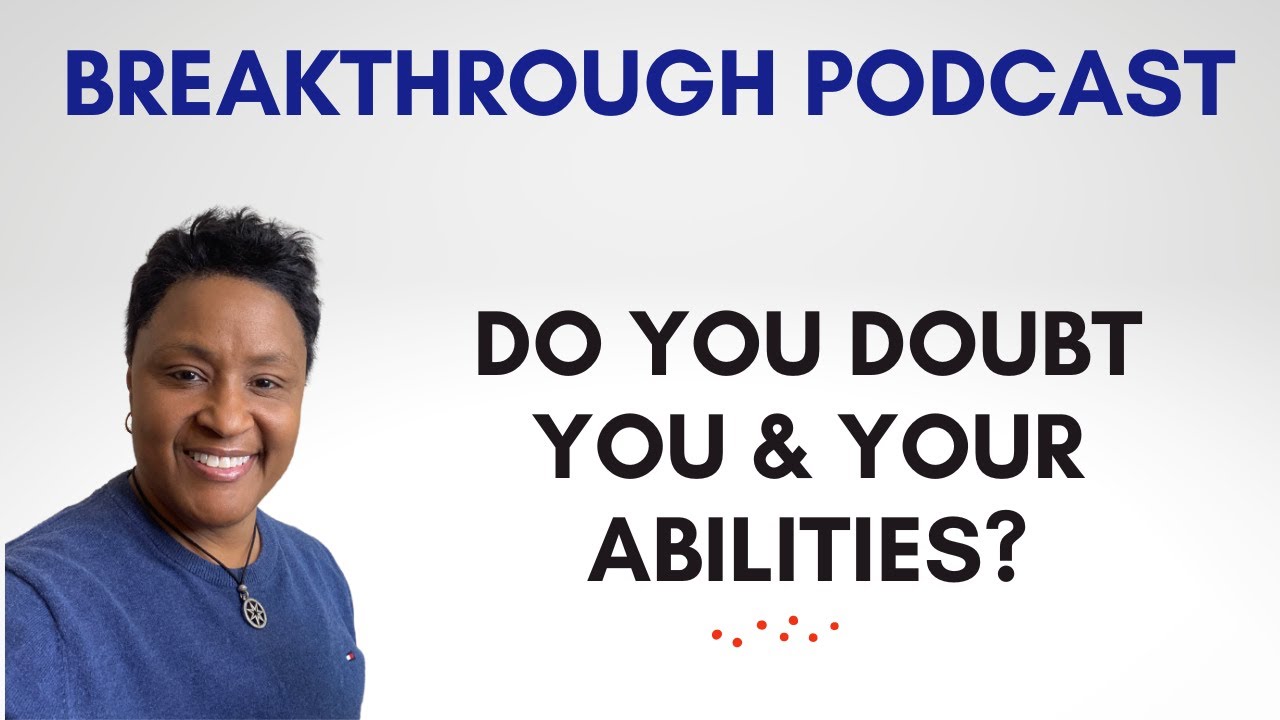
Travia Steward explores how self-doubt kills dreams and traces it to early conditioning, past experiences, and social media comparison. She shows how to rebuild confidence through recalling past wins and mental reframing, and explains why low self-efficacy leads people to settle for less than they deserve.
Chapters
Are you tired of settling for less in your life, in your relationships, in your career, in your money? Do you ever feel like you're holding yourself back from achieving your true potential? Well, you're not alone. I have felt that way. Many people struggle with self-doubt and just really doubting their abilities to do the things they really want to do in life. All right, let's get into it. I'm Travia Steward, and this year on the podcast, you are about to experience ways to settling in your relationships, careers, and lifestyle. No more settling for the bare minimum. This is Breakthrough. Yo, my peeps, happy Podcast Thursday. I just love saying that. That Podcast Thursday has such a, a different kind of ring to it than Podcast Tuesday. I really like Podcast Thursday. So welcome to the Breakthrough Podcast. And, you know, I'm diving deep today in what is going to be the foundation of the next, you know, several months of really diving deep into helping you create the life that you want to really live instead of, you know, participating in one that you don't, that you're unhappy with. So to begin with, I want you to imagine a life where you're not afraid to take risk, where you believe in your abilities, where you have the confidence to pursue any dream that you want to, where the first thing that comes up is not that I'm too old, it's too late, I'm too young, whatever that thing is. And I want you to think right now, ask yourself, what is that thing that kills more dreams than anything else? You know, Is it failure? No, it's not. It's doubt. And you see, because doubt shows up in so many different ways, doubt in what we can accomplish in life, doubt in our abilities, doubt in our strengths, doubt in our decision-making. And when we think about where doubt was born, you know, doubt was born in our past experiences. You know, the negative beliefs that have been ingrained in our mind, and doubt comes from the ways in which we've been conditioned. So we doubt ourselves when things don't go our way, and then we double down. That same thing didn't go our way, and then the doubt becomes a belief because we're like, okay, two, two times, three times, this thing did not work out for me, then I must not be good at it. This is not my strength. And so again, it stems from our conditioning and past experiences. But one thing I want you to remember is that these doubts, these beliefs are not facts. They're just stories that, that we've all been telling ourselves about what we're capable of, capable of, you know, and doubt is, It's sneaky in how it shows up. It's sneaky in how it talks, talks us all out of what we really want to do. And so we, you know, this thing didn't just, you know, we weren't born with it. And so believe it or not, we all start out in the world as, you know, fearless, joyful, joyful, you know, little beings that want to explore and are curious about every single thing in the world. But why do we end up as adults questioning ourselves, questioning our abilities as adults? And so our default setting as a kid is that we don't worry what other people, what other people think of us. We don't worry about, you know, as a kid, oh my God, am I going to look stupid when I begin to learn to walk, when I go from crawling to walking? But as adults, we worry about what we look like when we're walking. Right? And so we, that, that, you know, as a kid, we begin to be conditioned based on what we're making it mean. Sometimes this has to deal with our parents, our teachers, sometimes our friends, you know, our siblings, our circle, because everyone's got an opinion. You know, some people cheer us on, others, you know, might not be so encouraging. And basically the opinions of others begin to shape how we see ourselves. When we talk about the main thing that affects how we see ourselves, we talk about, you know, social media. And it's not just the people that you know in your life, it's everyone everywhere. It's the constant comparisons that, you know, what we do and think about other people and how we stack up against and with those other people. You know, your life could be awesome, but seeing someone else's highlight reel on Instagram, on TikTok, you know, those things mess with your head because then you begin to compare where you are in your life compared to where they are. And again, that's their highlight reel. You know, most people aren't just showing, you know, the shit in their life. They're showing the great things, you know, and you know, I don't share a lot of the shit in my life with you guys. So it's a highlight reel. But one thing I do do, I talk, I talk about it on this podcast because I want to be real with you. Now we talk about self-doubt being the biggest thing that kills dreams, but what I want to really dive into right now is a secret sauce. And this is something that I am so good at talking about nurturing. And we're talking about the blueprint for success is confidence. You know, confidence or a lack thereof is like an invisible force that guides and directs our decisions and actions, you know, and as you know, I, you know, for one underestimate the impact, but it really does shape the way that we perceive ourselves and you know, how we move through the world. And again, what's on the other side of doubt? Well, that's confidence. But today I want to break it down for you. Okay. We're going to talk about self-confidence and self-efficacy. And so when we talk about confidence as a whole, that's more of a broad term that refers to like, you know, a person's ability, the overall belief in their abilities and skills. Confident. You know, I believe that I'm a very confident person. I'm confident in my life. But when we now begin to differentiate between self-confidence and self-efficacy— self-efficacy refers to an individual's belief in their ability to succeed in certain situations, very specific situations, or accomplish something very specific. It's a narrow concept focused on a specific type task. Confidence. Now I'm overall a very confident person, but my self-efficacy may be low in, well, is low in things like math. My self-efficacy to have a job with analyzing data, data analysis, is very, very low. And that's something that I don't want to improve my self-efficacy for data analysis, But I do want to improve my self-efficacy for marketing so that I can grow my business. I do want to improve it for— I want my podcast, my podcast to be great. I want them to get better. You know, I do want to improve it, improve, you know, my coaching every single day I'm learning. So when we continue to break it down and really dive deep into self-efficacy, I'm talking about the kind of confidence that you have in the moment, like to step up when needed, because we all individually have, you know, a lot of strengths, but we, we forget and we don't think about all those strengths all the time. We forget we were good at that one thing. And then we're like, oh my goodness, you know, because we haven't practiced. The repetition is way in the rearview mirror that, hey, I did that training. I learned that thing, you know, when I was younger, I learned that thing in training, in corporate training before I switch jobs, I'm really good at that. And so we all have a lot of strength that we forget from time to time. And, you know, we're really good at knowing what we're not good at. We're really good at seeing and knowing the things that we don't succeed with and that the things that don't come natural, but we forget all the time, all the things that we're great at. And sometimes it helps to just remind ourselves and remind other people of those great gifts. And when I talk about self-efficacy, I'm also referring to the moments when you can self-manage your mind, like your mental, you know, ability to manage your thoughts and what's coming up in the moment. And are you seeing red when, you know, like a fire truck goes by and then now you emotionally go the red? You know, when you're thinking, you know, sometimes, and assuming what someone is thinking about you, therefore you're acting on behalf of these made-up things in your mind when we don't know for sure. So that's also what I'm talking about with self-efficacy, because sometimes people, you know, will give us a certain look, and then based on past experiences, we go They were thinking blank. They were thinking that I did such and such, that I'm doing such— whatever it is. But we make this stuff up in our mind. And so self-efficacy in this situation is that you have the confidence, that you have the repetition and the ability to recognize in that moment that you're making shit up, that that person who just looked a certain way didn't say the words that you're hearing in your mind. And in that moment, you have the self-efficacy to manage that situation and not let your thoughts run away with you. And that's something that takes, you know, repeated learning and repeated— it's like going to the gym. And when you begin to lift weights, you know, you start with a 5-pound, you move up to 10, to 15, to 20, whatever those— whatever your growth process is. But you start somewhere and then it's like, oh, I know this thing like the back of my hand now. I know it like when I recognize those thoughts are coming up and they're not thoughts that I really want to be thinking. You know, also self-efficacy are things like when you were in high school, you know, we got up and did speeches. Nobody wanted to do those things. Well, I wanted to do those things because I wanted to talk about— I wanted to take a biology test and perform it. I didn't want to memorize all this stuff. I didn't want to take a writing test. So I love giving speeches, getting up in front of the classroom, right? And a lot of people hated that because that is like, you know, one of the top fears in the world is public speaking. And, you know, we had the confidence to go, okay, the first time it's unfamiliar, but I can get up here and do that thing. And so for some of us, you may have only had public speaking experience in high school, but if you had to do a presentation at work, you can get up and do that thing because you have some experience doing it. And so I'm talking about self-efficacy when it's like, are you first begin dating someone, you know, maybe you're putting yourself back out there because you've been married. Now maybe, you know, hypothetically you're going through a divorce and now what happens is you want to pull back from that first time when you asked someone out where you, you know, was You were proactive in getting the date and doing the thing for the girl, for the boy, right? And so going up and talking to that person, yeah, we feel uncomfortable, but we did it anyway and we survived. And so those are the moments that I want you to go and pull from. It's like, I don't know how to do that thing. I want you to think about all the stuff that you've done in your past when it's like, okay, in a way I have done this. And then we gather the evidence that I can do this thing. And so there's so many ways that we can nurture our self-confidence and our self-efficacy, you know, number one, by complimenting each other on the smallest thing, because what happens is that is building that muscle for each other. Because do we know the lack of confidence? What happens when we have this lack, when we have this level of doubt, it leads to more limiting beliefs. You know, these beliefs create an internal narrative, right? Those stories that we're telling ourselves that we're not good enough, we're not smart enough, we're not capable of doing that thing. And as a result, many of us settle for less than what we deserve, you know, and this stifles our potential. And so, you know, we all get thrown curveballs in life, but that's normal, but it's how you deal with it. That matters. It's your level of self-efficacy and how you deal with those limiting beliefs that are popping up in your mind, the curveballs that are thrown your way, because it has so much to do with perspective. And constantly beating yourself up or even fear— fearing failure can turn a confident kid, you know, who was so confident when they were getting up to walk into an adult who doesn't take the action that he or she really wants to take. And so when confidence, when we don't have the confidence, when we're doubting ourselves, opportunities pass us up. Whether it's a chance for a new job, you know, where it's a chance for a new me, uh, you know, a relationship, you have a new idea and then you watch someone else who had a little more confidence or self-efficacy in that situation, you know, go out there and do the thing. You're like, that was my idea. You know, these hesitations, you know, lead to us just really missing out on some things. And then later on, we have a whole lot of regret, you know, doubt and self-confidence, the lack thereof impacts our relationships. You know, we think that we're not worthy enough. We think that we have to settle and, you know, settle for less than what we really want. In our relationships in order to keep that relationship. You know, it affects our ability to communicate openly, to express ourselves, self-efficacy, and knowing that if, if you, if someone is saying something to you and that you don't agree with, you are competent in your self-efficacy that you can go, hey, you know what, I don't appreciate what you just said and I disagree, whatever that thing is. But having the ability and the confidence to step up and express yourself authentically when you need to and when it's important to you. And confidence is a catalyst for everything that we want in life, our personal growth. Without it, our growth becomes stagnant. We don't take risks. We don't try new things. We don't pursue, you know, ambitious goals. And so this lack of confidence, it takes a, it takes, really takes a mental toll on us. I know, you know, there are times when I haven't been as confident as I wanted to be, and then I was overcritical. You know, there was some anxiety that came up. I was feeling inadequate, and all it was was me making these things up in my mind that I was convincing myself that I wasn't good at. And to now break it down to the nitty-gritty, The biggest thing, which is why I've decided that I'm gonna focus on this, is that we settle for mediocrity. We settle when we lack confidence, whether it's in your career choices, your personal aspirations, relationships. A lack of confidence will lead us to accept situations that don't align with our true desires and potential. But the good news is We can always get confidence back. It's about understanding where you took a detour and not spending a whole lot of time looking back in that rearview mirror, but it's making the intentional efforts to rediscover that fearless kid you once were. So as I begin to wrap up this episode, I want you to ask yourself a few questions. Are you someone who believes that you can figure something out in the moment? Are you someone who believes in your capabilities? Are you someone who believes that you will work that thing out? You know, are you someone who, let's say you're in your career, in your corporate job, and you've been given, you know, a task that you've never done before. Are you someone who can confidently ask for help and then confidently figure things out and work that out?, you know, in the moment and get that task accomplished, you know. So I want you to ask yourself, do you have the confidence and the self-efficacy to speak up when something needs to be changed? When you know, you know, maybe you're not being treated right. This last one is the biggest question because this is somewhere, this is a place where I question myself. You know, are you someone who takes on challenging tasks, or do you take the easy route? Are you someone who goes, I know, you know, I really want to lose 60 pounds, but I know I can lose 20, so that's my goal? And I know I have been guilty of that. And so one of the goals for this podcast this year is to motivate you, to empower you to reach and strive for bigger, more challenging things so that you're not settling for what you already know you can do and succeed at. And so because this part of it is, is not about settling in life and not settling in your relationships, it's my goal to help you strive for that next level. What's next level you look like? And I remember when I was teaching high school, you know, most of you know, I taught high school for 24 years. And I would always motivate my students to reach, to shoot for the moon, and if they missed, they would land among the stars. But as adults, we don't even think about that stuff anymore. We don't even think about really going for it. We gotta be practical, we gotta be realistic. We forgot, and we continue to forget about those dreams that we once had as a kid. So I want you to ask yourself these questions. Where is your level of self-efficacy for certain tasks? And is this something that you want to improve through persistent repetition and build that muscle? Okay, my peeps, we're going to continue talking about this because I have found that when I go and do, you know, public speaking, I do presentations. We are never too old to learn about confidence.. And we can never talk about confidence enough because again, self-doubt is the thing that kills more dreams than anything else. All right, my peeps, that's what I have for you today. I hope you're having the most beautiful January and we'll talk next week. And if I can ask a favor of you, if you're finding value from this podcast, please share it with someone. And then more importantly, I would love for you to leave a review of it because it helps more people find the podcast and it helps it, you know, come up more in the search engines. And so rate and review the podcast, share it with someone else that you think could find value. All right, my peeps, happy New Year 2024. We're here.
More from Travia









Remember the YOU Who Didn't Overthink Everything #personalgroth #mindset #selfdoubt

