A Mindset SHIFT We All Need | Stuck No More Book @traviasteward
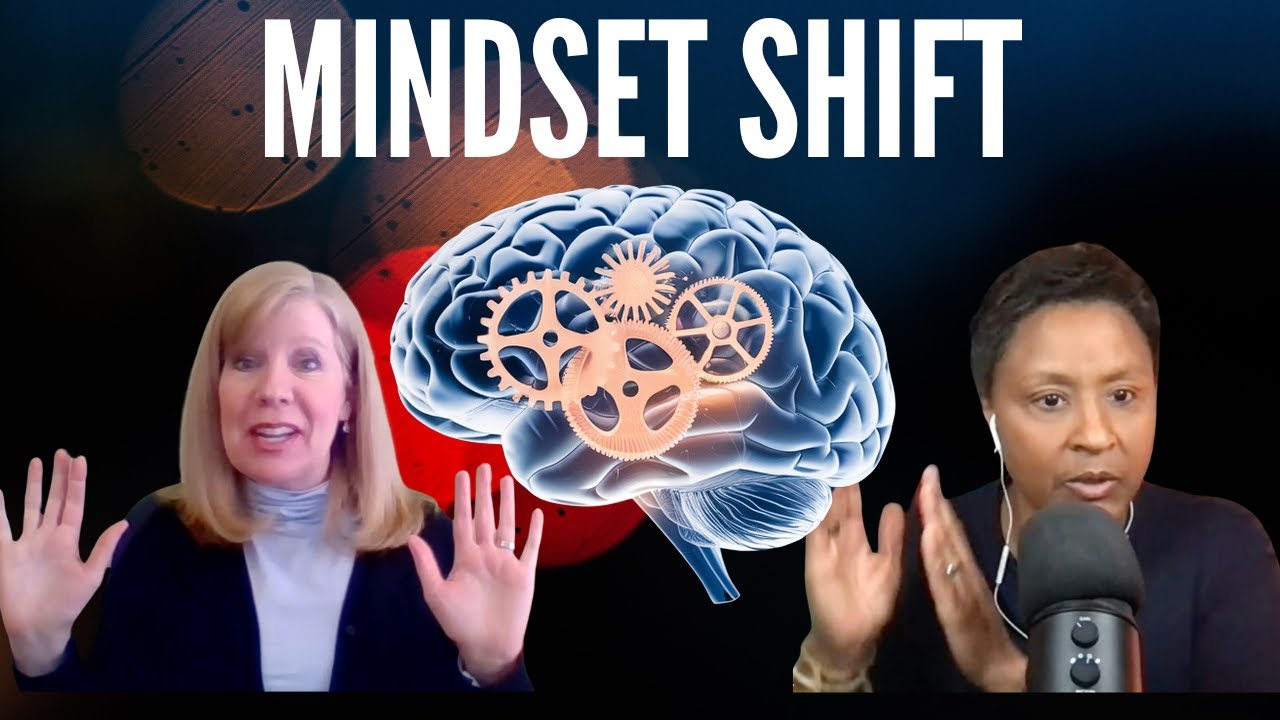
Leadership coach Lisa Gregory talks about her 2013 crisis that led her to strengths-based coaching and away from corporate life. She co-authored Stuck No More and shares four self-coaching tools, especially reframing the internal stories that keep people stuck. Understanding your natural strengths, she says, clarifies what authenticity actually means for you.
Chapters
Have you ever felt stuck? I mean, so stuck that no amount of effort seems to move you forward? My guest today, Lisa Gregory, knows exactly how to break that cycle. Author of Stuck No More: Practical Self-Coaching for Everyday Problems, and a thought leader with 25 years of experience, Lisa is an absolute master at turning complexity into clear, actionable strategies that help people and organizations achieve real and lasting change. Her work inspires audiences across the globe to embrace growth, overcome challenges, and create meaningful connections in their lives. If you are ready to unlock your potential and get unstuck, you don't want to miss this conversation. Welcome to Be You, the podcast that helps you break free from expectations, embrace your true self, and live confidently as the real you. My peeps, I have a special treat for you today. I am sitting down having a conversation with my friend Lisa Gregory. Lisa, welcome to the rebranded podcast Be You.
I love it. Thank you so much, Travia. I'm excited to be here today.
Absolutely. So Lisa is someone that I met in a mastermind group, and I feel like we have so much in common that I wanted to have this conversation with Lisa. And so as I have rebranded the podcast to— it's still, you know, Lead with Confidence Now, but we're really focusing on the Be You element of how we show up in society. How do we show up in social media? How do we show up in our lives altogether? So Lisa, with that in mind, because I know there's so many things that put us on different paths in life, I would love for you to share with me, share with my listeners, what was your breakthrough? What's your breakthrough story that put you on this path? The Stuck No More, the coaching, the speaking. Share with us what your breakthrough story is.
I think it would start in probably 2013. So I'd been in, been corporate leadership for a long time. I'm a training designer, facilitator, and I found myself in a position where I was vice president over product development for an IT training company. And they had leadership changes above me, and some new leaders came in, and their management style was not congruent with my values or my leadership style. And so I found myself fending off kind of this pressure and what I felt was chaos from above, trying to protect my team below. And, and trying to maintain my own integrity as a leader, as a caring kind of servant leader approach. And I just found myself feeling pressurized between the leaders above me and trying to protect my team below. It got so bad that at one point, I developed heart palpitations at the age of 37. And I had no physical reason to do that. It was 100% because of the stress. And I thought, Lisa, you cannot keep doing this. At that time, I was introduced through some wonderful friends to an amazing woman named Deanna Murphy, who takes a strengths-based approach to leadership development. She was really one of the first coaches that I had met. And she was gracious enough to start to coach me through that period. And she illuminated for me my or helped me eliminate my own thought processes that were adding to the stress. My own internal voice that said, I should. I should be able to manage this. I should be able to protect my people. I should be able to change these leaders above me. And the voice that said, well, you should, President and CEO. You should care about people. You should value them the way that I do. You should show up this way. And it was all the shoulds and you should and I shoulds. That was just adding to the pressure in a way that wasn't productive or helpful. And it was the first time, like I said, I had really come in contact with a corporate coach that was really ever, and I found it to be very helpful. That led me to realize that this environment was not the environment for me. And so what is an environment where I can thrive? What does that look like? And, um, through Deanna Murphy and her company, I became a certified coach in strengths. I liked the strengths-based approach that she took. And then one thing led to another. And then instead of doing mostly training and development, I started doing more and more coaching. It was a surprise to me and everyone around me, but I found the process so helpful that like a lot of us, like you find a good book, you find a good tool, you want to pass it on. Part of my passing on involved a total change in career path. And so 2014, I haven't looked back. It's been 10, 11 years, uh, self-employment, and I love what I do.
That's incredible. Thank you for sharing that story. When you were, when you were sharing the story, I was thinking, putting myself back in the shoes of so many people listen to this podcast who are still in their 9 to 5, people who are in corporations and companies where they're like, I can't just jump and quit my job and quit my 9 to 5 and start my own business. So when you spoke about having a disagreement or just differences in your values and your leadership style, how can someone use your example, your story, without quitting their job if they have a difference in values and leadership style?
So at first, I will say 95% of the time you don't have to quit your job. That just ended up being my path. And had I known then what I now know, I could have managed my stress and my situation very differently. It's why I co-wrote Stuck No More to take those tools that I've learned since and kind of write it back for my 37-year-old self saying, here are the tools that you need to get unstuck. So, one of the things that I would say is start to become aware of the story you're telling yourself. Stories are sometimes true and sometimes they're not true. Most of the time, they're a little bit of everything. The way that we explain the world to ourselves, the way that we predict what's going to happen, and we give meaning to what happens. The story of, you know, being able to help someone and how good that felt, that creates a story in my mind, and I want to do more of that. The story we create around, well, as a leader, a good leader looks like this. Therefore, if this isn't happening, it's not good leadership, right? It's a story we create. It might be kind of true, and there might be other components to the story that we should investigate. Part of it, I think, is just being— starting to be aware of what's the story I'm telling myself? What are the shoulds that are up here that, um, that comes from my own values and my perspective? I might want to hang on to some of those shoulds, and some of them I could actually let go of.
When you think about the person you were— and this was when you were 37?
I think so. I probably have my math wrong, but okay. But 37, 38, 39, yeah. Under 40.
Okay. When you think about who you are today at your authentic core, and when I— what I mean, because this, this episode, this season of the podcast is really about like, I'm a reinvention coach, so I'm like, who do you need to be? But this season is about peeling back the layers of all that crap we have laid on top. This is because of judgment and criticism. Compare Lisa at 37 to Lisa today, and how has she evolved and maybe peeled back her own onion, the layers of the shoulds? And so tell us about who you are authentically compared to who you were at 37.
Well, one of the nice things that happens as you age is you care less and less about what other people think of you and more and more about what your own mind and heart tell you you should be, right? And so, um, that's really just refreshing and liberating. I would say what has remained the same and what's at the core that is easier to see now that I have shed some of those 'shoulds'— I should, you should. And some of the things that remain at the core are that I'm a caring leader. That I think that there is a way to treat people with respect and kindness and truth. And sometimes, the truth isn't comfortable. I don't have to make people comfortable.. But the truth is the right thing to do and it can be delivered in a kind way. The truth of you're doing a fantastic job. You've lit up this room. You make a difference in the team. And the truth of the role we're moving into is a different world and we have an opportunity to upskill you or help you find a new seat on a new bus that's going to be a better fit. Both truths. There's a way to deliver that message with kindness. That's what I really care about. I really care about people. And that's been the core. I care about serving my customers well. I serve about— I care about my team members. I care about the people that I mentor. I want to lift and grow people if they come into my world and if they're open to that. That core truth is the same back 37, 38, 39-year-old Lisa all the way up to today.
Prior to us sitting down and having this conversation today, you and I had a previous conversation and you mentioned about like this lady that you were in conversation with, and she was like, like you two were talking about her version of being authentic was definitely different from yours because so many times we hear be authentic, be authentic, but what does that mean? And sometimes it's like, is there a template for that? Is there a mold for that? This is what authenticity looks like. Share with us a little bit about that experience and how your reaction to her differed from your thinking of what authenticity looks like.
Yes. So first, I'll just say that I firmly believe we all speak from our own experience and our own lens. And so, this coach who was encouraging people to be authentic was clearly coming into kind of a blossoming of herself. And so, her authentic energy and "I'm gonna own who I am" expressed itself in dyeing her hair funky colors and dressing up colors and fun patterns and just being like out there and I'm going to make TikTok videos and I'm going to be so excited. I'm going to dance in front of the screen, all this stuff. I'm like, this is so great for you. It is so not me. It is just not me. I would feel a fool and it wouldn't be authentic to me. And so for some people, like shedding the inhibitions that they put on themselves releases a creativity that gets expressed in colored hair and tattoos and fun things.
Straight.
I'm not a pink hair person. Um, I'm not a tattoo person. Um, and so I kind of shied away from her coaching as be authentic. Um, I'm sincere. That's what I am. I'm sincere. And it's, it's okay to be quiet and sincere. Uh, it's okay to be authentic and out there and exciting and just exuberant. I'm married to an exuberant person. My husband is just, he's just out there and just really fun. Not my style, but my style, not style, it's, I guess it is a style. It's like the expression, the outward expression of the inner me isn't TikTok. It's not. And it's okay. I don't have to, I don't have to be like that. And I'm not being suppressed, I'm not holding down, I'm still being my authentic me, even if it's a little bit quieter and a little bit more sincere, or it shows up differently than other people. Not to say she's not sincere, I don't want to say that, but yeah, thank you.
Okay, I get that. So when you think about the person Lisa is who is sitting with me today, how do you know in your bones that this is the authentic Lisa, that, you know, everything, the way you show up, who you're being, is who you actually want to be? How do you know that 100%?
I love that question, Trivia, and I'm actually going to ask you to answer the same question because I think you have some insight into this. Uh, my authentic self is partially cultivated and partially innate. When I was really young, I was super, super shy. Like, you would never guess that I would ever get in front of a group of people, much less become a public speaker and an author and trainer. I was super, super shy, but I looked around me and I was like, you know what, people who are outgoing, they have more fun. And as a 12-year-old, I wanted to have more fun. And so, I intentionally— looking back now, I'm a little surprised that I did— but I intentionally cultivated that outgoing side. And that I'm not afraid to speak to strangers side. And it was hard at first because I also had the shy Lisa who sometimes shows up. I kick her into the closet. But, um, I intentionally cultivated the outgoing because I could see that would lead me to where I wanted to be. And I liked— I always have liked people, and I wanted to connect with more people. And so part of my authentic self is cultivated I want to be an honest person, and that takes intentionality to be honest in the small things and in the big things. So part of my authentic me is definitely cultivated. It's intentional. It's shaped by my faith. It's shaped by my actions, my habits. The other parts of me, like my mother will tell you, I am who I've always been. My siblings will tell you, like, 51-year-old Lisa is the same as she was at 14. So some of those things, I just— I'm happy about that because I like who I am. I think I'm being my best self when I'm living true to the purposes that I have in life. And like I said earlier, for me, that's to lift other people. And when I feel like I'm doing that, I feel like I'm on the right track. Gotcha.
Thank you so much for sharing that. You're putting the question back to me.
I am. You can't wait.
Absolutely.
I want to know how you do.
Absolutely. This is something that I have created and worked on for decades because, and as a matter of fact, the podcast episode that's coming out, like when we're recording this, it's 2 weeks before this podcast episode.. And I talk about in high school, because of my sexuality, and I was— I grew up in Louisiana in a very religious family. So from then, I just remember in high school, I need to be like this, I need to be more like that, I need to be this person. So I began taking on these personas, wearing all these different masks, because I was thinking this was who I needed to be. So throughout the work with my own coaches, I recognized that I wore all of these masks because my default sentence, who I am at my core, is not acceptable. So for decades, I never thought it was okay to just be me the way that I know that, like you said, I've cultivated it with lots of intention. Is in my body when I am feeling aligned, I'm in homeostasis. I don't have any check engine lights going off.
Yeah.
One of the things I recognize that actually still happens. There's sometimes when I walk into like a restaurant and if I feel like people, like there's a guy over there who looks at me and I make that mean something, I tell a story about it immediately. I withdraw. I put my hands in my pocket, I— my chest gets tight, and I'm so attuned to that, I go, oh, you're doing that thing again. Stop that. Be who you are. Be proud. And so I pay attention to what shows up in my body. So when those check engine lights are not going off, I go, okay, you're being the Trey you want to be. All right, there you go. My first declaration is— and this speaks to how I want to show up. I, Travia Steward, am proud, powerful, and fully expressed in all areas of my life. So when I'm being those three things, I'm being my authentic self.
I love that. Yeah. And I do think it shows up in our bodies, just like you said, if we're attuned to it. I was not an authentic leader in my previous employer because I felt like I could not express and be the kind of leader I wanted to be. And I felt all of that pressure absolutely in my body. It affected literally my heart, the heart organ, and my soul. And once I left that, it was like— it took like 3 months. I'll just say it took like 3 months to scrub off the stress. But then you're right, like, there is a centeredness and an alignment that comes internally when you're living according to who you really want to be. Yeah, yeah, well said.
It is, and it's, it's grounding, and it's a presence that— and it's freeing, right? I mean, it's like you don't have to— you know, I taught high school theater for 24 years, so I always thought I was performing, right? You don't have to perform. So now, as we talk about— I want, I want to jump into your book. Stuck No More, which is a great book, my peeps. Everybody should go to amazon.com. You can even go to stucknomore.com and get the book. And I'm going to have Lisa talk to you about her gift that has a lot to do with the book as well towards the end of the episode. But what was the catalyst? What was the motivation for Stuck No More? And I know you, you co-wrote it with another guy, so tell me about its, its Birth, yeah, the book.
So the idea was birth during COVID when, um, at least in our profession, training, uh, courses, everything stopped with COVID Um, my online courses were still running, but that was so much stopped. And so this friend and I, Dr. Steve Jeffs and I, had worked together in the strengths space for a long time. We wanted to keep working together. We thought, well, how do we do that? 'He lives in London. I live outside Washington, D.C. We do a lot of work and we're very busy. So, let's pick a work project.' So, we said, 'Well, let's—' We had both wanted to write a book. We said, 'Well, who do we want to talk to?' That was the first question. 'Who do we want to talk to? We want to talk to all the people who are in the companies or in positions who never hear our training, who never attend an all-day workshop, where they learn how to coach themselves out of the stuck places in their lives. And how do we reach them? We're not going to reach them through corporate America like we do most of our training. How do we reach them? Let's try a book. And then that's who we want to talk to. What do we want to say? And how do we want to say it? And so we decided we want to share our top 4 coaching tools that we use most often in our work with leaders and employees, with ourselves, with our family members. To reduce the toxicity, reduce the conflict in our minds and in our relationships, in our tasks, either internal or external, and just get on with the good stuff. That's what we wanted to see. So how do we like— let's take our 4 best things and put it in a book. And then how do we want to do that? We are going to make this super practical. Dr. Steve Jeffs has a PhD. I love words. Like, we can talk for a long time. So we said, what if we just distilled it into the nitty-gritty? Here's the core. So the full title is Stuck No More: Practical Self-Coaching for Everyday Problems. So I'm gonna take my 4 best tools and put them in your hands. You can coach yourself, be your own coach, help yourself get unstuck. If you need more help, we're here for you on the sidelines, but you can use the tools and help yourself.
Absolutely. So Stuck No More, someone gets your book, they also go and get your tools that will help. So now they are— tomorrow they're in a meeting and something happens where they're feeling triggered, they're feeling like, what's happening in this place? Give me an example of just one tool that that person can go, okay, I have to go to another meeting. What is something that they can do like 10 minutes.
Perfect. Um, I would say use the tool of changing your internal story. So the first question is, what's the story I'm telling myself about this thing that just happened? The person was rude, they were intentional, they disrespected me, they're not valid— like, whatever the story is, like, what is it? What do you get if you stay in that story? Where does that story lead you? What's a possible different ending that you would prefer? Not saying it's possible. I'm not saying you're going to get there. But what's one different ending that you would prefer? And then what's one step you can take to move in that direction for that ending versus the stuck story ending that you're heading down the path toward?
So now I'm sitting there, I'm putting myself in the shoes of that person. And I'm thinking about like people like my mother, people who, you know, I have friends who are like, like, oh, I'm going to a personal development conference and it's, you know, $1,500. They're like, is what? You pay that much for that, for people talking and people speaking and blah, blah, blah. So, you know, if we're going to look at the two types of mindset, growth and fixed, now let's say the person who is doing this thing in 10 minutes has a fixed mindset. I like this, doesn't work. You know, how do you get through to that person?
That's who the book is written for. It's for the people who don't read self-help or self-growth books. It's the people who are like, whatever, I'm not gonna sit down and talk to somebody about my feelings about something, right? No, we all have family who's like that, right? And friends. Yeah, it's okay. That's why it's self-coaching. You don't even have to talk to anybody else. You don't have to share feelings. But just pause for a moment, get off the field and get out of the game for just a minute. Because when you're on the field and you're in the game, you get a really narrow focus. You're looking at, if it's football, you're looking at the linemen who are about to tackle you. You don't have time to be like, what are some other options here? Right? That's why you have a coach. That's why you get off the field for 5 minutes and look at it from a different vantage point. And you will see things differently. Everybody at some point has self-coached. Lisa, stop thinking about that, right? Change your mind. It wasn't that bad. Get over it. Whatever it is, like, everybody's got some self-coaching experience. So we're going to give you our best 4 or 5 questions for each of the tools so you can stand off the field as the coach, ask yourself some questions, and if you're honest with yourself You'll see things differently and then you'll have new options. Then you can choose to take a new option or stay stuck.
It's okay. So you said, let's see, what was her name? Murphy. Deanna Murphy. Deanna Murphy. She was the catalyst and for you going down the path through strength-based work. Yeah. How do you marry the two strength-based? With authenticity to help people excel at a higher level?
Oh, it's super easy because I think our strengths explain our authenticity. Whenever I talk about diversity, I always take it from a strengths-based perspective. I mean, there are lots of ways to look at it, but when I get two Strategic Thinkers talking, it's like, I don't care what your background is, what your native language is, what you look like. Two Strategic Thinkers, Those are those strengths that think big picture, big idea, man, they will brainstorm forever. You get the two of them in the room, they're talking the same language. They get so excited, right? Two people who are all about like, let's get stuff done. What's the step? What's the next thing we need to do? Like check the list off. Let's go. They speak the same language. And when you start to tap into what are your native languages, what are your native strengths that you naturally bring to the table? That you don't even think of it as strengths because to you it's just who I am. Isn't, isn't this like everybody? Isn't everybody like this? No, people are not like that and they can't do the things that you do so quickly. So when you understand what your strengths are, your natural strengths, whether you take Strengths Multiplier or Strengths Finder or a couple other assessments, when you understand, oh, Huh, look at that. That's actually a strength, this thing that I do so easily and I think everybody else does. How do I bring more of that to the world? Now you're starting to really understand your authentic self and what makes you unique.
So outside of, you know, and I easily see how that aligns together. Now let's backtrack a little bit. What do you think from your experience causes people to be stuck to begin with? Like, why do people get stuck? And have you seen patterns, like, in the workplace, maybe in overall life, that, you know, this is generally what I see, these 3 things happen and boom, stuck?
Yeah, it's a good question. I was trying to think if I have 3 in specific. One, um, every stuck place has a relatively high emotional temperature. So this is not— and that's why we get stuck, because we feel passionately about it, or we're passionately avoiding the thing that we don't want to do because we feel dumb when we do it, um, and so we procrastinate that thing. So there's, there's some high level or raised level of emotion around it. There is a feeling of, I should, I want to, but I can't, I don't know how. So there's this, this push and pull of I want to do this thing, but I don't know how to do this thing. I should do it, but I don't want to do it. So there's some internal struggle of feeling and/or thoughts, raised emotion, and the result is a feeling and an inability. The third thing I would say is an inability to control everything, everyone. Hi, it's universal.
We barely control ourselves, right?
But we have this mistaken belief that we can really influence everything and everyone.
Yeah. So good. So a lot of the work that I am— I love to learn and grow and research things. So I've been really into Carl Jung's work. And Viola Davis uses that quote a lot in her work. And I'm messing it up for some reason right now, because of course, when you need it to come to you perfectly, it doesn't. But it goes something like, the power— the greatest power in the world is the power of being yourself. Can you speak to that from experience? Like, when you have worn masks, when you have, you know, become a chameleon because of the situation you were in, what is the power and the— just the strength that you felt when you were being you?
So I think there are two 2 types of power that happen there. One is the power for myself, and one is the power that creates a ripple effect that affects others. When I stand in my uniqueness and say, this is what I am, and this one is what I'm not, and both are okay, I stand in comfort with myself. We call it confident vulnerability in some arenas.. But I stand there and there's a power of just letting go of the stuff that I don't do well. I'm never gonna do well. And I don't need to flagellate myself for not doing it well. I don't need to beat myself over the head, right? Stop with all that negative energy. Just let it go and really focus on what I am really good at. So for example, my husband and I run 4 businesses together. He is amazing at inventing like the initial igniting. And he is good at that. You think that all entrepreneurs need to have that. Well, I, I am not good at the initial idea. I'm not going to come up with the iPhone. That's not me, man. I'm really good once you come up with that idea. I'm good at helping you hone that idea and make it a reality. So I can stop worrying about trying to find the next big idea. That's not me. But I'm going to take whatever new ideas I hear, and boy, we're gonna make it happen.. So I let go of all the things that interfere with my true energy flow when I really hone in on what I'm good at, what I'm not good at, and I'm not apologetic about either. That's the internal power I found in my experience that comes. The interesting thing is, Travia Steward, is that as soon as I stand in that power, I give everybody around me permission to do the same thing. They don't have to pretend around me. Because I'm not going to judge them for what they're not. I don't judge myself for what I'm not. I'm not going to judge you for what you're not. And I celebrate what I am. I'm definitely going to celebrate what you are. So you feel comfortable in my presence, letting go and let dropping the masks, and you just be you. And now we've got two of us playing powerfully, or a team, right? It's exciting.
Honestly, that was one of the things that I noticed about you in the mastermind that we both were in, like, you just were always inquisitive and curious, and there never ever seemed, in your questions and comments or whatever, never seemed like there was any judgment. No, like, anywhere. Like, I, you know, because I know sometimes I can say something and it's like, you know, it's, it's looking sideways, and it's like, you know, you kind of know. It's very hard for me to hide my— hide how I really feel now because I have, you know, really gotten into this is me. And so, but I have noticed that, yeah, you just are welcoming, you are accepting, and it's a powerful place that you stand in and come from. And so I admire that so much in you.
Well, you're very kind, and I really appreciate that. It says that I'm in process and I'm doing pretty well because I still have that judgment voice. I have that judgment voice toward myself and towards others, and I really, like, really have to work hard at silencing it. So I'm grateful to hear that the bigger, more prevalent energy is acceptance, because that's certainly, certainly the bigger part of the authentic me that I, I want to show to be.
Absolutely. Perfect. Okay. Two more questions. One of the things that motivates me to do all that I can is the book by Bronnie Ware, The Five Regrets of the Dying. I've never read that. Oh my goodness.
Oh yeah, come on people, write it down. Yes, totally. Regrets of the Dying.
The Five Regrets of the Dying. Because she was a palliative nurse and she spent some time in a nursing home and she was quizzing and interviewing all these people who were in hospice. And the number one thing, the one that really sticks with me, is so many people said, I wish I had the power and the courage to live the life true to me that I really wanted to live. And so that— the first time I saw that, I was like, holy smokes, that's me. And that was part of my motivation and going, I don't want to take my last breath and go coulda, shoulda, woulda. What if I'd done that thing? So that— so this question is, and it's hard to— you're 51, you know, I, you know, I'm 54, and so I'm going, I'm gonna be 100, baby. If 100 was tomorrow for me, I would regret not having taken more action and been more bold. What is something if 100 was tomorrow for you, and they're like, yep, this is it, Lisa, it's 100 and that's all you get. What would be something that you're like, if I don't do this thing, I'm gonna have that regret?
It's the thing I'm doing right now this year. Travia Steward, this is the year in 2025. I wrote a book. I wrote a— I had a goal when I was 22 years old to write a book. Problem was I didn't know anything. I didn't have anything to say. Right, so now half a century, I have a few things to say. Um, and so the thing that I would regret is the thing that I'm working on right now so that I don't regret, and that is going all in and sharing a message with the world and being unafraid to be vocal and say, hey, I've got something that I think is of value. Some of you are gonna love it, some of you are gonna hate it, some of you are not even gonna care. But I'm going to be bold enough and big enough to be visible enough in this world that those who are looking for it will hopefully see me and come. And some of the haters and the naysayers are going to see me and they're going to come, and I'm going to be okay with that because it means that I'm playing big enough to make the big ripples in a positive way in this world that I really want to make, that I would regret if I got to 100, and I didn't at least try.
So good. Yes, man. So that segues right into the last question. So through all of that work and all of the bold things that you're doing right now, when you do leave this earth, what do you want to have been known for? And what do you hope people are still talking about because you came here and did that thing?
You go right to the hardest stuff, Travia. You don't mess around, do you? It goes right to the core of my personal mission statement. I'm just going to share this with you and all your listeners. Please. It's within our group here, people. Yes. I don't actually care that people remember my name or that they tie their growth to me, but I would love for the I get emotional because this is like right at the core, right? Our authentic self. I want the people who cross my path and whose path in life I cross to be lifted and moved to a better place because they had contact with me, whether or not they realize that I was part of that catalyst or they thought they just moved there themselves. I personally, for my strengths, it doesn't matter. I just want them to be lifted and moved. And in doing so, I lift and move myself as well. It's beautiful.
Wow. Yeah. Whenever— yeah, you know that you have found it when it brings up emotion in you, right?
Yeah. And when you don't share it with a whole lot of people except for your friend Travia Steward and all of us.
Yes. Who asked, right? It's just right here.
Just right here.
Just right here. Yes, yes. Wow, this has been so good. So Lisa, please share with my peeps how they can find you. Please talk about the gift that you have that I will definitely leave links in the show notes. But how can people get more of this brilliance that you are sharing with us today?
You're very kind, and I would love to connect with them because we're all trying to search for our authentic self and share tools along the way. Hey, this helped me in my path. Maybe it'll help you, right? So if you want a little gift and we'll put the link down below, like Travia Steward said, stucknomorebook.com and you do /free toolkit just for you guys, free toolkit. And then you can download kind of a digest version of the 4 tools and the questions with some examples and at least get you started. Love for you to read the book, love for you to take the online course, right? There's a lot out there, but at the very least, stucknomorebook.com/freetoolkit. That's for— that's for you guys.
Now, Lisa, when I bought the book, I think the book was 99 cents. How much is the book today?
It's a little bit more than 99 cents. Um, I think the ebook is $9.99, and then the audiobook, and then the paperback book. Like, for $20, you know, absolutely, you can get it. That's helpful, hopefully.
Yeah, because this is life-changing, and we go out and we spend more money on different things like coffees and alcohol and all these things. This is Stuck No More, a life-changing book that, you know, like, people who don't believe in professional development or who have not received it and have no idea where to start, you can totally start here with Lisa's book.
I tell all my friends who love self-help, like, this is the book you give to your family member who's super resistant to all the other books you try to share with them. You're like, this is your kind of book. It is straightforward. It is no nonsense, and you don't have to talk to anybody about it, right?
And it's a quick read. I love that it's a quick read. I love a quick read. So, so good. Oh my God, Lisa, this has been such a great conversation. Thank you so much for just coming on here and sharing this conversation with me, sharing again your brilliance with my peeps. And I believe that you are one of the souls walking this earth who really has you know, the best intentions with how you show up and the best intentions on the effect that you want to have on other people. So thank you for being in my world, letting me be in your world, all the things. So, but thank you for being on the podcast today.
I think it takes one to know one, so thank you for having me here and your authentic growth and being and sharing that with everybody. So thank you for having me. Me on your podcast today.
Yes, you're welcome.
More from Travia









Remember the YOU Who Didn't Overthink Everything #personalgroth #mindset #selfdoubt

