Breaking through a Mid-Life Crisis with Karin Freeland
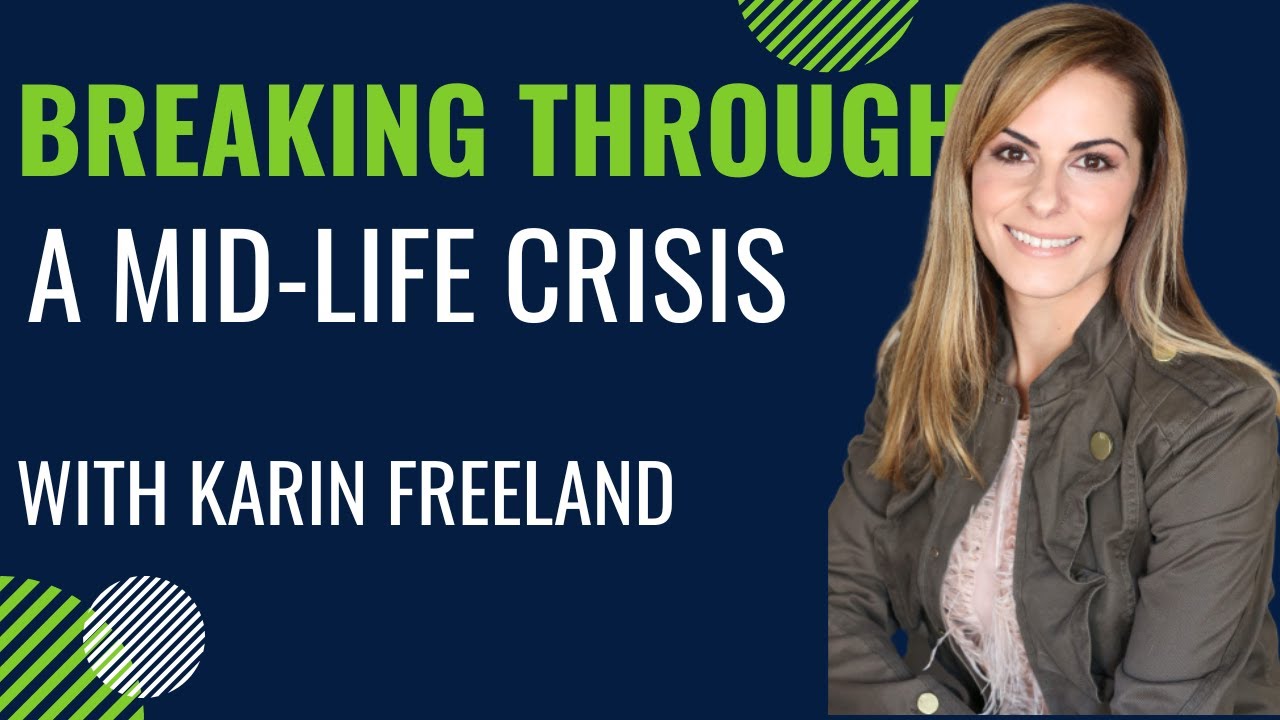
In this episode of the Breakthrough podcast, host Travia Steward interviews Karin (Karin) Freeland, a former corporate workaholic turned reinvention coach and author of the memoir The Ins and Outs of My Vagina: A Penetrating Memoir. Karin recounts how a series of family deaths in 2019 triggered panic attacks, existential dread, and a deep mid‑life crisis while she was leading a high‑pressure role at an energy company. The crisis pushed her to confront the emptiness of a life built around PowerPoints, long hours, and corporate ambition. After watching The Secret, she realized she needed to write a memoir—a project she had begun a decade earlier—leading to the creation of her candid, humor‑infused book about her relationship with her vagina and broader themes of body acceptance. Karin describes the practical steps she took to reinvent herself: carving out time for new hobbies (hip‑hop yoga, dance classes), cutting out mindless media, establishing a daily self‑care routine (meditation, stretching), and redefining her worth beyond a paycheck. She shares the emotional impact of fully embracing her body, the supportive reactions from friends and family, and the importance of sharing vulnerable stories to help other women. The conversation ends with concrete advice for listeners facing similar crossroads—"go for it," journal, seek coaching, and prioritize self‑care—plus a note that a portion of book sales supports the Alliance for Period Supplies. The episode blends personal narrative, practical coaching tips, and promotion of Karin’s book and services.
Chapters
This is episode 100, baby! I'm Travia Steward, and I want to help you move past barriers and obstacles that are preventing you from getting what you want in life. This is Breakthrough. My guest today on the podcast is— she's recovered Corporate Workaholic, Karen Freeland. And, you know, I met Karen as we both were guessing on another podcast, and I just remember really loving her energy. And it's like she and I were connecting on a level that I love connecting with, with friends. And she had, you know, and I talk about it on the episode, there, there's a feistiness in her there's a fire in this. And Karen is a reinvention coach, just like I am a breakthrough reinvention transformational coach. But there wasn't any sense of jealousy or, or, you know, a sense of feeling like I can't have her on because she does what I do, because there is space on this earth for each of us. And so I hope you enjoy this episode today as Karen and I dive into talking all things about life and how to make your life, you know, get that more out of your life and, and, and do the things that maybe we put on the back burner. Do those things now. So just a little bit of who Karen is. Karen is, again, like I said a minute ago, a recovered a corporate workaholic, and after years in high-pressure leadership roles at Fortune 500 companies, she traded the boardroom for the bedroom. In her hilarious tell-all book, The Ins and Outs of My Vagina: A Penetrating Memoir, she recounts the mishaps and misadventures she's had over the past 40 years with a special partner in crime— of course, her vagina, named V. Women of all ages can relate to this raw and honest journey of firsts, long-term relationships, and finding pleasure. Karen is also a speaker and a certified life and reinvention coach who focuses on helping women transform their lives and achieve their dreams. So listen in right now with my conversation. It was like we were hanging out, having, uh, you know, a coffee or having a drink. But listen in right now with my conversation with Karen as she starts with her breakthrough story.
So my breakthrough story started in 2019. I had two deaths in the family within 6 months of each other, and it shook me to my core. I just remember waking up every day and wondering, is this going to be my last day? When am I gonna die? How much time do I have left on this earth? Oh my gosh, my parents might be next. And that overwhelming sense of fear and something that I had no control over started to consume every aspect of my life. And what I mean by that is I would wake up in the middle of the night and I would have these panic attacks. I would be sitting on the toilet to use the ladies' room in the middle of the night, and I would be in the dark because, you know, when you turn on a light in the middle of the night, you don't want the lights to like blind your eyes. So we had a very low dimmer switch. So it's just enough light for me to actually be able to see. To do what I had to do, but it was still pretty dark. And I would sit there and think, okay, you were just sleeping. Is that what it's like to be dead? Nothingness, no awareness of your surroundings. And suddenly this wave of almost weightlessness would come over me, and I almost feel like I was dead for a second. And it was pretty traumatic, and it would set off bawling and crying. But I would do it silently because my husband was literally sleeping just a few feet away from me, and I didn't want to wake him up. Because what was I going to say? Hi, your wife's having a nervous breakdown. I'm freaking out that I'm going to die. And I would just look at myself in the mirror and be like, get it together, Karen. You got to get this together. And I would be wiping the tears frantically, knowing that he could walk in at any moment. And then I would go back to bed and I would try not to make any noise or sniffle and eventually fall back to sleep. And the sense of dread was coming mostly from my job. I was in a high-pressure leadership role at an energy company at the time, and our team wasn't performing. It was a new brand. We had an uphill battle and there were a million things wrong with the company that I could do a whole podcast just on that. But we'll save those details for another day. But it made me feel like, am I wasting my life? Is there more than just making PowerPoints, being frazzled 24/7, dropping my kids off at the crack of dawn at daycare and not seeing them until dinner, or sometimes later if I had to stay late at work, or traveling across the globe? And it really made me question everything. Why was I put here? What is my purpose on this earth? And it can't be to make PowerPoints to justify my existence to someone else. And that was the moment that started to set me off on a self-discovery journey to figure out what do I want to do with my life. I could tell people everything that was wrong with it, but I had no clue how to replace what I didn't love with something else. And so one, one day I was watching The Secret at a recommendation of a fellow coworker. And while I was watching that, Jack Canfield, who's the author from Chicken Soup for the Soul series, was talking about how he got his books written. And yes, you can manifest and you can think positive things. But at the end of the day, if you don't take action, then the book doesn't get written. And like a bolt of lightning from the bowels of my brain, it just shot forward and I was like, "Ah, my memoir." I had started writing a memoir 10 years earlier in 2009 when I was pregnant with my first son. And I realized right then and there, that's it. That's what I have to do. I have to write this memoir and tell my story. And that is how The Ins and Outs of My Vagina: A Penetrating Memoir was born.
Wow. You know, so many people like go out and buy a Corvette.
You know, I did. That was the first way I tried to fix it. Yeah, it didn't work so good.
But the way you fixed it was you poured your heart and soul into The Ins and Outs of Your vagina. Yeah. Oh my goodness. I've been so— thank you so much for, for sharing your story with us. And because what happens is, you know, and as you were explaining how it felt like in the room, like, you're like, is this what it's like to be dead? You know? And these are— see, I thought I was the only person who had like thoughts like that. What's it like? You know, blah, blah, blah, blah, blah. And then we look at our legacy. What is it that we're leaving behind, right?
Yeah.
And so tell me about, outside of rushing here, rushing there, doing the PowerPoints and the graphics, tell me a little more internally who Karen was during that time and who she came out to be on the other side.
Yeah, the best way I can describe it is the word hopeless. I just had this overwhelming sense of hopelessness. I was so stuck. And for me, that was like, I just couldn't— is this my bed and I just have to lay in it? Like, I, I somehow ended up in corporate, I somehow ended up in marketing, and like, well, Karen, you made your bed, now lay in it. And, and that's how I just felt. And, you know, you would see other people, um, And they would say, well, if you do what you love, you never work a day in your life. And the phrase actually, I love it now, but at the time, I didn't see a path to that. I didn't see how I got from where I was to doing something that I actually loved and making money at it. That it made me so angry when people would say that. I'm like, well, how? I'm not Serena Williams. I'm not like an amazing tennis player. Like, what am I supposed to do that I love? You know? And it was just like the worst advice anyone could ever say to someone who is like in the throes of a midlife crisis. And that's another way I'd probably describe it. Um, it felt like numbness, too. Like, there were moments that should have been so happy and exciting for me. And, you know, like, even just seeing my kids in a school concert and hearing them sing, but instead, I would be staring at my phone wondering if there was like an email that I was missing or a a new project that I could get put on that maybe would get me promoted and make me more money that wouldn't make me any happier, but I would pretend like it would. And yeah, no, it's just like this sense of like going through the motions every day but not really feeling anything.
Yeah, that makes so much sense. And of course that resonates so much with me. And, you know, guys, you know, that you're the ones, you know, since you're listening to this right now, Karen and I are both, you know, transformational reinvention coaches. And, you know, so many times we go, I'm not gonna have her on my show, she does exactly what I do, you know. And we have this whole selfish mentality, and I used to be one of those people who did. But I was so drawn to you when we did the other podcast that, you know, I was like, there is room for everyone. And so, and I say that because when you're thinking about, oh, what does that look like, you know, if you find a job that you love, you'll never work a day, another day in your life, you know, that's all so cliché. Yeah, so many people right now have no idea how to do that. You know, I have new clients that I'm bringing on and they go, you know, I just want to be happy, but I have no idea what I even should, should do first. I don't know what that looks like. You know, what would you say was the most important step that you took even before you wrote the book? But what was that first important step? You're like This is it, you know? Yeah, and not even the Benz, right?
Right. No. Yeah, because it wasn't. And my husband told me it wouldn't be the Benz, and he said, Karen, you're gonna buy this and you're gonna be happy for a few days, and then something's gonna happen and it's— and you're gonna go right back to feeling how you were. And I kid you not, he jinxed me because 4 days after I had the Benz, I hit a pothole on the Jersey Turnpike, popped a tire, and it cost me like $400 to get the tire fixed. He's like, if you had your Honda, it would only be $200.
There you go. Thanks for rubbing it.
So yeah, so there's a couple of things. And one of the things that I think is the most tangible that you can have— everybody listening right now can go do this— and that's start putting time aside for things that you love, a hobby, something. And it doesn't even have to be something that you know you love. So I had a cousin, I was in Jersey at the time, and I had a cousin who was younger and cooler than me, and she lived in New York City, and she started taking hip-hop yoga classes. Now, my whole life I was like, yoga, that's so stupid. What do you do? You're stretching. I'm like, no, I run on treadmills and like bump music. Like, so we just had hip-hop yoga. I was like, wait, I was like, I don't know, that, that might be kind of cool. Like, I could go jam out to some Biggie for an hour. Okay.
Yeah.
So I went into the city and I took a class with her. And I mean, I was terrible. I sucked at it. I was literally dripping with sweat. I could barely hold myself on a plank by the end. My arms were shaking so much.. But I was like, this was so fun. I feel exhilarated. Like, this is exciting. I want to do this again. And when I started carving out time for myself and figuring out what do I even like anymore, who is, you know, at this time, like 39-year-old Karen? I don't, I don't know who I am because I forgot who I was. I got lost in corporate. I got lost in being a wife. I got lost in being a mom. I got lost in being a workaholic. Loved that. Oh, I was so proud of my workaholism. So toxic, but I had to rediscover myself. And so one of the ways I did that was by rekindling my passion. And I also loved to dance, so I started going into Broadway Dance Center once in a while and taking a pop and locking class and a dance class and just remembering what it was like to be creative and move my body again. So that was pivotal for me.
Yeah, and that's so— I mean, it's so inspiring to hear you talk about those things. And I have I have people in my life right now, you know, and I'm a coach, you know, but, you know, I try to leave the coach hat at home and I don't coach them. But they're like, that's fine for you because you work at home and you work by yourself and you got time to do all that kind of stuff. I got to go. I got to get to work at 8:00 and I got kids and I don't have time to go down to Hollywood and Broadway and Times Square. What do you say to those people?
Yeah, neither did I. It's called time management. Right? Because I guarantee those same people are glued to the news for 2 hours at night or scrolling on social media for 45 minutes in the morning before they even get out of bed. Yeah, put the phone down, go work out. And look, I was guilty of it too. We actually canceled cable and didn't replace it. I don't have Netflix, I don't have Hulu, none of that garbage. No offense if you like that, but we don't have any of it.
Yeah.
And when I— when we did that, in, I think it was October of 2019, right before COVID we saw a crazy amount of new free time in our life. And I was like, oh, wow, we could like play a board game as a family. We could have a conversation. I could talk to my husband. That's a novel idea. I could read. I could educate myself on something that's actually of value to my life, not just watching the same news cycles over and over and over about how the world's going to hell in a handbasket. So you have time, you just haven't prioritized it. Yeah. And that's a big one that I'm sure you work with your clients on, right? Is really figuring out what are your priorities, what are your top goals?
Yeah, totally. Because if you don't prioritize yourself, you're what? You're pouring from an empty glass. I mean, the most cliché thing is on an airline when they say put your oxygen mask on first, right? No, I'm going to save everybody else first and my kid, my husband, my wife, whoever it is. And then you're dead. Well, that's how I metaphorically look at my life right now is that one of the first things I do every single morning is I get up and I meditate, I stretch, I do all the things that I need so that I can get myself up to a 9 or a 10 on a scale of 10. Right. So, yeah, baby, now I'm ready to go. But if I don't do that first, then I'm no good to anybody else. Right. And even if it's like Some days I have an hour to do it. Some days I have 10 minutes, and I work that out in those 10 minutes, right?
Yeah.
So one of the things that I love about your book that I'm so inspired by is who was the person that had the audacity to write a book about her vagina?
I know, it kind of is like an out-of-body experience. I can't even believe it was me. I did that.
Oh my God.
Yeah, I'll tell you, like, when you are in the depths— when you come out of the depths of despair, right, and you feel like your life has no value, no meaning, like you're in the driver's seat and you suddenly get into the path— and, or excuse me, you've been in the passenger seat and now you're in the driver's seat and you're like dictating your life It's like, oh my gosh, this is fun. Right? So I might have been on like a crazy power trip there in the beginning. I'm not sure. But yeah. And it wasn't easy for me. You know, certainly I do have a lot of confidence and I've had great support system. You know, when I first wrote the book and I started sharing it with people and I was getting like really good feedback, I was like, oh, okay, maybe there is something to this. Like maybe I could actually turn this into a real book. That was incredibly helpful to kind of keep me motivated and keep me going. But it wasn't easy for me to be like, "Oh, I'm just going to tell the world about that time my husband and I made a sex tape in college." You know, no problem. There was a lot of deep thinking and conversations with my husband and like, "Am I really going to do this? Am I really going to tell people this?" But the benefit outweighed the risk for me. And the benefit was if I could help one woman, one other person to not feel alone, ashamed, broken, um, like her body was dysfunctional, then you know what? That's— it was worth it for me to tell my story, every nitty-gritty detail.
Tell me about the first, like, the best reaction that you got from someone, not a stranger, like some family member, a friend who said, girl, tell, tell me, share something like that with me right now.
Oh gosh. Um, well, a lot of them are been around period stories because most people, they're not going to tell you all your sex stories. But, um, I had one person and she was like, oh my gosh, this took me right back to getting my period. Like, I was on the playground and then I went home to my dad and she didn't want to be in Little League. And she's like, I can't play Little League because I have my period now. It's just like, no. Um, oh gosh, there's been so much, but most people, they're still like really nervous to tell you like what their exact experience was, right? So I don't know, I have to think about that a little bit.
Everyone was pretty supportive though.
Everyone, yes. Yeah, well, I guess the ones that aren't just don't bother saying anything. Okay, you know, um, because I think, you know, some people are like, oh, they kind of hear the title and they're like, oh, okay, so how about that weather? It just kind of changed the subject really But I remember the first person was my cousin who was a 50-year-old guy and he's an English teacher. So I asked him to be my first editor. I'm like, look, I just need help with tenses, developing some characters, like let me know if I'm even going in the right direction.
Right.
And he had read the whole book on his cell phone that night. And at this point it was like 40,000 words, but still it was a big chunk. And he just sat there and scrolled on his cell phone. He said he couldn't put it down. He's like, I laughed, I cried. It was the best thing I've read. In a long time. He's like, you're gonna be on Oprah. I'm like, I don't think she has a show anymore, but thank you.
So, yeah, so Sunday, I think.
Oh, okay.
Yeah, Sunday.
Maybe there's hope for me. Oprah, if you're listening, call me.
Absolutely. And the, you know, and the reason why I ask that is because, again, I'm so inspired by that you wrote this book, because so many times in our lives we're not fully expressed, right?
Yeah.
We hide so many parts of ourselves. And when we think of— and when I think of reinvention, I go, no, I'm just going to reinvent my job. Okay, then next week I'm going to reinvent my physical appearance, right? But I felt like you writing this book— and I don't want to put words in your mouth— how did— like, what was the extent of your full expression of Karen and reinvention? How did that go?
Yeah, well, in several different ways. And I think, you know, just back to your other quick question, like, there were people who gave me feedback, but it was like, yeah, girl, that was awesome. It was like, oh my gosh, I went through a miscarriage too, and this was so hard, and I suffered in silence. And, you know, you sharing your story just gave me a little bit of peace knowing that there were other people who felt the exact same way as I did, or didn't— they didn't want to talk about it because they didn't know what to say. And so they're like, now I feel like I can talk about it and get that healing that maybe they need. So Um, you know, so I think it comes in different shapes and forms. So for me, because I go all the way back in the book to 5 years old, to when I first discover my vagina, all the way through to 40 where I'm like chasing the orgasm, right, and trying to figure out how to get my body to work and cooperate. And so I, as I'm writing the book, I'm writing the early chapters like from who Karen used to be right? I have to put myself back in that, like, hormone-raging teen girl. And, you know, I'm at a point in my life now where I don't talk like I used to talk. I don't swear as much as I used to swear. I had a bit of a trucker's mouth. But I had to if I was going to be authentic to who I was, right? You know, there had to be some of that Karen flair, Rebel Without a Cause, in those chapters. And then as I got older, I was like, okay, now I'm going to use maybe some different language because I, as a person, I've evolved and I've changed. So I think for me, like, it, it brought a lot of questions into like, who am I now? And being able to express all those different layers of Karen and changes throughout the, the life cycle was really fun and just gave me time to pause and reflect. And people will see it. There's the whole workaholic point, right, where I like am not even taking care of my body, and that's That's part of the reason why I found out late that I had an ectopic pregnancy and ended up in the ER. Because if I had gone to my checkups at the appropriate time instead of being like, oh, I'm traveling, I'm too busy to take care of my health and my unborn baby, my gosh, the outcome would never have been really different, but it would have— we would have known sooner and it probably would have been less painful potentially than it actually was. Yeah, I don't know if there's ever a way to make it less painful, you know, to have a miscarriage, but, um, it just wouldn't have been so shocking that this was what's happening to my body when it happened.
Right, makes so much sense.
Yeah.
So I recently had a woman on the podcast, and she, um, she wrote and directed, uh, like a Broadway— it was kind of like a talkback, like a reading called Brustable, and it was a story about women's breasts, like these. And, you know, she always referred to them as the girls. So as I read, you know, I pulled up your book on Amazon and there's some writing there, but the thing that I was drawn to is to get her through her trials and tribulations, she forms a fragile relationship with V. Of course, V is your vagina.
Yes.
What I think about the girls, and when you form that fragile relationship with V How does that communicate to women the importance of establishing the relationship with not just your vagina, but just who you are? But maybe because of those parts, right? Yeah.
Oh, 100%. I mean, if I didn't have those parts, I would be a completely different person, right? And because we're taught so early, you know, don't talk about that body part or cover that body part up. Which, I mean, I'm not saying you should be walking around with your vagina out, like, let's not be crazy, okay? Keep it in your pants. But you know what I'm saying? Like, we're so taught that it's like, don't say the word vagina, that's a dirty word, or that's gross or disgusting or smelly or whatever. So what are we doing? We're teaching ourselves to shrink. I mean, I spent my whole probably 4th and 5th grade year in a hunch. I don't know if that's why I had scoliosis, but I had a bigger chest than most people. I don't anymore. I was just an early bloomer. And then it stopped. But I didn't want it to touch my shirt because I was embarrassed. Like, oh, people are gonna see. And my mom had not bought me a bra yet. So I'm just flapping in the wind, you know, whatever. And so I learned very early on, like, just shrink away from it, shrink away from it, right? What happens then? You become an adult and you're in corporate. And you're shrinking away from yourself and you're not stepping into your, your full person. And so for me, like writing this book was that expression of the full person and just saying, look, I'm proud of everything I've done. I've made some really bad mistakes. Maybe people will learn from them, but they absolutely make up who I am today, the kind of parent that I am, the kind of wife that I am, just the kind of friend, everything. So I wouldn't necessarily go back and change anything. And just having that acceptance about yourself. Um, I don't know, it just gives you more power, puts you again in the driver's seat. I don't know how else to explain it.
Yeah, no, that's so good because it's one of the things that I think I've been working on the most in my entire life about myself is having full expression, fully accepting every part of me. Because you're right, I mean, like when I was, you know, this was, you know, before the whole cancer thing, but I had, you know, big boobs and I, I found myself wanting to hide and I would wear the tightest bra I could wear. I fine, just, you know, flap them, suck it down, suck it down. Because I recognize that when guys would come up, talk to me, that's where their eyes went. Oh, you know, it was that kind of thing. And so then it made, you know, I made it mean all this stuff. And so I'm totally with you with it. You didn't want your shirt to touch or anything like that. So, Karen, you know, there's always silver linings. There's silver linings you lying in the room going, is this what it feels like? Is this the legacy I'm going to leave? All those things.
Yeah.
What would you say is like, if you just had to choose one, what is the silver lining through your journey so far?
Just being able to come out the other side. Like, I think everything happens for a reason. And I, I say now to people, like, I hope you have a midlife crisis. Because the sooner you have a midlife crisis, the sooner you get to live your new real life, the sooner you get to reinvent yourself. So yeah, I mean, I always say my, my aunt and uncle who passed away within those 4 months of each— 4 to 6 months of each other, um, you know, it was not in vain. There— God— I believe in God, so whatever other people's preferences are, but I believe that God used their death to wake me up, you know, to just like metaphorically shake me and go, Karen, you used to be following your dreams. You were acting, you were, you know, living in New York City and, and going after what you wanted. What happened to that? What happened to that Karen? Where's that Karen? Because you have things to accomplish, and you're not going to accomplish them if you're working in a corporation for someone else. And so the biggest, I guess, outcome is just me being able to get out of corporate and to walk away from that lifestyle and and be a better mom and be a better wife. I don't know, there's a lot of things. I don't know if I could come up with just one.
Yeah, that's okay. I, you know, I love how, how fiery you are. You're just boom, you get after it. I love that. So let's say we have some people who are teetering right now and they're going, I hear what you're saying. If you had to leave them with 2 or 3 main things, they're like, girl, if you don't remember anything, or guy, if you don't remember anything else, I really want to hit home with these couple of things, what would those things be?
Yeah, you are having these thoughts for a reason. So this little seed that's planted in your mind, this little dream, this little thing you're teetering on the edge of doing— go for it. Yeah, if you're not happy now, what do you have to lose? Like, like, literally, you're unhappy now, so why would you just stay stuck and keep doing the same thing you're doing? So whether that's getting a hobby, whether that's starting a business, whether that's getting a side hustle and just trying it out for size, whether that's, you know, dumping your boyfriend and getting a new one— I mean, there's so many things, but it's hard. I— and I get it, I get it's hard because we've invested so much time. I invested 15 years in my corporate career and it was done, gone overnight. It was a huge, huge change and there was a lot of work which is why I always recommend people getting a coach, because I for so long had defined my whole worth by my paycheck. Now I don't have a paycheck. So what, how do, what is my worth now? Is my worth zero? No, of course not. So I had to find new ways to define my worth. So go for it is the, the easiest and straightforward answer. But if you hear nothing else, it's to turn inward because you have all the answers right with inside of you. Start journaling. Get those thoughts and feelings down on paper. And when you turn around and read them and stare at them, they're going to jump off the page and they're going to tell you exactly what you need to be doing. You just have to listen.
And most of the time we don't know what it sounds like, right?
Listen. Oh, no, we're terrible listeners, right?
I know. No, it's not loud enough. Okay, let me put some stuff in your life so that you can't help but listen. Right?
Yes.
Oh my God.
Yeah. And it's funny because probably what, before, probably 2 years before I peaked in 2019 with the midlife crisis, I had been at a show in Vegas. I hate Vegas, but I was in Vegas for work. And between dinging slot machines and smoke everywhere, and I just was like, I can't stand this place. Well, I went to, by myself, I went to see the Jabbawockeez perform, and they're like a dance group, if anybody remembers from another, uh, America's Best Dance Group. Yeah, yeah. And so I went to their show, and their whole thing was about being the walking dead. And so this Kid Cudi song called The Pursuit of Happiness is one of the songs that they perform to. And I just remember sitting there listening to this song. It was like about waking up with night sweats and like, not everything that glitters is gold. And I'm like, my six-figure package, you know, it's not gold. This is not the life I want. And I'm just sitting in the audience going, they're talking to me, they're talking to me. And then I walked out of there, and I kept doing the same things that I was doing before. It's like I heard the message, but I didn't— it wasn't loud enough. No, it wasn't. I wasn't confident enough yet. And then through this other series of events, eventually it was like, this is too painful to keep having panic attacks every night. Like, I literally can't live like this anymore. Something has to change.
Yeah.
Wow.
Thank you so much for sharing every bit of that. So guys, you know, so one last question is, Karen, for the people who have already fallen in love with you, for the people who love your feistiness and your fiery, fiery-ness, how can they connect with you, get in touch with you, get a little bit more of that in addition to getting your book that's on Amazon?
Yes, absolutely. Definitely go get the book, Amazon or Barnes Noble. And the best place to find me is my website, honestly, KarenFreeland.com, or go check out Instagram at Karen Karen Freeland, and it's Karen with an I.
Yes, Karen with an I. So Karen, this has been so much fun. Thank you so much.
You're welcome.
And you know, guys, just, just for the record, I am going on Amazon to get that book today and this episode, so you can go get it today as well because, you know, Karen shared a secret with me that's a little cheaper this week. And so this is just when this episode comes out, we would have talked about it a week before because I'm just now filling the tank again. So go get that book right now, guys.
Yes, get it. You won't be sorry. You'll love it.
Absolutely. I want to learn all about the vagina.
And guess what? You're also going to be helping end period poverty because a portion of the proceeds from every copy sold is going to go to Alliance for Period Supplies, which helps women in need who can't afford period products to get the access to the supplies they need.
So good. So good. Wow. Perfect. Karen, thank you so much for being on the podcast today. I've loved every moment of this conversation and Girl, I think you and I could go hang out and have a coffee or a drink or something.
I would love that. Absolutely. And if y'all listening need a coach, I'm telling you, go get Travia Steward. She's the real deal.
Oh, thank you so much for that. Perfect. Thank you so much for listening to the podcast, and I hope you're finding this information valuable and helpful to help you create your best life, to break through those barriers. If you're enjoying this podcast, I would love it if you you would like and subscribe to Apple Podcasts or wherever you get your podcast, whether that's on Spotify or Google Playlists, and also on my YouTube channel. If you like seeing the videos of these podcasts, please click below to the subscribe button so you don't miss an episode. All right, my peeps, take care.
More from Travia









Remember the YOU Who Didn't Overthink Everything #personalgroth #mindset #selfdoubt

