Ep 44: Thinking like a military leader to stand out with Zack Knight
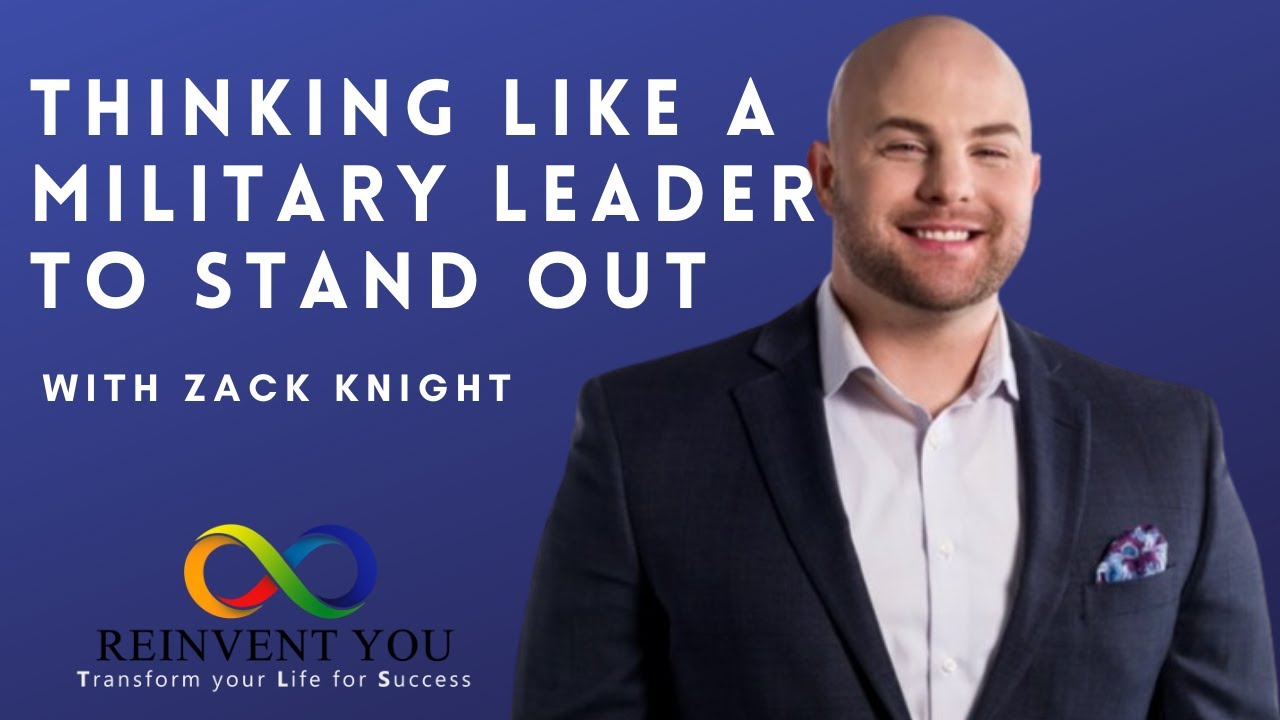
Zack Knight, a former Atlanta police officer and National Guard infantry officer, now runs six businesses including a security firm and women's self-defense nonprofit. He uses "ending with why" to align decisions and applies military tactics like B.A.T.T.L. and ready-aim-fire to leadership, emphasizing self-mastery and surrounding yourself with bigger-thinking people.
Chapters
You are listening to episode number 44 with Mr. Zach Knight, starting and ending with why.
If you're someone who wants to make major changes in their life, someone who wants to achieve their goals, or maybe you're someone who knows this is not as good as it gets, but you have no idea where to start, on the Reinvent You Podcast, we explore different types of people, of their successes and failures and how they reinvented themselves to create the life they love. It's our hope that from hearing their stories that you too may have more insight into what it takes to build a life that you envision for yourself. Here to help you do that is performance and life coach Travia Steward.
Happy Thursday, my peeps. And so I hope you guys are having a great start to 2021. By the time this episode drops, it's already March. And so time just flies by so quickly. And, you know, I, for one, like to feel like I'm doing the very best that I can to maximize the amount of time that we're given. And so as I reflect back on this great conversation I just had with Zach, you know, we, we delved into Zach's experience with him working with PD, the military, his leadership work, and that has an infused thread of his big why. And something that I got from Zach instantly was such a giving and kind, gentle giant. Zach gives his cell phone number on the interview. And so I'm like, man, what kind of person does that? What kind of person does that? It's a person who is selfless. It's a person who is genuinely here to help everyone get to where they want to go. And, you know, something that we talked about in the conversation was, you know, Simon Sinek has a book that, you know, did a TED Talk and everything on, you know, start with why. Zach's motto is end with why. And so it made me start thinking that I know what my purpose is here, to impact, to transform the lives of at least 1,000 people. But I've got to think bigger than that. And after having this conversation with Zach, I know that— I want to be bigger. Like, you know, Zach is doing all these, these crazy things, these crazy good things, you know, and every day is a new challenge. And so surrounding yourself with people like, like Zach Knight, who has 6 businesses, you know, and who's thriving and growing and who has a huge why that I can't wait for you to hear what that is. In summation, I guess the biggest insight that I got from my conversation with Zach, I must continually surround myself with people who are doing bigger things than what I'm doing, because that makes me strive to want to be better and better and better and do bigger and bigger and bigger things. So I hope you enjoyed this episode. I hope you take as much as I did from it and Here we go. And before we get started, here's a little bit about Zach Knight. His primary focus is supporting the why behind everything that people do. He guides people to aligning with their why through leadership tactics, content creation, and he started Knightly Productions to help clients get their why out in amazing ways. And also he started Be a Tactical Leader and the Tactical Leader Podcast in an effort to share lessons from business leaders, from business leaders, as well as his own lessons from the battlefield to the boardroom. His goal in the next year is to publish a book detailing all of these experiences titled The Legacy of Leadership. And on today's show, we are going to discuss his transition from the police, from the military, into a corporate environment, and owning his own business— businesses. Also his leadership journey. And then we are going to round that conversation out with ending with why. Zach, welcome to the show, my man. Zach, thank you so much for being a guest on the Reinvent You podcast. I am so excited about our conversation that we're going to dive into. So I just want to say welcome to my man, Zach.
I appreciate you having me. It is my pleasure and my honor to be here with you today.
Absolutely. So, Zach, before we get really into the juicy part of what Zach Knight does and what he represents, let's give the audience a little bit of context as to who Zach is, you know, just a little bit about his journey because we're going to dive further in, but just a bit of an intro.
Yeah, um, I was a homeschooled nerd for middle school and high school. A lot of people kind of think it's kind of funny, uh, knowing me now, but an introvert at heart because of those years of being mostly alone and that long-term or that virtual learning that I did. And I left— when I left high school, I knew I wanted to be a police officer, and I ended up becoming a police officer in Atlanta for— when I was 21, for about 7 years. My 2-week notice from there actually led me into the military.
Wow.
During the military years, I'm an infantry officer at this point. I did have a tour in 2019 in Afghanistan. Where we got attached to a special forces unit where I was the ground commander for a platoon of infantrymen, which was a whole different experience in itself. Then right now I'm back on orders. I'm getting promoted in the military to a captain. So I'm going through school right now down at Fort Benning, Georgia, in South Georgia. If anybody's been down here, you know how terrible it is. And beyond that, in the real world, I'm a National Guard guy. So really This is not my full-time job on a normal time. I am a weekender, thank the Lord. But beyond the military, I actually own 6 businesses of a varying nature and plenty of things to talk about there if you so care to. But keeps me busy. And also a podcaster like yourself. So I love podcasting. I love getting on podcasts and just talking way too much. It'll be a lot of fun.
Zach, this is crazy. You know, you joined the military, like, I mean, You're still in the military. This was 2 years ago. Well, 2019. I'm not even sure if it's 2 years yet, but you know, most people can't get, you know, up and do their 9 to 5. Here you are, police officer in Atlanta. Then you quit that in, well, I assume you gave your 2-week notice and then you joined the military. How on earth do you have time? And what does, what, what kind of tenacity does it take to build 6 businesses? Most people are just like, I can't even do one. But here you are with 6.
I think tenacity is a great word for it. I launched the first one actually, my journey through the military, I already had a 4-year degree. So when I joined the military, I joined in the officer world. I was enlisted for about 6 months as an E-4 specialist and then immediately went into officer school and got my commissioning that way. I'm down here at Fort Benning and It was actually during that time that I started my first business. I knew I didn't want to go back into the corporate world. The impact of being a police officer that I thought I would be able to have in serving the community— I was actually born and raised in Atlanta, so I was serving my community. The impact there was not the impact I wanted it to be. I think most of us that start in law enforcement do it for the right reasons, and most of us want to serve and give to the community. And I just saw that wasn't really a feasibility in the realm of Atlanta that I was in, unfortunately. So I knew I didn't want to go back there, and it really made me decide, like, what do I want to do? How can I make an impact? And a lot of what I have pushed towards— I think a lot of us know the book Start With Why with Simon Sinek, and I've kind of molded that and crafted that more into a legacy piece where I'm focused on ending with why. How am I going to end this journey, and what am I going to leave on the back end of it? So a large part of everything I do and the tenacity that I've gotten is because my why is driving me so hard every single day. That I don't even think about time, time management, too much to do, not enough time, whatever that looks like. Because my feet hit the floor and I keep going because I know at the end of the day what I do today is going to help me accomplish what I want to do tomorrow, which it helps me accomplish next year, right? It just keeps building and building. So really it's tenacity and it's, uh, I guess really being committed to that. But really you don't even think about it once you get in the habit of doing it, you know?
Right, right. How did you get to a point where you were able to leverage your why? Like, you know, most people, like, I know my why, I know what I'm destined on this earth to do. Um, for some reason I'm now comparing myself to you because I don't feel like, I mean, there are days when I go, remember your why, remember your why, why are you doing this? Okay. I don't feel like you do that. I feel like you, like it's ingrained in you. How did you get to that point to where it's just like, you know, you're a 7-day guy, 6 businesses, you know, your your why every second?
You know, it's funny. On the surface, yeah, sure. Probably, maybe seems like that. I don't see myself like that. My why is very short and concise. I am here to help those that can't or won't help themselves. And every one of my businesses feeds off that. My first business that I talked about goes back to the origin story of like the why, where it started like grinding on me, right? A few years before I started that business as a police officer,. I answered an audible alarm, routine. 95% are false alarms. You just go because, you know, the storm set off the alarm. This one happened to be an actual burglary. I went through with my partner, cleared the house. Nobody was in the house. You call the homeowner, "Hey, we need you to come back so you can tell us what's missing." You have to do the report, right? At the end of the day, a law enforcement officer's actual job is to respond and report. At the end of the day, like that's where the— that's where I felt like there was a missing piece there, right? I'm responding and I'm reporting and while I'm reporting this, they're going through and looking at my TV's gone, my laptop's gone, they're upset, they're victimized, they're in an upset mentality but overall, it's like that stuff, right? You can replace a TV, you can replace a laptop. Then all of a sudden, it is a young married couple, they're late 20s. All of a sudden, the young woman like freaks out and runs to the bedroom, like sprints to the bedroom like, "Oh, this isn't gonna be good." Whatever's happening. She goes in, she dumps over jewelry box and starts like going through all this stuff. And she starts searching for, come to find out, an heirloom ring from her grandmother who'd passed 2 weeks before. Priceless.
Yeah.
And couldn't find it because it was taken. It was gone. And she just starts bawling. And she looks up at me and she's like, "How do I keep this from ever happening again? How do I stop this from ever becoming an issue for myself, for my family? How do I never get victimized again?" As a police officer, because of the liability attached to you giving a recommendation, you cannot give that recommendation. You can't say this alarm system, this lock, because if it fails, well, you get yourself sued, you get the city sued, you get the police department sued. So you're literally told, don't make that recommendation because you don't have the authority, quote unquote, to do that. And that really grinded me hard. And my first business that I started is Knight Protection Services. It's still in business today. That business is designed to provide that answer. It's a security consulting firm that goes to residences and businesses that I will literally break down a security SWOT analysis, where your strengths, weaknesses, opportunities for crime to happen, and the threats that you're facing. And I'll break that down in a report and then I'll facilitate you accomplishing whatever I think is a great recommendation to keep you safe. If it doesn't work and you want to sue me, that's on me. But at the end of the day, it's called Knight Protection Services. I put my name on it. Right. And I feel like I have the confidence to put my name on something like that where I'm there to help you honorably and do what I can. My why is correlating directly with people that can't help themselves there to keep themselves safe. My firm does that, and I'm so proud of the work we do because our primary— 2020 being what it was— our primary schools and religious organizations, churches, that's who our primary focus is. And what's better than to protect people that are going to worship, people that want to go and serve in their capacity, and our children? And so proud of the work we do attached to that, how can I not get up every day and push further, further with that? Because my why is right there with it.
Wow. That's incredible. That's an incredible story. Holy smokes. So was this like, you know, she says this thing to you, how can I stop this from happening? How can I stop being a victim? Did the light bulb go off in your mind in that one moment? Or was this a repeat thing?
This was something that literally, this was in a street over from where I grew up playing T-ball. Literally in my backyard, right?
Right.
And it, it just bothered me. It was like a nagging feeling, like, man, this just isn't right. There's something about this. And I didn't have an answer for it for about 3 years. So literally years later before I ever came up with, what do I do about it, right? But it bugged me for so long, and I didn't even formulate— when I started that business, I never formulated my why as being wanting to help people that can't help themselves or aren't willing to help themselves.
Yeah.
I never formulated to that point. And over the years as I've learned more about that motivating factor, it's changed a little bit. I've massaged it a little bit. It's got a little bit deeper. But that overall meaning of my why— I call it the 7 layers, the 7 levels of why. You say, what's your why? Or why do you want to do this? That's not really going to be why you want to do it, right? You have to really get to that core of— if it's really deep enough and it's ingrained in you enough, like you were talking about, it becomes habit. And Something you said, it's actually funny and the audience won't see it, but I'll show you. I have RYW tattooed on my left wrist.
Okay.
Remember your why. Because there are times where I don't remember my why. And I actually got— I'm so— I'm covered in tattoos, right? But that one is one of the most important to me because there are days I forget that. There are days that, you know, I have injuries from the military and the deployment where I have really, really bad days. Really bad days. But Everybody needs that reminder occasionally, and we can go into that all you want. I am very open and vulnerable about those experiences, but at the end of the day, I have to look back and say it's bigger than me, right?
Absolutely.
Helping people that can't help themselves is bigger than, man, I'm having a bad day, right? So the next day I'm up and I'm at it again. And having it that ingrained, because it's that personal of a situation for me my why is so tied to that. It's no longer a question. It's like, what else is there to do? Right. There's no choice for me anymore. So I have to continue down that journey.
Right. Okay. Thank you. Thank you so much for sharing that. You know, now I'm thinking I have all these things formulating in my mind because I, you know, some places I want to go, but I have to go to your time as an Atlanta police officer. You know, because the second you said Atlanta, like you could have said, you know, lots of other places, St. Louis. But when you said Atlanta, of course I think about the volatile things that are happening in Atlanta. What's your take? You know, if you were still a police officer right now in a place like Atlanta that has, you know, some of the issues that we see on the news, you know, where people want to defund the police, all these things, you know, And it's like, you know, I have some people who feel like they have to be on either side. Like you either love the police or you hate the police, you know, that kind of thing. What's your take on the situation, the status as to what's happening right now with the police department?
There's a reason I'm no longer there. Got it. That should be indicative plenty. And I will try to stay as PC as I can. I'm not a very PC person because I like to speak bluntly and I, you ask my opinion on something, I'm gonna give it because that's what I believe. Um, in Atlanta, especially the area I worked, the demographics were varying. There were Blacks, there were Hispanics, there were whites. I mean, it's just my backyard. I grew up with more Blacks in my, in my friends group than I did whites or Hispanics. So like, I, I didn't know any different because the culture in Atlanta is so diverse as it is. And those same people and this is part of where I hated the culture of policing. The same people I grew up playing T-ball with, when I pulled them over not knowing who it was, were the same people that are spitting on me, calling me a white pig because I'm wearing a uniform, right? And it bothered me personally because they knew me as a person. But what really got me is my wife is a black female that was also a police officer. Her job was actually public information. She went into neighborhoods to kind of help bridge that gap, right? How do we work together with the community? When she started getting called a traitor to her people because she's a Black cop, and to me it's so unfortunate. A month or two after Ferguson, when the initial formation of BLM started, we had an incident. I was on the SWAT team. We had an incident where we ended up A Black male tried to run over a fellow police officer. Our SWAT team ended up killing the guy as he stole a Maserati, tried to run over one of our police officers, shot and killed him. The BLM leadership came to the area— Black Panthers, Jesse Jackson, you name it. I had the fortune to meet everybody attached to that, right? I'm a huge supporter of the BLM foundational purpose behind— the people that started BLM have such an amazing purpose behind that organization. And it's been twisted by people that aren't even really involved in BLM by that purpose. And I hate seeing that. And to like, to really get back to the core of the question, as a police officer, I felt so helpless because I was there when all of that started and I wanted to bridge that gap because I was white. I was instantly— I'm a bald white guy. I look like military. I look like a cop. And people that know me in that community They knew where I lived. They— we had people at our house that would randomly show up to my house. Our addresses are public. Like, it became such a, an unfortunate situation where like, this— I'm part of this community, I'm serving this community, but because this is the culture towards law enforcement right now, not just a white guy but also a Black female, my wife, like, how can I continue to make an impact? I'm literally here to serve and do what I can, but I can't do it because of the culture right now. And a lot of that was propagated by the leadership of law enforcement, right? Defunding is not the issue. I don't think that's concerned. I think we need to look past the symptoms of poor training. Defunding is going to take away what's already very, very minimal training. Maybe, maybe 40 hours a year of required training, maybe. Now, it's gone up in the last couple years but if you start defunding, you're never going to get diversity training. You're never going to get proper use of force training. All these issues you start seeing. Well, there's a lot of training that has to happen for your reaction that happens in a split second to not be choke a guy, right? Because at the end of the day, I had to fight for my life a couple times. I got in some really bad fights. I never personally killed anybody attached to anything I did, but when things start escalating, you're like in a fight for your life. What choice do you have if your training is not at the capacity to do what needs to be done to keep both you and the individual safe. So by defunding, they're never going to get that training and you're going to see a slide in law enforcement capabilities, I believe, where really the, the spend budget on training needs to be doubled with an actual training standard. There's no standard from Atlanta to Baltimore to Minneapolis. There's no standard across the nation. It's all different. So each department operates different, each one trains differently, To me, that's a problem. So I can't look at Baltimore and say, y'all are doing things wrong, but here in Atlanta we're doing it right, because it's different. It's like, how do you say— how do you point a finger when you don't have the capability to actually set that standard of, this is our expectation, right, of how you should be trained? And it turns into like an industry where like, I couldn't— I couldn't serve anymore, and I can't operate like that. If I can't do my job and do the things I'm passionate about, about giving back to that community, I'm not doing any good for the community at that point. So why should I still be there?
Yeah.
I get really long-winded. You make that make so much sense to me.
No, I get it. So why was the military the very next step after the police force?
I refused to give up the opportunity to serve, and I wanted to serve on a larger scale. Mm-hmm. And it's twofold. I wanted to serve the country. I remember 9/11. I remember where I was, 8th grade in a bowling alley when everything happened, right? There's still a level of that desire to serve in that capacity, but also it's one of the greatest tests of leadership. I'm fascinated by leadership, the art of leadership. Like, how do you actually apply the science behind it, right? And my podcast is called Tactical Leadership. What are the tactics behind actually being a good leader? Right? And a capacity of not just serving the country but serving 18, 19, 20-year-olds in a combat zone as their leader and getting them safely home. Right. And I took 35 guys. Of those 35, about 15 were 20 or younger. And I was literally the leader of those guys. If I can say 2 words under gunfire and people don't question it, they just respond, What greater test of leadership is there? And if I can serve them in that capacity to bring them home, what better capability, what better environment to really see, am I a good leader? Should I be in this leadership realm? Do I need to learn more? Yeah, I need to learn a lot more. And it turned into like, I could serve on both capacities. I could still train, I could still mentor, I could still give back to the community and these younger folks that I got in at 28. So I was already an old man at that point, right? Getting in that young, that old. But it just is a capacity to serve. I wanted to continue to give back and that the journey of the military has been honestly the most rewarding thing I've done in my life.
Yeah.
Wouldn't take it back. The rough times, the injuries, all of that, like wouldn't take it back because it's been so rewarding in the long run.
Got it. Okay. I just have one more question on this subject. It's just, it's burning inside of me. I try my best to, be PC a lot of times, but I'm just so curious. You're a military guy. You believe in the Black Lives Matter cause. What is your stance on taking a knee? Like, is that too much? I know, I know, because you're wearing so many hats here. Taking a knee before the game, Colin Kaepernick, all that. I mean, because you're both sides here.
I, I am. Um, I respect Colin Kaepernick for taking the action. It took a lot of courage for that man to do what he did and then stand by it, right? Right. It's not like he did it and said, oh man, I shouldn't have done that because it ruined my career, or because I became a, a toxic leader in the locker room, which unfortunately he turned into a toxic individual in a locker room. Not by his doing, but by the people around him, right? They saw him as toxic and he couldn't overcome that. Yeah. Um, so I respect him for taking a courageous act. I think he did it wrong. Um, I think there was a better way he could have done it. I think he was very inflammatory about it in the long run, right? I think by starting that, it could have— because you, you look back at, um, I forget his name, but he was the Broncos quarterback for a little while. That always took a knee to pray, um, white guy, Tim Tebow. Tebow, Tebow, thank you. Um, he took a knee, no different, right? I think it's really unfair that you point a finger— his beliefs are okay, but Kaepernick's beliefs are not okay, and they both took knees. I think it's really unfair, and there's a double standard there. However, I think Kaepernick could have gone back and been like, hey man, this is my intent. He did it once, he did it once. He actually spoke his intent by why he did it. He said he did it out of respect. For those that served, and he got so overwhelmed by emotion he took that knee because he was so filled with emotion for the patriotic piece of things. And I think he didn't stand by that enough as the story, because really the intent behind it was honorable.
Yeah.
But I think mainstream media took it— people that are against, you know, the Every Lives Matter stance of things, I think took it and, and molded it in a way that is unfair to what Kaepernick did. I personally don't like it because of my military background, right? Um, the, the way it turned out— the initial, awesome, amazing— and then it kind of got distorted past the actual purpose of what he did it for. Yeah. And people turned it, oh, that's disrespectful to the military. I served so that you could do that. I served so that if Kaepernick wants to take a knee, bro, it's on you because that's your belief, right? That's literally why I serve. I'm not serving so you have to stand. Like, what kind of person would I be if I'm like, nah, man, you, you gotta stand up, that ain't cool. I don't like it, but because I don't like it doesn't mean you have to do what I like. Yeah, like, at the end of the day, right? So like, literally why I served was so you could do free will, right?
Right.
I serve for your freedoms. Well, that's your freedom to do that. So if that's how you feel like you can best put forth, then by all means, man, do it. I just wish he would have continued along the journey and articulated it well, maybe gotten a really good PR person that could have said, this is how you really make an impact, right? Because unfortunately he got, he got stomped out at that point where he wasn't able to continue the impact that he should have been able to make.
Right. Oh my God. That was some powerful stuff in there, Zach. My goodness. So, you know, you're just so many layers deep here. What do you think in your military training and your police training has basically paved the way for your tactical leadership, what you're doing right now, the man you are today?
I think it turned from— I couldn't get out of my own way. I think a lot of us, a lot of leaders, a lot of young leaders have this issue. We're in the police force. A lot of them are former military, right? And I didn't understand, me not being military at that time, I didn't understand how my attitude as a millennial held me back. My arrogance, my "I deserve it now" mentality.
Yeah.
I thought— and a perfect example, serving a warrant and my sergeant walks by. There's a giant oak tree, a beautiful oak tree to my left, and I'm about 3 feet to the right. And it's a known drug house. I work on the narcotics side of things. There's a known drug house, known weapons. And instead of sitting behind the tree where there's beautiful cover and I won't get shot, I'm 3 feet to the right of the tree like, la-di-da. And this guy walks by, the sergeant, Marine Corps, walks by and he says, hey, excuse my language if you have to bleep it out, hey dumbass, why don't you get behind the tree?
Right?
I'm like, I was like, fuck you, Sarge, literally what I said.
Yeah.
As a young and dumb 22-year-old. And That response, he never said anything about it. He never held it against me. But that response put a chip on my shoulder towards that guy. He was trying to help me, trying to keep me safe, keep me alive. But the way he delivered it, I was not willing to receive that message, right? And communication is all about not only delivering the message in a way that the recipient will respond to it, but as a listener, I have to be willing to receive the message no matter how you deliver it, right? Two-way street.. And it turned into for years, I had that same issue. I don't like how you said that to me. I was told if I smiled more, literally was told by a captain, if I smiled more and all my productivity dropped off, I'd be a better police officer. I'm like, that's just wrong. Like I'm over here making numbers. I'm doing great things, making arrests, getting bad people off the street. And you want me to smile more? Like that doesn't make sense. And I was just a terrible employee. I was a terrible teammate.
Right.
Never made sense to me why I couldn't get that promotion or I couldn't get the specialty position I really wanted. And it became a journey of like, why, right? Why am I in my way so much? Why can't I get— a lot of my journey now is about self-mastery. How do I get myself under control to get out of my own way? And it, without meaning to, it turned into a path of learning more about leadership, being on a journey of what is leadership, how do you apply leadership, how do you be a great leader, how do you be a tactical leader. And how do you do it with yourself? Because I think that's the biggest struggle in leadership is really leading yourself. Leading others is a lot easier than leading yourself and having that, that capability to transform your life for success. Obviously something you're really passionate about. You can't do that until you really have that control of yourself.
Yeah. Wow. So something you said earlier when you were talking about, you know, how like the motive, part of the motivation for starting your security company, you said you want to help people. And part of that is that that you said you want to also help people who don't help themselves, you know? And so, and I was a teacher for 24 years, and as a coach, I go, you got to show up half the way, you know, 50%, you got to show up and you got to help yourself. But here you are, it's like, I want to help people who don't help themselves. Where does that come from?
You know, it's, there are people that can't because they don't have the capability, right? They just don't have the know-how. They don't have the knowledge. They don't have whatever it is at this point to actually accomplish. Then there are the people that are just unwilling, right? They're stubborn. They're me at 22, right? And they don't want the help or they play the victim so much. They let that take over their mindset and "I deserve this to happen to me. Things happen to me, not for me" mindset. My security firm, We served churches and schools. Well, we tanked pretty hard in COVID when people didn't go to church and school anymore, right? That happened. That didn't happen to me, that happened for me, because thankfully when I was deployed in 2019, I learned how to really operate a very streamlined business with me not involved. So that security firm has managed to survive a deployment, managed to survive COVID, because I learned. Things happened for me to learn. There's learning opportunities attached to. And a big piece of that is people are unwilling to help themselves. One of the businesses is a nonprofit called Surviving to Thriving that my wife and I run. She's— don't mess with her— 5'2" and a nationally certified women's self-defense instructor that will check me. I'm 100 pounds heavier than her and I will not mess with her. But our passion, that's our purpose behind a lot of what we do. It's our purpose partner in a lot of what we work on. What's the purpose? How are you giving back again? How are you serving? Well, a lot of domestic violence victims, they're merely surviving in life. And the whole mission behind that business is how do you go from surviving to thriving, which is why we named it that. Well, a lot of survivors that are just surviving and just barely making it are unwilling to help themselves until they realize there's a path. A lot of people I think that aren't willing don't realize there is an option here, right? And for me, it turns into I just have to be able to present that option again, communicate that option in a way that you understand it's a viable option for you, right? And with— especially with that, it's a lot of women think that they deserve to be beat on, they deserve to get slapped across the face when they say the wrong thing, because that's just how— how either they saw it from their parents, or they don't have the level of self-worth to realize you don't deserve that. And our headlining program, that women's self-defense, goes from a 10-hour block on mindset talking about, you know, how to not get victimized again, how do you get past the trauma that you went through, all the way through a full padded suit combative course that is essentially Krav Maga. If nobody knows what the Israeli martial art is, it's very, very violent, which is why I won't mess with Heather. But it literally goes on full level combatives where we have the women show up in full padded suits and we have a person that will literally attempt to assault them in a full padded suit and you go full-on combatives and we teach the women, this is the path where you can actually not just survive a situation, you can thrive and get away from this attacker, this assaulter. And once you show them that here's the path how you can actually thrive, I think people go from being unwilling to help themselves to realize I'm actually capable I can do this. And I think it's our job as coaches, as consultants, you know, we have to teach people this is the journey that you actually can go on, you know?
Right, right. Wow. So you've mentioned 2 out of your 6, right? You have the nonprofit, you have the security business. What are the other 4?
All right, you're gonna laugh. You're gonna laugh so hard. Um, so The third one is a real estate holdings firm. We buy small 30-door or so apartment complexes that house women going through our program. In order to have housing with us, you have to attend our programs. So we do lifestyle learning, we do self-defense. The security firm, we put an off-duty police officer, we give them a free apartment in this complex. The security firm does all the security around it. We make it a fortified living situation where those individuals realize they— this is a safe place for you. So those three feed off each other really well.
Yeah.
Um, so that's three. The fourth one is Knightly Productions. It is a production company that does audio, video, um, for podcasters, YouTubers, really post-production. Um, that was started in COVID because of the fifth business, which is an international dance competition.
Holy shit! What?
This is, this is where you're gonna make fun.
Um, No, I'm going to your thing.
I know you're talking about the summit. The summit. We'll talk about the summit in a second.
Okay.
Okay. So the dance competition, um, in the first 7 months we grew it to— we now have 135 countries streaming from our website.
Yeah.
Um, a buddy of mine we met in a mastermind, he's honestly a great friend, Jesse Smith. Um, he used to dance with Rihanna, Justin Timberlake, got screwed over really bad in Hollywood, ended up with a million-dollar LA I ended up with a million-dollar debt and was on the other side of a railing on a bridge. Literally jumped. Somebody grabbed him, saved his life. And he now has turned that back into we help creatives turn their passion into a profit because that's a journey of a creative. And it's really unfortunate that people across the world don't have the capability to come to the United States to perform on American Idol, perform on World of Dance. With our show, you need a cell phone, 2G Wi-Fi, You record yourself on this competition. Then the production company cleans it up and we create an audition reel for you. In week 3, we had Angelo from South Africa on the show. By week 6, he was signed to Universal and 10x'd his revenue and opened 2 dance studios in South Africa. The impact attached to that is we now have Angelo in South Africa and the nonprofit Surviving to Thriving is the purpose partner of the dance challenge. So everywhere the dance challenge goes, 135 countries, there's now a domestic violence resource going along with it, educating people about the value of defending yourself.
Yeah.
The sixth business is My Creative District. That's who's hosting the summit here on the 10th. Um, My Creative District is essentially the talent development firm we started over the top that helps people like Angelo take that audition reel and put it in the places and create— the summit's called Create Your Big Break. You know, create your own yes? How do you not rely on Hollywood, people that don't have your best interests in mind? How do you, again, helping people that can't help themselves quite yet, how do you take this stuff you're already doing, create your own big break, create your own yes, create your own success, and then not rely on somebody else? So as I kind of talk through that, my whys interlaced across all of that. Jesse, the business partner, did not have the capability to operate and structure a business of that magnitude. Well, that's my specialty. I love operations. Well, I didn't have the capability to meet one of our clients, Lady Gaga's choreographer. I didn't have the capability to meet him, but Jessie did. Right? So you start creating a partnership where my why really aligns with what Jessie wants to do with these dancers. Then we were able to align the nonprofit attached to that where now we have domestic violence awareness coming across the entire world and parts of the world where It's just culture that women get whatever happening to them. And now we have awareness going across. And again, that why, when you have things like this in place and my why is really backed into all of it, why would I not get up in the morning and remember my why? Right? What— going back to that initial, like, what keeps me going, that and my why being attached to every one of those things. Every one of my clients is the same way. One of my first questions if I intake a client, what's your why? Why are you doing this? 7 whys later, as we get to the true reasoning, you know, my— one of my clients, my son has a disability. He will never be able to work for himself. I want to create generational wealth where my kids never have to worry about supporting their brother. That's a deep why that will always keep you motivated to take that next step. Well, that correlates with— they don't have the capability, they can't help themselves. Well, now the production company can help them with what they're doing. So, if you correlate your why with those whys and it just becomes a whole bunch of why are we doing this together and it makes sense, the success just keeps growing from there. And again, we all get up out of bed in the morning ready to go.
Wow. So, two questions. So, when these things are presented to you, you know, or maybe you go out and find them, you know, because most people are like, you know, I want, I know you have a common thread of a common why here. But do, how much of a decision is made between, does this align with my present business? Does this align with my goal? Like outside of your why, does this align with my goal of Knightly Productions, of the security firm? How much thought is given to that? That's the first one.
Honestly, I've made really good decisions in business and really bad decision in business to reinforce my why. Because I know if it doesn't align— and I always go back to that— if it doesn't align, I'm not going to be passionate about it.
Yeah.
I'm not going to make them a success, which means I'm not going to be a success. I don't succeed unless you succeed. So realizing that, you know, I, I have to maintain that. And as soon as I aligned myself, so many things align once you figure that out and you have that direct path, right? So looking at business goals, life goals, it goes back to life goals. I talked about ending with why. My favorite question on my show is like, what's the legacy you want to leave on the world?
Yes.
Well, my legacy turns back into my why. And it's not about my name. My name is attached to several things because again, if my name's on it, you know I'm bringing my best self. But what's happening past that? Surviving to Thriving doesn't have my name on it. We want that to be the Susan G. Komen of the domestic violence world. That's a lasting impact. When I'm gone, cool! There's still gonna be women's self-defense taught across the world because of Surviving to Thriving. That's a legacy to leave, right? It's not about my name. It's not about me, but when that's the driving force of like, by the time I'm dead and gone, women are gonna better be prepared to not be victimized, I'm gonna keep getting up every single day align every decision I make with how do I accomplish that goal? Right.
Got it.
That's the legacy I want to leave.
Absolutely. And then the second part of that, how do you know when it is a good decision to jump and make? You know, because so many people spend their time, me included, in analysis paralysis. I don't know if this is a good— how do you make the decision that this is an opportunity worth jumping for?
So I love taking lessons from the battlefield to the boardroom. My coaching side of things on the podcast is that it's an acronym. The military loves acronyms. So I came up with an acronym. Be a Tactical Leader is B.A.T.T.L. So I take lessons from the battle, B.A.T.T.L., field to the boardroom. And one of the concepts I've developed is the old adage of ready, aim, fire, right? Get ready, you set your sights on something, and then you shoot your shot. I flip that a little bit. I get ready, I'm ready, I'm open, I'm available, right? I'm showing up available for whatever opportunity presents itself, whatever learning opportunity presents itself. And I see an opportunity. You have to be up, you have to be available to see it, right? You set your sights on it, you get ready for that opportunity. Well, I fire. I don't aim, I fire. You start taking action. If you take mass action, the universe loves speed, the universe loves audacity. And if you can take that mass action, you can always pivot and keep pivoting. If you start something and you get ready, you fire, you shoot your shot, and then you aim it a little by a little, things like COVID become a non-issue because you're used to pivoting, you're used to shifting. You're not dead set on, well, I aimed and I'm ready to go down this one direct path. Well, you lose everything around you. Put your blinders on when you do that. So if you can shoot your shot and realize you're gonna have to pivot as an entrepreneur You're gonna have to pivot in life because you're gonna get dealt life. Things are gonna happen for you, right? So you realize, I'm gonna have to keep pivoting forever, so I'm not gonna set my sight that one direction. I'm gonna keep shifting and be ready to shift. COVID becomes a non-factor. Business failures aren't really failures, it's your first attempt in learning— another lovely acronym I love. And if you can keep that mindset of learning, and I'm shooting, and I'm pivoting, and I can keep adjusting that then you're not scared to make that decision. Cause you know, at the end of the day, if your heart's there, I'll make that decision. I know I'm going to keep pivoting it until it works really well for me.
Got it. Got it. So I have no idea. I feel like with all the things that you're doing, that your days are actually 72-hour days compared to our 24. How on earth do you prioritize these things? How, what is your method to getting, you know, to the madness here? That you're successful every single day, how do you prioritize what to work on?
Ooh. First and foremost, I prioritize myself. I am very selfish with my time. And you can ask very many people around that. It might sound really awful, but until you can respect yourself and love yourself enough to realize you are the most important person to yourself, right?
Yeah.
So every morning I start my day, 3 things I'm grateful for that day. They may, they may be different from yesterday, may be the same today, but I write them on my mirror so I see it every morning. So what am I grateful for today? I've got a bottle of water sitting here, I've got some hot tea, and I'm having a great conversation. I'm grateful for that.
Nice.
And it immediately goes from that to the gym. Every single day I get my mind right with what am I grateful for, then I get my body right and I go to the gym every— if I miss the gym, if something happens, for some reason— I'm in school right now, I had to show up at 6 AM the other day and I missed the gym, my entire day was screwed. Yeah, well, you know, the, the— I have a full-time job with the military right now, so like, if my day, if my schedule isn't set aside like that, I literally— if it's date night, well, you better schedule that with me because I have my time protected enough where If we have something scheduled, it's gonna happen. I'm gonna show up, I'm gonna show up available.
Yeah.
We don't have something scheduled, uh, because I'm really protective of that time. And that's how I prioritize, right? I set out sides on my— I have a whiteboard right above me right here. Today's steps towards why. And I write down my to-do list and I go through and like, all right, how do I accomplish my why today to get to my why tomorrow?
Yeah.
And I'm so protective of that time because that's the one thing you can buy more time. You can buy a jet to get across the country faster. Right? But you will never get time back. And I talk about those lessons from the battlefield. That perspective shifted in Afghanistan when I saw the true value of time and not having any left. When we started losing guys, and those are the guys that are 2 months removed from getting out of the military, and he just left a wife and 3 kids, and he was only 26 years old. The value of time changes in your mind. And realizing if I love myself, I respect my own time and I respect other people's time. I show up ready. I show up on time for myself and for other people. You start prioritizing in that fashion. And again, at the end of the day, you prioritize yourself first. If you need a day off, trust me, I will schedule a day off. I watched the Super Bowl. Hell of a game yesterday, right? And I watched it. I hate Tom Brady, I hate the Tampa Bay Bucs, but I watched it because I wanted to prioritize myself as I know I would enjoy watching that game, right?
Yeah.
And to me, that's how I prioritize, is like that value of time. When you can value time to that capacity where I get really upset if somebody wastes my time, show up 10 minutes late to a meeting with me, you're gonna hear about it because it's a lack of respect. But you better believe I'm on time. For us every time, because I'm going to show up and I'm going to show up ready to rock, right? And that's how you prioritize, is like, if you know it's on your schedule and it's that important to you that you're willing to put it on your schedule, then it's no longer a priority. It's like, it's just, that's your day, and that's how you go through things where it just keeps going along that path, right?
So energy-wise, health-wise, nutrition-wise, like, there's some superfood Popeye's eating, a spinach, like What is that thing? Because I'm telling you all the stuff that you're doing, I'm going, shit, that's a lot. You got nightly productions. I don't know when you're helping people with their podcast. I don't know when you're coaching people. You're in school, you're in full-time in the military. I mean, you're doing all these things. How do you maintain the energy to do these things?
Um, I wish there was a superfood. Pre-workout is important to me. Caffeine, I love!
I love caffeine too!
You know, it's funny! I don't think about it. I don't give myself the excuse of saying I don't have the energy to do this today. I completed about 3/4 of my MBA in Afghanistan while we ran operations every 4 days because I prioritized again my time. If I have 2 hours here, well, I'm going to write 10 pages of the paper that I have due this weekend. Because I'm prioritizing. Again, that 2 hours is valuable to me because I know if I don't accomplish something in my personal life when I get back from Afghanistan, there's not gonna be anything really there for me if I don't keep that motivation up. So it doesn't turn into, I don't have the energy to do this today. It turns into my why. Again, I'm gonna use it every single day. That's my energy, right? That's what I go back to. Pre-workout in the morning because I just love my pre-workout. I love the tingles and the itches, right? Your face. But it Oh, I love it. I love it. But again, it turns into like, I don't, I don't necessarily think about how do I get energy today? Because it's like, I'm so motivated to go accomplish my why, then we're going to keep on rolling.
OK, I like that. I like that. So, Zach, how can people work with you? What are the ways like when we want to, you know, I'm going to have all your information in the show notes. How can people work with, with Zach? Because, you know, I mean, you're so deep here. You have so much experience on so many different levels. And I just love your passion. It's, you know, why you make— I've already examined my why, but you're going to make me journal about that in the morning because I'm like, let me make sure I'm aligned. So how can people get a little bit of what you're throwing out here?
Keep journaling. I love that, by the way. Sorry, sidebar. No, you know, the best way to reach out to me, my phone numbers all across. I'll even throw it out here. 404-771-9368. Shoot me a text because I usually have it silenced so I can focus on what I'm working on. Shoot me a text. You can find me across social media, Zach A. Knight, or the tactical leadership side, it's Be A Tactical Leader across all social media. The podcast, everything falls under that. Reach out to me. I monitor all the emails, all the social medias. That my— literally, that's my cell phone number. Reach out to me. I'm here for a great conversation. I'm here to have a have any type of fun convo like this. And then of course, keep listening to this podcast because I expect there to be lots of good times between us.
Absolutely. And so just to wrap up, what's your next big thing? I feel like, you know, you got it. You've already done all this stuff. There's got to be something else that's on the horizon. What is that thing for Zach?
Um, people are going to laugh because I've already been told I'm crazy for this. Um, I finished my MBA in August, and I said I would never— I said I'd never go to college. Got my MBA— I got my bachelor's. I'm like, you know, it'd be interesting to get an MBA. I'm interested in that. I went and got my MBA. I'll never go to school again. Here I'm now in school with the military. Yeah. And last month I started researching schools for my doctorate, and I want to get a doctorate in leadership, organizational leadership, something along the leadership journey, so I can write a really extensive concept, conceptual paper on leadership. So I'm hoping by Q3 I'm enrolled somewhere. My goal is Q3 to enroll and get a PhD or get a doctorate in some sort of leadership. And I think I'm really crazy and I think it's a really bad idea, but it kind of— those types of challenges, you know, that's a big old audacious goal for a homeschooled kid back from little Smyrna next to Atlanta, you know. So Yeah, that's the next big one. We're going to take it one bite at a time.
Okay. Wow. Well, thank you so much for sharing everything that you shared with us today, Zach. Um, you know, I feel like I'm going to leave everything in the show notes and what you do coaching as well though, right? I know you do. You work with— who are the people that you work with? So the audience is like, cause I still have questions about that. So who are the— how do you work with people?
I really focus on— I love launching things. I like structure, structuring things, foundational pieces. You know, if you want to launch a podcast, I'm all about like taking it and making it tactical. If you have a business, entrepreneurs, you're like, I don't really know that 5-meter target, but I have this 300-meter vision. That's what Jesse was. He knew he wanted to get back to dancers, but he didn't know how to start that first thing. I'm really good at that 5-meter target. I can really break down your big thing, backward plan it. All right, here's your first step. Let's do this. That's who I love working with. I really enjoy, again, taking that first step with you and then being along for the ride because it's a blast.
I love watching it grow. Yeah. So, somebody can come to you with an idea and you can run with it after that?
As best as I can. Absolutely.
Okay. Perfect. Perfect. All right. Well, there we go. I think I'm full now. So, I I feel like I'm complete. Thank you so much, Zach, for being on the Reinvent U podcast. I love everything that you shared with us, and you are— you're quite a multi-layered guy who has a lot of stuff on his resume already.
I'm like an onion. You just keep peeling layers back and it gets stinkier and stinkier. Something— I don't know, there's some Shrek reference there.
Yeah, yeah, yeah.
But I love that. No, I, I appreciate you having me today. This has been a blast, and, uh, hopefully brought some good value to the audience.
Absolutely. If you're finding value in these podcast episodes, in these videos that I upload to YouTube, I would love it if you'd go to Apple Podcasts and leave a 5-star review. It helps other people find the podcast, and it also helps me to know that I'm on the right path. And so thank you so much for listening. If you would like some one-on-one coaching, my link is in the bottom of the show notes. Feel free to click it. It takes you directly to my my contact form and let's have a free conversation of how I could help you reinvent you and transform your life for success.
More from Travia









Remember the YOU Who Didn't Overthink Everything #personalgroth #mindset #selfdoubt

