EP 49: Don’t hide your pain, use it to Reinvent Yourself with Laurie Hardie
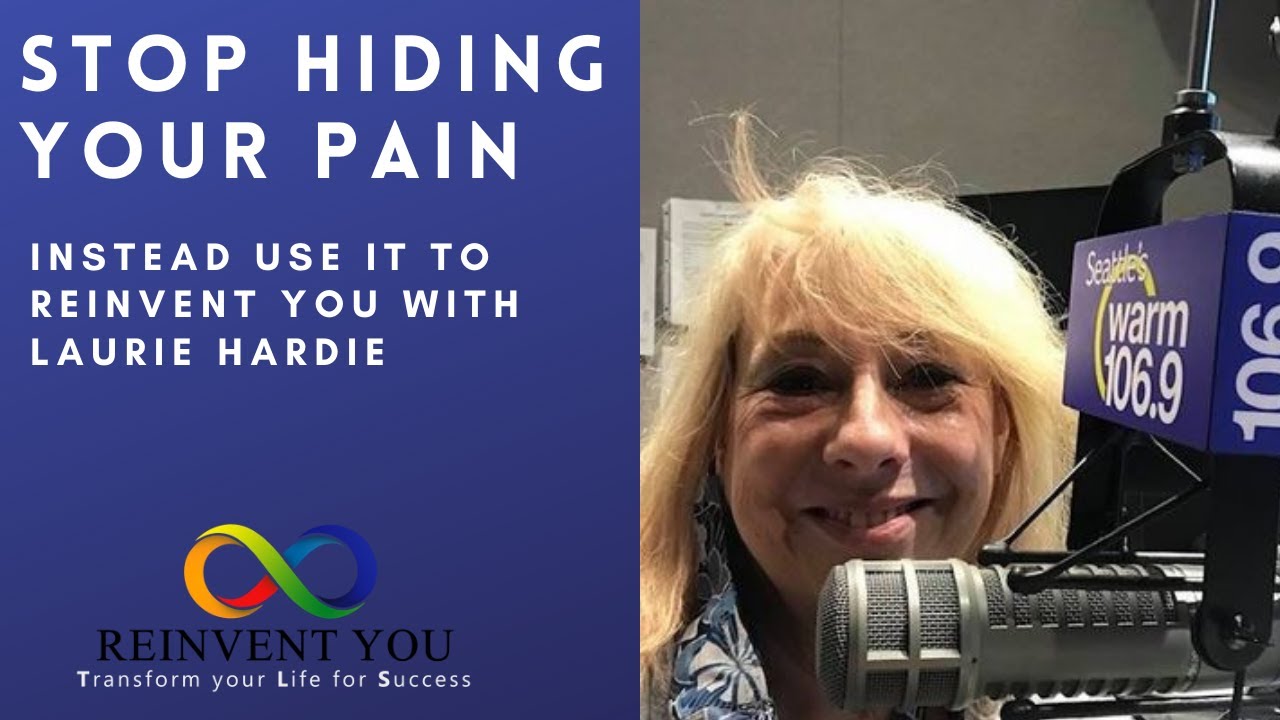
In this episode of the Reinvent You Podcast, host performance and life coach Travia Steward interviews Laurie (Lori) Hardie, a veteran life coach, author, radio host, podcaster, and foster‑grandmother. The conversation weaves through Laurie’s personal reinvention story—leaving an unhappy marriage, raising foster grandchildren, returning to school, and building a multifaceted career. They discuss the transformative power of coaching, especially during the pandemic, and critique common coaching misconceptions (e.g., the word “should”). Laurie shares practical frameworks: replacing “should/need” with curiosity, using tiny habits instead of audacious resolutions, and the neuro‑linguistic technique of rewriting self‑talk. They explore legacy‑building tools such as the “grandpod” (short audio stories for grandchildren) and Laurie’s 10‑week certification program that equips participants to become certified coaches, launch a podcast, and finish a book. The episode also highlights Laurie’s book Did Not See That Coming and her philosophy that listening, boundary‑setting, and language shape brain pathways, enabling people to reinvent themselves at any age. The dialogue ends with actionable resources, calls to action for reviews, and a shared vision of impacting 100,000 lives.
Chapters
You are listening to episode number 49 with Laurie Hardy. If you're someone who wants to make major changes in their life, someone who wants to achieve their goals, or maybe you're someone who knows this is not as good as it gets but you have no idea where to start, on the Reinvent You Podcast, we explore different types of people, their successes and failures, and how they reinvented themselves to create the life they love. It's our hope that from hearing their stories that you too may have more insight into what it takes to build a life that you envision for yourself. Here to help you do that is performance and life coach Travia Steward. Okay guys, it's review time. I had another review that came in. It just brings me so much joy in my heart to read these. This review is from Joel in Arizona and Joe says, So positive and energetic. It's great to experience this podcast. Gave me lots of gems to reflect on. Time well spent. Thank you so much, Joel in Arizona. My guest today on the podcast, on the Reinvent You Podcast, is a fellow coach, a fellow podcaster, Lori Hardy. She is also the author. She's an afternoon radio co-host. And in her 20 years as a life coach, Lori has learned a very valuable lesson from her clients that many of us think that we're not good enough, which makes it tough to pursue our dreams. Enough is the name of her podcast. And in life, her goal is to encourage people to discover their purpose, make an impact, and also leave a legacy, maybe even start a movement. She is also the grandmother of 4 foster kids. The show— on the show today, we discuss how it's not as hard as you think to reinvent yourself at any age on any day, right? We also discuss the importance of coaching during this time, especially during the pandemic. And then we follow up with the importance of leaving a legacy, among many other valuable things that I learned from having the conversation with Lori today. So let's get into it. All right, ladies and gentlemen, my guest today, as you've just heard me introduce her, is— she's an author, she's a speaker, she's a coach, she's a radio host. Joining me today is Coach Lori Hardy. Lori, how's it going today? Thank you for joining us on the Reinvent You Podcast. And I just welcome— glad to have you today.
Travia, thanks for having me. And I live in the Pacific Northwest, and it's been very rainy, and today is sunny, and I'm looking out at the sun. So it is a good day.
That's because you're talking to an Arizonan. I'm giving you some of that sun.
Love it. Thank you.
Absolutely. Absolutely. So Lori, to begin with, you know, I always like to start off giving my audience a little bit of context as to who Lori is, a little bit of your journey, because I know you have a reinvention story. So just who is Lori and, and what makes her magnificent and fantastic today?
I'm a friend, I'm a mom, I'm a grandma, and I have 3 foster-adopt grandkids, which With coaching, we talk a lot about trauma, and foster kids come with trauma, and most of it, nobody knows what it is. And so that has been really, for me, exciting and challenging because I think so many people, what stops them, what gets in their way is childhood things that they don't even recognize. So, that is why being a parent is so important to me. I love my radio job. I love being on the air. I love podcasting, but most of all, I love teaching coaching. If we had a world of everybody knowing coaching skills and they listened better, we would be living in a very different world.
Right. Very perfect. Perfect. How did you get into this work? You know, some of us stumble into it sometimes. You know, we're like, oh, I need help. And then we're like, that was life-changing. I want to do what you just did for me. What is your background as to getting into coaching?
When I started coaching, it was in 1998, and people thought it was woo-woo. They thought it was new age. I had thought about becoming a counselor, but as a mom of young children, I didn't want to be bringing home a lot of distress. I just happened to see a class in the newspaper. It was before internet, and I went and took it, and I was hooked. I was so hooked.
Absolutely. I totally get that. You know, because it's almost like once you figure out somebody is actually speaking your language, it's like, what? You hear me? Oh my God. This, the stuff that I'm thinking actually makes sense. So I totally can relate to that. So, you know, on the Reinvent You Podcast, you know, I always want to dive into what your Reinvent You story is. So would you mind sharing with the audience? Because, And part of the objective of the podcast is to inspire others, to motivate others that on any day, any year, any month, you can what? You can reinvent yourself. So how did Lori reinvent herself?
I love that, Travia, because I am a big fanatic about that. So first of all, after 14 years of marriage and 3 kids, my husband left me for a man. That was over 20 years ago when it was still you know, a thing. And I always say, not only that, and believe me, he's read my book, we're friends, we've raised our kids. I say, not only that, he took my best tiara and cemented my status as a single mom. So that was the first reinvent, working full-time, being a single parent. And then the empty nest. And I prepared for it because I wanted to get back into radio. And I would whisper because People would say weird things like, don't give up your day job. So I was, you know, I knew that's what I wanted and I made it happen. And actually somebody that had said that to me, I worked in the school district for Big Brother Big Sister. And one of the receptionists in my area said that to me. And not too long ago, she Facebook messaged me and apologized for saying, don't keep your day job or do keep your day job. Yeah.
Yeah.
Then I knew I had been trying to write a book and I couldn't figure it out. So, a friend of mine introduced me to a publishing coach. So, because of his formula, I was able to write my book and it is about coaching. It is about how to let go of things and only take what really matters. Choose your battles. So, then once the kids were raised, I was working in radio. I was loving my life, but I knew I really wanted to teach coaching. So, I hired a coach and she is like, well, what do you know? What are the— see, we don't know that we have things we can teach people, right?
Absolutely.
So, like, duh, I work in radio. I can teach podcasting. I mean, I edit. I do all that every day. I wrote a book. I know a formula. I have been a Coach for since '99. So I started looking at all the little things I could do, and that's what I love to help people reinvent, because they're like, oh well, nobody— anybody can do that. Well, that's not the truth. Things that we think anybody can do usually are something we're really good at that we just don't realize, right?
Absolutely. So that is so cool. You know, that brings me back to— I had this— I have this friend who another friend was going to get some help with their marriage. And one friend was like, you paying $600 to get help with that? They were going to see a coach. And I was like, ooh, that's cheap, but totally worth it. So, so, you know, I know that there's a lot of people who don't really understand the power of coaching. Like, I was a high school athlete. I played college softball before I got my own coach. I had only known an athletic coach. So when people hear the word coach, they go, oh, I'm not playing a sport. Oh, I'm not, you know, tennis. I'm not doing those types of things. What do you think lies in the power of having a coach for your life?
I have a question for you. I'll answer yours first.
Absolutely.
But for me, the most important thing is that a coach will listen to you. And let you talk so that we can hear threads of what's going on in your life. You feel heard, you seen, and then we see the brilliance in you even though you probably don't see it yet because we live in a world that says downplay yourself all the time, especially women, right? Right. And I upplay them, and it takes them a long time to believe me, right? It's like Okay, well, why would she lie to me? Right?
Right.
So my question is, I don't have that athletic background. And so my question to you is, how do you see those connecting, the two types of coaching?
You know, the common thread with an athletic coach and, you know, a performance and life coach is that they, like you said, are able to see things that I'm not able to see for myself. But my coaches both were able to inspire me to dig deeper than I ever would on my own. And so they're looking, Travia, you're capable of more. When I was going, this is all I got. This is all I'm done. Nope. Dig deeper, dig deeper. I remember this one time I was in high school and I, I played softball. So I hit the ball out of the park and I trotted, you know, I did a home run jog around the base. And my coach said, Travia, you lackadaisical. You get around those bases, you sprint. And I was like, I was like, OK, now I just hit the ball out of the park. There was no need to sprint. But that's the same thing that I look for in a life coach exactly. So yeah, common threads right there.
Yeah, that is so true. Because I think that that is the key, is that we push a little harder once they start to see what they're good at. And one of my favorite— have you heard of Dr. Barbara Sher?
I haven't actually.
She's the original coach, and she wrote a book way back in the day called Wishcraft.
Oh, okay.
He was kind of a, like, a job coach, and this woman came in. She was a waitress, but she wanted to do something else, and they worked for like 3 weeks, couldn't find anything. And so she got up to leave, and, and Dr. Sher said, put away your checkbook, I've never not been able to help anyone. So the woman walking out the door, a book fell out of her coat, and, and Barbara Sher picks it up and goes, what are you reading? And she looked at it and it was a book about apes. Okay. And she said, come back in, pull up the checkbook. And she goes, but everybody wants to work with apes.
Wow. Right?
And so it's— we think it's—
it—
so coaching really is helping you think different. Mm-hmm. So she ended up moving into a house and raising these apes, whatever city she was in, and she got to take them back to their homeland. That would have never happened had that book not fallen out because she just thought, well, everybody wants to work with apes.
Right. So Laurie, I know that, you know, basically listening to one of your podcast episodes that you don't set New Year's resolutions, right? I love the— I love the whole— the mental reframe of I get to leave those things behind, and it's almost like I get to just start anew, right? And so I, you know, I love to set goals. I love to set resolutions. What is your take on that? And how do you use those in your life?
The reason I don't do resolutions is because I believe in goals, but what I find is most people set such audacious goals, which I think audacious goals are awesome because when it is out of our hands, right?
Right.
It can be so much bigger. We know that God, the universe is in control. However, many people say, I am going to lose 100 lbs. this year. And that's not likely to happen. And everything starts with baby steps, tiny little habits. So, eating 1 less donut a day, drinking 1 more glass of water a day. And so, what I find with goals is people will really set those goals and they're like, nope, I'm going to do it. And they, you know, what do we hear in the beginning of the year? We hear all of the exercise goals. All of the gyms, right? They start dropping off right about March. Why? Because everybody's done.
Yeah.
And so I would rather have somebody celebrate what they did well last year, get rid of what they don't even want to deal with this year, and then set baby steps towards what they want to accomplish. So like when I wanted to get back into radio once my kids were raised, right, I didn't just run out to every radio station. I figured out how to record on my computer because that was new. So I made a recording, I learned how to edit it, I did a few takes, right?
Yeah.
And then I started going to radio stations, and I got a lot of nos. In fact, this, this is in my book. I love this story. I, I worked with Big Brother Big Sister, and, uh, so I would meet with the high school kids. I had the biggest program in the country. I had 100 high school kids meeting with 100 elementary school kids. Not on the same day. And so they would come to the Family Resource Center. Well, I worked out at the high school, and everyone at the resource center knew I was trying to get back into radio. And so I had applied for this one job, and I was in the top 3. And just before I had to go, I found out I didn't get it. So I called over there and I said, listen, I didn't get that job, and I'm going to meet the kids there. So when I come in, please don't ask me about it because I'd be really embarrassed if I start crying, right? I go, I'm just done. I'm so done. So I get there and I walk in and there's like this red roll of paper and sparkles. And I'm like, I'm so wrapped up in myself, I forgot somebody's birthday. I mean, these are my friends. And I run into the back room and I'm like, whose birthday did I miss? And they go, surprise, it's a pity party. Seriously. And you know what? Because they believed in me and they supported me, I mean, they bought me gardening stuff, they bought me coffee card. They, they really loved on me. And because of that, I tried one more time, and that's the job that I got, got in, and that now my career has flourished. And so it's like, it just, it shows the power of believing in people and supporting them.
Oh, I love that. Yeah, so I'm totally on the page with you. Like, I, I still set resolutions because I like seeing that big target. I like knowing where I'm going. I like having the map and knowing the destination. But I do know as a Coach how it works both ways because like I have my nutrition certification with Precision Nutrition and, you know, it is kind of like some people don't want to know that, oh, I don't want to record macros. I don't want to really look at that. So, I was like, OK, well, let's just look at the amount of food. Put the protein in your palm. You know, carbs, make a fist. This is the amount of fat you need to have. For some people, that is like, Oh, I can do that. So I totally understand what you mean when you say that. I just had a guy on the podcast about a couple of weeks ago. His, his episode hasn't dropped yet, but by the time people hear this, it will have. And he is an author of Rewrite the Rules, and his whole methodology is going through his life doing things that he thought he should do. Right, right. And I know that you are a proponent for taking out the shoulds in life. Where, where did that come from? What is the origin of, you know, I should do this, I should do that? Where do you, like, how do you feel about that and how do you incorporate that in your coaching?
When I went to coaching school, which of course was— I wish I had my rock. I paint rocks and it's— I write should and I put a couple of diamonds and then I put a big red circle with a line and then I go hide them around so people will find them. No shooting. So when I went to coaching school, I remember it was— I don't know that it was exactly should, it was more of need to. Are everything people tell you that you need to do, are you doing? Well, I was a good girl, so yes, I was. In fact, I was doing everything everybody told me to do, and I was exhausted. And so as I started self-care, which I did not think was a good thing. Seriously, the way I was raised of putting yourself last, I thought self-care was an abomination. But because I was learning it in this school and I wanted to be a Coach, I made a commitment. If I do it and things are better, I will know that it is a good thing. If I do it and the world falls apart, then I will be like, no, you do not put yourself first. Isn't that crazy? So, I started some self-care. It was so wonderful. So, I started learning to say no when people would ask me and then they would try to talk me into it. I would be like, no, that doesn't work for me. It was so freeing. Then I caught myself saying should to people. Well, you should go and do that. Even if it was a good thing, it was still telling somebody what to do. You know what? Nobody wants to be told what to do. Nobody wants unsolicited advice. Believe me. And so as I started to recognize that, I took it out of my vocabulary. Once in a while I catch myself, but need and should are gone because if I need to do it, I am not gonna. And I always tell my Clients, now, if I need to do the dishes, I am not going to do it. But if I do the dishes and then I get to go do something because I have taken care of stuff at home, suddenly it is worth it, right? So it turns into a want. So it's not like we go around not doing anything, right?
Right.
Even one of my favorite stories is I had a client who was— you know how in a family when a grandparent or someone's sick, one person gets chosen? She was the chosen person, right?
Right.
Take care of Grandma. And she was getting resentful. And her friend really liked Grandma. And she's like, how's Grandma? She's like, uh, I gotta do all this stuff, and I'm going shopping for her right now. And she goes, well, I love playing cards with your grandma. How about give me the list, I'll go shop, and when I drop them off, we'll play cards. And she's like, no, I gotta do it. She's like, come on, let me do it. So friend went, bought groceries, sat with Grandma, they played cards, they had such a great time. Friend said, let me do this every week.
Okay.
And the client was like, oh, I wasn't asking for help, I was resentful because I was saying yes to everything that I wanted to say no to. Right? No boundaries. And so when she learned, wow, my friend is actually enjoying this and getting something out of it, it helped her learn to lighten her load and have better boundaries.
Right. I love that. Setting boundaries is something that I work extensively on with my clients. So when we're talking about the shoulds, right, and we're talking about reinventing yourself, you know, but breaking away from need to, have to, I should do this. What would be your advice to someone who is a stressed out, you know, entrepreneur, maybe even, but they are working for someone else and they have bills to pay. I should stay in this job because I have bills to pay. I should just listen to my boss because I don't want to get fired. How do you balance that?
Life is so short, and when we stay in a job— my daughter-in-law has just become a health Coach. She was an up-and-coming chef. She had just been featured in New York. She lives in Portland, Oregon, so she was big time on her way. She ends up— she had lupus, and she was getting so exhausted that she couldn't, you know, she couldn't do it all. So, she took a lot of time, but she realized she had to step away from being a chef because that is an all-consuming job, especially when you are starting out. So, she made the decision to leave and it was excruciating. Even when she talks about it today, she gets emotional. But she went and got the nutrition training. She became a health Coach. She went to a farm and took a class on how to farm and about soil and everything. Now, she is doing healthy meal prep for families. She is still doing a lot of that farming and her life is flourishing. But had she not chosen her better health and chosen her, her, uh, her, um, what do you say, a better state of mind, yes, she would still be doing that and she would be missing out on her partner, which is my son, and all of the good things that are going on in their life. And so I say life is short. Look at what you really want. And if we believe in the bigger picture When we take a step in the direction of what's good for us and our family, doors begin to open, but it takes believing.
Yeah. Nice. Thank you so much for sharing that. So when you say it takes believing, I know that the name of your podcast is Enough, and it's basically motivated through so many of us, which you learn from your clients, right? That so many of us believe that we're not enough. You know, so many of us, including myself, there are times when I believe that I'm not enough and I, and I experience imposter syndrome. Who am I to do these types of things? And we need to be around people that help support that in us, right? And so when you're talking about I'm not— people lying away, I saw that you posted this. You had a quote you posted on Facebook that talked about there is not one friggin' person on the face of the Earth that is worth you laying awake at night feeling like you're not good enough. And that's so powerful. And when we read that and then we try to attribute that to our lives, it's like people like, yeah, that's easier said than done, right? How is that— how do you make that more realistic than in theory?
Have you heard of Dr. Caroline Leaf?
No, my second no to you.
She's a neuroscientist and brain scientist, and I have followed her. She has a neuro— a 5-step neurocycle that you can go through to help you get yourself centered again. But she says your mind can change your brain. So we've lived in a world that says our brain can't change. If we have brain injury or whatever, our brain can't change. But the truth is, and the science behind it, is our brain can change. And how do we do that? We speak the words. So So if we listen to our talk, what do we say? I am not enough. Or if we do something, we are like, I am always messing up. We have all these messages that we tell ourselves. And so I am always telling my Clients, first of all, to write them down. And when I hear them say it, like we are on Zoom now and I am like, stop, stop. And with the delay, it takes a little while.
Yeah, they are still going.
Yeah. And it is like they will say, I need to. I am like, no. If you need to, you won't. Do you want to? Because if you don't want to, forget it. Let's move on. They're like, huh? And so it is our language, what we speak and what we write. And when we learn to turn that around, so instead of saying should, what is something different? What is it about that that makes you want to do that? Or, you love that so much, have you thought of making a career of it? Because maybe they haven't. It's not what they want. And I'm saying, you're a good singer, you should be a singer, and they're like, no, I, I love to sing, but it's not what I want to do for a living. Right, right. And so we change our language, and when we do, we make new pathways in our brain.
Absolutely.
And also, it's familiar, right? You know how when we start to change, we gravitate back to the familiar? So I always say, make the familiar unfamiliar. So when you keep changing your language and you put Post-its up and you try different things to keep on track because it's easy to be negative. It's the easiest thing in the world. It is not so easy to think positive, pay attention to our language. But I'll tell you what, it is so worth it. It's so worth it to begin to change our language. And ladies, our daughters deserve us to do this.
Boom!
They deserve a mom who speaks a better language.
I love that. I love that. I 100% relate to that, you know, because there is something, um, it's so powerful about your language. It's what, you know, tells your reticular activating system what to focus on. Right. And even, you know, we're not perfect as coaches, but like, I find myself going, ooh, I'm a language police for my clients. And I need to be a language police for myself as well, because you're painting that, that is the environment that you're fertilizing the soil. Right. So Lori, I know that you're an author. I want to delve into that book, right? Lori has a book that I think it just, it just came out, didn't it? The beginning of March?
It was actually 5 years ago, March. It's my 5-year—
oh, this is a 5-year anniversary. Cool. Well, you know what, I'm going to talk about it anyway. It is entitled, right, Did Not See That Coming: When Life Throws You a Curve, Keep Going. What is that title about? Tell us a little bit about the book that makes me want to go buy it right now on Amazon or wherever it is.
We're in a pandemic, right? We didn't see that coming. We have had to— everybody's had to pivot. In my radio job, I interview people for our public affairs, so they're often nonprofits. Every single nonprofit, their fundraiser got blown out because of the pandemic, so they had to pivot. And as a single parent, I had to pivot, and I had to decide what was more important Spending time with my kids or having an absolute spotless house? Being right or having relationship? And so it's really not about my husband and I. It's really about what do we want to take on as a parent? What's important? And, and again, language. How are we talking to our kids? The, the thing that motivated the book was my kids love their dad. And he and I loved each other too. And but, you know, when you're going through a divorce, you want to vent a little. Well, I made sure to not vent ever around them, not because I'm a saint, because that's their dad. But one time my youngest heard me in my bedroom. I was just mad about something, and he was so hurt. And I just went, you know what, I have to tell people, it is worth your while to make sure You do not talk badly about your ex in front of your kids, even if you guys are disagreeing on something. Go find a friend and go somewhere else. And so there were a lot of other things like that that I wanted people to know. It's not like I wanted to tell people what to do, but I also thought maybe some people could learn from my experience rather than have it catch up to them. Oh, I shouldn't have done that. It's like, hey, if you're going through a divorce now, start with this.
Right. I love that. What was the time like between divorce, your husband coming out of the closet, to you guys becoming friends again? And how did that happen?
I don't think we were ever not friends.
Okay.
It was hard for me. And again, that was over 20 years ago. And so it was, it was a thing, you know, and, um, we lived in a, in a really actually the perfect community for that. Because people didn't judge my kids. They knew the dad, they knew me. And sometimes it was hard. I'd want to go to the grocery store and just get milk, and people would look at me like, oh, right, you poor thing. But we were able to work it out together, and I had to let go of expectations. People would say, you need to get more money. 'You need to.' And it's like, 'Need to,' 'should,' those don't work. And if I believe that things work out, then I have to believe that things will work out. And I have to be my best self for my kids, right? Because if they see me not being who I am because of something that they perceive their dad did, that's not going to help them at all. And I wanted to see them see me reinvent myself so that they would know any time in their life. I went back to school to get my bachelor's when the 2 boys were in high school. My daughter had just graduated, and I never thought I'd go back to school, but I did. I got a degree in social services. And so it's reinventing yourself, and it's finding a way to keep on going no matter what. It doesn't mean we stuff our pain. Right. It's like we have to validate. I talk a lot about that. I always say when my friends are having a really bad time and they're mad, especially if they're mad at somebody, I let them vent and I'm like, let's go beat them up, right? We're not going to go beat them up, but it makes them feel better because they've been heard. Of course, once we feel heard and seen, guess what? We can let go and we can actually forgive when somebody believes us, when somebody actually listens to us. And that's why I want everybody to learn how to be a better listener.
That is really great, Lori. I completely agree with that. You know, being— feeling heard, you know, feeling like you're seen. Because so many of us hold on to grudges, you know. And we don't let things go. And you could have easily held on to that, which could have perpetuated ruining your kids, all these things. So kudos to you for being able— and both you and your ex-husband for being able to rectify that situation and fulfill the obligations of— still being friends, right? And, and for your kids. So, so, Lori, I know— go ahead.
So I was gonna say, tell me, have you told your listeners your reinvention story?
Um, yeah, I think so. I think so, from time to time. Yeah, yeah, I think I should have, like, in the first episode. But so, but you want me to share my reinvention story with you? So my reinvention story is I was a high school theater teacher for 24 years. And yeah, and I just got to it like every year, like when I would start the new year, I would be excited, but it was always like, I just think there's more. And then I just kept feeling that and feeling that and feeling that. The catalyst to me making change was my mom lived to be 85 years old, about 6 months before she died. In 2017, I asked her, I said, Mom, you know, what is it that— 85 years now— what is it that you're most proud of, your accomplishments on this earth? And she said— my mom wasn't really a talker, so she was like, oh, I don't know. She thought I asked too many questions. I don't know. I don't know. I mean, she didn't even say having her 5 kids. She just didn't come up with anything. And so I, of course, was asking her this, and then I turned the questions back on myself. Well, what am I the most proud of?. And then I went through and did an exercise of listing my most prized accomplishments, which I looked at them and went, oh, you can do better than that. There's more to do. And myself, you know, and I listened to Les Brown all the time. And, you know, I don't want to carry my dreams. I don't want the cemetery to have all my things that I should have left here. Right. And so I attended a Brendon Burchard High Performance Academy, and he came here to Phoenix and I cried every day. I went, I am more. And then that was the moment where I, And I connected so deeply with Brendan that I was like, I need to do this. But I tell you, so that was the first pivotal moment. The second, I was diagnosed with breast cancer. And it was like, boom, baby, no time like the present. You got to do it now. So those were two very pivotal moments for me. My mom not having anything, and then breast cancer said, you don't love teaching anymore. Let's reinvent yourself and let's make a change. So there you go. That's, that's my quick story.
Yeah, my friend is a hospice nurse. And she ushers people out. And I'll tell you, if when I go, I'd love to have her by my side because she's excellent at it. But she hears a lot of stories and a lot of regrets. And I do not want to leave this world with a bunch of regrets. I want to do everything. That I ever thought I could do and more. And we check ourselves, right? We are like, well, I can't do that because I don't have enough money. Well, you know what? Start thinking about it. And honestly, I raised my kids. If I was watching my checkbook, I would have been like, we can't. I was able to help my kids. We were creative. We figured things out. I was resourceful. We can do whatever we want. People go, well, what if you're 60 and you want to be an NFL football player? I'm like, if you want to be an NFL football player, what is it about it that you love? Because you probably don't want to go and be beat up, but maybe you want to work in the advertising part, right? There's always something a little more, but we always look at the one thing. Like when I got the job I have now, I was already doing it at a different company, and I looked at the job description I'm like, I can't do that. And I'm like, wait a minute, that's my job.
Right.
I almost X'd myself out of that job. And we do that all the time out of fear.
Absolutely. Oh my goodness. So I know that you've, you've had several different jobs and I know right now you also have a certification program that you're doing because I feel like you are wearing so many hats, right? All these jobs, all the experiences that you're talking about. You're a radio personality, you're a podcaster, but you also have a certification program that's coming up that's opening, uh, what, March 29th through May 24th, I think?
Yes.
Yes. So tell us a little bit about that certification program and how you can help people who want to leave their, what, their 9 to 5s and create a greater 5 to 9. Okay.
I love teaching coaching because You know, as a coach, don't you love those aha moments?
Yes, yes.
Oh, they're the best when people— when, when we get to facilitate somebody realizing their brilliance, because they're always the expert on themselves. We're never trying to tell them anything. We're helping them see who they really are. So I love teaching coaching, but I hired a coach and she's like, well, what else can you know? What else do you do? And I'm like, Well, I work in radio and I have podcasts. She goes, can you teach that? And I am like, well, yeah. Then I wrote a book. Can you teach that? Well, yeah. Then a lot of my Coach friends said, well, that is too overwhelming. It is too much. But you know what? I have been teaching it now. I am going on my 4th class. What I have realized is the book formula is the same for the podcast formula. If you are going to be a Coach and get certified, you want a book or you want a podcast. And this is my big thing. Most people hate their voice. All of us radio people, we hate our voice. So they're like, well, I hate my voice, but I insist they record something, which is so easy. You can do it on your phone, and then they send it to me and I produce it. I put a little music behind it. I take out all the ums and ahs. I make it beautiful. And if you are a grandparent, that's— this is the legacy. If you want to leave a legacy My best girlfriend's daughter is redheaded, blue eyes, and we've always laughed because they're not Irish. They did DNA ancestry, they're Irish. Why aren't we telling the stories? So if my clients don't want to do a podcast and their grandparents, I make them tell a story about themselves, about the parent, and about the grandchild. 3 different little things, and then they put it on Google Drive, and guess what? When they're long gone, that grandkid's going to find those stories told by grandma, and that's leaving the legacy. We want to do more, we want to be more, and we want to leave more.
I love that term. You called it a grandpod.
Yeah.
Is that your term, or can I Google that and that actually exists?
I've never Googled it. I made it up because, you know, there's that grandpad that grandparents are using. But I'm thinking podcasts, but they don't want to make a podcast to put out to the public. But it's also, it's, it's a little pod because it's a little mini story, right? Isn't that what podcasts are?
Of course.
And so I just started calling it that. And it's funny because it doesn't really catch on until they do it. One of my, uh, people in my class, when, when she's talking in class, so many ums and ahs and you knows. And, and so I said, you just make this recording, I'll take all of that out. I am not kidding you, her recording, there was not one "and," "um," or "ah." I'm like, who are you?
Yeah.
And so I put music behind it, and she cried when she got it back because now she had a gift for her granddaughter. Yeah, it's like our voices are so important. Our voice, our words change our brain, and our family loves our voice. We may hate our voice, and again, that's that "I'm not enough." but it just sounds different because we're not used to it. But if we really ask people, most people love— if they love you, they love your voice too, and they want to hear it.
Absolutely.
In the old days when people passed away, what do we do? We kept listening to the recording on their phone. We just kept listening. Hi, this is so-and-so. It's like, oh, to hear that voice one more time.
Yep, that's so true. Yeah, because I have every one of those. As a matter of fact, I used to be the one that I would have my phone just recording every word that my mom says, ah, you know, you can stop doing that. You're always doing that. And I was like, you know, now I'm so grateful for those things, you know? So I love that. So Lori, if somebody joined your program and how long is it? It's, it's a, it's several weeks, right?
10 weeks.
10 weeks. At the end of 10 weeks, they're going to be a coach, a certified coach. They're going to have a podcast and they'll have a book at the end of 10 weeks.
Yes, so the book, it's a process, but they'll have everything they need to finish it. And here's the thing, in, in one of my classes there, it was a guy that has a ministry and he wants to write a book, but he's not a writer and he doesn't want to write. And I'm like, I said, so my— I have the formula, right, which I said is the, um, content. So I said, pick one of all those things that you've been writing down. And so he picked one and I pushed record And I said, talk about it. He talked for 15 minutes, and I said, I'm going to send you this. You go to Google Drive, Google Docs, it'll translate it. There you go, you have 6 paragraphs of your book.
Yeah, as a matter of fact, that is probably nowhere, you know, in the next couple of months, but it will be my— it's going— it's on my list, and that's exactly how I plan to do it. My spouse was like, you should write a book.
And I was like, oh, everybody writes a book, blah blah blah blah.
But I have so many stories within me because I also want to speak on stages. And so it's like, you know, you write a book, it creates credibility, instant authority, those things. So writing a book is on my bucket list as well. But that's exactly what I plan to do because I don't want to write. I just want to talk.
Right. And think about it. What if you did another little podcast that is each chapter of your book?
Absolutely.
Right. And here's the, here's the other thing is I had a client that, um, read my book and she's like, you already wrote the book I want. And I said, really? She goes, yeah. I go, was I infertile? She's like, well, no, but, and I go, did I adopt children? She's like, well, no, but, and I'm like, we're a fingerprint and our book is a fingerprint and story. You may tell a story that's similar to mine and somebody else will resonate it with it in a way that changes their life, where with my story they may have not have connected. And the formula I have, which I am going to give to you because you are going to get started—
okay, I would love that.
And the thing is, is that we're not writing a book about us. It's not a biography. It's about things we've learned and things we want people to know, right? I wanted people to know to be careful what they say in front of their children. And then there were so many other things that fell into that. Even if one part, one story resonates with somebody, it is worth it and it is leaving a legacy. Someday somebody, when you are gone, is going to pick up that book or they are going to find it online, right? When we look, you know, as Coaches, we look at some of the people that were first in the Mind, learning about the Mind, we go way back to people that are dead and we are so grateful, right, that we can find their stuff because They knew things then. Well, we know things now. And maybe our kids aren't going to listen, but maybe our grandkids will read the book and go, oh, I never thought about that.
Right.
Right.
I love that. Yeah. So, yeah, I'm going to— I'm going to start doing a little bit of that sooner rather than later. So I know your program is called Leaving a Legacy. So in the beginning, when I start coaching my clients, one of the things I have them do is, you know, like a lot of other coaches, I have them write their obituary. What is your very specific things that— what is a legacy that you want to leave for your grandkids, for your kids when you're gone?
I always say, I mean, I don't really intend to be buried, I'd like to be cremated, but I say I want to have a bench that says, "Grandma's here, sit and, and listen," or that she was a good listener. And did you hear about the grannies in Africa?
No, I have not.
It may have come across on Story Court, but there was a little African village and this one grandma would go sit out as the kids were leaving school and the kids would stop and talk to her. And some people came in and they were like, crime in this village is really low. And then they started watching the kids while they were stopping and telling grandma all their issues. So they actually started a granny program where when that granny wasn't sitting out there, they'd have another granny sitting around and then And from that came the benches. Have you heard of the red bench at school? It's a new thing.
No.
So there's a red bench at school, and if you're feeling alone, you go sit on that red bench and somebody they know to go talk to you. Okay. So it's a way to connect. And I think the biggest gift you can give anybody is to listen and not only listen, but to hear and not give advice. Because when we give advice, it's like saying, I know better than you, rather than I love you and think you're so awesome. Awesome. I can't wait to hear what you have to say.
I love that. Yeah. And as a theater teacher for 24 years, most of the kids who didn't feel heard or seen, where did they come? To the theater, baby. I love the red bench because some of the people, the athletes who wouldn't, you know, be extroverted enough to come there. So the red bench, wow. That is, that is incredible. So Laura, this has been so fantastic. I have loved every bit of this conversation. Where can people connect with you? What's your preferred method? What's what's on your docket? Give us all the deets.
Well, if you want to buy the book, go to didnotseethatcoming.com. That's no I, just did not see that coming. Or if you want the legacy program, go to www. You've got to always have the Ws. CoachLaurie.com. And I set it up so that if you can't afford the fee that I charge, you can make a donation, fill out the application, talk to me. Because my goal is that I've got thousands of people leaving a legacy in one way or another. And it is about the money because we pay attention to what we pay for, right?
Right.
But also, we're in a pandemic, and I know that people have been paying for things— Amazon, for instance. So if you can pay, great. If you want to make payments or if you want to make a donation, I just really want people in the program. And I want people to understand, like, like we talked about earlier, about how important coaching is and whether you do it as a business or you do it as a grandma, a mom, a coworker, a volunteer, it is going to make you better at what you do.
Oh, I love that. Thank you. You wrapped that up perfectly.
I love it. So, what is on your tombstone?
You know that I have always wanted more. So, the things that I wanted was I want 100,000 people's lives to have been changed and impacted, and they were able to achieve their more. So I want to be a catalyst for that change, and then they become a catalyst. So that, that's where I am, because I want to leave, you know, I don't want to leave anything undone.
I love it.
There we go.
Yeah.
Thank you so much, Lori. This has been so great. I've loved it, and I knew we would have a good conversation. You knew that too when we were messaging on Facebook. Facebook. Absolutely, because we have so much in common. So thank you so much for being on the podcast today.
Thank you.
If you're finding value in these podcast episodes, in these videos that I upload to YouTube, I would love it if you go to Apple Podcasts and leave a 5-star review. It helps other people find the podcast, and it also helps me to know that I'm on the right path. And so thank you so much for listening. If you would like some one-on-one coaching, my link is in the bottom of the show notes. Feel free to click it. It takes you directly to my contact form, and let's have a free conversation of how I can help you reinvent you and transform your life for success.
More from Travia









Remember the YOU Who Didn't Overthink Everything #personalgroth #mindset #selfdoubt

