Ep:50 Overcoming the odds to become someone in life with Kaz Nascimento
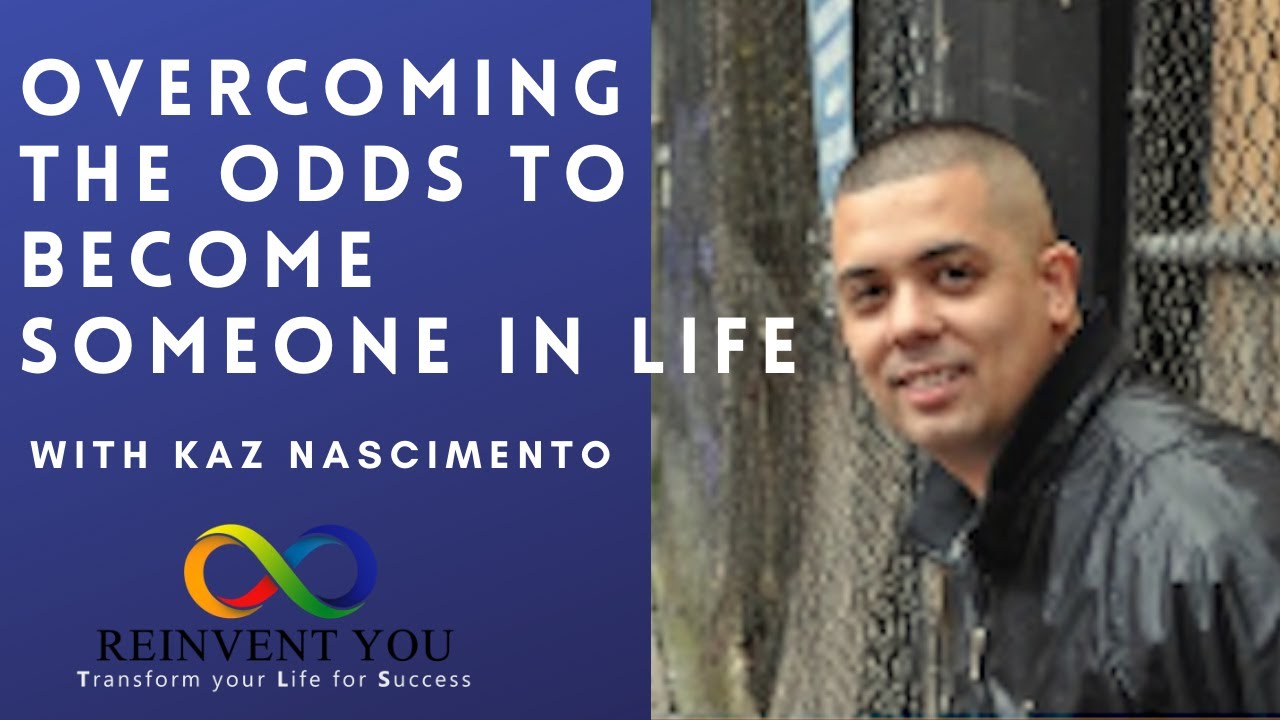
Kaz Nascimento, a nationally syndicated radio host, overcame abandonment and poverty in Oakland to build a life of purpose. A 5th-grade teacher's public dismissal fueled his drive to succeed; the military taught him discipline and self-respect. He uses his radio voice to reach people in their darkest moments and defines "reach" as daily action toward any goal, big or small.
Chapters
You are listening to episode number 50, 5-0 baby, with Mr. Kaz Nazeemiento.
If you're someone who wants to make major changes in their life, someone who wants to achieve their goals, or maybe you're someone who knows this is not as good as it gets but you have no idea where to start, on the Reinvent You Podcast we explore different types of people. They their successes and failures, and how they reinvented themselves to create the life they love. It's our hope that from hearing their stories that you too may have more insight into what it takes to build the life that you envision for yourself. Here to help you do that is performance and life coach Travia Steward.
My guest today is Mr. Kaz Nacimento, who is a nationally syndicated radio host And he's also the author of the book Reach. Kaz, in his lifetime, has spent some terms in the United States military. He's also worked for law enforcement on death row. He wasn't on death row, but he worked with inmates on death row. And he's also spotlighted as a nightclub DJ. Today on the podcast, we are going to discuss the importance of having positivity in your life if you want to achieve things. How Kaz persevered from the streets of Oakland, California and became someone in life. And then third of all, we're going to talk about— we're going to delve into Kaz's hard knock lessons that made him the man he is today and much, much more. So sit back and enjoy the podcast. I just want to take a moment right now and welcome to the Reinvent You podcast the author of the book Reach, Mr. Kaz Nazzimento. Kaz, how's it going today?
I'm good. Thank you so much for having me. I appreciate the opportunity.
Absolutely, absolutely. You know, Kaz is a fellow, you know, Arizonan, and we are enjoying this beautiful weather that we're having right, right now. There are no snowstorms, none of that stuff, so it just feels so good right now. So Kaz, I want to jump right into it. You know, I know that, you know, thank you so much for sending me your book. And I had a chance to read it. I mean, it was a very, very quick read. So give me a little bit about your origin story, you know, because, you know, what is it that has happened in your life, which don't go into all of the details, right? But a little bit of your origin story as to who Kaz is today.
Um, well, there's a lot of things that has made me who I am today. You know, I joined the military, I worked in law enforcement, have a syndicated radio program. And I've always been a person of staying positive in life. I know throughout life we go through so many struggles and so many things that kind of turn our world upside down. And it's just, it's for me personally, it's been one of those episodes where it's just like, you know what, I see other people doing it. If they could do it, why can't I do? And that was one of the reasons I put the book out. Like you said, it's a short read because I wanted people to kind of get it all in one sitting, you know, because I know you read a book sometimes, you'll read a few chapters, you'll put it away, then maybe you'll forget about it, right, where you were. So I wanted people just kind of get it all in one, one dose. And like the book, it's really an inspirational book. It's kind of my story. Kind of my struggles and my upbringings. I grew up in Oakland, California. I was abandoned by my mother. I lived in a really bad neighborhood with my brother, no parental supervision. It was just me and him. He was heavily into drugs and alcohol. And I was a teenager. So at the age of 16, you know, I had to kind of learn to be an adult really fast. And at that age of 16, you shouldn't be having to think about where's my next meal coming from? Is the power going to be on when I get home? You should be thinking about things like, you know, I'm going to go to college. What college do I, you know, do I want to pick? You know, what about the prom? And, you know, those, those things that you hang out with your friends. I didn't really have the opportunity to do that.
Right.
And I look at my life and I think, you know what, it's okay. Because those are tools for me personally that I know that God has used me to hopefully inspire others and tell my story. Because there's other people out there that are going through the same thing. Now, maybe the story may not be relatable, but I know in the story that people will find themselves like, oh, that happened to me, or I remember that, that, that was something that happened to a friend of mine, or or something. So it is a relatable book. And like I said, it's a short read. It's my story kind of infused with some inspiration to get out and reach for what you want to do in life. And really, that's all you have to do is just kind of reach. I'm sure you've been in the kitchen trying to grab something off the top shelf, and you're just inches away from getting it, right? Yeah, yeah, yeah. And to me, that applies in life as well. You just have to reach just a little bit more to get what you need. And that's really all it is. I know with everything that people see in the world, like through media, you know, because I've worked in media just like yourself, we know how those things can be flipped so that people will think that it's constantly negative, you know? People think that you can't make it in life because of your surroundings or your situations. I'm here to tell you that that is false. Don't believe any of that. Regardless of your situation, where you're from, whatever it is, know that you can overcome those things and that you can— you just have to apply yourself. You just have to think positive and you just have to stay on that path. It does get dicey at times. Trust me, I know. I've been down all these roads. And I just want to let people know through my book that you can absolutely do it regardless of your situation. I know finances sometimes that hurts people. We're dealing with that right now. People losing jobs. We've all been there. We've all lost our jobs before. You know, mine may extend a little bit longer. You know, I've been homeless. I had no parental supervision at the age of 16 to you know, till I became a grown adult. So I didn't know too much about life. I didn't know how to, you know, I didn't know how to do taxes. I did— I didn't even know how to shave, you know. It was the military that showed me how to shave.
Okay.
And become— I become a better person. So, you know, and, and those are small things that we take for granted, but there's a lot of people out there that may not realize that there are, you grown men that don't know how to shave. You know, there are adults that don't know how to do taxes, or, or just even how to communicate with somebody on the phone. Those are things that we take for granted. But it's one of those, you know, you have to be around the right people to show you those things. And that's what I did in my life. I started placing myself around people that I knew were going to help me and have a good impact on my life.
Right.
Going through the military was a huge game changer for me because I learned about myself. I learned about other people, and I learned about life. And so I really do thank the military for giving me the opportunity to serve the country. Um, but I met a lot of great people on the way as well that inspired me after I got out. Um, but the camaraderie— if, if, if you've been in the military, uh, the camaraderie of, of the people is, is just— it's something I can't explain. It's one of those— it's a bond that you have forever. I remember we graduated, uh, from basic training in South Carolina, and they were releasing us, you know, and we were like, what do we do now? Some guys started crying because we had no idea what to do. And going back to, you know, to those stories where people may not know how to function after something like that, because it was a big step for a lot of us. We were kids. And for me, I kind of already had the, the upper hand because I was already doing these things on my own. Or learning. But we stood around and we cried because we didn't know what's the next step, because over 9 weeks we spent the time together learning each other, building together, and just kind of getting through life situations.
Right.
So I credit the military as a big part of who I am today. If that— going back to your question there, I don't mean to— go sidetracked there.
That's okay. Hey, you got a lot to say, but I do want to pull you back to, you know, you right now in this conversation, you're such a very, very positive guy, you know. You're like— but I read your book and I read all the stuff that you went through, you know. Like, what was it, uh, Miss Anthony, you know, and, and, you know, yes, what she said to you. You said that she was a powerful and firm Black woman. She didn't take any mess. Right? She stood about 5'10". And then what did she tell you? She said, "Class, you see this person here? This person is going to flip burgers and pump your gas." Right, right. How do you remain positive after hearing that from someone in authority?
You know, for a while it was really rough. You know, and it has to go back to how I grew up. You know, there was not a lot of positivity in my life. When I look back on Miss Anthony today, She actually helped me, if you think about it. She stood me up in— so going back to the story real quick, in the book it talks about I had forgot my math homework one day, and she was collecting them. And she asked me, she's like, "Well, where's your homework?" I said, "Well, I didn't do it." And she says, "All right, come with me." So she stood me up in front of the class, and I'm in the 5th grade. And she goes, "Class, you see this guy right here? This is the guy that's going to flip your burgers and pump your gas." And that was devastating as an 8 or 9-year-old child. You know, your class is laughing at you. And so at that point, I was like, "I'm done with school." You know, later on down the line, I didn't realize that I had a learning disability until like the 9th grade, which by then was too late.
Right.
But the thing that Miss Anthony, for me, that stood out all of my life. And I think I use that as a tool to not do those things. And if you think about it, she actually put the spark in me to want to be successful. I may not have known it at the time and thought that that was devastating, which it is to any child for your your teacher to say those things. But she said that because maybe she thought I was going to be something. I don't know. Maybe that was her way of saying, you can do it. Don't be that person. So that's something that will probably be with me till the day I expire. As a child, it was devastating. I look back on it now and it's like, it was kind of funny, but you know, as a child, for me, it was pretty tough, you know? And I think that turn was when I started not wanting to do school, you know? And so, I mean, that path kind of goes on quite a bit until I get into like my late 20s when I turn all that around. But that was something that was That was a big part of my life, I would say.
Right. So I feel like you and I— like, you were dropping some dates and stuff in there. I feel like you and I are pretty close to the same age.
Ah, a true lady never reveals her age.
Okay. Okay. So, okay, we don't have to.
But yes, specifically, we probably are. We probably are.
Yeah. Yeah. Because you were talking about some things. I was like, okay, I think we're pretty close. So when you're talking about, yeah, it was probably for my best, like we're talking about, it's 2021. If a teacher said that to a kid right now, anywhere in this country, like they would be on the news. Somebody would have recorded it. That lady would have lost her job, you know?
Right.
And then the kid would be suing the school because how dare they hire, you know, old school here. You know, we look at those things and go, oh, she was teaching me a lesson. Absolutely. I was on, you know, I was, I was on the path of destruction here.
Right.
How were you able to differentiate between that? Is it because it was old school? Is it because of, you know, you didn't have that authority figure necessarily in your life?
How did you— It was both of those things. I mean, you make a great point. It was old school. Like, I'm like you, I'm very old school as well. Yeah. We didn't have cameras, we didn't have cell phones and all that to take video of all that. But I think at that time, that was the norm. That was the old school teaching style of getting kids to be successful or do great things. But during that time as well, and I'll reveal kind of my age, but from mid-'80s to mid-'90s, Schooling was different. And then you have to think about the things that were going on in the world as well. You know, start, you know, in the '80s, you started having the drug issues. You know, in the '90s, the police stuff started coming out, you know, that was actually— now we're videotaping this stuff. Now we're, now we're really seeing what's going on with the community and the police. But that, I mean, as you know, that stuff's been going on forever. But now that during that time it was just, it was brand new. Now we can see it, now we can hear it. Um, and I think that was kind of the norm during that time, you know, you kind of shrug it off and be like, okay, whatever, right? Um, but it, it, it's, it was just an old school type of, uh, of lesson, I would say. Yeah, you know, like you said, today it wouldn't fly.
It would be so different, you know. And, you know, I was a high school teacher for 24 years Oh, wow. And I just— I quit and became a full-time life coach. I was life coaching and teaching, and it became too much. And then when COVID hit, it's like, oh, man, I'm diving all the way in. But honestly, Kaz, part of that was it's so different, and you can't have that tough love. You were from— do I dare say— kind of from the streets here in Oakland. You went up to Seattle. You had that whole tough mentality. I mean, you saw people got— you know, a guy gets shot in front of you when you went to get something to eat. I read your book, you know, right, right. It's like, what do you wish people like teenagers had in them today that maybe you had in you when you were tough and going through your journey?
Oh wow, you know what, I talk about that with my, my daughters. They're, they're grown adults, young ladies now. They're 21 and 25. And I always see them not— I don't know, just something about this generation is a little different. I don't think for us, we had the work ethic. We had the— we knew what it was like to have things and take care of them. Today, like, my kids will buy something. Be like, I don't want this anymore. They'll toss it. And I had to actually tell a story to my daughter one time because she was crying because she couldn't get a pair of Jordans. Now, even as an adult, I still have never owned a pair of Jordans, and I would love to, you know. So, right, but I, I told her the story of— I said, you know what, when I was your age— and we were about the same age, she hit probably about 15 or me. I said, I owned 2 pair of pants that I had to share with your uncle, my brother. And when I told her that, she's like, what, 2 pairs of pants? Who owns 2? Who has 2 pairs of pants and share it with somebody? Right, you know. And, and I don't think kids understand that today because I, I think that they kind of are given things to them because of the technology Um, you know, I'm baffled at how a lot of these kids are getting record deals and they're making music through YouTube. I think it's fantastic, it's great. I love the creativity, I love them doing that, but they're scoring record deals, they're getting millions of hits on YouTube and getting paid for it. Um, I mean, I think that's great creativity, absolutely, artistry, absolutely, but it's so easy for them to get these things now, so anything they want They post it online and they get it. You know, we didn't have those things as kids. Um, a good friend of mine that I talk about in the book, Cheyenne Salah, uh, we started music at the age of 19. We were doing music stuff and we always talk about that. What if we had the internet when we were doing our music stuff?
Yeah.
Um, I mean, who knows where we'd be, but we used to have to go to Kinko's and make copies 24 hours. And we would, you know, and that's what we had to do. That's how we had to do it to make ends meet or to get the advertising out. We would put flyers on cars, you know, just to get recognized. But now kids can just YouTube, TikTok, or, you know, whatever, and boom, they got a million hits. So I think for this generation, it's a lot easier And they're not understanding the— what's the word I'm looking for? Like the importance of what we do have. The small things that they absolutely take for granted. Having power, for me, I mean, I try not to take that for granted. My health, I try not to take that for granted because I was, I was in a state where I was malnourished when I left Oakland. Um, having food, I try not to take that for granted.
Right.
Um, just, just little things like that. And I think because the new, newer generation, they haven't, uh, got to experience that because with technology everything is at their fingertips. Um, so I I wish things could kind of slide back a little bit to where kids can kind of understand those things and appreciate life and the world and people a little bit more, you know, than how they see things.
Absolutely. I love that. I love that. So another thing that you and I have in common is the thing that you really wanted your dad to say to you. And I don't want to give away your whole book, but I was just so touched by this. You know, when you said, you know, it was the night before he passed away and you said, "I love you," and he replied with, "I'm proud of you, son." Mm-hmm. Why did that weigh as much as it did? Why did it affect you as much as it did, him saying that?
Couple reasons. Because by that time, I had gone through a lot of my experiences, the military. You know, being raised by myself. And this was probably in 2003 when he passed away, he said that. When he said that, I understood a lot more as an older adult, as a, you know, having my own family, gone through the military. Because as a kid, just like any kid, you know, the things he would tell you go in one ear out the other. And then, you know, either when, when they're gone or it's too late, you start to realize that stuff. But I just— something told me that day, um, that, that that was— and I know this is going to sound weird, but I had a feeling that was the last time I was going to talk to him.
Yeah.
Um, he came up to visit me and my family in Seattle, which is very rare. That's how I knew it was— it it was something special. And the other thing was that he wanted— and I didn't talk about this in the book— was that he wanted to share something with me and my brother, but he wanted to wait till the next day to have dinner and sit down and talk about it. So I may never know what he was going to tell us.
Right.
Maybe it was just— maybe he was just going to say, "I'm proud of you guys. I love you." Or maybe Maybe he left me a million dollars. I don't know. But yeah, yeah, you know, it's one of those things that's going to be in the back of my brain for a long time. But, but that day, it just something seemed weird. You know, during that day, we went out with my daughters, went to the park, and we went to the shopping. And just something didn't seem right. And so I dropped him off at his hotel. He said, you know, those are the last things he said to me. I— he wanted some dinner, so I said, "I'll grab you some dinner, I'll bring it back." And I brought it back and he was sleeping, so I, you know, I kind of left him. And that was the last time I saw him, you know, alive. That was the last time I saw him. But the thing about my dad was that he played a big part in my life as well. Even though he wasn't really around quite a bit because there was so much going on in his life. He was fighting his own demons after coming back from Vietnam. He was 19 years old when he went to go fight over there. And he thought he was doing the right thing, you know? Right. But the story behind, well, any military, but the story behind The Vietnam veterans is really sad because they came home to nothing. There's an article that I found after my dad passed away. He did a local newspaper interview. And he said that he got off the plane and thought, okay, I'm home now. And he got in the airport and people were spitting at him. People were throwing rocks at him. People were calling him all kinds of names. And you're 20, 21 years old. He did not know what was going on. He thought he went over there, was doing a good thing for our country. He hid in a phone booth and cried. He had no idea what was happening. Right. And I mean, I can only imagine what he was going through after all that he did over there. You know, he was combat wounded. You know, he served a year over there. He lost a good friend of his. And just so much stuff that I can only imagine what those guys were going through. Right. But he never was the same, you know, and I never really got to know who he was. You know, I always asked people that knew him before the war, like, and some of my family members.
Right.
Like, hey, how was he like? What was— oh, he was an outgoing guy. He, he played basketball. Um, people loved him. He was a straight-A student. Uh, he, he loved school. But those were things that I never got to see because he came back a totally changed person. It wasn't the same person.
Got it.
Um, so I only got to see the, the bad years of him. But I know he did the best he could trying to raise me. I got an opportunity to live with him. That was the last place I lived before I moved out to Oakland with my brother. So I lived with him for a couple years and it was difficult. It was very difficult. He had a lot of mental issues. He had a lot of health issues. But a lot of that was from the war. You know, he—
Yeah.
He just, he couldn't function in life.
It was very difficult.
Very, very difficult for him to do those things. But, you know, I really wish I had the opportunity today to really pick his brain and talk to him.
Yeah.
And see what it was, you know, what it was like for him and maybe help him get back into a better state. But, right, you know, life happens and you move on. But that situation was very dear to me. And I thought that was fantastic that he had said that. Even through all of his mental and physical stuff, he took the time to say, hey, I'm proud of you.
I love you.
And that was it.
Oh, that's powerful. Yeah, that's so powerful. So I know, again, from the book that you had a hard time— you talk about having a hard time finding yourself and who you were and what you stood for, who you were supposed to be, you know? And I know that, you know, in, in, in 2021, a lot of young people growing up think they should be doing this, they should be doing that, right? What was the process that you went through to find who Kaz was, and what is the advice you can offer to the generation coming up right now?
Sure. That was a tough, that was a tough one for me. Um, growing up, I came from— so I'm half Filipino and I'm half Portuguese. And so me growing up, I took more to the Asian side growing up through my family. And as a kid, I dealt with a lot of, I would say, hardships for being Asian. You know, of course, the stereotype stuff, you know, we can't drive, you know, our food stinks, we wear slippers all the time, you know, just those stereotypical things. And I wasn't quite sure how to digest that. And so I was always nervous of who I was, you know, I knew really nothing about European side, the Portuguese side, because, you know, I come from a very small family, so there was really no one left to tell me about those things. Um, but I, I was not proud of my nationality, and that was very difficult to find who I was. Um, where I grew up in my neighborhoods, uh, in Oakland, of course there was a lot of Hispanic people, uh, Black people, And those were my influences. Those who— those were the people that lived in my neighborhood, and that's who I hung out with. So I kind of adapted to their cultures and their upbringings and their, you know, the things that they do and their families. But throughout life, I just really felt like that wasn't me, you know. And searching for yourself can be a different thing. Um, because a lot of time you get that negative of what your culture is like or, or where your background is from. You get a lot of the negative. But then I realized, I said, well, what's the positive stuff in this? What's the, what's the good things that my culture has done? Um, and I think that's one thing that people should look at. They definitely should be proud of who they are because of the history. And I think the history is what makes a lot of us today, that makes America as well. The thing about America is that we're a huge melting pot, so everybody has contributed to building this country. So you should be proud of where you fit in there, you know, what you have done, what your culture has done for this country. Research it, look at your history, go back to your You know, I think it's really cool that— what's that, 23andMe? That you can go back and see. I think that's fascinating.
Yeah.
And you can go back and look at the history of where you're from and, you know, where your families have lived. And I just think that people today should really embrace who they are. Don't worry about people say— because they don't understand. They don't understand. But if they want to open to understand, they would open their minds and be like, yeah, tell me more about your history, your culture. Where do you come from? And I think that's always fascinating because sometimes you may find stuff about yourself through their culture.
Yeah.
Or be like, wait a minute, I had no idea that the Spaniards came to the Philippines. And that's why a lot of— from the Philippines, you hear a lot of the names are like Spanish names, you know. So like, I have Filipino friends, the last names are Rodriguez, Lopez, um, because they, they, they came through there. Uh, so, so the, the history is so— it's, it's fascinating to me. Yeah. Uh, to hear about all those things, you know, the food, um, the clothing, There's just so much. So I would tell people today, be proud of who you are. Be proud of your family. Be proud of your culture. Be proud of what you and your family, I mean, decades have done for this country. Because if it wasn't for them, then we wouldn't have what we have today. So research your stuff. Understand who you are, where you come from. And even bring, invite that into your home and to other cultures. You have friends that may come over that are not, for me, that are not Asian, like, hey, try this dish, or hey, you should watch this movie. This is really, really cool. Invite them and let them learn about where you're from so they get a better understanding of you and who you are. So then that way, your relationship with them and their family and their friends will but only further, because then they'll understand you so much more than if they didn't. So I would invite people to open their minds to those things. And to— yeah, I mean, I think it's really fascinating to understand other people's background. So to me, I think that's great.
Yeah, no, it is very, very fascinating. I've done 23andMe as well. And then I've got these people reaching out to me. It's like, oh, Oh, you know, fourth generation. I was like, oh my goodness. You know? And it's, it's really, really cool. It really is.
You know?
Yeah.
I love that. Kaz, if you had to look at your whole life, right? Everything that you've gone through, what would you say is the biggest lesson that you've learned and how did it— cause I know you are of the belief in the methodology that everything happens for you. Everything was happening for a reason. What was that thing you went through? And that now you look at it, Aside from 5th grade, what is the biggest lesson that you went through and what did you learn from it? And how did it help you become the man you are today?
For me, that's an easy one, and I have a big chapter in the book about it. Um, it's 4 easy words. It's called love, L-O-V-E. And when I learned about what love was and I embraced it and I learned love through my wife. I talk about the book. She came from a huge Hispanic family, and the things that I saw were something that I never saw in my life. Families would come together and gather. They would have lunch, they would talk, and they would hug each other. They would tell each other, "I love you." Um, and those were things in my household that I didn't see. So when When I started understanding what love really was, that changed me quite a bit. Because throughout my life, a lot of it was just negative, negative, negative, negative. You're never going to do this. You're never going to do that. He doesn't like you. She doesn't like you. He doesn't like you. You know, that's what was going through my brain. And so I kind of distanced myself from that. But then when I learned that, that love is such a powerful tool, um, it really changed my perception in life, how to look at things. Um, I've learned to, as we talked about, appreciate the little things in life. I've learned to appreciate other cultures. I've learned to appreciate, um, people's time. I've learned to appreciate other people, um, because for me it makes me feel great. It makes me feel good that I can, I can, like with you, and I mean just talking with you, I, I feel great and, and I appreciative of you letting me tell my story. Absolutely. And that, that makes me happy and, and, um, and spreading the love, you know. So yeah, yeah, I'm a big fan of those, those 4 words. And I tell my family that every day. I tell my daughter that, hey, I love you. Be proud. Go ahead and do your thing today.
Okay.
I'm just a big positive person that, yeah, love, love is special. And when you truly understand it and how it works. Yeah, it's, it's just, it's, it's just a great feeling, you know, and it's fantastic. I agree.
I'm with you.
Did that answer your question there?
Absolutely.
Absolutely.
Yeah, yeah. Because I know I read in the book, um, uh, the, the woman— was that, was that Tanya's mom who took you in? I'm just giving away your book here. And that was your first example of real love.
Yes, it was through her past.
Yeah. And that, that was so powerful. So yeah, so it's kind of like when you don't have that example for yourself in your own life And the first time you get it is what you're explaining here. The first time you get it is like, oh my goodness, that's the— that's what I've been missing.
Absolutely.
Yeah, yeah, totally get that.
Absolutely.
I love that. I love that. My, my top 2 values are love and connection, which is part of the reason why I started this podcast was because I love hearing, you know, sitting down with somebody like you and hearing your story because there's always something I can learn from it. Right. So you mentioned earlier in the episode that you surround yourself with, with, with different people, right? You know, we call it a tribe, your 7th Power tribe, that kind of thing. Mentors, whatever it is, you are the average of the 5 people you spend the most time with. Who is your tribe? Like, you don't have to say names, but like, what are they and what do they mean to you that bring out the best in Kaz?
Uh, to be honest with you, I don't really have a tribe. Um, I— my tribe is anyone I meet, you know. I, I connect with everybody. Um, the other day, and I don't want to sound like, you know, to make it make me look good or anything like that, but, um, I was at the grocery store and I was picking up a few items and I saw this, this this gentleman just sitting on the curb, and I thought, wow, you know, it's like a homeless guy, you know. And, um, so I went over to him, and I drove to— there was a McDonald's there, and I picked up a couple, uh, chicken sandwiches for him. That's it. And I drove over there, and he kind of got startled, you know. And I said, hey, I said, I said, hey, are you okay? He goes He goes, yeah, he didn't, he didn't really talk very much, but then I said, hey, are you hungry? I have here some dinner for you. And he just started talking to me. He was very appreciative. Uh, he said, yeah, I'm fine, thank you so much, I appreciate this, I'm very hungry. And I said, no problem, man. I said, for me, those things I understand because I was there, you know, when someone would reach out to you and give you you know, something to eat. Once again, it's those little things that we appreciate, and he truly appreciated. Going back to your question, the people that I kind of connect with is— I have a very small circle. I connect with everybody, you know. I would say the people that I just encounter, like you. You know, I kind of feel like you're part of my team now. Um, any of your listeners, hey, we're— I'm part of your team now.
Absolutely.
Um, anyone on the street that I connect with, even if it's just a hello, yeah, they're part of my team now. Because I've always been a person that, you know, if you, if you encounter somebody, you know, what are you supposed to learn from them, or what are you supposed to give to them? That's how I look at it, and that's kind of how my universe, uh, rolls around.
Yeah.
Um, so maybe the guy that I gave the chicken sandwiches to may write a book, or maybe he may do the same thing when he gets out of his situation. Um, but, but I roll with everybody. I roll with the universe. That's who I am.
I roll with the universe. I hear you. All right, all right.
Nothing wrong with that.
Nothing wrong with rolling with the universe. So I know you're— the, the title of your book is Reach. We've talked about what reach means. What is your example of your reach in your life?
Example of my reach? Well, I would have to say being able to just get up every day and apply myself to whatever it is that I want to do today. Reaching for me incorporates a lot of things. It incorporates being brave. It incorporates, uh, not giving up. It incorporates, um, being open-minded. It incorporates, uh, you know, love. There's so many— to me, reach is so many different things.
Okay.
So when I tell people to reach, reach for whatever it is that you want. Reach for love. Reach for for that house that you want. Reach for— it could be the smallest thing. Reach for the phone to call somebody. It could be the smallest thing. But for me, reach is really about just applying myself, making myself realize that it can be done. I just moved into a new home right now. Things are kind of all over the place. Um, but, but it was one of those decisions where I woke up and said, you know what, I, I want to find a new, new space for my family. I want to have a bigger office, and I want to be able to invite more people over to my house. And so I woke up and said, let's do it. And that's kind of how I am with anything in life. Like, if I see something or I think of something Okay, let's try it. Yeah, let's reach, you know, that, that's my reach. You just have to get out and do it. And as in the, as, as the book says, reach is all you have to do in life. It's really all you have to do is just apply yourself and get out there, do it, and be brave, and, um, you know, be proud, um, and not worry about what other people are going to think. Um, I mean, if you think about it, people thought What's the guy's name from Starbucks? Howard Schultz. You're gonna do what? You're gonna have a coffee shop? Nah, that's not gonna work. You know, you're gonna bottle water? Nah, that's not gonna work. You're gonna do a bookstore online, which is now Amazon? Nah, that's not gonna work. Right. These people had visions and they had a passion about what they thought was gonna happen. Having that passion and having that drive is going to take you so far. And that's the first step, is just, just, just thinking about it. Like, you know, uh, just having a, a vision of something that you want to do. That's your first step. That's all. You're already on the first step when you're thinking these things. Write it down, you know. Then when you write it down, you see it, then you can, then you, then you can build it and apply to it.
Absolutely.
That's all that, that to me, that's my reach. It's just getting out there and doing it.
Nice.
And I hope that your listeners as well will do the same thing and just, just kind of reach for whatever it is that they want.
Right, right. I love that. Thank you for sharing that. So I know that you're a nationally syndicated radio show, radio show host. What would you say you use your voice for? 'cause I know you talk about there's power in your voice, in the radio, in the show. What is your main objective that you have? Like when you get on the radio, what do you want to infuse in other people? What do you want people to get from you? How do you use your voice?
That's a great question. That's a really great question. When I first got into radio, all I wanted to do was be on the air. You know, I wanted to be this big radio guy you know, have all kinds of fans. But then it was actually one situation that made me realize the power of the airwaves. Um, I had just finished up my internship at college. It was my last, my last day. I went, I went to radio school, and I was telling everyone, hey, this is my last day. I've been on the air doing College Morning for a good 7 or 8 months. And this lady called in, and I actually have it on tape. And she goes, she goes, thank you so much. I appreciate you getting me up in the morning. I appreciate you playing the music. And another thing, I want to appreciate, I want to say thank you for being my, I guess you could say, guide when I'm out, or trainer when I'm out working out because I've lost 50 pounds.
Wow.
Tuning in to you every day. I would walk and I would listen to you. And when I got off the phone, I thought, well, that's kind of odd. But I realized that's the power that you have in your voice. Yeah. That you can really affect people that way. So later on down the line, which is— a good maybe 5, 4 or 5 years after that, I ended up doing a Slow Jam show. And I thought, oh, this is fantastic, this is going to be great. And this show blew up like crazy. I was, you know, I was taking dedications, I was, uh, you know, I was talking to people about their love life and talking about on the air. And so I thought, well, Well, how can I expand this? Well, I came up with a brilliant idea of saying, hey, send me mail, like snail mail, actual, right?
Actual, write a letter, put it in an envelope.
Right, right. Because it was, you know, during the time of emailing and all that stuff. And I thought, well, it's a throwback show. I want to kind of make it throwback.
Right.
So when I did that, and I have, I have an envelope full of these letters. Um, I started receiving prison mail, and the stories these people told me were— it was, for some, it was very, you know, heartbreaking. And then, you know, a lot of people wanted to get messages out to the loved ones. Uh, people were actually telling me their their sentence, what they did. Yeah, I mean, I'm in prison for, for 35 years, here's what I did. Wow, this person is, is inviting me into their life. So, and I don't know this person and he doesn't know me, only know me from, from the radio. So I thought, that's how powerful you can be with your voice through the airwaves. You can inspire people, you you can help people. One thing I— and I'll leave on this note with radio. When I was in radio school, the instructor always said, think about your audience when you punch the mic. Think about what they're doing. Think about how they're feeling. And so I came up with this very weird concept. And I know this is going to sound weird. Um, but every time I got ready to hit the mic, I would envision a person sitting on their bed in a dark room with— and I know it's going to sound weird— with, with a gun to their head. Wow. And I thought, okay, here is my job. My job is to make that person put the gun down.
Wow. Okay.
So, so here we go. I'm getting ready to punch the button and my words are going to make him put this gun down. So it could be a song that's coming up, you know, hey, could be his favorite song and be like, ah, I love this song. And then, you know, put the gun down.
Right.
Um, it could be words that I say. It could be just the smallest thing as, hey, how are you? You know, how's things, you know, maybe that's all they need. Um, but still to this day when I try to punch the mic, even on my show, I try to think, okay, what, where are these people at? What are they doing? So I have to make this break so good that I'm going to save this guy's life.
Wow.
Or girl's life.
Where does that come from? Like, why, like, what was the motivation to go to put the gun down rather than I just want to make people get up and dance, you know?
And that's what I'm saying. It was a very weird concept. But I think throughout those years, I realized that the power of being able to talk on a microphone can really empower people and change people. Right. I've gotten great phone calls. People call just, yeah, I want to dance or play music. And that's totally fine, 'cause that's really what I love to do. I love to make people feel good again, you know? Make them forget about issues. But that, and like I said, that was weird. That was a very weird concept, but it only made me work harder when I got on the air. And I think that's why I'm, I guess you can say I am successful through the airwaves. But I just had to find that highest point to be like, how can I be the best on-air person? And that was it. You know, I, I don't know if I could go any higher than that, but that was just what was in my mind every time I got on the air. You know, like I said, I know it's a very weird concept.
You know, it's powerful. It's your concept, so I wouldn't say it's weird at all. It's yours. Yeah, I love it. I love it.
I've saved a lot of lives though, let's just say that.
There we go. There you go. Perfect, perfect. And that's what your voice was, was meant for. So, so, Cass, as we wrap up, you know, how can people get their hands on your book and how can they connect with you?
Sure, sure, absolutely. Um, so you can go to amazon.com, which you can find the book. It's called Reach: It's All You Have to Do in Life. Um, you can also go to my, uh, my radio page which is newjackradiolive.com. There's a link there for the book as well. And then of course, I'm sure that they can link back to you. Absolutely. To get connection of the book if they want to get a book.
Yep.
And those are really the only two places right now. I'm trying to get out into the community now that things are starting to get back a little normal. Yeah, yeah. You know, for to get out in the coffee shops and things like that. I just did a book kind of a meet and greet at Jared's Coffee out here in Mesa, which was great. Um, got to meet some great people, uh, love the story, bought a couple books. Uh, but yeah, amazon.com, newjackradiolive.com, and of course, you know, uh, your page as well.
Yeah, I'm gonna have it all in the show notes. Absolutely. Well, thank you. This has been a blast. I have enjoyed getting to know you because, again, my top values are love and connection, so I've enjoyed connecting with you.
I hope—
yeah, I hope we run into each other just on the street. Yes, maybe getting coffee, maybe getting a brew, who knows.
Absolutely, absolutely.
But this has been a blast. Thank you for being on the podcast today.
Thank you so much. I, I appreciate you, and, and I love what you do. Keep doing it. And this is a great, great show to, to get out there and reach as well. So we're kind of on the same wavelength. I love that. So, yeah, so keep doing it. Don't give up. And hopefully your listeners will continue to be inspired by you as well.
Love that. Love that. If you like what you're hearing and perhaps you're interested in having a complimentary conversation with me, click the link at the bottom of the show notes. Thank you so much for listening. If you even want to know more about what I'm up to, head over to traviesteward.com. And if you like seeing the videos of the podcast, podcast. Every episode is on my YouTube channel. Take care, guys.
More from Travia









Remember the YOU Who Didn't Overthink Everything #personalgroth #mindset #selfdoubt

