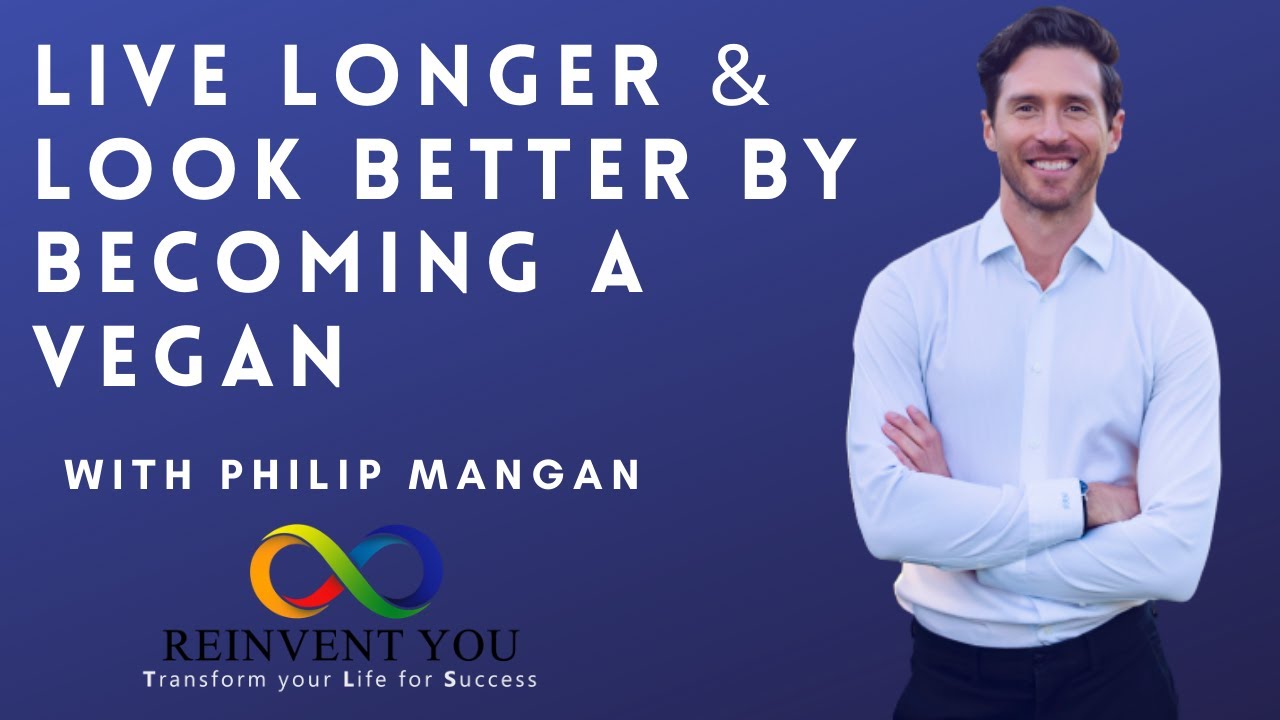
Philip Mangan, a model and holistic health coach, shares his 3-step method for wellness: slow down, quiet the noise, open the mind. He emphasizes simple habits like consistent sleep and morning phone-free time over intense workouts, and explains how his party-bus business collapse led him to coaching overwhelmed women.
Chapters
If you're someone who wants to make major changes in their life, someone who wants to achieve their goals, or maybe you're someone who knows this is not as good as it gets but you have no idea where to start, on the Reinvent You Podcast, we explore different types of people, their successes and failures, and how they reinvented themselves to create the life they love. It's our hope that from hearing their stories that you too may have more insight into what it takes to build the life that you envision for yourselves. Here to help you do that is performance and life coach Travia Steward.
My guest today is Phillip Anthony Mangan, AKA your Wellness Wingman. He helps overwhelmed women lose weight and regain control through daily personalized support. Phillip is a model, a commercial actor, and an environmental activist. He's also an NASM certified personal trainer and fitness nutrition specialist. He is also the founder of a holistic health and wellness coaching business that focuses on providing people with the clarity, confidence, and control that they need to make lasting changes in their lives. His 3-step method emphasizes that building simple and consistent self-care habits are the key to success by encompassing the practices of slowing down, quieting the noise, and opening your mind. Today on the podcast, we delve into a plethora of topics, from who Philip is, his reasons for going vegan, when Philip actually wasn't living as his authentic self, how he created the reality, the life he's living right now. We talked about his lowest moment and the lesson that he learned from it. We talk about why he actually enjoys and chooses to work with women. We talked about the advice, his nutritional advice, his advice for sleep, his, um, the exercises that he advises us, are just a plethora of things that he drops gems on the show. Don't miss a second of this episode as we begin right now. Joining us on the show right now is Philip Anthony Mangan, your wellness wingman. All right, so Philip, welcome to the Reinvent You podcast. I'm excited to jump into this conversation. So, and I'm going to tell you later on why I'm so excited to jump into this conversation. But Philip, before we get started, will you please introduce yourself to my listeners? And the way I want you to introduce yourself is You know, Philip, if you're at a social gathering or maybe it's a function, because I know you have a party bus background, how do you introduce yourself? Like if you're on, you know, at a gathering, you know, if you're introducing yourself.
The funny thing is I don't know if I would introduce myself at a gathering like, oh, let's, let's— Philip is in the room. I got to tell all my stuff. But yeah, I'm a little bit more low-key when I'm like, you know, I ease into it and then people find out about me because I think when you kind of spit your different titles out right away, it's like you're already giving someone like something to judge you off of. So I just like to have like conversation and I let it flow. So, okay, I remember a quick story like just before I dive in is when people used to introduce me as like, here, here's Phillip, he's my roommate, he's a model. I would not like that because I think if someone thinks of you this or that way right off the bat, like if they think models are this way, they're gonna already have these judgments about me. So I was just like, don't say anything about that. Just introduce me as your roommate. Your roommate. Okay.
Okay.
Yeah. But if you want the formal introduction, and you're like, someone is announcing me to come out of like the stadium, Philip is coming. I am Philip Anthony Mangan, also known as the Wellness Wingman. And I am a model. I am a wellness coach. I am vegan. I am big into sustainable living and I am a NASM, it is called, it is a National Academy of Sports Medicine. I am certified by them as a personal trainer and a fitness nutrition specialist. My passion is helping people lose weight and regain control of their lives. I own my own coaching business and honestly, I am your wellness wingman of support throughout your whole entire process. I don't just give you a plan. I am your wingman throughout the plan, helping you execute it and gain the confidence to do it yourself eventually. So, you don't need me anymore. So, it is, I want to help you fly. That is the best way to put it.
Boom. I love that. What was your catalyst for getting you planted on that journey?
On the journey? Well, which part?
The wellness journey. So, the reason why I am asking you and the reason why I am so excited about this, because I did hear you on another podcast and I think it was, you saw What the Health, right?
Yes, I did.
So let me tell you what's so funny about this is because I also watched What the Health, right? So I saw it and because I saw it and I went, oh my God, I am never eating meat again. This is horrendous because I ate bacon and, but I had also transitioned to turkey bacon and Phillip, I swore off of meat and I was like, I'm never eating it. Because I had gone to organic and I was like, and I saw the little artificial grass, which was 4x4, you know, and the, you know, just, oh, here it is. It's grass-fed, but you know, where they had the little chickens on the 4x4 piece of artificial, artificial turf. And I was so appalled at it. And the lady who was like, oh, you know, the bacon, how they did the pigs and just all this stuff. And I swore off of meat. Philip, for 5 days.
5 days?
For 5 days. I was so hungry. I was so hungry. For 5 days, I ate rice. I ate black beans with peppers and onions. I was so hungry all day long, and I couldn't make it. I couldn't sustain myself. And on the 5th day— on the 6th day, I went to Chipotle and ate a bowl with chicken.. And I was like, holy shit. I couldn't, I couldn't sustain it. And so I laughed and I was like, Philip is going to— I couldn't do it. But that was it. That was, that was the show for me that I was able to go for 5 days. I did connect with it, but I was like, oh my God, that was the movie. That was a Netflix thing that did it for him. And I was only able to go 5 days. So what was it for you with that emotional connection that was lasting for you?
Um, well, I think the nutrition side of it always has spoke to me. Like, just my— every single time, like, I would be diving into something, like, and it's probably from, like, the time I started college and started making my own food and really kind of harnessing that and, uh, really just wanted to better my, my health in some sort of way. And then when that came along I mean, honestly think I just had a more of an interest in seeing how it would make me feel. So it wasn't— I don't, I, I don't necessarily say that there was a really deep emotional connection at that moment. It was more of like it caught my interest enough because I resonate with nutrition. Yeah. And it, and it seemed— and I would say like when I reverse this, I say I made a lot of other changes in my life prior to that, so and I'm on this like change, like train, and I'm just chugging along. And one change comes, boom, knocking it out, knocking it out, knocking it out. So honestly, I feel like that's, that's how the way I teach people now is like when you make these little changes, it ends up being very empowering. And then you can change, you can feel like you can do anything. So when the What the Health came around, It was like, oh, this really speaks to me. Like, I'm open, fully open, uh, and I'm gonna try this and I want to go all in. But the thing is, I was like, I'm gonna do it my way, right? And I'm not going to feel bad if I don't, um, if I don't do it like perfect. Because I think that was the thing is I, I knew a little bit about, you know, vegan life. But I just knew that what I did know of it, I didn't really like it because I felt like it was kind of telling you you had to do it one way or no way, you know? So I take my cool approach and just kind of do my thing. And I think that helped me because, uh, and since I was so interested in nutrition, like, I get what you're saying. Like, you tried to eat rice and beans. It's you're not being— you're not getting satisfied from just rice and beans. And I get it. But so when I went vegan, I just really dove into the research and I was like, I'm going to figure out what I can eat, what I can't, and try. And I just really tried so many different things. And there was moments where I brought like chicken back in or eggs back in. And this is like a month or two in, like I'm doing pretty good for a month. But honestly, for that month before the eggs, I felt like I was lacking. I felt like what you said.
Yeah.
And I felt uncomfortable in my stomach too, a lot because of the fiber intake. I was eating a lot of vegetables and I ate vegetables before, but when you really live off vegetables and you're taking in that amount of fiber, it becomes, it becomes uncomfortable because your body's used to meat. Meat doesn't have any fiber. So, uh, when I— long story short, when I tried meat again, it didn't taste good to me anymore. Uh, when I ate the chicken again, it didn't taste good to me. And I thought, why am I gonna eat it if it doesn't taste good? So it kind of was helping me kind of continue on in a little bit and just keep going. And I think honestly, the more I went into the vegan world, the more I learned, the more I channeled Simplicity. So right now, the way I thrive in it is I know what satisfies me. And a big part of my satisfaction comes through textures. And I believe that's the missing link with people, is when you eat meat, you're getting that bite from the meat, that, that certain texture. Uh, if you can replace that texture, I believe you get that satisfaction that you can achieve from meat. As long as you're also getting the other nutrients, like which is the protein. And, and I do believe beans are a great source of protein. You can make beans into bean burgers, you can make a lot of different things. So it really, for me, it was hacking my satisfaction through textures and being able to stick to it for long term. But for honestly, for the probably about 6 months, it was, you know, right, you know, it was just kind of like teetering of like, can I do this? Can I not do this? But I really realized, like when I went And I'm sure that's what the way you took it is. You went all in. You went all in from the start. Yeah. That is not the— that's not the best approach. I honestly don't even— if someone is interested in going vegan that I coach, I don't even tell them to go all in. I said, we're going to— this is actually the way I tell them to start. I said, we're going to, we're going to start adding in vegetables before we take anything out.
Okay.
So then, so then you're actually getting used to eating vegetables, you're getting used to eating the fiber, and then you don't feel like you're lacking anything. So I kind of flipped it in taking that approach rather than, hey, let's eliminate more meat from the beginning. Let's just add in vegetables and get your body used to that first. And then we can kind of wean it off.
Right. And what happens like at Christmas, Thanksgiving, when you hang out with your friends who are carnivores?
Yeah. Well, my whole family is carnivores. Clearly. Most people. So yeah, uh, I remember coming home for the Thanksgiving for the first time, um, and I used to carve the turkey for my mom and I was just like, I don't really feel comfortable doing that anymore, you know? And, and it was just kind of like, but the one thing that I really realized was when I come, when I came home that first Thanksgiving, it was that I didn't feel like I was missing out on anything because I looked at the holiday differently. I looked at it as it really is who you're with rather than what you're eating, and that's what makes the celebration. So I really kind of had that more open moment of kind of seeing that we kind of think that it's the food that bonds us, but it's really just being present and being there with each other there that bonds us. The food just happens to an extra added piece to it. And I honestly found it, the more I was kind of eating my own thing and making my own thing, it was gaining interest from other people that were at the table. And I think when you can kind of stand alone and, and not follow just because it's the friends or the family that can influence you and you feel like you're left out, it's very empowering when you actually stand your ground for what you think is best for you. So what, what might be best for someone else might not be best for you. And, and I think that's the, that's the outlook like you have to have is I, I'll be fine if people don't accept me for this, if they don't accept me for that, which you know your family is going to accept you for that no matter what because they love you. But when you think about like a friends group, if they don't accept me for that Maybe they weren't really my friends in the first place. That's the only reason that they're really being my friend is because I'm eating meat. Yeah, yeah. So it made me start looking at things on a deeper level and just a more conscious level. But at the end of the day, I think when you stand your ground and you know what satisfies you and you know what you believe in and you stick to it, it's very empowering.
I love that. You know, Philip, speak to another example outside of your veganism. I did a post on Facebook just today And part of the podcast is what I like to shine a light on. Where else in your life, like maybe some things in your past where you found yourself not being authentic, where you were wearing a mask, where you were agreeing with some things, where you're like, I'm pretending to like this because I want to keep these friends, or I don't want to lose things. You know, I don't want to lose these people. Where else were you pretending to be someone where you really weren't at your core? Outside of veganism?
Yeah, I, um, I'd have to say there's been a couple different instances, but the most recent one was, uh, in the model industry, uh, when, when I first got signed, it was really— I was really kind of, uh, or when I first, you know, saw an opportunity to like, hey, I'm gonna run with this and try to become a model because I really— and I really enjoyed it and it was just fun. I just kind of— it's like let me see where this goes. And I'm shooting all the time and it's great. I'm meeting people and then I get signed by the agencies. And when you're signed by the agencies, you start seeing where you fit in with the jobs. So I have a very clean-cut image, you know, obviously despite me not shaving for a couple days. I get most of the The things I get are like, you know, everyday guy, like dad roles, or like, you know, clean-cut guy in a commercial or something like that. And I started seeing these different things that like, hey, people want me for this, or people want me for that. So then I would try to kind of navigate towards these things a bit more and try to really kind of guide myself in that way. But I think there's a lot of times where I let that get too far. Where I started just operating in that manner because I wanted to get more work and wanted to get more work. And I think that led to me kind of, uh, putting on a mask in some sort of ways. Because when I look back a couple years ago, um, at a certain time in the industry, I'm like, I wasn't— I could— I know I wasn't being authentic, authentically me. And I think it honestly is— it's easy to kind of get molded a bit when other people are telling you that you should go, that you should do this or you should do that. And if you don't do that, you might not be valued for it because you're not going to get the job or this and that, you know. So I think, I think most of us, the way when we put on masks, it's really because we just want to feel seen, we want to feel loved. And so that, that was one moment where I kind of look at it and I was like, I just wanted to be seen. I wanted to see like I, if, if I didn't get that job, I was thinking like, I'm not, I'm not getting valued. Yeah. At the end of the day, I realized that the modeling industry is really, really, um, it's a strange industry. Like, just because it could be someone that just doesn't like your look that day, and that's, and it's nothing against you, but you can take it to heart. And so absolutely. And, and I think like I started taking that to heart because I was depending on it for my survival. It was my main source of income. So when it's my main source of income, I'm in this scarcity mode, like, I gotta, I gotta people, I gotta people please. And then that led me away from being authentically me. So that was definitely one moment in time that, um, I saw myself and I looked back at it and I'm like, wow, like, I could tell in the pictures that I was forcing things. I was forcing things. Like, when I'm in that flow, like, I don't even have to, like, think about it and just— and like, I think it's anything, like, when you channel joy to what you do and you're not worrying about the result, then you're being authentic. If you're too worried about what other people think and, and all this and that, you're really not being authentic at your core. Because I can have a conversation with you right now, and if I'm not telling you the truth in some sort of way, I'm gonna know that later on. Because I know, like, whether I see it a day from now or later on it's going to come back to me because if I open up myself and I can connect with it, yeah, I'm going to notice. But if— I think that's the problem. Most people get stuck with putting that mask on.
Absolutely.
Don't realize they do because they don't take the time to look at themselves. And a lot of the habits that I form each and every day, it's self-reflection. In the morning, I do a journal self-reflection. Am I feeling— am I on or am I off? And how do I get back to being on? Yeah, that's, that's kind of— and I think that's an important tool in making sure you're staying true to yourself, right?
How did— like, I know that, you know, I read, I read that article, and so I know, like, were you proactive in creating that reality that you're living— an actor, a model, a fitness coach— or did these opportunities land in your lap?
Oh, um, both.
Okay, okay.
I was— I feel like I was aligned, and I was, I was aligned to the, to what the universe is, was providing me. So, okay, okay. I was, when I was open. So a little bit about the article, like when I, when I, uh, in 2016 when I was running that party bus business and I get the insurance come back and it's like 80 and I see like I already have this inner desire that I want something more. I already had that desire at the time. Insurance comes back, 80% raise. And I was like, wow, it's like literally giving me a sign. It's telling me this is the way, this is now the opportunity. Now, instead of channeling, oh no, I might lose the thing that I've known in the past 7 years. It was like, wow, imagine what the possibilities can be. And I think That's how I channeled that transition from my party bus company to the modeling industry. I didn't know what I was going to do in New York. I didn't have any plan to be a model, right? But I was open, and I was open to letting life happen. So if I'm in that, like, synchronized to opening, like, myself in certain ways, I'm meeting the right people, and it's kind of guiding me. So I was in that, you know, people call it the flow. Yeah, that's what I was in. I was in the flow, and When I rewind it now, I say, wow, this would have never happened if I would have went to New York at any other time because I met the right person that opened up my eyes to something and then I ran with it. And then I, and then at the same time when I was running with it, I was meeting more people and things were clicking, clicking, clicking. But as far as getting into the modeling industry, no one gave me that. I had to hustle my way into that door.
Okay.
There's another, there's another article I could send you, but I'll briefly summarize it. Since I knew nothing about modeling and I moved to New York at age 34, and I'm basically switching careers at that point and just saying, let's see what I can do. Okay. And I started building up my portfolio and You know, no one's guiding me how to do this or no one's guiding me how to model. But when it came down to it, I had a portfolio, enough good pictures that I thought that I could present to an agency. It's time to go meet with them. So how do you get a meeting with an agency? You submit and just hope? I don't want to play that game. I decided to try to go into their offices and I would go to their buildings and try to get up into the building. And most like the first time I did that, they were like, you don't know anyone, you can't come up. And at that moment I knew that I needed to do something different. So I went on LinkedIn and I looked at the people that worked there and I found names so I can name drop them at the bottom floor so I can get up into the building.
Okay.
And I just kind of channeled that mentality of taking the— if the door is closed, I'm gonna find the window to get into. And when people ask me like, oh, how did you get discovered? I said, I led them to me. That's, that's the best way to put it, is I led them to me because I put myself into that position to get discovered. Uh, so sometimes you hear the stories of people getting discovered on the streets. That wasn't me. Like, I had to put myself in the right position to actually get discovered. And create the opportunity for myself. And in doing so, that— I didn't know where things would go from there, but all I knew at that moment that I got into the modeling industry was like, well, I just ran my business for 7 years, and I, and I value my, my free time. The modeling industry is similar. I can kind of control my time. It's not like a 9-to-5 job. And then I can use my free time to work on other things. And during that downtime, that's when I ended up getting my personal training certifications, ended up going— learning about all the vegan stuff, educating myself all about the environment and sustainable living and all those different things. And I think when you have the time, you could either waste it or you can use it for something. And I used it for something good. And I didn't know what anything— like, when I started doing like the learning and all about all those different things I had no clue where they were going to take me. Yeah, but I just knew, hey, this is— this aligns with me, this speaks to me, I want to learn, I want to learn. And then sometimes it just takes, uh, certain moments to realize, like, I have all the right pieces, can I just start diving into, like, a greater direction? You know, I think a lot of people wait for that specific moment, like, when I get here, then I'll do this. Yeah, but for the most, for the most part, I've realized that you dive in, just dive into it. So if you don't know how, like, if I was thinking like, oh, I don't know how to go on a pod— I've never gone on a podcast or I've never publicly speak before— well, I don't think you need to have like show some experience of public speaking. I think honestly you just start reaching out to people. Yeah. And then figure it out later, because if you can just get someone to recognize you then you get your foot in the door, you'll figure it out. You just have to have that. And it's all about gaining, gaining confidence over time. And just that— and I think it's each little action that you do. If you go into anything like looking at, you will figure it out. Yeah, that— then, then it will work out for you. But you have to channel that openness, I think.
I love that, love that. So in your entire life, Philip, What has been your lowest moment and what was the lesson that you learned from it?
Um, I would either say there's been a few low moments, like, and I could either go from like the heartbreak of like a woman that I cared about a lot, or I can go to like my dog passing away like unexpectedly. But I think I want to go with like a— actually, I want to go with this story. So like when I moved to New York, I still had my business open. I was running remotely my party bus company, so that kind of helped me not have to pay for rent. And when January came around of the new year, I'm about 3 or 4 months into living in New York, the insurance rates came back again and it was sky high. And I was like, I'm, I'm in New York, I established myself here, like, I'm not dealing with this stuff anymore. So I cut it off because it didn't make sense anymore. I wouldn't make any money with the business. And that cut off my income source. So I ran out of money and I had to figure it out because I wasn't in the modeling industry yet. So I got into— I was trying to figure out like a job that I wanted, like that could work, but I couldn't find anything that was like, you know, if you have— if you're in the modeling industry, you have to keep your schedule open if you want to make it work, to be honest. So I was trying to find stuff, didn't— ended up doing a job as a doorman at Tiffany's. And I only say this, that it's, it's not my lowest moment, but it's one very low moment that I have in my, my mind is I hated that job so much because first off, I was like, I was just wasting time. Like, I need something constructive to do and I'm not using my intelligence to do it. And I thought, I just came from running my own business now to being a doorman. At this place. But the thing is, I had this very, very— this strong realization after a couple times of going there and just standing there and realizing, like, look, no one told me to come to New York. No one told me to try to be a model. So if I want that thing, you stay here and you do this, and you— and you pay the rent. And I think that's the thing that people don't realize is that when you're trying to do something, that you have to put in that work, whether it's something you hate. Like, we don't, we don't love every part of the job that we do, even as coaches or that, this and that. Sometimes I do things that I don't necessarily love, like love, and it's— now I'm getting to the point where I can delegate it a bit, a little bit more. But at the same time is when you're starting out in anything You have to be willing to put yourself in an uncomfortable position to eventually get comfortable. And that's what I learned at that moment. I, and no one, no one told me to do this. So it couldn't, I couldn't put a blame on anyone. I had this like real conversation with myself. This was my doing, own it.
Yeah. Wow, cool. So that's gotta make you a kick-ass coach, you know? And so like when you've worked, when you're working with a client who doesn't wanna get there and knock out that cardio. You know, you've been there, done that, right? You don't want to be a doormat.
Yeah, I mean, you don't, you don't want to do— and most people are resistant to doing things that— absolutely, you know, that makes them feel uncomfortable. But I think over time, it's, it's all about switching your perspective. Yeah, it's really the— that. And I think when you bring someone in to coach you Uh, that's what, that's what you're getting for the most part. You have been operating one way. Yeah, for as long as you can remember, so you don't know how to break out of that cycle. So then when you're bringing in assistance, then someone's giving you a, like, a showing you a different way of looking at it.
Yeah.
And then guiding you on how to continue that journey that way. So then you change the trajectory of where you're going.
Yeah. I love that. So I saw on either on, on your Facebook or either on your website that your offer is like what you're coaching, that you help overwhelmed women lose weight and regain control through daily personalized support. Why do you only work with women?
That's like, I get that question a lot lately. Yeah.
Yeah.
Um, well, I don't just work with women. I think it's just my target market right now, uh, because a lot of my coaching has to do with gaining that emotional intelligence or having it and, and being able to be open to change. And I think most women are more open to change than men. Oh, so that's good. That is, that is why, uh, I work with women. They connect with me Yeah, more so than men do, because I mean, I'm— there's certain men out there that have a greater emotional, emotional intelligence than others, and I think that has kind of been one of my strong suits that I've been able to, to gain throughout the years. So a lot of men, like a lot of what I speak about, the men aren't necessarily ready to hear that message, and my goal is to bring the women in, in hopes that it eventually leads to the men following, whether it's their husbands or friends. I think that's kind of my longer-term goal, because I think the men really need that help in that way. Right.
So just for, you know, someone who's listening right now, if they could take away any little nugget of information and they're like, they could take it away and go do something right now, what could you gift them with right now in the form of like habit-forming, something mindset right now that you're like, oh my God, Philip is genius right now. What could you gift them with right now?
I don't know that they'll think I'm genius for this. It's almost, it's funny. Cause I think sometimes when, when I do it on repeat, I'm like, oh, this is, this is nothing. This is nothing new, like, or special. But then to someone else it might be.
It could be. Absolutely.
I have to say where I really started making, um, thriving with my wellness and, and overall feeling more in control of my life is when I was able to kind of form my schedule in a better manner. And that all started with the sleep schedule. And I believe most of us out there are not forming that consistent sleep schedule with a shutoff time. And a wake-up time every day. And when people tell me that they don't have enough time in their lives to do the things they want, like go to the gym or make better choices, I say, let me see your schedule. I guarantee I can find it. But I think it all starts with finding that rhythm for you and your sleep schedule and sticking to it each and every day. Because when you have that, when you're well rested and you are actually create— you're creating more time for yourself and you're sticking to that schedule because If you told me, hey, I, I watch Netflix at night and this and that, I would say, well, you go to bed, go to bed, and then let's get up early and let's start the day in a greater fashion. But my— it all starts with that. But I honestly, it all starts with taking time for yourself each and every day. And that's why I was kind of leading into with the sleep schedule. If you can form a sleep schedule to where you can get up a little bit earlier, if you are not taking that time for yourself to slow down and listen to yourself each and every day, how do you know what needs to be corrected? How do you know if you're off or on? And I take that morning, I, and I don't touch my phone for the first hour and a half of the day. Stop letting the chaos in when you don't need to, right? Take care of yourself first and then go out. Into the world. So I always said that's why I do what I do in the morning, because then I'm my best self when I show up for a podcast. Absolutely. You know, a job, anything in life. And I think that's the number one thing, is finding that time in the morning to set the tone for the day.
Perfect. And what would be your best advice meat-wise? Like if you, like, if you were going to give someone, like, cause you know, you've done the research. Like if you couldn't convince someone to go full vegan, but if you said, hey Trey, if you could, you know, if you could convince me to give up one type of meat for my betterment of my health, what would that be?
Oh yeah, I would give up red meat if I were someone.
Yeah. Keep pork, keep chicken, just give up red meat.
Well, I mean, honestly, I'd say more of the red meat because of the environmental impact too. I think there's, but in reality, I think it's almost like all meats are created equal. Like if you, I actually got reminded yesterday, from a post someone made from What the Health. And it was about how, you know, chicken has been marketed so well to make it think it's clean and this and that. And it's pumped full of sodium and that's not good for our health, you know? So, yeah, so there's— I go with the red meat because that's just— it's like fattier. But at the end of the day, any meat would be a good strong suit. I would honestly just see if you can start with 1 or 2 days a week where you actually just— or 2 meals a week, you know, like 1 or 2 meals a week where— but honestly, like, I still think the best piece of advice I give someone when it comes to not eating as much meat is first add in the veggies. If you're not eating a lot of veggies, add them in. And then start taking— reducing your intake of meat, you know. So it's— yeah, you're not gonna feel like— because no one likes to be told that they can't do this or that, you know. They, they want to— they want to do what they want, and it's fine. That's, that's our freedom. But at the same time, I think there's a method of being able to kind of slip in there where it's, hey, you're not— I'm not telling you you can't have that. I'm just telling you to try this. And then see how you feel. Yeah, yeah, slowly, slowly take it down a notch.
Okay, yeah, I like that, I like that. Yeah, nobody likes to be told what not to do, but let's improve something. Okay, yeah. And then, and then as a trainer, you know, like, I, like, I'm always trying to improve myself, but you know what, Philip, I cannot stand doing cardio. Like, I like the idea of being able to run, but I can't stand running nonstop. I like to, you know, I have a treadmill. I like to run. I like to run. And then I like to walk. I like to run. I like to walk. You know, what would you say is the best way to get in shape without like killing myself? You know, like, like, I don't want to run for like an hour, you know. What would you say? Like, you know, I'm older, but I still want to try to get in the best shape of my life. What would you advise me to do?
Uh, eat better.
I eat decently well, to be honest.
But I'm saying like, for the majority of people out there, yeah, yeah, I think that Try— like, I would first ask someone, what is your goal? Like, what does the best shape of your life mean for you? Does that mean, uh, less weight? Does that mean feeling better? Does that mean just like both? Yeah. So if you're going for less weight, I would take a look at your diet and I would make the changes first and foremost in your diet because that is going to help make you have— make you have the most progress, right? Because you can't outwork a crappy diet.
Yeah, I've heard that before.
I'm sure you've heard that before. So it's funny how people want to spend all this time, and I don't believe that we have to spend all our time in the gym. I don't even believe we need to go really crazy with it. I believe we just need to move our bodies more. And that means doing certain things that, like walking more and riding a bike instead of getting in that car every day and doing more stretching and movement to your body. I honestly think you don't have to do an hour of cardio all the time to be healthy. There's— that's low, low impact movement is great with walking and, and doing kind of what you said you did. You walked and ran, walked and ran. Yeah, I think That's fine. It's really about finding what you like to do, and, and because that's gonna— what it's gonna keep it sustainable. If I'm gonna tell you to do something that you don't like to do, you're never gonna stick to it.
So true.
You try things. The more you try and you say, wow, I really like that— maybe you like boxing, maybe go like boxing class or something. I'd say do that as much as you can. Like, if you like it, you're always going to show up for it, and you know you feel good after it. Yeah, but overall, if you want to be in the best shape of your life, it's combining that good feeling from whatever you're doing, and then also really honing in on the diet and eating less processed foods, I would say. And I wouldn't even say the meat is the biggest problem people have. I think it's the processed foods. Mm-hmm.
Substitute the white for the wheat and the brown.
Yeah, just like really, basically, yeah. Like, that's pretty simple, you know. And just to eat more. I always say, especially if you want to lose weight, I— this is how I approach my clients. I say, you want to lose weight? We're not going to count the calories. We're not going to worry about any of this. We're just going to get you eating the good things first.
Okay.
I believe in the good things. In my opinion are the plant-based whole foods, more of them. And if you eat that consistently,, then it will lead to weight loss. Because if you're eating more fruits and vegetables, it is harder to take the amount of calories in that you get from eating more meat and processed foods. Yeah. And then you will end up in a calorie deficit. And if you're in a calorie deficit, it leads to weight loss over time. But the thing is, people really want that instant gratification. Yeah. And what I said, what I asked you before was What do you, what do you want? Like, how do you want to feel? Like, I think the results are not just on the scale, it's in the feeling. Like, one of the clients I coach, I said, how are you feeling? She's like, I feel in control, I feel happy, all these things. And I'm like, that's, that's results right there.
Boom.
Keep running with it because that's going to keep you going.
Okay. Yeah, nice. Well, Phillip, people are wondering right now when they're listening to this, how can they work with you?
Well, you can visit my website, philippmangan.com. I offer a free 30-minute consultation, and okay, I'm gonna tell you, tell everyone straight up, I don't work with everyone because I, I want to know if you're committed, and I can only do so much to motivate you.
Okay.
And I ask two big questions of what do you want and why do you want it, and I don't think that is, uh, something to take lightly. I want you to really connect with it. Like I said, emotionally connect with it, right? Kind of see, like, is there something greater? Like, do you just want to look good for a wedding, or do you want to actually change it into a lifestyle and keep the weight off consistently and feel healthy consistently? Because I think I'm trying to just give people lasting change, right? I want to I want to work with you, and then like I said, so you can fly by yourself over time. Yeah, you have these habits that you can take on for the rest of your life. I don't want to just try to help someone where they're in the panic mode of just trying to do it because they want to look good for a photo shoot or something. So I'm picky in that manner, but I would love to have a chat with you first and foremost if you're out there listening. Absolutely. Philipmangan.com, and I just book a free 30-minute consultation and then we'll chat and I'll definitely give you some tips. And if it doesn't work out, then no harm done. Just, uh, I love connecting.
Boom, boom. Yep. And the, his, his other connections will be at, in the bottom of the show notes. And also Philip has a free ebook that I'm also gonna leave the link to and boom. Philip, thank you so much for dropping all of the nuggets that you have just shared with us on the Reinvent You podcast. And it has been a blast talking with you. And Philip, I might revisit some of the things. I might rewatch What the Health and try to maybe introduce another day or so with no meat. This is—
yeah, just let me know. Let me know if you need some extra tips. Like, I'm always happy to help people, um, especially if you— I think I'm gonna start making videos about swaps, like healthy swaps. So like, if you like cookies, like what you should eat instead kind of thing.
Yeah.
And you have that same satisfaction because I— that's the one thing I don't want anyone to feel like they're lacking and like not living the quality of life they want to live.
Yes.
I'm just trying to bring them more happiness and joy. That's my job as the Wellness Wingman. Yeah, yeah.
Phillip, I saw some pictures of you with no shirt on and I was like, Yeah, it might be worth going vegan, Philip.
I, it, it, it's, it's, I mean, the funny thing is actually when I worked with a guy, like, I worked with a guy recently and he saw, he found me on Instagram. Yeah, he was vegan too, and he saw, saw me and he's like, wow, he's like, uh, and he saw pictures of me, my shirt off, and he's like, wow, how do I get like that cut? And I said, what are you eating? And then I saw his— I worked with him for a month. We literally completely just saw the missing piece of his diet. Like, there was a big chunk of his diet that was really bad, of what he was eating— vegan processed stuff. And a lot of those vegan processed things are the same, like, same level of probably unhealthiness as a lot of just the normal processed things. So I helped him eliminate that, and he just thrived from there. I— in his goal, he's— I think he's like 50 years old or 55, and he's trying to be in the best shape of his life by the end of the year. So it was— it's cool to like when people come find me and there's like, you can be that cut as a vegan, or you can, you know, like I think there's a misconception with like having muscle and, yeah, and, uh, actually, you know, thriving as a vegan rather than just being frail and weak.
And now he's shredded too, right?
I mean, I, I have to check in with him again, but I, I'm hoping by the end of the year he's just like I wouldn't have been able to do this without, you know, that. I think that is— because when you see the missing piece, it's amazing. It's amazing because I didn't have to work with him more than a month. It literally was like, wow, like that was, that was really that all that was holding him back. And like a couple of weeks, but overall I checked in with him daily, made sure he's sticking to it. And that's what I do. I, I'm like an accountability coach. Every day you'll hear, you'll hear from me. And, you know, just words of motivation, not like, did you do this? You know, I'm not like punishing anyone, but I know that I'm with you. I'm your support system. Yeah. All right.
Boom. Thanks, Phillip.
Thank you. I appreciate you having me.
You're welcome. If you like what you're hearing and perhaps you're interested in having a complimentary conversation with me, click the link at the bottom of the show notes. Thank you so much for listening. If you even want to know more about what I'm up to, head over to traviestewart.com. And if you like seeing the videos of the podcast, every episode is on my YouTube channel. Take care, guys.
More from Travia









Remember the YOU Who Didn't Overthink Everything #personalgroth #mindset #selfdoubt

