Ep 55: Are you really an Introvert pretending to be an Extrovert with Joanna Rawbone
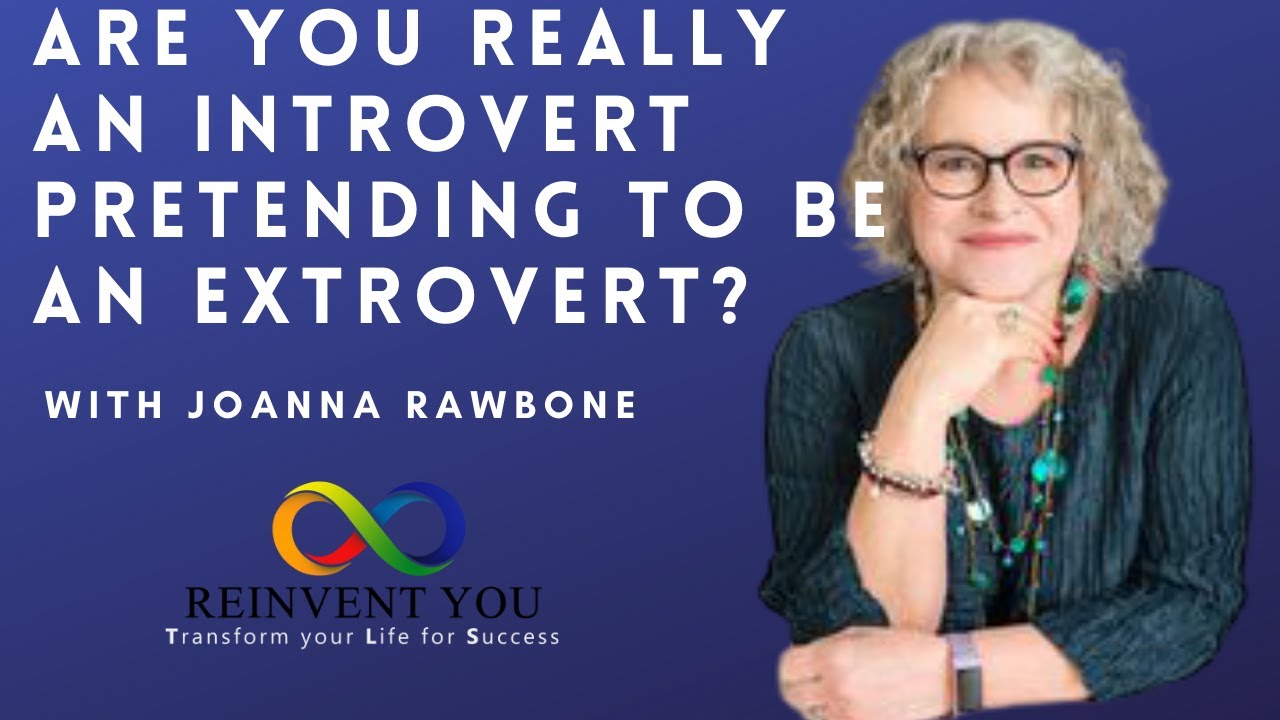
Joanna Rawbone, founder of Flourishing Introverts, spent decades pretending to be extroverted before burning out. She identifies six introvert types and explains how extroversion bias marginalizes introverts in schools and workplaces. Simple fixes like giving advance notice and pausing for reflection help introverts thrive.
Chapters
You are listening to episode number 55 with Joanna Rawbone.
If you're someone who wants to make major changes in their life, someone who wants to achieve their goals, or maybe you're someone who knows this is not as good as it gets but you have no idea where to start, on the Reinvent You podcast we explore different types of people, their successes and failures, and how they reinvented themselves to create the life they love. It's our hope that from hearing their stories that you too may have more insight into what it takes to build the life that you envision for yourself. Here to help you do that is performance and life coach Travia Steward.
My guest today is Joanna Rawbone, who founded Flourishing Introverts to shift the extroversion bias in business and enable individuals to recognize their natural strengths so so they can fulfill the potential without pretending to be something they are not. Today on the podcast, we discuss an array of things like who Jo is, as she likes to be called, how she even got started in this work. We talked about what extroversion bias is, how to give space by taking maybe even a pause to introverts, how introverts are even able to get up on a TEDx stage, the 6 types of introverts, why she is so passionate about this work, and a whole plethora of other things. Join me in welcoming right now Joanna Roboh. Oh, Jo, where are you located right now? You've got this beautiful accent that I am going to probably take on by the end of the episode. You know, where are you located right now?
So I live in the UK, and I'm down in the southeast of England. So for anyone who knows that area between London and Dover is about where I am.
London and Dover. See, I just want to do it. I just want to go there. So Jo, so to get us going, start it off, introduce yourself. Give us a little bit of context as to who Jo is today. Introduce yourself to our Reinvent You podcast audience.
Thank you. Yeah, so I am a trainer, coach, facilitator. I've been doing that kind of work since 1987. These days, the more people I work with, they weren't even born when I started doing this work. And I'm really proud of that because I, I'm passionate about what I do. But in terms of who am I, I think, A, I really only started to get a feel for who I was in my 30s. And it's only in my mid to late 50s that I started to then say, and I'm proud of who I am. So it's been a very long journey for me, and if I can help other people find who they are earlier, I'd be delighted. So I'm, I'm Joanna Rawbone. I'm an introvert, and I'm a proud introvert.
Nice. Isn't that amazing? You know, I just had my 51st birthday, and isn't that amazing that we wait all this time to find who we are? Because, you know, part of my work as a coach is that, you know, I help Become who they were meant to be instead of who they were molded to be. Why is it that it takes us so long to go, my God, to like we're 50 to be, this is who I am and I'm okay with that? Why did it take you so long? Why did it take me so long?
I, I think, well, there's one good reason why it took me so long, and it's called the extroversion bias. So the world, business, education, society has somehow deemed that extrovert is what's normal, is what's good, and anyone who doesn't fit that norm is somehow weird or broken or needs fixing. And, and actually introverts aren't weird, we're just wired differently. And, and so for me, I couldn't be myself earlier comfortably or confidently because I didn't feel like I fitted in, because I was mocked, because I was bullied, because I was, you know, given all sorts of advice about how I needed to be different. So So the real me ended up feeling not enough, like I couldn't just be me. That's why it took me so long.
Right. And so let's dive into that. Like, how would you define extroversion bias? You know, because it just fits the mold of everything else in the shoulding. You know, we should do this, we should do that. How would you dive into what is extroversion bias?
So in order to answer that, we probably need to go back to what's an introvert, what's an extrovert, right? So, okay, so introverts— and I use the Jungian definitions because I'm a, you know, I'm a big fan of Jung. And what Jung said was that introverts are already overstimulated mentally. So in order to recharge their mental batteries, to do their best work, to be really present in this world, they need to avoid additional external stimulation. Which is why so many introverts are quieter. Extroverts, on the other hand, need social interaction, need change, need, need kind of high, high-speed, high-volume, high-definition stuff in order to get recharged, to get pumped up. Imagine two people going into a gym. The extrovert, as soon as they throw open the doors and hear that, it's like they're already starting to get pumped up. For an introvert, it's like earplugs in or headphones in. I'll do my own quiet stuff, not necessarily join in with that. So the extroversion bias is where our society gears everything around that— push yourself forward, speak out, be loud, be, you know, all of that stuff. So from education, put your hand up, tell us the answer. Volunteer for things. When we get into the workplace, speak up, join in with the banter, have fun with people, don't be so quiet. And we're surrounded by it's not okay to be you. And that's the extroversion bias. And it's in, as I say, in society, in education, in business, it's everywhere, it's endemic. And so we end up feeling not enough.
Wow. So, oh my, yeah. Cause I taught high school theater for 24 years. And so the students who were in the back of the room, who, you know, just wanted to be quiet, wanted to be in the room, you know, like I listened to your TED Talk and you said, you know, the introverts were kind of identified as tongue-tied loners, you know? Yeah. As a matter of fact, I mean, I didn't look down upon them, but yeah, I didn't look at them as being— oh, this is awful, Joe. Yeah, I mean, I'm embarrassed when I admit this, like, oh, I really am as an educator. Like, I always thought, oh, okay, leave them alone. They want to do their own thing. Just leave them alone. Okay, Elizabeth, you go. And then, yeah. Yeah, I celebrated the ones who would raise their hand.
Yeah. And thank— and that's made me— I've got goose pimples, you talking about that. But yeah, but that, that realization, the more educators realize that earlier, the more in an— at an early stage in their life, introverts and extroverts learn that we're different. We both, we both bring our own value, our own qualities, our own skills, our own strengths to certain situations, and that neither one is right or wrong. We're just different, and let's really celebrate and value that difference.
Wow. So now, of course, because I'm a person who goes and go and thinks, had I known then what I know now, what could I have done differently? So speaking from the introvert perspective, yeah, how could that introvert have helped me as a teacher in that situation to have handled that differently?
So when introverts are able to know how they're different— so quite often young children don't know, like I didn't as a child. I didn't know why or how I was different. I just knew I was different. Yeah. But I think once we start to realize that the quieter ones are already overstimulated mentally, they're in their heads a lot, it's about giving them time to prepare. So if we talk about ad-lib and spontaneity and all of the things that you talk about in theatre that I don't have the right terms for—
Yeah.
The extroverts will typically be great at that, whereas our communication process, as you'll have heard in my TED Talk, is think, say, think. So if you want me to assume a certain character or, you know, 'Behave like a certain animal,' give me a bit of warning that, you know, this or next week what we're going to be doing is we're going to be thinking about animals. So as you go through your week, think about the different qualities and characteristics of an animal that you could adopt, because that's given me time to mentally prepare. And then when we start the class, I can get into it straight away. But If you give the topic and then go straight in, my poor brain is going, hang on a minute, what does a cat even look like? How does a cat move? So it's about giving us a bit of preparation time, giving us warning, because some of the very best actors and actresses are— I'm supposed to say actors all the time now, aren't I? But are introverts, you know.
So true.
Yeah, yeah. And I forget who it was now, one of the famous English actors. His name will come to me at some point, but he used to have a bucket on the side of the stage because he would literally throw up before every performance. So he was that kind of consumed by everything, and yet you would never know that he was nervous or an introvert.
Oh wow. Yeah, yeah. One of my high school actors, this guy Logan, he was classic introvert. I mean, when he came into my classroom, I was like, oh my God, I can't even really hold a conversation with this guy. And then when he started acting, I was like, holy— like, we did Flowers for Algernon and he was my lead actor. And, well, he was one of the doctors. He wasn't Charlie, but I was like, oh my God, this guy's brilliant. And he came alive on stage and I was like, Holy smokes. And that's where he really thrived on stage. You're absolutely right. So it's like, because we go, we do like, like I, like you, you are absolutely right, Joe. Like when I hit the gym, like when I want to go and work out, like I have like EDM music in my ear, like boom, boom, boom, boom. Yeah. So I'm going to do that. And so, but I noticed about myself that I don't take the time to slow down. I don't take the time to pause. And so it's like taking the time to go, because automatically it's like, oh, when someone else isn't going at my speed, it's hard to just slow down and go, oh, that kid's weird. Oh, that person's weird. Then they just are a loner. Oh my goodness. It is like if you just would pause.
Yeah.
For just a moment. Yeah.
Yeah.
It's just a slight pause, right?
Yeah, a pause, give us space. So, space. Introverts will speak up if they have something of value to add. But what they won't do is they won't use airtime for the sake of using airtime. But if they have something significant and of value, so it does mean we're prejudging what's going to be valuable, and that is a downside. But if it's already been said, I don't need to repeat it. It's already been said. But because of our think-say-think communication process, often there's not space in the conversation for us to get to the say part of our process because it's already moved on. Now, somebody who's maybe, you know, a good facilitator or a good coach or a good trainer, whatever, will recognize that and will deliberately create space not to pick on them, but to actually create space and encourage, just as you said, so let's take a pause for a moment, just reflect, and then see what comes up for us because that will give us as introverts a chance to say, well, I've noticed this, or this is what I want to contribute.
OK. Now, Jo, there is— because I'm thinking, I'm wondering what some of my people are thinking right now. How do you discern between, OK, that's a creeper. That person is like the Unabomber. And that's just an introvert. Yeah, you know, what are the— what are some, some obvious differences between those types?
The, the first thing, yeah, so the first thing I would look at, and it's really hard to say this, but the first thing I would look at is I would be looking out for that communication process. So introverts are incredible observers, and that can freak people out slightly because we do notice everything. We might not want to make eye contact with you but will be watching everything that's going on. So if you're not sure, and I always think it's, it's dangerous in a way to assume or prejudge people, but what I would want to do is, is try and engage them in conversation and then just judge from that moment about, okay, if they're taking time to answer my questions, chances are they're an introvert. So, you know, it's, it's about, it's about the quality of conversation because introverts don't do small talk. We can be really awkward around small talk because the types of conversations that we love, that we will get headlong into, are the generative conversation that expands our thinking and takes us somewhere else altogether. But if we're just talking about the football game or the, you know, the weather or the holidays, or it's like I don't have headspace for that because I'm already overstimulated. I have headspace for the enriching stuff. Okay. So I would, if you're not sure, I would try and engage in conversation and start with something like, you know, I've noticed you're really, really taking everything in. What's your sense of what's going on here? To give them, give you a chance to see whether actually what they are doing is observing or whether they are just somebody who's kind of lights on but nobody's in.
Okay. And then so if they don't engage back with you, like if— what if they don't even talk back to you? What would you conclude?
A number of things might be going on there. So one, there might be social anxiety going on, and it's not the preserve of introverts. Extroverts have social anxiety too. But can you imagine how crippling that is? I need social interaction in order to recharge my mental batteries. And I have social anxiety. I mean, that is a, a crippler for extroverts. So some introverts will have social anxiety, and of course that can be worked on, that can be improved. Some introverts are shy, but not all. I'm not shy. In my 6 types of introversion, I'm an open introvert. If you ask me how I'm feeling or what I'm thinking, I'll probably tell you. So you better mean that you want to know how I'm feeling. Yeah. So So it's not a case that introverts won't engage. Some types will be a little bit more reticent. Some people who, who identify as an introvert say, "I hate phone calls. I will never answer the phone or make a phone call." Well, that's not me either. So there are other issues going on. So if somebody really doesn't engage, chances are it's more than introversion, it's social anxiety Or, you know, even, you know, they're a misanthrope, they just hate people, in which case they're probably gonna turn around and walk away as you're walking towards them anyway.
Yeah, okay, okay, I get that. So you, you just brought up a little bit about the 6 types of introverts, and was that something that you discovered, Jo?
It's something that I refined. I'd heard a bit about there being different types, and I'd looked into it, and none of them worked for me. And because I am a Myers-Briggs practitioner, I kind of looked into it a bit more through the lens of Myers-Briggs, the MBTI. And what I found is that once you know, because, because Myers-Briggs looks at other things, it's not only the introversion, extroversion, but it's also how you take in data, how you make decisions, and which of those processes you prefer. I'm just interested in helping introverts understand themselves, not the rest of those processes. Myers-Briggs does that fantastically, although it's brought into disrepute. For me, it was still the most significant moment that had me go, aha, I know who I am now because I can see myself in that description, right?
So take us back to that part when that— because that was your, your, your moment when you realized you actually weren't an extrovert, wasn't it?
Yeah, well, it was the time when I realized why I was different So I was in my 30s, I was on a women's management development program, and I took— one of the things we did there was this Myers-Briggs Type Indicator, and it's just a standard test, you know, lots of questions, or a standard questionnaire. And the results was just one small paragraph, and it was like someone was seeing into my soul. Everything that was described there It was like, okay, and if, if this questionnaire knows that's me, there are other people like me here too.
Yeah.
So in that moment, I realized I wasn't broken. There was nothing wrong with me. I was an introvert. And but in that moment, I knew I was an introvert, but I looked around all my colleagues, all the successful ones, and they were all extroverts. So my uneducated mind at that point said, right, so now I know what I need to do in order to fit in and get on is be more extroverted. So now I knew the difference, I knew how to behave in a more extroverted way. So I then pretended for a couple of decades to be more extroverted and got myself into burnout as a result because it was so inauthentic, and I wasn't giving my mental batteries a chance to recharge because I was just pretending. Pretending the whole time, right?
Even after you had done the Myers-Briggs, you just continued to pretend?
Yeah, because at that point it didn't, it didn't tell me how to manage me. Okay, it helped, it helped me know who I was, it helped me recognize me, but what I hadn't grasped at that stage was that, so what I need to do is understand when I need to flex and use more extroverted behaviors in order to get onto the same page as someone else and build rapport, right? When I can retreat back and be more introverted, be more naturally me, because your needs based on that battery kind of recharging thing is one thing. Behavior is something altogether different. It's overlaid over the type.
Yeah.
So, so I can use extroverted behaviors any time I choose, provided I'm suitably recharged and I've got time to recharge afterwards. Okay. So, you know, I've emceed events of over 1,000 people. I've given conference speeches to over 1,000 people. I recharge first, I go on stage and I wow them, and then I go back to my hotel room. I don't want to speak to anyone for about an hour afterwards. I certainly don't want all of those, you know, 'Can I just ask you a question? Will you sign my thing?' No, actually, I just need to take myself away and then I'll come back when I'm fully recharged. To get. So, so your type is not an excuse for your behavior, and that's where people go wrong. So I've heard, I've heard too many introverts say, I can't do that because I'm an introvert. I could never do that because I'm an introvert. Tosh. I can do anything I choose, but it's my choice and I need to be recharged.
Right. And it's, it's kind of like just knowing what are your needs, right? So if you know that you can go out, you know, 40%, you got to come back and then just recharge your battery when you recognize that you're getting low.
Absolutely.
Perfect, perfect, perfect. So now can we please get into— so I recognize that you said that you are an open introvert because I know from your TEDx talk. First of all, before we get into the 6 types, how is an introvert— because common sense, and that might show to my ignorance in thinking that an introvert can't even do a TEDx talk because you clearly stood up there, did a 20-minute TEDx TEDx Talk that I just listened to. How is an, is an introvert able to get up and do a TEDx Talk to begin with?
So it's back to that, I can, I can do whatever I put my mind to. Um, some of the, some amazing world leaders are introverts. Some amazing business leaders are introverts. Barack Obama, introvert. Um, Warren Buffett. Yeah, yeah, yeah. Okay, Warren Buffett, introvert. Bill Gates, introvert. Steve Jobs was an introvert. Yeah, the list goes on and on and on. So we make great managers, we make great leaders. What enabled me to get on the stage and do that was because I finally got mad enough. I got mad enough that introverts were being overlooked, were being treated badly, were being not being recognized for their natural strengths and skills. And I thought, somebody has to do something about this. And, you know, there are other TED Talks around introverts, but I had to give my version of it because I had a personal story that went with mine. And if you listen really closely, there's a tiny moment where my voice almost breaks. I'm so emotional at that moment. And what enabled me to do it is something that I still talk about as my mantra today, which is purpose plus passion trumps fear.
Oh yes, it does. Yes, it does.
And it makes— I get goose pimples when I talk about that still. And I had a purpose, I had the passion, which meant I could get on stage and do it. Was it easy? No. Was I shaking before I went on stage? Yes. Did it, did it go across the way I wanted it to? Almost. But what I knew I wanted to do was to deliver it modeling introversion. So I wasn't all hypey and laughter and jokes. It was, this was a serious message and it was measured and it was paced. Because that's typically how an introvert will deliver, right?
I thought it was beautiful. I thought you did a wonderful job.
Thank you.
Absolutely. Wow. Okay, now let's jump into the 6 types, because you said earlier that you're open. So from your TEDx talk, there's classic, engaging, connected, open, dynamic, and sociable. So talk us through what those 6 really mean.
Yeah, so the classic introvert is, is what we would probably call an introverted introvert. So they have those basic recharging needs that we've talked about that all introverts share. And on top of that, their behavior pattern is very introverted as well. So these are our great solo workers. These are the kids who will probably never put their hand up in class. These are the people who would never blow their own trumpet. These are the people who will go quietly about their business, who every weekend will be in blissful silence or just really calm, out for a walk maybe. It's not the big partying stuff. It's not even seeing lots of friends. It's just really calm. So these classic introverts typically hate it on a Monday morning when they go into the workplace and they, you know, everyone asks, what did you do at the weekend? Because they know whatever they share is going to sound boring to other people. But it's exactly what they need. So they have quite a small circle of friends, they're very good solo workers, they're very resourceful, very independent, very quiet, very unassuming, very humble. So, you know, these are great people to have around an organization because they are calm, they don't do drama, you know, they, they actually, um, don't get involved in unnecessary conflict and cause issues. They're just quiet and get on with their stuff. So that's the classic introvert.
Okay.
The other 5 types are still introverts. They have that basic recharging need. They have that same communication method typically, but they have access to a range of extroverted behaviors that don't drain their batteries. So the connected introvert, unlike the classic who has just a tight circle of friends, the connected introvert is typically going to have way more in terms of their circle of friends. So if, if a, if a connected introvert was having a big birthday party, they might invite 120 people to a party and people would go, you're never an introvert, not having a big party like that. Yes, they are. But what you'll notice is every now and again they'll pop out somewhere, or they'll go to their bedroom or to the bathroom or outside because they just need to recharge. Then they can come back in. So, so they have a much wider circle, whereas a classic introvert on some of the other types, if they've got a big birthday, it'll be a discreet dinner party for 6. You know, that's the kind of thing that goes on.
Yeah.
Um, the dynamic introvert learns more like an extrovert. So, you know, we— and as an educator you'll know this— we have different learning styles. Most introverts are really reflector-theorists when it comes to their learning. A dynamic introvert who has more of the extrovert style is going to be more of an activist. So if you throw them into that, okay, everyone behave like a cat, a dynamic introvert will probably get right into it. The other types of introvert won't. So their learning style is more pragmatist activist than the other styles.
Okay.
The engaging introvert is the one who's fabulous on stage. So the one who can turn it on and actually they have a magnetic energy, they have a compelling message, they know how to tell a story, they draw people in, but they still have that recharging need once they're off stage. Bit like me, they're off. They don't kind of hang around for people.
Okay.
The open introvert, which is me, as an open introvert, I'm, I'm very happy to share my thoughts and feelings. Most introverts are quite contained. They're quite unreadable. Whereas if I'm having a good day, you'll know about it. And if I'm having a bad day, you'll know about it too. So, so again, people don't always recognize that as, as an introvert type because I'm not as contained as some introverts. Are. Okay, then we have the sociable introverts, and the sociable introverts are the good networkers. Hang on a minute, you say introverts like networking? The sociable introverts do because they're good at that small talk. They're good at the conversational bits that most of us introverts really don't enjoy. Okay, they're good at, they're good at introducing people and kind of, you know, making connections between people. So So again, people would say, you're not an introvert, I've seen you at networking meetings. Oh yes, I am, but I have a strategy for when I go in. And then they're the 5 kind of types, but you can be a blend. So you could be an open, dynamic, sociable introvert. Okay, now that really confuses people because, right, that look— that looks nothing like an introvert. But then what you have to do is still have that recharging need and still make sure you're looking after your batteries. So the, these 6 types, it really helps people understand themselves better and therefore start to access their strengths because they can say, well, yeah, I've noticed I am really good at networking, so how can I play to that as an introvert? And typically it's about You watch those people at work, they ask great questions. They get the other person talking about themselves, right?
Wow, thank you so much for that. Why are you so passionate about this work, Jo?
Because I've— I had too many decades of feeling like I wasn't enough, of feeling like I didn't matter, that what I said or thought didn't count because there was never any space for me to get it in the conversation. And And you know, I've been working with international organizations for over 30 years now, and I got mad seeing that it wasn't just me that was being affected this way. It's so many other people. And when you think up to 50% of any population identifies as an introvert, that's potentially half of every workforce who are feeling not good about themselves, that it's impacting their mental health and well-being. Yeah, we have a responsibility as part of the diversity, equity, and inclusion agenda to make sure that they are part of, included in, and valued by an organization. And that's why I'm passionate about it. I'm here to make a difference.
I love that, and I love the path that you've chosen. You know, it's amazing how, you know, this has been decades for you, and whenever you are that, that little thought of not feeling good enough, that one little thought that was placed probably somewhere below the age of 10. And it's matriculated all the way through your life, you know, past 50. And it's taken on that form and look at the work that you're doing in this world. And so can you talk about the work that you're doing through your Frustrated to Flourishing virtual program? How is that taking shape? What does that look like? And how is that helping change the world today?
Through Flourishing Introverts, I work on a kind of dual track. So I work with introverts, both one-to-one and in group programs, helping them on the journey that I went on to helping them from being frustrated that I didn't count, I didn't it seemed to matter. My voice was never heard. I didn't get considered for the special projects. I didn't get considered for the promotion. Whatever their frustrations are, to that point where actually they are— they have chosen to flourish. Flourishing for me, and it's such a beautiful thing because it's not an end result, it's a, it's a process. So we are on a journey of flourishing. Every day I choose to flourish. I could choose to be static. I could choose to stagnate. Yeah, I choose to flourish. So, so this is about choosing to live in a way that brings me joy, choosing to be myself so authentically that if some people can't take it, I'm fine with that. I'm cool with that because actually I am flourishing as who I am. So, you know, in line with the work you're doing, It's, you know, it's not necessarily about reinventing yourself. It's about finding yourself. It's about reclaiming yourself is the work that I do. So slightly different, but just as important, I think.
I love that.
And so, so that's the one path working with introverts like me who've— and often, you know, it's, it's people in their 40s and above. Because until that point you realize that you just have to toe, or you think you just have to toe the line and, and do what's needed in order to fit in. And then people have that epiphany where they go, to hell I do, I'm actually gonna find and be me from now on in. And I think it's a point when, when people go, there's more to life than this. And And the older we get, the less life typically there is when you go, 'I'm not prepared to compromise myself anymore,' right? So, so that's the work with the individuals. I then work with organizations, and I call it cage rattling work. I want to shake them out of their complacency, out of this bias that means they're not creating a level playing field for everyone. So when I work with organisations, I conduct an audit that enables us to see where the bias exists in everyday practices and processes. A bit like you talked about, you know, with your class. How are people treated in meetings? Are people given enough notice of meetings? Are they given a clear agenda that enables them to prepare before the meeting? What about problem solving? Do we do this talking out loud problem solving, or do we give people the problem that we want to solve with a few days ahead of time so that they can go away and do their thought-through stuff around problem-solving. They can then bring that into the group for the spontaneity, but they've thought it through, they've had a chance to get clear in their own minds. What about recruitment? Do we rule people out at interview stage if they don't answer a question quickly, or if they don't give a perfect answer? Well, do we give them space to think about their answer and consider? And assessment centres, you know, so many assessment centres, and I've spoken, as you'll have heard on my TEDx, I spoke to assessors who mark down people who don't contribute enough. So never mind the quality, it's the quantity that they were looking at, which rules introverts out and, you know, discriminates against us straight away. So there are so many areas within business where extroversion is deemed the norm. But, you know, let's, let's respect this aspect of neurodiversity. And anyway, who decided it was us that was neurodiverse? Maybe it's the extroverts who are neurodiverse in the first place, right?
You're not passionate about this at all. You could care less. Not at all.
Absolutely.
Oh my God, I've learned so about this today. Thank you for gifting us with this topic today. I mean, I feel like, you know, I— again, I wish I knew then what I know now about introverts, and I would have done some things. I would have provided a lot more space to my introverted students.
And, and you can still do that now in your coaching. So it's never too late.
It's never too late. Jo, where can people find you and connect with you today?
The, the, the one-stop shop, if you like, is on my website, which is flourishingintroverts.com. There you'll find my podcast, which is called The Flourishing Introverts Talks, dispelling the myth that we don't have anything to say about or say for ourselves. Yes, my TEDx talk is there. Information about my programs is there. My blog is there. It's the one-stop shop and the questionnaire that will help you find out what type of introvert you are.
OK, boom. And of course, I'm going to drop all of those details in the bottom of the show notes. Well, Jo— Joanna Rawbone, thank you so much for being on the Reinvent You podcast. It has been an absolute blast of a conversation, and it was so great to have you today.
Travia Steward, thank you so much. I've loved it.
Joanna Rawbone. If you like what you're hearing and perhaps you're interested in having a complimentary conversation with me, click the link at the bottom of the show notes. Thank you so much for listening. If you even want to know more about what I'm up to, head over to traviestewart.com. And if you like seeing the videos of the podcast, every episode is on my YouTube channel. Take care, guys.
More from Travia









Remember the YOU Who Didn't Overthink Everything #personalgroth #mindset #selfdoubt

