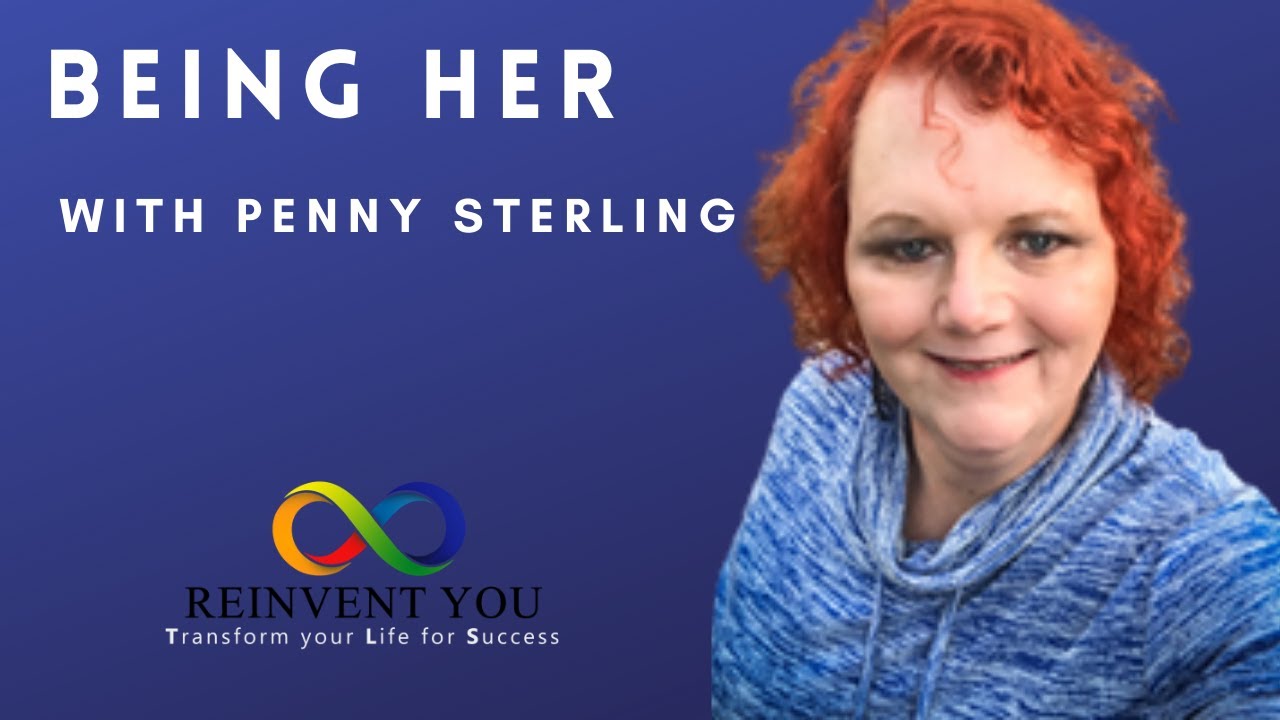
In Reinvent You podcast episode 56, host Travia Steward interviews trans woman Penny Sterling, a former television producer, stand‑up comedian, and storyteller. The conversation traces Penny’s life from a deeply closeted childhood in the late 1960s, through decades of living as a cisgender man marked by abuse, toxic masculinity, and a strained family environment, to the pivotal 2014 moment when she shifted from planning her own death to choosing to live authentically. Penny recounts her social, legal, and medical transition, the creation of one‑woman shows such as Spy in the House of Men, Parents and Children, Husbands and Wives, and Schmilf Life, as well as two TEDx talks that explore abuse from the abuser’s perspective. She discusses her four children, the cycle of abuse she perpetuated and later worked to break, and the therapeutic work that helped her become a “sane” parent. The interview also covers her current advocacy: using comedy and storytelling to educate audiences about transgender identities, encouraging respectful language, and helping people recognize and work with their emotions. Penny shares how listeners can connect with her via social media and emphasizes the podcast’s mission to inspire listeners to reinvent their own lives.
Chapters
You are listening to episode number 56 with Penny Sterling. If you're someone who wants to make major changes in their life, someone who wants to achieve their goals, or maybe you're someone who knows this is not as good as it gets but you have no idea where to start, on the Reinvent You Podcast, we explore different types of people, their successes and failures, and how they reinvented themselves to create the life they love. It's our hope that from hearing their stories that you too may have more insight into what it takes to build the life that you envision for yourself. Here to help you do that is performance and life coach Travia Steward. Guys, I would love it if you're finding value from the podcast, if you would leave a, preferably a 5-star review on Apple Podcasts and share it with someone else that you think that would, might find some value from it. And if you actually have any suggestions on things that you would like to hear more of from me on the podcast, I would be open to that. So thank you for being valued listeners of the Reinvent You podcast. I appreciate you, and it helps me to know that I'm on the right path. So thank you so much. I appreciate you more than you know. My guest today on the Reinvent You podcast is Penny Sterling. Who has worn many hats in her life, and none of them have actually looked particularly good on her. Penny has been a photographer, children's show producer, an assignment editor, advertising producer and a director, an actor, a stand-up comedian, and a competition chili cook. But the reason she's currently writing about herself in third person is because she's a storyteller whose tales of growing up as a deeply closeted transgender woman and then learning to live her authentic life have made audiences laugh and cry in places as far as Minneapolis, Richmond, Virginia, Washington, D.C., and even Minneapolis. Penny obviously didn't think this through. Penny has written and performed 3 shows, 2 TEDx talks, and a sermon. Well, because Penny will never refuse stage time. In— on the show today, Penny and I delve through lots of things. Penny tells her story so sincerely, so passionately. We talk about Penny's story of living as a cisgender man for 50 years. We talk about the difference between transgender and cisgender, when Penny knew something was off, the struggles that Penny endured when she lived as a man before she decided to live her true authentic self, when she decided to really, really live, what's going on in her world today, what is the work that she's doing today, how to connect with Penny, and so much more. You don't want to miss a moment of this episode today. So join me today as we dive right into this episode with Penny Sterling. All right, Penny Sterling, welcome to the Reinvent You podcast. And the second I said that, because you just gave me permission to ask the dangerous questions, I don't know, there was a sense of nervousness that actually honestly came over me. So before we really get into the meat of it, I would ask you to introduce yourself to my listeners. Who is Penny Sterling as we begin to get to know you?
Hi. Okay. So, uh, I am Penny Sterling. Um, I am transgender, uh, which explains why I'm built like your dad and I dress like your mom. Uh, I, I've been told I'm funny.
That was funny.
Thanks. I am a storyteller. I, I'm a lot of things. I've, I've been a, um, a television, uh, producer and director on a local aspect. Nothing, nothing national or anything like that. But I did— I was one of the people who was— I, I was one of the people who started the second, uh, 24-hour local news channel in America. I was part of that team, uh, as a news producer. Uh, the first one was New York One, uh, but the company that started that just basically banked— dropped a, you know, backed a Brinks truck up to them and said, here, do a new— do a news wheel. And then they came to us and they gave us like, you know, a piggy bank and said, all right, now make it money, you know, do it, do it and make money off of it, right? So that was one of the things that I did. I've also worked in commercial television, sports television. I was actually working in sports television when I transitioned, which was really scary because, uh, you know, I was working with a bunch of like former Division I and professional athletes, uh, and which I, you know, like did not think— I was kind of worried about the reaction I would get with, with these people who were now my co-workers. Um, And, uh, I was trained as an actor. Uh, I never really did that. Uh, the closest I ever did it pre-transition was stand-up comedy. Uh, I did— I was actually voted the funniest man in, uh, Rochester in 1992. Funniest man in Rochester. Something's changed since then. Yeah, I no longer— I no longer live in— I no longer live in Rochester. That's what's changed, right? Right. No, that's not true. I live in Rochester. I'm no longer funny. That's what's changed. Uh, I am extraordinarily serious. I am as serious as a heart attack. Um, no, I'm not. Basically, I, I wear many hats and none of them well. But, um, after I transitioned, um, I decided I was going to try getting back into stand-up comedy. Um, and I did a couple of open mics, and I quickly realized that I was trading truth for laughs, and I didn't want to do that. So, um, there's a Fringe Festival in Rochester, and I figured, well, I'll just— because I was also like going— I also came out on Facebook and Twitter, and people, old friends, you know, were like, I, uh, how long has this been? And were asking me questions. And so I started answering them, and they're like, you should write a book. And I'm like, I don't want to write a book, right? But I figured I could take the stand-up comedy background and the fact that I can answer things both truthfully, entertainingly, and I started I did a story, an hour-long show called Spy in the House of Men, a one-woman show with balls. Get it? I promise I'll give you a word in edgewise someplace along here, but for now— Hey, you're good.
You're good.
You know, I tell people if they ask me how am I to, you know, sit down, because most people just say that to keep hello from bumping into goodbye, but I will actually tell you. Um, so I, I started— I did that show, um, and it was really well received, and I've done it more than 40 times around the country. Um, I then was involved in a second show called Parents and Children, Husbands and Wives, about raising children, because I am a father of 4. My kids still call me Dad.
Okay, really?
And yes, uh, and I figure if that's the trade-off to have them accept me for who I am, No trade-off at all. Uh, they have a mom and it's not me, so I, I— that's something that I did. Um, what else? Then I wrote a third show called Schmilf Life, which is about, um, dating when you're both old and transgender. Hint: you don't. But, and, uh, and I was going to— I was all set to do a whole bunch of stuff with that and tour with that last summer, and other things came up instead.
Okay.
And there, I think that's okay. I'll open the floor for questions now.
Perfect. So, so of course I want to, you know, do a rewind. So, Kenny, you know, because, you know, part of your bio is like 50 years you lived as a cisgender heterosexual man.
It's pronounced cisgender, by the way.
Okay, see, see, I don't know that. Thank you. Cisgender. Because I'm like CIS, you know, the TV show, you know.
Well, this is gonna be— this is gonna be a voyage of discovery for you. So CIS will actually— although the only problem was how I dressed before I came on, because oh my God, it was horrible. Anyhow, cisgender. You're familiar with transgender, right? Transgender is, uh, you know, break it down, it's like the— it's the formation of two Latin words, uh, trans, which means across, right? And gender, to the other bathroom. Um, but cisgender is the opposite. It means, it means on the same side of. So basically cisgender is just the opposite of transgender, and it is, it is not a slur. A lot of people who are transphobic consider it a slur because they, I guess, consider transgender to be a slur as well. Oh, it's, it's, it's nothing. It's just another way to say people who, um, whose outsides match their insides. And, uh, we and the trans and trans allies use it because, uh, what could— what would be another op— another choice be besides that? Normal? Straight? What am I, crooked? Am I abnormal? No, I'm a human being. I'm a person. So, uh, cisgender— it is, it is just another way of letting people You know, it's a way of acknowledging that there is more than a binary in gender.
So when you— okay, just correct me if I'm right. So when you— what I say, agree— when you agree with your genitals, you are cisgender, and when you don't, you're transgender.
Yeah, that's cool. Yeah, that's, uh, that's pretty close. Yeah, that's cool. That's Close enough for rock and roll.
There we go.
If you want, if you really want to get into the weeds about, you know, gender diversity, we could, but I'd much rather talk about me. Absolutely.
Okay, there we go. We're here to talk all about you. Okay. So let's talk about when did that light come on for you in your life when you were like, something's not, something's off here. When was that pivotal moment for you, and how did you know?
Well, something was off, um, from the beginning. I did not put, uh, I did not put the fact that it was gender-related until I was 8 years old. But, um, I used to, to do things that, um, really pissed my mom off. Actually, my existence pissed my mom off. In my show Spy in the House of Men, my very first segment. It's basically a series of 7 different stories from my life, people pre- and post-transition. And the first one was called The Fundamental Wrongness of Me, because I didn't know what was wrong with me, but there was something wrong because my parents just did not— I did not fit, uh, anything about that family. Uh, and I start that at 8 years old when my mother rather drunkenly told me that I was supposed to have been a girl. And she said that because for, for old wives' tale reasons, like she had acne while she was pregnant with me, and everybody knows a daughter steals their mother's beauty, what that meant. I was, I was— she carried me high when she was pregnant. I was a month late. They, they bought girls' baby clothes for me. That's how sure they was, and that's how much they wanted a girl. And that was like, okay, that makes sense. It was my reaction. I didn't say that out loud because my brother immediately started mocking me. Ah, you're a girl. Yeah. And it's like, I was, you know, this was 1968. There was no such word as transgender, right? There was no, there was no such concept, especially not in the little town that I lived in. Um, this was like 68. So this was like a year before the Stonewall Riots, which I didn't even know about until I was in my 20s or 30s. Um, so I was completely isolated. I had no idea who I was except for that I was the wrong person. But before that, I had all of these things that were happening that kind of clued me in. Um, I remember when I was really, really young, one of my first memories is playing in a little splash pool in my backyard with the little girl from next door and liking her bathing suit so much more than mine and saying, let's trade. And she said okay. So I took off my bathing suit and handed it to her, and she giggled and ran to her house. And so I ran behind stark naked with my bathing suit in front of me until my mom caught me. And, uh, but that's— I wanted to trade bathing suits with her. And, um, when I played with her older brother, um, we would play G.I. Joes. This was back when they had the the actual big articulated GI Joes with clothing. Um, usually when I would leave, I would swipe one of his sister's Barbies and take off the Barbie dress and try to get it onto my GI Joe. Um, and it didn't work because they were on entirely different scales, but that's, that's where I was. Um, the very first, um, Halloween costume that I picked for myself. Um, my father was like paging through the, the Sears and Roebucks catalog. Again, 1968, Sears and Roebucks was the Amazon at the time. And there was, um, this is called the Wish Book, and they had different sections for different seasons. And there was a Halloween season, it was like pages and pages of like 7 or 8 photos of costumes on each page. And you'd page through and, you know, you you like every, you know, you point to something as an 8-year-old or 6-year-old, I want that. And my, my, my brother saw Huckleberry Hound costume and immediately pointed to that, and I want that. And my dad was turning pages and turning pages, and he turned this page, and I saw in my mind, I thought Supremes. It was a Supremes outfit. It was, um, it was a, it was a gown like I saw Diana Ross and the Supremes wearing, uh, when they were performing on The Ed Sullivan Show. And I was fascinated by them and the way they looked. And they looked so glamorous, and they looked— and they had such a joy about themselves. And the way that they were dressed was just fascinating and beautiful. And they turned, and I saw that outfit, and it came with the above-the-shoulder opera gloves and the beehive hairdo and all these things.
And I—
as soon as the page turned, I tapped it and I said, I want that. And my father got like really, really quiet, like, like the sort of quiet that, you know, even my brother shut up. And he goes, which do you want? And the way he asked, it was like, there is a right and wrong answer here, and the wrong answer could be deadly. So I put it in one ball, and, um, it was acceptable. And that's why I went trick-or-treating that year as Top Cat. No one remembers Top Cat. Top Cat was a, was a, was a D-list cartoon from the Hanna-Barbera. I mean, Magilla Gorilla looked down and Yogi Bear looked down on Top Cat. It was a horrible cartoon, not funny at all. But I was wearing my Top Cat because that was, you know, and that was my life basically, doing things because I was supposed to do them, because I would find other which is why I call it Spy in the House of Men. I would watch what guys did, and I would do my best to imitate them and like not know why. And literally, I would like be ignoring this other voice in my head that would say, this is not who you are. So that's— that was my life for a very long time growing up.
Wow. So that started a chain of events, of course, because realizing that these are the shoulds that I should be doing, these are So how did that permeate through the rest of your life? You're a kid, now you're a teenager. Just give me some snippets of who you became and how much of your life you had to hide.
All of it. There are a lot of transgender women who transition late in life. There's a joke in the trans world. What's the difference between— actually, my partner in my podcast. Amy Stevens uses this in her act, so I'm— I don't want to feel like I'm stealing her, her bit, but, uh, what's the difference between a crossdresser and a transgender woman? About 6 years. Um, but I was not that way. A lot of trans women who transition older will, will spend a lot of time crossdressing, and a lot of times they will have like the, uh, buy and purge syndrome, where they'll like get a secret closet filled with clothes and then at some point be so filled with shame that they'll just ditch them, burn them, give them away, or throw them in the garbage or what. I never did that. I was, um, I was— my mom caught me when I was, I think, 12 or 13 years old, um, making meatloaf in one of her dresses. And, um, I— because she was working, and I, you know, I, I love to bake and cook and stuff. And, um I literally thought— I literally— my fear was that she was going to beat me to death because that was our relationship. She was a very— she was unstable and she was violent, and I was her primary target. Um, and so I was like absolutely terrified of her. And when this happened, I was literally— I thought my only chance might be that she gets tired or like breaks her hand before she beats me to death, right? Um, And because that— she was that severe. But instead she kissed me, and which is the first time she'd ever done that, and said, do you want me to, um, buy you your own dresses? And I, I panicked and I said no, um, because my father was the only person who could put a— could, could rein in my mom. And my father was very— had a very rigid view of gender. You could tell that I, growing up, anything that I did wrong was like a girl. I would like throw like a girl, especially sports— throw, catch, run. Um, but also like things like laugh. And so I would have to learn how to, to behave and, and walk and, and talk and do these things like a, like a, like a boy in order to, to, to please my father. So when she said, do you want me to buy you your own dresses? I, as much as I wanted to say yes, I said no. Um, and I did not wear— I did not do anything at all feminine. I did not cross-dress. I did not wear women's underwear, any of that stuff until, um, I transitioned, or just like weeks before I transitioned, which is another story. But yeah, so, um, yeah, and then I just doubled down on my masculinity at that point. And literally that summer after I did that, um, I grew 6 inches, um, taller, and my voice dropped a half an octave.
Yeah.
Uh, which is like, I was almost, you know, which is almost like my body was waiting for me to decide what I was going to do. And right, well, we got all this testosterone, here you go, right? And it was, it was a, you know, and I started lifting weights and I got hyper-aggressive and I became an asshole and I became abusive and I carried that abuse into my life growing up, right?
What age was that? What was that window?
The— I was 12 years old when my mom caught me, and I learned to, like, literally, I did, I started doing guy stuff. I got into sports. I got very physical. I treated my body like like it was a rental, if that makes sense. I really didn't care about it. I didn't have any sort of gentleness or sensitivity. I liked acting because it gave me a chance to be somebody other than myself, right?
A chance to escape, right?
Yeah, a chance to be— and, you know, like, it was as long— again, I could do a lot of comedy. I have good comic timing. And things like that, but I really didn't get any of the more interesting parts. But at least it gave me a chance to be somebody else, and whenever there was a part that came along, right?
So how did that transition from— so like, you're 12, you like, you took the masculine man road, you're 12, now you're— you, what, do you get married? You're dating girls, you're obviously having sex. I mean, not obvious. I mean, you got kids here.
Yeah, well, if you have 4 kids, it means you've had sex 4 times or nothing more, unless they're twins, which they're not.
And talk to the emotional connection or lack thereof.
Yeah, yeah, they're— yeah, well, emotionally, um, I don't know how frank you want to get, but basically the only way I could perform sexually as a man was to imagine being the woman, uh, that, you know, that I was the woman in the situation. And that was the only thing that would work. Um, and even then I had to like take like Cialis and all these other things. And on top of that, I would have to get really— I would have to hype— I would have to like, like think about and, and reinforce the masculinity and the— and the— so I would use adrenaline and I would use aggression in order to like force the testosterone to overcome the, the mental block of, you know, being the long— use an acting metaphor— being the wrong character in the, in the performance. Um, and so I be— you know, I, I found, uh, the— my— I rarely had sex. Um, I mean, this, like, where this is the pre-AIDS sexual revolution, you know, when everybody was, was having sex. Which is when I came of age, um, I didn't kiss a woman until, or until I was in college. It was a— I was a sophomore in college and I was drunk on my— I was drunk off my ass, um, and I was— it was a Halloween party and I was sitting next to a slutty witch and I was telling her how cute her outfit was and I was like really and, uh, she and I kissed and we made out. And that was the very first time I kissed. I didn't kiss anybody sober, and I would have to get drunk to kiss women. I didn't kiss anybody sober. Uh, my ex-wife was the first person that I kissed sober. Um, and I basically avoided sex as much as possible, although my body craved it. I, I avoided it because it was in the wrong— it was the wrong— I was the wrong part. I was doing— I was in the wrong role, right? Wow.
So, so did you get married?
Yes, uh, married and divorced. I have, uh, 4 children. Um, 2 of them came in pre— 2 of them came pre-installed with my future ex-wife. Um, They were like 3 and 6 when I met them, so I was involved in their life all through the growing up. And, um, and then we, um, we built two from scratch. And so, uh, and, and I, I love them all dearly. Um, and then my marriage fell apart. It was not my gender issues had nothing to do with the marriage ending. Um, it was a combination of things. Uh, part of it was My part of it was that I was an aggressive, abusive asshole. And you, and you, you know, you saw one of my— I've done two TED Talks. Uh, the, the second one was the one that you were watching just before we started. I did another one a few years earlier where I talk about abuse from the aspect of the abuser, which is what I was. Um, mostly it was very little was physical, and I don't say that as an excuse because a lot of times with with men, um, that is used as an excuse. You know, I'm not hitting her, so, you know, uh, and I, and I did that too. I was, I was abused as a child, and so I would compare the, the horrific abuse that I had to what I was— the abuse that I was laying on my family and saying that no, that's not abuse because comparatively. And that's not true. Abuse is abuse is abuse. And that was my part of it. Her part was, uh, was a lot worse than that, her part. And so we separated. I got custody of my kids, um, and, um, I met somebody who, um, kind of mentored me, uh, whose life fell apart very similar to the way mine did, only I like, you know, 15 years earlier. And one of the things that he said to me that, um, has stuck with me for the rest of my life is that every child deserves at least one sane parent, and you can never be sure of the other one. And that kind of became my, my way of living. And that was my rule, is that I need to be sane and I need to make sane choices. And so I got into therapy, um, with the intent of becoming the healthiest, least toxic masculine man that I could be. Uh, and what happened is that eventually I realized I needed to drop more than just the toxic and toxic masculinity. Um, but that took 15 years of work on my part and and all as well as having an existential crisis where I was literally scheduling my death. Um, so, and then while I was doing that, um, I don't know how much, how much do you want to get in on this?
Well, you know, I want to go back because it feels like, like, like I would be, you know, amiss for not asking, like, what do you think was at the core of that abuse? Like, you think, you know, what, what, what was the cause of that? What cause Penny to be abusive and then repeat it? Well, to be abused and then repeat it.
Yeah, well, my, my mom was— I think both of my parents, um, had children, were children of, um, people who abused alcohol. They, they showed a lot of the patterns of that, um, and, um My father never talked about his family life growing up and what his life was like, so I could only imagine what they were. But he was, um, he was the, the perfect child. He was the, the, the savior of his family. He was the straight-A student, um, and, um, he grew up in Pittsburgh. Uh, he met my mom in southwestern Pennsylvania and the week before they got married, my dad transferred to Corning, New York, which is where I grew up. And, you know, kind of like the geographical cure, get away from his family. And so he really— and he was very much very rigid. And like he told my— and my mom was— would tell me stories of the abuse that my grandfather on her side would heap on her three brothers and never talk about herself, about the abuse that she got. And so I assumed that she didn't get beat up and physically abused like her three brothers. And it wasn't until I was much later in life that I began to suspect that the abuse that she had was probably far worse, and she couldn't even talk about it. But she would say things like, you know, women don't enjoy sex, so You know, she would say that to me growing up. Um, so that was kind of— and, and she never thought that she was going to get married. She thought she was damaged goods. And so when my father asked her, uh, to marry her— marry him— she basically decided that she would do anything to save that marriage, and that included blindly agreeing to anything that my father asked. And my father only had 3 demands. Um, he wanted the house to be clean when he got home. He wanted his children to be clean when he got home, and he wanted food on the table when he got home. And, um, any sane woman would have said, okay, um, pick two, and if one of them is kids, only if you help out. But he— she didn't. And so she needed to have the house perfect and the food perfect and the children perfect, and I didn't fit that. And I was, well, no, I was a second child. My brother was very quiet and studious, and I was rambunctious, and I would crawl. That was the first thing that I was ever punished for was actually crawling. I, you know, I— she told me, you know, kind of amusing, you would never sit still. I just get so angry at you. Having been a parent That's what kids are supposed to do. Um, but I got beaten for it, uh, because I was the frustration point. Uh, I was, I, I was the, I was the straw that, that broke the camel's back. And, um, then my brother, who was brilliant, is brilliant, would see that and recognize that as long as he kept my mother's anger on me, then he would skate. And so That's where it came from. It was that, that, you know, she was— it's— there was no such thing as mental health back then. I was actually threatened with it. I haven't gotten to that in my TED Talk yet. I talk about that a little bit too. But, um, you know, like, uh, I, I was— I was literally, you know, she'd say, if you don't straighten up, I'm gonna get your head shrunk. Yeah, because they, they called psychiatrists shrinks back then. I didn't realize it was a metaphor. And considering the things that happened to me, actually, like, doing something like that was not out of the realm of possibility. Um, so yeah, it was, it was hell, former child recalls. Um, yeah, but it was because she was abused herself, quite frankly, and my father was too. And he, she shut himself off. Um, he was like the champion of ignoring pain. He considered pain to be a weakness, and it killed him. He had a heart attack— well, a series of heart attacks— and he would— he was playing volleyball while suffering a series of heart attacks, and he died on the court at 50 when I was a senior in high school. Um, and so I don't really know that much about my dad's side of the family. Um, but you know, yeah, my, my— I can assume that my both grandfathers were pretty horrible, right? And so my parents were the products of that.
Okay, well, my goodness, we're going to get into some happier stuff after I ask you one more thing.
Good night. I'm sorry.
Well, I mean, it's just— I mean, this is like— this isn't, you know, I'm hoping that it's something that could help, you know, someone, one person. You know, I always think about these episodes asking the kinds of questions that if it helps one person get through something, you know, it helps, it's helping. And so I did take a scroll, I did send you a friend request, which you haven't answered yet, but I know you will. But I did Scroll down your Facebook and there's a post that you have on there like that you posted on April 29th and you were referring to April 28th where you said, I just now realized that yesterday was the day, the day in 2014 that I went from planning the end of my life to living the rest of my life. What did you mean by that? Can you expound? Do you, would you mind expounding?
I don't mind at all. I don't mind at all. I'm kind of the same way that you are about all this stuff. Yeah, um, which is one of the reasons why I use so much comedy, um, is because I do get into heavy shit. Um, but yeah, on that day, um, okay, so I was a single parent and I was raising my kids, and they are fantastic. Uh, the time I spent raising them, even though it was really, really hard— we didn't have a lot of money Um, for a number of reasons, um, every moment with them has been pure joy. And they were, um, they were growing up and they were getting to the point where they're going to be moving out. And, um, uh Okay, so when my life fell apart at the turn of the century, at one point I said to myself, and I said to a group of people, not everybody makes it, and I'm not gonna make it. And I was perfectly okay with that. My, you know, my family, we were bankrupt. I had to, I had to declare bankruptcy. The house was foreclosed. Um, my ex-wife massively cross-addicted. That's— I've been trying to avoid it, but, um, and she emptied out the bank account, and then she, um, destroyed one of our cars. Uh, and then we rented a house, and I couldn't afford that anymore because she— and she— and I, I— a lot of it was me just trusting and hoping that she wasn't the addict that was increasingly sure that she was. But, uh, so I was at this really, really, really low point. And, um, just be— just before that low, because I was still going down at that point, I was in a— I was in a group of people who were families of addicts and alcoholics. And I— we start— we were sitting in a circle and it was like a check-in thing because it was a— it was a therapy session. They started with the person to my left, and then they went clockwise, and they were all checking in about the week that they had. And they were having pretty good weeks, and they're like 6 of us. And by the time I got to the 3rd one, like, everybody's week was better than mine and better. And it's like I was praying and hoping that they would be better, because when it got to me, I opened my mouth and I said, well, and I talked, and everybody, when I was finished, was like And I said, I win, because my life was worse than anybody else's. If I couldn't have the best life, then I was going to have the worst life. And that's when I started getting— that was like the moment where I started getting help, um, and I started actually being aware that I had children and that I needed to be that same parent. But now my kids were looking at college, they were in high school and looking at college, and my oldest was about to go into college. And so about 2 years before that, I was recognizing that end was coming. And so I looked in the calendar and I figured, okay, August of 2020 was when I was going to kill myself, because my youngest would be graduated, um, and they would be out of the house. And, you know, then, then, and I would be able to do it on a date and a time when it was not near any holidays or birthdays so that there wouldn't be any— I wouldn't ruin anything for anybody else. Um, and then in 2014, I was like, okay, that's really far away. Um, and so I started waiting to say, so I'll do it in 2000 and, um, 2016 when my daughter is out of high school, because at least she'll be out of high school and she'll be in college. And so, because my father died when I was a senior in high school, and it was really, really hard on me. And then in April, I was thinking, okay, well, my dad died in my senior year of high school, and, you know, I turned out okay. Except for the fact that I am sitting here now trying to make a calendar item of my death. And that was a part, one part of what was going on, um, my recovery work. At that point, I was dealing with the fact that I was homophobic and transphobic. Uh, I was all, I was pro-equality. I just was intensely around uncomfortable around, um, gay men and, uh, gender non-conforming people. I did not want to be around them, and I was trying to work through that. And I was actually working on a project with a, a gay man, and, um, there were some things that were coming up in conversations with him and as we were working together that were making me intensely uncomfortable. And he and his husband were on vacation and I couldn't talk to them about this, and I couldn't talk to my therapist because he was on a 2-week windsurfing vacation, and I couldn't talk to my, um, my 12-step sponsor because he was off doing something else. So I was just like having this multiple-level existential crisis, and the combination of which, um, finally broke through to me that it wasn't that I didn't want to die, that I didn't want to live It was that I didn't want to live as the man that I was not anymore. Yeah. And, um, when that hit, um, everything changed. Um, everything shifted. Uh, and I, I did not And, and I, I felt lighter and freer, and, um, I felt a true sense of joy for the first time in my life. And, uh, and it was, it was, it was an earth-shattering moment for me, and I still had a long ways to go Um, I didn't say I was transgender. Um, I, I said I was androgynous. Um, and basically the, the next 7 months I spent, um, trying to be— learning to become comfortable with being transgender. I tried a whole bunch of things. I'd— more lying to myself. That's really what it was. I, you know, lying is second nature, was second nature for me in so many ways.. And so I kept on, like, putting down lie after lie after lie and telling me it's okay until, um, it was Halloween actually of 2014 that I was finally able to admit that it— I was transgender. And then I spent the next 11 months socially transitioning. Um, and, uh, then there's, there's 3 different types of transitioning. There's social transitioning legal transitioning and medical transitioning. And there's no rules about any of this for trans folk. Um, I, um, got my name legally changed in, um, the, the, the judge signed the order on November 30th of last year. And so I finally got— yeah, I finally got all the paperwork done.
Congratulations!
Thank you so much. And it was I had a lawyer helping me, and, um, uh, the, the, we were going over the paperwork via Zoom, and, um, there were lots of questions about this. Did I want to keep my last name? And originally I said yes, but no, I really didn't want to. I wanted to be Penny Sterling, which is the name that I discovered about myself in 1981 and was pissed because I didn't think anyone was ever going to know it. And so when I transitioned, of course, that's who I was, because that's who I was in my mind for 20 years or so, even though I didn't do anything externally. So yeah, it's— and so, uh, that's, that's how I got to where I am.
Well, there you go. Thank you, that was beautiful. So what is the work that you're doing today to leave your mark on this earth?
Ah, oh gosh, uh, the work that I'm doing, a lot of it is being present in the world, uh, being sometimes radically present in the world, um, going to different places and just being myself sometimes is, yeah, uh, it's pretty radical. Making myself open to even the uncomfortable questions. And, um, you know, you know, a lot of times the— one of the questions that gets asked a lot is, have you had the surgery yet? And I said, well, yeah, I had, uh, I had my wisdom teeth out. That's the surgery you're talking about. Yeah. So yeah, and, and that— and, and so, but I am More, you know, like, you— these are not questions. Don't talk to anybody's genitals ever is a really good standing rule, unless it's, you know, to talking to your doctor and, you know, about it because there's a genital issue. You don't ask somebody, you know, if you— a real good question about dealing with transgender people is, would you ask the same question of a cisgender person? If the answer is no, then don't ask it of a transgender person. But I, um, for whatever reason, maybe it's because I'm old and I, you know, I, I have very, very few fucks to give, and I'm not going to give a lot of these questions. Yeah, I, I'm okay with people asking these questions in context, in like in question and answer sessions, it's like after a show if I'm working with people. Uh, and so that's what I'm doing. I'm trying to, I'm trying to get people to be okay being around transgender folk. I'm trying to get people to understand that transgender people are people first, and they are not— it really doesn't matter what their genitals are.
Absolutely.
Or how they started their life. It's where they are now that's important. I'm, I'm also working, trying to get them to, um, get to, to, to deal with emotion, which to me is the most— all decisions are emotional decisions. You may— people may confuse the fact because, oh, I'm a rational thinker, which is what my dad used to do. I have to do these, right? But no, he would just like— you, you can game the, the rational thinking to get to the decision that you emotionally came up with. Everything starts with emotions. And so I, I try to get people to, to be aware of their emotions. And to play with their emotions in my stories, which is why I do a lot of comedy, because that's a great way to start— you know, I call it breaking hearts in, in the most important way, because a lot of people's hearts are very hardened.
Yeah.
And it's, it's not until you, you get past that hard exterior that you can get to the, the tender center where they've got things that they're protecting that, uh, maybe the way they protected themselves when they first hardened their hearts is not going to work for them anymore. If they have a child who is transgender, or if they have a spouse who has come out and, and, "I love you, but I can't be married to you anymore because, uh, I'm attracted to other people." Uh, yeah, there are lots of things that harden our hearts, and I try to break them.
Oh, I love that. So, Benny, thank you. What is the most exhilarating thing that you can't wait to do?
Oh my God, be in front of people.
Be in front of people on stage.
On stage. Yes, I, I live for the stage. Um, I have been able to You know, with, with my work, I have— I've always wanted to perform. I've always loved performing. I've loved acting and doing things. There are very few roles for older yet still vivacious transgender women, believe it or not. I can't imagine why there are. That's to say, so I've given myself roles, and, um, I'm really good at playing me. And so Um, I, I, I, I've been doing a lot of stuff on Zoom, but the reactions that I get and that I feel and I pick up in front of people when I'm, when I'm telling my stories and doing my shows is, uh, it's, it's, it's, it's mana. It's what I need, and I miss it so much, and I can't wait for that, uh, wait for that to happen. Yeah.
And it's coming. It's coming. You know, New York. Yeah. Well, New York, they're selling tickets for, you know, September. So yeah, it's coming.
Yeah, I'm really hoping so. You're in LA. Is that where you are?
No, I'm actually in Arizona.
Arizona. Yeah. Okay.
Yeah. So Penny, this has been a blast. Thank you so much. And thank you for sharing your story. And I think, you know, I know, I don't think, I know it's going to help somebody out there. So just one more, one more thing. Where can people connect, you know, especially reach out to you, especially if someone's going through something that, you know, that they see in your story? Where can they connect with you?
Um, I am on all the socials. I— well, not all. I am on Twitter and Facebook and Instagram. I am Penny Sterling, or some iteration of Penny Sterling, and all of them— type it into the search box and click on the one that looks like me, uh, and, uh, that's probably going to be me. And I, I welcome, uh, talking to anybody about this. And, uh, thank you so much for, for what you're doing here. It's been a pleasure, uh, talking at you because I really feel like you'll— you, you said hello and then an hour later you're saying, okay, we gotta go now.
It's been a blast. I love it.
I love it.
Thank you, Penny. If you like what you're hearing and perhaps you're interested in having a complimentary conversation with me, click the link at the bottom of the show notes. Thank you so much for listening. If you even want to know more about what I'm up to, head over to traviestewart.com. And if you like seeing the videos of the podcast, every episode is on my YouTube channel. Take care, guys.
More from Travia









Remember the YOU Who Didn't Overthink Everything #personalgroth #mindset #selfdoubt

