Ep 57: Live the impactful life you were born to live with Lily Shaw
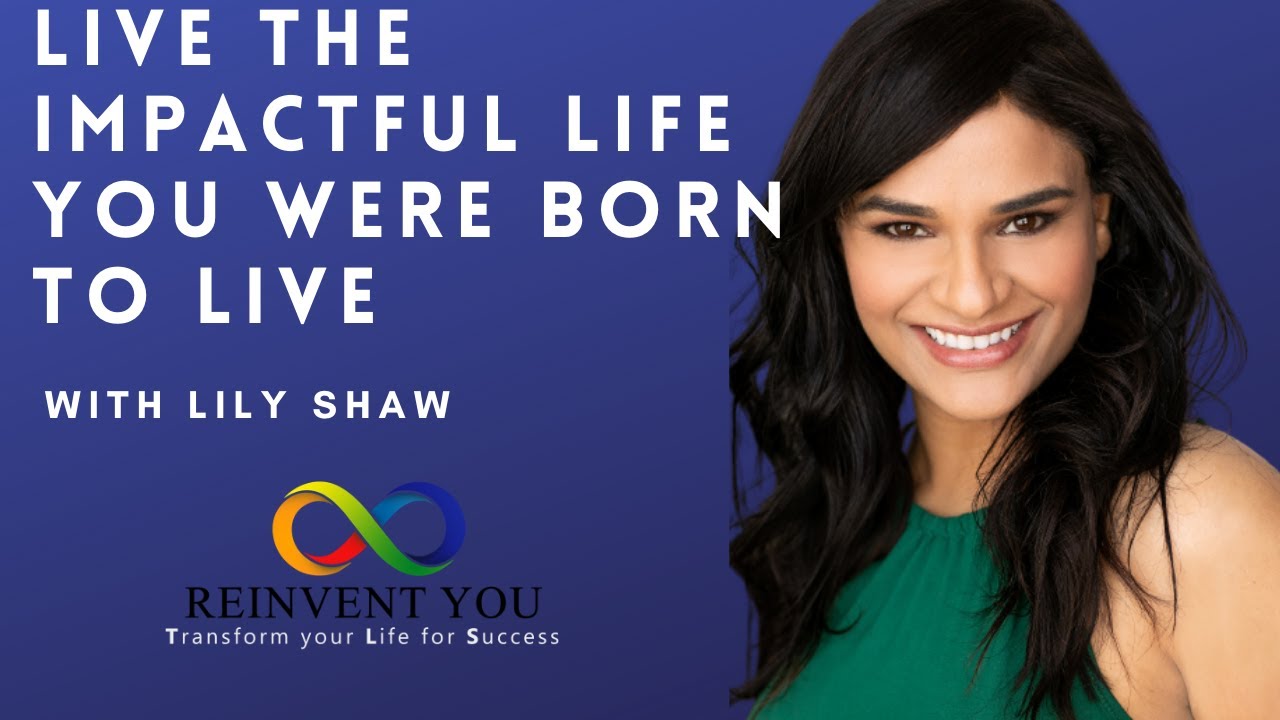
In this episode of the Reinvent You podcast, host Travia Steward interviews Lily Shaw, a first‑generation Indian‑American actress, writer, voice‑over artist, and motivational speaker. Lily shares her personal journey from a child fascinated by cinema to a professional navigating Hollywood’s systemic sexism and colorism. She describes how the #MeToo and Black Lives Matter movements served as a catalyst for her to speak out about toxic masculinity, misogyny, and the pervasive practice of casting women of color in one‑line "co‑star" roles. Lily recounts specific instances of discrimination, including an agent’s thinly‑veiled comment about her skin tone, and how she eventually recognized that her struggles were part of a broader pattern affecting women of color. She discusses the cultural pressures of being a first‑generation Indian American, the estrangement from her family, and how those challenges forged her resilience. Central to her philosophy are listening to one’s inner truth, “fake it till you make it,” and building supportive communities of like‑minded people. Lily explains a pivotal “reset button” moment when her body health collapsed under industry‑driven body‑image expectations, prompting her to redefine success on her own terms and pursue sustainable, authentic work as an actress, writer, and speaker. She outlines current passion projects: creating a community platform, virtual speaking series, and undisclosed speaking engagements, while emphasizing the need for representation—both for Indian girls and Black girls—to see themselves reflected in media. The conversation concludes with Lily’s vision of a legacy rooted in empowering others, her call for better American history education, and an invitation for listeners to follow her on Instagram to join her community‑building efforts.
Chapters
You are listening to episode 57 with Lily Shaw.
If you're someone who wants to make major changes in their life, someone who wants to achieve their goals, or maybe you're someone who knows this is not as good as it gets but you have no idea where to start, on the Reinvent You podcast we explore different types of people, their successes and failures, and how they reinvented themselves to create the life they love. It's our hope that It's by hearing their stories that you too may have more insight into what it takes to build the life that you envision for yourselves. Here to help you do that is performance and life coach Travia Steward.
Guys, I would love it if you're finding value from the podcast, if you would leave a, preferably a 5-star review on Apple Podcasts and share it with someone else that you think that would, might find some value from it. And if you actually have any suggestions on things that you would like to hear more of from me on the podcast, I would be open to that. So thank you for being valued listeners of the Reinvent You Podcast. I appreciate you, and it helps me to know that I'm on the right path. So thank you so much. I appreciate you more than you know. My guest today is a powerhouse actress and voiceover artist a contributing writer for Backstage Magazine and Thrive Global, and an award-winning motivational speaker who is rescued and inspired by the make-believe world of cinema at the age of 7. A first-generation Indian American, the first woman in her family to step away from tradition to pursue a creative profession, which she's been a powerful voice for women's empowerment since childhood and now fiercely stands for social justice and gender equality and representation. As an intuitive and conscious speaker, she leads by example, inspires audiences to use their very own voice, their own gifts, and authentically become who they were born to be. Her mantra is use your voice, own your gifts, and stay step into your empowered self. Live the impactful life you were born to live. I love it already. On the guest today, we dive into so many things ranging from the moment she knew she was meant for more, all the way through some of the hateful things that she experienced going through her acting career. Her message that she has for young girls, how she hit the reset button and found her true authentic self, the legacy that she wants to live— to leave, and so much more. Join me as we dive into the episode right now. All right, so welcome to the Reinvent You Podcast. My guest today is— she's an actress, She's a lot of things. Motivational speaker. I will have introduced her already, but you know, joining the conversation is Lily Shaw. Lily, will you do me the honor of introducing yourself to my listeners right now?
Oh my God. Uh, hi. That was a lovely, lovely introduction. Thank you. We're gonna have fun tonight.
Yes, we are. Yes, we are.
Uh, well, I, as, uh, my name is Lily Shaw. I'm an actress. I'm, uh, as of last year, also now a writer. And, um, and all my life experience has kind of taken me down the path where I want to share my life experience, my journey, and my tough life lessons that I've learned with the people, with audiences, with everyone out there. So I've also decided to, uh, and have actively taken steps into becoming a motivational speaker, into becoming somebody who is a public speaker. So, and of course I stand, um, and feel, feel, uh, believe very strongly in the idea of empowerment of women and of social and, uh, moral equality for everybody really.
Right. I love that. You know, there comes a moment where it's a pivotal moment in your life where you're like, I just wanna be an actor, you know, but it's like you get a wake-up call, right? What was that moment for you where you was like, it's not just about acting? Wha— you know, what was that impact moment for you where you're like, it's about more for me. When did that occur for you?
You know, that's a great question because as we are now seeing, more and more actors are stepping up and they're, you know, becoming activists. Um, and I gotta tell you that I absolutely was one of those young actors who just wanted to act and didn't really think much about anything else, you know. Um, acting was kind of like something that brought me joy, brought me happiness, and I thought, oh, you know, this is it, this is what I'm gonna do with my life. But then, you know, being in LA, being a woman of color, uh, I had to go through the kind of experiences that you don't really think about when you're a young person, right? So I had to deal with a lot of toxic masculinity, a lot of patriarchal stuff. I had to deal with a lot of misogyny and discrimination. And so All of that combined kind of opened my eyes towards this idea of there's more here, you know, there's a conversation that needs to happen about this. And one of the worst things about this kind of toxic experience is that it's very isolating. You kind of feel like you're the only one who's going through it. And as I, you know, became— got to know people more and more, I started understanding that it, it feels isolating, but it's not quite as isolating, that I'm not the only one going through it. And so, you know, if you— when you share your grief, you reduce it. So that's kind of the, uh, the motivating factor was, it's like, I need to share, I need to talk to somebody, you know, about the life that I'm having, about these experiences that I'm having. And then for me, the huge turning point was the Me Too movement, um, and then the Black Lives Matter movement, because that was the first time that I got to see just on a massive, massive scale the— you know, what I thought I was— was just happening to me, it turns out pretty much has been happening to actresses, to women, for like at least 100 years, you know what I'm saying? And then, you know, so that was like that big eye-opening moment for me, for when one, I realized the importance and how, you know, how necessary it was for me to come out and start talking about me and my life experiences, but also how necessary it was that other people who are perhaps going through the kind of journey that I went through understand that they're not as alone as they think that they are. Right. So yeah, that, that, that I would say would be the pivotal moment for me. Wow.
So as a first-generation Indian American, you know, you guys, you're not loud, you're not extroverts. You don't go out there and bang down doors. You don't— you're not heard. You know, you don't make noise. Where do you get this voice? And where do you get the motivation and the encouragement to even go and stand alone to take action like this and feel supported?
Wow. Right, right. You know, yeah, you're right. I have never thought about it that way. You know, first of all, I do want to say that Indian community America might not be a very visible or loud community, but, you know, Indians in India are extremely creative. You know, there is this whole sort of ideology of like art and singing and dancing and acting and performing and things like that. So I had an early exposure to that, uh, you know. So growing up in India, you know, my mom and my dad was like— we were always— my brother and I were always in some sort of, you know, painting, sketching, dancing, some sort of classes. So I kind of grew up in a very creative home to begin with. So by the time I decided to make this a career, it didn't even occur to me. And, you know, because I emigrated, and so by the time I emigrated, my mind was kind of set on being an actress. But I had no idea that the community here and the whole attitude here was very different than the kind of attitude that I had grown up in India, right? So part of me was just plain simple stupid ignorance and not really knowing. Right, right, right. I was like, ah, okay, gotcha. You know, not Mumbai, LA. Got it. Let's do this. It was just like, eh, no biggie. Right, right. But yeah, and then the struggle came later in a huge, huge way, in an exceedingly difficult way where I had to sort of decide many, many times, do I want to keep doing this? Is it worth this hatred? Is it worth all of this pain and this anger and the stuff that I'm going through that's not just my acting struggle but just the fact that I'm not a white blonde woman pursuing this? It's like, you know, so I've had to have this conversation with myself so many times over the last 10 years, and I gotta say that for better or for worse, the answer has always been yes. And I have— what I have found in my experience is that every time I needed help, one way or another, I was able to get it. That helped me go, uh, move forward and sort of keep going, even though it wasn't at the level and even though it wasn't quite the progress that I wanted. But at least I was moving forward. So somehow or another, someone would show up who would show me my next step. But yeah, so it was literally like one step at a time, right? But yes, those, those conversations happened later on. Yeah.
Can you speak with some specificity about some of the hatred you experienced?
Um, gosh, that's— we're gonna be here forever. I think, um, the biggest thing that I didn't— it took me this this thing that I'm going to talk about took me almost 10 years to understand. Um, what ended up happening is like I would go in— so this is like my first, one of my first agents that I spoke to, and I showed him my demo reel and he was very happy with it, very impressed with it. And then he kind of casually said it, he was like, if you had the right look, you'd be the next Sandra Bullock. And you know, at the time I— what I thought he meant is, you know, because I was overweight, so I thought, oh, he probably means that I just need to lose weight because, you know, Sandberg's got this awesome body. So I was thinking in my ignorance and in my youth, I was thinking that's what he meant. But these kinds of experiences, these kind of like subtle nudges kind of kept happening and which, you know, ballooned up and ballooned up. And so eventually I came to a place in my life where I was like, wait a minute. Like it's always my fault, you know, like something is always wrong with me, you know, there's always someone else seems to get the part, someone else seems to get the appreciation, why isn't it me, why am I not getting my turn, right? So that was the moment like when I started was like it can't be like I, you know, and then the dichotomy was at my school in my acting classes I would get these massive sort of positive reinforcement of like how I was good at a good actress, but that kind would not translate into the real world. In the real world, there was always something wrong with me. It's just, you know, either I wasn't the right type, they just weren't looking for you, they, you know, right? And then it got to that level where the only thing that I was auditioning for was co-stars. Now, for those of you, your listeners who don't know what co-stars is, it's literally those one-line roles. Right. So, you know, and I started observing this pattern of where people of color literally were just doing those one-line roles, and all of like the main big parts, most of them, 90% of them, were going to white people. So that's when I started understanding that what my first agent really meant when he said was that I didn't have the right skin color. It didn't mean, you know, that. And so, you know, there's— I mean, just like being constantly like just being, um, in this co-star thing, you know. And then I had to fight a lot of battles where I had to fight to get credit, where I had to fight to get respect, where I had to even one time had to walk away from a project because I wasn't getting paid the amount that I was promised. And so those kinds of small battles would happen constantly. And it took me almost like this 10-year journey to understand that the reason that was happening was mainly because of my skin color and to a certain extent, even my gender. But they were primarily driven by the fact that I didn't look a certain way.
Wow.
What would be—
that's, that's so good. That's so eloquently. I love it. What would be your rebuttal to someone like Tim Scott, who gave the Republican rebuttal to Joe Biden, that, you know, who comes up to you and says, this is not a racist country, and Lily Scott, you have the same opportunities as any other female in this country. In the acting industry?
You know, I want to be, first of all, very cognizant of the fact that a Black person's experience in America is very, very different and trouble— and as, as we are now finding out, more troublesome than the other minorities. So I want to be a little more cognizant of not speaking for a Black person's experience. But frankly, I mean, when I heard It was heartbreaking. That's the word. It was heartbreaking because it's one thing when you say that you have equal opportunity and, you know, you're taking that opportunity away from somebody, right? But it's completely other thing when the, the difference between white and Black in this country is whether or not you get shot at a routine traffic stop. So, and, and then, you know, for him to say that and to say it with such sincerity and with such, you know, it was just so disappointing to me, you know. And I would just say that all he, Mr. Scott, needs to do is to look back into his own life, and he would find out just how much opportunity was restricted from him because of his skin color. And, and I, I would honestly, honestly encourage him to just look back into his own life and understand what the truth really is. And no amount of massaging it, no amount of politicizing, politicizing it is gonna take away the simple fact that in this country, up until now, opportunity has been exceedingly defined by your skin color.
Absolutely.
You know, so, and if he chooses to not do that, you know, thankfully we are in a democracy. But thankfully for me, I'm surrounded by people who want to make a change that's going to bring equality and that's going to bring equal opportunity to everybody, you know, even idiots like him.
Absolutely. Would you say— so is your family here with you?
Yeah, yeah, we all emigrated together. Yeah.
Okay.
Mom and my brother. Yeah, we're here.
Do you have any older relatives who worry about you?
Older relatives? Uh, well, all of them have passed away, thank God.
Okay, okay. So nobody's like, you're being too much, what's going on?
You know, um, I absolutely went through that. My mom's side of the family pretty much shunned me. They, you know, treated me, ostracized me, were exceedingly cruel to me, have basically written me off and treated me like I was the black sheep of the family for the— for basically the whole time that I've been an actress. Um, so, you know, it's not that they worry about me, it's the fact that I think to a certain extent they just either want to pretend that I don't exist, um, or it's just that they're ashamed of me. But I have had to cut off all ties with them in order to protect myself and protect my sanity. So that's the side of the equation where I come in. Wow.
Okay. And so, and how do you balance that? Like, you know, let's say, because I mean, you have found your empowered self, you know, like you are stepping into your empowered self. So like, like when, you know, you have siblings, like when your niece comes up and says, Aunt Lily, Aunt Lily, you know, I want to be like you, you know, tell me, how do I be like you? What is the message that you have for her?
Um, you know, again, wow, uh, two great questions. The first one I would say is, um, the reason I'm empowered today and I'm strong in who I ha— I— in who I am and what I'm fighting for and what I believe in is because of people like my family, like my mom's family, you know, because they were so arrogant and so dismissive and so cruel and so inhumane to me, I decided from very early on that I wasn't going to be what they were. So, you know, as Abraham Hicks says, when you see what you don't want, you do know what you want. You know, so for me, it was really that contrast of like, no matter what, I'm not going to be them. So that was a huge deciding force. I mean, for me, because Once you realize that they— that I will not become them, then it's an easier journey to keep, you know, disassociating yourself and disconnecting yourself from those people. So that's like the first aspect, um, you know. So a lot of it for me has been about connecting to my inner voice, about connecting to my inner truth, and sort of, you know, to keep going despite despite the odds and to keep believing almost foolishly that I'm going to beat the odds, right? So somehow, you know, fake it till you make it. Somehow, as I was doing that, I started embodying that, you know. So that was a huge component in my survival, the fact that I could imagine that things were good, you know. So I like— I mean, if I didn't have that imagination, if I didn't have the ability to believe that I could beat the odds, I probably would have given into their kind of thinking and their kind of, you know, that, that kind of existence a long time ago.
Absolutely.
So that's, that would, that's like the first thing I would say is like, please listen to yourself, listen to your truth, even if it makes no sense, even if it is different than what everybody else around you is telling you to do, you know. So listen, be quiet and listen to your truth, and I promise you, if you leap then that will appear. I mean, that's just the reality of human life, you know. So that's the first thing I would say. The second thing that I learned and that I really, really talk about, which is the foundational element of why I do these kinds of conversations, is the importance of finding like-minded people. Create your community, you know, surround yourself with people who believe in you, who think like you, who look like you, who don't look like you. It doesn't matter, but you gotta be surrounded by people who, who can believe the impossible. So, you know, so that would be like my two big sort of nuggets of like, believe in yourself and then surround yourself with people who believe in you. So if I had learned that sooner I would have been like way ahead of my—
this is right, right. You know, because I've been on a search of— I've been on that search. That, that is one of the things that I wish I knew then that I know now. And when I took a search, you know, because I do a little research every time I have somebody on the podcast, and I immediately, you know, I scroll through your IG, and when I got to the Mahatma Gandhi quote, and I went, that's my girl right there. There she is. Your belief become your thoughts. It's the foundation of all the work that I do. And I was like, there she is, right? And when you started talking, that's what it is. She's like, fake it till we make it. It's the basis of the work that I do with my clients. And my goodness, Lily, if we— oh, it's so powerful. And just if you knew then as a kid, if those young girls who are looking up to you, the power of the imagination that we can build those neural pathways.
Yeah. That we can. Oh my God. Right. Oh, that's, that's it. That's the thing that can, my God. I mean, our mind can trap us. It can set us free. We need somebody who can show us how to use it in a way that's gonna fulfill us and empower us. Us.
Absolutely.
And, you know, and before we move on, I really want to say that, you know, someone like you being a life coach is also equally important because yes, we need people of all color and all shapes and all orientations out there spreading your message, right? But there is something that needs to be said about seeing yourself reflected in the world.
Yes.
So it's so, so important that, you know, an Indian girl sees an Indian actress on screen, that a Black black girl sees a black, uh, you know, fingers crossed, black president.
Yeah, you know.
Yeah, so you know what I'm saying? So I think, so the more you and I go on stages and occupy space and share our life stories, I think the more we're gonna empower the next generation, or even, you know, women older than us who are now stepping out to, you know, embody their true selves. So, you know, this works both sides of the equation.
It does.
You need to join the community and you need to lead a community.
Right, right, right. So what is your big thing that you're working on right now? I know you're acting, I know you're speaking. What would you say you are the absolute most passionate about right now? What's your passion project?
Um, you know, I, um, am— it's, it's for me, um A couple years ago, I'm going to go back a little bit. I realized that I was not being impactful in a way that I wanted to be, right? So whether as an actress, and then at that time, I hadn't even discovered the idea of writing and write— the idea of speaking. So I just knew that I wasn't living up to my full potential. So I kind of hit the reset button in my life and literally, like, started from scratch and recreated myself as an actress and started connecting with the right coaches, joined the right community, right people. And now I'm finally in that place where I'm finally starting to go out for the roles that I'm right for, the roles that reflect my strength and my essence and not necessarily my skin color, right? So that's like a huge sort of motivating thing for me right now because I— thank you. I really want to be on the other side of this conversation where I'm no longer a struggling actress, actress, quote quote, but one who can now share her journey with people and to show them that it's possible to sustain yourself and come out on the other side and be a winner. So for me, you know, I— my, my number one most important thing that literally wakes me up every morning is the idea of connecting to people who have vision. So, you know, that's like what— as an actress, as a writer, and as a speaker, that's what I'm doing right now. I'm creating a community that is around me that is empowering. So, and then on the speaking side of it, I have a few projects which I'm not allowed to talk about just yet. Of course. I would really, you know, if your listeners would follow me on Instagram, that would be great. Then I could like announce my stuff there and be all super cool about it. You know, I'd be all showing off and whatnot. But, um, yeah, you know, so I do have like a couple— I'm gonna start to do a series of like virtual speaking, and then we're gonna have some conversations around that. So yeah, those are like the two big things that are happening right now.
Nice. So of course I want to go back and pull that apart because I'm so inspired, because this is what this show is really about. When you realize you're not really living your authentic truth, when you realize that there more when you— because part of why I do this work is realizing that, you know, the most powerful thing that Les Brown says is we realize that we have regrets. The most— the richest place in the world is where? The cemetery. Because we've taken dreams that we've never fulfilled, songs that were never written, plays that were never performed to the grave, right? And so, right. And so you had this revelation, you hit the reset button. Where were you in your life? You were still acting, right? But you weren't doing the parts you wanted. There was something that was missing. What was it that was missing from your life? Because you were still doing the work, but not the right work. What was that missing piece of the puzzle for you?
Um, that's gonna come. There's a few things that happened. One was that my body changed. I, you know, I looked a certain way. I was never a size zero, but I was okay, right, when I first came into LA. And then the whole Hollywood pressure started, and there was this thing of, well, if you want to be successful, you got to slim down, right? So I bought into that pressure, and I spent 2 years, you know, slimming down, doing a diet that worked really well for me, and it slimmed me down. But then came a point where my body just completely gave up. Like, I gained all the weight back. I developed a lot of hormonal problems. It was like this whole sort of span of things that started happening because you really can't eat— like, as you know, as a woman, we need to eat everything, right? So we can't really eat a restrictive diet. So I was cut out a whole food group. Yeah, you know exactly what I'm talking about. So that's what I was doing. And so that was like my first big hiccup because I understood that, you know, I want to be an actress. It's why I'm here, right? I want to be in the, the business of communication, and communication will always be driven to a certain extent about your looks, which is great. You know, I'm all about it. Like, we want to look good. Who doesn't, right? But that was like my big jarring, uh, wake-up call of like, I want to do this, but I can't keep doing it in this way, right? So for me, the realization happened when my body just completely gave up and I gained the weight, and like my whole, you know, my looks just fell apart. And with that, with as the looks were falling apart, so were the, uh, the auditions and the roles and my connections, because, you know, you're expected to look a certain way and I wasn't looking a certain way. And with that, my business relationships took a, a toll So that's when I made the decision. And it was a very subconscious decision that I needed to find a way to do this that was, you know, long-term. So it was just, I was like, I have to do this and I have to do this well, but I have to do it in a way that I can do it for the rest of my life. Yeah. So once that, you know, recognition came into me, then that kind of switched pretty much everything about me and how I approached things in my life. And it literally started with like putting my body back together, you know, sort of taking, you know, doing the things that I wanted to do in my family life, walking away from, you know, relationships, walking away from social relationships that weren't working, you know, walking away from toxicity. So that was the big thing. Like, that was the first step that I took. But then that kind of snowballed in, you know, one thing led to another, and then everything I just kind of slowly and steadily was like, nope, nope, nope, yes, this person works, this doesn't work. And so, yeah, and every time I would make a decision, it would scare me because, you know, you have to give up your old way of living. So I would— there was a lot of like internal fights that I had with myself and, uh, about like, do I want to do this? And I would delay it, you know. So there was this whole process, but I did know that I wanted to do it. For the long term. I want to do this 30 years from now, you know. Yeah. So that once, you know, it's funny how your perspective changes when you realize that you want to, you want to leave a legacy versus you want to get your next big hit. So, so that started the change, and then different things happened at different times, and then I made the changes as necessary.
Got it. Perfect, perfect. How does someone like Lilly, who is so spiritual and so strong and so powerful. How do you recharge and find inspiration when you're at your lowest point?
Um, I am, like you said, um, very, very spiritually driven. Um, you know, so meditation, yoga, exercising, you know, splurging on sugar as much, you know, all of that.
All of that.
Yeah, all of that is, you know, part of my, um, so, you know, that's like the, uh, however, the serious answer, uh, is that I learned, you know, that you need to have a few hobbies. So for me, like, that hobby is dancing. So, you know, to find a way to somehow stay connected to something that brings you joy has been my biggest lesson. So like every day, you know, for me it's dancing, sometimes it's acting, sometimes it's writing. So doing the thing that keeps you creatively motivated is important. And then I've also learned not to put timeline on things. Okay, I should be doing this by now, I should have this. It's like, no, you are shitting all over yourself. Thank you, ma'am, you just said it. Yes, learn not to shit myself.
That's right, right. I love that. It always sounds so terrible when you say it, but when people are like, wait, wait, wait, what? Just cuss me?
You gotta listen.
You gotta listen. You gotta listen. Oh my goodness. If you could name one thing, like if you had a magic wand and, and you had all the power and you could fix it right now, what would you use it for to fix this country?
This country? Um, I mean, this is a rather blasé answer, but I would start with like teaching, uh, actual real American history to, to our citizens.
Okay.
Yes, because, you know, I, I went to school, uh, partly in India and then partly in America, and and there's just a huge amount of history that I— that my brother doesn't know, that I know. And the reason I know is because I was educated outside of the U.S. So there is a lot of his history and a lot of whitewashing, unfortunately, that's happened that has taken away the real perspective of what it actually means to be a country. You know, no country No culture stands still, right? People change, people evolve, they learn from their mistakes. And that's the same thing the way it's been, like, with governments, you know. So when you say— when you take away that growth curve and you are only showing this one perspective of, like, how we are brilliant, you are taking away people's ability to learn and grow, to change and evolve, and to live your life with an open mindset. And, and I really believe that education is the silver bullet. It's the thing, the one thing that can teach us to open our mouths, open our minds, and to be willing to accept that more than one thing can be true. So, you know, so I mean, we are in desperate need of change, but change can't happen without growth. And growth can't happen unless our minds and we understand that that's the reality of humanity. We believe in one thing, we learn from it, we move on to the next thing.
Yeah.
Wow.
Thank you. If you know, some of the work that I want to do, it just is so heartbreaking for me and not in a form of like world hunger or anything like part of me growing up, I wasn't surrounded by people who did, like, really great things. Like, like, I'm an entrepreneur now, but I never knew any entrepreneurs before I became, like, an entrepreneur. You know, like, I didn't have any in my family. I only knew people who worked 9-to-5s and who worked for other people. And so I didn't have that example growing up. I knew people who worked paycheck to paycheck.
Right.
And so So, and then a lot of my closest friends kind of are like, you know, I just can't wait to retirement. And I can't wait, you know, oh my God, I hate this job. I would love to figure out a way to give back to the people in my closest circles that there is more. We don't just have to wait for retirement. There is more living to be done. There is more life to be lived. I haven't figured out exactly how to do that.
Well, I gotta say, this podcast is a step in the right direction. I mean, you being a life coach is a huge— it's not just that it's necessary, it's that it's inspiring. I mean, you know, you— I mean, we don't know at any given time who we're going to inspire, whose life we're going to change. So you doing this is kudos, like, great.
Yeah, this has been such a great conversation. And you know what, I had— you know, I, I've been getting much, much better at following my intuition, and I knew it would be. And so just two more questions, Lily. What is the legacy? Because I feel like you have some ideas. What is the legacy that you want to leave when you're no longer here? What are those footprints going to mean to people when they read about you? When they look at the footprints that you've left on this earth, what will it mean that Lily was here?
You know, uh, you're right. Wow, you are a very good judge of character. I absolutely do want to leave a legacy, but here's where I'm gonna say that I'm in the process of growing because I know the kind of work I want to do, right? And at the end of the day, I want to be an instrument of good in the world, right? I want to be a positive example of something, you know, but I have no idea yet what's that gonna be like. Like, I mean, in many ways, you know, taking a stand and fighting, you know, even if it was fighting against, you know, people who were in my immediate social and family circle, I feel like I've already taken the first steps. You know, when you are setting yourself free, by definition, you are creating the path for someone else to follow you. So I already feel like in many ways I have made the change that I wanted to make. I just had no idea that this is how I was going to make the change, you know. But I just, you know, I just, I really, really hope that in the end, like, when I wake up, you know, when I'm 70, 80 years old and look in the mirror, I can just look in my— look at myself in the mirror and not be disappointed, you know. That's the legacy.
But nice. And I don't think you will be because, you know, you said you want to be the change that you want to see in the world, and you already are.
Oh, thank you.
Absolutely. You're a powerful voice already. So yeah. So Lily, how can my viewers, my audience, how can they connect with you?
Oh my gosh, I would love it if they would follow me on Instagram because I am looking to expand and create lives and, and do this kind of stuff that you and I are doing. My number one goal is, like I was saying, it's like create community, and I want to bring in voices voices different than mine, you know, and give a voice to the underrepresented, give voice to the unheard, give voice to the suppressed. So one thing that I, you know, talking about legacy, I really want to make sure that what's been done to me, what I went through, if there is at least one person in the world who doesn't have to go through the mess that I went through, then I feel like part of me would be relieved, you know, that some sort of mission would have been served. So that's my number one goal right now, is to create community. So I would really appreciate if your listeners would follow me on my Instagram page.
Boom, done.
Yeah.
All right, thank you, Lily. This was so— I mean, this was deep, you know.
Well, I mean, we both knew it was gonna be. I mean, we have— I'm sure you can resonate with all of my life experiences.
Absolutely, absolutely. Yeah, so thank you for this, this very valuable conversation.
Thank you very much for having me on your show, and it's been a privilege and getting to know you and talking to you. You're awesome.
Hey, you're awesome too. If you like what you're hearing and perhaps you're interested in having a complimentary conversation with me, click the link at the bottom of the show notes. Thank you so much for listening. If you even want to know more about what I'm up to, head over to traviestewart.com. And if you like seeing the videos of the podcast, every episode is on my YouTube channel. Take care, guys.
More from Travia









Remember the YOU Who Didn't Overthink Everything #personalgroth #mindset #selfdoubt

