Ep 68: Breaking down Fitness, Form, and Life with Eugene Kwarteng
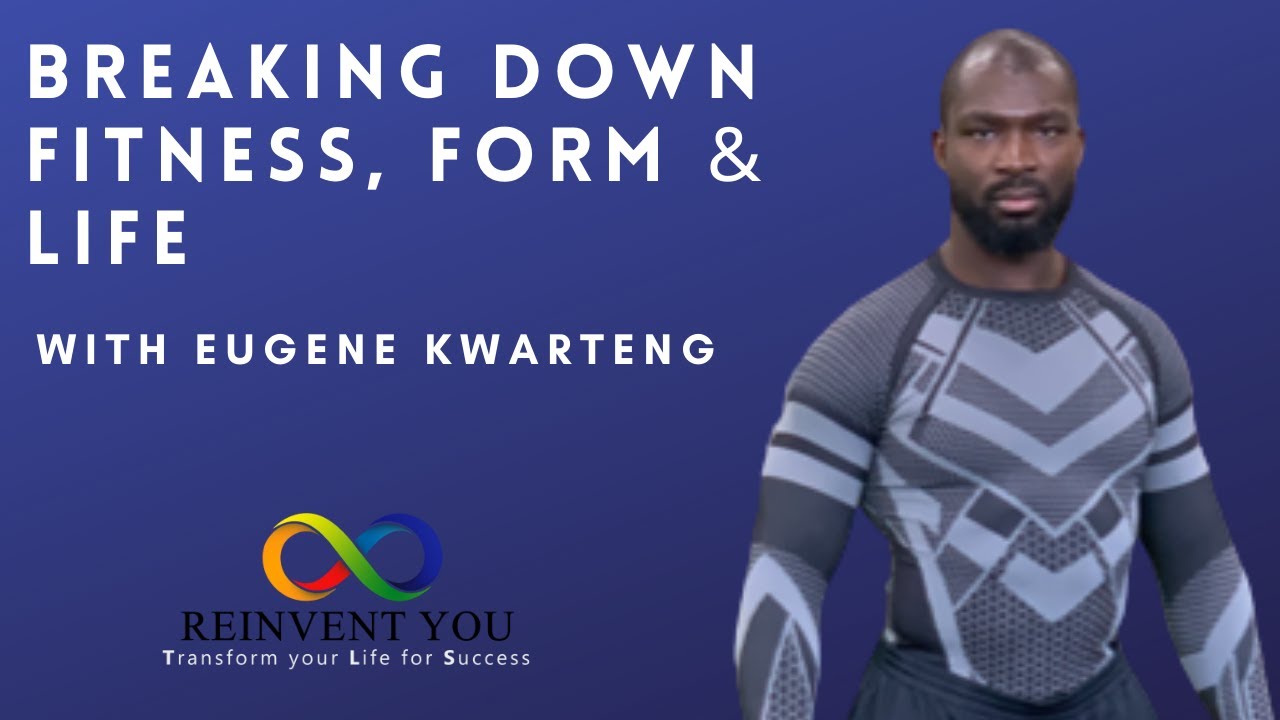
In this episode of the Reinvent You podcast, host Travia Steward interviews Eugene Kwarteng, a Ghana‑born, Texas‑raised former college football player turned veteran fitness trainer at Red Laurels in Lafayette, Louisiana. Eugene shares his life story—from an early desire to act, through an athletic scholarship, a brief professional football stint that ended with a career‑ending injury, to a 14‑year career in personal training. He explains how his computer‑animation degree sharpened his ability to visualize movement, shaping his coaching philosophy that emphasizes proper form, individualized programming, and a focus on fat loss rather than weight loss. The conversation covers his approach to client personalization (adapting programs to sport, lifestyle, and personality), the importance of listening, the therapeutic role of hugging, and his holistic morning routine that includes tai chi, joint mobility, and martial‑arts forms. Eugene also discusses his extracurricular passions—acting, costume work, shooting sports, and community involvement—while reflecting on his legacy of helping others improve health, mobility, and self‑care. Practical advice is offered on hydration, daily mobility work, full‑body training splits, and simple nutrition timing tips for those without access to his gym. The episode blends personal narrative, fitness expertise, and motivational insights for listeners seeking to reinvent their health and life.
Chapters
You are listening to episode number 68 with Eugene Quarten.
If you're someone who wants to make major changes in their life, someone who wants to achieve their goals, or maybe you're someone who knows this is not as good as it gets but you have no idea where to start, on the Reinvent You podcast, we explore different types of people, their successes and failures, and how they reinvented themselves to create the life they love. It's our hope that from hearing their stories, that you too may have more insight into what it takes to build a life that you envision for yourself. Here to help you do that is performance and life coach Travia Steward.
My guest on the Reinvent You podcast today is a man who was originally born in Ghana, West Africa, and then he transplanted to Texas where he grew up. In 2001, he attended the University of Louisiana Lafayette on an athletic scholarship to play football. He graduated in May of 2006 with a BFA degree. And after ending his professional football endeavors, he found his passion in fitness, in the fitness profession. This guy is a trainer at Red's Health Club in Lafayette, Louisiana. He's worked at the club for 14 years. He continues his path in fitness by teaching others how to use various fitness tools, safely and effectively to reach and/or exceed their fitness goals. Okay, ladies and gentlemen, with me today is a special guest. This guy, when my friends talk about this guy, I swear I had the visualization that he was a Greek god. I'm pretty certain if I lived in Lafayette, Louisiana, I would also be working out with Eugene. So Eugene, I am honored to have you on the Reinvent You Podcast. Welcome to the show, my man.
Thank you very much. Glad to be here.
Absolutely. So Eugene, you know, Eugene is a trainer at Red Laurettes, right, in Lafayette, Louisiana?
But yes, Red Laurels.
Red Laurels. There we go. But you didn't just wake up as a trainer. Tell us a little bit about who Eugene is and a little bit about his journey that brought you to training today.
Well, you're right. I did not definitely wake up as a trainer. I actually attended Louisiana Lafayette, Ragin' Cajuns, on an athletic scholarship.
That's what I'm talking about. You see this? Look at this.
I did this for you, Eugene. I see it. And you know, as a kid, I grew up, I wanted to actually be an actor. That's really where my deep, I guess, desire is, right?
Yeah.
I've always been some type of performer, you know? But my parents, you know, I was born in Ghana, West Africa, and, you know, I grew up in the States. So I'm, you know, I'm Americanized, if you want to call it that.
Right.
So I had to get into a major that would be convincing to my parents that I could make some money off. I couldn't just major in theater. As I wanted to, right? And so I majored in computer animation. That was my concentration. Oh, cool. So I figured I could either make it doing special effects or, you know, somehow use it as a channel to get into the entertainment industry, you know, right? And so I completed that degree, and it was pretty intense. I had no idea how intense it would be, which I do appreciate it now. And Even elements of that, you know, some of that is helping me in what I do now as far as learning how to see how an object— or people aren't objects, but see how a person moves. Because in my head, I can look at them in 360, you know, with all that rendering and modeling I had to do. It just kind of gave me that vision to where I can see people and look at, you know, movement inconsistencies. So that, that's a skill I definitely picked up from that major. Yeah, which is not completely related to what I'm doing, but, uh, when I finished football, I spent 2 years, you know, going to tryouts and trying to make it professionally. And my junior year at UL, I started working here as a summer job, you know. I figured, hey, why not, you know?
Right.
Place is pretty impressive. It's like, you know, I could do something here and, you know, get more meals here because they have a nice, uh, you know, snack bar here so I could get extra meals in. Because back when I played, it was hard to get extra food, and, you know, I had all these obligations to gain weight, which I had trouble doing that. Okay, so this is a summer job, you know. Yeah, but here we go, you know. I finish, I graduate in 2006, you know, still trying to make it professional. Like I said, I'm working here in the meantime, and I had about 3 other jobs as well. You know, I was working security and, you know, I actually worked in the compliance office at UL too because, you know, I still wanted to be involved in the program.
Right.
Yeah, I'm bouncing around with all these jobs and, uh, you know, I had an opportunity to go to the CFL. It was year 2007, I believe. Yes, 2007. So I went up there and made it into training camp with the BC Lions. Unfortunately, I got hurt and I had to hang it up. So I came home and, you know, I wasn't sure if I was gonna be able to even get my job here back, 'cause I had in my mind, "All right, I'm in camp. I'm gonna make the team. Yeah." Yeah. But I came back broken, literally broken. My knees, everything was just gone. And they let me have my job back, which was— you know, pretty amazing. It was a blessing. And so I'm like, all right, well, I'm here. Let's— what we're going to do with this. So I just started learning, working with kids, and doing just workout plans, just basic generic workout plans based on what I learned here. And, you know, the process evolved because, you know, I'm learning that not everybody is built like me or can train like me. So I had to learn that early in my career.
Yeah.
And so that, you know, forced me to learn and adapt more and kind of create more of a range of training applications, you know, so that way I can cater to the person.
Right. Okay.
All these years, you can say I've learned in reverse because I got my ACE certification probably 3 or 4 years after I'd already started personal training adults. And from there You know, as I started engaging with more people, you know, I feel like there was always something going on with everybody. And that was a very new thing for me. So I would consult with different physical therapists, or based on their orders, if they're coming off of a surgery, what movement parameters they can do. And then that skill set just grew because I had a lot of different cases, a lot of variety of different cases. And so through all that, it was, you know, I learned so much. And so that really helped me be more versatile so I can cater to a whole spectrum of people. Yeah. And, you know, as this started happening, uh, business grew and, you know, I started finding my passion in helping other people, you know, become their best selves in whatever manner that looks like, you know.
Yeah.
Some people, they just want quality of life. Some people actually want certain things to prepare for a certain task, so I could prepare them for that. I enjoy working with the kids, particularly the 7th and 8th graders, because those I feel are critical years to learn the fundamentals of movement and lifting. That way when they get to high school, you know, they'll have all— they'll have that good foundation and hopefully avoid unnecessary injuries, you know.
Right.
And so here I am You know, I'm in this 14 years. This is definitely what I'm supposed to be doing, cuz a lot of things have happened where, you know, I'm just pointed in this direction. OK, I need to keep doing this. Cuz I will question from time to time, do I need to be doing this? Is there something else I need to do? But the question will be answered right away. And so I'm like, all right, well, let's just— don't worry about it and keep going and just help one person at a time.
That's perfect. So how do you hear those answers? Like, what was this process? What was that process like for you when you try out for the professional team and you're hurt? Like you said, you were literally like broken and you're coming back. So as a young man processing that, this is probably a goal, this is probably a dream, but didn't work out the way I envisioned it to work out. How did you hear the next answers? And how do you hear those answers today? Am I in the right place?
Well, I would encounter a person who would have a particular issue that I also encountered in my journey. So I feel like that me going through the process I went through—
Right.
—prepared me to help this person, you know, with the situation. For example, I think the first minor injury I had in training camp with the BC Lions was a hamstring strain. And the trainer up there had put me on this pool workout to help kind of recover faster. And, you know, I wasn't sure what to make of it, but he just told me what to do, and I did it in between practices because we had access to a pool. Right. And I gotta say, it's gotta be— it was the fastest recovery that I ever encountered from an injury like that, which I've sustained before in college. And I mean, I was back practicing in, you know, less than one day. I only missed maybe— oh wow— practice. And so that was very valuable because I've used that method with other people that have had similar injuries or, you know, recovering from surgery. So if I hadn't gone through that, then I wouldn't be prepared to help that— those people down the road. Right. Interest came really with the situations that I had to deal with, you know, and so I had to call on, okay, well, how can I relate to this person? And, you know, based on what I've been through. Right.
Oh, I love that, you know, and you, and you knew that at a very, very young age because, you know, it takes people in the second half of life to go, okay, I need to have a different mindset, I need to have a different outlook on this challenging thing that I went through. Most people don't automatically see, oh, this is what I learned, this is what I can do from this experience, and look how I've grown. Man, kudos to you for learning that at such an early age and being able to put that into practice. I totally love that. So I want to go back a little bit because you said you wanted to be an actor. I taught high school theater for 24 years, and Eugene, I, you know, I follow you on Instagram now. I have gone through all of your things, and I was like, man, this guy is a character. Like, you're dressed like a gladiator one time. One time you're in the gym and you're balancing on this thing, the cylinder, and you're dancing. You're a cowboy. And then I saw some of these shows, like the Mardi Gras 2020 thing. So is that how— so, so where did you get the theater bug? Was that high school, and then your parents said, go get a real job in college?
Definitely in high school. My freshman year, I had this teacher, uh, Mrs. Meisel, Maggie Meisel. She's still alive today. She retired, but she is one of those teachers that changed my life. Um, she just told me—
what school was that?
At the time, I was at Eustis High School in East Texas, but she taught at Athens. Yes. Yeah, she's a legend, you know. She's the— she was the bomb. Out the front door.
Eugene, I— holy sh— I didn't even know East Texas. I just knew you had a Texas background. Did you do one-act play?
I did, yes. I was in, uh, let's see, my sophomore and junior year we did A Midsummer Night's Dream. I played Theseus. And then my senior year— Oh, you were good. Oh yeah, because we had to play double parts. That was— yeah, we had so much fun with that.
And those are good roles.
Oh man. And then my senior year was really, really a special year. We did The Boys Next Door. Yeah. I played, um, uh, Norman. Yeah, I played— he was mentally handicapped. Yeah, yeah. Older male figure. And so, you know, we, we talked to, uh, different people, just got to spend some time with people who were similar to the character that I was portraying. And it was really special because you really had to, you know, learn perspective and put on that skin. You know, put on that person. Absolutely. You know, how would they react in this situation? And that was a real special year because it was a humbling year too. Right. You know, they can see a lot more than we think, you know?
Absolutely. I've actually directed that show twice. I did The Boys Next Door, and then I turned it into The Girls Next Door because I had more females. I mean, of course, you know that in high school you have I have a bunch of girls and then we have a few guys. It's so crazy, Eugene. It's a small world because you, since that was Athens, right? Or were you at Eustis? I was at Eustis. You were at Eustis. So do you know where Longview is? Yes. Yes. I taught at Pine Tree High School and Harrelton and Hallsville. So it's like, man, we were in the same area for so long.
Oh, for regionals. Yeah. Y'all encountered each other regionals and state problems.
Yes. Yes. Yes. Oh my God. This is so cool. So, Now there is an IMDb movie credit. Is that you? Yes, it's me. Because I kept— I watched it. I was like, holy smokes, Eugene!
Yes, that is you in the zombie.
The zombie.
Yeah, my wife and I, my wife and I worked on that, that movie film together because she's an artist and, you know, she did, uh, all of the makeup effects on that film. And so that was definitely a learning experience because I couldn't make it to all the shoots because, I mean, one, it wasn't really a big paying gig, and I had, you know, we had kids at home and I had to do that. So I mean, in the film, even though I'm credited, you might only see a quick glimpse of me or maybe my hands. Yeah. By the way, it was still a great experience and we learned a lot. It was like, wow, this is what it's like. This is— yeah, living doing this, I would do this, you know. Wow.
So that's why you're always game to like go dress up, Mardi Gras 2020, all those things. Yeah, definitely. Oh my goodness, this is so fantastic. I love that because I was like, you don't see— you don't meet a trainer every day who has the personality that you have, you know. So outside of your per— your personality, or in addition to your personality, what do you think is your magic sauce that like draws people, trainer, you know, clients? What do you think draws people to you?
I don't know, maybe some people said I have a presence, you know, maybe that's part of it. And then some people say, oh, I'm intimidated by you until I meet you, you know. Right. You know, I'm, you know, I'm all about, you know, love and hugs. I love hugging people, but only, you know, if it's receptive. I don't believe in forcing stuff, but— Yeah. But I would say I listen. You know, I really— it's just become a skill to listen because thinking about the dialect of my language, Twi, T-W-I, I don't even know if I'm saying it correctly because my parents wanted me to learn English first, you know, to blend in. But you have to listen because the way you say something changes how— what it means. So you might say a certain phrase in 2 or 3 different ways and it means 3 different things. Very similar to, I guess, Mandarin. You know? Okay. And so with that, I guess I have— I've had to use my ears because I have to detect if my parents were talking about me or family over me. What are they saying now? Oh, you know, because there was always something, you know, right? If they wanted to try to disguise their conversation. Absolutely.
So being a good listener, you know, I went through, uh, some of your— I went through a lot of your Instagram, let's be clear, because I like to— I like to do my homework for it. And there were, and there were a couple other times, I think you did like a CrossFit thing. And there was a review where a guy said he, you know, he'd worked with you, hadn't seen you in a while. And the thing that you said, he felt like you were always still interested in his progress, how he was progressing. And you always reminded him of his form and how he could improve, right? Why do you think form? I mean, I work out, you know, I lift weights and stuff, and sometimes I'm like, oh, I've gone, I've done some deadlifts, and now my back hurts. Outside of hurting yourself, why is form so important when you're working with it? Because this guy that you work with obviously knew it was important.
Well, I believe form is important, I guess, on a deep level. It's like, are you all the way here in this moment doing what you're doing? 'Cause what I've observed is, you know, it's a challenge to try to be present. You know, we talk about it, it's a cliché, but it's a real thing. You know, how well can you fully be doing a task at that moment and not thinking about anything else? Right. And that's where form comes in, because you have to look at your body as a structure. You know, this is the animator speaking here, so your body is a whole structure, okay? Yeah. If you're using and controlling and maintaining the alignment of your structure, that puts you in a state of being present because you can't think about anything else but what are all my parts doing at the same time. And so if you get better at that, you get better at dealing with emotional stress because you know how to not allow your body react to— excuse me— react to external forces. And so that's kind of like a deeper level on why form is important besides keeping yourself from getting hurt. But on the physics side, when you're in good alignment, you're able to really maximize the potential of your movement without having to either overmuscle something, you know. Let's, let's put yourself in a position to put physics on your side for a change, you know.
Yeah, I love that, Eugene. I must, I must admit I never really thought of it like that. And I think that's such a great perspective to have. I mean, I know form is important, but I've only thought about it as in the form of not getting hurt. But as a coach, I work with my clients to— when something— like, know where your homeostasis is. And, you know, like, today I get up, I generate this energy. I'm generally an 8.5, 9 every day because I choose to be, because I do the things that get me there. I don't just expect to wake up on one side of the bed and be like, I'm a 9. That doesn't happen. I work on it. And so the one thing I work with my clients is to know when that number has dipped. And it's always kind of after something has changed in your body. But I love what you just said. Practicing the form, it's kind of like the step right before. If you are in good posture, if you're walking and leading with confidence and who you're supposed to be, That's the step before. Wow, I love that. I never thought of it like that. That is so cool. Thank you for sharing that with me. So that is part of your— the animator in you and how you are looking and assessing. In addition to, you know, listening to them, where do you think the importance of— like you said, you're a great hugger. What is the importance of hugging? And, you know, because I don't know, like, I worked out with lots of trainers. None of them have ever hugged me. Why do you think that's an important— that's a Eugene special sauce kind of thing? What's in that hug?
Well, there's definitely some type of energy or heat exchange, you know? And so when I engage with a person and I squeeze them gently, and initially you get some resistance, even if they're agreeing to the hug, right? And then eventually, after a few seconds, both of you relax. And that seems to be some type of release of tension, unnecessary tension that was in the body. So there, I think there's some kind of healing property or medicinal, even if it's temporary, it's a special thing. And, uh, 'Cause I get it as well. So I feel like, well, this is important. Let's share it with people who are receptive to it. Obviously you can't hug everybody, but it's like, if you find a person that's there and receptive, that might've been what they needed that day. Right. So if I can do that, then that's just part of the healing process. 'Cause this is more of a healing business than a fitness business. That's how I see it. I see it more of a healing business because yeah, you want people to look good and move good, but you want them to also be able to— you also want to put them in a position to help them teach their bodies how to heal themselves. Because when you're in shape, your body does that. It heals more efficiently.
Yeah, I got it. And then speaking about the way that you train your clients, your name came up. I went on vacation with Nat and Kat. They're a couple of our best friends. Love those girls. I remember Kathy saying that you are a different kind of trainer in the way that you train her because she's a tennis player. It's not like you're trying to make a bodybuilder out of her. You're not trying to, you know, get her to lift 800 pounds. You train her to play tennis better. How do you have the time to go, this is what I do for Kathy Luke. This is what I do for Jane. This is what I do for Nat, those kinds of things. How do you have the time to personalize and individualize those kinds of things for each of your clients?
I think the, the experience has helped, you know, just my years of doing what I'm doing and understanding the movement demands of the sports. And so that being said, I do everything I can to cater the person's plan to their lifestyle. Yeah, some people that like to ski, and so there are certain times of the year, well, okay, it's time to get ready to ski, you know. So we're getting their bodies prepared for that. And then you have some people that like to wake surf, and then, okay, it's getting to that, close to that time, you know, we start preparing you for that. Or, and those are just a few examples. And, you know, I, I try to prepare people for whatever they enjoy doing and, yeah, prepare them to do it well and, and do it safely.
I love that. That is so cool. And you know that you take that into consideration. I mean, I've worked with lots of trainers and, you know, and I would say, these are my goals, you know, this is what I'm working towards. But there were some times I was like, you know, like I had a total knee replacement and, you know, I had this one trainer who wanted me to like try to max out my squat. And I was like, maybe. I mean, I'm not the expert here, but I don't know. This doesn't feel so good to me. And so I love that you actually look at each person individually and individualize those things because not everybody's the same. And you have quite the background. I mean, you've done CrossFit. And Eugene, the stuff I've seen you do in these videos, like this one, you were holding a kettlebell. It looked like it was about 40 pounds. You were doing a pistol squat on an angled platform holding a TRX. Dude, I can't even do a pistol squat holding nothing.
And I try to do some fancy stuff once in a while, you know, that was fancy.
Oh my God. So is that an example of you following your own advice, being able to do those kinds of things? Yes. Yes.
By, you know, demonstrating stability control, You know, just, I like to, for my movement snacks, I like to show people the spectrum of things you can do. And I try to make those movement snacks accessible to most people. Yeah. Some are pretty extreme and some are pretty okay. I think a lot of people can do this, but by me being an example, at least I can show you some possibilities. Because I mean, I'm 6'5", you know, I'm 240. I'm a tall guy and I always, I try to, I say to myself, I want to move like the little guys do. So yeah, in CrossFit, the, the physics is against me in that sport in a lot of the events. But you know, I had some good trainers and good teachers, so at least I could maximize my potential. Sure, maybe win, just because you know you're taller, you have a longer way to go on a lot of things. It's just part of, part of it. That's okay. But I still learned a lot from the process because yeah, I was a CrossFit basher, but I didn't know anything about it. And I'm guilty of that. So I was like, okay, look, let me just let me go through this and learn more about it so I can at least be competent, competent in my opinions. Absolutely. You know, and so I went, I guess you could say, 5 or 6 years, you know, I did it. And, uh, you know, it was tough. Yeah, yeah. Um, but I learned a lot. And what it encouraged me to do is to get deeper into restorative movement. Okay, how can I help myself recover to keep from getting hurt like some of the other people have, unfortunately. So how can I make this a smarter, more intelligent process? Still get out there and get after it, but how do I do it and not get hurt? So that was— I figured that was my submission through all of this.
Okay, right. So speaking of not getting hurt, what would you say is your best advice for, you know, maybe someone like me? I've had a total knee replacement. I love to work out. This knee is stronger, the left one is a little weaker, but I actually enjoy running on the treadmill, not on the street 'cause it's too hard, running on the treadmill only because I can, because I never thought I could after 50, right? And so what would you say, what is your best advice for people who want to maintain mobility, longevity into life, their definition of what health looks like? What would you say are like a couple of things that make sure you're doing this, make sure you're doing that so you can extend your amount of time where you can still be active? What would you say? How would you answer that?
Well, I'd say number one, make sure you're always hydrating adequately. Hydration is a big key to just overall function in the body, muscles, you know, central nervous system and all that. So number one, hydration. Even if it's not hot, just making sure you're staying adequately hydrated. Yeah. And two, you know, as far as like mobility and flexibility, it's a process. It definitely doesn't happen overnight. So a little bit every day without moving into any kind of pain or strain is the key. Right. That little bit by every day, your body will naturally adapt. 'Cause I've made a mistake of just being too forceful with certain types of flexibility work and it's caused an injury that was unnecessary. So you can get hurt from overdoing that too. So I would say a little bit every day will go a long way for you. Okay. And also, you know, how can I put this? I lost it. Yeah, I think, I think just a little bit every day and being patient with the process. Yeah, yeah. Like you say, you have your morning routine. I have a morning routine, and that's what gets us going because, yeah, you know, it's only been since we were kids that we could just pop out of bed and be like, let's go, right? You know, you get up and, you know, you're gonna have some movement restrictions, I think, from being in that bed and So you have to do what you have to do to get your body ready to go. But once you do it, hey. And so make time for yourself in the morning. I think that's a big one. Make time. It is. So make a morning routine, however long you have to spare. Even if it's 5 minutes, do something to get yourself ready to go. Movement-wise.
What's a guy like you— what's your morning routine? Like, what did you do this morning?
Oh, well, you know, I'm pretty extreme, as you've seen. So— I've been practicing tai chi for the past 5 years. So I wake up and I do a loosening up series, which is some little bit of joint isolation work. Some people might call it Z-Health, or, you know, it's all just small movement first to get circulation going in the body. Then I practice my form, you know, wherever I'm at. Unique thing about tai chi is that, you know, you can do it on your feet. I don't have to lay down, and I can do it anywhere. You just have to have intention, you know, and balance and relaxation. So that's really helped me a lot, just to kind of physically get circulation in my body and get me ready for the day. So I don't have to drink or consume any extra caffeine, you know. Okay, okay. And then, so I practice that, and then I have some martial arts forms that I practice as well. And so that's a good 30-45 minute routine every morning.
That's where I'm at. All right. So it's physical, but it encompasses some mental elements as well, right? Especially the tai chi. I know. Yeah. So how long does that take you? Like, you're getting up at like, what, 4:30, 5:00? What is that? What is the time?
5:30. Okay. 5:30. Yeah. Okay.
And so, yeah. So what's your perspective on, like you said, like, I know that we share commonality in this this is important to start your day off, right? But how does it outside, in addition to you don't have to go consume caffeine, but what else does this morning routine do for you and why should other people make it an important part of their day?
Well, it's, it's making time for myself, you know, self-care, you know, we, you know, we spend a lot of time in this business. You always taking care of everybody else, but nobody's really taking care of you. So all you can do is take care of you, you know? Yeah, yeah. So whatever time you can carve out, you have to do that, because if you don't, then you, you start falling apart, and then you're not going to be able to help the people you're supposed to help, right? So that self-care is key to helping you do what you do, you know, help me do what I do, you know?
Oh, I love it, love it, love it, love it. So What would you say? I tell you what, before I ask this next question, the reason your name came up on vacation was because several years ago we were on vacation with Nat and Kat again, and Nat mentioned, she was like, oh, you know, I love these muscles over here. I was like, oh, the tricep. She said, yeah, I wanna, I wanna have that. I wanna develop that. Well, I'll be doggone, when she, when we saw her, I, that was the first thing I noticed. Like, I went, holy shit, Nat has nice arms. I mean, Nat's always been small, but I looked at her arms and I looked at her shoulders and I, and I actually commented and I said, girl, you've got the triceps you've always wanted. She said, yeah, you see that? She said, Eugene. And so I was like, wow. I mean, I mean, she looks incredible. And I mean, Kathy Luke looks good too, but I was really impressed with Nat's arms and her shoulders. I love that. What would you say, who, what is your biggest success story? Like when people are like, why should I work with Eugene? Oh, because I've gotten these results. And you don't do the work, but you know what I mean?
Well, it's, it's the biggest thing it boils down to is the consistency. The ones that I've worked with that have been the most successful have been the ones that just don't miss, barring obviously, you know, career obligations, you know? Right. But man, they just don't miss. And it's amazing what can happen in a year. Like, I had one lady, I mean, she lost, oh my gosh, probably 40 pounds in a year. Now, she's a tall, tall lady, but her, her body fat percentage was the most impressive. She lost a ton of body fat in that year. And that's really what I call myself. I'm not really a weight loss guy, you know, I'm more of a fat loss guy. You know, because a lot of the training that I put people through is geared towards fat loss and getting stronger. So, we are losing inches. Sure, the scale might move a little bit, but, you know, I tend to not put too much energy in that because I want you to be your best self, meaning a solid structure, tight contact, being able to move, but also, you know, look good in your clothes, you know?
Right. Oh, man, I love that. Like fat loss, not a weight loss, but a fat loss, because sometimes when people focus on weight loss, they are losing muscle and everything else, right? Right. Wow. And so what would you say? So somebody is listening right now and going, how can Eugene help me right now? What is it? You know, in addition to hydrating yourself, what if somebody wanted to get like a quick win with some fat loss? What would be a couple of things, your best advice right now, if they can't get to Lafayette and to Red L'Oréal's gym, you know, because they don't live there? How could they get more of Eugene and his tips and advice? I know you're on Instagram, but what could they do right now that could get them a quick win with fat loss?
Well, I would say, you know, you know, fit exercise-wise, you definitely want to always make your training sessions full body, meaning you want to touch a little bit of each muscle group every time. 'Cause that way, if you can't go to the gym every day, if you get at least twice a week, you're still getting 2 nice full-body workouts. That's a, you can say that's an exercise way. I'm not a nutrition person. I tend to stay away from that because, you know, I don't wanna step on anybody's toes 'cause that's not my area of expertise and I'm not gonna fake that, you know, 'cause everybody's different. I typically say, look, you know, for me, I tried, like for me, for example, I've switched to eating smaller dinners, bigger lunches, you know, kind of medium-sized breakfast. Right. Because I would want the majority of my food, whatever I'm gonna eat during my active hours, 'cause that's when I'm gonna burn it. Nighttime things slow down. So I figured, okay, proportion-wise, let me just try that and see if that helps. So I might say that to a person, you know, maybe play around with your portion size and be strategic, be thoughtful about the time of day that you're eating, you know.
Right. Okay, I get that. You know, I had, I had another lady on the podcast about a month or so ago, and she does this stuff with body types. And based on what she was saying, that I fell into the adrenal body type, and she said that, you know, her best advice for me was to have my biggest meal at dinner. And I said, Really? And so, like, and it, you know, and I know everybody's philosophy is different, so it's kind of like I look at you and go, who is that? You know, female advice, is it male advice? Your advice is for anybody, right? Eating your biggest meals when you're going to burn it off, right? Okay, okay. Are there any differences in the way that you work out with, oh, you work your clients out like male or female? Is it— are there any stark differences between, this is what I do with the men? I know it's all individualized, but are there any big differences in the way different bodies react to your training?
I would say it's based on the— I base it on a person's personality. You know, I ask them questions. And you know, a lot of times as you get to know a person, you'll see like some people aren't afraid of lifting heavy. You know, because, you know, you'll know based on the feedback you get from what you introduce to them. Yeah, not afraid of going heavy. And so that could be male or female because I have some females that, you know, they like to lift heavy and it's okay, cool. So we'll do it in a good fashion that still meets you towards your goals, you know. And some of the guys, they may not want to lift heavy but they just want to be able to move better. So I know for this person, this male person, we might make this more of a mobility base or movement-based, quality-based. You know, right, you know, it just depends on what, what their needs are, you know. It's right, but with the guys, you know, I definitely, you know, because I'm a guy, you know, so, you know, you have that fellowship, you know, that, you know, especially if they played, uh, they were a former athlete, you know, you have even more fellowship because you have a commonality. So you might engage in a little locker room banter or during the session, you know, and they, they enjoy that because it kind of brings them back. You know, brings me— and with the ladies, it just depends on the lady, you know. If they didn't have an athletic background, then, you know, that's more of a, you know, just communicating. I'm always asking them, oh, how are you feeling? What do you think about this? You know, keeping them involved in the process. You know, that way it's not just me telling you what to do. It's actually, yes, I'm guiding you, but you're learning something too. And what are you bringing to this so we can build this thing together? So yeah. So that's pretty unique, you know. That is so cool.
I love that. So just for a little clarity, you know, 'cause I ask the questions I wanna know the answers to as well. Like when you're talking about touch every part of your body, like workout, like if you can only, let's say you're able to work out 5 days a week, you know, even if you're skipping some days, should you work out a part of your body at all 5 days or should we now break that up? Or is that something for 3 days a week?
Well, it depends on the goal. Like, if, uh, and you say you want clarity, so I can give you an example. So we have 5 days a week. This is for a person that might want to just gain muscle. Yes. Mondays—
let's do it for a person who wants to gain muscle and drop fat.
Me. So if you're working out 5 days a week for fat loss You can make— let's see, we got Monday, Tuesday. You can make Tuesday and Thursday your primary strength training days, and that— those would be your two total body workouts, you know, all muscle groups, right? Um, Monday would be more of a— I guess because at the beginning of the week you probably want to do more of a a low-impact cardio day. And low-impact meaning like, you know, not just doing one thing for 30 minutes. Like, you might do a rower, a bike, and you can do all that one day, you know, that day, Monday, just for, you know, varying time, maybe 10 minutes per unit for, you know, 2 rounds, which will make your hour-ish, you know. Okay, then you do your strength training on, uh, strength training on Tuesday. Wednesday you do more of a medium intensity, kind of up the intensity a little bit. Okay. So that would, that would be more of like a, uh, a circuit training day, or, you know, something where it's like you can still pace yourself but you still are doing more up-tempo movements. Yeah. And then Thursday you'd have another strength training day. Okay. And then Friday would be more of like your HIIT day, you know, that would be your you know, circuit style, but more of an intense circuit style, but that doesn't compromise any health issues. Okay, so you can do your boxing class or your HIIT class, or, you know, as long as you have a way to do it without injuring yourself. Obviously you want a higher intensity at the end of the week. And then Saturday, you know, I know it's a 6-day, but you want to do some type of active recovery. You want like, you know, either a light walk, light swim, stretch class, yoga if that's what you like, or some type of restorative activity. And then, you know, Sundays you rest.
You rest. All right, thank you so much. That's incredible. I'm gonna, I'm gonna put that in action, Eugene. I sure will. I love that. Eugene, any hopes of opening your own training facility?
You know, I've thought about that, and, you know, I've had some some interest, let's just say that, from other people. But for me, I feel like I'm more of a boots-on-the-ground guy, and I want to be involved. I want to be there with the person and be part of the process. And so it really— it's not on the radar for me right now.
Okay, yeah, very cool. You know, you have that theater background. I actually listened to your— I think it was like 10 minutes long— your Lafayette Storytellers. From 2018. You told the story about when you first got— yeah, yeah, yeah. And I was like, just— and I was like, man, you do have a presence. Like, you are an excellent speaker. Do you have any hopes of, you know, speaking on stages outside of being, you know, a storyteller, but like motivational, inspirational?
Any hopes with that? Definitely, definitely, definitely have that on my radar. You know, if not, you know, either on stage or on film, you know, the acting bug or the performance bug or the stage bug is— it's— that's part of me. That's— that's like I said, that's the core. So that's never going. Yeah. Okay. And you know, you can do that at any age, which is the beauty of it. Yeah. So right now I'm just building up my resume, my demo, and trying to sharpen my skills. So your acting skills, you know, uh, Not formally, but you know, I'm always in the process.
You always got a monologue handy?
I mean, I'm working on it.
I'm working on it, you know. Okay, okay. I love that. Wow. So that's so cool that, you know, it's never too late. I think it— who was it? Morgan Freeman didn't really find acting success till after 50, and you're a young guy. What are you, 38? 38, yes. 38. Yeah, I did a little homework. So yeah, so just a couple more questions before we wrap it up. You know, obviously you have found balance in your life. You know, you do these dress-up, these costume things. You know, you look like from your social media that you're having a really good time. And I think, you know, a lot of that stems from your theatrical side, right? Where does this— the shooting at the gun range played, because I was like, is Eugene a martial artist? Like, I watched some of your IG videos and you're like fast, you know. The only thing you didn't do is like duck and roll and shoot, but it's like, what is that about? I think it looks really, really cool, but I just was so curious. It was like, why is he doing that?
Well, that is just a fun hobby I got into a few years ago. I met a guy, he's a friend of mine. He's, you know, he started as a client and we just became friends. You know, he told me about what he wanted to do. And, you know, I cater to the lifestyle, right? It's like, "Well, okay." Okay, cool. I can help you out with that. You know, he just wanted help with his agility, you know? So we worked on that, and we would— then we evolved to where we were just setting up, like, little mini stages here and shooting our— working our pretend hands here and trying to, you know, do that. And then doing it with him, I'm like, "Man, okay, this is kind of cool. Okay, cool." You know? And then I went to a match and I watched and I was like, "Wow, this looks like a lot of fun." Yeah. And, you know, we just— it just evolved from there. And now here it is, I'm doing it as a hobby. And, you know, I'm learning and I'm becoming proficient with the handgun, which that's part of it, because safety is number one. It's not— it's a very structured, organized— it's through the USPSA. Right. And, you know, it's a national organization and you can compete and— you can get scored and you get entered into a database to kind of see, you know, if you can rank up or not. And, you know, I, I, I feel like it's something I can do that's outside of fitness that I could do till I'm, till I'm, till I'm gone, you know. Absolutely. Yeah, I met some guys there in their 60s, 70s, and it's amazing the things they can do. So I feel like for my fine motor skills, it's something that helps you maintain that, you know, so that That's what keeps you young. Yeah, yeah.
Because I saw you doing the one where somebody was throwing you baseballs.
Yes, I do those. I do baseball workouts on Saturdays. That was fast. And I box Fridays. I do boxing on Fridays, boxing training. So I'm always trying to just keep myself, you know, keep that edge, you know?
I love that. You know, you're so inspiring, Eugene. You really are. Like, I look at you, and you are someone that when I look at your videos, that if I live there, I would love to work out with you because, you know, you take your own advice. You are a walking example of what I think fitness looks like. I mean, I've worked with a couple of trainers who were overweight, and I was like, there's something wrong with this, you know. And so when I look at you, I go, that's the example. Do you do any kind of online training? So for the folks who don't live in Lafayette Uh, not formally.
I mean, I've helped some people out with some workouts, just, you know, clients that might have moved away. I might send up a little package, you know, some TRX stuff, just a little simple package just to get you started until you— they can, you know, get their feet on the ground. But yeah, nothing, nothing really formally though. Okay. All right.
And just the last question, when you think about your whole life and you're 38 you got a lot of life to live. What is the overall impact? What is the legacy that you want to leave? Like, when you, you made it to 100, you've done all these things, what is the impact that you want to have had on the world, the environment, your family, social, whatever it is?
Well, you know, it's, it's the lives that I've helped. You know, I feel like I'm here to enhance the people around me. And hopefully somewhere along the line I've influenced others to do the same. Yeah, I figured we keep that going, then, you know, we might be better off. You know, we might be.
Here's hoping, right? So Eugene, thank you so much. So for people who want to know more about Eugene, what is your preferred method of how they can get in contact with you?
I would say probably like Instagram. Instagram. Yeah, Messenger, DM me.
Yeah. Okay, EK Prime. I will have all of that in the show notes. And, and just because I'm curious again, what is EK? Of course it's Eugene Carton. And what's the prime? So what's, what's the significance of EK Prime?
Well, here's the, the child in me. I'm a big child. I'm always— I, I love Transformers, you know, growing up. Optimus Prime, you know, was, was my guy because he wants to have the wise things, you know, and Yeah, he'd always have his voice and he would always give some moral and wise advice and all that stuff. And so I can't take his name, I can't be Optimus Prime, so I figured, okay, let me just— let me get a piece of it, you know? So that's why Prime happens.
Oh, that's incredible. Have you ever thought of doing voiceovers? You have an incredible voice.
That's, that's on the radar too. I just have to do some training and train like a muscle. You got to train it. Absolutely. Spectrum of things you can do. So yeah, yeah, that's definitely on the radar. Perfect. Perfect.
Well, Eugene, thank you so much for your time. I think you dropped so much value for my listeners, and I know that people are going to enjoy this episode. So thank you so much for being on the podcast today. Oh, thank you for having me. Absolutely. If you like what you're hearing and perhaps you're interested in having a complimentary conversation with me, Click the link at the bottom of the show notes. Thank you so much for listening. If you even want to know more about what I'm up to, head over to traviestewart.com. And if you like seeing the videos of the podcast, every episode is on my YouTube channel. Take care, guys.
More from Travia









Remember the YOU Who Didn't Overthink Everything #personalgroth #mindset #selfdoubt

