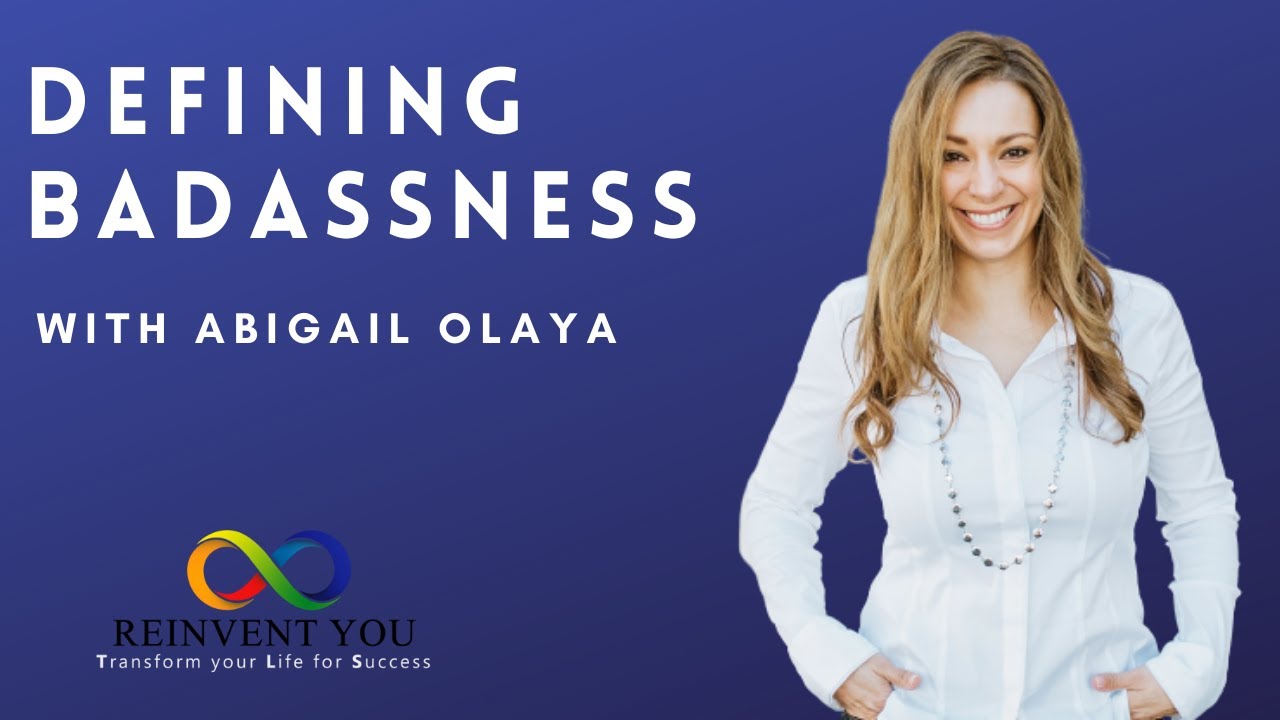
Abigail Olaya started a wedding and catering business with a $15,000 loan during the 2009 recession, then became a coach and mother of triplets. She talks about IVF, raising three newborns, a five-month RV road trip during COVID, and daily practices like sending love to three people to build personal power.
Chapters
You are listening to episode number 69 with Abigail Oliah.
If you're someone who wants to make major changes in their life, someone who wants to achieve their goals, or maybe you're someone who knows this is not as good as it gets, but you have no idea where to start, on the Reinvent You podcast, we explore different types of people, their successes and failures, and how they reinvented themselves to create the life they love. It's our hope that from hearing their stories, that you too may have more insight into what it takes to build a life that you envision for yourself. Here to help you do that is performance and life coach Travia Steward.
Joining me on the Reinvent You podcast today is the CEO of Olaya Events and Company wedding venues and a catering company based here in Phoenix, Arizona. She and her husband started Venue at the Grove in 2009 with a $15,000 loan and have grown it into an award-winning multimillion-dollar business. She is also the CEO of her own coaching company where she gets to leverage her leadership, her expertise, and her passion for helping women access and step into their power in extraordinary ways so that they can live extraordinary lives. She's also been recognized as one of the top 40 under 40 Leaders by the Phoenix Business Journal for her leadership and impact within the, within the community. Ladies and gentlemen, I am excited to sit down and have this conversation today on the Reinvent You podcast because the guests that I have on this show today, you don't really realize how close you are to people and then how and when people come into your life. I met this, this, this woman in a micro-mind working with Varian Brandon. And there was just always something about her that I said, hmm, I think she's someone that I find so incredibly inspiring, so incredibly interesting, and someone that I would love to have in my circle. And just to give you a little bit of who she is, I mean, she was right here in Arizona with me. You know, she has been, you know, recognized as one of the top 40 people in Phoenix. She and her husband own a wedding venue. She's starting her own coaching company. I mean, there's so many things that I want to delve into you— delve into. But first, before we get going, I want to welcome to the Reinvent You Podcast Abigail Olaya. Abigail, welcome to the podcast.
Thanks, Trey. Oh, see, look, I got real comfortable. I didn't say Travia, I went right to Trey.
So I like Trey, I prefer Trey, so that's good.
Cool, we're already there. Well, thanks for having me.
Absolutely. And did I say your last name, Olaya?
Yep, yep.
Okay, perfect, perfect. So Abigail, you know, I like to sort of do things a little different, you know. I, you know, I like to do my homework a little bit. So I know that you grew up in Levine. I know that you, you were like really good. You had good grades in high school, you know. You really like focus on science and math, and you worked for APS, you know. All these things in a male-dominated world and society. But what are some things that we don't know about Abigail? Because something about when you come out of math and science, and is that the path you go straight to entrepreneurship? You know, were your parents instrumental in that? What are some things that help you to pave your path that put you on the path that you are today?
Yeah. Um, one of the things I like is that the Steve Jobs quote where he made that address, that looking back you can connect the dots, but you couldn't when you were going forward. Right. So like looking back, I can connect the dots and my parents were instrumental in that. My dad was very big on it. It didn't matter how I did in all the subjects. I mean, I was doing really well, but it was like most important math and science that he was an engineer. And that was what he believed, or they believed that it was important. And so as long as I was like excelling in those two, and those were the two that, like you said, I did I did excel in. There was a time in probably about middle school that, um, that I got outcasted by the girls. And so, um, I, looking back, I can connect that as a dot, as a pivotal point in my life that I had never realized, um, for so many years, but it was outcasted. And for me, much of my life had already been, um, because I was good in math and science, because I was, um, my, I had two younger brothers and most of the kids that were, we lived out in Levine, so it was very rural. And there weren't— it wasn't like house, house, house, house, neighbor. It was like the neighbor was over there, you know, like over there. And so they were, they were mostly boys. And so I grew up around baseball and those kinds of things. And when that happened, I had a shift that it was just like, okay, well, I'm— if that's a problem for you, I'm just going to go play over here. And I was, I was well accepted into the, the male environment and, and thrived and did well. And, and I think that's what really set me up for, um, going into these is I never saw a difference. There wasn't like a female, male, so to speak, in my mind. It was just like I was with my people. And at the same time, I was helping women to rise in their career. And I just had this pull, like, I don't know, I mean, I help men too. But I just, I was, I was drawn towards helping women, like, you know, like, seeing the difference of just instances of like, they wouldn't go for a promotion, they wouldn't go for a thing.
It's like, why?
Any guy would. That I was working with that had half the qualifications and would go, yeah, yeah, right? Like, so just some of those mentality things. And, and yeah, my parents, I mean, they just, they supported it. And then, like I said, math and science was really important, and that's how I ended up in those fields, and I did well.
Yeah. Now, in middle school, how do you get to a point where you're not affected by being ousted by other people? It's like, I'm just gonna go over here, you know? Generally, it's like Oh my God, that's why people don't like me. I'm gonna go hide. I want to now do homeschool. I don't want to— you know, why didn't you go hide in a turtle shell somewhere? Where were— you know, how did that not happen?
My parents were tough. There was no— that was not an option. It was like, you better figure it out. I don't, I don't remember any specific conversation, um, but I remember my mom, like, it sometimes before around that or whatever, like, instances of, like, I would get, um, feedback and from the, the, the girls on like, you know, I was taught like, if someone says you're pretty or someone says you're good at something, say thank you. And that was, that was the thing of like, no, you don't say thank you. You're conceited. You're self-centered. You're, um, you know, you're all about you kind of thing. Um, and so it, it did have an impact. It had a big impact. I just didn't see it at that time. Like I just shifted, but there was always this thing in the back. And even to this day, I'm still working on like, you know, judging like, oh, what are the people gonna say? Oh, you know, That was only one instance, but like, I think, you know, like, how's that going to be accepted? Oh, I'm facing, like, if I put this post out or I've put this offer out, is it going to be rejected? You know, I think it taps into some of that, that what happened so long ago. And so now it's shedding those, getting down to that and then being able to bring that to the surface and shed those layers. Right, right. Grow into it.
What did your parents want you to say when somebody said, oh, I love your hair? Were you not supposed to say thank you? Are you just supposed to, like, what was the response that they wanted you to have?
The girls? No, my parents were like, say thank you.
Oh, the girls didn't want you to say thank you?
Yeah, no, the girls were the ones that like, that, that meant that I thought I was better, I was conceited, I was self-whatever, things like that. And it was just like, okay, like, I'm not gonna deal, I'm not gonna deal with this drama, you know? Like, yeah, I didn't have those words back then, but I was like, I've been hanging out with these guys over here and they're, they're not saying these things, so I'll just— I don't think it was like a conscious, conscious shift of like, it was just like a, okay, and then went over here and it just played out for the—
yeah, you know, that is so incredible. And so both your parents were engineers?
No, my— only my dad, only my dad. Yeah.
Okay. And so you, like, the inspiration, like, like, where does your motivation to, you know, I know you were making good money with APS, you know, I listened to a couple of your other interviews and, and, but yet you and Edward, your husband, wanted to branch out and do your own thing, right?
Yeah.
And so in going through your story of starting this company with $15,000, right, if you can talk to that process a little more about How can you go from feeling good, making good money, really good money, and then going, no, we just gonna give all that up and we're gonna go do this thing. We're gonna struggle, we're gonna have challenges, and it's gonna be great. Right?
Yeah. We have, we have a distinction and call it we're crazy. We do crazy things. And every time we do a crazy thing, we're like, that's crazy.
You know? Yeah. Yeah.
It's one of those. Yeah. Well, we, we, it started before I even got to APS. It started young in our twenties or, or pro— yeah. Young in our twenties. Like he had taken an entrepreneur entrepreneurship class at ASU. And it was something about like, if you're going to, you can either be an entrepreneur or if you're just gonna go and create a job where you're the owner and you're basically turning the key to run the business every day, that's not entrepreneurship. It's easier to go get a job, right? And so we just had these aspirations and goals and things like that in our mind. And we were even in college, we were like, well, maybe we can do cleaning offices at night. I don't know. Like, how do we up one? Like, how do we up like, the life that we can create. And that was a desire. That was the desire of us upping it. And so we were always trying to think of businesses, like hanging up Christmas lights with those little plastic clips that go on the tiles, you know, it's like, oh, we just need to create this clip. Like we just, what's another thing we can create? And so we were trying to think of ideas. We couldn't think of anything. And finally we got to the point where we were like, okay, let's make a list. And so it was a burning desire of like, this is the life we wanted to create. Like whatever that lifestyle was like, yeah, it has more challenges.
Yeah.
It has more responsibility. And that's what I thrive off of. Like, I wanted— I want— when I was in corporate, I was able to help a lot of people and train and develop a lot of people. And I also wanted my own terms. Like, I didn't want to be told, I didn't want to be limited by that. And so even though I was thriving in corporate and had a— I loved my job. And I loved what I was doing. I still felt contained. And it was like, that was the driving factor for me to go and be an entrepreneur and And I kept my corporate job for 4 years while building this business, while building the wedding business, I should say.
Okay. Yeah.
So, and really what took, what it was a gift of the universe is that in 2009, when the recession had hit, my husband's funding, he was grant funded at ASU working with biodesign and that got cut. And so he was at the higher level. And so those got, those are the positions that got cut. And so at that point we were like, Okay, do we take this as an opportunity and jump and go find something? Or do we go back to corporate? And so we said, all right, we can always go back to corporate, but let's— so it also took an act. I don't know, maybe sometime later we would have like volunteer voluntarily left. Um, but even another act because it was comfortable in my corporate job. It was, I had a really good salary. I had benefits. Like I said, I loved it. And we had been wanting a family and it was 10 years that we hadn't conceived. On our own. And so we started looking into that, whatever, and it ended up that we went through IVF. And so IVF was like the thing. If we, if we were successful with IVF, cool. If not, we would look into another, you know, adopting or something like that, right? And, and so even that, after having— well, you know, I have triplets, so I have triplet girls. Yeah, that was a surprise, triplet girls. But that was the, that was the driving force to be able to leave corporate now, right? So I had another decision point of I couldn't go to corporate, I couldn't run an entrepreneur business, and I couldn't have 3 babies that were 8 weeks old saying like, where are you?
Yeah.
So it's back to that creating, living a created life. And the created life I wanted was this over here. And that was the most scariest moment of my career. I don't know if you have had that, but it's like I was leaving comfort and security and identity because at that time, the identity of being high in corporate was a better identity than being an entrepreneur starting, or, you know, we were 4 years in, but yeah, absolutely. It's like, no, no, no, this is where the grit is, right? Not—
yeah.
So yeah, I don't know, I kind of went on like a lot of stuff.
I love it.
But even being 4 years in, we had, we had developed it, but now it was— we, what we lost— what, not lost, what we gave up was that secure paycheck, and it was like, it sustained a certain lifestyle. And now, before, when we were younger and it was just the two of us, it was like, who cares, we'll figure it out. We were— I mean, even if we were never at that point, but if we lived on the street or whatever, you know, we wouldn't be long out of something.
Yeah, yeah.
And now it was like I had something to lose because someone else is depending on me. And so that's the— that was the the hook then.
Okay.
And it was like the big why. It was the big why. And that also played games with my mind. Right. So then I got money stuff coming in on like, you know, driving down the I-17, it's like, oh, there's a, oh, look at those apartments. Those are $500 a month. You know how they have the big banners out?
Yeah.
I was like, so if it ever went bad, like we still would have a place to live. He's like, what are you talking about? Like, where are you? It's not even, we're not even, it's not even like, yeah.
Thing.
But that's where my mind was out creating craziness, stories of like, of like, oh no, this is riding on— like, we have to make it, right?
So yeah, it like becomes a DirecTV commercial, right? It's like, oh my God, if this thing falls down, then that sign's gonna fall out over the car, we're gonna lose our car, and then the tire is gonna fall off of the car, it's gonna hit one of our kids in the face. It becomes that thing with those automated negative thoughts in our minds, right?
Yeah, fear takes over.
It does.
What role does Edward play in this equation? Like, is he the more motivated, calm? He's like, I don't let these thoughts, you know, girl, you're crazy thinking that stuff. What is his role in the thinking and the thought process?
Yeah, we're total opposites. So he's, uh, he's definitely the calmer, um, grounded. Like, he just balances, you know, like, I We did a personality test one time and it was like, he's the visionary and I'm the builder. And it so plays out that way. So like, he can look into the future, he can see that. And I don't want to play, like I could, but it takes more effort, right? For me to think about where's the venue going to be in the next 10 years? Like, it just doesn't. And, and so mine is more, my strengths are in like building now. Like if we have a conversation, 10 seconds later, I'm taking action, like moving things, right?
So, wow.
So that— so it's like we have those two, we have that, that dynamic where we can equal each other, right?
And how did you take on that identity? You know, because like, even like, like right now, because I know you, you know, when you want something, you need to come from that place.
I know that.
I love that, you know, Rich Litvin preaches that all the time. But coming from that place, and I'm a coach who believes in shifting your identity to become the person you need to be to get the things that you want to get. How— what were the identities that you stepped into that were not apparent before you became the CEO of the wedding venue?
Yeah, it, um, it was that identity of like a lifestyle I was going for, right? That freedom that I sought out of like not being told what to do, not being hampered, not being limited. Um, and, and And I didn't have words at the time, and I didn't really even understand it until I started working with Steve Hardison. When I started working with Steve Hardison in 2015, he opened up a whole new world because it was like really being able to create a lifestyle, right? Like, it's like I was creating before, but, but I didn't understand it. And what he taught me was that you, you create where you want to be, the identity, you envision the identity that you want. So right now I have like about 50 declarations. And you come from that. So it's not a place to get to. You've probably heard, like, Rich Lippman says something similar. It's not a place to get to, it's a place to come from. So like my— I don't know, I'm trying to think of which one of my declarations— like, the one that always comes to the top of mind is, um, I'm the most loving, patient, caring, nurturing mother to my 3 children, Audrey, Ava, and Adelina. We have a special and irreplaceable bond. So like when, when, when they break down in the morning, like, I, I have to remind myself that that's the, that's the mother I want to be, right? That's the identity I am and come from that. Now, do I hit it 100%? No.
Right, right.
I don't even know what person to— but, but at the end or afterwards, I can like practice self-forgiveness, like, okay, we were off, now get back on, now get back on track. So it's not like, oh, I have to do these 5 things to be a most loving, caring mother. It's like, Okay, I am. And then when I'm not, I self-forgive and get back to that. So I'm trying to think what are, I don't know, they're on the wall, but every time I was asked and I do these daily. Um, but even thinking about like the one about like, you know, the judgment, like having the fear of judgment and like putting out there, you know, I have, um, I'm confident, powerful, and courageous. Like every, you know, like before I do any kind of speaking, like I'll run through some of them, like just what's on top, you know? So it's like, I don't have to be like— and they're not— I don't think of them as affirmations. Like affirmations, like, okay, you have like fear and all these thoughts and everything, and I'm just placing it on top because I've done so much work on them. Like, I truly believe, and this is where I am, who I am. And so when I have that belief, I can come from that, right? Right.
So you're declaring it. You're not affirming, you're declaring it.
Declaring like, okay, here it is. Like, this is it in the world. And then, and then living from that.
Absolutely.
Wow.
I love that. I never thought of it because affirmations don't really work for me because sometimes I say these things and I don't really believe that. But yeah, I like that you, you know, you term— you coined it as declaring it. Yeah, that hits really home for me.
So yeah.
So Abigail, I want to talk about your 5-month journey, right? Because I know you guys took off, you had this plan, you went what, everywhere, you know, around the United States. What was the catalyst for that? And then talk through the evolution of how that changed you and maybe Edward, maybe the girls. But, you know, I, 'cause when I, whenever I, I would watch your Facebook Lives and I would think, oh, she's doing Eat, Pray, Love, you know, the Julia Roberts. Yeah. Yeah. Only, you know, it's not after a divorce. So this is great. This was really because they wanted to talk through the catalyst? What was the catalyst about, you know, taking that and then the evolution for you, your husband, and the girls?
Yeah. So we want— we are dedicated to traveling every summer with the girls and having experiences. We basically look at it as like we have 18 years or 18 opportunities, and, and then maybe not even be 18, like they're 7 right now, about to be 8. So we've got about 7 more years to be with them and whatever that's gonna create. And so when COVID hit, um, it took away our plans. Normally we go outside of the country or, well, not normal, but we do something big. So we've been doing it for couple years. So like when they were 3, we went to Mexico for 7 weeks. And that was, that was living bold and audacious, like, who are we to go and do that, right? And so it opened up, it expanded what was in our minds as possibility. And then the next year, we didn't do something big. Then the next year, we went to Colombia for some time, because that's where Edward's family's from in South America. And, and then COVID hit. And so we couldn't go anywhere. And there we— and it also opened up opportunity because we believed as a wedding service venue that we had to be in the flesh, in person, in the office to be able to run it. And COVID opened up the opportunity because now we became, like much of the world, remote. And we were like hitting and making things and still running the business and thriving in a COVID world as much as you could at some, you know, after the surviving. But so we were there and then the girls were, we took a trip. So we did a 3-week RV trip. So we were like, okay, how do we be self-contained and safe during COVID So we went and did that. And while we were doing that, it just felt like, oh my gosh, this is amazing. We're outside, we're, we're seeing things. And so I came out one day and I was like, I could do this longer, you know? And he goes, I could too. And that's where it created. And I don't even know where we came up with 5 months, but it was horrendous having the girls online. Well, horrendous might be a bit strong, but that's what it felt at moments.
Yeah.
Because they were all on different computers and you're asking a 6, 7-year-old to be there for 6 hours of the day on a computer. So even though I'd be in the office on my computer with them, they needed— I, I couldn't be present to my work. Right. And so it was like, let's just forget this. I think I can take on handling teaching first grade. They'll be fine. They're going to have experiences. Let's go out. So we did, and we did do homeschooling. I had to withdraw them from school. And of course there were a bunch of fears at that time. Where was the, the money, right? Those money mindset things with money, the COVID out there. How will we be safe? What will the family think? How will, how, you know, like, will we have approval? Which I don't know, we kind of just sloughed that one.
Yeah.
It was like, we're doing, but you know, those thoughts do come up. Um, the girls' schooling, what will the school, will they take them back? Will they be behind? Will, are we doing them any service? You know, all those things. And we had to, I had to work through those. And what, again, it's that why, like, what is the why? And the why is like homeschooling is not working, not loving it. How do we really be with them? And, and have— make this a positive thing for our family. And so we decided to take off. And when we decided this whole trip, the way that we were able to create this— because it's one thing to have, just like the declarations, I'll use an example. It's one thing to have that as a declaration. It's when I'm speaking it into the world, right? So I speak it into the world myself every day. I speak it into, um, hearing my own voice. Like, I speak it when I'm when, before I'm going to come on to a speaking, things like that. But then we did that with the trip. We started speaking that out into the world. Yes, we're going to tell you guys, we're going to take this 5-month trip, you know, different things. And, and what's so funny is when it, we didn't have the RV to do it. We had the old RV, but there you couldn't do a 5-month trip in that. Like there was no space there. It was a very little one. We didn't have the truck. We didn't have the business set up to where we would be able to be away that remote, like that it was running.
Right.
And we had to work through those. So that's the process is like speaking it in. And, and by speaking it out there, it also gave me accountability, right? I didn't have the ability now to shift in my mind. Do you have, you, I'm sure you know, this is like, oh, I'm gonna work out tomorrow, whatever it is. Right.
Right.
Pick something. And then it's like, eh, no one's counting on me. Let me just renegotiate that.
Yeah. You know, it's true.
And so those were, that was the key is speaking it out. And then when it And then it was speaking out and then someone would ask me, "Hey, are you guys really going to do that?" It was like, "Yeah, yeah, we are." Yeah.
Like I had to get, you know, like, like, because I said it now I got to put my money where my mouth is. Yeah.
And when we came to writing our Christmas card, we put it in there. Oh, we had so much fun in the 3-week. We are going to do a 5-month next. And that was the moment we were both, I was like, are you sure? Are we really committed to this? Because we are putting it in our Christmas card.
Yeah.
And going out to 100 people or whatever.
Right. Wow.
And, and I think that that's where it gains the momentum. And then when we, when it came time to actually leave, when we got that, we got the RV about a month before we were going to leave. We got the truck a couple of months before that. And, and, uh, when it came time to that, like our families were like, wait, wait, wait, wait, what? You're really leaving? And we're like, yeah, we are. Like we told you.
I love that. And then everybody was completely supportive of it. They didn't go, Y'all are crazy.
Yeah. Well, they, I think they already know.
Yeah. And they're like, okay, then own it. Yep. Yes, we are.
Yeah. They already know. That's us doing that thing again. Right.
Right.
And then the trip we could, we, I expanded, I expanded so much. I got so much out of it. I mean, the experiences, the richness, being able to drive around. Like, I think, uh, you know, here in Phoenix, it's like, there's the Palo Verde, there's the, you know, you just know where it is. It's so obvious that you don't see it anymore. And over there it was like, Oh, this is what Florida looks like. We were going back through pictures because we wanted to make some videos and document the trip for ourselves. And we made one and then it was too hard with internet connection. It started becoming stressful. So we just put it aside. We said, we'll do it when we get home. So we started going through that and just even in those pictures, I'm like, oh, that looks like Maine. Oh, that looks like Vermont. Oh, that looks like, you know, and I never had that. Not that that's a skill that I haven't found out how to use that yet. But, but you know, it's that expansion of like the mind, like now, now I'm thinking like here on things. It just like widened and expanded. And, and it also allowed me to like come back and want a more experiential thing in my life, like to, to things that I was settling on that I didn't know I was settling on before, to come back and make those changes. Like before I was like, we don't need new towels. Yeah, they're a little rough, but we don't need new towels.
Right? They still dry us.
They still, they're functional. The silverware, right? Like, we— I didn't know I really wanted new silverware until I saw it when I got back. I was like, ah, their silverware's gone. Like, the plates— like, Edward, our plateware, like, it's 20 years old. It's embarrassing, but from first, first apartment. Edward's like been wanting to replace it for years. I'm like, why? We don't need it. Like, it works. Like, we still have the pile of amount of plates we need. And I got back and I was like, get that plate set out of here. I don't want to see, you know, because it represented like It's not that somebody has to come back and do that. I think for me, what it, what it brought to light was that I, these were things that are important to me now, uh, of the experience, right? Of the like, oh wow, I recognize I settled on that before and I no longer want to settle. Like I didn't settle in career. I didn't settle on not having a family. I didn't settle in big areas, but I was settling in small areas. And that I think was holding me back in some way.
Wow, I love that. And so what was the difference in your 3 girls by at the end of the 5 months?
Oh, well, we're still seeing it come out. Like, I, I think that they just were willing and wanting to learn more, you know. Like, I wasn't super rigorous about like every day at this time we're going to sit down and read. They were coming, they came back reading more, um, but we're hearing it and they're speaking now. Like, even this morning they were like talking about a school bus, and we drive them far to their They were like, well, why can't the school bus come over here? And we're like, it's not like public transportation, and this is how public, you know, works. And they were like, oh, like the Disney buses, how it had the name at the top and it told you where you're going, and you go there and you do that. So that gave them like real life experiences. Yeah, I think they have more relatability to stuff right now, and they're like thinking— they too are thinking like bigger, right? Like what? I don't know, like, I don't— they didn't They were very inquisitive before, but they're asking bigger concepts. They're like thinking of things on a bigger level, if you will. I don't know. We'll see how it plays out.
But I get that. My, my older brother— I'm the youngest of 5 kids, and my older brother, he is in Houston. He's a pastor. He and his wife are co-pastors of a church. And he called me this morning and he said, hey, you know, I haven't gotten a phone call from you in a while. I would call him. I was triggered, like, you know, like Pavlov's dog when I would go and get my allergy shots to call my brother because— and then I started attaching those together. And he said— I said, well, you know, we've been traveling a little bit. And he goes, oh, I want to be you when I grow up. And I was like, yeah, you should. That's right, you should want to be me. And then we started talking about— you're, you're talking about the experiences with your, with your girls. Like, growing up, he and I never had those things. Like, we were— we grew up in Louisiana. We might have gone to Pontchartrain Beach where the moss on the steps made you almost those tear up your shins because you would slip and fall. I never like traveled outside of like Texas and Louisiana and Mississippi when I was growing up, but having these experiences just really, really changes you. And then you and Edward are, you know, introducing your girls to all these things in life that just opens the path of, you know, I might want something different. Because I think identity, you know, most of the time we Oh, for our whole life we're going to do what's expected. What's expected is we're going to go to high school, we're going to graduate, we're probably going to go to college, and then we're going to get a job. And we might like it, we might not like it, but then we're going to stick with that job and we're going to retire. But you guys are already positioning them to have a different experience in life and giving them some things that, like, I for one wasn't given. And I think that is so powerful. Do you think— and I know you can't, you don't know what's going on in their brains— do you think they see the difference between the three of them compared to other kids who may not be as fortunate?
I don't think so. I think they're, they're still pretty young. Um, I, I don't think— I don't know, I haven't seen that. Now that you say it, I'm gonna look for that. But they haven't— they've been back, and now they're in person. Um, and that was one thing after the trip, it was like, you're going back in person. Yeah, like you're gonna wear your mask or whatever you gotta do.
Absolutely.
It was, it was good to be with them, and then it also is good to like everybody have their space, right? So yeah, yeah, but yeah, but it just looks so cool. The, the, like, I hadn't traveled outside of— I mean, if I traveled anything when I was little, it was like California a couple times, and like my grandparents were in Michigan, so that was like once or twice only. And, um, and, and so when we were in Louisiana, we were like, that's a bayou! Like, we were excited because we're like, now I know You know what a bayou is. It's not just a word, right? It's not just a word. That's the, that was the cool thing. And we were like, you're 7, we're like in our 40s. You know, you don't understand. You're getting to know this, like everywhere we were going. I think that, that, you know, when you're a kid, you remember like the stuff your parents say.
I don't know.
Can you remember anything from when you were—
No, I do. I do.
Yeah. No, the saying, like, I think that they're going to take like, oh, when I was your age, I didn't see, you know, like you guys got to see this. We're seeing it for the first time.
Right. Oh, I love that. Yeah, because I saw on some of your posts that you guys were at Oak Alley Plantation, and that was— that's off of one of the River Roads, and that's such a cool place to be. I just love that you guys have opened it up, the experiences, because, you know, I know that you know this as well, that, you know, the experiences shape you, but also being the average of the 5 people that you spend the most time with. Really shapes and molds you. And when you said, like, Edward worked at Biodesign, that is like— I was like, oh my goodness, because I think everything happens for a reason. My wife is in Biodesign right now. She's a microbiologist. And then I go— and part of that is I look at you and Edward as a power couple, and that's why I was like, you know, what is the role between that? You know, is you're the yin, he's the yang kind of thing. When I think about my marriage and I think about her mentality and like when she went up for tenure, she never doubted that she would get tenure. When she went up, she became a director. She never doubted she would get that. She just doubted if she wanted it or not. And having the assurance of, of knowing that no matter what it is, yes, I'm gonna get that. And I know that's something that you really stand on as well. You know, how do you have the certainty in anything that you do?
Abigail? Yeah, well, I go back into it can all be figured out, right? Like, that's really where I come from. So when we were starting the business, Trey, you're gonna love this. So when we were starting the business, we had only gone to like 3, 3 weddings. I say usually when I talk about the story, less than 5, but I can only remember 3, and one was ours. One was ours. So, but I remember being in that, and it's like, even to this day, it's like, whatever I'm gonna take on, it's like, okay, Okay, we're Google. Like, let me just get a—
yeah, yeah.
I mean, that exists today. Um, or who do I know? Who can I talk to? Who do you know? Kind of thing. So one of the things that I have in my life that I'm dealing with right now is, um, is, uh, my ankle. So I was in a bad car accident when I was 20 and, um, it's stayed with me and now it's at the point where it's really impacting the quality of life. And so, you know, I started, I'm like, okay, now that I'm committed and I'm ready to deal with this, you know, at that level, I started asking people. I mentioned to a friend group, I was like, hey, I'm going to have to— does anybody know? And one friend's like, I have a friend that's in orthopedics in Las Vegas and they actually do ankles. And I'm like, okay, so I need to start talking there, right? I started Googling like ankle replacement, but you know, what are the options available today? Like, I haven't looked at this in years. And so it's having that, having that that I don't know how it's going to turn out. I just know that however it turns out, I'm gonna have to work with it, and it can be figured out. Like, there, there's a quote of, um, it can't be a problem if there's not a solution. So like, yeah, it can't be— you— if it's a problem, you got to be able to solve it. Like a math problem or whatever problem, like, there has to be a solution or it can't be a problem.
So true. So you— 3 weddings. Weddings, right? Free weddings. But yet, come to us. What, what was it, um, at the Grove? Uh, Venue at the Grove. How did you and Edward start with $15,000? You know, everybody wants to know, how did you grow that business to a multi-million dollar business in such a short amount of time?
Yeah, well, um, it was that knowing to figure it out. Like, and we started out, we, we really and put time into creating a business plan. So we understood it. And I think from coming from engineering backgrounds, we were like, if this is where we're getting to, how do we get like, come instead of trying to get here, we go back, right? And it's like that language, like reverse engineer it. And so it was like, okay, if I've got to make this every, every month, every year or whatever to be able to pay rent, like what's the rent thing, then I've got to be having money come in here. And one of, one of the biggest decisions, because we did do that business plan, is that we were able to see and understand things. And we were able to like make our payment plan instead of chunks. It was like, I need money coming in now. We only have $15,000. We didn't have— and that set us up for success. We didn't have the luxury of having a big bank or an account you could go into or whatever, right? Because it was during the— banks were already like, nope, they learned their lesson. They had, you know, the housing—
because of the housing. Yeah. Yeah.
Where people were getting like loans off their house and stuff like all of that had been shut down and they weren't willing to invest in a new company that was coming from not, you know, so that was, and it was, we had to be resourceful. It was $15,000. We were making it on Craigslist, like the plateware that we started out with when a little bit farther in, but when we did start the catering company, it was like a hotel that was giving it away. Right. So like, it was nice. 400 plates, right? Like, yeah. We just, we made, we were very resourceful in it and It was just, I think not looking at the end, it was just like the next step, next step. But knowing, having that depth inside that, that's where it was like, um, I say, I say about like in the beginning when I would deal with clients, I didn't know all the answers. So I was like, well, let me talk to accounting and I'll get back to you. I was accounting. I, they didn't need to know. We were just starting out. I needed time. I needed to buy time so I could go look into it, figure it out, make a decision. And then I came back and I'm like, I didn't have to tell them who I talked to. I was like, here's what the answer is, right?
Accounting said— I love it. Oh my God. So just being resourceful. And you know, when I think about some things that I wanted to do in my life, I like, early on, I didn't feel like I— I— well, I know I didn't have the grit. Like, did your dad, did your parents give you an example of grit and like, I'm gonna start this and I'm gonna finish it. Is that a, an attribute that you learned from your parents that kind of helped fuel this dream of building this multi-million dollar company?
Yeah, I don't— my dad did have a company that he started, but it wasn't really up and running. He finished and lived in throughout corporate. Um, um, so I mean, I guess I had maybe some entrepreneur from like seeing some things like that, but I would see them Like, my mom was into sewing. Like, things were like, how do we do it on our own? Probably because my dad was the working, um, the, the, the bread and butter of the household, and my mom was like more of the, you know, taking care of the kids in the house kind of thing. And so, um, so just, yeah, just— and we were out in like farmland, and it's like, you— we didn't have a farm, but there wasn't like luxuries of like He wanted to go play, like go figure it out outside, like what is it, right? And so, and even with cars, like he, he's in his 70s now and my mom was telling me last night that he's trying to fix an old car and I was like, what? But it's not like a hobby, it's not anything like that, it's just, I don't know, they, they put an air conditioning unit in their house last year and they, he had to go and do it, right? Like he was always wanting to do it do it himself. And so I think I learned and saw, like, I'd see where he— I mean, we'd go to AutoZone, he'd have the manual of like what the car needed. I remember these things, you know. So it was like, like, I, I think what I saw was I saw how to get an answer, like there was an answer somewhere, and then doing it, right?
Yeah.
Um, and then when I did get into leadership, I got, um, I think I already was a leader and being conscious of that at some level, and And then I started really developing like, oh, I like this. Like, I like leading teams. I like doing, you know, this kind of stuff. So yeah, like, don't tell me what to do.
I'll figure it out. Because everything's figureoutable, right?
Is it?
I love that. I love that. So how do you decide who you add into your inner circle? Because we all know we're the average of the 5 people we spend the most time with, according to, you know, Jim your own quote, because I know that coaching is important to you. I know masterminds is important to you, but I know that I have some people who listen to this podcast who go, I'm not spending that kind of money on a coach to do what, to tell me that, to what? What is your philosophy on how much being in a mastermind, receiving coaching yourself, how much has that added such a value that has helped you create your created life?
Tremendous. I mean, it allowed me to collapse time, right? Like when I started working with— Girl, I love that!
Collapse time!
It did, right? I mean, I could have got to a certain place, even growing our business. We started out and we went to like a program. That's where it all started, is that we went to a conference here in town for small businesses and we saw something. Edward saw something, saw a presentation about like invest $10,000 and go to this 2 or 3 3-day training program. That was like, at that time we were like, $10,000, like, and you know, like, how can we do whatever? And then, and then we spent it and we went to the training and we were like, oh my gosh. And that's where I heard of Steve Hardison, where I like kind of, we got the notion. And then my soul was lit on fire when I really, you know, got to know, when I saw his video of the TBO, LAT and FL, it was like, I gotta work with him. Like, I already felt that calling, but it was like certain now. And, and then when I, when, when I actually heard it was when the lady I was speaking to happened to be in the class and she says, oh, he's, he's better than a coach. What was it? He's better than— he's a mind surgeon. And it was like that solidified everything for me. So like, I knew that because I was already experiencing things in my life where I felt like I don't recognize her. Is she in a different body? Like, who is she? She's not figure, you know, I didn't know at the time but I was having struggles. And so when I went and worked with him and that, you know, I sold it to Edward as like, this is priceless. Like, this is gonna change the lives of our kids. This is gonna change, you know, I don't know. But it really did because the things that I'm doing now, like that trip, like the declarations, like the being able to go out and help people and coaching, like it just keep expanding. Those were all created because I was able to clean up where I felt like I said, I was off and wobbly in my head. I was going down into story land of other stuff and get into living a creative life. So investing, I would say, you know, and I heard it before, I heard it before. Oh, your course starts or your program starts the minute you sign up for it. And I'm like, that's just a thing to get money. They just want me to pay my money right now. That's so not true. And it really is because, you know, you were talking about varying And I signed up with her in May after to do personal coaching, but I didn't start with her until next month because I was like, hey, I'm wanting this. I need to finish off over here, go back and situated. Then I want to like, but I, but just knowing that I'm going to work with her in September, I'm already thinking, I'm already preparing. I'm already like, what do I want to work on? It's causing me to live in a different space than if I was like, I'll check it out in September. Because I made the financial commitment. So it's, it's also being able to take action, you know, not sit and wait. Like, because sit and wait allows like, come on doubt, come on fear, come and talk to me.
Here I am waiting because I'm in it. I'm not in action.
Yeah. And then it's like, oh, you're right, fear. Yeah. Or doubt. Like, oh yeah, no, we, oh no, we definitely don't want to be rejected. We don't want to put ourselves up, you know, whatever comes up out of things. So, so yeah, I think the investment is, I mean, I'm, and that's the thing, right? Is like you and me, how do you, how do we get people that were really like, that are wanting life changes and you're like, you've got to invest, they're like, how much are your fees? It's like, it's not about the fees. It's about like, whatever you get in that time will change the trajectory of the rest of your life if you're really committed. Yeah.
And people don't get that. Like I had this one friend who was talking about another friend who who was getting relationship coaching, and she was going to a relationship, like, conference over the weekend, and Abigail cost $600. And then my friend thought, well, I'm not paying $600 for somebody to tell me how to improve. And I was like, girl, that's cheap.
Yes, that's what I was thinking.
But it's so cheap. You're— what is— like, I wouldn't pay that. And so I'm like, oh my goodness, just getting, you because it is priceless. Like, I remember, like, it's kind of like the Pygmalion effect, right? And it's kind of like, like, I remember, like, I've worked with coaches, you know, I've, I've been in other groups and stuff, but there was something different, which is another reason why I felt drawn to you. And, you know, some of the other women from that MicroMind is because being in the presence of other high achievers makes you feel like I'm a high achiever too, you know? And then I have to put my money where my mouth is, and I need to step up, and I can do these things, and I can do them bigger, and I can do them just like you can do them. And so just being in that space of, yeah, I can create it, I, I can, I can be on the porch and run with the big dogs, right? So the importance of coaching—
good night, It's that desire, right? Like it's that, that like, I wanna be around that. I, I don't wanna be around the complainers. Like that's an energy drain. Like complainers, sorry. Like we're gonna have very limited time if you're even in my world. Like if love it.
Yeah.
And it's just like, I just don't, you know, it's that creativeness. I, you know, I don't want that. And now do I have an, and that's something that I'm like, sometimes you just wanna post real. Right. And as a leader, you have to, like, I can't just post all the positive and not Um, like, here it is. But I haven't found where— what I really wanted. I don't know, stepping into it.
There's a line. There's a line.
Yeah, I'm now at the edge of, like, you know, this was my year of expression, I say, of, like, stepping out and being seen and, and having my voice in a bigger way than what I did before, right? And so now it's like, um, it's pushing up on, like, okay, if you're going to be a leader you can't just, you can't just be a leader and like, rah rah, everything's good. You've got to be like showing how to lead in whatever challenges are coming in my life right now.
So yeah. So are you doing, because I think you go live like every day.
I did a challenge in June for every day. Okay. I was thinking about, you want to join me on this one? You want to do a live for 30-day challenge? You and me, we'll do it. 30 days.
Okay. Absolutely.
Absolutely. See, that was a created life right there. You and I just created.
Oh, I like that. Yeah, because, yeah, and I'm a very confident person, but for some reason lives are like, don't do live, just record. Because remember, Barry got on to me, she's like, you're, you're, you're recorded videos are nice, but get on there and do some lives.
Yeah, it— that changed me, that expanded me, because now I had to think about what am I going to do, what am I going to do at night. And then by the end And then it was like, just do you. I don't know. Just do you. But I got, I did the 30 days and I ended on a bang. And then I was like, oh yeah, I'll come back every couple. And I like to build in, this is the creative life. I build in, like, I won't go work out by myself. I already know that. Like, it's not gonna happen. So, and then the drive and the whatever. So now, and I didn't wanna invest, this is like also with your question of investing. I didn't wanna invest in the beginning, the whatever, $35 a day for him to come. Um, because I was like, you could pay $35 in a month for the gym membership. Well, I donated months and years of gym membership.
You didn't go.
I didn't go. So, and the $35, it's not about the $35. It's like, I get, I get a better workout. He's giving me corrections in between, right? Like he's, when my mind goes, eh, I don't want to do 10 more reps. He's like, give me 15. I'm like, you got it. I can do this.
Yeah.
So So with those pieces and the live did that, it held me accountable because I put it out there to people and I was like going to show up and I had to figure it out and it grew me. And then I came off and I have done only a few. So just the other day, so our challenge right now that we are agreeing to is just the other day I was like, you know, I really need another, I think I need another round.
Okay. Okay.
I think I need to build in something.
Yeah.
I'll be committed to that and then that'll expand more. Right. Like I was kind of feeling like, yeah, you know, when you get, I wouldn't say like really good, but when you get something where you're comfortable, like I got comfortable and just like, I'll just go post this today. Yeah. Right. And it was like, I'm kind of itching for some growth here. So, okay.
All right. I take the challenge. And that's one thing that I've been working on with myself because normally, like you said, I would go, let me get back to you on that, Abigail. I'll let you know. And then, oh, there's a gap of fear.
Jumping in.
And so absolutely. So cool. Abigail, in all of your success with the company, with starting your own coaching company, badassness, right? When was the moment for you where you looked up and said, I am living my created life, this is it?
Oh my gosh, I don't know if I've, uh, I've obviously— I don't know if I have like one moment. Like, it doesn't stand out to me right at the I did that on the trip. I did that on the trip. Like, I don't know if I— maybe I did that the first time we left when we went 7 weeks with 3-year-old babies. They're not really babies, but they'll always be my babies, so I call them babies. Yeah, 3, 3-year-olds. What we realized when we did that one, I was like— I remember, I don't know, I remember we did some other trip in like March. Well, we were in Colombia in March and We were driving around in some tour bus that was going around the island and I was just seeing it and it was kind of like one of those things like, I want this. And then we came back and I had a coaching session and it's not like he said, go do it or anything, but whatever he said, like, I was like, I'm gonna live my life. Like, we're gonna do this. And I remember I called Edward, asked him to meet me. Um, I was like, hey, I wanna do this. And he was like, all right. You know, we both like, we're like, okay, how do we do this? And then we went out there and did it. And so I remember being on that, but like, I think it's just every day, like being able to to— there's not a reason for me to think of, oh, I wish my life would be, or whatever. Because when that comes up, it's like, all right, what are you going to do about it? You can't— you can't be wishing. Then we don't know. Like, you either declare it and get— and come from there and do that, or, you know, it's not— because what is that? That's just like, I don't know, like that hopeful thinking, whatever, this like I wish or whatever. It's like, well, who says I don't have the power to change right? So I don't know if there's like definite— I mean, definitely on the trip I had enough space to have a lot more gratitude, especially with the just being out and experiencing. But yeah, I don't, I don't know of any like one single like, I've made it because I keep putting the bar, right? It's like, now I want this, now I want that.
So do you take the time to go, yes, I know you do a gratitude thing that I want to talk about next, But I know you do a gratitude thing at the end of the day, but do you take enough time between these accomplishments to go, oh girl, this was badass? Like, I'm talking like more than 10 minutes.
Yeah, I am learning and leaning into that now in my life, honestly. So we celebrated 18 years of marriage at the beginning of August, and I did that. I did that. I went and like put posting. We actually went to a staycation here at the Phoenician. And, you know, like, we made, we made it like a thing. And so, and I was like, ooh, I like this, you know, because before it was like, I, an achievement, even when we bought the property. So for 4 years, we leased the venue property, and we built the business from the ground up. And when we bought the property, a family member asked, are you guys going to celebrate? And it was like, why? Why? We were always going to build it. I mean, buy it. We always, we were always, we just bought, we just did what we said we were going to do.
Right.
Yeah.
When I graduated with my MBA, why? Like, no, I'm not going to celebrate. Like, why? Like I did it. I checked the box, you know, it was like responsibility versus like living and celebrating. And like, you're like, you're pointing out that acknowledgement. And so now I'm taking more time to like, yeah, you know, I had gratitude or I've built that over over the years. But, um, but now it's like, no, you know, and leaning into who can see that, that needs to see it. Because if, if I didn't see that, like, you know, we know Varian celebrates, like, if I didn't see what she's saying as possibility, yes, I wouldn't have— that wouldn't have inspired me to like want to go after that. Right. Like, or to know that that's even possible, even though I've already done some things, but like in that realm, like, I I was like, I'll be there, I'll see you there, very end. Yeah, yeah, absolutely. So, so yeah, taking more time. I would tell anybody, celebrate. Yeah, time to celebrate.
Perfect. So as we begin to wrap it up, because I know people are like, your, your episodes go so long. And I said, because I want to talk to these people all day, you know. And so Abigail and I, I want to— I wanted to go for 3 more hours. So let's talk about your coaching, right? This next phase, chapter of your life. When I went to your website, the first thing I saw was Badassness, right? Tell me a little bit about what Badassness represents to you and what and how do you coach and work with women.
Yeah, it means to me personal power. And so it's not coming from a forceful or authoritative or aggressive standpoint. Sometimes that I know when I was working in the male dominant fields, it was like, if you're going to succeed, you have to come in and be. And I think I lived a different identity. I wouldn't say I came in and was a certain way, but I definitely played different in that. And so like my whole goal is to work with women on like, what is it that you want and where are your gifts? And like, let's bring that out. Like, let's bring that out. Let's create, let's create that in your life. Here's how to create it. What, you don't like that. What do you want?
Yeah, let's repaint it.
Yeah, that you have the personal power to choose and to create from there. And so how I work with them is really looking at like mindset and a big portion of it is like taking that programming that we've had for however many years and saying, all right, that's my programming. I'm aware of it. Now, where do I want to be? And declaring that and then living into that, right? Or living, you know, like I say, living in, but it's like coming from that to live Absolutely. Like my declaration, I'm living a, I'm committed to living a happy life. Oh my gosh. Full living life to the fullest. I'm committed to living life to the fullest. Like that's when, when I go over that every day, I'm like, yeah, yeah, yeah. You know, that's where I think it was like that question of like, where's that moment? And so it's like helping women to like see that and really like own how many times, I don't know, for myself at least, did I put stuff on the back burner? Did I, you know, like, yeah, I went after a lot, but I also like put some, you know, like I said, the plateware, like, I don't want to see that anymore because I, and we were eating on paper plates the whole trip, like 98% of the time. So it's not like I was out dining in luxury or whatever, any of that. And I came back and I was like, I don't want to see those plates. It's like, no, oh, I get it. I was settling on those plates. And so yeah, that tapping into that personal power and really that they have the answers and they to create.
Absolutely. That's incredible. I love that. So I know that you end your days with gratitude for Edward, for Audrey, Ava, and Adelina, or like Adelina, right? And then I also think what's so cool about it is that you send love to 3 people. Why has that become a staple of your evenings?
Yeah, I think it's that energy and, um, and how can I put myself more in like a loving and like a positive state, right? So sometimes I'm sending love to like the person that annoyed me that day, like, or, you know, but it's not, maybe it's not really them. It's a way to shift my own mind and to get myself into a good place of who I want to be, like who I am of. Yeah. Like, I don't wanna be around the people that are not very nice or not loving. So like, how can I increase How can I increase that? And I think that, you know, just living, living and learning, like, that's all life is, right? Like, like the more that you can come from love of not like a lovey-dovey or relationship, but just like, like an understanding, common ground. I don't know. We're all human. So how can I just put some more of that out in those vibes? And I get that it works. Oh, perfect.
Yeah. I love that. So, Abigail, after you have lived your whole life, right, and it's been, you know, a couple decades later, several decades later, and your three girls are now grandmothers, and they're sitting around on a porch somewhere, wraparound porch maybe, they're talking to their grandkids about their mother What is it that you want them to be saying?
Oh, you're gonna make me cry. I'm just kidding. Um, I want them to say like, she, she really gave me a foundation for that they could do anything and that they, that they lived the life that they wanted, not the life that was expected or that was, but that they had that personal power, um, to choose and to go after what they want. What— and I know kids hear that that. But like, I really work with mine on like, I mean, I already work with them on mindset on like, hey, you're getting to choose. Hey, you know, the other day one of them got out of the bath and she just went straight to throwing a fit. It's not fair. It's not fair. It's not fair. It's not fair. Her sister got to watch 15 minutes on the iPad, right? Because they hardly get to watch anything. So this was a big deal for her. I never said it wasn't fair. Like, where was that created? So I want them— I guess my whole thing would be that they have the power to create and that they're constantly creating. That's what I want them. And you touched on that with the experiences, is like, yeah, I didn't see a lot of this when I was, when I was young, you know. Like, when I was young, it was like, you go to be a doctor, a lawyer, a teacher, and I can't remember what the other two— police officer. And that was like it. Like, and then I got out in the world, and then I kind of just— I did what you said, you know, go to school, go to university, come out, get a job, And when we were out on the trip, I told Eder, I was like, man, I was like, you know what? I was like, if we would have— because we met a gentleman that was— I'm going, I know I'm talking, going along here.
Oh no, you're fine.
We met a gentleman that was our whitewater raft guide, and he's like, yeah, I live out of my car and I just do that. He does that all day, that he just goes and he wants to go sleep in his car in nature somewhere. And that's like his lifestyle. But that might have seemed like super crazy to me at some time. Time. But now I'm like, that's cool. Like, I mean, for you, I mean, that works for you right now. Like, but what freedom that is, right? And so, and so I told him, I was like, man, I was like, I think if we would've come out when we were in our early 20s, I was like, we would've never went back. Like, who knows what we would've done? But you know, everything, I don't wish anything different, but I would really hope that they, that they have enough in there to just like, be like, oh, there's all these possibilities and I have the power to too, like that they, they have the power to create and to do.
Perfect, perfect. So for everyone who's fallen in love with you from this episode, how can they find, be in your world, get in contact with you?
Yeah, so, um, I'm on Facebook, Abigail Olia. That's the primary social media that I'm using right now. LinkedIn, Abigail Olia. And if you would like to email me, it's Abigail, A-B-I-G-A-I-L, abigailolaya@olayasolaya.com, and that will be a direct email to me.
Perfect. Abigail, thank you so much. This has been a pleasure for me. It's been so much fun. This is one thing that, you know, I, I had one of my coaches ask me the other day— you know, I have several, we all have several coaches— and this was a guy that was like helping me. He's my podcast coach, and he's like, why do you love podcasting? And I said, because I love to have an excuse to have deeper conversations with people that I can't have in everyday life because they think I'm being nosy.
Mm-hmm.
That—
well, you're amazing at it.
Thank you. Thank you.
You really truly are. Thank you for having me.
Thank you for gifting us with your talent and your knowledge, Abigail. I love it, love it, love it, love it. If you like what you're hearing and perhaps you're interested in having a complimentary conversation with me, click the link at the bottom of the show notes. Thank you so much for listening. If you even want to know more about what I'm up to, head over to traviestewart.com. And if you like seeing the videos of the podcast, every episode is on my YouTube channel. Take care, guys.
More from Travia









Remember the YOU Who Didn't Overthink Everything #personalgroth #mindset #selfdoubt

