EP 76: Creating more financial abundance with Daniel Mangena
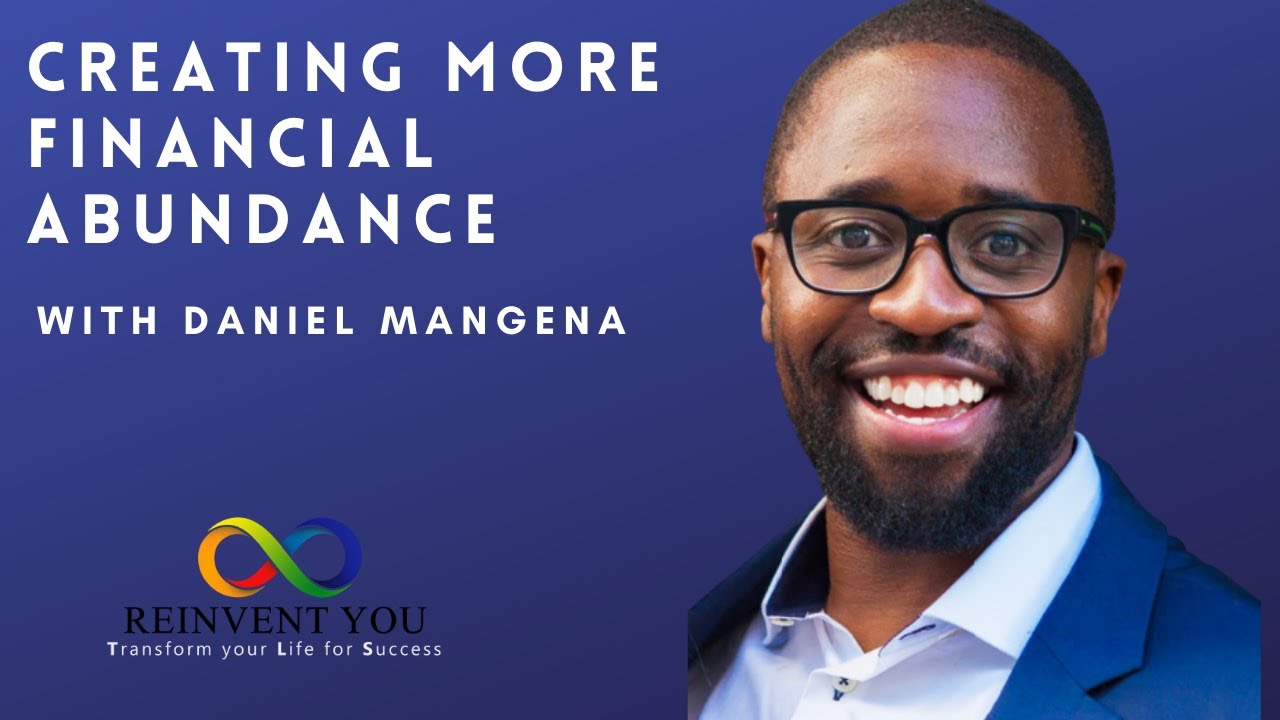
In this Reinvent You podcast episode, host Travia Steward interviews UK‑born entrepreneur and performance coach Daniel Mangena about wealth, freedom, and personal development. Daniel shares his early trajectory of making and losing two £2 million fortunes by age 23, describing how pain, resilience, and a relentless belief in his ability to create were essential but insufficient without proper systems and mindset. He introduces the idea of a “7‑figure life,” where wealth is a tool that supports health, relationships, purpose, and overall fulfillment, rather than an end in itself. The conversation delves into his coaching methodology—Micro‑to‑Millions, the Money DNA, Flow Funnel, micro‑shifting, and communal intention—emphasizing the need to align mental, emotional, spiritual, and physical aspects before scaling wealth. Daniel critiques the notion of “just meditating” for manifestation, arguing that intention must be paired with concrete action. He also discusses his perspective on societal attitudes toward the rich, advocating for contribution over resentment. The episode concludes with practical entry points for listeners: the free‑for‑a‑dollar "Money Game" book, a 5‑day challenge, and tiered programs (Kickstart, Micro‑to‑Millions) that are selectively vetted. Throughout, the dialogue is conversational, motivational, and peppered with personal anecdotes, concrete examples, and actionable advice.
Chapters
You are listening to episode number 76 with Daniel Mangana.
If you're someone who wants to make major changes in their life, someone who wants to achieve their goals, or maybe you're someone who knows this is not as good as it gets but you have no idea where to start, on the Reinvent You podcast, we explore different types of people, their successes and failures, and how they reinvented themselves to create the life they love. It's our hope that from hearing their stories that you too may have more insight into what it takes to build a life that you envision for yourself. Here to help you do that is performance and life coach Travia Steward.
All right, joining me on the Reinvent You podcast today is Mr. Daniel Mangena. Yeah, oh baby, that's what I'm talking about! This, this UK-born guy with the sexy accent Welcome to the Reinvent You Podcast. I'm excited. I'm always excited to talk about money and health, right? And so today, we are going to dive into a little bit of your wallet, maybe, and how to make maybe your wallet a little fatter. And I know everybody likes to hear that. So, so, Daniel, thanks for being on the show today. Can you begin to give us a little context as to your journey, who Daniel is, how he came to be the great international speaker, all these things he is today?
Pain.
Pain was a big part of it. Pain. So we'll throw some more.
There we go.
Epic failures and accidentally finding the resilience to move through all of that and to try again is the long and short of it. I made and lost £2 million fortunes by the age of 23.
Okay.
I had this arrogant, untried by life belief at a young age that I knew everything. I'd cracked the code of the universe and can't nobody tell me nothing and learned quite painfully that was not the case. And, you know, it was— anybody can lose, anybody can win, but can we face failure time and time again and still stand tall in our resolve to keep trying even if we don't get there? A friend of mine was letting me know that the average multimillionaire has bankrupted twice. That's the average number. Twice. So had they given up the first time, they wouldn't have made it. Had they given up the second time, they wouldn't have made it. On average, there's not all of them. Some had, had it easy, some had it harder, right? But on average, they've been able to stand the test of that. Um, now financially, yeah, fine, cool, I'm make good money or whatever. But more importantly than that is what I like to call the 7-figure life. That was a phrase that got given to me by one of the guys that came to a retreat we did in April here in Carbo. It's not just 7-figure bank account, but 7-figure relationships, 7-figure health, 7-figure yumminess in yourself and in your being, being in your purpose, doing what lights you up. That's what I'm more passionate about. That's what I'm more happy about. We use money in my work just as a measuring tool to see how close we are to having the capacity to create that 7-figure experience. And we find that when you allow everything to bleed into everything else, when you do create that 7-figure experience very consciously in one area, it can actually lead to an alchemic transformation of the other areas of your life too. Your health, your relationships, all of that yummy can come by focusing on one area knowing that goodness can spread to other areas too, right?
Oh, I love that. I love how you're using yumminess.
It's my word of the moment. I'm using yummy everywhere, right?
Yummy is your word. I love it. So now, in my program, I have a program called Create Your More, and I don't deal with money at all, but let's take some folks through a little bit of Daniel's methodology. Somebody comes to you and they're like, Daniel, I need help. Like my first pillar is to help them reassess. Like, you know, let's, let's take some inventory, you know, let's see, how do you start them off to figure out, okay, what is the foundation and how can we evolve you from there?
The first thing we're going to do is take stock of if they actually want what they say they want. Do they really want it? Not is it something that would be nice that, you know, Because you know as well as I do, yeah, no change comes without pain because it's growth.
That's right, absolutely. It's true.
Pain of losing the old self, right?
Right.
Pain and discomfort of doing different things or doing things differently. Pain and discomfort of maybe changing your environment or the known things that are in your environment. Because if you're staying the same and you're doing things the same and the same thing, you're going to stay the same. So someone—
right.
Is claiming that they want something different, I need to know how committed are you to letting go of who you are so you can step into something more.
That's what I'm talking about. You are speaking my language, right? Because everybody thinks, you know, oh, I'm gonna set a goal and I'm gonna be so compelled to that vision at the end. No, no, you change because of pain, right? Because people don't, people don't really drop weight until it's like you go to the doctor, it's like Oh, shit, I'm type 2 diabetic. Oh my God. You know, I look at myself in the mirror. It's the pain of the situation. So I totally get that. So now you figure out, you know, do you really want this? Right. And then what do you do with them?
Then we say, you said you want this, but let's assess, is it really? What do you really want?
Okay.
We know that you're committed to doing something. We've established that. Now let's clarify, refine, and dissect this goal that you said you had to make sure that it's not one of the 97% of the other thoughts running through your head that aren't even yours. People don't realize how much of the things that they're chasing after, going for, craving for, it's not even them that wants it. It's the unconscious mind. It's the programs that they were given. It's the stories that they had. And these are becoming buzzwords right now, but I really love to get into the, the itty-gritty of You say you want to be a millionaire. Why? Right. So you want to be financially free. Really? You say that you want to move to the career or you want to get the— do you really? Or is it that you're seeking the validation of the numbers on the screen? Yeah. Really? Or you're running away from the pain of not having someone else control you? Do you really? Or is it because you were told that you're not going to be something unless you get there? Because there's going to be an emptiness on the end of that. There's going to be an emptiness that's going to leave you Look at these Hollywood celebrities, right? They spend years sometimes honing their craft, getting to the top of their game. Drugs, alcohol, suicide. Why? Because they spent all this time and energy reaching for a goal and found out that there was nothing there for them. But when you actually step towards a goal that you're feeling here, because you've really got a deep personal resonance to it, then there's so much infinite support. There's so much fulfillment, even in the journey, even if you don't get there. You can be so present in the journey that the whole thing is a wonderful experience. When the trials and tribulations come, when the obstacles show up, when the bumps in the road show up, you can face them with an excitement like, yeah, bring it. Because I know that I'm on this journey and going to this thing that's really calling me from the heart.
Yes. I love that. And so, you know, we're both coaches. So the work that I do in order to get to that is to go 7 layers deep, right? And so—
I love the 7 levels.
That's what I'm talking about.
Hi, baby. Hi, baby. Hi, baby.
So, You know, so I know you have done some work. What is your 7th layer? Like, why are you— because I hear the passion in your voice right now. Why are you so passionate in this work right now, Daniel?
Freedom. Like, I peeled it away from a million different angles, and it's freedom. Freedom is freedom. You know, I've been very wealthy. I've been on my face. I've slept on people's sofas. I've not known where the next meal is coming from. I've Like I've been on the spectrum, right? And at the end of the day, what I came to understand, it's not even being on any point of the spectrum. It's having the freedom to consciously navigate the spectrum on my terms. One of my coaches, one of the coaches that I work with personally, is like, being rich isn't having money in the bank. It's having the capacity to call in the resources to live life on your own terms. That's what it's really about.
Love it.
There are people with money in the bank that are a slave to the money that's in the bank or slave to the path for which that money comes in. Whether it's a job, a so-called business, because if your business can't operate without you being in it, it's not a business, you're self-employed and your job owns you. And sometimes that's a worse boss than Bob, right? So it's having that freedom. For me, that's what it's about, right? Freedom to like, I don't feel like doing anything, so I'm gonna go play with the baby. Freedom. Like, I'm gonna— this morning I feel like going to Tahiti. Babe, we're going to Tahiti. Pack up the kids, we're going. We're going. That, for me, is what I do it for.
Well, I get it. And so the legacy is like— because you have kids, it's like, you know, I want to pass this. You know, it's setting that example, right? And it's like, you don't want to— you don't have to be a slave to the bank account. You don't have to be a slave to your 9 to 5. But it's how can we help them experience the ultimate level of fulfillment? And money does help you do that. So I totally get that. It is a great tool, and I love that, you know, you have that methodology because, you know, growing up I wasn't surrounded by people who, like Daniel, who was like, you know, I want to earn more money because of freedom. I was surrounded by people who are like, I want to earn more money so I can pay more bills, so I can do this, so I can get these financial things, and so I don't have to live paycheck to paycheck. But having that big why, that deep why of freedom, is so empowering because it takes you to that high Maslow's hierarchy, doesn't it? And so what are those moments for—
go ahead, go ahead. No, no, I just wanted to just quickly— sorry to cut— I just wanted to just speak quickly to this thing about money being a tool, because so many people— there's this whole like hate the rich movement right now, which I get a bit emotional with. My friends post these things, it's like, what do you mean hate the rich, right? What about me? One of my friends, for example, she posted this thing, people only got to be millionaires by stealing it or or inheriting it or breaking the back of the working class. Wow. Like, you know, I'm not that person. Oh, not you, not you, all the others. It's like, there's this energy, this mentality of bringing down others instead of being a part of a constructive conversation about how we operate as a society around this idea of allocation of resources and wealth, how we encourage growth expansion, how we encourage creation.
AOC.
I can't remember her name, the politician that got into trouble.
Oh, Cortez. Alexandria Ocasio-Cortez.
Yeah, yeah.
She goes to party with rich people, say tax the rich, the Met Gala, right?
Yeah. And it was like, yeah, tax the rich and blah blah blah and all the things. Like, what are you creating? Like, you're just putting down other people. You just put— so we're not creating anything anymore. We're waiting for other people to create so we can steal from them illegally. Is that what we're doing? We're not talking about people paying their fair share now, because what is the fair share? Let's say, for example, I started a business, I create 10,000 jobs, I'm feeding 10,000 families, I'm creating resources that are supporting other people creating businesses that creating other jobs. I have my reward for everything that I've put into that. And people who aren't creating anything are saying, your fair share is X amount of everything that you've created. What are you making? Nothing. I'm waiting for your share so that I can do— that's your fair share. And for me, that doesn't make any sense.
Yeah.
That doesn't make any sense. For me, the public purse is to serve the public, right? So we've got education, we've got healthcare, which are supported by the citizens. We all have our contribution to that. Yes, the sums are going to be different for someone who's creating more and someone who's contributing to creation. But I believe that if we start thinking differently and focus more on what can I create, if there's a greedy fudger over there who's not going to give, am I going to spend all of my energy putting them down and getting mad at them? Or am I going to see what I can do to contribute, to be an example of how to show up, to be an example of what it means to be a person of contributive influence instead of stealing the life value of others. I just wanted to just kind of put that out because I know that's very present in the political sphere.
It is present, and I've never— instead of what can we take, that's quite the perspective, you know, that you have. And so I've actually— I've never had a conversation with someone who had that perspective, so thank you for sharing that. Yeah, absolutely. So you're asking a question Well, I was, you know, you were talking and we were talking about freedom and I wanted to know when you, not when you're on your back, like not when you were down on your face, you know, but when you knew Daniel had made it, was freedom the thing that came up and how did you recognize it?
No, I was a slave at the time. I made my first million when I was 19 years old.
At 19? Wow.
I made my first million when I was 19. I was undiagnosed with my Asperger's at the time, so I had no real personal relationships to speak of. I think by that time I had one actual semi-serious girlfriend that lasted 6 weeks, and then she moved to Gloucester, and then she ended up dating one of my best friends. But that's completely other story. We're friends now, 20-some years later. I forgive her, whatever.
Yeah.
But, um, I was surrounded by sycophants that only had me around because I was valuable and useful. I didn't have any real relationships. It took going through the dark times for me to appreciate my family more and have the healthy relationships I've got with them now. But I was basically alone in this ivory tower of success that didn't even last that long because I lost everything within a year. Right.
Oh, after you made your first million, you lost everything. Okay.
And then I made it again and then I lost it again. So I'd made and lost it twice by the age of 23.
Wow.
Wow.
And I had no conscious relationship to the money because it wasn't about the money. I was trying to validate myself by creating— I was keeping myself busy from the noise of loneliness by creating, gathering, and being Johnny Big Socks, who's done this and done that. And I believe that that energy was one of the reasons why it couldn't stay, because that's not a wholesome, expansive, creative energy. It's almost a fearful, lack-driven, pain foundation energy, right? So that couldn't help hold the wealth. Since I've rebuilt my life over the last— what year are we now? Since 20— I'd say since 2014, I've had consistent financial success. Since 2014. Since then, I've got beautiful relationships with my family, helping my body. I'm married now. I've got my 9-year-old son. I've got my 5-year-old stepdaughter. Nephews and nieces are getting older, I've got a great relationship with my mom and dad, I've got great friends, I've got a beautiful community that I get to serve, and I'm free to live life on my terms.
Right.
That has been facilitated by the financial resources, that is supported by the financial resources, and in many ways they're symbiotic in that they're byproducts of each other, but that didn't exist before in any way, shape, or form.
Got it. What do you think was that common thread? You make your first million at 19, you lose it, and then you make it again before 23. Like, I've never made a million dollars. And I'm like, what is that secret ingredient? Can I, can I put it in my pantry and go get it out now?
Yeah, there is a secret. I mean, there, you know, for me, you've got to remember that I got into this kind of work, personal development stuff. I read Think and Grow Rich when I was 17 years old. I was studying Plato, Machiavelli, listening to Nightingale Conant tapes, reading Wallace D. Wattles. Like, my mind had literally no doubt of its capacity to create what I wanted to create. I had a dogged, completely unchallenged certainty that I was going to create, which was enough to bring it forth, but not enough to hold it.
Okay.
I wasn't enough to hold it. I didn't have, I didn't have the experience of managing money. Right. So my business, my first business ended up getting lost because we didn't have the right licensing. We didn't have this, we didn't have that. Right. So government comes in, shuts you down. That's it. The next time I didn't have, I was naive and didn't have experience with people. People actually stole all of the money from me the second time. I didn't have that lived experience. I wasn't, I didn't have the humility to get the right advisors, the right mentors, the right guidance around me.
Okay.
Right. So any one of the piece, people can work really hard and create wealth, but it's not going to stay because you're not going to be able to believe that it can stay. Right. Or you're going to burn out mentally, physically, and emotionally. You're not going to even be able to enjoy it. I've seen people manifest it, but 90% of lottery winners that manifest windfalls, they're back to exactly where they were within 5 years. Because again, they don't have the capacity to hold it.
Right.
And so in terms of the methodology that we show people, for us to have people, millionaires in our program, people that create 6 figures in our program, people that have created financial freedom, and we're talking about people all over the world, from different walks of life is that we cover all of these aspects, not just the strategy, but also this, having the mind working for you.
Yeah.
Having your energy field working for you, having that intentionality commitment to a goal that you've chosen. And that's the way I found it to stay. That's the way we find our people find it to stay. And that's why I couldn't keep it before because I didn't have all of the pieces.
Got it.
Riding the coattails of just one.
Wow, okay, thank you for explaining and sharing that. And so, you know, Daniel, I read that, you know, you're talking about manifesting when people are manifesting. And for me, when I put that together, the first thing that comes to mind is I meditate. But Daniel here is not a fan.
I am a fan.
Are you?
I am a fan. Okay, avid fan.
An avid fan.
Because, you know, let's finish the sentence because everyone's okay. What are these crazy guys talking about?
Right. Because I read that, you know, Daniel believes you should stop meditating.
Mm-hmm.
Right. And so I'm like, then how do you manifest?
Let me, let me back up a sec. And I've actually got a hilarious story of something that happened this week. So I write for Entrepreneur Magazine. I write for a couple of magazines, but I also write for Entrepreneur Magazine. And thankfully every single one of the articles I've written for them, it's made it to their Twitter feed and it gets tweeted out to people and other viral things. And so I have an article that my most recent one that says why you should stop meditating and focus on your intentions instead.
Okay.
And people were wilding out, question marks. And one person said, you know, I can't believe this. You know, he didn't say he used swear words. He could, you know, entrepreneur's gone down the crapper. And I laughed, I laughed. And I replied to him. I don't normally reply to trolls, but this, I was like, I was just interested to see his mindset. Yeah. It's like, did you, did you read the article with a title like that? No thanks. And a lot of the TV interviews that I get to do is, you know, people do literally have me on because they, they want to know the answer to this question because like you, they're like, I'm a meditator. Meditation has done magic for me. I remember I had one interview. It was a live interview, but they replayed it on their website so I could share the link. It wasn't just one that was, was gone and I shared it and people were like, oh, have you no meditation has saved my life. It was like, did you watch the 6-minute interview? Did you?
Yeah. No, I read the title.
I read the title. And this actually speaks to why I believe a lot of people don't end up actually achieving their goals, why they don't end up getting that more. Because they're not open to actually exploring the full story of what's in front of them. We make these snapshot judgments. We take these actions based on these snapshot judgments instead of having all of the facts, because anyone that spends any time actually exploring what I have to say about my phrase, stop meditating.
Yeah.
Is that it's very different to don't meditate.
Hmm. Okay. All right. So what's the difference according to Daniel?
For something to stop, it has to be in motion. And I go on to say what we do once we have finished the practice of meditation and put aside spirituality and mindfulness to take care of the rest of the procedure. Like I said, in my own personal experience, experience of everyone that I work with, even when you look at ancient wisdom, we are not one-dimensional. We've got a physical body that moves through time and space. We have a mind that is the gatekeeper to our experience, and we've got an energetic field. Now, meditation and other spiritual practices can have an impact on the non-physical, To some degree, they can impact the neurons in the brain and so on and so forth. But we have to then get off our butt and go and do something about that, which we've prayed for, that which we've gone to the temple, the synagogue, the mosque, the church, the thing, the garden, the zen, whatever the doobry, and do something about it. Else, what is the sense in— what's the sense in me close my eyes meditating about my abundance?
Yeah.
And then sitting around all day, not even answering the phone or answering messages, but eating Cheetos, watching Netflix, and waiting for my, my abundance to match. Got it. So it's saying I've got the vision board with the love of my life. Yeah. But then I'm staying in a cave and not connecting with any human beings. Wait, got it. Manifest that.
Yeah. So it's stop just meditating. Don't just meditate.
Take action and move on from meditation.
Okay, okay.
But you see, man, it's part of the process.
Yeah, it creates such buzz because you're You're right, it's kind of like, huh, stop meditating. Like the guy who, you know, sent you all the nice words, you know, stop meditating. I get that. Yeah, I— yeah, so that's very interesting. I love that. So Daniel, everybody wants to know right now, including me, what is like— what are the ways in which you help people manifest, create abundance? Because I know you have something called a flow funnel, you have something called micro shifting, like, like Let's just dive into a little bit of your methodology.
I'm gonna ask you a question and then you're gonna understand for a little bit after there, right? Why just last week we had another millionaire in our program, right? If I gave you half a million dollars, right? So there's half a million dollars. I wave a magic wand, you've got no energy blocks, no emotional holdups, no trauma. You're completely healed. I wave another magic wand. You've got nothing but no limiting beliefs at all. And I give you the complete playbook on how to turn half a million into a million dollars. Could you do it?
Absolutely. If you gave me the playbook, yes.
Okay. Okay. Let's half that. $250,000 to $500,000. Same thing. Same questions. Could you, could you turn $250,000 into $500,000? Yes. Okay. If I said, here's $10,000, we've waved the wands. Here's a playbook to turn $10,000 into $20,000. Can you do it? Yes. Did you know if you take $100 and double it 14 times, it takes you to $1.6 million?
No, I have not done that math, but that's very interesting. Okay.
That's how I made my first million twice. Hmm. My, one of my first mentors, a guy called Stuart Goldsmith, he's a millionaire from the UK, quite of a loose, but he's written some powerful books. And his first book of the first book of his, I read one called The Midas Method that changed the game for me in terms of taking everything that I had been studying up until that time and taking it to the next level. He did an experiment that he started in, I think, the year 2000 or 2001, where he said, if you take a penny, find a penny on the floor and double that 28 times, it takes you to $1.6 million with a couple of rounding downs here and there. So it takes him— he was really strict with his rules, but he was all about hustling, hustle your way through, get there, you're going to do this, you're going to do that. What we do now with our programs, we follow something that honors the structure, but takes care of these other aspects of ourselves. So what we do is we have people start with an account with zero. We teach them how to turn that zero bank account into $100, pounds, euros, whatever the fee is. Right. Then what we do is at that step, of $100 and thinking no further ahead, we look at— now, if we look at the journey of $100 to $200, do you have any limiting beliefs? If so, what are they? Let's address them. Do you have any hangups or emotional blocks to it? If so, let's deal with it. And then we give you a playbook based on what we call your money DNA on how to turn $100 into $200. What we inevitably find is in these earlier steps, people jump. They'll jump a few steps. So maybe they'll get to step 5 or 6. Okay. Let's back up. Let's make sure that we're clear every single one of these steps with the belief systems that you're, that you honor the worthiness of it, that you're celebrating what you've done, that you've got no energetic blocks. And then we look at the step that you're on. Okay. We've got to turn this 3,200 into 6,400. Let's pause. How do you feel about holding 6,400? How does that fit in your body? Is your body tight or is it, is it relaxed? Do you have any limiting beliefs, any stories coming up?
No.
Here's a playbook on how to turn 3,200 into 6,400. What you're for. And we just follow that process. But what we always find, and this is the hilarious thing, people get to a number and they're like, I'm good here. They get to like a couple hundred grand. I don't really need to be a millionaire. I'm really happy. Or they pay off their debts. We've seen people pay off a mortgage, put some money in the 401k. And they're like, I actually like my job. I don't want to leave my job. Or I like the business that I do. I'm good. And then we do have those people that go all the way and go beyond a million. And then they come and work with us at a deeper level and look at getting beyond a million. But that's what we do. We look at the mental, the emotional. We use, I don't know if you've ever read The Power of Eight by Lynne McTaggart.
I have.
But she did, it's a very, very, Lynne McTaggart, Lynne McTaggart, The Power of Eight. She actually has done scientific research to show that when 8 or more people hold an intention, magic happens. So we use communal intentions at every single one of those steps. So every time you're moving through those steps, You've got the energy of hundreds of people joining you, believing that you are ready to move to the next step and holding that intention within for you. So we've got the communal energy, we have loads of tools, strategies, support, and coaching around the emotional, around the mindset, but also the playbook based on you and how you optimally create. Not here's a cookie cutter strategy. Yeah, based on who you are and how you flow, how can you move through these steps? Right. That's how the program works.
That is. And what's your program called? Is that your Micro to Millions?
That's Micro to Millions. Yeah. And we've got different levels. People can come and do our Kickstart program. It's like $500. We take you through the first, we get you to $12,800. So what we call our Five Figure Club, it's a 6-week course. You go through those steps, you get that foundation, you join our community, you can come in and enjoy. And then if you want to progress, you can progress into our later steps, get a bit more support and so on and so forth. We have people that come in that are already okay and they want to get further. So maybe they want to, you know, invest a bit more. But, um, we've got something to meet people at all different levels. We've got people that are already millionaires that come and work with us, people that are kind of stuck at that 6-figure mark and not really able to break through, or they're making the money but they don't have that emotional well-being, which we're really, really big on, or it's costing them relationships, it's costing them their health. So we work with them at all of those levels, but ultimately it's the same formula— micro shifting taking those baby steps, stopping at each step, focusing on it and moving on to the next one. The flow funnel, which is honoring those different aspects of ourselves, our mental, our emotional, spiritual, and physical aspect, and that intentionality and bringing everything together for the win.
Wow. So it sounds like you've got a little bit of a variation of human design here with, you know, your own unique design.
Yeah, we do some human design. We throw that in the money DNA. We use human design. Yeah. That we, we look at.
I find that so interesting. I had, um, Bernadette Gold on the podcast about a couple months ago, and she talks about your unique DNA, and I find it so fascinating, you know. And I love human design, you know. I mean, I'm, I'm a generator, so, so yeah, that's what I'm talking about. I love that. And so, Daniel, this has been so informative. If you had to give my peeps one valuable takeaway from this, from our conversation today, from some action that they can go out and take action on like right now, because we don't want to just meditate, right?
That's right.
What would you say is the most important takeaway that it's like if they listen to nothing else, they hear this part of the, of the podcast?
I would say on a way around Get clear on where you're at and honor it because they can come and listen to all of your fabulous episodes. They can come and coach with you. They can go and read a book. But if you're reading that book, if you're getting that coaching from an illusionary place, yeah, where you're actually at, it's not going to have the same efficacy. All of the amazing stuff that we've chatted about today and all the things on your other episodes that they're going to get and all this, unless you know where you're at, how can you get the right support for you? Make the effective roadmap, do the effective tactics and strategies for you and where you're at, it's not going to happen.
Right.
So we invite people to find out where you're at, get clear on it, and then honor that.
That is so perfect. So now the next question is, how do they get in contact with Daniel? How do you work with people? Is it group program? Is it one-to-one? What does that look like?
I would say that, um, I generally like people to get a taste for what we do. First. I'm not one of these people like, come and spend blah, blah, blah with me. I'm going to, cause I don't know. Yeah. I don't know you. I don't know what you're about. So we don't generally allow people to, you can't go on our website and do any of our higher price programs. It's physically impossible for you to do that. You won't be able to find a link anywhere. We only really allow people to come into those that we've seen already too, because I don't need the money. Like you give me another thing for a pro— yeah, I'm good anyway. I don't need it. Right. Okay. So this is why we've got such a solid track record as well, because we very, very deeply vet people that work with us on more of a deeper level. Okay. If someone wants to explore the way that we do things, I would say this, go to dreamwithdan.com/moneygame. Okay. Grab my book, The Money Game. You can get it for a dollar if you go to dreamwithdan.com/moneygame. Um, that's this book here.
Okay.
What that will do will give you a practical experience of everything I'm saying, and you'll see evidence in the next— within days of you reading that book, you'll have evidence of our process in terms of manifesting money working for you. If you do, within the book, you have the opportunity to maybe look at either Micro to Millions 2.0 or Kickstart, our entry-level programs, come and join our community, hang out with us, we'll get to know you. And then you have the opportunity to come and do something deeper, but there's no need to come and spend a bazillion gazillion doobry whatzits Grab the book for a dollar, right? Come and play with us a little bit, and then we'll see if how we work works with how you're at. Do you even really want to be abundant? Who knows? Yeah, the relationship and see where we go from there. But start with the book. You can get Kickstart off the bat, the $500 program. You can get Kickstart off the bat, that one you can get directly. But other than that, we want people to come and play with us, to be in the energy of what we do, right? Make sure you're fit for our community. And then we go from there.
Perfect. So that series of videos that I watched, it would— there were 3 of them. I think it was like, like last week or something like that. And then you kept referring to, oh, I'll put a link in the chat about The Money Game. So what— so, and, and I kept looking for it because I was like, I want to play The Money Game, but I couldn't find it.
That's the book. The book.
Okay. So I— so we go get the book and we can play The Money Game.
You can play the money game. And what will actually happen is if you go through this link to get it for a dollar, you can have— if people want a paperback, they can go and get the paperback on Amazon for like $20 or whatever it is, but you go and get this for a dollar. You'll actually be directed to our money game challenge, which is a 5-day challenge where we— I have recorded walking you through and you'll see the live in the group. It's in the Facebook group. So you'll see all of the results that people have been getting each day. And that will give you some mental thing as well. Have some fun with that. dreamitdown.com/moneygame. Hop on board, come and have some fun with us. You'll get some results. And then if you want to invest some of that result that you've received and come and do some stuff with our people that have manifested, our record right now, record is £75,000 in 2 days. We've had someone get £27,000, $50,000, 20 grand. We've had a couple in the 20 grand mark. The average is between $1,000 and $2,000 within that week period.
Right, from playing your money game.
Yeah, from playing the money game.
I'm downloading that when we're done. I'm downloading that when we're done. That's what I'm talking about. See, that's— and see, that's something that will like— you made me want to download it, so I bet everybody— I bet you're gonna have like some— here we go, here we go. Man, Daniel, thank you so much. This has been informative and like, you know, I love your energy. So generator to generator, this has been so cool. I will, you know, continue to follow your work and I know you've been doing some incredible things and thank you so much for the time and the valuable insight that you gave us on this episode today.
My absolute pleasure. I really enjoyed my time with you today. Perfect.
If you like what you're hearing, And perhaps you're interested in having a complimentary conversation with me. Click the link at the bottom of the show notes. Thank you so much for listening. If you even want to know more about what I'm up to, head over to traviestewart.com. And if you like seeing the videos of the podcast, every episode is on my YouTube channel. Take care, guys.
More from Travia









Remember the YOU Who Didn't Overthink Everything #personalgroth #mindset #selfdoubt

