Ep 78: We are responsible for our own emotions with Luisa Molano
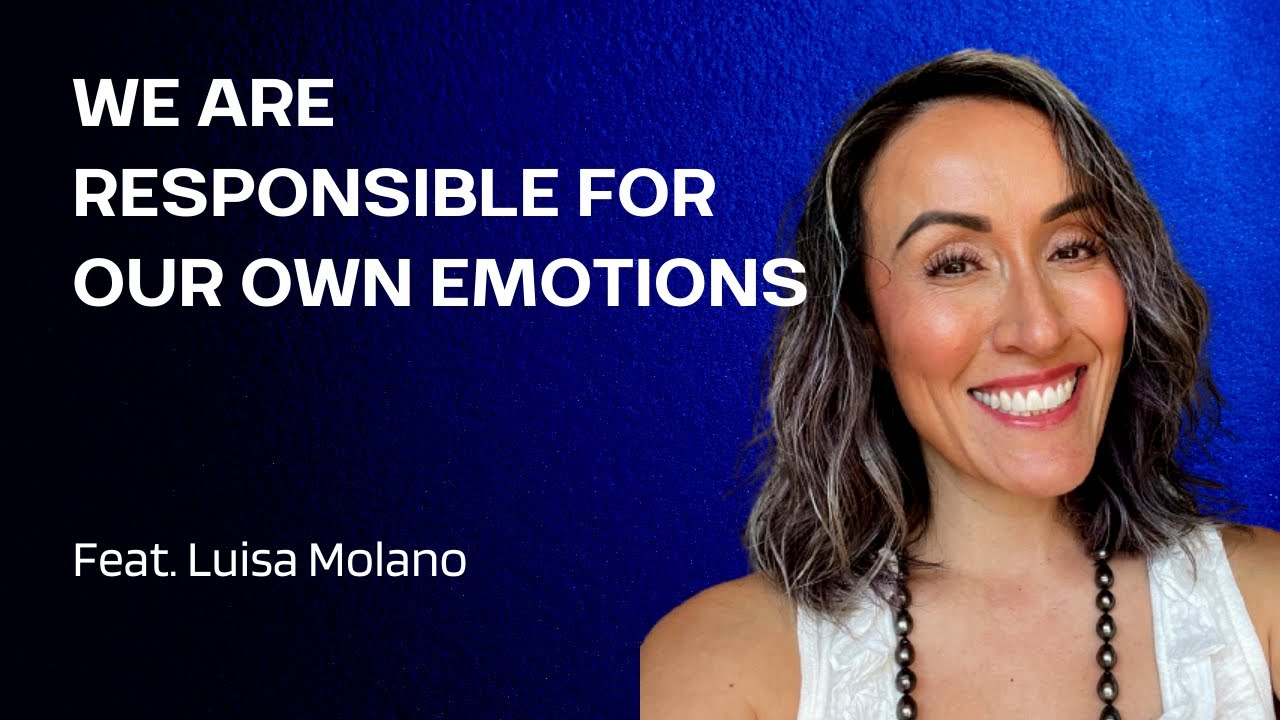
Luisa Molano, a Human Design guide and leadership coach, discusses emotional responsibility and healing childhood patterns. She shares practical tools like Byron Katie's Judge Your Neighbor worksheet and journaling exercises to help you take ownership of your emotions and find freedom from old stories.
Chapters
You are listening to episode number 78 with my guest Luisa Milano. We are responsible for our own emotions. I'm Travia Steward, and I want to help you move past barriers and obstacles that are preventing you from getting what you want in life. This is Breakthrough. Louisa grew up in a loving but largely emotionally unavailable home. And as the oldest of 3 children, she often needed to be responsible for the emotional well-being of her entire family unit, which often meant anticipating other family members' needs emotionally. This also left her, her own emotional needs unattended. In this episode, Louisa shares with us how self-forgiveness is a necessary component of healing. She also discussed how the invitation to heal shows up unannounced but always at the perfect time. And as a Human Design guide and leadership coach, she works with her clients to unlock their unique creative flow pattern so they can achieve greater levels of success in life and create a life that not only looks good, but one that feels good as well. This conversation is filled with real talk, practical insights, and a lot of heart. She even shares with us a powerful exercise to achieve emotional freedom in any situation. Let's jump right in as Louisa is in the process of sharing with you and with me her breakthrough that she recently had in a moment, again, that was unannounced But she shares it in such a way that I felt like I was a fly on that wall watching and witnessing her unpeel layer after layer to get down to the core. And she tells it beautifully. I hope you enjoy this conversation as much as I did, which was a hell of a lot. And now, Louisa Mulatto.
So good to see you. Thanks for having me, first and foremost, and thanks to everyone who's, um, who's listening. I hope that this serves and supports and helps each of our healing journey, each of our, our path. So because we walk this path together. So it started, this was Tuesday, where I'll take my story. I have a very close relationship with my sister. And she's younger than me. And I got a text, she's got a new job. And it's, it was challenging her. And she reached out and said, I need help. And it was all like a little audio text thing that she sent me. And, you know, I saw it and I listened and immediately like big sister, I'm like, I've got to save her, you know. I'm like, where's my cape, you know? And I'm like, whoa, cowboy, is that how you want to create your sister? Because I believe that every step of the way we are creators. We are infinite creators, and we create everything that shows up— our responses, our reactions, people. We don't see the world as it is, we see it as we are, and we get to create it that way. So I'm like, wait a second, all of a sudden I'm creating my sister as like some poor little child, you know, some little sister that needs saving. But really, she's actually strong, capable, brilliant, and exactly where she's supposed to be. So I talked myself off the ledge and I said, hey, you mentioned you needed help, but I didn't hear what you needed help with. And I hit send. I said, that's really what I need is for her to let me know what is it that you need, because it, it really sounded like she was just venting, which there's nothing wrong with. Every once in a while we need someone to hold the trash and go, just hold the trash for me, you know. And so I hit send, and the day went by, and the day turned into the evening. And I was getting ready to go to bed. And I hadn't heard back from my sister. And she was on my heart. And I remembered, all right, well, if I'm not going to create her as weak and helpless, and you know, what, what do I do? And I felt torn because on the one hand, I wanted to call her before I went to bed. On the other hand, I was like, she's got this. But I wanted to call her before I went to bed. She's got this. So I turned over, my husband who had already like kind of was already kind of like under the covers and winding down. I was still had my, my journal in my lap and I was going to do a little bit of journaling. And I said, babe, I need your support. He goes, what's up? Like rolled over. Like he's just one of those, he's my human. He's like, what do you need? And I'm like, I'm torn. I don't know whether I should call my sister and and go, hey, are you in your shell? Let's talk. Or if I should let her work this out, trusting that I've told her, if you need help, let me know what you need help with, and she'll come to me. Like, for all I know, she saw the text and went, I actually got this, and she was doing her thing. I mean, I don't know, right? Because our minds are really good at catastrophizing, and I'm imagining her like being sitting in the corner crying like, I don't know, if only there was someone. And over here, Luisa's like, I'm gonna go to bed. Right? So he goes, well, it's kind of simple. If you want to call her, it sounds like you should pick up the phone and call her. I was like, but that's what I'm saying, I don't think I should call her because I think she's got it. And then he looked at me and he's kind of puzzled, goes, well then don't call her. And I was like, ah, you're no help. So he rolls over and he goes to bed because I was clearly— I, I had some stuff now coming up that some stuff in my life curriculum. Now this was very clearly becoming, okay, this isn't about my sister. This is the universe going, there's a lesson here for you. This is your life curriculum we're working on right now. So he went to bed. I'm sitting there and I'm just like, here came the breakdown, right? And breakdowns don't call ahead. They don't go, hey, so something's gonna happen, and then this is gonna happen, and then I'm gonna show up. Breakdown. Just letting you know, I'm on my way. It's just like boom, like you almost hear the meow, right? And I'm sitting here looking at him sleep and I go, he's freaking abandoning me, emotionally abandoning me. And then it just was like the dam that broke. I was like, he does this to me, he's done this before, I can't believe this, da da da da da. Da da da. And then I remembered our vows, our commitment, our agreement to each other as a couple is comprised of 3 things and only 3 things. They were our vows on day 1. 2 years ago we renewed our vows, or a year ago we renewed our vows, and we renewed it with the same 3 agreements. And one is that we are responsible for our own emotions. And I went, wait a second, there was just enough left in, in, in the swirling that was happening because I'm torn. I want to be there for my sister, and then I ask him for help, and he's like, well, do this or don't do it. Okay, well, those are your two choices. And I, you know, and he went to bed, and I'm like, he's abandoning me. And I went, I had just enough within the pain that I was feeling there was enough air. There was enough air in the stuffiness of my mind to go, wait a second, I'm not owning my own emotions in this situation. I'm wanting him to come rescue me. And there was all this just like poison that was kind of coming up to the surface, and I paused And I reminded myself of one of the tenets of my life, and that is that no one can make me feel a way I don't already think. And I sat there and I had tears down my face. I already had maybe 7 or 8 bunched up Kleenexes. And I'm like, this is me and my thinking. This isn't me and my sister. This is no longer— this isn't me and my husband. This is me. Me and my thinking. And if it's me and my thinking, well, then that means I'm being invited by the universe to, instead of continuing to act out of fear, to now act in service of love and heal. Well, what is he— what is there here to heal? And I kind of sat there And there was still a lot of swirling. So I closed my eyes. And some people, God is a trigger word. Some people, universe is better. But I think everyone listening can agree that there is a higher power of our choosing at work in life, whatever that name is that you— that label that you associate to it. We can all agree in this moment that there is a higher power of our choosing at work. And that's who I called out to in my, in my heart. I went, I'm sitting there crying, tissues all over the place, and I said, help me recognize, help me recognize where, help me recognize and see how to choose love in this moment, because I can see the I can feel the fear right now that I need to save my sister, that she's broken, that my husband's abandoning me. This is about me. Help me see. And I sat there for like maybe 30 seconds, maybe a minute, and in dropped this thought to pull out a document that I haven't pulled out in a while by an incredible woman named Byron Katie, and it's the Judge Judge Your Neighbor worksheet. So I opened my journal and I went, I guess this is what I'm journaling about. And I literally went through the Judge Your Neighbor worksheet, which is available online. It's probably one of the most powerful tools to get back to our heart space when our ego has wrecked— like yanked the wheels out of our hands and grabbed it. I started going through it, going through it, and I kind of completing the, the, the various sections. And what I saw through the completion of that exercise is that little Louisa, you know, like 8-year-old me— and again, this is how powerful the worksheet is, like, this is what came up in— into my consciousness and into my awareness from doing the worksheet. When I was a little girl, I was responsible for my parents', my mom's emotional state. And so I was the one that needed to fix it. I needed to say or do or not do the right things or take care of things so that mom would be okay. And that part of me was ready for some healing on Tuesday night. And I said, okay, forgiveness is what's inviting me to— self-forgiveness is what I'm being invited to give myself, right? How must I be judging myself such that I'm blaming my husband for abandoning me emotionally when he gave me literally the very two choices that I had before me. And how must I be judging myself such that I felt like I couldn't go to bed without making sure that my sister was okay when she's a full-grown, brilliant, strong, capable mother of two incredible babies, starting a new career, and like just a badass. How must I be judging myself? And I saw it. I went, oh, I'm judging myself as responsible. I'm judging myself as emotionally weak and responsible. Well, I forgive myself. Then I kind of sat there and went Well, if that's what I've been judging myself as, then this is an opportunity to forgive myself. I forgive myself for judging myself as emotionally weak, as emotionally vulnerable, and as responsible for the experience of anybody outside myself, because that's not my job. God's got our back. The universe, whatever that higher power of your choosing is it has your back. And you have little versions of you that might be ready for healing at certain times, like my 8-year-old self was on Tuesday. And I sat there and there was some more tears, and I said, well, now what do I want to create, right? Because once we see how we've judged ourselves— because this is about us, right? Triggers people activating us or people setting us off. All they're doing is sparking something that's always been inside of us, and when that gets sparked, it's no coincidence. It's because our heart is ready to heal it. And for me on Tuesday, it was responsible for others, responsible for the experience and the well-being of others, which is not my job. My sister's well-being is not my responsibility. That's her job. Her emotions and her well-being are her job. I can be there for her and I can support her. It is not my responsibility. Yeah, it was an opportunity, an invitation to forgive myself for being responsible. And that was the other one, for emotionally vulnerable. And I said, well, if I forgive myself for judging myself, well, now I get— you know, it's kind of like you turn the page of, of, you know, the, the, the, the front of the book says Luisa's, you know, Luisa's life, and you've turned the page, and now there's a new blank page, and you get to write whatever you want on that blank page. I said, okay, I'm releasing this, I'm healing it, it is no longer— I saw 8-year-old me, I saw a couple moments where I was like, I need to do this and I need to do that and I need to fix mom and I need to do this and I've, I've got to take care of mom, it's up to me, I need to because if I don't she's going to fall apart. And I was like, I'm done, no, I'm not doing that anymore. Well, now what, what am I going to replace it with? Right? So then I said, well, I am that people— I see the strength, the brilliance, and the capability of people. That's what I want to see every time I lay my eyes on somebody, on a human. I want to see their strength, I want to see their brilliance, and I want to see their capability. That is what I want to see in all humans. And I went, I am I am me, Louisa. I am that people are strong, capable, resilient, brilliant. That's what I want to see. That's what I choose to see. Line 1. 2, I'm a conscious creator, and I see that all my creations are good. All of them. Being there for my mom, ain't nothing wrong with that. I did it. I can't change the past, but I can hold it differently. I did what I did. I was there for my mom. I'm proud of that. And now I'm letting it go because it doesn't serve me anymore. And then I've cleaned up my mokos, sniff, you know, cleaned all my, my noses and stuff, got my big pile of tissues, got off the bed, threw them all away, took a couple deep breaths and slept like a freaking baby.
Louisa, thank you so much for sharing that story. You're a great storyteller. I just love it. And so, you know, when I'm, I'm listening to you and I'm thinking about, you know, a lot of even my own shit that I am still releasing, you know, but for, for Louisa, like, and now we compare it to some of the listeners who are going, Well, how do I know that that's the thing that I need to let go of? Something from my 8-year-old girl self, you know, how do I differentiate between, I need to be there for my family, right? I need to, my sister needs me. I need to be there. I need to catastrophize things with her because that's what she likes for me to do. So how does the average person, you know, make sense of that and find strength on the other side like you did?
That's a beautiful question. I'd say you have to start with what is your intention for where— what are you committed to above all, right? Like, what it— my commitment is to peace, joy, intention, and presence. Like, that's it. Inner peace. I'm talking that feeling inside, that space within that is still and untouchable by any circumstance. That is what I'm committed to. And when you get clear on what you're committed to where you're committed to coming from, from within you. What are you committed to from within? Well, from that place, what to do is simple. It's— you can't not see it, right? So, okay, well, I need to be— let's play out the situation— and I need to be there with my sister, and I need to catastrophize with her, and I need to be there for her. That's a valid lifestyle choice. I've done that with my mom. I've catastrophized with my mom. I've catastrophized with my sister. I'm exhausted. They're exhausted because the ego doesn't take a day off. It'll go for days. It'll just go and go and go. I mean, we can catastrophize, you know, for years. And I, I, I did that. I lived from, lived from one catastrophe to the next, from one catastrophe to the next, from one catastrophe to the next, until I saw that what I was committed to was struggle. I was addicted to struggling. I didn't know how to function outside of my struggle. And when I saw it, I went, well, shit, I don't want it. I don't want to— I don't— it worked for a time. It even helped me survive and get to a certain place in life. But, you know, so it's not a defect, it was a feature. That ability to be able to go from catastrophe to catastrophe to catastrophe to catastrophe to catastrophe served me. It was a feature. But you get to a point where one day, maybe for you listening, like for me, it simply doesn't work. And on Tuesday night, it didn't work. I gotta be there over— but I don't want to be there, but I gotta be there. I don't want to be there, I want to be there. It's like, it's like, be, you know, having two lovers and none of them knows about the other. This one wants your time, and then this one wants your time, and you're lying to this one about the time you spend with this one and lying to this one about the time you spend with this one. And meanwhile, they're both like, right, like, you gotta pick, or you gotta just go, hey, how about we kind of bring it all in the family and we just all have fun, or do some whatever you want to do, whatever floats your boat. Yeah, right. But if this person thinks that they're going to get all of you, and this person thinks they're going to get all of you, eventually something's got to give. And so for me on Tuesday, from my commitment to inner peace, to joy, it wasn't aligning. And so when you get clear on what am I committed to— because you can only be committed to one thing at a time.
What time, right? So true.
And when I saw, I was like, oh, okay, I'm committed to being emotionally weak. I'm being committed to the belief and the creation that my husband has abandoned me and that I need to save my sister. That doesn't feel good. At some point that did, believing that men I had dated were emotionally abandoning me, that worked, and I kept repeating it. Saving my sister worked for a period of time, but one day you wake up and you face the same situation you have dozens of times, and it simply no longer works. And that's the opening to go, okay, I'm obviously seeing that I'm committed to something and it's not working. What do I want to be committed to instead? And that's that blank page of the history of your life. You turn the page and you get to choose whatever it is you want.
Perfect. We can't predict the future, but we can certainly create it, right?
Yes, I love that.
So, you know, you, you were able to see the light at the end of the tunnel. You were able to make these changes, right? What if someone is like, it doesn't work, they know it doesn't work, and they stay there? What does Luisa's life look like if she doesn't recognize these things? You know, in a year, in 3 years, what does it look like for you to keep going down that same path?
So for me, if I would have kept out going down the same path, You keep repeating the same thing and you feel the pain over and over and over again, and at some point the complaint ceases to be more dear than the cure, right?
Yeah.
At some point— and by the way, I mean dozens of times in the last, you know, since my, you know, in the last, let's call it 20 years, maybe 15 of my sister's life, that I've like dropped everything and like, I gotta save her. And it worked for a long time, and I would feel the pain and I'd feel exhausted, and it was just It was yucky every time, dozens of times. It didn't— every time I interacted with her, it wasn't that way, but it would happen, right? Because the mind will repeat the same story when it's— when the heart is ready to heal it, right? The mind just starts going, and when it does, when it does that thing and we feel that pain, that's again an invitation to look in. It's the heart going you're ready to heal this. But because the heart is so kind and so loving, it's infinitely patient. So if you go, uh-uh, I still want it, I still— I'm— I still want to play, I still want to go rounds with the ego, the heart goes, okay, next time. And then it'll happen again. And sometimes we still choose it until we don't. And it's okay because it's like The heart's like a GPS. It will infinitely recalculate until the complaint ceases to be more dear than the cure. And for me, that was Tuesday.
So beautiful. It's so, you know, and I love— because what's been coming up for me lately was my 5-year-old self who was— I had on this red coat. And I, I, I, I knew that I just, for some reason, it's etched up here, this red coat that my mother said, where in the hell do you want me to get that money from? I can't afford that. So my sister bought the coat and I carried that story that where in the hell do you want me to get that money? All these things. And I had money issues for the mo— the majority of my life. And the most beautiful thing that, that red coat, I keep seeing it. I had a, I had, I had a call, a Zoom call with a friend that I met in a, in a, in a workshop over in Australia. And I shared with him the red coat story. And he sent me a message like yesterday and he said, I saw you. I had the vision of you in that red coat. And he said, but you were prancing. You were strong. You had on these shoes that were like clickety clacky kind of thing. And you were playful. And so he was helping me rewrite that, you know. So it's kind of like— you're so right, Louisa. It's like the— I'm so, you know, I knew I was ready to heal it, but all of this evidence coming, you know, right now, it's like, heal it, let it be gone, release it, right? It's so beautiful. So as we wrap up, Louisa, I love how you and, you know, I know your husband Townsend have one of your vows is that you're not responsible for— well, you are responsible for your own emotions. You're not responsible for anybody else. And when I work with my clients, I always tell them, do not give your emotional thermostat to other people, you know, for them to go ride them down. Let me piss you off. Ah, you know, and be so reactive to those things instead of proactive. So for someone who is like, I recognize these things that Louise is sharing her story. I recognize, I empathize and relate to everything, but what do I do about it now? And so what are just a couple of tips that you're like, people can take away and go, I can make changes right now?
Hmm. So the first thing that comes up for me, and by the way, thank you for sharing that beautiful red coat story. It's, it's such a literally colorful image, um, and a testament to the work you've done because it can take years, right? Like, growth is not linear, and there's parts of me walking through the world that are 22, that are 30, that are 7, and she'll just show up and I'm like, oh, this is not 41-year-old Louisa right now. And I do the best I can to love her until she's ready to heal. And so your story is a testament to your love for yourself and your healing journey, and it takes how long it takes, you know. So the first thing that came up is I'm a huge fan of pen and paper and seeing, right, when you're, when you're going through something and you're like, okay, I listen to this podcast and I'm ready to like turn, right? I'm— the complaint is no longer more dear than the cure, but now what do I do? Healing comes in the moment, right? You don't heal in abstraction. Right? Like, let me think about something that I'm gonna heal that would be really great. Oh yeah, last week Joe said— you know what I mean?
Yeah, I do.
It's, it's, it's, it's, it's on the field because life is a full-contact sport. So when something happens and you move through it and it's real, it's, it's in your body and you feel the energy, I always love— I take a piece of paper and I write out 2 lines, so you have 3 columns, and you could do one of 2 exercises. One is, what is the judgment that you have? What is the, what is the story, right? Let me, let me order it differently. In column 1, you've got what just happened. Joe called me and told me he didn't want to go to dinner. 2, what is the story that I'm telling myself about what happened? Well, that Joe doesn't want to go to dinner with me because he's actually going to want to— he's trying to break up with me and he doesn't love me because last week I didn't want to go meet his mom because I wasn't feeling well, and he doesn't want to be with me, and this is— he's just going to break up with me. And how do I feel about that? I feel sad. I feel rejected. I feel alone. I feel like, here I go again, I'm going to be single again, right? And when you can see— and there's no getting this wrong, that's the beautiful part, there's no getting this wrong— what happened, what is the story that you're telling yourself about what happened, and then in the third column, how do you feel about the story? And when you can see all three, right, as independent that logic layer of your brain, the rational mind. Because we're actually all really smart-ass people. We just sometimes get all a little, you know, discombobulated emotionally, and our brain just takes things and runs with it, right? So if we can bring ourselves back and, and open our consciousness just a little bit by compartmentalizing— okay, there's what happened, there's the story, and there's how I feel about it. Oh, these aren't like all in one. These are 3 separate things that— oh, by the way, I've created 2 and 3. I've created the story. So guess what? You get to write a different story. You are the author of your story, and you get to— you get to dictate how you feel about something, but you got to see it first. You can't heal it until you see it.
Love it. Oh my God, Louisa, thank you. This has been such an experience. So powerful. Like you are, like, I know you're a little shorter than I am, but you are my God, a giant, you know, and, and what you stand for, how you show up in the world. I just love having had you on the podcast. Thank you for opening up our season 3 with like a bang, right? A cannon shot. Out. And thank you for sharing your story with us because you shared some intimate moments with us. You know, these are your intimate thoughts. Sometimes we don't want to have a vulnerability hangover. You know, we don't want to show people, unzip our soul and open wide open. We don't want to do that. And I think you just did that so beautifully. So thank you so much for sharing that and for those so valuable tips that you left us with. I know that someone going through this, if we just talk to one person, boom, you've helped them. So thank you so much.
Yes, my pleasure, my pleasure.
More from Travia









Remember the YOU Who Didn't Overthink Everything #personalgroth #mindset #selfdoubt

