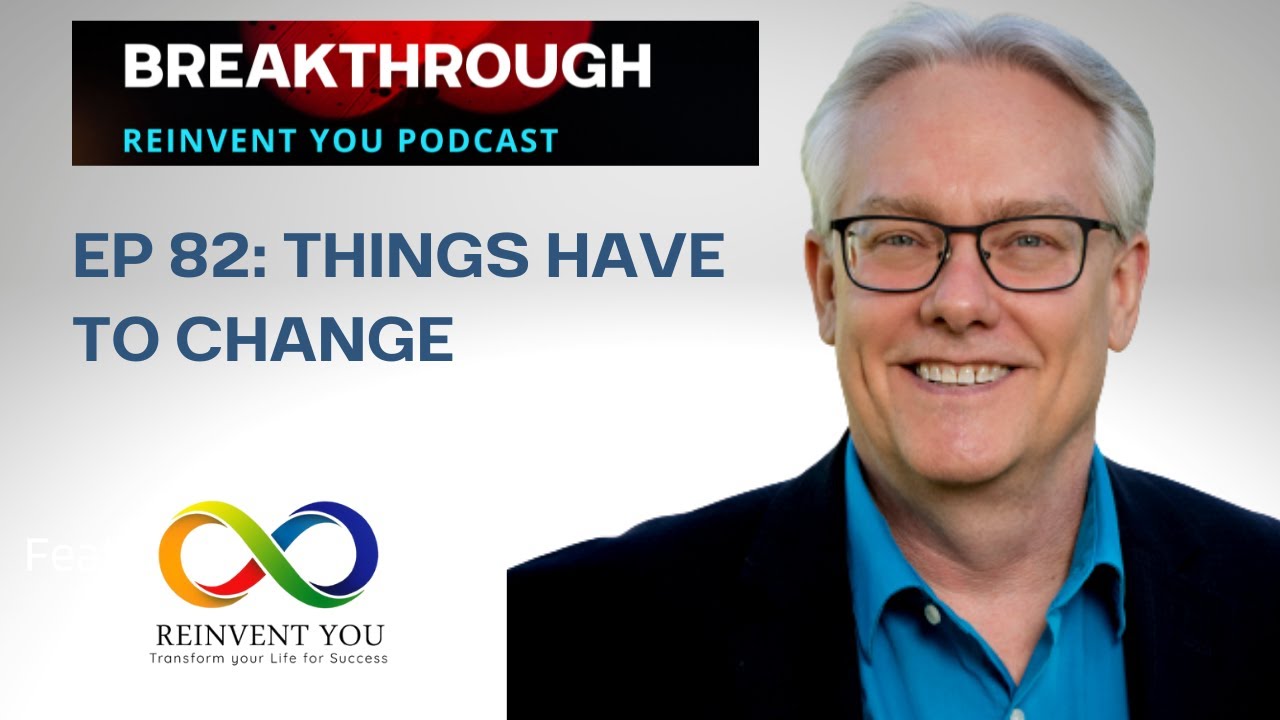
Steve Feld burned out working 20-hour days until his 7-year-old asked why he was never home. He quit, negotiated a 40-hour week, and now coaches business owners to find hidden revenue streams worth $10K to $100K annually through better lead generation and conversion.
Chapters
Episode number 82 with Steve Feld. I'm Travia Steward, and I want to help you move past barriers and obstacles that are preventing you from getting what you want in life. This is Breakthrough. My guest today, business coach, author of 6 books, professional speaker, podcast host award-winning business management executive who's worked with over 500 businesses who he has helped to gain clarity, implement solid strategic plans, and achieve positive growth results. This guy has built, owned, and operated 7 very lucrative businesses of his own. Today he works with businesses to help them skyrocket their revenue and profits so he can uncover $50,000 to $100,000 of hidden business revenue all in 45 minutes. Very impressive resume, but that was not what touched me in this conversation that I just had with Steve. It was his, his honesty about what it took for him to stop working his fingers to the bone, what it took for him to get the clarity that he needed in his own life. And how that basically saved his life. So welcome to the show, my guest, business coach Steve Feld.
I was working in this position as the operations person slash event person slash facilities slash everything that this company did. Everything. And I was working about 20 hours a day, usually 21 to 28 days straight, and then a day off. And I started realizing it got even worse than that. I mean, morning, since it was about 40 miles away, my morning commute would be about an hour and a half. My evening commute, if I didn't leave in the middle of the night, would be around 2 hours. So it's like, well, I'll just skip rush hour and stay here. So I started getting into work earlier and starting to leave later to avoid rush hour and everything else. Well, after a couple years of this, obviously it takes a toll on you, your life. You have no life, actually. It's all about work. Even your one day off that I had, It was nonstop phone calls, help with this, help with that. And even though I did my best to train and guide others, it was killing me. So where am I going to get that help and training? Who's going to help me at that point? My family was like, well, we never see you. And then the gut shot was my 7-year-old boy at the time just goes, I never see you. The only time I see you is when I have to go to your work. So when are you going to come home and have dinner with me one night? At that moment, I knew something had to change. That was a little too deep for me.
It hurt.
So it was like, give up the job, get a new job, or go out on your own. But this had to stop. It just had to stop. So everything in the business was going kind of crazier. The business got sold. They put me in charge of all of it. I had to move it from one location to another. So now I am working nonstop, 20-hour days, sleeping in my car to get the new place built, to get the old place moved to a new place. It was an 1880s Western theme town, so we had to stay open as much as possible because that's the money. We don't have retail, not online. It was all there in person, gun shows, the whole nine yards. After the new place got built, now I had to deal with so many different boards, and I am not a political individual, so I had to go out and seek a mentor. Help me communicate in this flowy, glossy, non-direct way, just so I can stay in the position for right now. That helped me a lot. So that eased off a lot of pressure. I'm still grinding it out 20 hours a day. And then once my son gave me that gut shot, I had to come up with a plan. So my plan was quit, flat out quit, because I knew he's gonna grow up before I know it. The next thing I know, he's gonna be leaving the house for college, and I missed everything.
Birthdays—
hey, you have a birthday, you got to come to my work. You're having a Some kind of, oh, you're graduating elementary school. Guess what? I got to take work off, but I got to go right back. So that started like taking a toll not only on my family life, but on my health. The 4 hours I was really off at home, that knocks it down to 2 because you still have to get up and get ready and wind down. My health was deteriorating. At a rapid rate. Ulcer. I'm not eating right. Everything. I was losing weight, don't get me wrong, but that was horrible. Not the right way to do it. Things had to change. And the day I met this other individual and he kind of just sat me down and goes, you look like crap. You're acting— I could tell, I could just feel it. I have no life. I'm about ready to burst out in tears. And he goes, just quit. The next morning, I walked into all 4 boards that I reported to. Yes, 4 boards and quit. And they go, you're not giving us a 2-week notice? I go, nope, I quit. Done. So then one of them negotiated that I stay on for a month. And I said, here's the deal. If I stay on for a month, I work no more than 40 hours a week, period. And I choose the 40 hours. So they said, that's fine. And I said, no calls at home, no emails at home. When I'm off, everything gets shut off. End of story. The time I was there, that last 2 months, which extended up to 6 months, was actually the best 6 months I've ever had at that business. I didn't have to go to board meetings. I would go there and really not care because I already quit. You guys are still paying me as an unemployed person, so I will be there. Someone else made the reports. The weight that came off my shoulders, I cannot explain. I don't think I could put it in words. It's like I could breathe again, and my kid was so happy having dinner with me every night.
That's—
seeing his face light up kind of made my whole decision so much better. And then it started hitting me after the first week of this, oh, crikey, I just quit. What am I going to do? Reality kind of set in, but I had my terms now and I'm working less. I'm feeling better. My health was starting to come back. I was actually starting to sleep, which was really unusual. And then I decided it's time for me to venture out again and be my own boss. I put together a plan and went that way, but I had to seek out help to get it. I knew I couldn't do that journey alone, so I sought out mentors and advisors who helped me guide it. And if it wasn't for that one person meeting over lunch, kind of like the final straw on the camel's back, I probably still would be there, miserable, divorced, and I'd never see my kid. And it— that's all it takes is that one moment to change your life.
Wow, Steve, that's an incredible story, you know. And it just— I relate to it so much because I see it in my own family. I see it in my circle of influence, right? Because people think that they have to just keep doing that same grind. And we don't have, you know, and COVID has kind of allowed, given people permission to speak up. No, no, I want flexibility. No, no, don't call me at home. Right. I just love, you know, so would you say it was your son? Like it wasn't, it was the son. It was the time. What was that internal monologue like for you? Your son comes in and he's like, I'm not going to your work anymore. What were those thoughts?
He freaked out. I mean, he was like, what happened? I mean, he's 7. He doesn't— it doesn't compute. But he was so happy. So dinner, he's just like, just can't stop smiling and staring at me. He wanted to sit next to me. I mean, the whole thing. And it was just like, what's going on? And then he wanted to do things after dinner because he goes, are you staying? Like, yeah, I'm staying and I'll be here tomorrow night. And he just like, you know, it was like, oh, crikey, I should have done this a long time ago.
Oh, that's so beautiful. Right. And so I can only imagine that, that transformation, that breakthrough that you had, how pivotal was that in the work that you do today?
Oh, I mean, I turned that business around. Being in it, the education I received out of it was phenomenal. The person who was the general manager before I was, I took his spot. He taught me a lot how not to be a good manager. I mean, he was a horrible leader. And I learned a lot, believe it or not. But I also learned how to negotiate. I learned other skills. And then the biggest lesson I think I learned was how to say no. Had to define your parameters. Because when I'm in that meeting defining my parameters, I was shaking. I had my hands under the table because I was shaking so hard. And my heart, if, if it would have came out of my chest, I thought it would have, because I was trying to hold it in going, please don't come out my chest, please don't come out. And it was nerve-wracking. I left that meeting, the weight of the world just got off my shoulders. And I was exhausted, just mentally, physically. I got in my car and just stayed there for like about an hour going, I can't believe I just said what I just said. And I feel so much better. And I left and I went home.
Beautiful. So, you know, Steve, how do you— how did you set your, your boundaries as an employee? You know, because some people are like, What? I gotta have lunch when I have lunch. I gotta go home when I go home, or I'm not gonna get paid. How do you balance that?
Yeah, it was weird because most of the places, when they brought me in as an employee, it's like they brought me in to do a certain job that was so unique, and I'm dedicated to what my, my craft is, my knowledge. Yeah, but that time it was like That position, it was like, I'm all in. And another one, I set my boundaries pretty hard. It was right after that. I set my boundaries real hard. It's like, I'm coming in at this time, I'm leaving at this time, my lunch is at this time. All right. And then I started realizing something, like, all employees can negotiate. You can negotiate. It's a two-way street. And that taught me a lot. It's like, I'm gonna have these days off. Well, no, we need you. No, I need my boundaries.
Yeah.
And that helped.
Nice. Perfect. Sorry to interrupt you. If you had not taken a stand for your health, taken a stand for your 7-year-old son, where would Steve be today?
Oh, I'd be in the grave. Honestly, my— I mean, it got to a point where the health was becoming such an issue. So I went to my doctor, and he's like, dude, you got to get out of the job. The job is literally, literally killing you. This job is killing you through stress, through workaholism. And you have no life. You have literally no life other than work. Wow.
And I mean, and that's gotta be a wake-up call, you know? Because yeah, like whenever you realize it's like, oh, but I'm making this, you know, I'm making really good money over here. Oh, but I'm stressed out. But look at all the money and what, look what I can do with the money. But it's like, if you're not around to enjoy the money, is it just that you're working yourself, you know, for everybody else, working yourself into the grave, like where Steve would've been. Wow.
Yeah. I mean, I got to bank it all because, well, I didn't have any time to spend it. Yeah.
Yeah. Yeah. Which means if you don't have any time to spend it, spend it, how much are you actually enjoying life? You're not.
I'll be honest. It's like, so the day off I had, this was my days off. I still got up early, like in the middle of night, because my body was so used to it. So no matter— I— setting an alarm clock's a waste of time. Start doing the fixing things around the house, yard work, all those kind of things that you have to do, all your errands, haircut, all these kind of like errand, daily stuff you have to cram in in one day, and then dinner with the family. And then guess what? Now you're actually tired, but you're up a few— 4 hours later, ready to go.
Yeah.
And it's like, I'm not even enjoying a day off.
That is so crazy. So Steve, I know you're a business coach, you're an author, you're a speaker. What do you— what is your methodology Like if you had to say, let's say I pulled in 5 different clients who work with Steve as their coach, what would they all— what would be the one thread, the consistent thing that they would say about Steve if you had to jump in their shoes?
I just had an ex-client I just spoke to that we still talk, and he brought up the fact, he goes, it was my follow-up. And listening to him. He brought that up out of the blue. I'm like, what do you mean? He goes, you said we were going to talk in 4 months. This is actually 4 months to the day. Yeah, I go, I know, I put in my calendar and that's how I did it. Nice.
Well, there you go.
That was the way you were with me. If you said you were going to do something, it always, always happened. And he goes, the thing he loved about it, he goes, he does— he sold his business So that's how we parted. But another thing he said, you were the first Coach to actually listen to my real, real problem and stop giving me a solution before I got it out. Yeah. Wow.
I love that. And I could see how he would say that because you do follow up because you come, it was like, ooh, I like this Steve and he's right down the road. So I love that. So Steve, what are a couple things you can share with our listeners about, you know, just things that you've learned? You know, what did you learn through your biggest failure? What would you say if you had to leave them with 3 of your best tips so that they can, like, you know, break through their own obstacles, their barriers, to create their more in their life? What would you share with them?
Oh, number 1, and I live it, I've learned it, lived it, is get help no matter what it is. Believe me, you're not alone. You might think I'm the only one who has this problem or this going on in my life. You're not. You're not the first. You won't be the last. I hate to tell you that. I thought the same thing. Guess what? It doesn't work like that. There's always someone out there to— that can help you no matter what it is. If it's like, hey, you have problems with us, guess what? There's someone out there who can help you with that, and they love doing that, and they know things that you don't even have a clue about, and they'll help you overcome that or go through it. That was one of my things. I've always had a mentor for years, and then I noticed something in my life when I did not have a mentor in my life. Those were the most chaotic years of my life. All right, so having a confidant who's on your side but will tell you the truth. So if you are being an idiot, they're there telling you you're an idiot. And guess what? They're coming from the heart. They're not being mean, not being malicious. It's coming from the heart. And I always say, those are your best friends, right? The ones who tell you the truth, the hardcore real truth, that when they say it, you're like Ouch. But then you start thinking about it, going, dang, they're right. And you don't like that, but those are your true, true friends. And that's where you have a mentor. So that's why I say get these kind of people in your life. And you know what, there's always someone, believe it or not, that wants to hear your story because it might change their lives.
Absolutely.
And I hear this from people, all walks of life, all different industries, levels of whatever they are. And it's amazing because we as humans are built on stories. But you might tell a story that's from the heart, and it may change someone's life, and you don't know it.
I love it. Thank you so much for sharing that. And so Steve has a gift for you guys today. So it is uncovering $10,000 to over $100,000 of hidden annualized revenue in your business, right? So who, who should go and sign up for this giveaway, this freebie today? And who should go, who doesn't think they should go?
Oh, the first ones is definitely small business owners, entrepreneurs. You look— because number one problem I always hear from you is I want more revenue. Well, you're missing 2 steps ahead of that. It's lead generation and conversion. So I showcase 8 simple proven strategies to grow your business by over $100,000 without spending more on marketing or advertising. Another crowd I always talk to because I do workshops on them and I call them, you know, like Mark Cuban calls them the wantrepreneurs, the people ready to jump the cubicle or they think, hey, it's time for me to do it for me. And I love those people because you have the, the goal, but where do I start? Yeah, I mean, we even have programs set up for startups where to go. I always— I'm a big believer since I learned this a long time ago, like I said, it's like I always offer 15 minutes for people if you have a problem in your business, your life, Get on a call. It's not a sales call. It's just someone to talk to that's not gonna judge you or, you know, shovel advice down your throat. It's someone to listen to and maybe throw a resource or an idea. I don't know, but I'm a big believer. I've learned the lesson. We all need someone to talk to.
Steve, you provided so much value for us today, for me, for my audience. I know it. Thank you so much for sharing that breakthrough story with us because sometimes we are not You know, we, again, we can't see, we can't read the label of the box from, you know, if we're inside the box, we have to have that mentor. We have to have that perspective and go, oh, this is what's happening.
Right.
So thank you so much for sharing. And thank you for being on the podcast today, Steve. And guys, I'm going to have all of Steve's information down in the show notes, how you can get in touch with him, his website, his Facebook, his Twitter, everything Steve Feld. So Steve, thank you so much.
Thank you for having me. I just wish everyone, all the listeners, you know, be the best you, you can be.
More from Travia









Remember the YOU Who Didn't Overthink Everything #personalgroth #mindset #selfdoubt

