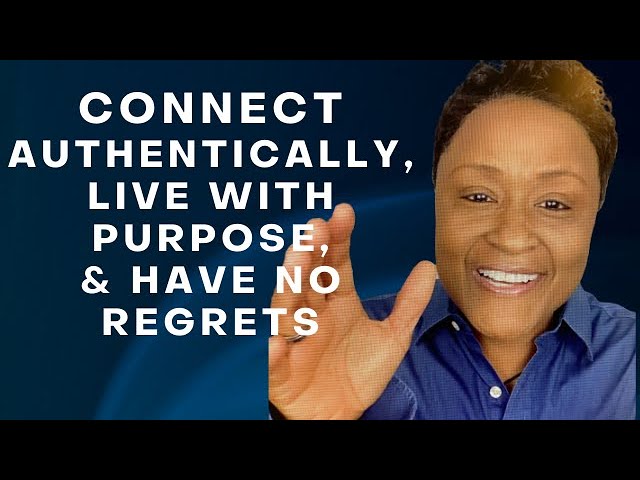
Travia Steward outlines three pillars: authentic connection through intention and presence, discovering purpose by asking what you're good at and what the world needs, and avoiding regret by taking bold action. She uses her mother's unfulfilled later years as a cautionary tale about missed chances.
Chapters
This is episode number 13. Thank you so much for joining us today. My goal with these conversations is to explore different types of people and their successes as well as their failures in navigating and mapping out their lives so that you too may have more insight in what it takes to build the life that you envision for yourself. I believe if you take action each day the life that you want can be closer than you think. Welcome to Work That Out, guys, your guide to connecting authentically, living with purpose, and having no regrets. This is a show that gives you real stories and real examples of people working it out and creating the life that they want. Today I want to talk to you about my tagline for the podcast and for my whole brand of coaching. So that's connect authentically, live with purpose, and have no regrets. And the reason why that's important to me is, you know, as a coach, I do a lot of values assessment with my clients. You know, and I never ask my clients to do something that I haven't done myself. And so, in doing my value assessment, and, you know, and this is something that could possibly change, you know, periodically. Mine have changed as I've gotten older, as I've evolved, as I have switched careers. So my top 2 values are love and connection. It brings me so much joy to authentically connect with people and to really have a shared experience of what it means to be, you know, vibing with someone, what it means to be on the same page with someone, what it means to be experiencing something that could be profound, and there's a shared spirit of, you know, this was meant to be and we were meant to be in each other's lives. So to start off with connecting authentically, I think that there are 3 things that we should focus on because a lot of people are like, oh, you know, I don't know how to connect out there, I don't know how to connect with other people because, well, first of all, I don't know what to say. So the first thing is set your intention. If you have an intention of just wanting to be curious just, you know, giving of yourself in that conversation more than you're expecting to get. If you come from a place of, I'm curious as to what makes that other person tick, what makes that other person, you know, really, really great in this moment, people tend to open up much quicker. And then you also think about, how do I want to be remembered? After I walk off, after I leave this conversation, how do I wanna be remembered? When I am finished talking to this person. So that goes back to my intention. And generally, when I'm speaking with someone, I always set my intention. And I say always— I don't always do it, but when I'm cognizant of it, when I really want to focus on and bringing love and connection into the world, that's when I do it. There are times when I do forget, but I set my intention of love and connection. And how do you connect with people? Generally, it's, "I wanna make people feel like I've seen them, that I'm present with them, that I'm listening to every word that they're saying." And, you know, and what can come in between those things? Sometimes we have a moment where we feel like we're judging someone, you know, and we know these unconscious biases that we all have in some capacity or another. Sometimes we have a tendency to judge people and we don't even realize we're doing it. If you come from a pure place, a pure place of your heart, and realizing that, you know, every person is innately good. You know, I know a lot of people, it's hard to really wrap your, your mind around the fact that because of all the things that are going on in the world today, that everybody is really at their core, they're very good people. Now, you know, some people for reasons or another, you know, do some very, very hateful things, but there was a point in that person's life where they were very, very good. And so I like to come from a place of assuming the best in people, assuming the best intentions, assume— and assuming that they want what's best for me just as much as I want what's best for them. And again, just staying present. If we stay present in each moment, we don't allow our cell phones and we don't allow distractions because we're bored with the conversation. If you go into it with a giving mentality, generally the odds of connecting authentically with each other will be much higher. So the second thing I want to talk about, living with purpose. You know, if we really think about what that means, living with purpose, like, I believe that we're each put on this earth with special strengths, special talents, and special gifts. And then finding that purpose, how do we do that to begin with? Well, number 1, you figure out what is it that you're good at. Number 2, what is it that you absolutely love to do? Number 3, is it something that the world needs? And number 4, how can you get paid for it, right? Because generally giving back, finding some way to add to society, to make other people's life better, brings us so much more joy and fulfillment. And after all, it doesn't matter, you know, the money's good, but what matters is if we're giving back. And so in living with purpose, it's, it's first starting off with those passions, figuring out what you're good at. And you know, if you're not so good at it but you love to do it, then go and develop the skills that can help you get closer to realizing that dream of helping and living in your purpose so that things don't feel like work. So in a full year, we have 8,760 hours, 365 days a year, right? So if we take away, you know, 2 days out of every weekend, so, you know, in 24 months, so that's 24 days. If you subtract that, Now if you take away like 5 days of Christmas that you're on vacation, let's just— this is all hypothetical. We're saying that, you know, you automatically are getting these days. You take away 5 days at Thanksgiving, you take away 5 days of vacation that you took, and let's just say there's 5 cumulative days that you're like, I'm taking time off, I'm taking a sick day, for whatever reason, right? So outside— so if you subtract 365 days, you subtract 44 days from that, you get 321 days. Okay, so out of that 321 days, those are the days that you're probably going to somebody else's job. Those are the days when, you know, even though, you know, most people work an 8-hour day, some people work 12-hour shifts. And if you go to work and then you come home, most of us are spent. We don't have time to do anything else. And so those hours between work and actually going to bed are sometimes wasted. So let's say you spend, you know, you come home from work and you spend, you get in that time suck, that tunnel, that deep abyss of social media, and you spend 2 hours a day for, you know, every single day for 365 days. Well, that ends up being like a total of 730 days, right? Hours, hours that you're spending, not days, hours. And so we're thinking about all the time that we didn't utilize our time wisely, you know. And even, you know, I've had many teachers who have said that. I've said it myself a lot. Well, it's because you weren't managing your time, you weren't utilizing your time wisely. So in living with purpose, we want to be intentional. As I've gotten older, it's become a bigger deal as to how I spend my time. I like to spend my time doing things that add value to my life or the people that I love. So what does that mean? Does that mean hanging out with people that don't bring me joy? Nope, not anymore. I used to do those things. It also means, what am I going to do today that is going to help me grow a little bit? Maybe I'm gonna do one different thing that scares the crap out of me, one thing that helps me grow today so that I can be intentional with my time. And I want to look back and go, okay, how did I spend my time? And so at the end of the day, I analyze the amount of time that I've been on various tasks, you know, because even though I'm self-employed now, I'm working from home, every moment counts. And without discipline, it's easy to let all of that time go by, you know. So in order to live with purpose each day, I plan my day the day before so I know the window of time in which I'm going to work out. I know the window of time in which I'm going to eat breakfast and eat lunch. And you know what, a lot of people will be like, oh, that's too much, I like to do things by the seat of my pants, you know. Well, that works for you. This works for me. I'm a person who likes to have a plan, so I like to know when I'm planning out my day that I've added value to my business, I've worked on something for my health, and I've, I've done something that makes me feel good, that puts me in flow, that gets me ready and excited to be working. So how much time are you wasting and not growing or learning something? How much time are you wasting that could really go to the category of improving your life, improving something that you can be better at? And we're talking about that purpose. Maybe it's the skills that you want to spend more time with developing. How much time are you wasting in your life? So, live with purpose and be intentional about every moment of your day. And to round off, you know, connecting authentically, living with purpose, number 3, the third part of that is have no regrets. So there are a couple quotes that I want to share with you. In the end, we only regret the chances we didn't take. You know, Michael Jordan has said that, you know, we only regret the shots we didn't take. You know, because we take a bunch of, a bunch of shots in a basketball game, you only regret the ones you didn't take. What's the same thing with life. A lot of times we have these ideas, we have some burning desire inside of us that we know in our heart that we should take action on. But various things hold us back, keep us stuck and planted in a place of unfulfillment, in a place that simply isn't very gratifying. And if you stay in that place, at the end of life, generally you have regrets. My second quote is, 'The cost of not following your heart is spending the rest of your life wishing that you had, you know. And even as I stand here before you, there are lots of things that I wish I would have done differently, but the difference is I'm not going to wallow in regret. How can I recover that? How can I recover from— what is a lesson that I can learn from not living with regret, you know? And again, a minute ago I spoke about living with purpose. So I think every day is so important. And I know some of my family members who, you know, may listen to this or go, that's TMI, you tell too many personal things on that podcast of yours. But you know what, these are my experiences, and lots of lessons that I've learned have been through my experiences. And so in living with regret, again, you guys have heard, heard me talk about my mom, and you know, I love my mother dearly. You know, my mother has taught me a lot of lessons, you know, as I look back at her life, you know, and even though she's gone now, but she's taught me so many lessons. One of the things that just, you know, and again, this is me projecting my feelings on her. She may not have even cared, but I remember when my mom was an insurance agent and She could count money, boy. If you said, you know, $30,000 minus $11,000, whatever it was, if you sat down to the penny, you know, of giving change, she could really, really do that math. She was on top of that, which is more than I can say for a lot of our young teenagers, right? Because again, I'm not that far removed from the classroom. And I remember I had one kid who was like, hey, you know, Ms. Steward, how can you? "Can you teach me how to count change?" That blew my mind. Totally blew my mind. I didn't know how to count change. And so that was one of the gifts that I thought my mom was incredible with. Now there was some like, you know, some large, you know, 5-digit problem, whatever, I needed a calculator or something. My mom could do that stuff in her head. But after she retired from insurance, from working, from doing home health, She didn't do anything that grew her, that grew her mind, that grew her skills, something. She didn't really do anything that kept her brain going. And she didn't have any hobbies. There just wasn't anything that she was intentional in doing every single day. And so I remember when one day I went to visit And after I talked about, you know, how great she was and how great she was with numbers and how smart and how quick like a whip, when she was about 75, 76, something like that, in her late 70s maybe, I said, "You know what? Instead of just going down to my mom's and we're just sitting around a table, you know, pricking our fingers," because my mom was a diabetic. So there weren't many things that we could talk about because we weren't really an integral part of each other's lives. She didn't really ask a whole lot of questions. And of course, you've heard me say, she always said I asked too many questions. So we would sit around the table because she was diabetic. She'd be like, "Tray, you tested your sugar lately?" And I'm like, "Mom, I'm not a diabetic. I, you know, I have regular checkups, but it's fine. Let's check our sugar." So instead of doing that, there was one Christmas I went home and I said, you know, let's get a puzzle. And because she's older, you know, we're not going to get a 1,000-piece puzzle. And I remember as a kid, I loved doing puzzles. So I said, "Let's just get a 25-piece puzzle," which, that's a big old jigsaw puzzle. And as I stand here and I recall that memory, because she wasn't learning and growing and really using her brain in a way that continued to improve her, it was difficult for my mother to put together a 25-piece puzzle. It was difficult for her to discern the difference between an edge outside piece and a middle piece. And I wish, you know, and again, this is me projecting onto what I think she was feeling, but I don't think she wanted to really have the end of her life go that way. You know, and so a lot of things that hold us back is sometimes we don't know what to do, we don't know how to make the changes. But you know what? You just ask. It's easy enough to just ask for help. There's nothing wrong with ever asking for help. I know a lot of us fear rejection, we fear failure. I do too, you know. But when you have regrets and you look back at those times, just makes you angry inside, you know. And then, then you feel like you're deprived from happiness, you're deprived from this and that. Oh, I would have been such and such. I would have been such and such if only I knew then what I know now. And so what's important is you only regret the chances you didn't take. So what chances, what things in your life, what passions are, are really, really percolating in your body that you know deep down inside that you wish you could make a change, but for whatever reason you're feeling stuck and you can't get out of your 9-to-5 job, you can't get out of this relationship, you can't get out of whatever that situation is. What is something that you wish you had the guts to do? So that when you look back on this time, you won't have any regrets about any of the decisions that you've made. All right, guys, thank you so much for listening. If you want to know more about what I'm up to, head over to traviesteward.com. If you like seeing the videos of the podcast, every episode is on my YouTube channel. And if you like what you hear, please do me a favor and subscribe to the show. And remember, life is about connecting authentically, living with purpose, and having no regrets.
More from Travia









Remember the YOU Who Didn't Overthink Everything #personalgroth #mindset #selfdoubt

