Impacting your life through mind and body with Clifford Starks
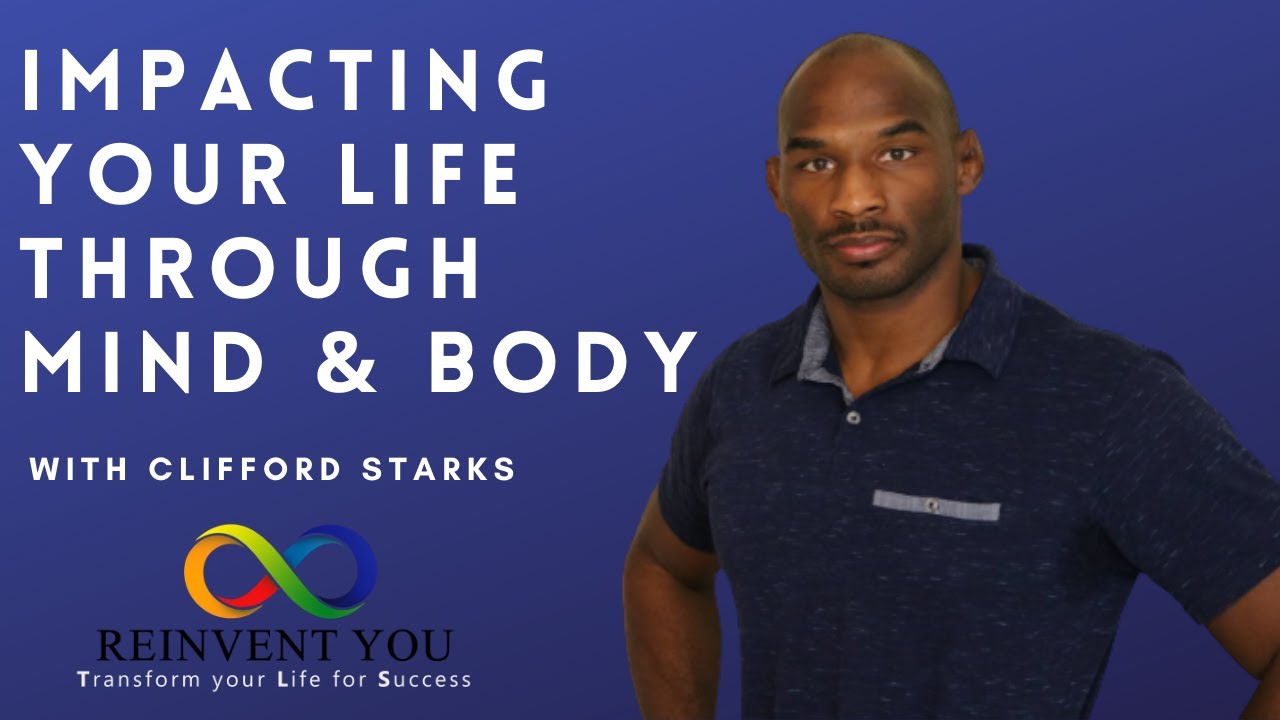
Clifford Starks, a former UFC fighter and kinesiology graduate, talks about his "Power of Six" framework for building confidence and clarity. He designs fitness routines for busy people using minimal equipment and treats failure as a growth tool. His core belief: everyone has greatness inside waiting to be awakened.
Chapters
You are listening to episode number 41. If you're someone who wants to make major changes in their life, someone who wants to achieve their goals, or maybe you're someone who knows this is not as good as it gets, but you have no idea where to start. On the Reinvent You podcast, we explore different types of people, their successes and failures, and how they reinvented themselves to create the life they love. It's our hope that from hearing their stories that you too may have more insight into what it takes to build a life that you envision for yourself. Here to help you do that is performance and life coach Travia Steward. So I just finished the, the interview with the conversation actually with Cliff, and some things that resonated with me was, you know, I've been doing a whole lot of work on you know, my conditioning, how my conditioning has shaped who I am and who I became. And I found it so interesting that I think I traveled a path of doing exactly what was expected of me based on my conditioning, my perspective, my social beliefs, my family, the examples that I saw around me. And it wasn't until later in life, like, honestly, like, I think I was almost 40 where I realized that I don't have to follow that same exact path, that I could blaze my own trail. But there wasn't a combination for me earlier, like before that. But for Cliff, that combination existed for him where sometimes he would listen to his parents and respect their views as always. But sometimes he would go, you know, I'm going to do this. I'm going to try this. And so I also, you know, I also loved in the conversation that Cliff believes that everyone has greatness within them. As a teacher, I always believe that, you know, but, you know, that's not something that's easy to do. It's not easy to look at someone who has just harmed you, someone who has just hurt you, and think that that person has greatness within them. So it takes a special kind of person To be able to have that mindset, that set of beliefs that everyone has greatness within them. And I, you know, I am inspired by that belief that Cliff has, you know, and to be honest, even as a teacher and teaching theater for so long, there were times when I had to go back and remember why I was teaching, that I needed to believe that about every kid, even if that kid was doing, crap, mouthing off, not working, you know, I had to remind myself of that same lesson. And I also loved how, you know, through the episode Cliff talked about consistently challenging himself, putting himself out there, even when it was failure after failure. He talks about, you know, his time as, you know, a UFC fighter and what that was like. I resonated with that because of the opposite, because putting myself out there and knowing I'm going to fail is very, very tough. And then it's hard to pick yourself right back up and go, oh, now I'm going to go out there and fail again. I am going to fail so many times until I— failure means nothing to me. And I know that I'm not the only one out here who thinks those types of things. And so Being so comfortable with failure is actually what helps you to grow so very much, you know, and, and basically if you want something bad enough, we all have the potential and the ability to make those things happen. We just have to figure out what that looks like and, and, and what that looks like for us and what we're willing to do to get it. And then the last thing that I loved about— you know, I love the entire conversation with Cliff, but I love that on his Facebook page, he talked about living a life worth living and inspiring 1 billion people along the way to do the same. And, you know, when I read that and we discussed that, my mission is to impact the lives of 1,000 people. Well, shit, I looked at Cliff, and he's at a billion. So I was like, I gotta up my game, baby. I need to be more than 1,000. Maybe it's a million. But I want to play a bigger part in this game as well. And, you know, Cliff, during this conversation, has inspired me to play a bigger game. So thank you so much for that, Cliff. So let's get into it. My guest today is Competitor Edge Specialist Mr. Clifford Starks. Cliff has an extensive background in helping people transform their minds, bodies, and spirits. He's a graduate of ASU in kinesiology. He's also an ex-professional fighter who is also an author and a speaker. He's done a lot in his years. One of his favorite sayings is, "If knowledge was all it took, everyone would have six-packs and be millionaires." Today on the podcast, we are going to delve into Cliff's journey to becoming that competitor edge specialist, the importance of overall health, and simple things that you can do today to get started. And then we're going to also delve into how he awakens the greatness in himself and his clients. Clifford, thank you for joining us today on the Reinvent You Podcast. How are things going? You know, I just want to say hi before we get into who Clifford Starks is.
Hey, things are going great. Thank you for having me on. I love your energy, so I'm excited for this, and I'm excited, uh, to see what we uncover.
Perfect. Perfect. I love it. I love it. So, you know, let's give the listeners a little bit of context as to who Clifford is. And I like to approach it from the standpoint of sometimes we think we're some— we think we're one version. But tell me who it is that your family thinks you are, your clients, the people closest to you. How would they describe you?
Yeah, ultimately the people closest to me would describe me as super, super competitive. Oh, yeah, yeah. Very, very disciplined. The ones closest to me, and what I would say is the ones most heart-centered, open, would see just how much I really have a love for other people. I have a love for community. And I just, I love humanity, you know, and I love life.
Yeah, that's perfect. So I mean, that's a perfect segue right into, I know that you are a competitive, a competitor Competitor Edge Specialist. What was your path? What was your journey, your path to becoming a Competitor Edge Specialist?
So it really started with, uh, the death of my grandfather. I was 5 years old, and what was so crazy, I remember being in the hospital and not knowing what was going on exactly. Like, I was just— I knew people were worried about something, and I didn't know what it was. And I remember my uncle carrying me out of the hospital, and then a couple days later, my grandfather had passed away. And it just, it shook the hell out of me because I knew like, that's gonna be me one day. Like, I wasn't necessarily sad about him going. I was more freaked out than anything. I was terrified. And it— I was trying to— the best way I could say it is, you know where you're there but you're not really there?
Absolutely.
That's what I was. I was just like, I was there and I was going through the motions of life, but I wasn't there. I was really freaked out. And looking back at it as an adult, uh, there was nothing my parents really could have said because they supported me in the best way parents could support. Um, and I couldn't really talk to kids about it either.
Right.
Because it's just, that doesn't really happen to a lot of 5-year-olds, not an actual family member. And so I kind of, I didn't know this was what I was doing for myself at the time, but it was like coaching myself through a process of saying like, okay, what do you do with the information you have right now? Like, what do you do with that? And I really took it as I just got to live. Like, I'm here now, and I just have to live as much life as I can.
Wow.
And that's really what started me on my journey of just like uncovering as much as I can and being as much as I can through the journey.
Wow, that's pretty profound. At 5 years old, you had the capacity to go, what do I do with this? Most 5-year-olds are like, they don't understand what death is, for one. But you to step out, sort of have an out-of-body, watch yourself do this kind of thing, not really be present. But now have the foresight to go, what do I do with this information as a 5-year-old? How did you think you became so wise at 5? Because most kids are like, oh, you know, great. And they have the parents talk to them about it. But here you are, you're like Buddha or something, you know, Gandhi here at 5. Yeah.
You know, that's so humbling. Thank you. And The, the honest answer is I don't know. You know, I'm just a person who does the best that he can with the gifts that he's given and just reminds other people to do the same.
Wow. So that is a gift.
Yeah. Wow.
So was it at 5 you realized you had that gift, that you were wiser than your, the other 5-year-olds?
No, no, not good. Yeah, I really thought everyone thought the same way I thought, you know. I mean, you go through your journey and you think we're all the same, so I thought everybody had that kind of awareness.
Okay.
Lo and behold, you start learning lessons as you get older and older, so I went through my process and, uh, yeah, it was It's crazy, you know, it's crazy and it's a lot of fun, a lot of fun because you get to, you get to dive deep with people and understand people and understand level layers of yourself. The one thing that I will say is I know how little I know. I know that I don't know a lot because all I have is the perception in the world that I see, and so the way my knowledge expands is from learning from other people, from their perspective, because I know my own. Mm-hmm.
Oh, I love that. So that brings me right back to, you know, we, we began talking about this a little bit, you know, the other day we were talking. Something that's— I'm very passionate about that I've come to realize in myself is just how much my conditioning, my environment, my perspective, my beliefs, because you just brought that up, how much my conditioning influenced who I am and who I became. And then, you know, I did some work to, to, okay, I don't like the path I'm going down. Let's looking at your path in life and your conditioning. Do you think you took the road that was expected because of your conditioning, the predictable path, or were you motivated to blaze your own trail? Because of that conditioning?
Uh, I would say there's definitely a combination. Okay, so I'll give a perfect example. You can't know what you don't know. And my, my dad really wanted me to go to college, and so I didn't even think of another option other than college. Okay, because that's what he wanted me to do. Now, if I would have known there were other options available or even have thought of other options, I might have chosen a different path. But I chose that path specifically because my parents wanted me to choose that path. Right now, on the reverse side of things, they didn't want me to be a professional fighter. I didn't care that they didn't want me to be a professional fighter. I was going to do what I wanted to do. And so that was something that I saw on my radar and I liked it. And I wanted to compete, as I talked about, like, I am a competitor by nature. And so I went after it. Uh, they said their piece because I will respect people, especially my own parents, of course. Uh, but I'm gonna do what I'm gonna do.
Wow. Very good.
So I do what I can with the knowledge that I have. Yeah.
Yeah. Okay.
I get that.
So yeah, so a combination of both. So I know that you got a, um, a kinesiology degree from ASU, Arizona State University. And then you started working personal training with clients. Am I correct in that? And then you just mentioned that you became, you know, a UFC fighter. What was that? You know, give us a little bit of background from, you know, you become a personal trainer and then what was that triggering moment where you're like, oh, let me go do this extreme thing. I don't want to just be a per— you know what I'm saying? What was it? Tell me about that journey. Cause I know doing my research with you that you achieved that in a very short amount of time as well. Share with us that journey and what drove you to do that.
Yeah, so it really goes back to that 5-year-old kid who said, I'm going to live life and not just like kind of sort of live life. I'm gonna fucking live life, you know what I mean? Like, I'm gonna drive it. Yeah, grab it by the horns and see what— see what shows up. Yeah, you know, just see what shows up. Yeah, like even when I, when I became a personal trainer, it wasn't like, yeah, I'm just gonna train a couple people. Like, I'm gonna change the world. He's just like, and I went after it and it's just like, oh wow, it's harder than I thought it was going to be, but I'm still doing it. Yeah, I'm in it and I'm learning the lessons along the way. And then the itch for seeing how far I could go when I was tested That's fun to me because you get to stretch into places you didn't think you could stretch into.
Wow.
And that's like, that's where you grow. Huh.
That's true. It is where you grow, but you know, you're like, that's fun to me. It's so hard for me to sit here on the other side and go, yeah, I want to test myself. I want to fail so many times. I want to be challenged. I want to be so uncomfortable. And that is fun. How did that become fun for you?
You know, that's living, baby. Like, that's how I look. I look at it like, all right, I get an option because we're either going backwards or forwards, right? We might not even realize it, but we are.
That's true.
And I remember that feeling that I got scared, uncertain. There but not there, and I didn't like it. And so I realized the more I tested myself, the harder it was to get back to that position.
Okay.
The more I grew into something bigger, the easier I could overcome any challenge that was in my way, because we never know what's happening. Like, we look at coronavirus and no one could have predicted that, right? Like, no one could have predicted that. And now it's showing up in people's lives, some for the positive and some for the negative. And I'm just glad that I've, I've consistently tested myself. For instance, I didn't say, oh my goodness, I don't have a gym to go to anymore. No, I'm very solution-based, very solution-based. I'm solution-based because I put myself in front of challenges and problems because I know if I put myself in front of those and my brain always has to come up with an answer, right, they'll be ready for anything that comes its way. So I've been practicing for what reality is, is a series of tests.
Yeah, okay. Yeah, huh, that's so cool. So I, I still am so curious about that motivation to become a fighter? Was it just like you close your eyes and go, what am I going to do next? How can I challenge myself? Oh, let me point— here we go, pick it out of a hat. And then what kind of person and what kind of attributes does it take for someone to accomplish that feat in the amount of time in which you did?
All right, so I'm going to start with everybody. Everybody is a superstar. Everybody has all the potential in the world.
Absolutely.
It takes years. I cannot lie to the people. That's what I said. It takes years.
Yeah.
It's not like, oh yeah, come behind the back office and I'll show you the strategy that gets you there. No, it takes— all right, do something so hard that you would be okay with dying. And still continue to do it anyway. Like that kind of blood, sweat, and tears. I'm going to discipline the shit out of myself to get to where I need to go. And everybody has it in them, like every human being.
Wow. Okay. And so how long did it take you? Was it like, because it was less than a year, wasn't it? That you trained?
Yeah. Yeah. Which was really cool. Um, and my coach, oh, you should have seen the smirk on his face when I asked. I go, Coach, I want to try and get to the UFC in less than a year.
Yeah.
And he had this smirk just judging me, just judging me, Travia Steward. Um, and I'm like, I gotta try. I just gotta try.
Just gotta try.
Yeah, yeah, yeah. And he didn't realize it, that was that same kid who wanted to lose 60 pounds. And did it.
Okay.
The same person who got into wrestling and was the first state champion in high school, uh, went on to ASU, got third in the Pac-10, like constantly, constantly learning and achieving and getting tossed on his head too. You know, you don't just learn and achieve instantly. Yeah, like you get beat up and you have to— you get a choice. Either you go away from it or you go into it. So I'm going to lean into it.
Okay.
I'm just going to lean into it and callous myself.
Right. So something you just said that everybody has it within them. Everybody has greatness. Everybody can do these things. Not everybody has that opinion. You know, as a coach, I have that opinion because I was an educator for 24 years. So as a teacher, I had that and I wanted my students to reach, you know, shoot for the, for the stars and, and, you know, just land as high as they could. But not everybody has that mindset. Where did you develop that to be able to believe so much in other people, even if their circumstances are saying otherwise?
So I remember my dad once said, uh, opinions are like assholes. Everybody has one. And I start like, as I started accomplishing things, I realized like, Oh crap, their opinions don't mean anything. Like, yeah, everything comes down to the action. Like, an opinion doesn't— it can't do anything to you. Like, literally, it can't do anything. I don't think you can do that. Cool. Like, it doesn't mean anything. It holds no validity. So if people are like holding on to people's opinions and like, oh, let me put these in my pocket, like, get them out. Yeah, like, shake those opinions out. Who cares? Start taking action. Well, I can't do that. Well, do one thing. Just do one thing.
One thing.
Like, that's all you need to do. Just one thing and just keep moving in that direction.
Yeah.
I love that.
Wow. Yeah. Just one thing. Then you can always focus on the second thing tomorrow, next week, just take action. So is it okay if we delve a little bit into your fitness background and your training? Is that cool?
Yeah, absolutely.
So, you know, like, my whole perspective and my aim for my listeners is that, you know, like I'm niching down a little more to sort of 9-to-5ers, you know, as a fitness trainer, you know, as someone, you know, who works with people to transform their mind, their body, and their spirit. If someone is a 9-to-5er, they have a family, they have kids to pick up, they have dinner to prepare. What would be your advice to them? Because Generally, people don't think about the importance of health until there is a diagnosis, until they have, you know, a lot of weight to lose. How can people just start and then keep, continue on with momentum? What would be your advice as a trainer?
Find as many anchors as you can to take the actions that you need to take because you know you need to take them. Like for your kids, for your family, for your friends, for your community, for yourself, for whatever it needs to be, for your career, for whatever. Find as many reasons why as possible. And I say that with full conviction and passion because I trained a guy, he was around 55 at the time, and it still hurts my heart to this day. I'm an empath by nature, and I feel for the people that I work with. And I knew something was off about him. And I remember him saying, he said, "I want to get in shape now because all my friends have passed away." And he ended up having lung cancer. And I knew something was off. I couldn't quite pinpoint it, but as a trainer, you, when you train people long enough, you just know. When you know. I'm like, something's off. Uh, he finds out he has lung cancer and he passes away like almost a year later. And, you know, he did the radiation, he did the whole nine, and it sucked because his— what he wanted, it was too late. Like, it was too late. And people, they gotta value what they value And I get it, as Americans we're always looking for all of these problems. We only want like 4 things when it really comes down to it, and it's health, wealth, relationships, and entertainment. And unfortunately we put entertainment on the top of the heap, and it's like, no, we got to build the foundation. Entertainment will come, right? Find getting healthy entertaining. Find building your relationships entertaining. Find getting to your wealth entertaining, right?
Wow. You know, and that, because I'm older and because I also played college softball, so my health has always been important, but not until like, you know, there, I went through a series of years where I had put on some weight and I was like, oh my God, I got to get this off. And so one of my whys is that, you know, I want to have longevity. I want to feel like I'm still 29, you know?
Yeah.
But getting that mindset to someone who is 29, who thinks they still have 1,000 years to live, how do you make— because you know what you're saying and what I'm thinking right now makes so much sense right now for me, you know, and I'm older than you are. How do you make that register with someone who's younger who walks into your program, you know, your gym, someone who's ready to work with you and they're younger?
So ultimately, I just give them a listening ear because it's got to be their idea, not mine. If I make it mine, they're not— it's just not going to go down.
Yeah.
And so I'm just going to listen closely because I know health is a, is a big crucial part to all of us. We just, we're not aware of it because it's something like we almost are pre-packaged with it. Like, I actually got lucky, surprisingly, um, being a mesomorph/endomorph, so I put on weight very easily. I put on weight very easily. So when I saw myself and I'm this fat kid, I'm like, oh, this has got to change. And then I realized, like, holy crap, we're all eating crappy, right? Just shows up on my body differently than other people. Um, but yeah, if I didn't, if I didn't put on weight, I probably wouldn't have been aware of it either and just said like, yeah, I'm gonna eat my Taco Bell on a regular basis and my Cinnabons and just enjoy what I'm eating because I look okay, so I'm healthy. And it's like, yeah, that's not health. It's, it's internal and it is external, but it's both.
Oh, I'm so curious about this because, you know, I, I have seen mesomorph, endomorph, and then I think it's ectomorph, you know? And so I feel like you can just go online and go, oh, this is what my body shape looks like. Am I the pear? Am I, you know, is there something more specific that you do to label, to become identified with one of which, whichever of the three you are? How do people do that? And then what would be the easiest way or the most beneficial way to align themselves with knowing this is, I shouldn't be eating Taco Bell. I should eat less carbs. I should eat more protein. What would, you know, again, I'm thinking about my 9 to 5-er who doesn't have time to go do all this research themselves, but what is it that they could, you know, take action on to get started right now with that body type and work?
The most, the most important thing I would say is go get some cardio in.
Got it.
Go get some cardio in because you'll start learning a lot about your body.
Okay.
It's funny, everyone feels like they're in shape when they're sitting on this in a sofa. Like, I'm like, I'm in pretty good shape, I'm okay. Like, do some jumping jacks. Oh, my knee's kind of acting up and my back doesn't feel so good. Right. Oh, let me— pardon me, my lungs. So if we just move, we'll start seeing what's wrong and what's right. I think of when a lion hunts, right? A lion doesn't have to overly stretch or kind of warm itself up, or it just— it's a hunter. That's what it does. It hunts. Human beings, we have it in us, but we— you do talk about 9 to 5. They're sitting for long, long periods of time.
Right.
And it's not healthy to do. Like, you got to move around. You have to shake it off, and you got to see where you're at and go, holy crap, like, if I, if I go on a 10-minute cardio walk and I'm not feeling good on it, on a little bit of an incline, like, oh man, what's going on? It wakes you up and it makes you realize, like, I need to change some things.
Yeah. Just walking up the stairs and realizing I'm only on the second flight and I'm out of breath. Yeah, you know, yeah.
I look at, um, if, if we just look at the body types, like a pure mesomorph, sometimes they're such genetic freaks, they just look good. Like no matter what they eat, they just look amazing. But have them do something strenuous And then we'll see how good their cardio is.
Yeah, because they put on muscle easily too, don't they?
Yes. Yeah. Yeah.
Wow. Yeah. And I'm not— I don't remember where I fall. And so— but I can put on muscle pretty easily, but it takes me a long time to drop body fat. And I can gain body fat like— I look at that and, oh, boop, there it is. And I know a lot of people say that.. And so, yeah, it's hard for me to find that balance as well, you know, with, with, you know, what works well for me. And then as we get older, you know, things change. And so what would be the minimum? Someone wants to get started. What would be the minimum amount of things that they could do? Again, busy people, 9-to-5ers, where they're like, just, you know, cardio for 15 minutes, 3 sets of strength training. What would be the minimum so that people feel success that you would recommend?
So to keep it super, super light, I say like walking for 10 minutes at the most if they want. And then there's the other part. Now do this with caution, but I— the reason I have people go up and down is it's just an extra— it's just extra strenuous activity on the body. But if you go like, you go down and you do like 3 push-ups And then you stand up and you do 3 squats. You go back down, you do 3 crunches. And you stand up and you do 3 squats. And you do that for like 5 minutes. And that's just going to break a good sweat and it shouldn't be too intense. Now I will say everyone's different though. Like that might be a lot for somebody. So if that's a lot, maybe try it for a minute and then try and march in place for 2 minutes. Anything to get you moving and getting a light sweat going.
That's perfect. And then you don't need any equipment, you can just be in your backyard, you can be cooking while you do that.
Yes, absolutely. Love that. Yeah, I want to take every, every possible, um, what is it called, excuse away from a person. Like, if I get to like, I don't have enough time, I got a plan for that. Yeah, yeah, yeah, yeah. I don't have equipment, I got a plan for that. Yeah.
And it's true because now, you know, it's 2021. People want results as fast as they can. And nobody has time for this. And to, you know, I work out first thing in the morning. And so if people don't work out first thing in the morning to now go to work, do all that stuff, prepare dinner, now we're going to work out. So if it's as easy as you just said, I think it increases the odds of actually being able to do that and then create the momentum because they start seeing progress. I love that. So Clifford, I want to pivot to, I know you have a Facebook group called Awakening the Giant Within, right? And you know, that's, that's a Tony Robbins thing, right? Yeah.
Awaken the greatness within.
Oh, awake. Got to see, I had Tony Robbins on my mind. That's what it was.
I completely understand it. He's the man.
Yeah. Wow. Tell me a little bit about, What, like the motivation, like how did that flower within you? You gave it that name. And how do you awaken the greatness with your camp, with your clients?
Hmm. So I've been playing this journey for so long and just having a lot of fun with it. But one of the greatest lessons I took on. I had one guy who was dealing with the drug addiction and he had— it was meth of all things, which is not a fun one. And he called me up and he said, "I feel like you're the only one who can help me with this." And I had only trained with him like twice. So I was just kind of like, "Oh, this is unique and different." Yeah. I'm gonna try. Let's see what we can do. Um, and he ended up like crushing it. Now I will say I didn't realize what I was getting myself into though, because I, I knew meth was a powerful, powerful drug. I just didn't realize how powerful of a drug it was. Like, if you take a dopamine level of sex, that's at 100. Okay, um, meth is 1,200. So it was like 12 times the dopamine hit that having a sexual activity would do. And I, I was jaw-dropped from it. I'm like, holy crap, right? Yeah. And, uh, he just— he did really, really well in the program, like really, really well. And he, he kept bringing up Stark Enterprises. I, I've never called myself Stark Enterprises. It just, it was my LLC. Yeah, but, uh, when he brought it up, that's when I really knew, like, holy crap, this is something special. This is powerful because we don't know what we have when we're the person living it, of course, but when we see it show up in other people's lives that's when it's a complete game changer. And so from there, I was like, I need to change as many lives as I can on my journey. Because me fighting in the UFC was a big factor of his belief in himself again. The fact that someone who had gotten so far and so, so high could tell him like, no, you are worth it. Like, that's what he needed to hear. He needed to hear it from the right person, right? And that's where it reminds me to continually live and grow and be as big as I can and remind others they can be just as big too.
Wow, love that.
So yeah, I give him the shout out for that. Like, it, it really propelled my journey to the next direction.
Stark Enterprises. So that also motivated you to— on your Facebook, I read that it's living a life worth living. And inspiring 1 billion people along the way to do the same. Was that like the next morning? It's like, oh my God, this is what— you know, a lot of people walk around going, what's my purpose? What's my purpose? You know, because it's this thing you got to find in a dark room somewhere, you know, with a little bitty tiny light. But here you are. So that was the motivation for that.
Yeah, I really— it was, it was a series of things momentum into its new process. Okay, so the fat kid was the one who wanted to start training people, and the trainer who was the one who wanted to step under the limelight into the UFC, and the UFC fighter is the one who wants to influence one door. Like, it's always been— I love people's opinions now. Now they're just fun to me. Yeah, because it's just a new challenge added to the fire. And what's interesting, what's interesting as you go through your journey, um, I honor and respect you because I start seeing people on my journey who are really on my side. So there's, there's going to be two. It's the light and the darkness. And the more you shine, the more you'll see others who shine, and the more you'll see the darkness too. And so there will be people who are like, oh well, you can't do that, or oh well, what about this? And Because I make a running joke, like, if I, if I influence 340 million people, the hater is going to be in the background like, ah, he didn't get there. Yeah, good night.
I know, like the crabs. Yeah, yeah, so true. Wow, I love how you just laid that perfect path, you know, the, the trainer who wants to be in the, the MFA fighter, you know, the MMA fighter who wants to change the world. You have a son, right?
Mm-hmm. Two sons.
Two sons.
I'm my second one now. Yes.
Wow. Nice. Oh, on the way, right?
No, he's already come, but he's like 3 weeks old.
Oh wow. Congratulations.
Oh my God.
That's incredible. Yes. 3 weeks out of the oven. You see, you have two sons. Now you're talking about the challenge and next to the challenge, you know, how old is your oldest son? 4. Okay, so when he achieves his first thing, what will that look like? Because Dad has done all these great things and Dad is like, mm-hmm, gotta go to the next step. So when your kid comes home and goes, Dad, I made the JV team, you know, ah, are you the kind of dad who is like, why didn't you make the varsity?
Yeah, so that's a great question and I'm gonna have fun with this one. So I look at life, life's a big-ass long marathon. It is like long as hell. So if you don't get your ducks in a row, yeah, it gets really, really hard. So I'll say this: so knowledge is knowing the path, knowing all of the steps, but wisdom is knowing the order of the steps. Now the only way you can truly know the order of the steps is a combination One, from mentors and guidance, and two, from taking actions yourself. And so as my son goes through his process of— I call it a series of sprinting, jogging, walking, and resting— and enjoying each piece of that process, that's where he'll, he'll show up fully. So if he makes the JV team and he's happy about making the JV team, hell yeah, I'm gonna celebrate with him for making the JV team.
Yeah.
And I'm gonna ask him like, how big do you want to think? How far do you want to go? And I hope— and this is my ego coming into it— I hope he wants to think big as hell, and I hope he wants to influence tons of people. But if he says, Dad, I just, I just want to be a good kid I just want to enjoy my life. I want to be the greatest juggler on the planet.
I don't know. Boom.
But I want to support him and honor him for what he wants to do and respect him for it.
Wow, I love that. Thank you for that, that very thorough answer. Do you work with your kids and your wife at all on mindset? Because I know it takes a certain amount of mindset. You're getting in the ring. I mean, you are a guy who's always going to the next level. How do you share that gift in that training that you've developed?
So now you're getting into my secrets. So this is what it comes down to.
Yeah, I'm picking that brain.
Yeah, this is what it comes down to. You are planting seeds on people all the time without them even realizing it. The very best know how to plant a seed and let it grow. Yeah, because what people do with their small-minded dreams and their small-minded ability, beliefs and thoughts of conditionings, they only believe what they can see is right in front of them. Yet the one thing that we're breathing on a consistent basis, we cannot see, but it keeps us alive. It's the most powerful thing that we have. We're not aware of it because we don't have to be. But I guarantee if you were to take someone who was asthmatic or had trouble breathing, air would be the most important thing in the world to them. And so with looking at that and understanding that life is a journey and a story, and figuring out how to, how to polish the story in a way that makes sense to that person. For them to take the actions and the steps that they need to take without even realizing that you're a part of that process. Yeah. Especially being a husband focusing on mindset, because if I went straight into like, all right, well, here's the strategy we're going to go over today, honey. Like, yeah, that's probably not going to show up very well.
Right. Huh. Yeah. So it was just kind of ninja style.
Yeah.
I love that. Oh, that's so cool. Nice, nice, nice. So yeah, so you, you've got my wheels turning here, you know? So yeah, absolutely. Because I know as a coach, I have a tendency to go, here are the steps, this is what we're going to do. But pulling back a little bit and, you know, I— that makes so much sense. Thank you for sharing that. Yeah, that was, that was ninja-like. Absolutely. Yeah.
I say, um, sometimes the best way to raise the bar is to lower it.
Wow. Okay. Okay. Yeah. Very cool. So let's talk a little bit about, about leadership. You know, I know you have a Power of Six course that you offer to clients that help them rewire their brain to make success a habit. And one woman on your website was like, this should be in every classroom, you know?
Yeah.
It's a little bit about what that program is. How did you develop it? And how can people get their hands on it?
Yeah. So since we're all about authenticity, absolutely. I got a funny, funny story. Uh, I had a, I had a speaking coach and my speaking coach wanted me to speak in front of friends, family, and my clients. And the first thing I said was, is this supposed to be the hardest one? It doesn't feel comfortable even thinking about right now. I'm sweating just thinking about this. Like, Yeah, it's gonna be the hardest one. So I went out there and I bombed like a champion. Just, it was terrible. And I'm sweating and I'm freaking out and I want to— and feel good about yourself and go all in and run into stuff and take on challenges.
Right.
Well, that was hard. So No, one of my clients comes up to me and she goes like, yeah, it was— there was so much good stuff in it and I felt inspired, but I didn't know what to do. Like, I was just like, I was inspired and I felt good, but I didn't know what to do, right? I was like, oh, I got that because I didn't know where I was going with it. And I go back and I'm like, all right, let me start from the beginning and let me ask myself the question, what got me to where I'm at? And what have I done with each and every client that I've gone through the process through? Because I know it was all in here, I just didn't have it on paper. And so I sat there and I'm like, what are the major steps that they have to take to get through their journey, to bust past any barrier that's in their way.
Yeah.
And that's where I slowly started coming up with The Power of Six. And it just— it came down to 6 principles that I lead myself with because I do it all every day I wake up, you know. They're the principles that I stand by, and I do it with all of the clients that I work with, right? I was super proud to have it out. And what's funny, when I did the beta launch because nervousness is always going to be there, like every single time, especially if you care about what you have.
Absolutely.
So I did my— yeah, I did my beta launch. I'm nervous to share it out, like I'm just getting ready, like, all right, I'm gonna do this. And I share it out and it ended up like it got raving reviews. I was really like, whoo, it's a relief. Just like a fight, you know, you don't know if you're gonna win or lose. Um, but it's a relief when it's over because at least you know where you're at, right? And, uh, it did really, really well, and I was super, super happy and ecstatic about that. And now it's like, yeah, I want to share it with the world, and I want to constantly improve on it too. It's always a work improvement. It never ever stays stagnant or stuck, right?
Can we throw the listeners and, and myself 2 small pieces of that, 2 bones, just 2. What are the first 2, the step 1 and step 2 of The Power of 6?
Yeah. So step 1 is called the 3 C's and that's clarity, confidence, and commitment. And so when you do certain exercises, right, just like a physical exercise, there's mental exercises too. And so finding clarity is really It starts with asking, what is it that you want? Yeah, because too often we get pulled and tugged in so many different directions, we don't even— we, we stop asking what we want and start just going on autopilot on what everybody else wants, right? And so when we have that and confidence— I, I love confidence because it's just like confidence just means Showing up fully, like, yes, being your best you in what you're in, you know? Like, I'm gonna— I might suck because, yeah, everything I've done, I've sucked it. Like, as a fighter, I've sucked before. As a wrestler, I've sucked. Like, I've sucked at everything that I've ever done, but I was confident in my belief that I would get there, right? I'm like, I know I'll get there. And confidence comes with acting with confidence until you become competent.
100% believe that. Yep. Yeah.
And then the commitment. Now, some people don't like this piece because people are like, I don't need a coach, or I'll just do it on my own, or I love this one. This is for the personal training side. I'll come see you when I get in shape, right?
Because that's when you need to come.
Wait, what? He's just like— and that's— this is a laugh out of love, everybody. I'm serious. But at the same time, I'm like, yeah, they're serious. Like, they're serious about— like, no, there's no commitment there. There's no commitment. But the second you tell someone, like, I'm gonna do this thing— like, I'll tell you right now, saying I'm gonna influence 1 billion people was not a comfortable thing to say.
Yeah.
Now I'm on for the world to, like, judge. World, judge me.
Right, right.
Here we go, here we come. And so when you're committed, you're fully committed to that process. And I have people sign away even though it's a do-it-yourself because they're, they're holding themselves accountable. That is hard for a person to do. The second they gotta sign something, it makes it real. And so the second principle, because you want me to throw you two bones, uh Effective plan. Having effective plan. And so an effective plan is actually— it's actually more simple than it is difficult. Like, for instance, I'll go back to the person saying, I want to get in shape first. No personal trainer is going to get you in shape, right, with you not hurting yourself.
You have—
people actually do too much. Like, they do too much. They're like, oh my God, I I can't walk and I can't move and I can't— I can't even my toilet. Like, no, too much. You want to be able to move a little bit. Yeah, like you want to be like, pull it a little bit because it's new and it's fresh, but you're going to have actual functionality. Because if you don't have functionality, you're going to find a reason to not be able to do it.
Oh yeah, absolutely. It hurts too bad.
Yeah, yeah, like, I gotta, got a date I gotta see, I got a birthday party I gotta go to, I gotta, I gotta go to the bank. Like, yeah, like, so an effective plan just means one that is effective, creating an effective system. We're all human, so why would I, why would I force you? Like, some people think they have to be forced into willpower and discipline. You don't want to be forced into those things. That sucks. But if you grow into those things, all of a sudden, going back to where I said sprint, jog, walk, rest, sprinting can be fun. So going into a UFC cage can be fun. Yeah, where some people look at it like, oh my God, I don't know how. Well, come ask. Yeah, just come back, I'll answer the question for you.
I love that.
Yeah.
So cool. So when you're saying sprinting can be fun, it wasn't until this past year, as a matter of fact. So I had— so I was diagnosed with breast cancer at the beginning of 2020. They caught it early. Boom, we took care of it. We lightened up my top area. Boom. So no more heaviness when I ran. So what was so cool about that, Cliff, is that what exactly what you're saying I was a college athlete. I hated to run. Even when I was in the best shape of my life, I hated to run. I love it now. You know why? Because I do it on my own terms. Like we have a treadmill. I get on a treadmill and I don't want to run for 5 minutes straight or 15 minutes straight. I want to just do sprints. I want to run for 2 minutes. I just get to decide. I make those rules. So that resonates with me so much.
Yeah, yeah, that's the biggest thing. Um, and I think all the women, like, I thank all the women that I've trained with on my journey because it's— they've, they've made my, my mind very palatable. Like, I can just twist and turn into different ways and different frames of thinking just because they don't necessarily think like I think. And so when I can really just sit there and listen and come up with a strategy and a solution that works for them, even though it doesn't necessarily work for me, yeah, it works out perfectly and they get to where they need to go.
Yeah, I love that. So cool. This has been so much fun. So just two more questions, you know. So surely, you know, if I— because I listen to a lot of podcasts— if I am just listening to a podcast, I'm going This guy sounds really, really cool. He, you know, I want to know what Power of Six is about. How can people work with you right now? What is it that they need to do and what are the options available to them to get some of Cliff Stark Enterprises? How can they, how can they get some of that?
So, uh, yeah, you can, I'm real easy to reach on Messenger on Facebook. And I'm also going to send you my landing page. As well. So they can check that link out and see if I'm a good fit for them.
Okay. Okay. So, so do you, do you do one-on-one coaching?
I'm actually somewhat going away from that. So I do do it right now. So I would tell people to jump on right now, more away from that and going straight into the group coaching in the group.
Okay. Yeah. And you know, most people get to a point, I'm still doing one-to-one. So yeah, so most people do that. So, so very cool. This has been so incredible. How can people, what is your preferred method of how you want people to connect and contact you? Like, is it Facebook? What's your preferred method?
I'm really huge on the Facebook Messenger. I've had people connect with me on Instagram, email, email takes a little bit of time because I get a lot of emails.
Yeah.
So definitely Facebook Messenger is going to be my best friend. I actually created a new email address, which is, uh, cliff@mindbodymentoring.com. Okay, I just have to get used to using that one because it's brand new. So, okay, if it takes me a second to get a hold of you, I apologize ahead of time, but I will get to you. Yeah, I will get to you.
Nice, nice. Well, Cliff, thank you so much for dropping So much knowledge here today. And I, you know, it just was, this was so fun. Like I learned, you know, which is the point of this, you know, because we're all still learning, growing, evolving, hopefully, you know, if we're going in the direction, you know, that's the goal. Yeah. Because I want to keep learning until I take my last breath, you know, I want to keep learning and growing. So this has been such a great conversation. I've enjoyed this. I think you have gifted my listeners, my audience with a ton of stuff that they can go out and take action on today. So thank you for being just so giving, honestly, because sometimes I ask questions and people be like, I need people to pay for that. You know, I'm not just going to give it all away, but you know, you answered every single thing that I asked. So I appreciate that so much. So thank you for being on the show today.
I 100% appreciate every question that was asked. And I do say, um, just give as much as you can. Because when you give, you get. Just, it's a, it's a basic law of the universe. And you don't, you don't try to get, you just give for the sake of giving. Part of the Power of Six too, you know, greatness within.
Greatness within. Love that. All right. Thank you guys for listening to the podcast. I appreciate each and every one of you. If you're finding value value in it, please feel free to share it with someone else that you think might find value in it. And I would love it if you would leave a— preferably a 5-star review, you know, but a review of the podcast so that, you know, again, more people can find it. And if there's anything that, you know, a special direction you want me to go into, I would love to know that as well. So thank you so much for listening. If you would like to have a one-on-one coaching session with Feel free to click the link at the bottom of the show notes and we can get that scheduled. Take care, guys.
More from Travia









Remember the YOU Who Didn't Overthink Everything #personalgroth #mindset #selfdoubt

