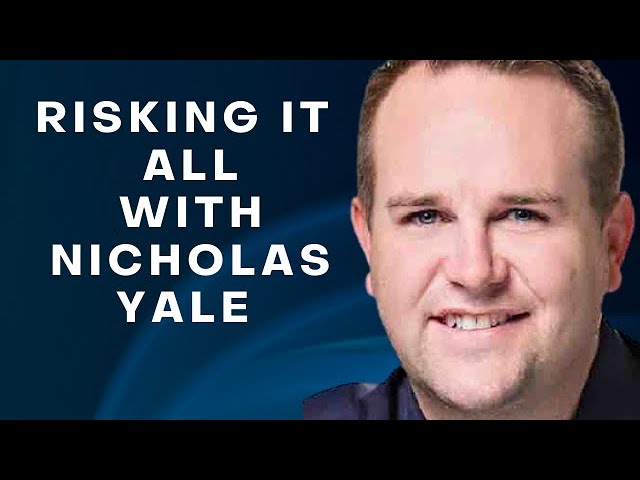
In this episode of the Reinvent You Podcast, host Travia Steward interviews Phoenix realtor and Brokers Hub Realty founder Nicholas Yale. The conversation weaves through Nicholas’s personal background, including how his identity and early family experiences shaped his ambition, and delves deeply into his highly structured daily routine—early wake‑up, strict bedtime, coffee rituals, and a calendar‑driven workflow. He explains how he copes with unexpected disruptions (even mentioning taking Xanax with vodka) and why he values office presence, even during the COVID‑19 pandemic. Nicholas shares his relationship with his older partner Bruce, their shared cruise tradition, and the importance of carving out personal time for self‑care such as baths and meditation. He reflects on a major financial regret—blowing his inheritance—and how that informs his current money mindset. The bulk of the interview turns to mentorship: he stresses doing thorough research, finding a mentor or apprenticeship, and the pitfalls of chasing commissions without guidance. He offers concrete advice for aspiring entrepreneurs and recent graduates, emphasizing research, humility, and surrounding oneself with supportive peers. The episode closes with Nicholas’s contact information and a light‑hearted promise to explore bath‑time rituals in a future episode.
Chapters
I also believe that part of the reason why I'm driven is because I'm gay. I think that in a way I had a little bit of a chip on my shoulder that I had to prove that I was—
Got it.
You know, that I was worthy of love. You have to treat people the way you want to be treated. And I want to be treated as somebody who is respected and well-known and smart and capable of what I'm doing.
Right, right.
I think that's part of success is You know, you just don't wait for it to happen. You got to kind of make it happen. Absolutely. You know, you got to go shake that money tree. You got to put out the energy that you want to get back. You know, mama said you are who, you know, you are who you hang out with, and you are what you eat.
Oh, that's so good, right?
So apparently I'm all Wendy's.
Today on the podcast, I welcome and have a fabulous conversation with Mr. Nicholas Yale. Nick is a realtor. He's a founder and owner of his own brokerage firm, Brokers Hub Realty. He has been serving the Phoenix area since 1998. On today's episode of the Reinvent You Podcast, Nick discusses how he stepped out on faith and risked it all to start his own firm, how having a chip on his shoulder has helped him to get ahead in life, and finally, what his definition of success looks like. Today my guest is a friend, and he is probably one of the funniest people that I know. Today, please take a seat, pull up a chair, be a fly on the wall with my conversation with Mr. Nicholas Yale.
Everybody going crazy, the crowds are going crazy.
Yep, just because you're here, that's exactly why.
I don't know why you think I'm the funniest person you know, because girl, when we have dinner with you, like, my cheeks hurt for days afterwards.
So— That's at least two-thirds because of you, though. I mean, it really is. And so I just—
We are not funny. It's margaritas.
It's margaritas, yeah. And yeah, and it's cervezas, right? So I'm having—
Sponsored by White Owl.
By Four Peaks Brewery.
By Four Peaks Brewery.
There we go. And what are you imbibing in?
Well, I'm in post-lunch hangover mode because my office, we have Mexican fiesta on Fridays. And so I had margaritas, but now I'm— I can say it.
Okay. Okay. So you have Mexican—
Bubbly and fancy.
Bubbly. So you have Mexican fiesta. Is this something you do for your employees, for your team, or do you guys have like a potluck?
You know, it— no, it kind of started— actually, it started during COVID When we all went into lockdown. And of course, you know, real estate agents, we are the bedrock of society. And without us, like, the world comes to a crashing halt. So our governor made our industry essential because, you know. So for the most part, we were still coming into the office, mainly to get away from our spouses. And because working from home doesn't really work that well in real estate. And, and so it just kind of became this on Friday, we had to celebrate that we had made another week. And so, so one of our agents started bringing in Ajo Owls, which is like, it's, it's the greasy spoon of Mexican food, really, from that little town of Ajo. No, it's right up on Central and Camelback. Like, Ajo Al's. It's— it will not be sponsoring you because I'm gonna call it the greatest food of Mexican food, but they have a Mexican pizza that's like a thick tortilla that's deep fried, and they put chicken and like a cream cheese jalapeño sauce. It's ridiculous.
Wow.
My mouth is watering right now. We talk about our COVID-19. This is the reason why. So every Friday has— this has become kind of a tradition now. Every Friday we have Ahual's Mexican pizza and margaritas and— OK. You know, why not?
Why not? Why not? You can make the rules, right? So as a way of introducing you to my listeners, if you had to describe yourself in 3 you know, characteristics, 3 adjectives that best describe Nicholas Yale. For me, I think you're funny, I think you're compassionate, and I also think you're very thoughtful. And so what are your 3? I do, I do. I can give examples of all 3. I mean, that's who I see you as. And so How would you describe yourself?
Well, I would say number one, I'm very driven and I'm really not sure where that came from because I do not come from a driven family. If they're listening, sorry.
We're going to delve into that.
But I'm very driven and that's driven in my business, it's driven in my friendship. I have always been a put your full ass into it, never do it half-assed. That's my thing. In fact, I have a great sign in my office now that says humble with a side of Kanye. Yeah. So I would say driven, number one. I also swear a lot, so just beware. But the thing about— there's been proven that people that swear actually are more truthful. And I would say that I'm very truthful. I have a hard time. I'm like Abe Lincoln. I have a hard time telling a lie. Like, is it Abe that cut down the tree? Who cut down the cherry tree? Clearly I'm not a history buff.
Right, right, right. I know, me either.
But I would say I'm very honest and sometimes to my own detriment. I tend to And it worked well in my business, you know, in real estate, you know, it's not exactly known as being the most, you know, upstanding industry. So, you know, we're one step ahead of used car salespeople.
Got it, got it. Always selling.
Yeah. So, um, so I would say I'm very driven, I'm very honest, I'm also extremely loyal. For me, loyalty is everything. In my industry, you know, you make relationships with your title company, with your favorite lender, with your favorite mortgage company, with your favorite homeowner inspector and that kind of stuff. And over the years, I've always been very, very loyal to that core group of people. And the reason why I am is because I don't want them to buy me lunches. I can buy my own damn lunches. You know, I don't need flowers. I need your, your hard work, ethics, and trust. And I need to know that I can trust you. And so when I have other companies that come to me and say, you know, hey, I know that we're, I know that you're loyal to X, Y, and Z title company. Actually, I'll say it. I know that you're loyal to First American Title, but if you just, we could be your number 2. And I'm like, that sounds great for you, but that's really not fair to my number 1 because they earned that trust.
Right.
And until they screw up, die, or pass away, like, they've earned that. So I'm very loyal to my business partners. I'm very loyal to people that I work with. I'm very loyal to my friends, my husband, you know, I mean, it depends on the day of the week.
Tuesdays.
Right, right. But no, I think, I think for me being loyal cuts into so many other parts of your life, right? You know, you can't, you can't be an honest person and be loyal, I feel. You know, you can't, you can't be, you can't be driven and be loyal. You can't be compassionate and be loyal. So unless you're Donald Trump and then you're loyal to yourself and only yourself, and then I guess everything I said just negates it. But, but I think that you have to be— a very, very good friend of mine is a She's a yoga master, yogi, whatever they call them, and she's always sending me cute little memes on how I can better my life. And the one that she sends me all the time is, "Be a better human." And I think, you know, for me, like, I really want to be a better human.
Right.
Don't tell somebody who doesn't want to be a better human to be a better human. It does not go well.
They don't want to hear that bullshit.
Oh no, I said that to my mother and she had exploded.
Wow. Be a better human, mom.
Yeah. I'm like, I just need you to be a better human. Be a compassionate, nice, honest human being.
Right.
Because I think that's really a lost art in our world right now.
Oh, I totally agree. Totally agree. Because a lot of people are just out for self.
Right.
They're not— but at all costs. Right. And so as long as I am able to get mine, It doesn't matter if I'm being dishonest, if I'm being a straight shooter or whatever.
Which is so disingenuous to yourself. Like I've always said in real estate, like I'm never going to get rich on one client.
Right.
I mean, unless I'm doing a massive deal, you know, I'm not on Bravo TV yet. So I'm not doing massive deals. So you'll never get rich on one client. You get rich on referrals.
Right.
And the only way you're going to get referrals is if the people who have used you like, know, and trust you. And trust being the key operative, right? You know, I tell people, you don't have to like me. We could— we don't have to split a beer when this transaction's over, but you do have to trust me, right? You have to trust me, you have to respect me, right?
And, you know, going to what you're saying with the trust, you know, you know, of course, you know my wife Shelly. Of course, you met her first before you met me. And so we were talking before, you know, she knew I was going to come in and record with you today. And I just remember the stories that she told, you know, that she would— before she moved to Phoenix, this was before I came out, of course, before you even knew me. But she had met with you 4 or 5 times, didn't really find anything that she loved, and she was back in St. Louis. And then I think she said you contacted her and said, you know, I think I've seen enough. Houses with you. I know enough about what you want. I think you're going to love this place. And I think from St. Louis, she put in a bid for it and it's the house we have today. And so, and I remember asking her and I said, well, what was it about Nick that, that, you know, you just trusted? And she said, well, in the interactions when she was here in Phoenix, she said, again, she said, I love the sense of humor. She also loved your experience, but she loved your attention to detail and that you could remember every single thing about a house and apply that to what the owner wanted.
Right.
And so when I'm talking about, I mean, I know you're a businessman, but I also think, you know, thoughtful and compassionate because you could have stuck her in some shit.
Right. Right.
Right. You know? And so to your benefit, those are 3 things that she loved about you as well. Yeah, in that whole transaction.
Well, and that goes to a couple of things. A, I feel that, you know, you have to be honest because I have a horrible memory. So I couldn't lie to you because I wouldn't remember the lie that I told you. So it's better for me, policy, be honest.
Tell the truth.
And then it also goes to my horrible memory that ask me what I ate for breakfast yesterday. I couldn't tell you, but I'll tell you about a house I showed you 15 minutes ago.
Yeah.
So, you know, I think you, you kind of remember the things that you do.
Yeah, perfect. So I want to talk about, you said a few minutes ago that, you know, one of your characteristics is that you're driven. And part of, you know, we know that your environment, your family, examples that you have in your life probably fuel that. But you specifically said you didn't have that. So where did that drive come from? Where was it able to cultivate? How did you get it?
Well, I am a big believer in biology. And so I— so where they ask, what's like the gay gene? Is it biology or is it environmental? I'm a big believer in biology in that regard. My dad was very driven, but I didn't know my dad growing up. I didn't meet my dad. My parents divorced when I was 4 or 5. I didn't see my dad, talk to my dad, know my dad until I was in my early 20s. And yet when I did meet my dad when I was 21, it was like looking in a mirror. It was a very weird— I always like, I bond well with adoptees, you know, kids that are adopted, and we talk about like that need to meet your family, you know, and even though I had my mom, I had my stepdad and my siblings, I had this need to meet my dad and it really was opening up, you know, oh wow, that we had the exact same mannerisms and the same, so I think internally I got that drive from there. I also believe that part of the reason why I'm driven is because I'm gay. I think that in a way I had a little bit of a chip on my shoulder that I had to prove that I was, you know, that I was worthy of love in a way. I got over that very quickly and then just became love of money. And then that was the drive from there. So, you know, because, you know, mom always told me it was easier to marry a richer man than a poor man. And it was easier to be a hard worker than a lazy worker. You'll just get further in life. And I always make the joke that anybody that tells you that money is the root of all evil has clearly never flown first class.
Right.
You know, now, and we actually, it's funny that we talk about money. We were having our conversation at our Mexican fiesta today and we were talking about Bill Gates and Warren Buffett and these incredibly wealthy people. And then our president right now, who was also allegedly, you know, very, very wealthy.
Right.
And we were talking about how money can— you can use it for good and you can use it for evil. Or just greed, not even— it doesn't need to be evil, it can just be greed. When is enough enough? And when you have enough, what do you do with it? You know, and you talk to Bill Gates, who wants to eradicate malaria and polio, and he's putting billions of dollars towards it. And Warren Buffett and the money that he's pledging to leave, you know, not leave his kids anything, which, I mean, that's the short end of the stick there.
But, you know— Damn you, Dad!
Right? But what an amazing story to have of, you know, my dad's one of the richest men in the world. And he didn't use it to buy boats and planes and hookers and blow. Like, he used it for good, right? And I don't know, it was just a very interesting conversation that I've never— for me personally, I've never apologized for the money that I make. And, you know, allegedly I'm one of the better real estate agents in town, and I make a really good living. I work very hard for it, right? And I don't apologize for it because I worked very hard for it.
Right.
Um, and, and I hope to be able to use it for good.
Nice. So when you're talking about, you know, you, you believe that, you know, being gay put a chip on your shoulder and it made you even more driven from your experience. And then all of you, like, how many years have you been in real estate since 1998?
I think I read. I think it's 21 years.
21 years, wow.
I'm legal.
Yes, you are. Did you ever experience that, oh my goodness, because I'm gay, it's to my detriment, or has it always been because I'm gay, this is, you know, I get all the business that I need?
No, you know, the first couple years in business, I got very good at using pronouns. It was like, you know, oh yeah, no, my friends and I went out, or, you know, "my other half," "what a crazy individual," you know, I got very, very good at using pronouns. And I think part of it came with my success as I did better and kind of growing into my own skin. And also it kind of came down to, you know, just having that maturity and you click and you kind of say, you know, I just, I really don't care what you think about me. You know, and not to go back to money, clearly that's the theme with me, but it came back to, you know, I was making enough money that I didn't need every sale, right? You know, if you didn't want to work with me because I was gay, well, you know what, I really didn't want to work with you either, right? And so I think part of that society acceptance moving on because I would say that was probably that way from '98 to about 2002, 2003. And then from there, I started embracing it and advertising in the gay community. I would say right now, probably easily 60, 70% of my business is with gay. Right.
And I remember that's exactly why Shelley contacted you.
Yeah. Oh yeah. Well, you know, it's, it's, it's, It's human nature that you want to work with people who look like you, talk like you, understand you, right? And in the gay community, that was certainly a big thing, was, you know, I don't want to be discriminated against, I don't want to have the perception of being discriminated against, right? You know, and there's just something about working with your own kind.
Yeah, no, I get that. Yeah, totally get that. You feel accepted right from the beginning.
That's changed. I mean, it's changed even now. It's like, I was working with a gay couple a couple years ago, these young little millennials, and they were, you know, 23, 24, which actually they're probably not millennials then, but in my mind, you're younger than me.
Yeah, yeah.
And, uh, and they'd been together 3 or 4 years, and I said, oh, what's your favorite gay bars? And they're like, we've never been to a gay bar. And it just blew my mind. You know, that was these 23-year-olds that had never been in a gay bar, and they're like, why would we go there? All our friends are in straight bars, right? So it's interesting how society has changed. And, you know, I mean, for me to say my business is 60 to 70% gay is, is a downward trend, I'll tell you. It used to be 80, 90%. So, right, right.
Because, like, you know, I love what I think you're so good at is Like you, it's easy to keep referring you. It really is. Because I think you take such good care of it. Well, it's not taken care of, but I, you know, that's a lot of the compassion and the thoughtfulness. I think you're so very thoughtful. Like when you have your Christmas shindig, when you have a pool party, when you rented out the theater for The Lion King, that was the first time I'd been to a movie probably in 4 years because, you know, I became, paranoid Pamela because I didn't want people to come shoot me up in the movie, you know. But that was the first time. But I just remember, you know, you— I think that's— that goes a long way. And that's— I know that's your way of sort of giving back. And I love, love, love the people that I always meet, your circle of friends, the people. And I feel like every person that I ever interact with at your home, at your outings feels the exact same way that I do, that we do.
Yeah, well, thank you. You know, it's interesting. I had a good friend of mine that said one time, he's like, I love coming to your parties because, you know, sometimes, especially in our community, sometimes you'll go to a gay party and it is 99% men and 2 lesbians.
Yes.
Or you'll go to a straight party and then you're the token gay person, or you're the token Black person. And so, you know, my good friend Joey said, I love when you party because it's just a mix of everything.
So true.
Oh, kind of like America is supposed to be, like, you know.
Yeah, kind of like the real melting pot.
Right, right. Well, because it comes down to, you know, for me, I've always looked at people, I don't care if you're Black, white, gay, straight, you know, purple or green. I only care that the money in your wallet is green and there's a lot of it. And you know, they're, they're going right back to money, right back to money. But, but, you know, at the end of the day, you have to, you have to, you have to treat people the way you want to be treated. And, and I want to be treated as somebody who is respected and well-known and, and smart and capable of what I'm doing. And right, you know, you gotta, you gotta put out the energy that you want to get back.
Oh man, I love that. Totally love that. I didn't really buy into putting out that energy probably until I started coaching, you know, and then I realized that, you know, which is something else I want to hit on with you. I realized that my internal dialogue when I first started this journey was not supporting in a productive way my journey, because I was arguing against the things that I wanted to do because I just kept letting myself talk myself out of things. Right. So, You're a successful realtor, right? Before Brokers Hub, you are making a really good living. I mean, cause shit, I remember going to your big, your one of your parties down on Central Avenue. And it was like, we were partying on the roof. I mean, there was a DJ and I was like, damn, Nick throws a damn good party, man. It was a good-ass time, you know? And then, you know, you were still a bachelor then. And so, you know, I feel like you were, you, you were living it up then. But then you're like, no, I want to go out on my own and start my business. You know, what was the motivation? Because a lot of people are like, nah, I'm just comfortable working for the man. I'm comfortable knowing I'm going to always have a paycheck. What was that driving force that made you lit up to start Brokers Hub? And I love the name and I love the colors.
I just love everything about it. Thank you. Uh, well, I know this is going to shock you, but it was money. Uh, no, you know, to be, to be perfect. I mean, it was money. I'm not gonna, no bones about it. It was money. Um, but the, the previous company that I was with was back in the day. Uh, and there's, you know, as you know, there's more real estate companies out there than you could swing a dead cat, right? And, and every realtor or every company that you meet is going to tell you that they're number one and that they have the best agents and that they have, you know, the highest producing agents of anybody. Which is always funny to me because it's not like you can't track these things, right? But most people don't. Case in point, most people hire the first realtor they meet. And so the company that I was with at the time was known for having really, really good agents. And the reason why it was, it was a relatively expensive company to work for. It was kind of the Nordstrom's of real estate. And you couldn't work there if you weren't a great agent because you couldn't pay that bill every single month. And during the recession, as everybody kind of looked around and said, "I don't want to shop at Nordstrom's anymore because, you know, Kmart's looking really good." Right. And so my company at the time saw a mass exodus going to Kmart because it was cheaper. And so my company at the time decided, "Well, then we need to— we got to keep butts in seats." you know, we got to keep our agent count up. So they lowered the standards of what they held as a standard for their company. And I looked around one day and I was like, I'm literally one of the last big producers. And this was a huge company. I mean, this was, you know, we had 1,000 agents here in the Valley at the time. And I said, You know, mama said you are who you know, you are who you hang out with, and you are what you eat.
Oh, that's so good, right?
So apparently I'm all Wendy's, I'm all Wendy's. But, but you are what you eat, and you are who you hang out with. You know, if you hang out with, with, you know, losers, chances are you're gonna be the next Warren Buffett. If you're hanging out with, you know, dopey down the street.
Yeah.
So I looked around and said, I just don't want to do this. So we started going to— I was interviewing with other companies and saying, you know, Okay, well, what company would I go to and what's the perk here and what's the perk there? And I will preface it by saying I never had a desire to be a broker. I never had a desire to own my own company. Um, the root word of broker is broke and, and that wasn't lost on me. And, uh, but I started looking around and I was like, there's not a company that celebrates success and, and makes it so that Good agents want to flock there, and there's good companies out there. I'm not saying we're the best company out there. There are lots of good companies out there, but they come with caveats. And so, you know, let's say that I wanted to go to, you know, this big blue fancy, you know, sign out in Scottsdale. Um, wonderful company, great principles, but they were going to take 20% of my income.
Okay.
And I said, well, I love money. I don't want to give you 20%. And yeah, and so then it was like, okay, well then what if I go to Kmart? Well, you know, Kmart's only going to take $25 a month, but they let everybody in. And how do I differentiate myself? In my industry, we all charge roughly the same amount of money. Like I said earlier, you know, people usually hire the very first agent that they meet. And so I would go on an interview and they would say, well, you're great, but we want to, we want to give the business to our brother's cousin sister who just got their license. "Unless you're gonna give us a big discount." And I'm like, "No, no, no, no, no, like, I'm good. Why would I discount my services? I'm really good at what I do." Right. And why would you give the same fee that you'd pay to me to your brother, sister who just got their license? So it was, it kind of created this thing. And I sat down with my team at the time and I said, "Hey, I really want to be with a company that has really good agents, that's known for good agents." I want a company that's not going to gouge me financially, and I want this and I want this. And they were like, so you basically want your old company 20 years ago that doesn't exist anymore? I was like, yeah. So that's how we came up with Brokers Hub.
Okay.
So we made it so that in Arizona— it's probably more of how you make the sausage than you ever wanted to know, but in real estate in Arizona, everybody, when they get their license— and I literally mean everybody because every other person in Arizona gets their real estate license at some point. So, so true. Start studying now. Yeah, yeah, I thought about it. Of course you did. Everybody does. But everybody starts out as a sales associate, and after 3 years of active selling, you can go back to real estate jail— I mean school— and, and do another 90 hours and then get your broker's license.
Okay.
And so I said, okay, well, if I can create a company where we only hire associate brokers, so by definition, all of our agents are at least 3 years in the business. And the average real estate agent in Arizona sells 4 to 5 homes a year. I want— I believe if you're not selling a home a month, like, A, you're probably not eating very well. And B, you're not really full-time. And so we set a standard of you have to do at least 12 transactions a year.. And you have to do 24 hours of renewal classes every 2 years to keep your license active. We require 36 and I don't let them do them online and make them do them in person. And so what's happened and we're, we have 20 agents now at the company. Wow. Yeah. And well, and what's great about it is the 20 agents that we have are high-producing, high-quality, good agents. And so all of a sudden now I'm working with my peers.
Yeah.
And when you work with, you know, when you work with your peers, it helps you elevate your standard, which floats the boat for the whole company. Um, and so, you know, it goes back to that, who you are, you are who you hang out with.
So true. So true. So did you have a safety net? How did you position yourself financially to be able to take that? I mean, I feel like you jumped out in the deep end of the Indian Ocean.
Yeah, well, I had a husband with a pension, so that helped.
Oh, very true. Very true.
There's the—
Bruce. Good old Bruce.
No, you know, to be honest with you, we opened the brokerage 3 years ago, so the market was good. And, you know, I had some savings, which was helpful. But really, regardless of whatever time you open a business, um, you have to be driven, you have to be honest, and you just have to take that leap. Um, when I first got my license in '98, I went to real estate school with a very, very good friend of mine, and we were kind of study buddies in real estate school. And we, we joined Keller Williams, which was our very first company that we, we joined.. And I remember I wanted to do a full-page ad in a magazine called Harmon Homes. And Harmon Homes is one of those magazines you get at like Safeway or whatever. Okay. Pre-Zillow. Quite frankly, like, well, not pre-internet, but pretty damn close. And anyway, I remember that my appointment to meet with them to sign a contract was in North Scottsdale. And I remember rolling quarters that I had found in my car to put gas in my car.
Wow.
Get to North Scottsdale. And I drove to North Scottsdale and I signed this contract and it was $1,200 a month for this ad. And this was in 1998 or 1999.
So that's big money.
Yeah.
So expensive.
Yeah. My rent was $333. Wow. So literally, you know, almost 4 times my rent.
Right.
And I remember I came back in the office and I was like, oh my God, Gabby, look what I just did. And she's like, you're out of your rabbit ass mind. She's like, why would you do that? And I said, because I have a full-page ad now and I can advertise houses on it and people are going to see that and they're going to call me and then I can advertise their listing and I can get buyers from it. And she goes, you're going to lose everything. And I go, I didn't have anything to lose to start with. So I mean, what's the worst thing that's going to happen? I'll file bankruptcy and lose my car and live in a Nipa hut. I've done that. Like, how bad can it be?
Holy smokes.
And, you know, it was scary. But in my mind, I was like, this is what I need to be. I need to put myself out there to be successful. Gratefully, they had me on a 60-day pay. So by the time the magazine came out, that's when this 60 days started. I had 60 days to pay it.
Right.
I was in Arizona for about 30 days, so I was like, it's gonna go out and I'm gonna get a thing and I'll pay it and it'll be great. And there were a few months that I didn't pay on time, but that didn't stop me because at the end of the day, I, I had a plan of where I wanted to be. And, and I remember, uh, one of the coaches that I had early in real estate told me to literally write out a 10-year plan. And be ambitious about it. You know, where do you want to be in year 1? How many actions do you want to do? How many clients do you want to have? You know, where does that put you in year 2? Where does that put you in year 3? Where is it? And I literally had it on the back of my door in my office. And by year 10, I had a team of 20. I had a team of 20 and I was making, you know, a million dollars a year and life was going to be great. I remember I got to year 9 and I was like, I'm not even close to that. But you know where I was? I was a lot, hell of a lot closer than my friend Debbie, who was like, what the hell are you doing this?
Debbie Downer.
Yeah, thank you. Debbie Downer, at that time, it was probably about year 8 in the business. Debbie Downer was out of the business. And so yeah, I wasn't making $1 million a year, but I was making good money, right? 12 assistants.
But yeah, you know, what, what was it? What is the attribute that you have that's inside of you that you're like, you know, you You just got to take the leap. You know, you just got to be driven. You just got to keep going. I knew I had to pay my rent because that's easy to say today, you know, but a lot of people don't have that. They can say it, but they don't take the action. What is it that you have that a lot of people like Debbie, you think don't have that kept you plugged into your goal?
Yeah. Uh, well, as well, maybe you, well, you, you know, but your listeners don't know. Um, I was raised religious, believe it or not.
I love that story.
Good old Mormon. Good old Mormon. But, you know, I am a firm believer of, you know, faith without works is dead. I had faith that if I put the work in, that I could go where I wanted to go. It never even dawned on me that I wouldn't be successful if I didn't put the work into it. And, you know, not to get all patriotic on you, but we do live in a fabulous country that rewards success, right? And rewards hard work. And so if you're going to have delusions of grandeur like I did, you know, you have to put some effort into it. This is not a— we don't live in a world that you can just manifest your dreams. As much as I want to say, you know, put it out there, girl, you know, it's got to be a little work behind that. You're listening. But, you know, Four Peaks is going to be a sponsor of yours because you put together a podcast and you mentioned them a thousand times and you hashtag them and say, you know, oh, Four Peaks was mentioned on, you know, the, the product. And so you're, you're not just, you know, putting it out there based on the stars. You're you're putting in the work to do it. So for me, it never, it never dawned on me that I could work and not have fruit. Right. Uh, I love, I had a quote in my office years ago that said, if you want a shady backyard, plant a tree 20 years ago. And you know, so, you know, work is not, success is not overnight. Um, You know, it's just not. And when I, when I have agents that come to me and say, hey, I want to get into real estate, and you know, you look like it's so easy and you make so much money and you drive a Range Rover and I want to be you. And I was like, well, I drove a, I drove a Chevy Cavalier for the first 4 years of my end of my career, and it wasn't a pretty Cavalier, right? So you have to put in that, that effort in order to get it. I mean, it's just This is a blood, sweat, and tears business for me, and I think any business is that way.
I hope you're enjoying the episode. I just wanted to take a brief moment to ask you to please leave a review and tell us what you think of the show. Maybe even include a favorite topic or something you'd like me to cover on an upcoming episode. Leaving reviews helps other people be able to find the show better, and then I can help more people. Thank you so much. Mm-hmm. You know, I feel like just listening to some of the nuggets that you're dropping in, in, in your dialogue here, I feel like you've done, you know, some personal development work. You know, I know you said you worked with a coach who helped you, you know, plan your, your 10-year vision, that kind of thing. What are the kind of personal development have you done that helped to make you the man you are today and the entrepreneur that you are today? Yeah.
Well, uh, no, no man is an island. So, you know, you can't do it alone, right? And so you do, you do need, if anything, you need something to bounce ideas, you need somebody to bounce ideas off of. And so I've always felt that having a, a coach or, and it could be a coach that you pay for, it could be, it could be the Bible. I mean, it could be whatever, you know, it's going to float your boat to help, you know, give you those ideas. But early on, I joined with the team. And so I had a mentor in real estate that taught me all the things of how to be a good real estate agent. But he also taught me a lot of things of that he was not a great agent. He actually lost his license to fraud not too long afterwards.
Well, that was a lesson you weren't going to repeat.
Well, and this is, you know, I mentioned earlier about being loyal to like my title companies and mortgage companies. I remember sitting down with this individual and he said, "Hey, you see my cell phone here? And my cell phone, I don't pay for that. I make my title company pay for that. And my new computer here, I didn't pay for that. My home warranty company paid for that." And I was like, "You make $100,000 a year and you can't buy your own damn printer?" So I took from that of things that I did want to emulate and things that I didn't. That was— so I think having a coach, good and bad— I don't think there's a bad coach out there, um, because you can have a horrible coach that you can learn to not be that horrible coach.
Absolutely, absolutely.
But I think it is important to have that, uh, that idea to bounce off to somebody and to have that accountability, right? So, you know, if I— one of the very first, uh, things I did was course called Floyd Wickman's Sweat Hog Course. And what Floyd Wickman did, he was the king of cold calling. Of course, this is when we could cold call, right?
Right, right.
Now people just hang up. And literally, I mean, I think I paid $800 for his course. And so I didn't eat that month, which was great for my weight. It was fabulous. You know, nothing tastes as good as bean pen. And I remember he came around the room and he had the white pages. And he literally tore out pages and handed it to us and handed us a script and said, go to your respective corners and don't come back until you've called every one of these people using this script. It was brutal. But hi, my name is Nicholas Yell. I work with Keller Williams Realty in the East Valley, and I'd like to know if you're interested in buying or selling a home in real estate. If you're interested, please call me back at 480-797-4422. Ask me to say that 16 times and I can.
And you can today.
And, you know, and that was 20 years ago. Yeah. But it was brutal. And I hated it. And I remember I had people that would swear at me and they would curse at me and they'd hang up on me. And I remember one time, I was probably 2 weeks into it. And this guy says, oh, I have been thinking about selling my house. And I was like, well, fuck you too. Wait, what? You know, And so, you know, so, and I remember coming to him and I was just like, and I said, you know, it was probably right before that. And I said, this is just pointless. Like I'm having people, they're just, yeah, they're, they're killing me. They're just yelling at me. And I said, I'm never going to get business from this. And he said, sweetheart, you're missing the point. This is not for you to get business. This is for you to grow a thick skin because this business will eat you alive if you're going to be, you know, and, and so for me, that was like, oh, okay. So all of a sudden, when, when I realized this really wasn't about getting the business, it made those calls a lot easier, right? And I was a lot more confident slash cocky about it.
Okay. Okay.
You know, so, so having a good coach is somebody that will, will It will help inspire you, hopefully, one way or the other. And then, you know, I love Shark Tank. I don't know if you watch Shark Tank.
Oh, we watch Shark Tank every— yeah, it's what, Fridays? Absolutely.
I mean, it's, you know, and I'll go on a hiatus and then my TiVo will be like, you're maximum capacity here. I love watching Shark Tank because I listen to the things that they say and One of my favorite things of Mr. Wonderful is, "This is a horrible idea. You need to take this idea back behind the barn and shoot it. And thank me later for it." Right. Sometimes you need to hear that as an entrepreneur. Sometimes you need to hear, "This is a horrible idea." You know? And then you have things like the guy that created the Ring doorbell.
Oh yeah.
He didn't get a bid. He did not get, they all thought he was crazy.
Yep, they all said no.
And then of course, then one of them circled back and said, well, we'll give you some money and recreated it to be what it is today. It's, I mean, who do you know who doesn't have a Ring doorbell anymore?
Right.
So, well, actually, I shouldn't say that. Me, I don't have a Ring doorbell.
Yeah, we don't either. We have cameras, but not a Ring. Yeah, yeah.
But, but, you know, it takes that. Sometimes it takes people saying, no, you're batshit crazy.
Yeah.
And at the same time, if you have enough in you, you know, no, I'm not crazy.
You're crazy.
And no, we're going to make this work. So, right.
So in building Brokers Hub, and I know you have a vision for the future because shit, when you first started out, you had it behind your door. So I know you have yet a newly created vision. Tell me a little bit about what that vision looks like and how do you empower your team to buy in and help you create and fulfill that vision?
Well, it's world domination.
Yes.
So there's that.
Long as we— you still like us.
Yes. Yes.
Okay, good.
Um, you know what, what I think has been interesting in relation to that is how I have changed as a person. Um, because I make the joke about, you know, I want to see Brokers Hub Realty grow to be the next RE/MAX or Keller Williams or Coldwell Banker. Um, but I also realized, to be perfectly honest with you, I'm probably not the person to take it to that height.
Wow.
Yeah. And that, and, and, and part of that is because of where I'm at in my life at the moment. You know, you can have a dream and don't be so stuck and hard on your dream that you lose sight of everything else and lose that. Because I realized that You know, it's a great company. I've actually shocked myself. I've really enjoyed building it. And certainly not done. So we may not dominate the world, but we'll dominate Arizona. Just give us time. But really, for me, the joy of it has not been me personally growing. It's watching the agents that we have watching them grow and watching— excuse me, Pellegrino— watching them become better agents. And then, and really, it's almost evangelical in the fact that at some point I don't have to be the one to sell the brokerage. They're doing it for me.
Right.
We have an agent that has probably brought on 2 or 3 2 or 3 people to the company because she's like, it's so great and it's this and it's that, we do this, we do that. And, you know, so for me, I would like to see the company grow because I would like to be profitable because money, money. But I also want to make sure that we're growing it responsibly, right? And with the right type of people because otherwise, what was the whole point of doing it in the first place?
Absolutely. You know, and you continually refer to money, and I just, I know you say that, and that could be something that drives you.
I've had a lot of therapy for it.
Yeah, but it's not what I get from you. You know, it's not.
Well, thank you, and you know, Because it goes back to our Warren Buffett versus Donald Trump conversation about money. Yeah, yeah. It's what you do with the money. You know, I love to help people. I love to help and be helped and be generous. Right. And it's a lot easier to loan somebody $1,000 who really needs it when you have $1,000 and it doesn't affect your daily life.
Right. And you don't care if you get it back or not.
Absolutely. Absolutely. So a great example, I was on a Facebook page the other day for a community in our downtown area, and this lady had posted on Facebook that she was in a clearly a craptastic little rental. And she said, you know, my kids, we found some wood pallets to sleep on because it elevates off the hot cement. And our AC went out and the landlord said he can't fix it. Does anybody have a spare fan that I can borrow to keep my kids cool? And it just broke my heart. And so I said to Bruce, and I said, I kind of want to get in the car right now and go buy this lady an AC unit. Because you see stuff like that Right. And it really makes you realize how grateful we are for the life that we have. And it makes me want to go out and, and help people like that. And you can't help people like that if you don't have money. That's true. That's true.
The more money you have, the more good you can do.
Right.
So, wow. And, you know, there's something about you and especially what you've been talking about. You said, you know, that you can't take your company to that grand vision, but you're driven. I know what got you here won't get you there, but you're such a guy who I feel like who would just create and change his tactics and his actions and take that company wherever he wants it to go.
And I would say, and I guess in a way I misspoke in that regard of I could take it there, but in the last couple of years, my priorities have changed.
There we go. Okay.
You know, Bruce is 56. I'm a young spring chicken of 25.
Yes, you are.
And, um, And, and, you know, we talk about retirement, you know, retirement the next 4 or 5 years.
Right.
And, and, you know, if I get my way, it'll be on the coast of Costa Rica.
I knew you were going to say that.
And, and so, you know, I mean, my prayers have changed that it's not, it's not that important for me to see the company grow to be the next RE/MAX.
Yeah.
Because ultimately I want to make me happy.
Absolutely.
And I want to make, I want to make my husband happy. I want him to feel like he, you know, is part of the journey as well.
Yeah.
And so maybe that journey is, hey, you grow the brokerage to a certain point, and then you pass it off to somebody else. And then you get to watch it from the background and watch it grow and know that you had a part of that.
Right. You know, wow, that's so incredible. So since we're talking about Bruce, I believe that, you know, partnerships work so much better. I'm sure there are times when this doesn't work, but they work better when there's a yin and there's a yang, right? And so I feel like you and Bruce are like pictures in the dictionary. Here we go, yin to the yang. How does Bruce fulfill and fill that need of your opposite, your yin to your yang, or your yang to your yin?
Well, for starters, um, let's make it very clear that Bruce is a, is an aerospace engineer. And so he is very analytical and where it works for us is we're very respectful of our differences because we are, as you said, very different. Yeah. But we work well because we respect each other's differences and yet, and I know you're not gonna believe this when I say this, but we've been together 12 years married for 4 or 5 years now. We've never had a fight. We do not fight. We do not fight.
I believe it.
We rarely disagree with each other. Could be because we're so passive that, you know, we're just gonna let our brains fall out, but we don't fight. And, but he does reel me in when my delusions of grandeur get—
Yes.
You know, so perfect example, uh, to 2 weeks ago. And we've been in the house. So the house that we're in, Bruce bought back in 1996. And he's been there for— since 1996. And I moved in in 2009. And we've remodeled the kitchen and the bathroom and put in a pool and it looks nothing like before I moved in. But it's not my house. It will always be his house. And it's always a little ting in me that just bothers me. Okay.
Even if you have a bidet?
Yeah, it's still, it's still not my house.
Okay. Okay.
And, and so, so I've been constantly saying, you know, I really want to, I want to buy something together. I want to have that experience together. And, you know, Bruce is like, but our house is paid for. Why would we go buy a new house? That's his right brain. Yeah. And, you know, if I had my way, we would have moved 10 times in the last 12 years. You know, we'd be broke, but you know, we would have fabulous houses.
Right.
So 2 weeks ago, we find this great house. I found this great house and I was like, oh my God, you gotta see this. It's amazing, da da da. And the house legit is perfection. It is exactly, and I forced him to come look at it. And he walks in and he's like, I see why you like this. He's like, this is you to a T. So do you wanna move to Costa Rica? Do you want a cabin? Months apart, do you want a new house? Do you want a new husband? Wow. And multiple choice. Like, I want, I want D, all of the above. Yeah. But he, he, he brings me down and said, you know, yeah, or if that's what you want to do, like when I opened that, when I opened the brokerage, you know, I said, hey, I've got this idea and what I want to do. And he's like, is it gonna put us in bankruptcy? And I'm like, I said, no, because I don't know, you never know opening a new business, right?
Yeah.
He goes, do you believe in it? And I said, I do. And he goes, okay, well, what's the worst thing that's going to happen? You know, having a partner that, that will put you on a little bit of a leash, pull it back when it needs to. Yeah, is, is great. But having feeling, knowing that you have, they have your back, and I have his back. Yeah, um, I watch a lot more Star Wars than— did you know that they're making new Star Wars? Wasn't that an '80s thing?
I know, I know, but they keep coming out with new ones.
He made me watch, uh, Star Wars. Said, okay, I want to watch it from the very beginning. And so we sat down with some friends and I said, we're gonna start with number 1. And they were like, oh no, you start with number 4. I don't understand it, but okay, okay. About halfway through and, uh, I lean over and I'm like, where's William Shatner? See, you're not a Star Wars fan.
I'm not, because I have no idea what the significance of that question is.
Uh, your listeners are blowing up right now. Um, uh, William Shatner was in Star Trek.
Oh, okay.
So I— oh yeah, yeah, Luke. That's when they, they turned on me.
Okay.
And, um, and then I fell asleep. Um, But a few months ago during, during the lockdown of COVID we watched Lion King— or not Lion King, Tiger King.
Oh, okay. Yeah, that was all the rage.
Yeah, yeah. And Bruce watched it right there with me.
Okay.
Um, probably with as much enthusiasm as I watched Star Wars. Yeah, yeah, you know, so, so having somebody that you, that you connect well with and, and it will be supportive of you and yet ring you back when you need it is Yeah, it really is.
Yeah, I love that. I remember when, uh, when, when we got married, uh, my friend Dara said, you know, one thing I always love about Trey is Trey is all about fun. Trey dreams up fun, but Shelly's the one that makes fun happen. So she reins me back into— and she goes, I don't think we should be doing that, but I want to do it. Okay, you know, and so You gotta have that opposite. So if you're just gonna jump off, you know, in the end of the ocean, to have a support. Outside of Bruce, who else has had the biggest impact on your success and on your life as a person?
I mean, I would definitely have to say, uh, my dad. Um, like I said earlier, I didn't know my dad growing up. Um, and that's a whole nother podcast all in itself. But I met my dad very briefly when I was 19 for 15 minutes, literally 15 minutes. And then we reconnected when I was 21. And my dad was in real estate in Houston and he's one of the very first people that I came out to and then told him that I wanted to go into real estate. And I don't know which disappointed him more. And I remember I got my real estate license and I called my dad. I had sold a little condo over in Mesa and I called my dad and I said, Dad, I just sold a condo. And he goes, well, that's great, son. How much was it? And I said, it was $68,000. And he goes, oh my God. And he goes, Nicholas, and he's from Texas, so big accent, right? Nicholas, it is the same amount of paperwork to sell a $500,000 house as a $50,000 house. And it's a hell of a bigger paycheck. And I go, yeah, okay.
Okay.
Are you still working at the Olive Garden? And I go, I am. And he goes, oh, you are an embarrassment to me and your profession. So you're either going to get into this full time or put your happy ass back in school. And Travia, I'm here to tell you, I was not going to pass that math class. So I was like, I walked into Olive Garden that night and I was like, time to be a real estate agent.
There you go.
And, you know, I never looked back. He was a huge influencer for me in that. And then I also think my friends, having a really good, you know, you can't choose your family, but you can choose your friends. You can choose your friends. Yes. And, you know, I think it's fabulous if you have a great family and you all love each other. I'd smother half my family with a pillow if I could get away with it.
None of them will ever hear this.
You're still recording, so—
just kidding! They will never hear this.
So, you know, you can't choose your family, and I'm a kid, but I respectfully love my family. But I really love my friends because they inspire me to be a better human. And to, you know, I have a good friend of mine that will drag me out to a protest, you know, and I'll go kicking and screaming, but I feel better when I'm done. Of course. And I have a good friend of mine that forces me to eat tofu, and I hate her for it.
But you do it.
But I do it, you know, and that's the beauty of life. Yeah. And I think, you know, for me also, I'm inspired by the people that I work with in my company. You know, for the third time, it's, you know, you are who you hang out with.
Yes.
Oh, if you want to, you never want to be, I mean, being the biggest fish in the pond isn't that great. Everybody else is nibbling at your fins.
Yep.
And you're constantly swimming to, you know, you're the Joneses. It's great to be you know, part of the ocean and be a part of the whole. Yeah, I love that.
I love that. So since, you know, you said Bruce is 56 and you're, you know, just a mere 25, you know, Bruce got you barely when you were just legal.
Um, such a young woman bride.
Yes, yes. What is it about your life and how you've structured your days that gives you the most enjoyable amount of, you know, like, why do you enjoy your day so much? Like, I'm talking Monday through Friday also.
You're insinuating that I love my days. Great.
No, you don't.
I will say that, and this could be part of why, you know, I'm not opposed to retiring early with my older husband. Because, you know, my business is stressful. Um, and, uh, I am very structured. Um, my alarm clock goes off at 6:15 every single morning, 7 days a week. The idea of sleeping in till 11 o'clock, cause it's a Saturday is a foreign concept to me. Um, and, and part of my body just adapted that way.
Right.
Um, you know, I'm in bed at 10 o'clock every single night with very rare exception. I lay there for 15 or 20 minutes and I read my Huffington Post or whatever other liberal media I can get my hands on and get a little worked up, and then I read something fluffy, and by 10:28 I roll over and I'm like, I can't keep my eyes open. I go, oh, it's 10:28, that's why.
That's why.
And Bruce says I lay my head down and I'm gone, right? It's You know, but I'm very structured now. I get up at 6:15. I literally get up and stretch and I pet the dog. I make coffee. I go pee. I let the dog out. I come back. I check my email. Like, I'm— and when my day gets off for whatever reason, you know, we have to go do something in the morning or if I have my calendar and I'm very structured in my— like, I I'm amazed people that don't use calendars or, you know, on your phone or whatever. Like, yeah, yeah. They're like, oh, I forgot I had that meeting with you. Well, isn't it in your calendar? I don't use a calendar.
Like, well, how do you know when to show up anywhere?
How do you know to have lunch? Right. But when I have, you know, and it's comical because in my business, you know, you get little, you know, bombs here and there, right, that throw your day off. And I will tell you, those are the days that Nick takes a Xanax with a chaser of vodka because I don't do well when my day is not structured.
Wow. Okay.
That's just kind of how I'm wired.
Yeah, I get that. You know, I like having some structure, but I also like putting a little bit of flexibility into that.
Yeah, I will learn that from you.
Yeah, yeah, I do love that because, yeah, I would, you know, I like having that sense of security. That sense of certainty, that knowing that boom. But I do like knowing, you know, I don't feel like getting up today. I want to sleep in. But sleeping in for me is till like 7 o'clock because I got to get up and watch Good Morning America because the first 17, 18 minutes of that is the best. Everything else is a repeat or just fluff stuff.
Yeah.
Yeah. Yeah. So I'm like, yep, got to get up. And I sit there with my coffee. But yeah, there just are certain things. What gets Nick into flow to where he is his absolute best, to do his best work first thing?
It really, for me, it starts in the morning. I mean, I have to get up on time.
Right.
I have to have my coffee and everybody knows.
Yeah.
Until that happens, just until it's about halfway done, just stay away. Yeah. So it's that. I had something until you said it in my head and then I forgot what I was gonna say and it wasn't you, it was me. 'Cause I just keep thinking about something that you do that I've always admired is you take baths.
I do.
I don't know if your listeners know this, but this crazy girl here takes baths.
I love a good bath.
Do you shower?
I do, when I'm quick. Like, I took a bath this morning and then I took a shower after my workout.
See, I—
I've already bathed twice today.
Nobody has time for that. Ain't nobody have time for that.
Right, right, right.
But I do love that about you, 'cause I think that actually says something about you that you take that self-care time and I'm assuming that you're— this is my vision of what Travia Steward is doing in the bathtub. Please, paint it. Candle or two, there's some rose petals and you're sipping, you know, a fine Four Peaks beer.
6 o'clock in the morning.
No judgment. That's right. I don't think that you're sitting there reading the New York Times. I could be wrong, but I love that you take that that salt.
Yeah, yeah.
I totally forgot what your question was. Sorry, because I was thinking about you in the bath.
Yeah, well, I mean, because that's something, but I was asking what is the thing like, you know, I do my bath sometime and in my bath, I also will meditate. If I don't meditate, it just throws me off in the morning. If I don't take that time to go, what is my intention today? What is it that I— how do I want to show up today? That puts me in flow. So I was asking what is that like the one thing or the two things? That you do?
I mean, I definitely have to have my schedule and I have to know what my schedule is going to be that day. And for me, I'm also, I'm an office agent. I have to go to the office every day. Well, I take that back. I go back 5 days a week. I go to the office.
Even during COVID you did?
Yeah, yeah. And I don't say that, you know, because I'm a workaholic. Be a piece of that. It's for me, even if I don't have anything on my calendar that day, I need to have that structure of, okay, go somewhere and I find things to do, right? I think that's part of success is, you know, you just don't wait for it to happen. You got to kind of make it happen. Absolutely. You know, you got to go shake that money tree.
Gotta go shake it. It's not gonna shake on its own.
Yeah, yeah. And then I think for me, because my business does tend to be 7 days a week sometimes, and sometimes 7 days a week for months on end. And we're in that period right now, by the way. Like, it is insane.
So COVID has been good for you?
For me, you know, it was funny. I was telling somebody that, like, I'm insanely busy right now. We're what, middle, almost end of July. I'm insanely busy. And I had an agent said, why are you so busy right now? And I said, well, because when you were all sitting on your couch, you know, grooving a hole in your couch with your ass watching Netflix during COVID I was going to the office and I was shaking that money tree and I was sending out my emails and I was calling clients and texting clients and, you know, hey, Shelley, are you washing your hands? Like, you know, it had nothing to do with real estate, but it was about connecting with people because A, there was nothing really else to do. And as a result of it, like I probably picked up 10 or 15 clients in that 45 period that was like, you know, now that you mention it, I don't want to quarantine in this house anymore, right?
It's over.
Let's start talking.
Let's sell this bastard.
Yeah. So, so, you know, when business gets that way, um, I am very good about, about taking time off. And yeah, and, and for me, it's— it has to be all or nothing. So like, you know, I love— I convinced Bruce to go on cruises with me. He was like, I have no desire, not gonna happen. I'm like, you're gonna go on one. If you don't like it, peace out. I'll go by myself. I'll go with friends. Of course he loves it. And we do one, one or two a year. But the reason why is because we get on the boat and he's like, give me your cell phone. And it goes in the safe.
Nice.
And he puts a combo that I don't know. So because that's the only way I'm really gonna— and it takes me 2 or 3 days of itching, you know, like a crack whore. Yeah, yeah, yeah. And then, you know, and then after 2 or 3 days, I'm like, is it Wednesday? You know, so for me, I need that. Yeah, you can be so on, on, on, but then you need time.
Yeah.
You know, I wish I could be more like you and take a little here and a little there and a 30-minute class.
Right. Well, you know, I think, you know, I was talking, I had a session with a client just yesterday and he was saying that, you know, you know, I don't know anybody who loves their job. You know, you're not supposed to like your job. And I was like, oh, that's bullshit. You know, I'm like, we are here to create the life that we want to live. And I'll be damned. I'm not a teacher anymore. And if If I can't create the life that I want to live, you know, every single day to where Monday feels like Saturday, then why am I even doing this? You know, and so it's by my design. So I love that. So Nick, I know, again, young life here, just 25 years, but in your lifetime, in your experience, I know that everything can be a learning tool. Do you have any regrets, something that you wish you knew then that you know now, you would have done, made a different decision?
Oh, this is where you're gonna make a Lifetime movie commercial. You know, and again, it goes to, so my dad passed away when I was young. So, you know, I met my dad at 19 for a few minutes, met him again at 21, had a couple years, then passed away. And my dad left me a couple of nickels rubbed together, and I was 25, and I blew that money. I blew my inheritance, and it was the money that my dad had worked his whole life for, and I blew it in about 3 years. I had a lot of fun with it. I got to It was a lot of fun, and we're gonna say it was money well spent, right? Because I learned a really valuable lesson from it. It's probably why I am as attracted to Bruce as I am. And so when Bruce tries to reel me in on stuff, I recognize that he's not just being a jerk and a tightwad. Yeah, you know, there's a benefit to it. Um, I wish that I had started saving money when I was younger. I'm very, very blessed in my career that aside from year one, I've never made less than six figures in my entire career, even during 2008 when the market was— and it wasn't until Bruce and I started dating in 2009, 2008. Ooh, I'm gonna get in trouble for that. 2008. And he's like, how do realtors work? You got a 401k? And I was like, Ora la ho! But you got retirement savings, right? And I was like, no, I don't. So, you know, I was not. And part of that was how I was raised. I was not raised with respect for money. And maybe that's why I have such a weird relationship with money. But we were not, we were not poor, but you would have never known it because, yeah, and every dime we had, and never, never saved for a rainy day. And so I wish that was something that— that's probably my biggest regret in life.
Yeah.
I didn't do it.
Wow. Thank you for sharing that with us. So just, you know, two more questions. The last one, the last real question before you tell us where we can connect with you. Um, you know, if anybody's listening to this, this podcast today and they're like, they're on the fence, you know, whether they're a young person coming out of college, whether there's somebody who is wanting to transition from a career to something else. What would be your biggest piece of advice for someone who is doubting themselves? Like if they want to be an entrepreneur, what is your biggest advice to help them succeed on their journey?
Definitely hands down, do your research. Um, you gotta do your research and, and then you have to kind of humble yourself and and have a mentor, have somebody that you shadow. You know, in our industry, you know, I'll have agents that say, oh, I want to get my real estate license and I'm gonna make $100,000 a year and it's gonna be great. And I'm like, why don't you go join a team first?
Right?
And they're like, well, I talked to a team leader, but they're gonna take half of my commission. I'm like, do you know what half of nothing is? Like nothing, girl. You're gonna starve to death. Like, you know, so, so having somebody, you know, see somebody that if you want to start a business in real estate or coaching or whatever, do your research and then humble yourself to say, you know, hey, can I apprentice with you for a while? Because you may, you may apprentice with a life coach or real estate agent and go, you guys are batshit crazy.
I'm not doing this.
I don't want to be a part of this.
Yeah.
And meanwhile, you gave up your job at Intel and gave up your cush benefits, right? So real estate, and, you know, showing houses in 117-degree heat with swamp ass and boob sweat, it's not sexy. They don't show that on Bravo, Million Dollar Listing, right? So, you know, a couple of months of mentoring somebody, you might realize that, you know, boob sweat's not your thing.
Yeah, yeah.
Oh, so I think anybody that's starting into a different business or different career, Or, or I'm always amazed at these, you know, for kids, we talk about these young kids and go, what do you want to be when you grow up? What 7-year-old knows what they want to be when they grow up, right?
They're just going to give some little answer and not know what that even means.
And as, and as parents or whatever, we kind of, you know, pigeonhole our kids into, you know, well, Little Debbie's going to be a doctor. Nobody, by the way, grows up to be a real estate agent. I'm going to make that clear.
Right. That's true.
No one ever says that. We're all going to be doctors and lawyers, lawyers, or, you know, Yeah, President of the United States. Yeah, really could happen for anyone now.
So true.
So I think it's important that, that you, you do your research, and I just can't say enough about having a coach or having a mentor or, you know, a sidekick to follow around for a while.
Right. I love that. I love that. And, you know, because I'm a coach now, but I never knew the benefit outside of playing sports, outside of, you know, working for a public school, you know, you always had mentors, but now that I'm on my own, you know, I'm a part of these groups and I'm a part of these masterminds and I have my own coach, you know? So yeah, I totally am with you on that, you know? And one of my favorite quotes is what you kept repeating, you know, you're the average of the 5 people you spend the most time with.
Yeah. Yeah.
Yeah. And so what I realized even more spending this time with you, that we need to spend more time.
I was gonna say we need some more time together.
Yes, yes, we need to spend more time together.
Have a Peaks white ale.
Yes, absolutely, absolutely. So Nick, where can the listeners connect with you? What are your deets?
Well, um, you can smoke signal in the sky. Yes, I can see that up there and find you. Um, you can find me on the worldwide web at nicholasyell.com. That's probably the easiest way to find me. My office, I'm in downtown Phoenix, we're on the ground floor of a fabulous building called Portal in the Park, and I'm down here, as we talked about, 5 days a week. But my phone number, I am actually somebody who answers their phone most of the time, and I'm really good with texts, so my phone number 480-620-8999. 075. But the best way is email.
Nice.
Nicholas@NicholasYale.com.
OK, perfect. Nick, thank you so much. I've had so much fun with this conversation. I've learned so much more about you, as a matter of fact.
I think next time I should interview you, because I want to hear really what you do in the bathtub.
OK, that's definitely a second podcast.
I'm going to buy you some of the little bath bombs.
Yes, oh, I love a good bath bomb.
I love it, love it, love it.
If you like what you're hearing and perhaps you're interested in having a complimentary conversation with me, click the link at the bottom of the show notes. Thank you so much for listening. If you even want to know more about what I'm up to, head over to traviestewart.com. And if you like seeing the videos of the podcast, every episode is on my YouTube channel. Take care, guys.
More from Travia









Remember the YOU Who Didn't Overthink Everything #personalgroth #mindset #selfdoubt

