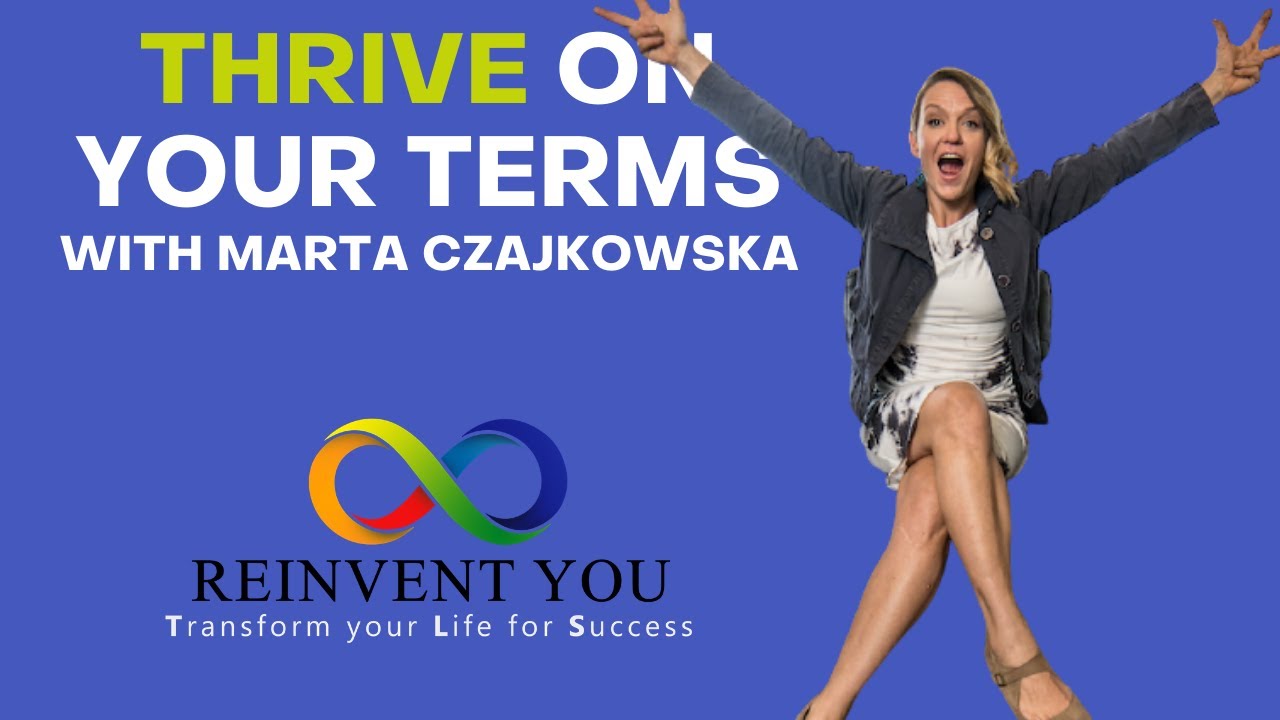
Marta Czajkowska, a Polish rock climber and Navy SEAL trainer, talks about how climbing taught her presence and resilience. A near-fatal fall that broke four vertebrae shifted her to coaching others. She breaks down how to recognize limiting thoughts, use body sensations to read emotions, and build courage through action.
Chapters
Oh, okay. As a, as a child, I just always felt like an underdog, like I wasn't good enough, I wasn't the smartest. I had some really gnarly experiences in school with my teachers. I am absolutely 100% sure that rock climbing is by far the best thing you can ever do. Climbing has taught me is, is a lot of the principles we use in coaching, but in the way that my body has to deal with it. It's sort of like I call climbing meditation with a gun to your head. Be present, be present, be present, or you'll fall and die.
Ladies and gentlemen, welcome to the Reinvent You Podcast. My guest today is a transformational coach and a lifelong rock climber. She combines her climbing experience with her mastery coaching. She has helped train Navy SEALs. Can you even imagine that? Navy SEALs at Yosemite Valley And she is also the founder of Rock Climbing Life Coach. Today on the Reinvent You Podcast, we are going to delve into mastering your mind, overcoming your fears, creating purpose, and how easy it is to connect with your body. Ladies and gentlemen, I want you to welcome my guest today, Marta Czajkowska.
I can't believe you spelled my name right and pronounced it well.
You know, that's— it's a tough name. It takes practice. So Marta, welcome to the Reinvent You Podcast. I'm so excited to have you here and thank you for agreeing to come on the show.
So, and this, this, uh, amazing welcome. I'm like, whoa, I must be somebody, someone important.
Absolutely. You, so you are so important. So, Let's, let's delve right in, right? So I like to start off every episode with, with my interview guests as far as, well, who is Marta? And what's your, a little bit of your story? And why is it that I had so much difficulty pronouncing your name? Because it's not like you are from the States and your last name is Smith or Jones, right? So just tell us a little bit about who Marta is today.
It's a, it's an interesting question because it's like, who am I? Holy smoke. So why don't I give give you a little backstory, and then, um, that will bring me to today. I was born in Warsaw, Poland. This was the time when Poland was still behind the Iron Curtain. And the more— the, the older I am, the more I appreciate that, actually. What we thought was us being underprivileged or not caught up with the world was actually such a blessing, um, growing up without having a lot of things and, and having to rely on ourselves and having a dream. You know, for me, a dream appeared when I was in my teens, connected with starting to rock climb, and I wanted to go and see the world and rock climb. And, uh, and it was, it was really hard for me to do. I didn't have any money, I didn't have any resources, but that really drove me to to accomplish it against all odds. I will go and do it. Yeah. So that brought me to Yosemite Valley. I was 20 years old. I had about $200 to my name and I was out to experience the world. And that was sort of the beginning of my story.
Of your story. Wow. So just, just jumping into something I find to be so fascinating about you. So I read on your website that when you were younger, that you mastered judo, right? And so your coach wanted to train you for the Olympics, and Dad said no. Tell me a little bit about that judo journey. And do you even still practice? No.
And it's just an interesting piece that showed that, OK, as a child, I just always felt like an underdog, like I wasn't good enough. And the smartest. I had some really gnarly experiences in school with my teachers, but yet I had talents. And I think this is, this is everyone, right? You know, I didn't know it, but I had those talents. And I, and I always had a pretty high athletic IQ and talents with to do with my body, but I didn't know it. And so as I was a little kid going to judo practice, and I had no idea that I was any good, At some point the teacher approached my dad and he's like, "She's got the most potential out of all the kids." But, you know, I was 7. Like, I had no idea about the potential or that I was any better or whatever. And then my dad said no. And I asked him later why. And he said, "Have you ever seen what Olympic judo ladies look like?" Right? So that was his answer. And I was like, "Okay, I get it." Wow.
So, so what did that mean? Like, let's, let's interpret that. Have you ever seen what real judo women look like? So your dad didn't want you to what?
I think he just thought they weren't very feminine, or, or, uh, I didn't— never felt that he was judging my appearance. That's not what this was about.
Okay.
It was more about maybe his fears. Now that I think that you know, thinking of what he thought that the path that this might set me on, you know.
Absolutely.
Path of greatness, you know.
Okay, I get that, you know. And just, just in sharing something about me, I had, uh, my friend Heidi on the podcast a few months ago, and Heidi is a tarot card reader. And I always feel like our parents are trying to protect us, even though if they don't know the right words at the— at that time, there's always a real protective kind of motive for doing that. So I'm sure your dad had his reasons. And the fact that I couldn't openly discuss things with my mom, I didn't realize until after Heidi pointed some things out. And she's like, your mom was just trying to protect you by not opening the door to more scrutiny and judgment. And so there are lots of things that we don't understand as young children. When you look back on it, you go, oh, that's why he did that. Right. So yeah, so totally get that. So Marta, I am inspired by you because especially like your strength, you're very, very strong. And I'm so inspired by your climbing and your whole background in that. The only climbing I've ever done, which probably isn't even climbing, it was rappelling down like a big rock in Mexico, you know, with all the gear and everything, because we were snorkeling, we went down, you know, into the cenotes, and then the third part of it was rappelling down, you know. So if someone were trying, they wanted to start rock climbing right today, where would you suggest they start today?
Well, first thing I want to say about this is that I am absolutely 100% sure that rock climbing is by far the best thing you can ever do. If you're thinking about, if it's, you know, for me when I was a teenager, somebody mentioned the word climbing, and I was like, this is it, that's what I'm gonna do all my life, you know?
Wow, yeah.
So for whoever is listening, if you feel like you might like it, go and try it out. The reason why I think it's so good— and you know, Ernest Hemingway said there's only two real sports that men do on earth, which is bullfighting and mountain climbing. Wow, okay. Because they're the only ones that have— the other, other ones are all games of men.
Yeah, wow, I didn't know. I've never heard that.
And the reason why I say this is because it conditions your body in so many ways, in such complex ways with balance and strength and perseverance and dealing with discomfort. And it does the same to your mind.
Okay.
So in that way, it's incredibly complex at the same as all-encompassing of human nature.
Right. Oh, that's beautiful. So I'm assuming that rock climbing has provided you such an enormous foundation, an incredible foundation, right? I feel like it's one of your superpowers, one of your unique gifts, you know, that makes you different. How do you incorporate that whole philosophy with leaning into your edges, with your rock climbing, with your coaching? Yeah.
You know, and it's, um, I do it all the time. I do it in every session. Is the real answer. What climbing has taught me is a lot of the principles we use in coaching, but in the way that my body has to deal with it. It's sort of like, I call climbing a meditation with a gun to your head. Oh, that's good. Be present, be present, be present.
Or you'll fall and die.
And there's so much more as well. So presence is number one thing that is obvious. Next thing is the idea that we have about ourselves, who we are, how fit we are, how hard we can climb, right? We see the same stuff with anything we do in life.
Absolutely.
How good am I at my business? How good— like, how much more can I push myself? What are the ways that I stop myself? From excelling, right? And so rock climbing just shows it in the smaller, more contrived environment where you can kind of see it under the magnifying glass. The way I look at it, I see it in my climbing and I see it in all the rest of my life. And so if I know how to fix it in climbing, I know how to fix it.
Yeah. So did you ever have a part of your practice where you took people out and like climb with them in person? Because I know with COVID and everything, we're all on Zoom. But was there ever a time you were doing one-on-one coaching in person with climbing as part of it?
Yeah, I, you know, I spent many years teaching climbing and then I spent years coaching. So I've done both things and now I'm looking forward to a time where I can actually bring it together. Circling back to your previous question that I didn't answer about how does a person start rock climbing, because this is sort of combined. Yeah, um, basically going to a local gym where you can, um, where you can start, meet people, start climbing, that's a great way. It's also the way how I would start climbing with a client, send them to the gym, maybe go with them first couple times, show them some stuff so they can start getting in the process of it. Because let's say in the first 10 times you're climbing, you're just dealing with the physical sensation and the fear. So in order to take this deeper, you need to be able to master that first piece, which that in itself is super helpful for a lot of people because a lot of people have very physical sensation of pain, of fear, right? So that's sort of the first layer of the cake.
Okay. Okay. Yeah, that makes a lot of sense. Like when I think of, you know, climbing even in a, even in an indoor space, I'm a person who needs— in order to jump, I need to know that there's a bit of a net. And so for me to start climbing, that would be the perfect place for me to start because I would go, okay, the floor is like 12 feet down, hopefully, maybe no more, maybe 20, we'll go 20. The floor is 20 feet down and surely there's some mats and stuff and there's people all around. And so for some people, like, I love that you suggest that it being like a rock climbing gym, because that like even I would, would be willing to do that. You know, that person, right? What about that person that comes to you and says, no, no, I'm an athlete. Let's go outside. Let's really do it. Like the very first time, because they're athletic. Let's say they're a college athlete and they go and you look at their physical fitness. Could you take them out there day one?
Of course. And, and this is, um, the trips we've done with Navy SEALs look just like that. These people have never climbed before. They're obviously incredibly, incredibly capable. They learn daily and so on. And so they came in, and normally stuff that takes us up to 2 years to teach a normal person, we would do in 3 days.
Wow. Okay.
So, um, with someone who's capable, uh, the big problem with people that are physically active and capable but don't— are not trained in the learning and failure is that they think they can do it. And so that's the worst, the worst piece is the false confidence, right?
Yeah.
So you kind of need both. A classic example of a university athlete coming in would be that they would get their butt kicked, like, right?
Right.
Because they think they can, but they have no idea what they're doing.
Right. But yeah. So the fine balance between I can totally get out there and do that, right? Because then they're not timid. Unlike me, who was like tippy-toeing. It's like, are we close to the edge now? Are we close to the edge? What? Why are we so close to the edge? What do you mean we're going over, right? And so finding that, that, that, that balance of, well, how confident do I need to be? I bet that's tough.
This is a brilliant, brilliant question because it's something I never thought of. So, okay. So a person that's not confident enough and all I have to do is be like, oh, come on, you got it. Just try it. Right. You know, it's, it's a, it's hard because their timidness is in their way of learning. Right? And now you have someone who's like, "I got it, blah, blah, blah," and they thrash, right? And they get— right? So it's both having the confidence and having the open door to receive feedback and listen and actually try things in the way that is technically sequenced, right? "Try this. Okay, good." Right? So ability to take feedback, I would say.
Okay, okay, that would be the deciding thing. Okay, nice. So I don't want to gloss over— I know everybody's wondering right now, how did you like get the job of training the Navy SEALs? That's badass.
Yeah, I cheated. I, um, I was so lucky to be friends with these guys that had Navy SEAL training contracts, and I just begged them to take me on trips. And because there was no women, there was no women ever in those training camps, right? So it's man's world. And so I was like, come on, just let me go, let me go be part of it. And so, um, you know, I was, I was so annoying to those guys that they finally started taking me. And, and it was great to see how You know, these high-level guys, military guys, they are so— they are— they can tell a person that has a skill. They can just tell, like they live in the world, skilled world. So they were like, she's got skill. Okay, no problem. Yeah, he didn't have to question, you know, where I came from or whatever.
So, oh, that's so good. So I want to delve into some of your personal experience again because The stuff that you do is so adventurous. You know, I would assume that adventure is one of your top values. Am I wrong in assuming that?
Um, I would call it anarchy and freedom.
Whoa, not even adventure, anarchy and freedom. Okay. Okay. So I like, you know, the, the original, the, the first version of my podcast was called Work That Out. I still love to integrate that theme in my show. And I love to know what is my guest's work that out story. Now, of course, if you go to your website, you know, looking at your quote, the best way to start massive change in your life is to have a near-death experience on your website. That's so cool, but so scary. What has been your work that out moment? And if that's not it, Please tell us about that near-death experience as well.
Um, I think that, that, that was really it. So I was recently reflecting on my life and looking at all the different pieces that made me who I am and uniquely suited to serve people, um, the certain people that might connect with me, right? And, um, the big part was as we would say in the hero's journey, leaving the village, right? Yeah. There was a moment when I was 18 and I saw a video about Yosemite Valley and I said, that's where I'm going. I am leaving Poland, Warsaw, Poland, and I'm going, right? And, um, me now— this is 20 years ago— me now, I have so much respect and I honor that person in me that did that. You know, like, I didn't— I didn't— like, it was so scary, but I was so driven that by the idea that I had in my head, I didn't know what it was, but I knew I was going.
Yeah.
So that was the first— the beginning of my journey, I would say. And then about 5 years ago, I had a secondary change, secondary paradigm shift that that came. At this point, I have been traveling and climbing and sort of living my dream for years. And, and I had— I was married. We had just bought a house. We had just bought a TV and a couch and a TV. And my friends came over and I went with them to Mexico for Christmas holiday. So it's been 5 5 years as of this month. As of— Trey, as of today. Really? Okay, okay. This is—
there's something in that.
December 14th. So 5— imagine that, you guys. 5 years ago, December 14th, I had bought this house. I have a couch, I have a TV, and I'm like, let's go to Mexico with my friends for a couple, couple— like, we're going for like 4 days. Yeah, day 2, I fall. I break a hold and I fall unconscious on the ground. As I wake up, I'm like, holy smokes, I'm still up on a mountain. My friend has to, um, rappel with me, and there's no car because the whole story, right? Yeah, you know, I regain consciousness, the car comes, and we're looking for a hospital. There's no hospital. So we drive, you know, towards Ensenada, blah, blah, blah. No hospital, no hospital. Finally, I'm like, I think I'm fine. I'm all, let's go to American hospital because I think that might be better, you know?
Yeah.
And I end up going to an ER in Santa Barbara where my friend was a doctor and she's like, just come on in, come on in. And I go in, and he's a good climbing friend of mine, and they do all these tests on me. And he comes in with the test results with this huge smile, and he says, you know, this couldn't have gone any better. Your muscles are so strong in your lats that even though you broke 4 vertebrae in your back, it's completely inconsequential. You will not like it will not affect your disc, it will not affect any of your mobility. Um, and, um, so this, this was kind of the outside story. Meanwhile, on the inside, as I'm in the car getting driven from, from middle of nowhere Mexico to this hospital, I'm like, okay, my life's gonna change completely now. I clearly know this, it's never gonna be the same again. So what do— like, how am I going to live it? This being the new life, how am I going to live it? How am I going to live it? And from this, this idea of working with people, I knew at this moment, I need to pass what I've been learning on. I need to help people find courage, leave the village, right? And And so, so that was this process. And the first thing I did after that is I went home and told my dear husband that I was leaving him and I had to go on to my new own adventure. So yeah, it was, it was like that. I was like, I know I have to do it.
There's so much in there I want to unpack. In your story. First of all, 3 things. How did you— like, I— like, were you climbing down and did you just like miss the rope? Did you miss a grab?
No, my foothold broke. So as I'm climbing, I was actually climbing down, and as my foothold broke, I, I kind of fell. I scraped my belly and I fell. Okay, about 15, 20 feet. I'm not sure. Okay.
Number 2, you, I feel like, I feel like you're a walking example of what it really means to be physically fit and how you can benefit from that. Like you showing up at the emergency room, you got 4 vertebrae broken, but because you're so strong, your lats are so strong, it did nothing to you. It was like any other person. What would have happened to someone else who wasn't as fit as you are? In your opinion?
Yeah, I mean, I, I, you know, I'm not a doctor, obviously. I didn't— yeah, I don't— I couldn't tell, but potentially someone with really weak muscles, it could be up to severing the, the spine, the column, the spine, right? Or, or broken vertebraes that in, in, right, in turn affect your disc, which is Mm-hmm. You know, it could be potentially really painful for life.
Right. Right. Wow. And then the third part is, you know, getting into a little bit of, you know, we're, we're talking about purpose here, you know, creating your purpose in that moment. I know that there are things that can happen in your life where the light bulb just comes on. Let me know, like dissect that moment. Where you're like, like a little more than like, you know, if I'm going to, you know, kind of spread my message to other people through coaching, like, how did you know? What were the signs? What was the validation that you were so certain? You walked in the door and said, hey, guy I married, we're done.
Yeah.
Walk us through a little bit more of a dissection of that process and how you really knew it was time.
Um, I think it's a great question too. I think, uh, what it was is that there was quite a few things that was happening internally that I knew about that I wasn't being courageous in my life with. Um, and for example, traveling and climbing at that point in my life had become easy. I wasn't growing in that. I was parked in where I was. It looked great from the inside, adventurous you would call it, but for me it was bread and butter. That's what I do, teach these people this, it's done, you know. So I, I felt like I was parked and I was, um, sort of in my head, I remember in that time because we had just finished the house, going, is this the end? Like, this is what I worked for all this time? And I knew the answer was not. I knew it wasn't, but I had invested so much in the moment, right, you know, to get the house and the couch and all this stuff. And I knew it, you know, I was like, no, there's more, and I need to do more. Like, I'm gonna be unhappy, depressed, or drunk if I don't. Yeah. Wow.
Yeah. And so, you know, I find that that's so hard. I mean, that was hard for me to take action in doing something, you know, just really jumping. But I find that especially with a lot of my clients, it's easy to just keep doing the same thing. It's easy to keep doing, okay, all I really wanted out of life was to have a job, you know, a 9 to 5 job, have a roof over my head, food on the table, have love in my life, all those things. But then it's like, how can you leave a perfectly good relationship? You weren't being abused. You, you know, there was none of that. I mean, it wasn't necessarily that it was loveless, was it? I mean, you love them.
We had, we had, we had and still have a great relationship.
So was it that you felt like, yeah, apparently, cause he's one of your best friends. Yeah. So was it just that you felt like you individually, I know you said you weren't growing. So was it that you weren't growing together or were you just kind of like, kind of holding yourself back to his level?
So it's, um, yeah. I wouldn't necessarily even think that. Maybe some people would, but my, my case was that I was letting it be comfortable, and that situation was comfortable for me, right? So, and I knew that there were things that I needed to do without this. I had to get out of this comfort, okay? And it was, for me, in that moment, it was financial. Um, I it— we kind of had an easy financial agreement where, um, my ex-husband used to and still does work a lot with movies. So he would work these short contracts where he made a lot of money, and he was like, there's no point of you even working because we can just have all this time off, right? So for a long time, I was feeling like I wasn't being on my own.
I see.
And so there was really no way to do this fake, fake it. Yeah, I had to go out there, be on my own like I was when I was 18, right? And, and, and then I knew also that it wouldn't be enough for me to go out there and get a job and be on my own. Yeah, I needed to do my purpose and be on.
Yeah, because you'd have to say that in your core, in your being, this was the person, this was the identity that who you were, and then through your marriage and through kind of, you know, coming into the safe area of being married, that's how you knew you were no longer aligned in your purpose, right? Wow. So how would you translate that to someone who's not a rock climber, maybe someone who's not even married, but let's say someone in their late 20s, early 30s, who is still like, I have no idea what I have been put here to do, you know? It's the thing, 2021 is right around the corner. What would you say are some quick action steps that people can do to find their purpose?
Yeah, you know, I, I love talking about this stuff. I love talking about it because I believe that, um, every single one of us can, uh, create something in their life that really drives them, that really excites them, that really makes them feel like they are in the right place, right? And I say create because I don't think we find that stuff. Um, it's possible that someone's gonna say rock climbing and you're gonna be like, this is it. But it's also possible that that will never happen, and then you will need to look really deeply inside of yourself and see what it is in you that can really get fired up and where it is. And even if it doesn't feel like it's the end-all purpose and I'm gonna make a life of it, as we are courageous and actually follow what our body tells us, yeah, and follow that intuition, and we start acting however hard and scary it is, we find that that action creates more, more engagement, more buying into what it is.
Absolutely. Do you find that purpose generally starts in childhood or against it?
It's interesting, you know, like just when you said that, I was like, no, mine was against what they tried to give me in my childhood. So in opposition of, right, you know, stable life, have kids, blah blah blah. And I was like, uh-uh, I'm going the other way, you guys, right?
Where did that come from though? Why wouldn't you just go with what your parents wanted? You know, why wouldn't you just swim down that stream?
Yeah, yeah, it's very clear to me because they didn't look happy when I look at it.
Oh, I see.
And I mean, not just them. I'm not judging that. Yeah, their lives are miserable. I remember looking at the world going— and I think that has to do with You know, the Iron Curtain and the Berlin Wall fell when I was 8. So my world went from this is the rules to no, these are the rules. We were wrong. And I was like 8 and I'm like, you guys have no idea. This is all made up. Right.
Right.
So from then I was like, everything that we're in is made up. There's nothing stable. And why don't I just do whatever I want? Wow.
You know, it— what are the characteristics? Like, where does that come from? I know you saw the evidence of, you know, like, I remember, like, I was, I was on someone else's podcast and they were like, you know, how did you become a badass? I was like, am I a badass? I didn't know when that became about, you know, but like, when did you— like, the characteristics, what are the characteristics that you think you embody? That kind of has become a part of your superpower as a coach. What are those characteristics?
Perfectly timely question. Um, I was hiking through the woods thinking about that. And then the, the, the, the first one is that, um, in— I am not willing to follow the rules that are given externally. I'm not. I will follow some rules if they're like, if it makes sense, but I, I, I don't usually get on board in my heart. Okay, I can do it for someone, but I internally, it's all wide open for me. I don't have hang-ups that have to do with that. So this is one. Um, number two is action. I was, uh, when I was young, I, um, I had this friendship and we used to just do a lot of stuff together.. And this has been a superpower for me all my life.
When—
so then when I had the near-death experience, I was able to go straight and act on it. I know what I'm doing. This is what I'm doing. Here's the papers, honey. Right here, honey. Right. Um, and so, and I see it daily when I, when I coach with my clients. I'm all— that ability to take action even in the face of doubt or not knowing is, um, is so crucial because it at least gets us out of where we are, and it just changes the environment. Now we have to deal, now you have to get inventive, now you can turn on your creativity, right?
Yeah.
So teeny step, teeny step.
Oh my goodness. So thank you for sharing that, you know, and I love that you were thinking about these things. So if we're going to pivot a little bit into overcoming fear, right? We all know that failure is a stepping stone to success, you know, and outside of your climb, you know, when have you massively failed, didn't see the light, and went, holy shit, that happened for me? Can you walk us through an example of something that actually happened in your real life?
—of a big failure?
Of a big failure. But because I feel like, you know, you're talking about fear. Get up and do it. You know, I know I fell and broke 4 vertebrae and stuff, but I know what I'm doing now. You know, most people would be like, that's a massive failure. I'm not rock climbing ever again. You know? So is there another example in your life, like even if it's in your business, you know, like, have there been— have there been any moments where you're like, damn this, I'm, I'm, you know, I, I'm gonna go back to my 9 to 5? Not that you had a, you know, your more traditional type job. When have you massively failed?
Thanks for this uncomfortable question. You're welcome. You said it's gonna be fun. You didn't say it's gonna be uncomfortable. Um, oh, you know, it's, it's so interesting. I'll think of something, something will come to me. But the first thing that came when you asked this was that, um, when we watch the world's best climbers on video— anyone of you can go now and watch world's best climbers on YouTube— what they're going to show you is the guy or the girl failing 99.9% of the time. They're going to show you try number 517. This person has tried something so many times, right? Right. So what sets up a high achiever from someone who's not is how often and how much they're willing to fail, right? So for me, I'm an average good climber. I will fail up to 30 times. That's how much emotional resilience I have for failure, right? And then the world's best, they fail 500 times, right? Deal with that. Yeah. And so that really helps me look at failure as just the process, really like a process. And it doesn't make it comfortable ever. Right? It just— everything still comes up. When failure— what comes up is excuses, right? Bargaining with reality. Yeah, all that other stuff. But it doesn't go away. But I know that the mark of an expert is how many times we can get up and go.
Wow. So all that to say, you don't believe that you've massively failed. You've learned. You've fallen down, and because of your resiliency, you've gotten up every time. So is it that you don't view anything, any of your failures, as failures?
You know, I think I do, and I'm now thinking of times in my life when I didn't get up. I, um, I, um, was in the film industry at some point, and I made a documentary, and I, um, I just didn't have the resilience to keep on promoting it as it should have been promoted. And so I failed in get the, the, the movie is wonderful. However, I didn't get out enough to, to spread that message. Okay. Yeah. So looking back at that, um, I, I can see what I was lacking. And right now I'm like, I will never let this happen again. I need to be getting up. Get up, get up, get up.
Is it just because you told yourself that, or, or what was the difference between you having such resilience with something else and not having it with that? Is it just— so what did you learn from that? Just, just saying, I'm never gonna let that happen again?
That I realized that it's on me and in me, that everything that, that makes me not do it is an excuse. Right? And it's usually driven by not wanting to be uncomfortable. It would have been uncomfortable for me to keep on promoting that film. And so I quit. Right? So to me, that's a failure. And, but so then I learned and I see how I did that. And I'm like, I will not go there. Every time I want to go there in my mind, I'll remember that moment and be like, no, guess what? You don't have a way out. No, you're gone for a while. Wow.
I love that. This is so inspiring, you know, and I, like you're saying, I can talk about this stuff all day as well. So now I want to, you know, talk about mastering your mind. In my next podcast episode, I talk about, you know, some of these, some of the thought spirals that we can sort of get into. I get into, you get into, we all get into these things that keep us in a certain place from maybe not taking enough action. Right. So if I'm still having the same thoughts I was having in 2020 as 2021, approaches, then generally speaking, my life will be the same as it was in 2020, right? That's what we seem to think, you know? Yeah. What would you tell someone? Because we know, you know, not everybody has the jargon of limited beliefs and all those things, but what would you tell someone who right now might be listening, how to overcome some of the thoughts they have in their mind, how to find that resilience to get up when you've fallen 77 times and they keep going? How to master their mind and their emotions. If they want, if they took nothing else from this episode, boom, they can take this into 2021. Yeah.
And I do think it's the most important thing. Absolutely. I think we can effectively change the world by changing our mind, um, in that way. And I'll tell you a story. I'll tell it to you in a story. And this is also having to do with failure and climbing. So A few years ago, I was in Greece and I was trying some— the route that was really overhanging and really, really difficult, right? And so I was trying it, meaning like I'm doing it every day, trying, falling, falling, falling, falling, learning, falling, right? And I started getting into a really negative mindset and I started being, you know, like— and I noticed it. I'm not good enough. I'll never be good enough. I should do this and this and this. I blah, blah, blah, blah, blah, blah, right? My shoes are wrong. The weather's bad, right? This was— this is where I was at, right? And I remember this particular afternoon, I was coming back from the climbing and I stopped. I was on a little— imagine me on a little scooter and I stopped. I'm looking at the ocean going, this is enough, enough of that already. Like, there was a moment where I decided I will not give in to these thoughts. They can keep on coming if they want to, but I am putting a wall, right? I will not act on these thoughts. Yeah, right. And so this was, this was a very practical moment to me. I didn't yet know how to proceed, which I'll explain to you how, but, but having that moment. So basically, if the pain of the experience is painful enough, is big enough, we'll change our mind. We'll be like, okay, I need to start changing my thoughts, right? Right. And I didn't yet know back then how to do it, but slowly I gained some tools. And the tool I really love to use lately is to seeing a thought, right? Whatever that thought is, I'm not good enough, or some thought that we don't like, right? And then seeing how it makes us feel, how it makes us act, and what are results of these actions? So really seeing what the impact of these thoughts is physically in our life, right? Right. Maybe if you want to be dating, I'm not, um, if your thought is I'm not very attractive, the most likely outcome and results is not meeting anyone, right?
Right, right.
So then I take that and then I say, okay, what is the result I would like to have? Right. One result I would like to have. Okay. Meeting people. Yeah. Yeah. Okay. I want to meet people. How do I need to act? What are the actions I need to take to meet people? Yeah. Well, I need to reach out, blah, blah, blah. Go on the app, go outside. I don't get a dog. I don't know. Dogs are great. Yeah. How do I need to feel in order to take these actions, right? In order to feel that way, in order to take these actions, I need to feel energized, like I put time into my exercise and I eat correctly, right? And then, okay, what are the thoughts that will help me do that? Yeah, generating that, right? Reverse, we reverse engineer these thoughts. And okay, and so for anyone who's listening and you're gonna try it at home, don't design a thought, I am attractive, because there is a big chance that you will not get on board of this. If the thought is a boat, you won't be able to get on top of that.
You need a dock first, huh?
Yeah, so, so I like designing thoughts that are entry-level That makes sense. Absolutely right. So for example, some people think, I am funny. That would be a thought that someone could have, and from that thought design these actions and get different results. Oh, I love that. Once we get different results, we can start, um, we see change, there's movement, and we can start, you know, sort of getting up on some higher thoughts. Right, right. That's perfect.
Thank you for that really, really realistic example. And so in order to be that self-aware, right, I know you place a huge emphasis on connecting to your body, because I know what happens in the mind automatically shows up in the body first, right? So how can people get to know their bodies and themselves more? How can they connect better to their bodies so that they can identify these things and, and other things that can set them up for success throughout their day.
Yeah, I think the, um, something that really plagues us as humans is that we're averse to feeling our feelings, right? So it's, it's, um, and we all have it. I have it, you have it, all of us have it.
Yeah, yeah.
You know, the best, the best example is when you hear some news and you're like, I don't want to deal with it, right?
Turn that off. Yeah.
Right, because it's, it's challenging. So I'm not saying to feel everything that comes your way. That's not what I'm saying. What I'm saying is that the stuff that's important, the first step is daring, having courage to open the door to actually feeling it, maybe just a little bit. Yeah. And when we have the agreement to feel it, then we'll— and we're sitting, you know, in silence and without distractions we will also feel it in our body. If we start listening, we'll hear, right? And so all of a sudden we'll have an emptiness in the chest or tightness in the heart, or we'll have a tingling in the belly, right? Right. And so as we tune into these body sensations, we don't need to change them. We don't need to do anything about them. Is we start noticing that they are there. So let's say I'm really sad and I go and sit and I'm okay, I'm going to start feeling my feelings and I'm going to listen to my body. What I realize, for example, is that I have a certain tightness in my throat. There is a sensation of tightness and sadness in my throat. What that does is it helps us realize that not all of me is sad. There is some sadness in my throat. Okay. So I'm not overwhelming sadness. Part of me feels it. And so this is the first step of separating from these overwhelming feelings. It's allowing them to be and sort of realizing where they are in the body, right? Oh, I love that. Everybody can do it right now. You guys can all do it.
Yeah, yeah, yeah. That's something that I do. You know, and which we do in our mastermind group is like assessing your body. You know, where are you on a scale of 1 to 10? You know, every one of my clients will do it. And so I love that you, you integrate that. And so for me, when I wake up, if I'm not at my general number, it's like an 8, 8.5, because a 10 sometimes it's like my 10 is hanging from the rafters. I'm so excited and dancing on the side of the road and there's not even any music playing. You know, but I love—
you guys, when, when, when, when Trey is a 10, we have to cut her off sometimes.
Yeah, I know, because yeah, and that, that really is my 10. And so I love how, how much you stress that as well, because it just shows up every day, all day long, and we can really be on top of it. Okay, so just a couple more questions before we wrap up. So now this is a fun question, I think. Because you're so adventurous, because, you know, your values are anarchy and freedom. What are you—
I just made it up on the spot.
It sounds good, but everything that you've said falls dead into that, really aligned. What are a couple of things that could exist on your bucket list that you just would love to do before, you know, you leave this earth? What are a couple of those things?
I haven't asked myself that question in a long, long time. Yeah, I feel like anything that's going to be on my bucket list is process-oriented. So, so that would mean is to go through the process of achieving something. Okay, right. For me, as opposed to like If you were like, do you want to climb the Everest, right? I'll be like, um, yeah, I'm interested what happens every step, sort of the deal, right? What's going to happen here? What the resistance is, right? Um, in me, which are the parts of me that, that, that will help me, um, understand myself a little bit more. Um, I, I think I was done with my bucket list in my 20s. I was like, I did everything I ever wanted to Wow. Yeah, I did so much stuff. So following that, I would like to have an experience of climbing a grade. We have grades in climbing that I've never climbed before because that would— not because I want to have climbed it, but because I want to have the experience what it teaches me in the process.
Right. That's so cool. You know, when I think, when people ask me, you know, the bucket list question, like, oh, I want to go to Amsterdam. Oh, I would love to go to Germany and drink German beer, you know, because I love this. And you're like, I want the process. You know, it's not that I just want to climb Everest. You know, I want the whole process of moving through the resistance. And but like, it just shows like the quality of your experiences. Experiences is evidently very important to you. And so it's like, like you are motivating me right now to live more boldly. You know, I think of my experiences again, traveling, but not really doing much when I travel, we're going to go drink beer or something like that. But now it's like, how can I lean more into those fears and the true experiences of what is it that I can learn from this trip? How can I push my push myself out of my comfort zone. And you've been doing that since you were 20. That's amazing.
Yeah, and I think that just— that just— thank you. Um, it just shows how much this is my comfort zone. Yeah, drop me off anywhere in the world with $10 and I, I can figure it out. Like, it doesn't scare me all that much, right? So, so now I kind of done that, so I want to go— I want to go depth. I want to go in and I want to like something on my bucket list is figure out how to help anyone in the world find their purpose. Like, I want to have a recipe for the most resistant and bored person to tap into their— the, the spring of life.
Nice, that's so good. You know, I had, uh, a friend of mine on the podcast, Faith Thomas,. And you and Faith have so much in common because Faith likes to road cycle. She also will go camping by herself. And I'm pretty sure I mentioned that my friend Marta has a van and she'll, she, you know, that van is so souped up. She can live in it, you know, you know, it's fancy, fancy. And then she'll just go park in some park and be okay with that. And the first question I ask is, what, do you have a gun? What if somebody comes up to the vent, you know? And you're like, oh my God, you know, that, that, no, that whole saboteur in your brain. But I would love to lean in to being more adventurous, to being courageous, more courageous, to be more bold, because I know that I show it in different ways. So last question before we figure out how to connect with you: what if someone else wants to lean into their boldness, into their their courage, their strength, like not living a mundane, mediocre, average kind of life. What would be your advice to me and to all those people who are wanting the exact same thing?
This is like, this is why, this is why I'm on this earth. Um, you know, sometimes we have a hard time knowing whether we actually want to do something or not. Sometimes there's like pressure or like, do you want to go skydiving, Trey? And you're going to be like, well, I should because it's adventurous, but I don't know, blah, blah, blah, blah, blah, blah. Right. Yeah. So to do any of that stuff for the sake of having done it, I would say toss that out. If there is a piece in you that says, I want to say that I have climbed the Everest, toss that idea out. It's not going to help you anything. It might help your ego in some way or whatever. Put on a resume, right? Train Navy SEALs, whatever, right? But yeah, but really, in the moment when you're posing that question, I want to do something, go into your body and see what the answer is in there, right? Because your body will know. I don't know how, I can't explain it, but your body will know whether it's just excitement and like, um, where you really want to do it, right? And when you feel that in your body, the yes—
I know where that is.
When you feel the yes, go and do it. Don't question that. Don't come up with excuses why— there's always a million excuses why not to do something. There's some, right? As soon as we start thinking about it, we can find, I don't have the money, I don't have this, I don't have that, right? So whenever you, you, you feel that yes, go and try. Even if it's a teeniest, teeniest step, try it. Go on that one overnight camping thing. Right? Yeah. Or, um, whatever it is, see what it's like and see what that opens for you. Because as soon as you take one step higher, you, you have more, you see more, right? Yeah, yeah. Check with your body, see what it is, right? And then you can take that other step. So don't let other people tell you what it is, is I guess what I'm, what I'm getting at. Because we are like, it's so often that we're getting like, you should do this. You know what you would love is this. It's like, no, go in and find out. Say thank you to all the suggestions and find out inside, however it shows up, and have the courage to trust it.
Oh, wow. Yeah, that makes so much sense. You know, because even though we're both coaches, there's just so many times where I go, I never thought of that. Now I'll tell a client all day long, but For myself, you need people to point out those blind spots, which I'm so glad, you know, that, you know, we're masterminding together, you know, so that we can keep pushing each other to a different level. So thank you. Thank you for that. This has been so great. This has been a conversation that I haven't had like probably ever. And I love that, you know, one thing that some of my friends would say is God, you ask so many questions. You're so nosy, you know? And it's like, these are the kind of conversations that I want to have because they're so thought-provoking. Like, just our time together right now on this podcast has already got me thinking. My wheels are turning and I'm like, okay, what can I go out and do now that leans into my boldness, that makes me more courageous, that walks more boldly into that fear? I love that. Thank you for this. And so right now I want to wrap up with how can the audience connect with you, which I know one of the best places is where I find so much value is on your YouTube channel with your 2-minute videos, you know. And so tell us a little bit about, you know, your whole— your motivation for creating those.
And then tell us, you know, where your preferred methods of contact Yeah, I was, you know, when I was setting up my coaching business, I realized that the best way for people to get to know me is to see me through video. And so at some point I started creating these. And also I'm a really brief person. I like things to go fast. Right. And I think that a lot of audience right now is like that too.. And so I came up with this idea of doing 2-minute videos, um, and then I was sitting there thinking, how do I, um, how do I talk about what life coaching is, give people value, and, um, and also have fun in the process of doing it? Because that's really important for me. When I commit to doing something, I can be 100% 100% committed as long as my body tells me hell yes. Yeah. Um, and, uh, so I was sitting there thinking, how can I get on board completely with this? And then I decided, oh, it's going to help if I'm doing little animations and little drawings, and it's going to make it funny, and, and I'm gonna stay engaged, right? So, um, yeah, anyone who's interested, go on my YouTube. It's called, uh, Coaching with Marta. And my videos are called Two Minute Videos for the Best Life, and everyone is a teeny little tip on how to do something in life. Some, some are about how to have better relationships, how to communicate better. Some are how to change your thoughts, and there's one coming out every week.
Oh, that's wonderful. I love— I'm subscribed to your YouTube channel. Guys, go and subscribe to her YouTube channel. The videos are so entertaining and it is always a good message. I especially am drawn to the stick figures. I love them, love them. I know I bring that up a lot, but I love the stick figures because they are so funny to me. You know, no, you did it. You are the boss. And it is just this twig of an arm, you know. So, that is the way my psychology works. You know, I am so easily entertained. So, guys, absolutely check out Coach Marta. She is a total badass. I think after COVID, you know, after we get the vaccine, which people are starting to get vaccinated, you know, after this— today, first one! I know. So after this, we can probably get back to a point of doing more things in person. And so I would love to do a climb with you. Now, you know, and look, the first thing I was gonna say, but not a real big one, you know. Yeah, yeah, yeah, careful what you wish for there. I know, I know. So I immediately follow up with not a big one, you know. I don't I don't want you to scare the shit out of me, you know, that kind of thing. But I would love to test myself a little bit with you. So that would be so badass. I would love the experience of that.
That would be so much fun.
Yes. So Marta, thank you so much for being on the podcast today. The value that you provided today, I think is absolutely priceless. So thank you so much. And guys, follow Marta on her YouTube channel. She's on Facebook, she's on Instagram. Instagram. She's everywhere. She's a badass coach, and if you want to work with her, she is a great coach to work with and take you through your shit, through your edges, to find that glory spot, right? To find your Treasure Island, that utopia. So, Marta, thank you.
Thank you so much, and I'm so impressed by your skills, by how you, how you do it. I don't know how you do it. You are amazing.
Thank you, Marta. Thank you. Thank you so much for listening. If you even want to know more about what I'm up to, head over to traviestewart.com. And if you like seeing the videos of the podcast, every episode is on my YouTube channel. Take care, guys.
More from Travia









Remember the YOU Who Didn't Overthink Everything #personalgroth #mindset #selfdoubt

