When is the right time to leave your job with Sonia Jackson
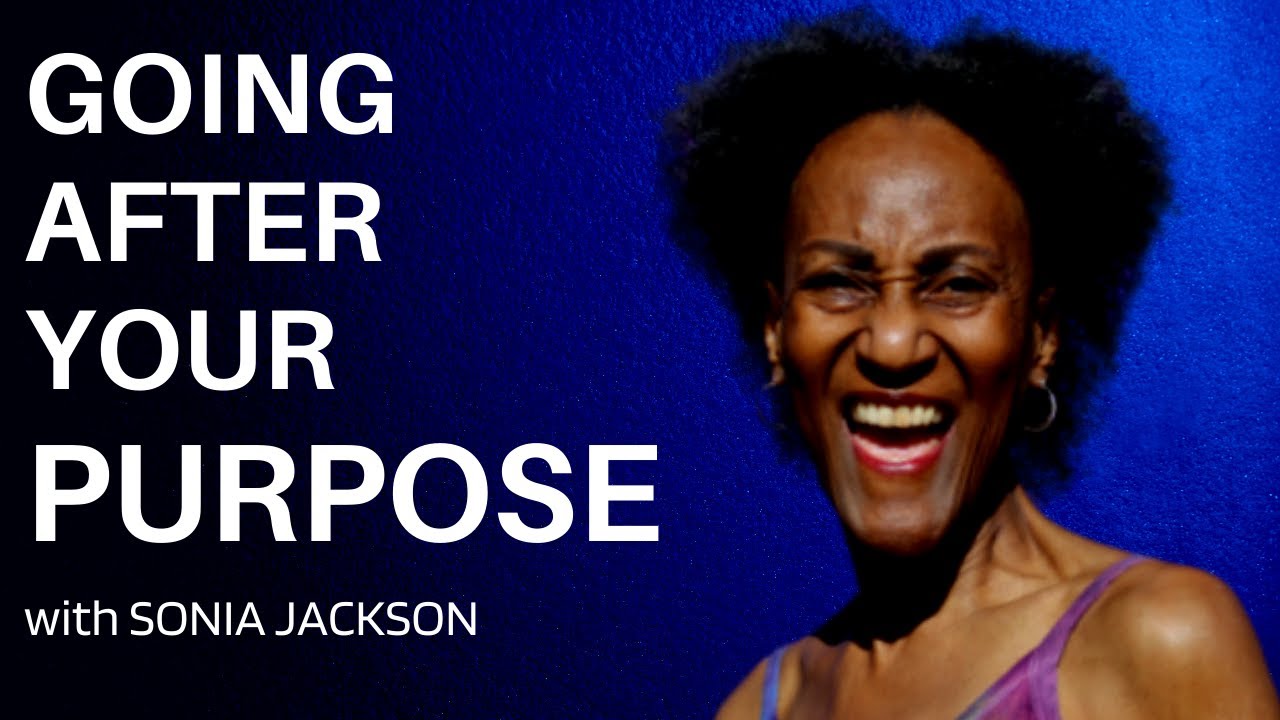
Sonia Jackson left her aerospace HR job to pursue comedy and theater. She created Conversations About the Girls, exploring women's relationships with their bodies, and Breastival, a May 14 fundraiser for Susan G. Komen inspired by her mother's mastectomy. Jackson emphasizes saying yes to yourself and using spirituality to sustain creative work.
Chapters
I'm Travia Steward and I want to help you move past barriers and obstacles that are preventing you from getting what you want in life. This is Breakthrough. As an established actress in film and TV, Sonia brings audiences to laughter or tears through comedy and drama. Sonia also uses her spirituality and storyteller style to create shows and challenge normal assumptions about women with the unique observations that she makes in life. Her projects are a transformative journey for those who watch. Sonya's intention is to entertain and inspire women to recognize their own beauty, power, and strength, and to see the possibilities for their lives, things they may never have imagined. And empower them to take action. Sonya has a show coming up that she wrote called "Brustival" that was inspired when she was 7 years old and she was a, a witness to her mother's journey with cancer who had a mastectomy. And You know, Sonya shares that she felt helpless and she didn't really know what to do and to help her mother through that. And out of that experience came conversations about the girls. Yeah, those girls. So sit back, have a listen as Sonya shares with us her breakthrough journey.
So let's see. It all started off when I was a kid, you know, my dad was a teacher and I thought, oh, I'll be a teacher. And because why, why else? Why not? You know, if you're a kid and you're thinking to yourself, I could have the summers off, I can have Christmas vacations. This is the perfect way to live a life. I'll be a teacher. And I love math. So I figured I'll be a math teacher. Then I got to college and realized I didn't like analytical geometry and calculus. I didn't like theory. I didn't like all of that other stuff. And what I realized that nobody had taught me what it was to find out what I liked, what it was for me to discover who I am in the matter. So then you just jump ahead and, you know, I went to, went to college and I graduated and then I got a job in business. And I'm going, hey, this is great. I can be a business person, a businesswoman. And then I started to work. I was working in human resources for an aerospace company. And they weren't doing business the way I wanted them to do business. I wanted them to be fair. I wanted them to, to treat people equally. And the Boys Club had a different idea. And I can remember sitting in a meeting one day, and the guys were all sitting around asking these questions because they had decided to, they had decided to build a new building and get us all new furniture. So here we are with new furniture, and they had asked the employees to pick the chairs that they wanted. They brought in 22 chairs, put them out, and had us come in and vote on them and which ones. And when the guy was giving the report about it, he made this announcement that it appears that more women More men like this chair and more men like that chair. And then one of them said something in effect that it's a good thing that we don't have any women managers that could— so that they don't have to make any decisions about what kind of chair to sit in. And I'm sitting there looking at him thinking to myself, hmm. And, and so I raised my hand and I said, well, women would like a chair that's different than the men's chair because our bodies are different. Our bodies are longer from the waist to the floor. And men's bodies are longer from the hips to the— their torso is longer. And so they were in this, and they looked at me like I was crazy. And then after that, the meetings were closed. So I thought, is this how I want to do business? Is this how I want to be in this, in this kind of company? And they eventually— the one that broke my moment was the boss approved a salary increase for somebody that I had already denied, and I had denied it because she had 1 year of experience, and I had secretaries that were there who had 10 and 15 years of experience, and they were working with 10 to 12 engineers doing all of this work, and they were giving this raise to a young woman who was pretty much filing her nails all day because she didn't have a lot of work to do. After that, I started to look for something different to do, and, um, I just so happened to be in a group of actors. It was about getting your career, getting your goals going, how you get these things in life. And I was a part of the business group, and when I got into this group One day we were sitting there in the business group going, is anybody else antsy? Because all of the actors were talking about the shows that they were doing and the productions that they were creating, and a lot of the comedians were giving their jokes and saying all this stuff. And I finally decided, hey, I want to do that too. Now, I had been, um, I had been in dance for years because my parents put me in dance classes to help straighten out my legs. And I, I never thought of it as a legitimate job, though. So eventually, I decided, since I didn't have anything to go on my resume in terms of being an actor, but I had performed as a dancer, and I had done some other things, and I was actually making people laugh. I decided, oh, I can do stand-up comedy. Nobody told me that stand-up comedy, they said, that's hard. And I'm going, no, it's not hard. So I started writing jokes and making jokes and, and going out on the circuit. But the circuit was— the circuit was the comedy clubs, you know. In those days, you went to the live comedy clubs and you signed up to be on it. And you had to get there early to sign up if you wanted to get a spot early. But I got there late because I got off work at 5 o'clock, and then I had to go and sign up. And sometimes you wouldn't get on the ticket until like 3 o'clock in the morning or 1 o'clock, you know, whatever. And so that didn't quite work out for me. But I had a blast. I had such a good time to, to, in telling jokes and doing stand-up. And I was a clean joke teller, you know. So what can I say? I was a clean joke teller. But what I started doing was, was becoming an actor, was working to figure out how to be how to get myself out there. And because I was a little older than an ingenue, I had to figure it out a little differently. So my friend suggested that I start doing solo shows. And so I said, okay, again, not knowing that solo shows are probably something that aren't the easiest thing to do. So I started doing solo shows. I wrote it, had a friend of mine write a show for me called I'm Gonna Fly. And I did that for years. I then created another show called Conversations About the Girls. These are the girls. I don't know if they're on camera, but I did a conversation— did conversations about that. And I created another show called Mama-isms. But Conversations is one of those shows that I just love doing because it's a story about women. And how we look at ourselves, how we see ourselves, how we see our breasts, our bodies, what we think about it. Because I, I was doing the Vagina Monologues and an idea came to me that the vagina is a very powerful part of our body, but breasts are right there in front of everybody's face. Everybody's talking about them. You can't watch a TV show where they don't make some commentary about them, or a movie, or they're highlighted in some way. And so I decided that wouldn't it be interesting for us to have a show about breasts? So I started doing that. And what was really great about it was other things. Women started coming up to me afterwards with other ideas about how to do, you know, what their stories were about breasts. And so I started— I continued to do that show for years, and I'm still doing it now. And what was great about this show, what's great about this show, is that women start to see their own power, start to see who they truly are, start to see how they can— how we're— how resilient we are, how we've come to make a life out of ourselves. So My whole idea of leaving my job in my 30s to, as they say, you know, trod the boards, to be an actor, that was something completely unheard of in my family. My parents, my dad was a teacher, my mother was studying to be a teacher years ago. And I had no clue about how to do acting, how to navigate the entertainment industry. But the thing is, you can figure that out. You can find that out. And I started to learn that the biggest thing for us to do is to do something that brings us joy. It doesn't matter how hard it is, because somewhere, somewhere down the line, some job that we have, something that we're doing is going to be difficult. It's going to be hard. But it's when you're loving what you're doing, those difficult parts of it, they're actually challenges you to find a way to move beyond there. So you have an opportunity to really go for something that you like. Turn those hobbies into jobs, turn them into opportunities, turn them into, you know, I have friends who've said, in fact, I had a friend who said to me the other day she had this idea about creating a company that would help other people move their companies along. So maybe they— she would create a facility and people could come to the facility and do their work out of her offices and make her secretary their secretary, make her bookkeeper their bookkeeper so that she was a support service to them. And she said, and look, lo and behold, here's this other company that started this. So there are ideas that we have that we could be putting out in the world and making our own that someone else is already working on. But because we didn't say yes to ourselves, which is what we're really doing when we have a breakthrough, is we're saying yes to ourselves. We're saying yes to the ideas that we have. We're saying yes to our capabilities. And it's really interesting now because with, with Conversations About the Girls, um, I've been doing it on smaller stages for 15 years, and a friend of mine had said to me, Wow, when are you going to get it out there in the world? And, you know, because this is really a great piece. And I thought, yeah, that's true. If I don't do it, who is going to do it? You know, it would be great if someone came up to me and said, I'll produce that for you. But no one did. So if I really want to make an impact on the world and change people's way of thinking about something, if I don't say yes to me, who's going to say— who's going to do that job? So I decided to put conversations in the world on a bigger scale. So I created this star-studded event called Breastival. And we're having— we're producing conversations about the girls with recognizable names in jazz, in acting, in radio personalities. And we're bringing them to the stage to do a reading of Conversations About the Girls for a benefit to raise awareness, true, and as a benefit for Susan G. Komen. We're doing that in May of this year. And, and the thing is, is when you step out to do something, you have to be prepared that you're not prepared to do it. You know, you have to be ready for Oh, I have to do that. Okay. All right. I can do that. I— oh, I have to, I have to learn how to do that. I have to have these things in place. I have to do that. So I have been having breakthroughs. The person who I am now is not who I was a year ago, because I said yes to me. And I am not the person I'm going to be that I know I need to be to put this project on. And so I have a number of people that are helping me and lifting me up, but I'm also having to lift myself up. I'm having to take action when I hadn't planned to. I have to learn new skills, open myself in a new way that I hadn't planned to, or I hadn't thought that I'd have to, or It's just the thing that's come up now. So it's really exciting to, to make those kinds of shifts.
Perfect. Thank you so much for sharing that. I mean, wow. It's quite the evolution, right?
It is.
So I want to go back to, because this is where I find a lot of my clients are stuck. A lot of my friends are stuck. I was stuck there for a while because I was a teacher for 24 years, right? High school theater teacher. So I'm all about it, all about it. And there's something about the safety net, the certainty, right? The security of that job and that paycheck that's coming either bimonthly or whatever that is safe. And the older you get, the less risk you wanna take, the more fearful you become, right? We don't go, nope, we gotta make sure there's a net there before I jump. You know, talk to, you know, and you're talking about the arts because, you know, when I taught high school theater, most parents were like, go get a real job. You can do the arts as a hobby. Yes. Right? But here you are leaving, quote, a real job to pursue acting. Tell me about the level of confidence, your self-concept that gave you the fuel and the motivation to take such a huge leap, especially with comedy. My God.
Uh, yeah. Well, you know, I always loved making people laugh. When I was little, it was like, be the silly one, be the fun one, you know? I used to be able to put my leg behind my neck, you know, and people would look, it's like, what is she doing?
You know?
Yeah. But there's a— it's a fallacy that there's a safety net to a certain degree. And safe— and what is safety if you don't have any joy in your life? You know, because if you're doing a job that you don't like, and I'm not advocating that everybody should up and quit their jobs, you know?
Right, right.
But if it's not working out for you, if it's not something that you are enjoying, why not take that risk? And it doesn't have to— and the thing is, it doesn't have to be a big risk. I had a friend of mine who was— I have lots of friends. I had a friend of mine who was an aerospace engineer, and he loved theater as well. And he would handle— he would do things from a place of, of being whatever it was that he wanted to do at that moment. He was an actor, he would do sound, and so he started out doing things in theater, and he remained an engineer, but he had such a secondary career as an actor that he could have just as easily switched over if he had wanted to. But he didn't want to. He loved, he loved engineering. So there's a level of doing it that can bring you satisfaction, and then there's a level of, of doing it because your heart says to do it, you know, because you really want to jump into it. Um, a friend of mine said that a project will pick you. A project may just pick you because it trusts you to carry it forth. It trusts you that you're going to pull it out there, you're going to keep it going. A lot of my friends have done solo shows and they do the one solo show and they do it for a year or 2 years and then they don't do it anymore because it is difficult. It's difficult to find the audience, it's difficult to put yourself out there, it's difficult to, to, to do your own PR. But if you are— for me, the joy is more important, is how I would say it. The joy is so much more important. And to be able to surround yourself with people who are going to support you no matter what, who are going to— they can play devil's advocate, but they should not be stepping on your dreams. Because they don't have any idea what your capabilities are. They think they know your capabilities from a place of who they are, and sometimes they're holding themselves back waiting for you to say, "I'm gonna go for this." And when you say, "I'm gonna go for this," they think, "Oh, wait a minute, maybe, maybe I do have permission to do that. Maybe I do have the ability to do that." So our own saying yes can catapult someone else into their yes. But there's a— but in terms of the confidence, that doesn't necessarily translate always, because I had confidence. But then somewhere along the line, I bought into— I bought into what the world says about actors. You have to pay your dues. You have to do this. You have to do it this way. And I wasn't— well, first off, I'll put it this way. When I first started acting, I was like, surprised nobody was beating down my door. Oh, what's up with that? You know?
Right.
So, so there was that. And I had to— I had to— I did have to go out and have support in continuing to have a job job. So that I could eat. So I did that. But I remember I went to an audition for Kaiser. Kaiser used to have this program for dental that the people would go out to the schools and they would teach about their dental hygiene. And so they had 6 roles that they were hiring people for. And I'm great at improv and They said I did a great job and I was having a great time, and I just knew that I got one of those jobs, and I didn't. And I was like, oh. And what happened with that? I took a hit because I thought, well, maybe I don't know how good I am. Maybe I think I am and maybe I'm not. And so my confidence took a hit. And jump forward, I was at a party once must have been years later, 10 years later. And this one young woman came up to me and said, 'Oh, I remember you. Hi, how are you?' Blah, blah, blah. And I said, 'I don't remember you.' And she said she saw me at that audition. She was working that audition. And she said, 'You were good. You were really good.' And I said, 'Oh yeah, I was so great, they didn't hire me.' And she said, 'Yeah, the director didn't want to hire you because he thought you'd be working in films in 6 months, and he didn't want to train you and then have you leave the job. And I kind of went, hmm, that's interesting, right? I took a hit on my confidence because he didn't hire me, because I thought, you know, whatever I thought. And, and it wasn't true. So the thing that I've learned from that is it— what matters most is what we think of ourselves. And what we think of ourselves We have to lift ourselves consistently and regularly and remind ourselves of whatever it is we want to do. You know, it's all been given. Yeah, I'm a very spiritual person. I believe you ask and it's given. And we have it. This world is abundant. This, this place is a powerful place that we live in. And if we keep our focus on what it is that we want, more of that always shows up. When we— whatever we put our focus on, that shows up, even if it's what we don't want. So I'm, I'm back to picking up with, yes, this can be done. I don't know how, but it's good. There's an answer. There's always an answer.
I love that. And see, I'm, I'm at that place now. So, and I was thinking, you were— I know that you're a very spiritual person because you so lovingly sent me your prayer journal. And this morning I read Through gratitude. And I thought it was, you know, I just always think everybody's separated through 6 degrees of separation, right? And through the Mindvalley platform, I'm very familiar with Michael Beckwith, right? You know, the Agape Church and the whole spiritual journey. And so I want to talk now to about Breastable. And the reason I want to talk about it is because, you know, like, I remember, like, when I scroll through your LinkedIn, um, you know, when you were 7 years old, you didn't know how to help your mom when she had a mastectomy. Well, I also have had a mastectomy. And so, you know, and it's such a very personal conversation. And as I read through, you know, what you're doing on May 14th of this year, you know, Tell me a little bit, like, without, um, talk to someone like me about BRUSTABLE. And so, because I'm thinking about my relationship with my breast, right? And so, and what it means to me, and how is it that every person of every body type can find something in BRUSTABLE? This—
what I always try and create with Conversations About the Girls, with the play itself, is a sense of community of women. Yeah. And because we are— we're all women. And regardless of the place where we grew up, or the number of people in our family, we have had serious, very serious, very much similar experiences. And we've had concerns, we've had joy, we've had loss, we've had all of that. And what I want for women to understand is that we are We are all the same. And if we can start to support each other in whatever it is that we're going through, whatever it is that we understand about each other. So in, in conversations, the— there are stories about loss, there are stories about everything, about getting breasts, there's misconceptions, there's conversations about things that, that, um, Some people might say, well, that's trivial. But it's a conversation that some of us as sisters are having, you know, so there's, we can see, oh, that's Cousin May. That's my sister. Oh, I've had that experience, or that's me. And we can start to see that we're all the same, that we're all one, one person. With different names, with different bodies. I had a friend of mine who is a minister who told me she sat in the show and realized that she was uncomfortable. I don't remember which, which little mini story that she saw, but she was uncomfortable in her body. And she's got a great body. And she's a beautiful woman. And she didn't realize that she had issues with her body. She had thoughts about it not being perfect or not being what it should be or anything like that. And so what I want women to do is just to examine those moments and go, well, why should I feel badly about my body? Why should I have a concern about this? Or why should I think about that. You know, I have a great body, whatever, whatever shape it is, whatever parts we have, whatever parts we don't have, whatever. Because as, as you can see, I'm, I'm thin. And growing up, I had a whole lot of names that were related to those, that ability, that thing being thin. Some of them I won't repeat, you know, because people think, oh, you're thin, You've got this. Everything's perfect for you. And I'm going, oh yeah, right, right, right. You know, but on the other side of that, I was watching a friend of mine who was a large woman at the time, maybe size 20 or something like that, 20, 22. And she was walking down the street towards me, because we were headed somewhere. And she had the most sexy walk. It was just— she was just moving. She was like moving through space. She was like floating through space here on the street as I was watching her come down. When she came up to me, I said, "Oh my God, I didn't realize how sexy you are. Where'd you get that walk?" And she says, "Oh, I got it from you." And I'm like, "I don't walk like that." She said, "It's my version of you." You know, and I thought, how great is that, that she picked something up from me and then just took it on for herself and coated herself with this confidence, with this movement that just was transmitting itself out into the world as joy, as confidence, as peace and serenity. She just was looking great.. And that's the kind of thing that I want women to see about themselves wherever they are. And I think a lot of it comes from just experiencing the stories of what we've gone through in whatever shape or form we're in.
Yeah. Thank you for that, that, that full explanation. I, I totally get it. Um, you know, part of my transformation and, you know, and I do a lot of self-work. A lot, a lot of transfer. I work on the inner game all the time. And, you know, some of the things that just came to the surface was probably some of the reason why, you know, when, when I read about Brustable, I never liked my breasts. And so when I go through it and I think, huh, you know, when I had early stage breast cancer in early 2020, it took me a long time to figure out Spiritually, how do I make this work for me? You know, mentally, how do I make this work for me? And so I'm going, is there a place for me as I sit, you know, if I were going to get a ticket for Breastable, is there a place for me to have a connection to your show?
I believe there is. There are, um, so I tell a variety of stories. There's, um, there's a— there's one monologue that I use that's in the show now called One Step at a Time that talks about the various steps that, uh, some women may traverse through when going through breast cancer. I usually— the I interchange certain stories. So that particular story I put in this time because I think it's important for people to know different— know the things that they may not know about. So there are a lot of women out there who have no idea what someone walks through when they're going through chemotherapy. And it's not a big story. It's— there are various monologues with the stories. Sometimes I use that story, sometimes I use another story. Butchered is a story that came through me that is my mother's story. And it is— there's a— and this particular one isn't in this particular version. But it's called Butchered, and it's— and she starts off, the woman starts off saying, "We'll have to take it off. That's what the doctor said to me at the appointment. We'll have to take it off." Like it's a coat or a piece of clothing to be shed. Not my breast. "We'll have to take it off." And And to me, that, you know, that's one of those, those pieces of information is that when somebody says, we're going to have to, to, to do surgery on you, or we're going to have to do something, or we're going to have to remove your breasts, we're going to have to do that, that's an amputation, that's an invasion of our bodies. And we as sisters need to know that about our sisters, this is what you walk through. This is so that there can be a better sense of compassion for each other. And for, and not necessarily just around that, but just compassion for each other, period. You know, so, and how to, how to, I, one of the productions we had years ago, one of the, one of the performers had her circle of friends came, and her circle of friends was 7 or 8 women, and one of them couldn't come to the show that time. And she eventually, within like 2 or 3 months of the show, got— was diagnosed with cancer, breast cancer. And one of the friends who came to the show said, You know, I know how to be with her now better because I was at that show, because I had a different concept of my— of this woman, you know, of what she's walking through. And so there's that, there's, there's that kind of a situation that happens. Yeah.
I love that. Yeah. So when you say that, I totally get that. I know how to be with her now because of the show. Because yeah, if you don't, If you haven't, you know, gone through the journey of cancer, you don't know how to be there. But so that's doing such a service for, you know, the people who will see your show. So as we wrap up, what would you say if you were leaving us with your 2 or 3 best pieces of advice because of the path that you have walked? What would you want my listeners to know and benefit from? I mean, the whole, you know, our whole conversation has been full of nuggets and jewels and gold. You know, but if you had to go, this is if you remember nothing else, I want you to remember these 2 or 3 things. Hmm.
The first thing I guess I would say is that you are important. And what you have, what you have to offer is important. It may only be offered to one person, maybe it's offered to 100, maybe 1,000, maybe 1 million, but whatever it is that you have to offer is important and we need it. So if you're drawn to do something, then do it. If you're drawn to say something, then say it. And And then I think the biggest thing around that is just loving yourself because you're important. Whatever you say or do or don't do, love yourself. That would— those would be the two things.
Perfect, perfect. So I'm already loving your prayer journal. Other people are listening to this, this podcast episode. How can they get their hands on that prayer journal?? Because I was lucky, you just mailed me one in the mail. So thank you so much for that.
You're welcome. I love it. It's, um, it's on a— it's on Amazon now. And it is My Prayer Journal is the name of it. And Sonia Jackson with an I, Sonia with an I. And if you do a search, because there's a lot of prayer journals on, on Amazon, but if you do a search for My Prayer journal, Sonya Jackson, it'll come up. And there's also— there's a hard copy, and then there's also a Kindle copy.
So good Kindle, love a good Kindle. Yeah. But I find that the hard copy has a place for notes. And yes, and I love to journal.
And that's what I like. Yeah, it's about— I, the prayers came through me in the way they did.. And I worked on the prayers and, and Spirit finally said, yes, that's right. Yeah. But there's, but as you read the prayers, there are other ideas that are going to come to you. And when those other ideas come to you, then you make notes about them. And then you change the prayer, just cross right off, cross out the prayer in there, cross those words out, put the words in that you want so that when you're praying it the next time, it really resonates with you and it, and it, and it, uh, moves through you in a way that you really feel it because it's the feeling tone that you get out of it that's going to make the shift, right?
And then the final thing, I, I'm noticing your breastable that's happening May 14th is actually a streamed reading, so I could possibly attend that, right? Because I'm like, I'm in Arizona, so anyone could Everyone can. How can— what are the steps to, you know, get a ticket? What does that look like?
Well, right now we're building the platform, so the tickets are supposed to be on sale on May 8th. Let me take that back. The tickets will be on sale on May 8th. All right. And just to make sure that you're one— if you want to be a part of it, and get the first notification of that. If you go to my website, visionsofpossibilities.org, visionsofpossibilities.org, and sign up for the newsletter, you'll get 3 prayers and you'll also get the information when it comes out about the ticket sales.
Perfect. And I will have every bit of that information in the show notes. Sonia, thank you so much. For being a guest on the podcast. And, you know, I honestly can say from my heart that whenever I go on LinkedIn and I see your posts, and sometimes you comment on mine, sometimes I comment on yours— we've never ever met before today, and like, I feel like this is in person even though it's on Zoom.
Yeah, yeah, yeah.
But I've always felt a sense of love and comfort and peace and genuine support. Like, I remember after I did Lily Shaw and then you responded, I was like, oh my gosh, you didn't have to write that. That was just so touching and so sweet. And I've just always felt that in your presence, and that was just on LinkedIn.
How about that?
So thank you so much for that. So, you know, just, just know that your light is emitting out there and I'm receiving it.
Thank you. I'm so glad. Thank you.
You're welcome. Absolutely. So, well, thank you. This is all we have time for because the guests are like, can you make them shorter? And I was like, okay, I'll try. But sometimes I don't like to stop the conversations. But thank you so much, Sonya, for being on the podcast. This has been a true treat for me today, and thank you for sharing your spirit with us.
Thank you, I appreciate it. Thank you so much for your willingness to create this type of a platform.
Absolutely. Thank you so much for listening and being a valuable member of the Breakthrough Podcast. If you have a question or anything that you'd love for me to tackle, something that you feel like I would be an authority on and you would love my take on that, I would love for you to shoot me an email at travia@traviasteward.com, uh, and I would love to compile a list of questions and turn those lists of questions into an episode because it's my goal. It's my objective to serve you more powerfully. So I want to help do that in the way that you want me to. So have a great day. Thank you so much for listening. And as always, I would love it if you could leave a 5-star review on Apple Podcasts. So thank you. Have a good day. Peace.
More from Travia









Remember the YOU Who Didn't Overthink Everything #personalgroth #mindset #selfdoubt

