When Things Don't Go Your Way | When Life Throws Curveballs | Coping with Life's Surprises
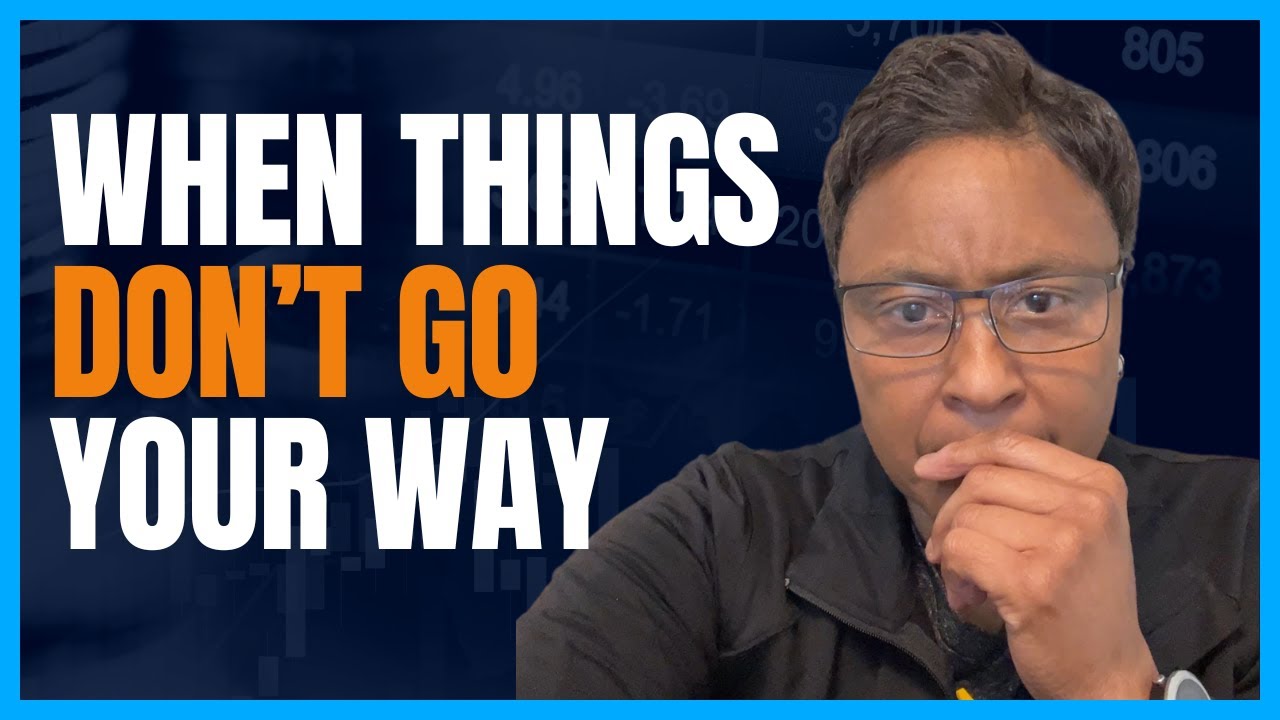
In this solo podcast episode, Travia Steward addresses the universal experience of disappointment when outcomes—specifically the recent U.S. election—don’t align with personal hopes. She argues that events are neutral until we assign meaning, and that honoring our emotional response is essential for growth. Steward outlines a three‑step practical framework: (1) consciously acknowledge and process whatever emotions arise, using reflection or journaling to understand the source of the feeling; (2) conduct an "energy audit" of the information and media feeding the mind—limiting news, social media, or conversations that perpetuate negative cycles, illustrated by her own decision to deactivate Facebook after the election; and (3) reconnect with a broader personal vision or purpose, reframing the setback as a catalyst for intentional, small‑scale actions that align with long‑term values. Throughout, she emphasizes that feeling the disappointment is valid, but staying in that state is counterproductive. By moving from feeling to auditing to recalibrating, listeners can transform disappointment into motivation, maintain resilience, and continue contributing positively to their lives and communities.
Chapters
Have you ever felt let down, right? After— have you ever felt in your whole life, have you ever felt disappointed, let down because things didn't go your way, right? Because this is a common experience that happens in life over and over and over again, because there are so many things that we invest so much time and energy and we put our hope into this basket. And when things don't end up going that way, now it's a, it's a matter of handling the disappointment that comes with it. The disappointment that follows like a big event, like the election that just took place 2 days ago, and how we can find a constructive, meaningful path forward. This is Lead with Confidence Now, the podcast dedicated to helping you grow your confidence and live your best life. I'm Travia Steward, and for the past 27 years, I've been on a mission to help you reinvent your relationships and career. My goal with this podcast is to show up for you so that you can rock your own world with the confidence to make that big change in your life you've been wanting to make. I really want to honor with this episode the people who are feeling some kind of way because things didn't go your way. And I also want to honor the people who may be listening, that things that you actually got the outcome that you wanted to get, because that's a democracy in the United States. That's democracy. And we can, you know, hate the results sometimes, we can love the results sometimes, but we keep moving forward. We keep going even when there's disappointment, especially when something as big as the the election we just had. And so, so often if we're disappointed, we're told to just accept it, move on, life goes on, right? But does meaning, does moving on mean we have to ignore our feelings, bury our emotions, let things go, like, like just sweep it under a rug when we were so passionate about this? Now, I am an advocate. I do believe that Everything is neutral until you attach a meaning to it. Because again, for some people, the meaning was the results of the election happened exactly they wanted, the way they wanted it to happen. For some people, the election did not happen the way they want it to happen. So we all attach a meaning to it. And I don't want to sit here and go, oh, okay, it's what you make it mean. You know, these things mean a lot to people. These things mean a lot to me. And so today I wanna honor the disappointment and talk about a powerful way of honoring what you, what I care about, because it's not about today, it's not about pretending that the outcome doesn't matter. It's about maybe using it as a force that motivates us to grow. And so like, imagining if we can use this mindset, this circumstance that we feel so disappointed in, in a way that drives us constructively, you know, helping us to take intentional, effective steps towards the things that we actually want to create. You know, maybe this is like a time that it lights a fire under us to take even more action But what I really want to drive home is these 3 things. It's important that we all acknowledge and process our emotions because we wanna recognize that we're feeling a certain kind of way. We wanna honor what we're feeling, whether it's frustration, whether it's jubilation, whether it's disappointment, whether you're feeling deflated. These emotions are all valid, especially when we've invested so much time, energy, and effort into the outcome. And so allow yourself to sit there with the feelings. And I understand that sometimes that's not an easy thing to do because our brains are wired for survival. And for some of us, feeling our feelings feels like fight or flight. We don't want to sit there and feel what disappointment feels like. But when it comes down to ignoring it and pretending it's not there. It's like we're putting those feelings up on the shelf, and then we put another feeling up on the shelf, and then we— before you look, that shelf is overloaded and that sucker falls down. So suppressing these emotions, you know, allows them to just keep collecting on the shelf, lingering longer and longer. But when we confront, when we understand why we feel the way we do, when we except that we feel the certain kind of way, it loses its intensity. And it strengthens your muscle that you can feel any emotion on the face of the earth. Because when we are all willing to face and feel any emotion, then we can walk in the face of so many things fear, right? We can walk into the face of things that we have been afraid of, things that we have been— we felt like we were going to be judged by, because we're all motivating things in our life so that we are able to feel the way we want to feel. And when we don't think we can— we're going to feel the way that we want to feel, then we do something else. So when you allow yourself to feel any emotion, I believe then we're unstoppable. And I'm working on that myself. So that's the first thing I want to talk about is allowing yourself to feel whatever you're going through. Now, I'm not saying that— not an advocate for staying there. I am an advocate for going, why am I feeling this way? What's happening? What is the disappointment? What is the excitement? And then just figuring out and doing a little journaling about it. And going, okay, how can I use this and move forward? And so number 2, with something like this, with whether it's a disappointment, whether it's, you know, this, this jubilant outcome that happened for you, you want to do inventory on what's being inputted into your brain, into your mind, like what's coming into it, whether it's the TV, whether it's newspaper, whether it's friends, whether it's social media. And so we want to take the inventory so that we don't continue to feed emotions that we no longer want to feel. Once you have processed it and we want to move on, now you don't want to go, OK, I'm feeling some kind of way about the result. And now I'm going to turn on the news. And I'm just going to stay in it and stay in it and stay in it. And it's like you're going to be spinning on it, right? And so then we get into a habit of going, "You know what? Why vote anyway? Why do this thing anyway? It's not going to make a difference. I shouldn't have even tried." And I'm using this as an example so that we can take a moment, look at the broader, the bigger picture. This is just an example of when we can manipulate, we can shift And I don't mean to say manipulate in a negative way, but we can shift our perspective and what it means for us. And so what we can do is we can decide how we can make these things useful and we can begin to respond in a way that we want to respond, in a response that is without frustration, a response that is without lingering dissatisfaction, lingering discouragement, deflation. So I want you to think about the mental inventory that is coming into your brain that we sometimes are being influenced by, that we don't even recognize, and do an audit on that. Maybe it's turning the TV off. Maybe it's not like not watching the news for a while. For me, I deactivated my Facebook the night of the election actually because I wanted to control my peace. I wanted to control and I didn't want to go on there and like block everybody and do all this stuff. And so I was like, okay, in order for me to feel the way I want to feel so that I can be My powerful self, I don't need to be on Facebook right now. It's deactivated right now, and who knows, it could be permanent based on letting go of allowing these things outside of us to impact and control us. So I took that action and did it, and you know what? It feels good. It feels really good, and it feels good to sit back and be with me, allow the natural things that are coming up in my mind, have control over the things that, that I'm thinking about, have control over the things that you're thinking about. Therefore, we're not being triggered. You know, we're not allowing other things to trigger us. We're not allowing people to trigger us because there's a moment, there's a way you can detach from this. So doing the inventory, this is like an energy audit. What is giving you energy? What is sucking the energy out of you? If it's the news that's sucking the energy, if it's talking about this thing that's sucking the energy, then stop doing that. And so focus on the things that are giving you the energy and helping you to feel the way that you want to feel. And so the third thing that I want to talk about is Reconnecting to a bigger vision. We all have a bigger vision. I know I have a bigger vision for my life, and when things don't exactly go the way that I want them to go, yes, I'm disappointed. Yes, I take the time, as I'm asking you to do, to take the inventory on my input, to go through and, and feel what I'm feeling. But it's so vitally important that we reconnect with our bigger picture, our bigger vision, our bigger purpose that we were created and put on this earth for. Because disappointments, this thing that happened, it's a moment in time in my life, will change my day-to-day life. Didn't change my day-to-day life today, won't change my day-to-day life tomorrow. Hopefully, you know, it will change for the better because I'm, I'm an optimist. I'm hopeful. So whenever you're feeling disappointed, those things can be just moments in time, but the values that we hold onto, that we attach to those things, they go beyond that single event. Who you are goes beyond that single event. So just take a moment, step back, recalibrate, and remind yourself, as I'm doing, setbacks happen, disappointments happen. Progress can still happen, and it can happen in stages. When we focus on the things that are possible, the things that we can control, the things that are in our immediate surroundings, like in our home, in our friend group, in our relationships. When we can control the people that we want to hang out with, the people that are giving us energy, that we feel like we are all generating the same kind of energy with each other, and really focus on the person that you want to be. How you want to show up even after disappointment. That is my biggest teaching lesson for myself, because I think about— I want to be the example of how to move through these things. So even when there's disappointment, I spent a majority of the day feeling my feelings, allowing them to be there, and then going, okay, how can I I use this in a meaningful way to move forward? What is it that I now need to tunnel vision focus on so that I'm not looking at and feeling all the negative things that I was feeling a couple days ago? And so we want to use even an experience like that as a way to help you to show up differently today and in the future. Because what we can do now helps us to make small impacts that lead to bigger and bigger and bigger things. And taking those small actions help build bridges to issues that really matter to you and to me. And so what I'm inviting you to do today is Feel your feelings and then do an energy audit. What are you letting into your mind? And then recalibrate. What is it that you can learn from the disappointment? What is it that you can learn from, you know, if you're celebrating right now, which to each his own, because there are moments when, you know, I celebrate after an election and there are moments when other people don't, but I celebrate that this is democracy. I celebrate that we live in a country where we are allowed to have a say. We are allowed to have a voice. And I'm thankful for that. And so I want you to think about those things. Think about the things, your goals in your life, the values, the people that matter to you. And how can you use this time, this circumstances occurrence to learn more about something that you are involved in. Like maybe it's an issue, maybe learning about a way that you can contribute more to a community, to cause. Or maybe you can just use this as a time to have an honest conversation with yourself and how you want to show up, or have an honest conversation with someone else that you want to share an experience with. And how this experience has affected you. And so by turning this disappointment, our feelings, into thoughtful, grounded, actionable steps, we are able to move forward with a sense of purpose and with newfound sense of energy. Because moving on doesn't necessarily mean letting go and like it didn't matter to us. It means finding ways and new ways to go, I'm gonna focus on this and how can I still show up in being the person that I wanna be, the person that I wanna be an example as with this disappointment. So how can you frame, as I am working on framing myself, and I have today, well, actually yesterday, how can you allowed this disappointment to have happened for you. And that is the reframe that I'm asking today. How can we use it for us that it maybe helps us to become stronger people? Maybe it helps us to get involved more. Maybe it helps us to feel better about ourselves, whatever it is, but how can we use it for us? Because that gets us out of victimhood. So, my peeps, as I come to a close, I'm not asking you to abandon your feelings. I'm not asking you to abandon hope. I'm not asking you to sit and wallow. I'm not asking you to pretend your feelings don't matter because they do. These are moments that are important to us. But what I am suggesting is we don't stay there. We take a moment and we feel it, and then we figure out how can we use this as an opportunity to grow, to learn, and to move forward in a way that reflects our values and what's important to us. Because this is a mindset, this is a perspective shift that we can all cultivate. And so it's a way that we can move through things, but honestly, much more intentionally. So take the moment, take time if you haven't already done it, and understand what you're feeling, understand why you're feeling it, and then use what you're feeling in a way of reframing and recalibrating as a way to fuel a positive change in your life. And hopefully in the lives of others. So this isn't about giving up. This is about aligning our thinking with our feelings and our actions so that we can stay the course, stay resilient, even when things don't go as planned. All right, my peeps, we'll talk next week.
More from Travia









Remember the YOU Who Didn't Overthink Everything #personalgroth #mindset #selfdoubt

