Episode 3 | Troy Henikoff on how #GiveFirst grew the Chicago startup ecosystem | Episode 3
In this episode of the Give First Podcast, hosts David Cohen and Brad Feld interview Troy Henikoff, co‑founder of Math Venture Partners and former managing director of Techstars Chicago. Troy recounts the origin story of Techstars’ entry into Chicago, beginning with his mentorship of Northwestern students who later joined Techstars in Boulder, the pivotal Demo Day that led to the creation of Accelerate Labs, and the eventual partnership that turned Accelerate Labs into Techstars Chicago. He describes the impact of the Next Big Sound pivot and acquisition, illustrating how early give‑first actions created a ripple effect throughout the ecosystem. Troy then explains Math Venture Partners’ investment thesis centered on customer acquisition advantage, highlights his mentorship style through the example of SwipeSense, and shares personal anecdotes that emphasize relationship‑first investing. The conversation concludes with a rapid‑fire segment revealing Troy’s favorite city, book, charitable focus, and the most interesting person he’s met. Throughout, the dialogue underscores the give‑first philosophy as a non‑transactional, long‑term network‑building approach that fuels both personal and community success in Chicago’s startup scene.
Chapters
Hi everyone, this is David Cohen and I'm here with my amazing co-host, Brad Feld. Hey Brad, and this is the Give First Podcast. In the startup world, give first means simply trying to help anyone, especially entrepreneurs, without any expectation of getting anything back. So we'll be talking to mentors and founders about what give first looks like in action and how it makes great entrepreneurship possible. Here's what the lawyers make me say. Brad and I are having personal discussions and these are our personal opinions. that are represented here. They don't represent the opinion of Techstars or The Foundry Group or any other group. Our conversations are just for informational and learning purposes, including any mentions of securities or funds. Certain of our own funds may own these securities, but please know we're not giving any legal, business, investment, or tax advice, and anything on the podcast is not intended to be used by any investor to make investment decisions. We're really excited to have Troy Henikoff on GiveFirst today. Troy is one of the partners and founders of Math Venture Partners. But before that, and we've known Troy for a long time, Troy is the reason that Techstars, or one of the reasons that Techstars is in Chicago. He was the managing director at Techstars Chicago for some time, and before that at Accelerate Labs, which was a fantastic accelerator. So a lot of history with Troy. Troy, welcome to the show. Really glad to have you today.
Thanks. It's great to be here.
Troy, a lot of people might have heard the story of how we first met and Accelerate Labs and Techstars came together, but a lot of people haven't. I think it's a really interesting story, so I wanted to give you some space to talk about that.
Yeah, I think it was fascinating. So, you know, in 2008, I had been teaching entrepreneurship at Northwestern for a while, and I had some students in my class who were just different. They were just better than any other students I had had up to that point. And I mean, to the point where when they did their final project, And they presented their business plan. The judges, all of them came up to me and said some version of, you know, are those guys doing that for real or just for class? Because if they're doing it for real, I want to talk to them. And so we got them. They were doing this thing around music and the internet, and we rounded up about $25,000 in seed capital, which we had never done for undergrad students before. And they struggled for a while, and they really tried to get this thing off the ground. And then Then in 2009, one of them, that CEO Alex, had graduated and David and Samir were still seniors in college and they got accepted into this thing in Boulder called Techstars that I had never heard of before. And when they asked me about it, it sounded like they were going to get some capital, some mentorship, spend the summer in Boulder, sounded awesome. So they piled into David's VW and drove down to Boulder to be part of the program.
You know, before they did that, Troy, I had to fly out to Chicago. And I met them in the airport. I remember vividly.
Oh, I've heard a little bit about this story. Yeah, to persuade them?
Yeah, I used to fly to the airport of whatever town and I'd take a meeting in the airport and I'd fly back. And I remember meeting those guys just sitting in that sort of airport crappy seats.
Yeah, so they came down to Techstars and as it's been told to me, they got there and like day 2 of the program, they said, this dog isn't going to hunt. And they thought their business was doomed. And I don't know, David, you were there, so you can tell me a little more about what happened then.
Well, you know, they walked in, it was day 2 of the accelerator program, and they walked in and they said, you know, we just don't believe in this business anymore. And, you know, they were sort of saying, we're not sure we believed in it when you funded us. And, you know, our reaction was, okay, you know, cool, like, let's figure out what we should go do because the investment's in you, not in this particular idea. We weren't too sure about it either, so we just started brainstorming and I remember a big whiteboard session that day.
Yeah. And then fast forward to the end of the program, which is like what, 88 days later, and I'm down in Boulder for Boulder Demo Day and Alex did an amazing job with his pitch. I think he was asking for like $350,000 in seed capital to launch this new thing around music and the internet that he called Next Big Sound. And there was a line of investors waiting to invest. He actually ended up raising over $1 million in that round, turning people away. It was one of my first angel investments. It was that day that I realized we saw a couple of things. Well, one was how awesome the program was for Alex, David, and Samir. It took them with this nascent idea that wasn't going to work, helped them figure out how to pivot, how to find a real business model, how to raise money, raise over $1 million, and go into business. And that was phenomenal. The second thing was there were a handful of us from Chicago who happened to be there. Techstars had just expanded its first time to Boston. You had 10 companies in Boulder, 9 in Boston. Of those 19 companies, 5 came from Chicago. That was awesome. We rock, except they all left and didn't come back. Next Big Sound set up camp in Boulder because that's where their lead investors were. They didn't come back to Chicago. They never made it back to Chicago. There were a handful of us who were there. I remember it, August 6th, 2009. And we said, hey, we want to do this in Chicago. So we reached out to you and to Brad and said, hey, will you do it in Chicago? And I remember you came up to Chicago with Sean, the MD from the Boston program, right? And we talked about setting up Techstars in Chicago. And then you kind of pulled me aside and said, hey, you know, we're kind of busy. We're like, it's under the radar, but we're launching New York and Seattle. don't have the bandwidth to do this. We're really focused on quality over quantity. We think you should do it. We'll share with you docs and best practices, but it's got to be your thing. And so a handful of us, Sam Yagan, the I2A Fund, Sandbox Industries, and I decided we were going to do it. And we launched an accelerator called Accelerate Labs just 6 months later. So we ran in 2010. And you were super helpful. I remember We're on the phone with you asking questions all the time. And it was a great class. It did amazingly well. We did it again a second year, did it again a third year. And then in the end of 2012, Brad came up to Chicago and was— we were having lunch and he basically said, you know, we love what's going on in Chicago. You've got all this activity and the ecosystem, 1871. We really want to have a presence here as Techstars, but we don't want to compete with you. So would you consider joining forces and— changing the name on the door. And I just thought it was an awesome opportunity to join the network, have a reach that was much bigger than just Chicago, be part of that big mentor network, the investors, the entrepreneurs. And so it came full circle and we became Techstars Chicago and ran that program as Techstars Chicago. And it was great. And that seems like the full cycle, the full circle of what happened. But it was a couple years after that, I think 2014, 2015, when Next Big Sound, Alex's company, was acquired by Pandora. And that was awesome for them. It was a great event. It was great for the investors. I actually got a nice return on my investment. But Alex sent me a really heartfelt handwritten note and talked about how he wouldn't have been where he is without that first class and without my support and mentorship. And I was reading it, and while it made me feel warm and nice, something didn't feel right. It just didn't settle right. And it took a minute for me to realize, wait a minute, I wouldn't be where I am if it wasn't for Alex, David, and Samir having found Techstars and introduced me to that program. And so when I look back at my personal trajectory, you know, I tie the last 10 years Basically goes back to the seminal event was Boulder Demo Day, August 6th, 2009, when this aha moment happened of, oh my God, I want to be part of this network. I want to help entrepreneurs like this. And so I wouldn't have run an accelerator had it not been then. I wouldn't have run a venture fund had it not been then. I wouldn't have invested in all these companies. And so I wrote him back a note saying, you're mistaken. You've had a bigger influence on my life than I've had on yours.
Wow. What an incredible story. And just in hearing you talk about it, I think a lot of people, sometimes they take this idea of give first and they think about it as it's not transactional, but if I help you, someday it'll come back to me. But what I just heard is a story of it came back to everybody in different ways, right? Because I feel the same way, right? You know, having the chance to work with you and, you know, building the Techstars brand in Chicago and being fortunate enough to be, you know, a small investor in Math, you know, which you're running now. And just, you know, how even the Next Big Sound guys, right? Some of them are coming back like literally in a week from when we're recording this to, you know, help with some new company ideation at Techstars Studio.
And they're investing. They have Next Big Ventures. That's their venture fund.
That's right. It's a network of effects that have happened because of the early give first of you helping them in class and maybe Techstars helping out Accelerate a little bit early on. It just continues in this virtuous cycle. Rather than thinking give first is like, I'll do one thing and I'll get a thing back, you just never know how that's going to build upon itself to get really powerful for everybody involved.
Yeah, I never would've imagined where this would've taken me when we first started Accelerate Labs. Didn't have any office space, didn't know what a demo day was. We didn't even have internet. We used clear wireless modems hanging out the window to provide internet to 30 founders. I mean, it was pretty ridiculous. And today, it's pretty awesome to see all the companies that have gone through and be part of that worldwide network to— Help entrepreneurs.
Tell us a little bit about Math and what you're doing today, Troy.
Yeah, so Math Venture Partners is obviously a digital technology venture firm. We take a little different slice on our view of the world. We slice it a little differently. Instead of focusing on a particular vertical or horizontal, we believe, and we're all operators, that at the end of the day, what really matters is customers and customer acquisition. And I joke with entrepreneurs, I tell them, listen, if you can acquire and retain customers, I can fix anything else in your business. Like, that's the hardest thing. And so we tend to focus— our mission is to find companies that have an unfair advantage in customer acquisition and to back them both with our capital and our experience and connections. So Fund 1, we made 16 venture investments. We're now in our 5th year, and all 16 are still operating. They're all doing well. They're doing— a couple are doing different versions of well, But we have no zeros yet, and that's because they all have customers, they all have revenue. We also have a seed program where we made 21 seed investments out of that first fund. And then in the second fund, we've just started, closed the second fund a little over $45 million, and that has about half a dozen total investments split between seed and series and what we call our venture investments. Out of that, I think 12 or 13 are Techstars companies that we've already invested in. So there is a lot of synergy there, and then a bunch that we've invested in, not just that are Techstars companies, but with Techstars Ventures as well.
So I like to tie it all together when I can. I was thinking about GiveFirst again, you know, thinking about what you're doing now, the impact that, you know, you guys are having on Chicago and making all those investments, you know, the impact that people like Sam and Farsh and others that, you know, we've been involved with have had on Chicago is really just amazing to watch, and in a relatively short amount of time, right? Sort of 10 years in. But sort of you telling that story The story of a large number of your portfolio actually being Techstars companies is just another way that the existence of that fund sort of more than pays back that early give first. Thanks for all you're doing. I know you're really passionate about what's going on in Chicago.
Yeah, it's been great to see. Sometimes I still have to pinch myself because when we were thinking about starting Accelerate Labs, which is still only 9 years ago, There was no accelerator. There was no coworking space. There was no really formalized way to get to investors. There was not much. Hyde Park Angels had just started their formalized angel group. But if you were a startup in 2009, 2010 in Chicago, there was no support. And today we have one of the, you know, one of the biggest incubators, coworking spaces in the country. I think we're at 150,000, 160,000 square feet at 1871, 2,000 entrepreneurs a day working out of here. Many others. I mean, obviously WeWork and all those are here. Multiple angel groups, lots of venture funds. I mean, the whole ecosystem has evolved in the last 10 years in an incredible way.
Really amazing to watch. So Troy, in prepping for this podcast episode, I talked to some folks at a company called SwipeSense who I think you know. And here's a few things that they shared about your style and working with them. They said your best quality is that you know Never give advice. You simply share a heartfelt moment that you went through yourself with candor. They said when talking to you know the press or when doing anything in business, never do anything you would be embarrassed about reading on the COVID of the New York Times. It's something you told them that really stuck with them. Maybe when they were having people approaching them to to maybe buy the company, you said let them do the talking. What they explained to me about how great this was was that. You know, you've been a consistent source of advice for them, but they also said you're the only person that gets their investor updates regularly that's actually a non-investor in the company. I don't know if you ultimately invest in the company, but that was their perspective. So that's a lot of give first. And maybe talk about how you think about interacting with a company like SwipeSense, how that ties into give first, and how you expect that might come back to you in the future.
The founders of SwipeSense, Mert and Uri, are awesome. I love them. I met them when they were still undergrads. They also were at Northwestern, by the way, and they had asked to be introduced to me because my first company I had sold to Medline Industries, which was a potential partnership for them, and they wanted to get the introduction to Medline because they were selling a product into the medical space. And so I met with them when they were seniors in college and, you know, tried to give them a little advice and help them. And then a year and a half later, they were applying, thinking about where they're going to go and what their next step is, and they're was a new accelerator in Chicago called HealthBox that was formed kind of after we had done Accelerate Labs. And so I introduced them there and they ended up— it was a great fit for them. And they went through HealthBox. And then as they were raising money, every time I was so close to wanting to do it both as a personal angel investor before we had Math Venture Partners, and then in a couple of rounds when with Math, for whatever reason, there was always something. It didn't quite fit our thesis. I couldn't quite get there. I was too late. The round was filled. But I always loved working with them and helping them because they are so passionate. They're so driven. It's sort of a mission-driven company. What they're doing is helping improve hand hygiene in hospitals specifically to reduce hospital-borne infections and unnecessary deaths, of which there are a couple hundred thousand a year in the US due to hospital-borne infections. It's crazy. So they're making the world a better place. And They just always come with open ears, open minds, and great questions. And we sit down, I don't know, every couple months and talk through something. I just met with them recently about a recent financing that they're talking through, and I just love working with them. The reward for me is just seeing the glow in their eyes and their face and how well they're doing. And we're not, you know, Matt nor I have ever made an investment in SwipeSense, and I don't think we will. It's not our business. I will tell you that when they start their next business, if it's not in healthcare, I will be the first one in line though to try to invest. They are awesome entrepreneurs. So yes, it's give first. I mean, if they never do another business, if I never invest, I feel like I got more out of it than they did because the reward of just helping them and watching them grow. But there's a selfish side of me too that says, you know what, at some point if they do, I hope they'll come to me first because I've helped them a ton and I love working with them and I think they like working with me. And if they do, we should do something together. And so I think these things always do pay back in the long run. One of the other things I always like to think about is that as you're making decisions, especially hard decisions, the longer the time horizon you use to evaluate the decision, the better decision you make. And so if I'm evaluating decisions based on how do I optimize today, You know, I'd never spend time with Mert and Yuri 'cause I don't get anything monetary out of it today for sure. But if you evaluate things on a generational timeframe, like Brad likes to say, 20 years, I would love to have a relationship with these guys 20 years from now. I would love to be, you know, still in touch, having— we do quarterly dinners where at one of our houses, I mean, it's more social than business, but at this point, but I would love to still have that relationship with them 20 years from now.
And, you know, as you said, I think what's so interesting about this idea of give first is that, you know, you give, but this is not transactional. You're not expecting anything back from them, but you feel like you're getting something out of it. And here they are singing your praises, and now it's on a podcast. That's a tiny little way that they give back, but I'm sure that they reputationally share, you know, anytime anyone asks them about working with you. And it's going to come back to you in ways that are totally unexpected. And it's, it's in the meta or the macro where this really pays off over time.
Yeah, no, I totally agree. And I didn't— I have to admit, I didn't see that at first. I mean, the first year we did Accelerate Labs, it was really fun and new, and it felt like we were building something cool. And then the second year, I remember we were doing it, we didn't have a budget. MDs, you know, today an MD in a program gets a salary and carry and all that stuff. But I mean, I think the second year I got paid less than a barista at Starbucks. I, uh, I was in a position where I could afford to do it. I wasn't worried about how I was going to pay rent next month. And it turns out that that decision to actually help build this Accelerate Labs, Techstars Chicago, has paid such huge dividends in the long run. I never would have been in the position I'm in today. I wouldn't have been offered the positions teaching at Booth or at Kellogg that I did. I wouldn't have been able to start a venture fund. I mean, I'm sure I would have been fine, but I can trace so much of where I am today and the entrepreneurs I've gotten to engage with and to help To that early decision to, you know, we're going to volunteer our time and start this thing called Accelerate Labs. Okay, we'll put another year into it, you know, making a tiny, tiny little stipend that doesn't pay the bills. But it has had such an impact on my life and hopefully rippling effect impact on dozens and dozens and dozens of others as well.
No doubt about that ripple effect. And hopefully the baristas listening are not offended. So I want to pull out one more founder story and just ask you about it. I'm not going to mention this person's name because the topic was a little bit sensitive, but, you know, going back and forth with them, they were talking about how you took 10 or so meetings with them to create their first investor deck. You know, just incredible amount of mentorship before really it was something that you later invested in. Just upfront time, you know, creating a relationship, really expecting nothing back but to see them succeed. Same kind of story, different company. And the reputation is you do this with anyone and everyone in Chicago, which is amazing. And probably beyond. The thing that struck me about this person is they told the story of someone in their family getting really sick right in the middle of a fundraising round, and that your immediate reaction was, let's not talk about the fundraise, let's talk about you and your family, and are you okay? And that you just shifted into one of actually caring about the person in the relationship. And this person shared with me that's really who you are. So I don't really have a question other than I just wanted to tell that story. But if there's anything more to how you think about it, again, how that relates to just really being human with people and sort of giving first of that personal relationship, not just always making it about business.
I mean, I think that what we do as investors is a relationship business. We are in the business of Getting to know people, understanding them, building relationships, building trust, and only once that relationship and that trust is there can you then start to talk about okay, do we invest some money and do we help build a big business? Right? It's very different from you know investing in public markets where you can invest based on numbers. You know you see P to E ratios and other other indicators in the stock market, and you invest in a company not even knowing. Who the CEO is or who the management team is. But when you're an early-stage investor, it's really all about the people and all about the relationships. And that's part of what I love about it. I don't think I would be happy doing later-stage private equity or public company investing because I'd miss the part that's most important to me, which is that fabric, the people that you get to build these relationships with and help. And The person you're talking about, I know very well, and I did help a ton in the early stages and had no expectation I would ever invest in this business. I didn't really like the business that much as a business. I thought it was something that should exist and will help a lot of people, but I never saw how it was going to make money. And so I was, of course, happy to help and put a bunch of time into it. And then over time, I was proven wrong. Not only did it help a lot of people, But it actually could make money while doing it. And so ultimately, math did invest. And and you're right, there was a big fundraising event, and there was this medical issue. And it was a significant issue that but at the end of the day, the CEO has to be in a good place mentally to be able to run the business. And so you have to focus on those things that are going to give you that state of mind. And that means focusing on your family first when something big like that happens. And having the time and the space to do it. And so a bunch of us who were involved in the board of the company stepped in and helped with running the business while the CEO couldn't necessarily be there every single day. And when I say running the business, stuff like interviewing a new CTO or stopping by and talking to the management team. Really, the reason the company did so well is that there was an amazing management team in place and everything worked out well with the family member who's doing great, 100%. And The company's doing amazingly well and, you know, it's thumbs up all around. So it all worked out. But yeah, it's, it's a people business. If you don't have trust in this business, you don't have anything.
So true. Um, it's a great story, Troy. And I think, you know, from, from having known you for a long time, I think really representative of how you do business. So, hey, look, I want to switch to rapid fire. I'm going to ask you 4 quick questions. Give me rapid fire answers. Just want to give people some new ideas. We'll start with this. Other than Chicago, what's your favorite city and why?
Oh, okay. So rapid fire. I would probably say Wellington, New Zealand. I love New Zealand. I love all of the diversity of nature that it has to offer. And then Wellington has this cool little pocket of kind of, you know, interesting people, cool coffee shops, a startup ecosystem. If I could move anywhere in the world, With the snap of my fingers, it'd be Wellington.
I may see you there. It's not, not a long drive from Queenstown, which I love. So great, great place, South Island. How about a great book you've read recently that you'd recommend?
How the Internet Was Made. I think that's the title, How the Internet Was Made, which was sort of the story of from the first browsers all the way through the launch of the iPhone. And it was fascinating to me Having lived through all of that, to hear the inside story of what was really happening inside and how all of those steps from MySpace to Facebook, how they all impacted our lives in such very incredible, incredible ways. Like, I'll never forget the first time I saw the first iPhone. I was like, wait, you have a phone that has no keys on it? Like, that was just the craziest thing. And now we just accept that that's standard. And It was it was a great book.
Okay, we'll check it out. What charity would you urge people to get involved with or check out?
So I have a particular bias, and my bias is here in Chicago Lurie Children's Hospital. My daughter had a had a pretty serious health issue many years ago, ten ten plus years ago, and had brain surgery there, and is an amazing kid, and done amazingly well, and is awesome and perfect, and. About to go off to college, and we attribute that success to Lurie's Children's Hospital. So we every year try to support them to the best that we can. And I think that there's nothing more we can— nothing better we can do than to support future generations, whether it's in their health or their education. But I'm always looking to support the next generation.
Awesome. Last question, outside of your immediate family and of course present company, who's the most interesting person you've ever met?
Probably one of the most interesting people I ever met was Leon Lederman. Many people won't recognize him. He was a Nobel laureate. He was a physicist. I think he invented the term the God particle. And he was— he passed away recently. He was an amazing man. First of all, incredibly smart. That goes without saying. Nobel laureate. But to sit down at dinner with him and talk to him about any topic in physics, and he had such passion and drive and creativity. And then he turned that into creating something amazing for the state of Illinois, which is the Illinois Math Science Academy, which is a publicly funded high school. It's a boarding school for the top math and science students in Illinois every year. So they take about 200, 250 students each year, each class. It's just awesome. And it wouldn't have existed without Leon. So I think Leon Lederman was one of the most interesting people I ever met in person.
Super cool. Troy, uh, thank you so much for sharing, uh, some of the way that you operate with everybody. Uh, I'm sure everybody appreciates hearing about the stories. Uh, congrats on everything you've done in Chicago, and of course everybody should check out Math Venture Partners. Uh, great fund there in Chicago now. Thanks for being here, Troy.
Well, thank you, and thank you for all you've built with Techstars.
You can always learn more about what's going on here at Techstars by checking out techstars.com. Or find us @Techstars on Twitter or your favorite social.
And don't forget to give first.
More from Troy
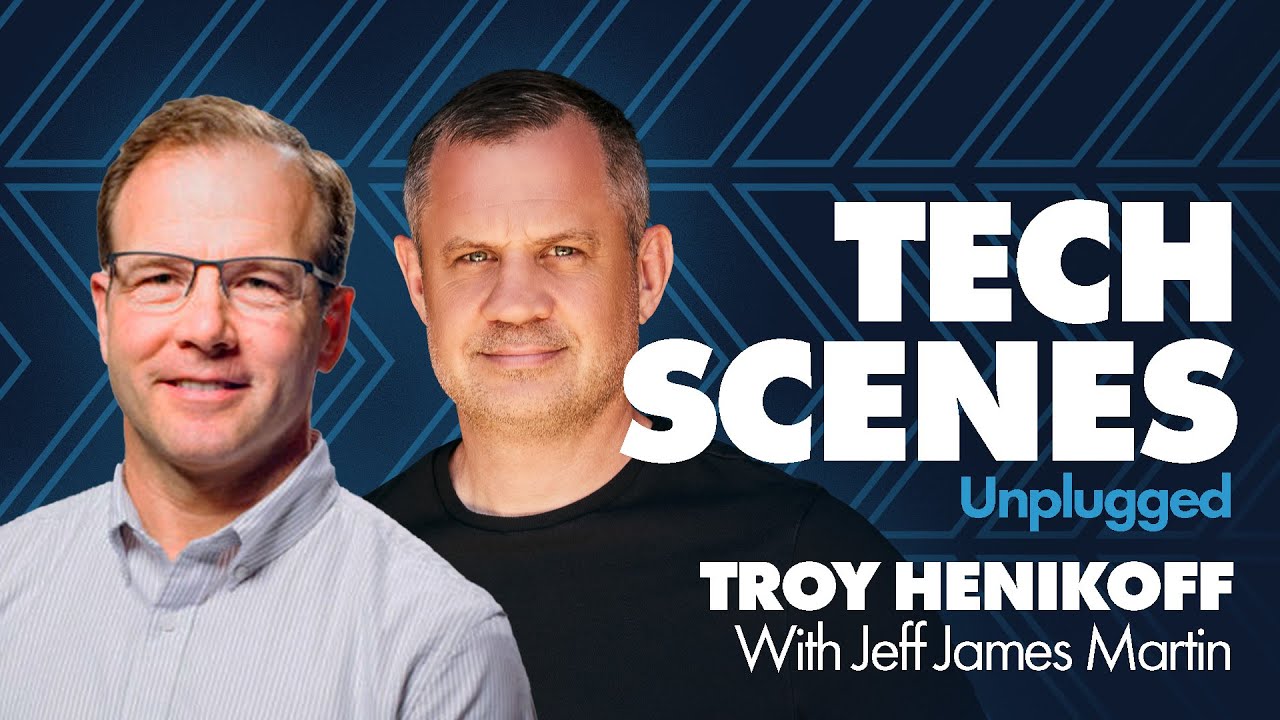
Tech Scenes Unplugged with Troy Henikoff, Managing Director of Math Venture Partners


Entrepreneurship, fundraising, and practical advice for startup founders :: with Troy Henikoff

Troy Henikoff, Managing Director of MATH Venture Partners, on Fireside Chicago, April 9, 2020

