Tech Scenes Unplugged with Troy Henikoff, Managing Director of Math Venture Partners
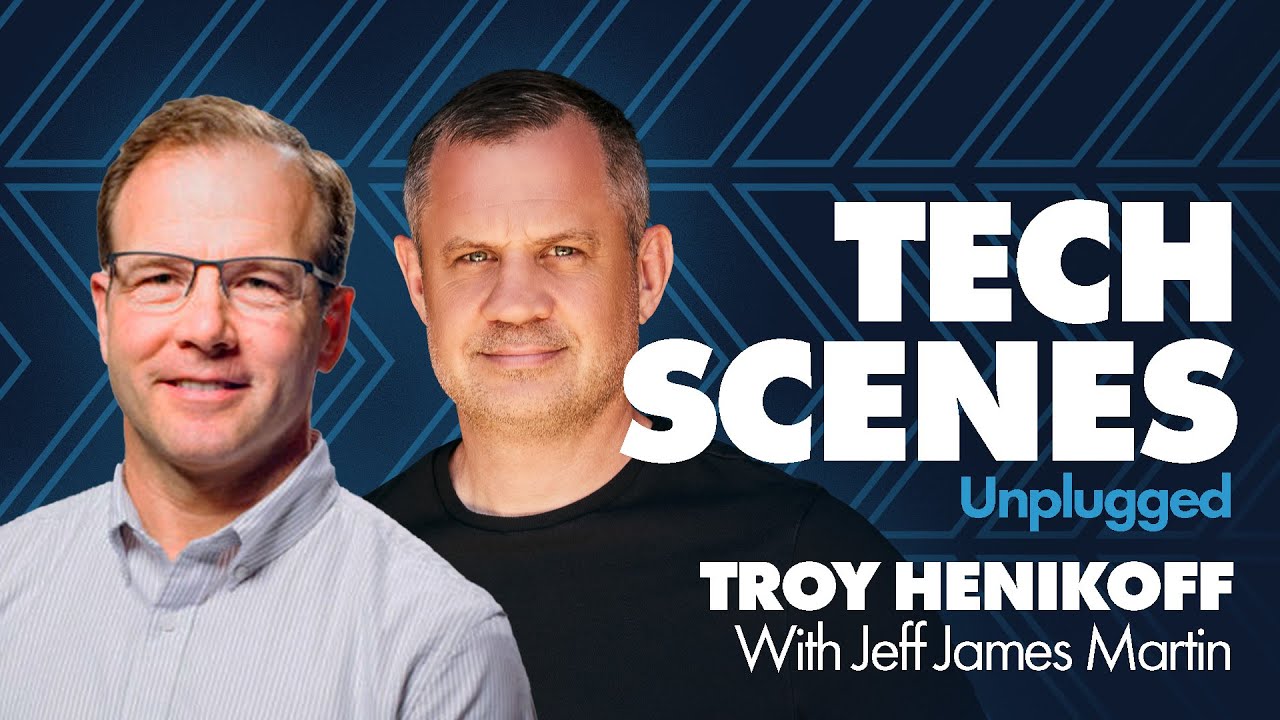
In this interview, Troy Henikoff, Managing Director of Math Venture Partners, shares his journey from serial entrepreneur to investor, educator, and board member. He explains Math Venture Partners' investment thesis that prioritizes companies with strong, unfair customer‑acquisition advantages, and why focusing on creating real business value beats the obsession with fundraising. Henikoff discusses the importance of capital efficiency, the discipline of saying "no" to preserve time and money, and the need for founders to evolve from scrappy builders to CEOs with scalable operating systems. He outlines best practices for board meetings – pre‑read decks, managing by exception, and a clear distinction between budget, forecast, and actuals – and describes how to compose a board like a football team, emphasizing diversity of background and skill gaps. Transparency and intellectual honesty with the board are presented as non‑negotiable for trust. The conversation also covers the role of OKRs and weekly cadence in aligning teams, the value of lifelong learning, and critiques of the current venture‑capital culture that over‑emphasizes valuations instead of delivering customer value. Henikoff shares anecdotes from his time at SurePayroll, Techstars Chicago, and teaching at Kellogg, and ends with a personal note about his favorite album, Warren Zevon’s Excitable Boy.
Chapters
There's too much focus on the fundraising and not enough focus on the accomplishments of the business as a business. Value is created for both you as the entrepreneur founder and for the investors in the delta between the post-money of your last round and the pre-money of your next round. And I want, for people that is not intuitively honest, I want you to think about it. Because if you keep doing additional rounds, you do a round with a post-money of $10 and your next round is a pre-money of $10, and then what you're doing is you're stacking capital such that the value of your company is basically equal to how much You haven't created value for anybody, and when you sell that company, if you sell it at the post-money of the last round, all the investors get their money back and no more, and you get almost nothing because there's nothing left for common. Value is created when you raise a relatively small amount of money and then have an exit at a relatively high value. That's when value is created for everybody around the table. Yeah, I am. The judge.
Troy, welcome to Tech Scenes.
Awesome, Jeff. It's great to see you again. Last time we did this, it was in person.
Yeah, I should say welcome back to Tech Scenes.
No, it was fun. We had a good car ride. We did a little walk around Lake Michigan. It was, well, not around Lake Michigan. That would've been a long walk, but we did a walk along Lake Michigan. It was great.
It was good. It was good. Actually, that, there was a photo of that that I had that was like my LinkedIn background photo of you and I walking. Out there.
Cool.
For years. For years.
I think that was North Avenue Beach. We were out, out on the breakwater looking back at the, uh, at the skyline of Chicago. It was awesome.
Yeah, it was a good time. Um, I love doing tech scenes in Chicago. I got to eat pizza. I got to do all my favorite things. So for people that don't know, let's, let's, uh, why don't you give a brief overview of Math and kind of where you guys are at right now?
Yeah, so for the quick trajectory, I was a serial entrepreneur. I built a bunch of companies, and then I started getting involved in helping other companies via teaching at Northwestern and Kellogg. I'm at Kellogg right now. I teach one quarter a year. Angel investing, spinning up the accelerator here in Chicago, originally Accelerate Labs. We became Techstars Chicago, and then investing and, uh, investing through Math Venture Partners, which, uh, We started in 2014, and MATH is a, you know, fund investing in early-stage digital technology companies. Our specific thesis— I know this is going to strike you as strange, but all of our successful companies had something in common: they had a lot of customers. And so we like to invest in companies that have an unfair advantage in customer acquisition because we believe that that's the key that unlocks growth. And we raised Fund 1 in 2014, Fund 2 in 2018, and we're scheduled to raise Fund 3 in 2022. And with the economic conditions and what was going on at a macro level, we decided, you know what, we're not going to raise a third fund. We're going to focus on helping the companies that we have. We're going to get them to great exits. And a great outcome would be when our LPs say, why didn't you ever raise Fund 3? Funds 1 and 2 returned so much money. Hopefully that'll happen. We'll see. But so today we're not making new investments at MATH. We do have 43 active companies. I'm on 9 boards. Like, there's a lot of work to be done. People think, oh, you're retiring. I'm on 9 boards. I mean, just think about how much time that is. And in addition, I'm still teaching one quarter a year at Kellogg. I'm doing some angel investing, a little bit, very specific around Chicago. And I'm also, as of the last 4 or 5 months, helping David Cohen with some of the The new stuff he's doing with Techstars. So helping as Techstars rolls back out to local communities, et cetera, I'm spending a bunch of time helping them think about how they do that.
Is that similar to like how Techstars Colorado is launching?
Exactly. So you saw that, you saw the announcement that Nicole made most likely. So—
I talked to Nicole yesterday.
Great. So Boulder is the first of the cities that we're returning to. And, uh, so we're looking at Boulder. I can't really say what other cities they might be, but if you think about the cities that I'm passionate about and Techstars used to be in and they said they're not going to be in, they're going to be back. So, um, so a handful of them. So we're starting with bringing Techstars back to those cities with a slightly different model. It's more community focused, like you saw in Nicole's post. And Nicole and Natty are going to do an awesome job with Boulder. We're teeing up the co-chairs for the, for other cities. They haven't been announced yet, but they should be shortly. And, um, and we're going to roll it back out and we're going to do it in a much more organic, community-focused way where the accelerator is actually owned by the community and Techstars is powering it. And you get kind of the best of both worlds. You get local investors, local mentors, local capital, which means as those companies are successful, the more capital goes back into that local ecosystem. But you also at the same time have all of the learnings, materials, content, and network of Techstars global network. So it's sort of the, I think it's the best of both worlds. It's going to be awesome for entrepreneurs. I love to help entrepreneurs. And so even though I wasn't looking to spend more time, and I certainly wasn't looking for a job, when David called and asked me if I'd help, I couldn't turn him down.
Right. That's awesome. Yeah, it's kind of a community of communities.
Mm-hmm.
And I think— That's a good way to— Techstars has always been about community and growing that community. And yeah, that's awesome. And the model seems to make so much sense. I would think early days Techstars, one, I don't think they ever thought they would've got as big as they did. And, you know, in hindsight, you can see kind of where the model should probably be, but they would've never been able to get to where they're at today if they didn't just go Yeah,
no, and you said something, you know, never— I'm sure that David back in 2007 when they ran the first one didn't realize how big it was going to be. And then it got, you know, lost its way a little bit in terms of size and scale. And as David has come back, one of his very clear commitments— he's funny, he's, he said this to the whole company, he said, bigger isn't better, better is better.
Right.
Like, bigger does not mean better. Better means better. So let's make sure that we're not focused on scale, but we're focused on delivering better products to entrepreneurs. The entrepreneur is our customer, and that's who we have to serve. And if we do that while supporting local communities, it's a trifecta.
Yeah, that's awesome. Yeah, I got to spend some time with David and Brad Feld a little bit. There's, I think it was their FounderCon just, I don't know, 6 months ago or something like that that they had out in San Francisco and spent some time with them. He gave me a really nice blurb on my book that I really appreciate. But he has always been all about founders and it's easy to connect with people like that.
Yeah, no, they both are and they're both good friends and they're both, you know, because Brad isn't raising another Foundry Group, he has a little more fund, he has a little more time on his hands. And he's getting back reengaged with Techstars as well, which is great. When I ran the Techstars Chicago program, one of the things that was amazing was we had 10 CEOs and once a week we sat in a conference room, the 10 of us, me, and then we had a big screen and we had Brad at the other end. And the 10 CEOs all got an hour of Brad Feld every single week for 12 weeks. He did that for our program for 4 years. It was awesome. It was really, really great.
That's so cool. Yeah, it just goes to show, like, the more cycles that you have with companies, the more companies you're under the hood of, the more things that you see, it just makes— that knowledge adds up. You don't need to be brilliant, but if you see things over and over and over again, which those guys have, um, at scale, um, it's definitely really easy to see how to do some things the right way. Very simple. There's low-hanging fruit. In a lot of— there is building communities or, or building companies.
There's a lot of pattern matching, but I think Brad has something else that's special in that he has an empathy for the founder in a way that not many VCs do. And he's really, really good at understanding the difficult positions that founders are in, how they get— I mean, he personally had his own journey as a founder and as a CEO, and Um, this is why, and I, you know, had my journey. I was a serial entrepreneur long before I was an investor, and I'm biased, but I think that while you should have a diversity of types of investors on your board and on your cap table, I think the ones that were operators add the most value in the long run. So just my personal self-serving opinion.
Well, you, you know, you and I both think alike. In, in that realm. I, I, I really believe execution's everything, and that's really operating.
Yes.
And, and people say that all the time, but I think they, they get lost in thinking that's just another, like, good phrase to say. But execution's everything. Everything.
Yeah.
And
if— here, here's the way I, I get people, whether they're students or they're entrepreneurs, who will come in and be afraid to share their idea because they think that's the thing that's valuable. And I have this dialogue with them. I'm like, you really think your idea is the part that's valuable? Yeah, yeah, nobody else has thought of this. This is like, okay, so what's going to happen when you actually take this to market? Because now your idea is public. You don't have— by definition, if you're selling it, you're talking about it. So you no longer have an exclusive on the idea. If the idea was the valuable thing and you no longer have an exclusive on it, What do you have that's of value? And that's when they get this really long face and realize, oh, I've got to execute better than anybody else. Aha, that's the value.
Right. And as making investments though, I mean, turning this to like the investment world, you know, I always ask the people like, you know, what do you invest in? And it always comes back to the same things. It's, you know, it has a big TAM and I love You're probably the only person that I think I've ever heard tell me that it's all about their go-to-market or they're having a competitive edge in being able to get clients, right? Like
acquire and retain customers. If you can acquire and retain customers, everything else becomes much easier.
Right. Um, and then they're like, and it's the founder and the team, but I don't feel like people spend as much time or really have a good grasp on how to evaluate a team if they can execute. And I mean, looking at my, you know, what I wrote and what I teach teams, like, to be frank, most teams I come in have big gaps in their operating system. They have big gaps. You know, oftentimes what I see is a CEO, you know, builds the first team and then they're like, okay, now I need to bring some additional people in here. Now we're gonna be team of teams model. And they bring in, you know, a head of product, uh, maybe a head of sales. They bring in head of engineering. And these people that come in, they hire really great people that have been there, done it before, and they all come with their own systems. And so now the CEO's like, well, you know, Steve, my head of recruit or my head of sales wants to use OKRs. And then I got this person wants to use initiatives and this guy wants to use this EOS thing. And they don't have like one system and he's trying to be collaborative, or the CEO's trying to be collaborative and he's like meshing together like a new operating system. And I see that happen like every single company versus like finding one system. And that's where I come in with the system with Peak. But what that system is, like a lot of companies don't have that. So if I'm investing in a seed round or even an A and sometimes even a B, do you think investors are really looking at, do they have the right people? Do they have the right execution model? Do they have what they need to actually Operate and execute.
So I think the relative importance of those pieces varies based on the mature— the continuum of the maturity of the company, right?
So
I'm going to take 2 very big extremes to make my point. At the very earliest stage, when you're a startup and you just have an idea, the founders are really the only thing that matters. And the reason I say that Is that these in the earliest stages, you've got an idea, but you're going to go test it. You're going to do customer discovery. You're going to pivot. You're going to pivot again. You're going to pivot again, and you're going to pivot until you find something where you get product market fit. Then you're going to go execute. The only thing that's consistent from the time you first met them till they're executing is the people. All the other things changed: who they're targeting, who the market is, how they're talking about like. And so at that earliest stage, the only thing that matters is is the founder. So. When we're selecting companies for Techstars, we talk about team, team, team, market, solution. But it's team, team, team, the first 3 things. Let's take the other extreme. On the other extreme, let's take a publicly traded company. You know, it'd be reasonable, and not just reasonable, but happens all the time, for me to invest in a publicly traded company where I don't— not only haven't met this team or the CEO, I don't even know the name of the CEO. You know, who's running IBM today? I have no idea who that is. Could I invest in IBM based on numbers and a spreadsheet, earnings per share and P/E ratio, whatever? Of course. So at one end of the spectrum, it's all about numbers and operations and, and that stuff. And at the other end, it's all about the humans. And as you go along that continuum, it changes. It's sort of a, you know, one phases up and one phases down. So, you know, when you're looking at pre-seed, and I hate using those labels because pre-seed means something different to everybody, but when you're looking at some of the first money going in, generally pre-revenue, you know, it really is all about the team and the people. And by the way, the people who are successful at building a company at that stage need an entirely different set of skills than the people who are successful at taking something from what most people would call Series B to a Series C. Where you already have product market fit, you already have processes, and you're really incrementally improving and scaling. And so most of the time, the leadership is going to be different between those 2. Sometimes it's not. We all know some examples where it hasn't been, whether it's Zuckerberg or Bill Gates or, you know, Larry Ellison, whatever. We can find tech—
One in a million though. One in a million.
Yeah, but the vast majority of them are that. And You know, when we started SurePayroll a long time ago, we're the first internet payroll company in the country. I literally told my wife then, I'm like, oh, we're going to do this thing. This was the first dot-com bubble. We're gonna do this thing. We're going to take it public. I'm going to be a publicly traded CEO. It's going to be a once-in-a-lifetime opportunity. We can't give this up. I've got to work hard on this. Well, a bunch of things happen, not the least of which for this story is I would have been a really bad publicly traded. I would never have made it as a publicly traded CEO. I'm a pretty good founder. I'm really good at scrappy, put it together with bubble gum and duct tape and figure it out, product market fit, bob and weave. But by the time we got to 80 employees and I had managers reporting to me about the people they're managing, I don't know if it's that I wasn't good at that, so I didn't like it, or I didn't like it, so I wasn't good at it.
Right.
But that's not the cloth I'm cut from. 80 people, I'm like, this is no fun anymore. I want to go do a startup. I want to roll up my sleeves. I want to get dirt under my fingernails. I want to be in the code. I want to be talking to the customers. I want to be figuring out product-market fit. That's the stuff I love. And so I'm a good founder, but I'm not a good CEO.
Right.
There are many people who are really good CEOs and process-oriented. Like, I hear you talk about peak teams and how important that stuff is. But it's not important day one when there's 3 people with an idea in the same way that it's important when you're, you've raised a lot of money, you've got real revenue customers. So, um, you know, and I think it is unusual to find people who can do both. And we have a couple in our portfolio, but, um, but, you know, eventually you tend to need a different skill set. So either the people running the early stage are going to have to adopt and learn and, and move to that skill set. Or you're gonna bring in new people to help augment it?
Yeah, I think the first team— well, I have a few thoughts on that. One is, from day one, it's the scientific method. As a founder, you have some ideas, you have some hypothesis, you're out there and you're trying to figure out what works. You're like, you're crafting— I'm gonna go test, uh, talking about it this way. I'm gonna, I'm gonna build this and see if that resonates, you know, with just some wireframes. And I'm gonna do this. And then you figure out where you start to get traction on some of those ideas. And it's the scientific process, right? And I think as an early stage founder, when it's just you and the team and you're probably managing everybody, right? That's fairly easy. I think when something like Peak, having an operating system is once you get about to that 20-ish employees and now you have to hire people that are hiring people and it becomes team of teams, I think that's one of the biggest switches where it's like you can't manage everything yourself anymore. And if you do, you become the system, right? You're the system of, hey, this is where we're going, what we need to do, this is what I need you to do, and then checking on if everybody's doing it.
And you're the single point of failure. It's right, it's, it's a bad setup.
Yeah, once it goes beyond the pizza stage, pizza party stage of one pizza, you know, you have to have some sort of model. But I think the The execution is the same. It's now, it's that you need each of your teams running and trying to iterate and pivot. And I know a lot of people think the word pivot's a bad word, but the reality is there's these micro pivots that you're doing always when you're trying to figure out a business. There's a bunch of micro pivots. And I think that as a founder, or if you're looking at making an investment and looking at a leadership team, making an investment to see if they can execute, it's really pinging on Where have you iterated? Where have you pivoted? And how successful are you at learning, sharing that learning, and dialing into what is the most important thing to dial into? And I think some people don't really look at that, but I think that's one of the probably biggest strengths of teams that succeed are the ones that can test a lot, pivot, dial in, and find their way to what they, they really want.
Yeah. And so you just talked about the, The kinds of activities that successful teams embark on. And I agree with that. But as an early-stage investor, I'm looking for what are the characteristics and personalities that will lead to that kind of activity. And so I'm looking for people who are intellectually honest, people who will take accountability and say, well, I tested this thing and it, you know, it didn't work, but that's okay. I learned from it and here's where I'm going. And And, you know, it's very interesting because, you know, many great entrepreneurs have pretty big egos and are pretty stubborn. But if you have too big an ego and are too stubborn, that can get in the way of being intellectually honest, taking accountability for your actions, and figuring out that you're not always right and the customer is who's right. And how do you use the data? How do you use the results from those scientific tests? To guide your decision-making. And I do think that there are some personality characteristics like that of the founders that I enjoy working with the most and that I see become the most successful. Now, what's interesting is that you have these exceptions that get a lot of press. So think about Steve Jobs. I'm guessing that Steve Jobs, I never met him in person, but he probably had a pretty big ego. He probably was pretty stubborn from what I know. I know people who worked for him directly. And he's not what I'm describing, right? Yet he built one of the biggest companies in the world. His investor base got frustrated with him, kicked him out. The company did worse. They begged and got him to come back in. Like, think about that trajectory, right? And there are others we could point to who have similar big personas, but those are the exceptions. And one of the other things that I try to remind entrepreneurs of They'll say, well, I read about this company that, you know, went from zero to $1 billion in value in 2 years. That's what I should do. And I try to remind them, well, you read about it in the news because it's not normal. That's not average. If it were average, they wouldn't write about it. They don't write Troy Henikoff got up today and walked across the street. That's normal, but it's not news. And so what you read in the news, don't expect that to happen to yourself. Boy gets hit by lightning 3 times. They write about it because it's abnormal. So, um, sometimes reading too much of the press is a disservice.
100%. 100%. I would say, uh, I've narrowed it down to 5 behaviors of high-performing teams. Um, it's what I wrote about, but one of those behaviors that we can talk about right now, and I would be surprised that you wouldn't, I'd be surprised if you disagreed, but one of them is learning. Like that, you
have to be a lifelong learner.
Lifelong learner. And actually, I think master the art of learning to learn. And you can use Steve Jobs as an example. Again, I would argue the fact that he was a lifelong learner, right? Like everybody has their own personalities, but the people that are just so eager to learn are the people that you really are, the ones that are able to change, which allows you to evolve, right? Yep. And it's, it's same with your team. And, you know, I, I've had a recruiting firm for over 20 years as a division of Collective Genius. And that's one of the things for venture-backed companies, companies that are doing things that have never been done before, cross-functional teams. If you are looking to actually grow, you have to have learners on your team. 100%. And you have
to
drill those, those interviews on, give me examples of what you're learning, what you like to learn, and your people aren't willing to learn. They're not willing to change. And if they're not willing to change, you're not going to be able to grow.
So Jeff, I have to say that it's one of the biggest gifts of being an investor. I'm not an investor today because I need to pay my mortgage this month, right? I'm like, I'm an investor and I love what I do, and I've continued to invest even after Math isn't making new investments because I love to learn.
Yeah.
And, you know, I tell people, what do I do? I sit at a table, or a Zoom these days, but whatever. I sit at the table and I have people coming in telling me about how they're going to change the world, about what the next greatest technology is, about how they're going to make the world a better place to live. And, you know, one out of a few hundred of them, I get to actually go help and work with to try to achieve those dreams. And the only way I can do that is by being open-minded And by learning all the time.
Yeah.
And not just learning new technologies, but learning about customer behavior and learning about new ways to think about the approach to business. Like, business has changed. Everything has changed. If you don't wanna be a lifelong learner, you can't sit in this seat.
100%.
And then, you know why I teach at Kellogg? Because I learn so much from interacting with the students and teaching. I'm about to take a group of 12 students on a trek to San Francisco to learn about AI. We're going to spend 3 days meeting with OpenAI and Google and NVIDIA and Techstars. And, and I feel like I learn more than the students do, right? I love it. And, uh, it's great. It's great. And I can't picture— like, people have said to me, what are you going to do when you retire? And I'm like, when I what? Why would I retire? Like, this is the thing I want to do for the rest of my life.
When you stop learning, what are you going to do when you stop learning? It's not gonna happen, right?
I don't want it to ever happen. Exactly.
Well, you know, it's funny, I, about 18 months ago now, uh, a CEO came to me, a fintech CEO, and she said, hey, I'm having these problems. My team isn't in alignment. Like, I have my product team wants to go this way, sales is saying this other thing, uh, I'm trying to get 'em together. Then I have this, You know, customer success team. I think they're just not as mature, so they're not really servicing the client. And then she's talking about all the kind of problems that I usually hear, right? Like, we don't have alignment, so we don't know where to focus. My team's going in 5 different directions. We're not communicating properly. Um, so as I was asking these questions, I'm like, are, you know, you have the cadence, you know, are you defined tools? Are you using some sort of like OKRs or goals? All that stuff. A lot of that stuff seemed in place. And the more that we talked and met, about working together, I started hearing things that were like, I'm telling them to do this, but they don't do this. And, but everything has to come through me, you know, and I'm sick of making decisions on everything. And then this team's not doing what I've asked them to do. And, you know, what came down to the bottom line of this is that this CEO in particular, and I said, no, probably not a good fit for us to work together. Just wasn't collaborative. And not only not collaborative, but just felt like they knew exactly what they needed to do and nobody else was getting on board doing it. And really they were standing in their own way. It reminds me of like all those, I'm a total geek for entrepreneur shows, but if you ever watch like Bar Rescue or any of those shows, when that Jim Taffer or whatever his name comes in, he always finds that one thing that that entrepreneur is not willing to do. There's always like one thing that they're just not willing to do, you know? And he makes them do it and then it turns the business around almost every single time. And it, I mean, like in this scenario with this CEO founder, and I believe they were at Series A going to B, they were just stuck because they were getting in their own way and they weren't open-minded and collaborative. They, I mean, they maybe were wanted to learn, but they weren't allowing themselves to learn or their team to learn.
Yeah, totally. So, you know, both when I was running companies and now as an investor, so like I, I'm on a bunch of boards. So I had 5 board meetings in the last 2 weeks. This is board meeting season. It's, you know, 4 weeks after the quarter is closed, 5 weeks after the quarter is closed. And I view my role as a board member and viewed my role as a CEO as I was there to support the people who were running the company when I was a CEO. And when I'm a board member, I'm there to support the CEO. And it's interesting because many entrepreneurs come into that relationship, or the first time they have a board member, if they're a first-time entrepreneur and they go to the first board meeting and they feel like they're reporting to the principal, you know, they're like the 5th grader who got taken to the principal's office and they gotta sit there and report what happened. And I, it takes a couple of meetings and then they realize, no, wait a minute. Good board members are trying to help me think through difficult problems and come up with creative solutions. And they empower me. You know, if they ask my opinion, I'll give them my opinion. I don't sugarcoat anything. But at the end of the day, if you're the CEO and I'm the board member, I'll give you my opinion, but I'm going to say, Jeff, you decide. You write the checks. Right. And same thing when I was CEO. Is I had department heads and people are running stuff, and I felt like my job was to clear all of the stuff out of their way so they could do their job. If, if I did a reasonable job of articulating where we're going, so everybody knew we were rowing in the same direction, I made sure that we had the right people on the bus or in the, in the boat rowing in that direction. and I made sure we never ran out of money, those 3 things, we were going to be successful,
right?
And so I didn't dictate what they did. I just dictate— helped dictate where we were going, and they had to figure it out. And that made it way more interesting for them, and we were partners in this journey, and it was more fun for me. And that's just my style. There are very— there are many styles, as you know, of successful CEOs, and my style was always very collaborative.
The board meeting's interesting, and I think it's similar to the weekly meeting that I teach and my teams use is the board meeting's really about, hopefully you get your board notes so you kind of know where everything is, but the meat of the board meeting should really be about talking about new opportunities or solving big issues and getting feedback and relevant experience around that to help give inputs to the CEO to make a decision. Oftentimes bad board meetings, and I'd love to get your perspective on this, are where you get a bunch of presentations and no conversation.
Exactly. 100%. Not kidding. I had 5 board meetings in the last 2 weeks. And, um, and I just had this conversation with the management team of the last board meeting I had yesterday. The best board meetings from my perspective, both because they're the most interesting to me and because I think they're the most effective for the company, And I think it's very formulaic. The company has a set of charts and graphs and numbers that are published each quarter. It's always the same so that it's easy for the board members to read and interpret. It makes it less work for the management team because they just have to fill in the updated numbers. They then have some new information, probably some back information on what we're going to talk about, Reid. And that goes out as a pre-read deck one week before the meeting. And it's very clear when it's sent out, this is the pre-read deck. We are not going through these slides in the meeting. If anybody has any questions about anything on the pre-read deck, please email me. We will address the questions live in the meeting. And you get some questions and then you spend the first 15, 20 minutes of the meeting, say, oh, there was a question about slide number 5. Let me explain. The dotted line was actually blah, blah, blah, blah, blah. You clarify, you have discussion around it, you're done. Then you say, the goal of the meeting is I have 3 strategic things that we need to talk about. Should we be going upmarket or downmarket? How do we think about CAC LTV? What do we want? Whatever they are. And you spend the rest of the meeting talking about the meat. And what's, what's so great about it is, A, it's way more fun for the board members because it's interactive, but B, for the management team, they're getting feedback. A board meeting is a once-a-quarter opportunity for you to see the forest. And not just the trees, because you're so in the weeds, you're so in the trees that you don't actually get the opportunity to step up and see the big picture.
Right.
But if you're interacting with board members who aren't in those, the deep weeds with you, they see the forest. And so it's your opportunity to step up and see the big picture. And I think those are the most productive. I think they're the most fun for everybody and the least stressful. It should not feel like you're being dragged down to the principal's office to report. If it is, you have the wrong board, you have the wrong dynamic. Yeah, it should be something you look forward to. I can't wait to discuss this with my board and get some input because I want to see things from different perspectives. And in order for this to feel fun and great like that, there has to be mutual trust and respect,
right?
In that the management team has to feel like, I'm gonna get input But I have the freedom to make that decision myself, like, yeah, as a management team.
That really is in alignment and with my belief in how I've taught teams to do their board meetings. And it really parallels how I teach the weekly camp meeting that I wrote about in Peak Teams is quarterly, annually, we do a session where annually we define a 3-year vision, a 1-year plan, and OKRs for the first the next quarter. And then we spend time in triage discussing the most important discussions. Prior to that, we do some review of a survey and kind of unpack our thoughts with our teams and, and together. Well, when you come into the weekly meeting, we've already defined what are the top 5 objectives for the leadership team that we want to accomplish this quarter. The key results, which is a mix of different people on the leadership team that are owning each of those, which has a name on it and a date on it. And we walk through those OKRs. Are they on course, off course? We walk through our KPIs that we've set in our 1-year plan and boil 'em down to monthly or weekly. Are they on or off? Anything that's off course goes into what we call triage. Once we get to updates where we go around the room in the weekly meeting, there's 0 to 1 updates. And because the rule is the update is only an update and it has to be prepared ahead of time, it has Makes sense for the majority of the people in the room, and there's no discussion because it's an update. Now, most teams spend all their time going around the room giving updates. Yeah. And the reason why they do that is because they didn't do the work ahead of time quarterly defining what we're actually gonna do, what we, who's gonna do it, when it's gonna get done by. And so they're always like doing a mess of these updates. Everybody's been in that meeting where that it gets to that one person, Steve or whoever it is, and you know he's gonna talk for like 15 minutes just To let everybody know that he's doing his job. And it's just a waste of time. So by doing this upfront, defining our OKRs and our KPIs, we just walk through it. So now we get the triage, which is very similar to the board meeting, and we say, here's the things that are off course. KPIs, maybe, maybe it's a key result or an objective or anything else that people want to talk about that's relevant, urgent, or important. And we rank those. We choose what are the top 3 things or 5 things, and we start one at a time and we walk through a very simple way of assessing the situation, pulling the onion back. What's the core issue? Finding solution and solving it and getting it off. And then what's the next action step to actually do that? And we track those action steps. But again, similar to the board meeting, it's really about, let's not unhash everything and talk about everything we know that we're already doing or what's going on. It's, Let's solve some problems or talk about big opportunities. And then every week cadencing on that, that allows that pivots and those micro pivots, you know, this is stuck. Is there another way that we can get to this? You know, like we don't, our sales process isn't working or we're not getting enough leads. You know, how can we get better leads? You know, and solving those problems. What it does is also gives transparency throughout the leadership team. And people know what everybody else is working on, and we don't have to keep on giving updates on those things.
A simple way that I like to think about this is it's sort of like managing by exception. So in managing by exception, we're only going to deal with the outliers. Let's communicate everything in the board packet, right? The KPIs, all OKRs, all that stuff. And let's only deal with the exceptions. What are the problems? What are the opportunities? Because we don't, it's a waste of time to spend time on the, on the stuff that's going on course and that's normal. So,
right.
I think you and I agree. Very strongly on this.
Right, right. I probably go another layer deeper, probably in the operating philosophy of, I think a CEO should know what people are doing and how they're doing it, but I think they don't need to tell them how to do that. I think it's a collaborative process for everybody to kind of bring that together. But I think when people talk about visibility and the visionary, you know, CEO, you have to have vision forward, but you also have to have that vision in the organization, and you shouldn't have to use your energy to scope in and scope out by having conversations. We should already know what that is. And they, and I think a lot of CEOs spend a lot of their time going in and solving a sales problem, then going in and solving an engineering problem when the whole team, not only the CEO, should really know what everybody's working on because that milestone or release of engineering's gonna impact marketing and that is gonna impact sales. So by laying that out in 3-year objectives, 1-year objectives, and quarterly objectives, We have that timeline, like you said, rowing in the same direction, but also the full team has visibility of what's going on. 'Cause if one of those things stop, it's gonna affect everybody else. And I think all venture-backed teams, all teams that are doing things that have never been done before, are typically very cross-functional teams. And not having that visibility is typically what stalls them out.
Yep. No, the good ones certainly are.
Yeah. So I have a, I have a question for you. You sit in a lot of board meetings and you just kind of went through that process. What makes a good board member?
Well, so I don't think there is such a thing as a single definition of a good board member. If I were running a company today and I were selecting a board, I would want a diversity of board members. And I have a few different objectives here. When I say diversity, I mean diversity in many dimensions. I would love to have diversity ethnically, you know, gender diversity, racial diversity. I'd love to have all that, not just because I think it's a good thing to do, but because I think that people who've had different life experiences are going to bring different perspectives to the table. And again, if you think about how I described it as a board member, I want to communicate my perspective, but I want to let the CEO make their decision. Well, the more diverse the perspectives around the table are, the more information the CEO is gonna get about how customers, about how employees, et cetera, work. I also want diversity around skill sets. So I think about a board member, a board as sort of like a football team. And I use a sports analogy. I apologize. I'll be specific. When we talk about basketball team, you have 5 people, all of whom can basically do the same thing. Any of the 5 people can get a ball, they can dribble, they can shoot. You have 5 good skilled dribblers and shooters, you're going to do well. Some are offense, some are defense, so it's not that specialized. A football team is very specialized. You have someone whose only job it is to kick the ball between the uprights. You have somebody whose only job it is to pass the ball, somebody whose only job is to catch the ball, right? Blocks, be a center. And a board is sort of like a football team. And what I want is I want somebody who has deep industry expertise. I want somebody who has scaling expertise in the range, not where I've been, but where I'm going, right, forward. So if I'm at $10 million, I want someone who's taken a company from $10 to $30 to $100, right? I want somebody who has deep financial expertise, who's going to help me with connections and with structuring that next round. I want somebody who has deep operational experience who I can go to and say, oh, I've got a problem. I have 2 VPs who are fighting and whatever it is, you know, I want somebody who has deep sales expertise now. And I could make a Venn diagram of all of the skills I need in my company. Some of them the management team is going to have. I don't need that on my board. I don't need that on my board. And then I'm identifying what the holes are and I'm trying to fill those holes of expertise with my board. Now you're not going to do it perfectly. You're always going to have some holes and you shouldn't have a giant board. The way I described it, it sounds like you need a 15-person board, right?
You
know, startups, your first board, when you get your first money, should be 3 people, right? You know, and then maybe you, you get a little further, you do your next round, you add another investor, maybe a 5. Right. But, you know, boards of more than 5 get to be a little difficult to manage scheduling and timing and signatures and all that stuff. So in this early stage where I play, You know, I don't think I'm on a board that has more than 5 people. So some people will play multiple roles, right? So me, I'm an operator first. I feel like I have lots of operating experience. I have decent financial skills. I give talks on financial modeling all over the world, literally. So maybe I fill 2 holes. But that's how I think about a board. It's a football team. You need a various set of skills. Map what skills you have, see where your holes are, and bring people on who can help fill those holes, knowledge holes.
Yeah. And then if there's still gaps, you know, then what's the role of the founder? How do they fulfill those gaps? If there's still gaps between their management team or a leadership team and the board, you know, what would be your recommendation?
So this is a good place where you can use other investors who aren't necessarily on the board but have a vested interest in the company. So a lot of times, Early stages, some angel investors, et cetera. I'm not a huge fan of a formal board of advisors. Part of the reason for that is I had a board of advisors at SurePayroll and it didn't give me much value. And I want to be 100% clear, it is not the fault of the advisors. They were amazing. I had 4 literally world-class advisors, but I didn't have the time to manage that and manage the board and manage the company. So I failed at managing the board of advisors. So we had a quarterly board of advisors meeting, and they would come in and I'd have a little slide deck that I had thrown together an hour before, and I'd say, okay, here's where the company is, here's where our revenue is, here's where our— boom, boom, boom, boom, boom. It was a 90-minute meeting, and at the end of that they'd say, oh, sounds like everything's going well, Troy. I can't wait to hear the update tonight, you know, in another 3 months. And they leave, and I got nothing out of it. Now, I think I would do better today, but it's a lot of work to have a— have 2 boards.
Yeah.
And it's a lot of work to have one board. Now, it, it's a ton of work, and I want entrepreneurs to hear this. It is a ton of work to manage a board properly, and the rewards are 10x what you put into it. So if you put very little time into it, You're going to get very little out of it. But if you take the time to keep your board members updated, you prepare the right materials, you get everybody rowing in the same direction, your board and your management team, et cetera, it can be the most valuable resource you have.
So let's dig into one little other area. I'm real curious. A lot of CEOs are not sure how transparent they should be with the board or what information or how much information they should provide the board. What would be kind of your thoughts on like how much, how much detail do they need to see and what level do they really care about?
So I have a very strong opinion on this. If you are not comfortable being 100% transparent with your board, you have the wrong relationship with your board. Whether it's you have the wrong attitude, whether you have the wrong board members, I don't know, but it is a failed relationship. Now, that doesn't mean that you give them everything every time because you'll inundate them and they won't have enough time to assimilate it all and to distill out what's most important and to give you the right feedback. So there's a difference here. One, you should feel 100% comfortable having your board see everything in your company. For a board meeting, you have to be careful. You wanna give them the basic reports. We talked about this already that they're familiar with. They know what the trends are. They know how to read those. And then you have to decide what of the things that are most important to the company do you want to share with them so we can talk about it now. If they ask about anything else, you can obviously share. You should not— you will fail if you're trying to be close-minded or close to the vest. But it is up to you as leadership to decide what are the topics I really can get the best value out of my board from discussing. And you want to give them that information in addition to the baseline. And so I want to be crystal, crystal clear here. I'm not saying that you withhold information from your board. I'm saying that you provide information to direct the conversation. And I know that I'm successful when a CEO that I've invested in calls me and says, the shit hit the fan, I need your help. And when I'm their first phone call, I know that I have the right kind of relationship with them. And I have a bunch of CEOs where that is the case, and I will cherish those relationships because I know that I'm adding the kind of value that they want and that I, that they feel they can be totally transparent. And on their darkest day, I'm their first phone call. I've been successful. We trust each other.
Yep. That's awesome. I love that. That's so important. So I have a question that kind of goes along the line with this. A lot of the teams I work with, uh, you know, we'll be doing Q3 planning, which is reviewing what's, what happened, KPIs, OKRs, what we got done, what's working, what's not working. And then we plan the next quarter. Now, one of the things that we always do every quarter is look at that 1-year plan, which we've broken out functionally, top 5, 3 to 5 things that we wanna accomplish in each functional area of the business. And each one of those has some sort of KPI. Let's say our leading indicator, like let's say sales ARR. Let's say the company's on target to hit $25 million, but they said they were gonna hit $35 million. Now we as a team choose to change these KPIs every quarter or not based on where we're actually at, right? So I have some teams that will say, Hey, we're gonna hit 35, but we're hitting 20. It looks like it's gonna be 25, so let's try to make our target 30. Now we should adjust instead of try to hit some target we're just not gonna hit or ignore it, which a lot of teams do. They just ignore these numbers that they put up. But I always wanna make sure that we're building the right things and doing the right work in the company to get us to where we want to go. So we should always be looking at the reality of where our numbers are. Now, some teams are not willing to change that. forecasted ARR number, and then some teams will, and this could even happen. I have teams that have gone over it and they'll be like, let's not change it. We said it's, you know, 35, but we're gonna hit 45. As a board member, how often do you think they should change a number like that or not change a number like that?
All right, I'm gonna try to unpack this. You said a lot in there. I believe in intellectual honesty. And so the way that I've landed on this, there are 2 components. One is that once we set a budget for the year, we keep the budget for the year and we call that budget.
Budget. Those are expenses.
No, no, no. Budget, budget for revenue too.
Okay. Budget for revenue too.
Budgeted revenue. We have a budget for the year. It has revenue, it has expenses, it has everything in it. 2 is that as we start operating, we are going to veer away from that budget. In both expenses and revenue. And that's what we call forecast,
right?
And so what we do in our board meetings is we show the budget, we show the forecast, and then we show the actuals, which is looking backwards. But looking forward, we always show budget and forecast. And so that gives you both the perspective of what did we originally set out to do, and the forecast should be a 50/50 shot. 50%, it could be over, 50%, it could be under. It should be the intellectually honest assessment of the management team of where they think they're going to land. And that gives you both perspectives. And I think that's really good. So that's how we operate. Second thing I want to talk about is we use a tool called a waterfall. I do this in all of my board meetings where it's going to be hard to show on here. If you want, I can actually give you, I'll give you a link to the article that I originally read over 10 years ago about this. And I, it's awesome where you lay out, if you could picture revenue and you laid out your revenue every month, what you expect it to be.
Right.
And then when January happens in the next row, you write down what actually happened. And now as of January, what I think every month should be. When February happens, you act, you write down what February was and what I now think. And what happens is, as you go down the year, you can start reading and you can look at, well, I thought the year was gonna end at $25 million. Then I thought it was $25.5. Then I thought $26. Then the world came to an end. I thought it was 24. Boom. And here's my current projection. And what's so great about the waterfall is that you get to see how your perspective has changed over time.
Right.
Again, intellectual honesty. You all— I have them do it for 3 key things. It's different for every company. Could be things like ARR or cash or number of customers or churn, whatever it is, whatever you think are the 3 most important things. But the waterfalls are super important, and I will send you a link to that. The last thing I want to say is that you said something that I disagree with, which was you said leading indicators and ARR in the same sentence. I don't think ARR is a leading indicator at all. No, I think it's a trailing indicator.
Yeah, you're right.
So I'm looking at leading indicators of sales. So I'm looking at things like pipeline, number of leads, all the top, the actual leading indicators that are going to lead to a better tomorrow.
100%. I agree with that.
Okay. Yeah, I thought you would.
ARR is a metric. We call it a metric, right?
Yeah, that would be great. Ultimately, you need to hit ARR, but I'm more interested on what are the activities that you can control that will impact the ARR. Like when we build financial models, we don't type in what our ARR is going to be. We type in things like how much money are we spending each month on Advertising, how many sales reps do I have? What's our conversion rate? Those are the things that are drivers or levers of ARR.
Mm-hmm. So this is interesting. How I also look at this is OKRs, and a lot of teams use OKRs or try to use OKRs. Not really an owner of OKRs anymore, and that's kind of a problem. There's some nuances to using them. I use OKRs with our teams as building capabilities in the organization. To reach our metrics. So if our, if we've set a goal to hit that $35 million ARR, Q1, we will say, what do we need to actually do in the next 90 days that's most important to reach that metric? And that's where I think OKRs are really powerful, is using them to think about what are the things that we need to do to build this organization. And some people will say, Man, OKRs are great, but it seems like I got 2 jobs now. I got my normal job and then I also need to do these OKR things. But the OKRs are part of any company that's building and growing. If you are talking about one of those big stable companies, you get it in a real big enterprise company, thousands of employees, they're gonna, you're gonna come in, they're gonna say, this is what you need to do to do your job. You're basically on an assembly line. You're not doing anything because they're probably just maintaining. And they're not rapidly trying to grow. Yeah. The earlier stage and growth stage companies, there's work that you need to do to build the organization as well as do some of that maintenance work that you need to do.
If you, if you figure out the right OKRs, it shouldn't feel like a second job. It should feel like a reinforcement of the things that are most important in your job.
OKRs are your job when you're in an early stage, early stage company.
They're your job.
They are.
But you're doing things that aren't in the OKRs. Either your OKRs aren't right or you're doing the wrong thing.
Yeah.
Like those are the only two options,
right? Or you're the wrong person for the the role.
Well, that's possible too, I guess.
So
okay, three options.
Well, that's often the case because people will say, man, this is and I always have to explain to them, this is part of your job. You came into a company that you're growing, and if you're in a maintenance company, you know maybe ten percent. would be that growth or iteration, or maybe nothing. But early stage, especially a founder from day one, 100% of what you're doing is growing and trying new things and figuring things out and, you know, focusing on those things. So OKRs done right, and I think done in layers, I have a lot of opinions on this, can be some of the most powerful tools to grow a company. And they create a lot of transparency and cross-collaboration. But you have to do 'em right. And there's just some nuances to them.
Yeah, I, I totally agree. And I think they also help make sure everybody's rowing in the same direction, as I said earlier. Because if, if everybody knows what everybody else is doing and it's all aligned properly, then again, the work that you're doing is the same as the OKRs. You're all rowing in the same direction, and that's how we get alignment, and that's how we, how we get success.
I have one last question for you. Actually, 2 last questions. One is, what do you think people aren't talking about enough in kind of this venture world, tech world? What is not discussed enough that is important?
Yeah, so the world is changing right now and it's hard to tell. So part of the reason we didn't raise our subsequent fund in '22 is people weren't talking enough about adding real business value. People were more focused on how much money can I raise at what valuation, and there was a bubble of valuations and it was crazy. And I thought they were focusing on the wrong thing. We made very few investments after '21 when the market went up like crazy. And in hindsight, I think it was very smart of us because it then came down, right? And I think that, you know, people get wrapped up in the venture world and they think about how much money did I raise? How much money did I raise? And I think they should be thinking about, am I actually delivering value to customers and have them want to pay? You know, there are 2 kinds. of VCs. They're venture capitalists and they're valued customers. I much prefer valued customers. Stole that from Amanda Leonard at Jellyvision. I got to give her credit. Amanda, shout out to you. But, um, but I, I love that saying. And because, you know, they're not focused enough on the customers. The other thing that very few entrepreneurs do is they not— they don't understand their cap table in that value is created for both you as the entrepreneur founder and for the investors In the delta between the post-money of your last round and the pre-money of your next round. And I, you know, trying to do this visually, and I want for people that is not intuitively honest, I want you to think about it. Because if you keep doing additional rounds, you do a round with a post-money of 10 and your next round is a pre-money of 10, and then what you're doing is you're stacking capital such that the value of your company is basically equal to how much capital you raised. You haven't created value for anybody. And when you sell that company, if you sell it at the post-money, the last round, all the investors get their money back and no more. And you get almost nothing because there's nothing left for common, right? Where value is created when you raise a relatively small amount of money and then have an exit at a relatively high value. That's when value is created for everybody around the table. And there's too much focus on the fundraising and not a much Enough focus on the accomplishments of the business as a business.
I think capital efficiency as a CEO should be one of the most important things to focus on. And I see the role of the CEO is, is as an investor themselves.
They are. It's your— for most investors sitting at my seat at the table, you have a portfolio of companies. And by the way, pay attention, the bigger the portfolio of companies the investor has, The less they care about any individual one. And I say that because there's some investors who have a spray and pray mentality. I'm going to make lots of investments, could be hundreds, could be a couple thousand. And the way I win is that— this is not Troy, but the way that investor wins is by having some crazy unicorns. And so that investor is going to push all their companies, raise a ton of money, go big or go home, swing for the fences, all those things. Because if, as that investor, all you need is a handful of successes and you can have thousands of failures and be a success. But as the entrepreneur, you have a portfolio of one. And so if you do something that has a very high risk, high return, if you're lucky, it's going to turn out well. But the majority of the time, it's going to be a zero. And that is something with a portfolio of one, I wouldn't be gambling with, with my company.
Yeah.
So I would be focused on how do I be capital efficient? How do I create real value? How do I grow the value of this? And that's part of the reason I've been attracted to boring industries. We made a bunch of money in payroll. What could be more boring than payroll? But you know what? It's something every business has to do. They can't do it themselves. They need to not— we had a better solution. You know, we didn't— we nice steady growth, SaaS recurring revenue. It's boring by most people's standards.
If you think of a timeline as a CEO, you are investing capital and energy over that timeline. If you think about it, like you bring money in, your job is to be as efficient with that capital and to make sure that your team is focused on the right things. You have the right people and they only have so much energy. So I think it's capital which creates resources, and energy is so important, and your job is to allocate those resources to the right things. It kind of reminds me of these old video games where, you know, there's a ton of them online where you have so many resources, right? And
you
can go mine gold, you can go mine the stone, and you need to have this right calculation to win a game. Typically, I'd play those games because I love that resource capital is, you know, moving things around. I'd fail the first time, then I'd figure out, oh, this is just a mathematical equation. And then you start to figure out what to have, right? And you, then you master the game.
I want to boil that down to the ridiculously simple. I tell entrepreneurs that when you say no, you have 2 finite resources, time and money. When you say no to one thing, that opens the door to being able to say yes to something more valuable. It's more important what you say no to Than what you say yes to many times. It's powerful to say no as an entrepreneur because that saves time and money so that you can spend them on something more valuable.
Yeah. You only have so much. You only have so much. Awesome. Well, here's the last question for you, and it's actually more of a scenario. So you unfortunately are trapped on a desert island the rest of your life. I know you didn't expect this to happen, but it's a beautiful tropical island. And fortunately in this scenario, you do have all the resources. You have, you know, food and shelter and healthcare. I don't know how you're going to get that, but you do have that. But the one thing, Troy, you don't have is entertainment. However, luckily for you, an old '80s boombox drifted to shore with unlimited batteries, but you only can bring one album to listen to. the rest of your life, what— oh, and it can be of any genre. I know it's like cassette tape and '80s, but of any genre, any timeframe, what one album are you gonna bring?
If it had to be '80s—
It doesn't have to be '80s.
Well, I just had this conversation with my daughter.
Okay.
And, uh, and what's funny is she picked, she picked an album that I think most of the younger entrepreneurs today— my daughter's only 23 right now. Most of the younger entrepreneurs today don't know, but she picked Warren Zevon, Excitable Boy.
Oh, wow.
Which was an amazing album. Unfortunately, he's not around anymore. Um, that would be on my list. I, I do love '80s music. That's when I was in college. I'm an old man. Um, so I— Warren Zevon, Excitable Boy. Um, Van Morrison, uh, Poetic Champions Compose was amazing. If I'm more upbeat, it might be some Bowie. Um, but, uh,
final answer.
Final answer. You know, I have such respect for Carlin. I'm gonna go for Warren Zevon, Excitable Boy. And if you haven't heard it, those of you, go listen to it on Spotify.
Awesome, awesome. All right, well, thanks for joining me on Tech Scenes for the second time. Appreciate it.
All right, it's great to see you, and I'd love to, love to continue the conversation.
More from Troy


Entrepreneurship, fundraising, and practical advice for startup founders :: with Troy Henikoff

Troy Henikoff, Managing Director of MATH Venture Partners, on Fireside Chicago, April 9, 2020
Episode 3 | Troy Henikoff on how #GiveFirst grew the Chicago startup ecosystem | Episode 3

