What Investors Look For In a Startup // Troy Henikoff

This content was created by Troy Henikoff. This content was uploaded by Troy Henikoff. This is a YouTube/podcast-style interview titled "What Investors Look For In a Startup // Troy Henikoff" (published Jan 20, 2023). It features host Chris Ronzio (Organized Chaos) interviewing Troy Henikoff, managing director of Math Venture Partners and former founder of SurePayroll. The conversation covers Henikoff’s entrepreneurial background, how he transitioned into investing, Math Venture Partners’ thesis (focus on unfair customer-acquisition advantages), what kinds of businesses should seek venture capital, how to pitch and structure fundraising, investor-founder dynamics and board roles, and practical advice for founders (including the 20/20/60 rule: 20% problem, 20% solution, 60% future).
Chapters
And so many entrepreneurs make the mistake of talking all about what they built today. They talk about the problem and they talk about the solution and how cool it is. And we're not investing in your problem and we're not investing in your solution. We're investing in your tomorrow. And so my recommendation is to spend 20% of your time talking about the problem, 20% of your time talking about the solution, and 60% of your time talking about the thing the investor's buying, which is your future. That's— it's literally that simple of a formula.
What's up everyone? I'm Chris Ronzio, founder and CEO of Trainual, and this is Organized Chaos. As always, we're taking a page from a different leader's playbook so you can put it in yours as you build your own. And you just heard from Troy Henikoff. This episode's all about how to make your business investible. So Troy is the managing director of Math Venture Partners, which happens to be one of Trainual's investors. He sits on the Trainual board of directors, and he's been a great friend, advisor, and mentor for us over the last few years. So we get into the story of how we built Trainual, how we met, and Troy's background before we ever intersected. So he was a serial entrepreneur, one of the founders of SurePayroll, which is the first online payroll company in the US, and he teaches entrepreneurship over at Northwestern University. is Kellogg School of Business. He's on the board of the Chicagoland Entrepreneurial Center and the board of a bunch of other companies that he's invested in over the years. So what I love about this episode, if you have ever considered raising money, raising venture capital for your business, this is the hour of content to listen to, or even less than an hour. We packed so much into this conversation about whether or not your business can grow at the trajectory to be investible. About what you should do to formulate your pitch and make sure you've got the right metrics to be investable by an investor, about the types of investors you should look for. Should they be active? Should they be passive? How frequently should we be checking in with these people? And then why would you raise money and what is it supposed to do in your business? So from start to finish, we talked about Troy's journey getting into investing, and then we broke down the details of how you can do this for your business. So this is a great episode to share with anyone that's interested in raising money for their And if you're growing a company that could take investment, please listen to this. Troy is, uh, so wise when it comes to this stuff and he puts out videos all the time. We'll put a link in the chat or in the, uh, the show notes about this, but, uh, we packed a lot in here, so you'll enjoy it. Hey everyone, and welcome back to Organized Chaos. I'm your host, Chris Ronzio, and today we have a very special guest. My friend, my cycling partner, my board member, my investor. It's Troy Henikoff. Hey, Troy.
Hey, Chris. It's great to see you. How are you?
Awesome. Thank you so much for being here. We're actually like through a wall from each other, which I've never done in the history of Organized Chaos. I've never done an on-premise podcast.
You gave away our secret. Wait a minute. We had totally different backgrounds. We were like across the world, I thought.
I know you've got my book in the background. It says Top Places to Work. So they know it's Trainual. Anyone that's watching knows it's Trainual.
All right. All right, cool.
So we've never had you on the episode or any of our investors really. And we wanted to take a different approach to this episode and talk about what makes a business investible. So we're going to get into all of that, but I want to start with going way back. Do you remember our first call when we, when we first got introduced by Greg and, and Like where you were. And do you remember that at all?
I remember one of the calls when you were in Hawaii.
That was it. That was the first one.
Okay, that was the first one then. And you were in Hawaii. And I'm like, wait a minute, should we be investing in this company? He's like on vacation for 3 weeks. And little did I know that you weren't necessarily on vacation. You're just working remotely. But yes, I do remember that very well.
That was before remote work was, was as cool or as prevalent, I guess. You know, I was— we went away every summer with my family. And I I would rent an office somewhere or work. And so I was actually nervous to take that first call with you because I thought that you were gonna, you know, be biased or something with all the palm trees in the background. Like this, this guy doesn't, he's not serious about his company.
Yeah. And then I also remember on that first call that you, uh, you started, uh, boasting a little bit about how, how rapidly you were growing and what number you were gonna hit for the end of the year. And we made a little side bet that I think I still owe you. If I remember correctly, you had picked a number that you thought you were going to hit for the end of the year. And entrepreneurs always put big numbers out there. And I said, really? Do you think you're going to hit that? He said, yeah. I said, I'll tell you what, let's make a side bet. Steak dinner anywhere you want. And if you hit the number, I got to buy you the steak dinner. But if you miss it, you got to buy me the steak dinner. And you were confident. And I gotta say, you came through.
You know, I really like the steaks in Italy. I feel like we'll talk after this. We'll talk.
Okay. All right.
So before we get into, you know, all the general, like, investors speak, I want to go through your story because you have an impressive entrepreneurial story as well. You're the founder of SurePayroll, which I'm sure a ton of people have heard of. And you went through that journey. And so can you tell us about, like, you know, Pre-that company, when did your whole entrepreneurial path start?
Yeah, so I'm actually an accidental entrepreneur. I had no intention of being an entrepreneur. Uh, in college, I was positive I knew exactly what I was going to do. I was going to design sailboats for a living. And, uh, needless to say, I decided not to do that. But, um, when I was graduating, um, I decided I wasn't going to design sailboats and I didn't know what I was going to do. And I interviewed with a bunch of the big tech firms. I had an engineering degree, so I interviewed with Sikorsky Aircraft and General Dynamics, and General Dynamics makes submarines. I went down to Groton, Connecticut for the final interview, and they made me an offer. And the guy making me the offer—I'll never forget this—the building was like you walked in, and it was a football field filled with cubes, and literally, I mean, a hundred yards long of just cubes. And it wasn't just one floor; it was like five floors of football fields filled with cubes. And this guy was so happy; he was so excited. He was making me this offer to be an engineer. He said, "You could someday you could be like me," and I just finished. This amazing project. His amazing project was he had spent 18 months designing a hinge for a submarine door. 18 months. I could not get out of there fast enough. I wanted nothing to do with it. And so literally, I was trying to decide, what am I going to do? And I started talking to people I knew and someone had suggested— I'd done some programming the previous 2 summers and said, hey, why don't you, you know, why don't you open up a shop and do programming? And I'm like, What? How could I start a business? And this was before entrepreneurship was a thing. As a matter of fact, I didn't even know what the word entrepreneur meant at the time. Totally serious about that. But so, I said, I don't know. That's kind of crazy. He said, no, no, no. I've seen the work that you've done the last 2 summers. My company is growing. I have 4 employees now. I need a new accounting system. I'll be your first customer. You can write the accounting system. This was 1986. Wow.
Wow.
So, the PC was just becoming a legitimate business tool, and there wasn't software that did much. You basically had a simple word processor. There wasn't much else. And so, I was writing network database applications. True story, true part of the story is that I decided to do it. This was like in April as I was graduating. I knocked on— his name's Michael. I knocked on Michael's door a few months later in July, and he said, oh, Troy, what are you doing here? And I said, well, I'm coming to talk to you about that new software. He goes, oh, you mean the new accounting software I just bought? I got this Unix-based system. He had totally forgotten. Right. I didn't know enough about business to know I should have a contract. I should have confirmed with a letter. This was pre-email, obviously. So anyway, I lost my first customer before I was in business, but I decided to do it anyway and started with custom software and built a bunch of custom software. He sold computer hardware. And so people didn't know the difference back then. They'd call him up and say, you know, hey, Michael, I need a computer system. And he'd say, well, I'll sell you the hardware. I got this guy who can write software for it. And so, you know, very quickly I became busy and then I had to bring on a partner and then we had to bring on 2 more people and then 4 more people. We were doubling every year. We thought we were just incredible. I didn't know what venture capital was. We grew on revenue. We were doubling every year, but that meant I went from 1 to 2 in the first year, 2 to 4 in the second year, 4 to 8 in the third year. We had 8 people. Wow. We ended up growing that business, doing a lot of work. We did some interesting projects. We did Hyatt's worldwide purchasing system. So, we had software in every Hyatt hotel in the world.
No way.
Before the internet. Yeah, yeah, yeah. So, they were FedExing diskettes between Chicago and like Paris, and they would put the diskette in the computer in Paris. It would read the data and write the data, send it, FedEx it back. That's how they were getting stuff back and forth. And we wrote that system. We did work for McDonald's and Abbott Labs. And then that company was bought by Medline Industries. We ended up being the software division for Medline. They make bedpans, linens, syringes. They're like a smaller version of Baxter. I had a 5-year earnout, so I had to be there 5 years, way too long. But I learned a ton about business there. And then after Medline, I took a a little bit of time off. I joined a company called Jellyvision. Some of you may know, the older folks may know a game called, uh, You Don't Know Jack. Some of you more current may know Jackbox Games, which did really well in the pandemic, but that was all Jellyvision. Built the original technology platform for them. We built Who Wants to Be a Millionaire CD-ROMs. Um, that was pretty cool. And then I left there to start SurePayroll, and, uh, it was right around 2000, end of '99. People were starting to pay their bills online, and we thought they should pay their employees online. Why not? And I had two co-founders, and we worked really hard. Did not know what we didn't know. If we had known how hard it was, maybe we wouldn't have done it. But I'm glad we did it. And we were the first internet payroll company in the country. And so the idea was that instead of dealing with these legacy processors who had mainframe computers and operators you had to talk to on the phone and deliverymen and all that stuff. We could get rid of all that. You could just, just like everybody expects today, you sign into a website, you have your secure credentials, enter who gets paid what, they all get paid electronically, all your reports come electronically, cuts a lot of cost out of the system. But more importantly, cuts a lot of hassle out of the system. We made it easier to run payroll.
And so when you founded that, were you doing the coding still? Or were you just strictly in business at that point?
So, at that point, I did not write any of the code for SurePayroll. I was pretty close to it, though. We had a great CTO, and I would help problem solve, and I definitely helped design and lay out the screens and did some of the architecture work, but I wasn't actually coding. And none of— nothing I wrote went into production. Let's put it that way.
Okay.
And that's probably a good thing, especially today. It's fun because I don't have the opportunity to code, but I've been participating in this thing called Advent of Code. I don't know if those of you out there have heard of it, but like an advent calendar as you lead up to Christmas, 25 days, a little chocolate. Well, it's 25 days of little coding problems for nerds. And I had to break out like some old skills and I'm doing it in JavaScript now and it is so much fun. I am totally addicted. I, uh, we're on day 15 now and I just, I'm going to be disappointed when I wake up in the morning after Christmas and there isn't a new coding problem. I love solving problems.
I'd be happy to put you on one of our engineering teams. You can, you know, put those skills to good use. I had a brief stint. I took a coding class in college and I developed— I made this little game on like, it was like a Palm Pilot or something. And it was in PC Magazine that like, you know, as a student I made this little, this little game. But beyond that, it was always just like HTML websites. I was telling the company the other day, my first website was in I think '97, '98, it was called Rap Is Life and it was reviewing rap CDs or rap cassettes or whatever in the '90s. So, um, I, I, I've since moved on.
You were ahead of your time.
I've since moved on, you know, I, I, uh, but I did, I did do the design of the initial Trainual application. So I moved into design. So, so anyway, SurePayroll, how long were you there in total?
So SurePayroll, um, we started in late '99. Now I'm an early stage guy. So, I took it from 0 to about 80 employees. And at the point at which there were 80 employees, I had managers reporting to me about the people they manage. And I'm not sure if it's that I'm not good at that because I don't like it or I don't like it because I'm not good at it, but that's not my thing. My sweet spot as an operator is getting something from idea to a tangible product in a real company. And I've done that about half a dozen times successfully. And I like getting dirt under my fingernails and I like being in the trenches and whether it's writing code or talking to customers and really dealing with the problem, putting stuff together with duct tape and bubble gum, having to pivot, having to do all that stuff. Well, by the time I left SurePayroll, which was only 3 years in, we had about 80 employees. But more importantly, we had about $3 billion of other people's money going through our accounts. You don't want duct tape and bubble gum when you got $3 billion going through accounts. And so it was really time for me to move on. And what you need, it's very interesting because the skills that are required to be good at that early stage, you need to be comfortable with uncertainty. You need to be willing to pivot. You need to be, you know, not bought into any one thing and change as you learn more and all that stuff that I love. The skills that you need as the company gets bigger are very different. It's very much not about discovery. But about execution. And execution is about managing managers. Execution is about setting a plan and sticking to it. Execution is about discipline. And while I can do some of those things, I'm much better at discovery. I love the early stage. That's my passion personally.
So, you know your sweet spot and that's good. And I think everybody listening kind of needs to know where that sweet spot is that they excel at. You know, a related question, I had Ali Webb on the podcast, or she was at our event. She's the founder founder of Drybar. And after selling Drybar, I was curious what her relationship with the brand was like, having been that founder, been there at the beginning. And I'm curious, when you see SurePayroll's ads on Instagram or LinkedIn, like, what's your connection to the brand today?
Yeah, so it's been a long time. I mean, we started that company 22 years ago, almost 23 years ago now. And, um, but I will tell you, every time I see it in the wild, I smile, and it definitely brings, you know, it just warms my heart to see that people are still benefiting from and using a product that we took to— brought to market over 20 years ago. It's, uh, one of the things that I loved about when we were doing custom software too was very similar. We'd walk into— I didn't get to tell you the whole story of the custom software, um, but that guy Michael who helped me get into business and had his 4 employees, we did a lot of work for him as his company grew. So it went from 4 to 10 to 20 to 100 to 500. It ended up going public as Computer Discount Warehouse or CDW. And we did a lot of work for them over the time. But I'd walk into CDW's offices and see 400 salespeople with these blue screens that was software that we wrote. And they were all being more productive because of this custom software we wrote. And that's just a wonderful feeling when you can help people and help them do their job better.
Totally. All right. So then after that experience, why the shift into investing? You didn't know about venture at the beginning. So what kind of you know, whet your appetite? How'd you get into investing?
Yeah, there are a couple more steps along the way. So SurePayroll, um, I left SurePayroll 2003. Um, I ran a publishing company, ran a data company, and then I started getting into helping other entrepreneurs. And that first was by teaching. So I was teaching at Northwestern a course in entrepreneurship, um, and through that, some of this one group of students that went through my class had a real business. Some of the students were just doing business to learn, but had a business they really wanted to build. And it was around music and the internet. And they went through my class in 2008. And in 2009, they went through Techstars in Boulder, Colorado. And I had never heard of Techstars before. But I got exposed to it because of their journey. And I went down there and I was a mentor. And I went to Demo Day. And I saw these 10 companies present on the main stage at the Boulder Theater. It was awesome. And I wasn't the only one there from Chicago. There were a handful of other people who were kind of looking at this ecosystem. And we all got together and said, hey, let's do this in Chicago. And we tried to get Techstars to come to Chicago, but they were really busy. So they had started in Boulder and they had opened New York and they were planning on doing 2 more cities, Seattle and— sorry, they'd opened Boston. And they're planning on doing 2 more cities, Seattle and New York. And they're like, we are way, way over our heads. We can't handle this for 4 locations, but you should do it. You just can't call it Techstars and we'll help you. We'll give you best practices, documents, whatever you need, but you should go kick this off. And so 4 of us got together and in 2010, we launched an accelerator called Accelerate Labs out of Chicago. 10 companies, 90 days. We gave them some capital, lots of mentoring. And I really found that I loved helping other entrepreneurs and hopefully helping them not make some of the mistakes I made and hopefully helping them build much bigger companies than I built. But it was awesome. And so, you know, we ran that in 2010, '11, and '12. And then in 2012, some of the folks from Techstars, David Cohen and Brad Feld, came to Chicago for our demo day. We were at the House of Blues in Chicago. It was a great venue. It was so much fun. And they basically said, hey, we want to open up Techstars in Chicago. There's a lot of activity going on here, but we don't want to compete with you. Will you change the name on your door and become Techstars Chicago? And so we did. And so I was running Techstars Chicago and I was doing angel investments. I had made 28 angel investments, but I saw there was an opportunity to do even more for other entrepreneurs and raise a fund and then have money, more money to put to work than just my own personal money. And so I partnered initially with Mark Ackler and then shortly thereafter with Dana Wright, and we created Math Venture Partners. And in 2014, we started actively investing in early-stage digital technology companies.
So give us the, the like 1 or 2 sentence elevator pitch on Math Venture Partners, like the what kind of business, what, what does early stage actually mean, Who's an ideal candidate for—
Yeah, so, so, um, at Math, we're all operators. So we've all run and built businesses. And there's something that we've noticed, which is all of our successful businesses have one thing in common. They have a lot of customers. And, uh, I know that sounds pretty obvious. But, um, so we decided that we were going to invest in companies that we felt had an unfair advantage in customer acquisition. Because if you can retain and if you can acquire and retain customers, you're going to win in the long run. The hardest thing about business is acquiring and retaining customers. And so our whole thesis was around this customer acquisition piece. And, you know, Trainual, you guys have an amazing engine for customer acquisition that's all based on marketing and, and, you know, putting out great content like we're, you know, this podcast and all the other stuff that that you do, um, the big conference you do every year in September. So anyway, um, so that was our thesis, was that we were going to find companies at an unfair advantage in customer acquisition. And we've been preaching about this literally for close to 10 years now, and it amazes me that there aren't more investors who follow suit and have used that same filter. Um, but so we're a little unique in that way, and, um, it seems to be working. All of our cut— you know, we've had a pretty challenging economy the last 6, 8 months here. And most of our businesses are continuing to do well. And the reason they are is they've got customers, they, they have revenue, they have like the fundamentals never go out of style.
Getting customers and getting revenue, I guess, is just, you know, that those are the basic building blocks. I think hopefully that's a good reminder for everyone. But let's pivot a little bit into What makes a company investible? Because you've looked at a ton of businesses, and my guess is that most people listening to this podcast have never raised money before. And so when they decide that this could be an option for them, how do they even dip their toe in the water? How do you start meeting investors? How do you just get educated about all this?
Yeah, well, let's first start with what kinds of companies should look for venture capital investment. Because not every company— and I've built companies. So my first company was totally bootstrapped, no venture capital. SurePayroll, we raised $17 million of venture capital. The publishing company, we had private equity. Like, I've been on all sides of this. I built a company with angel investing. So some businesses are capital intensive. The payroll business was one of them. We had to invest a lot of money. And when I say a lot of money, millions of dollars, literally. in both hardware and software infrastructure before we could process our first payroll. There was no AWS back then. We had to buy physical servers. We had to write everything from scratch. And as a result, we had to raise outside capital in order to be in business. There was no other way to do it. Contrast that with my first business, the consulting business, where it was custom software development. It was me at a desk in my parents' basement after I graduated college. There was no capital investment. And I billed for my time. So, I didn't need capital to build that business. And so, the first business was one that you rarely see venture capital investments in service businesses for that reason. They don't need the outside capital. They also don't grow as fast. It's hard to grow. I mean, I joked we doubled every year, which was a lot of growth for that business. But, you know, a good software business, a good SaaS business, can grow much faster than that because there aren't limitations. There isn't friction to growth. It's just signing up another customer, signing up another customer. So we actually had to do the work and build the software. So service businesses generally don't take outside capital, or if they do, it's a very different form. It's not venture capital. It might be a small bank loan to get some assets, that sort of thing. As a venture capital investor, we're investing in early-stage companies all digital technology for us that are generally high risk, high return. So there's a lot of risk in these companies. You're putting in a lot of money before they have customers sometimes, or when they have relatively few customers. And so a lot of them go out of business. We know, you know, a high percentage of, you know, entrepreneurs end up being multiple-time entrepreneurs because sometimes it's because they sell their business, but sometimes because they go out of business. And so, with the risk involved, your portfolio of companies— so, as a venture capitalist, I'll just roll back for a second. What we do is we raise money from generally high-net-worth individuals or institutions, and we put it in a pool. Think of it almost like a mutual fund, except instead of that mutual fund investing in publicly traded companies, we're investing in early-stage private companies. And so, we're going to have a portfolio of companies we've invested in. And in that portfolio, some of them are going to be worth zero. And some of them are going to kind of tread water, not be worth very much. Some are going to do okay. And then on average, about 1 out of 10 of them has to pay back all the other ones. That's where all the gains comes. It's power law, they call it. And so 1 out of 10 should be worth 10x what we put into it, 20x what we put into it. And so what that means is that if you're trying to raise money from a venture capitalist, You have to be able to, with credit, make the case that your company will be worth 10 times or 20 times as much as it is today when they invest. Because if they don't see the opportunity for a 10x, a 20x return, they're not going to make that investment. Because if their winner is only 2x, and out of the 10 companies they invested in, 7 of them went out of business, They can't win. So I'm glad it has— it's high risk, high reward.
I'm glad you started there because as a qualifier, it is important to say that not every business should go out and try to get money because it could be a big waste of time for them to only go down this path and get rejected over and over again because fundamentally their business, their market, their, their service just can't scale in the way that could pay back a venture capital fund. And so I think, I think that's a great place to start.
And there are some businesses that don't need it. I mean, I'm mentoring a company in Chicago right now. He's raised a tiny amount of outside capital and he's making— trying to decide, should he raise more money or not? And all his friends are like, yeah, go raise money. I'm looking at him, I'm saying, you don't need to raise money. You can actually keep more of the equity for yourself and you're cash flow positive. You know, there are 2 kinds of VCs. So, the first we already talked about, those are venture capitalists. But the second kind of VC is a valued customer. And I would much rather see you build your company with the second kind of VC, have more valued customers. And I don't think venture capital is for everybody. It is not. It is for a very small select percentage of companies. Most companies don't have that kind of risk-reward profile and shouldn't. And so they're much more traditional. They're, you know, there are some bank loans and there's some other things that people will do to get them off the ground. And that's awesome. This is a very— it gets a lot of attention because you see some of the biggest companies ending up being VC-backed, but it is the vast minority.
So what's, what's the use of capital that you want to hear from somebody that should be venture-backed? Like somebody comes and says, I want to put money into XYZ. What is the right answer there that means they should be venture-backed as opposed to just, just go get a bank loan, just fund it with profits, that sort of thing?
Yeah. So the best pitch is probably the pitch that says, you know, our trajectory looks like this and we're going to be fine. We don't need, we don't need any, any venture capital, but with venture capital, we can make the trajectory look like that. And it's the delta between what we would do and we could do. That makes it really interesting, and for that they're willing to give up a percentage of their company. And the reason that's compelling is for both the investor and the operator. So from the operator standpoint, if you're the owner of the company that's doing nicely, your back isn't against the wall. You're not forced to take any terms or any deal. You are in the driver's seat when it comes to negotiating that deal. But you realize that if you did have more capital, you could grow faster, and you know exactly what it is. I don't— every business is different, but to simplify, you want to raise a dollar that's going to get you $2 back in value. And so if you have a black box that you have proven where I can put a dollar in the top and get $2 out the bottom, that's a pretty good deal. You want to go raise a bunch of dollars to put in the top of that box, right? From the investor standpoint, the reason that's compelling is that we like to invest in businesses that are going to be successful. Right? We're aligned. And so knowing that the base case is successful, we're gonna put capital in and hopefully it's gonna grow much faster. But if for some reason it doesn't quite go as planned, it still is a successful business. That's the kind of business I like to invest in. Now, there are some VCs who take much more risk and go much earlier. There's a lot of that going on in Silicon Valley where they'll just back an idea, they'll back cool technology. Um, and so there are all kinds of VCs that, that invest at various different stages of business from the very earliest to the very latest, right before an IPO.
Yeah. For anyone building a business, you know, if you can build a business that doesn't require investment, that you can grow on your own terms, that you can grow on your own trajectory, and then investment becomes an option to create that delta, that's powerful. And I agree. That's the best place to be. A lot of people though will try to raise money because they say, if I don't raise money, X, Y, and Z is going to happen, you know, like, and that's not a company you want to invest in.
No, not at all. And so, and the other, the other company that we don't like to invest in is there are a lot of companies where maybe they're kind of flatlining and they're doing okay, but they're flatlining and they say, well, but if we had more capital, we could grow more. And that's just not nearly as attractive as the business that's already growing organically and doing nicely. And we can just pour fuel on the fire. The, the, the cash should not change the trajectory of the business. It shouldn't change the fundamentals of the business. It should enhance what's already happening. Fuel on the fire.
Yeah. Well said. So when you bring in an investor, I know you can also get some people that are very active investors and want to participate or mentor, and there's others that are passive and it's really just a check. And so for an entrepreneur that's thinking about that, are there advantages to one or the other, or is one or the other more appropriate at certain stages?
It's interesting. So, so a lot of times people who haven't been through this process say, well, I don't want investors who are going to tell me what to do. And there's some misconceptions about what happens with investors. And certainly when you raise venture, professional venture capital, you're going to have a board of directors. And technically the CEO reports to the board of directors. But as an investor, we're investing in the people. You know, Trainual is a great company. I love the business model, Chris. But if it weren't for you and Jonathan and Drew and your whole team, we wouldn't have invested. We invested in the people. We believe in the people because without you, without the people leading it, there is no company. So, we're totally aligned. And by the way, we're going to do well financially when the company does well, and you're going to do well financially when the company does well. We both want the same thing. And so, we're really here to help and to help you build a better company and have a better outcome that's better for everybody. So, so I think most investors are here to help. Now, there are times when, as you're building out your portfolio, we talked about the portfolio of companies, well, you have to build out a portfolio of investors. And my advice is always think about it like a football team. In a football team, you need someone who can pass and someone who can kick and someone who can throw and someone who can catch and someone who can run, right? And you need all these different skills. And while you may be a good entrepreneur, you don't have all of those skills. And so you try to fill in your gaps. And so when you look at who your investors are, if you have the luxury of choice, you want someone who's been an operator. You want someone who's really good at financial engineering, who's going to know the investors that are going to be your next round. You want someone from your industry. You want someone who's built a company of the scale you're going to, who's been through what you've been through. And so think about what are all those skills that you need help with? You might need help with marketing. You might need help with operations. You might. And so you're trying to round out that skill set with your board of directors and your investors. And maybe you have all the skills you need, and you just need a little cash. And so having a silent, a quiet investor is fine too. But I think that the most value comes from investors who actually can help you when you get into when you get into trouble or when you're trying to make strategic decisions. And I know for me, I believe I'm doing my job well when entrepreneurs know that they can pick up the phone and call me about anything. And specifically, and I have a number of times this has happened where I've gotten the phone call at odd times at night or weekends where the entrepreneur on the other end of the phone says, Troy, the shit just hit the fan and you're my first call. I don't know what to do. Can you help me? And when one of our— one company we've invested in, that first call comes to me, I feel like I have been successful at earning the trust of that entrepreneur.
Yeah.
And he or she knows that I am there to help. I'm not going to— I mean, people make mistakes. A lot of the time when things like this happen, it's not even a mistake. It's just something that happens. It could be the economy. It could be whatever.
Yeah.
And that's what I shoot for, is to be able to be that trusted insider.
I almost look at it like a, like a coaching staff, you know? So yeah, you put together your team, but people could think they've got a great team internally and they don't need any help and they just want money, but they undervalue having an incredible coaching staff around them. Right. And, and that's how I see it. You know, our, our investors, you know, all of you is like, we've got people with those different specialties that can, can help, you know, like the quarterback coach and the defensive coach and the offensive coach. And, and that's so helpful to elevate. Yeah. how we're playing. You know, it's, it's not that you're filling a role, but it's you're elevating how we operate.
I know you just, uh, you just participated in the Trainual Ironman.
Yeah.
A couple of weeks ago. I use this analogy a lot of times for people who are like, well, I don't want a board of investors, a board of directors. And I'll say to them, listen, if you thought you had a chance at going to the Olympics for the marathon and you were going to the Olympic trials in the marathon, Would you hire a coach or would you just train yourself? If you hire a coach, it's going to be harder. Like, they're going to push you. That person will make you be a better runner. But in the end, you'll have a much higher chance of success. And always, 99% of the time, they say, oh yeah, of course I'd hire a coach. I want to be the best I can be. And I feel like a board of directors is sort of like that coach to the entrepreneur. And sometimes— It makes your life a little more difficult. There's no question about it, but it's always for the right reasons. Just as the running coach will push you harder in doing your intervals and push you harder in your wind sprints, it may not be comfortable at the time, but it's with the goal of making you achieve your goals better. The same thing is true in business with a board of directors.
I agree 100%. If, if, you know, if past Trainual, whatever's after this in my career, I would always have a board of directors regardless of whether I had investors or not, because I think it's It's such a positive forcing function and it's such great accountability that makes me want to show up every few months with the updates from what we talked about last time. And if you don't have anyone to hold you accountable, then you can kind of just, you know, phone it in sometimes. And so I think it's been incredibly positive. So when you're looking for an investment, when you're looking to make an investment, you mentioned that the founder matters a lot. Uh, you mentioned that getting customers and getting revenue matters a lot. Are there other things that you're looking for, boxes you want to check to say, This is something that's exciting to me.
Yeah, I mean, there are a lot of things we could talk about here. We could go on for a whole podcast about each one of these things. So there's something called, you know, founder market fit. Does this founder have passion around solving this particular problem? Because it gets hard and you don't want someone who's just doing it on a whim. And, you know, so I think founder market fit is really important. Market size, of course, is important. We— it's important that we're solving a problem, but it can't be a tiny little problem because, again, it has to be big enough that there can be enough returns that it's worth solving the problem. At the end of the day, though, I'm going to simplify it to the ridiculously simple. There are only 2 things as an entrepreneur you need to convince an investor of to get a check. The first thing is that this company is going to be worth a lot of money. I call that the pot of gold. Not the market is big, but this company is going to be worth a lot of money. The thing that I'm building is going to be worth a lot of money. That's up here, the pot of gold. And I have a low-risk path to getting there. I have figured out how I'm going to get to the point where this is a pot of gold. Because if the investor believes that this is going to be worth a lot of money and the risk of getting there is fairly low, he or she is going to have to write you a check. I'm exaggerating. We only invest in certain verticals, in certain areas. There are lots of reasons we'd say no. But that's what you really have to think about. And so many people miss this. And what I tell entrepreneurs when they're building their pitch decks and trying to pitch to investors is that, you know, we're investing not in what you have today, but in where you're going to be tomorrow, the pot of gold. And so many entrepreneurs make the mistake of talking all about what they built today. They talk about the problem and they talk about the solution and how cool it is. And we're not investing in your problem and we're not investing in your solution. We're investing in your tomorrow. And so my recommendation is to spend 20% of your time talking about the problem, 20% of your time talking about the solution, and 60% of your time talking about the thing the investor's buying, which is your future. And that's— it's literally that simple of a formula.
That's great advice. And I think that's even counterintuitive from, from what I probably did, you know, thinking back to my first Pitch decks, I feel like the where it's going is sort of the slide that you slap at the end and you're like, oh yeah, and like, you know, here's the bar chart, you know, but, but you're, you're so focused on we're making progress and here's what we're doing today and here's what our team looks like today. But I guess the, the undertone there is, is that the right team to get to where you're trying to go? And are you in the right market to get to the forecast that you've put on there? And, and so that's, that's great feedback because I wouldn't think to put over half of the attention into the future concept.
But that's what the investors are buying. They're buying tomorrow. Now, what you've done today is proof that you're going to get there. And the other thing that's so important, you know, if we— if this were a— I wish I had a whiteboard here, but if this were a chart and there was a data point of where you are today, the best indication of where you'll be tomorrow is what is the slope of the curve? How— what is the trajectory going through that data point? If it's steep, You know, we've grown really fast in the last 6, 12 months, I can infer that you're going to continue to grow and tomorrow's going to be really good. If you're flat, oh, that's not as promising. And that's why growth rate is so important to investors. Again, because we're not investing for today, we're investing for 2, 4, 6, 8, 10 years from now. And so we want to try to envision what is the value of this thing going to be in 8 or 10 years. And that's what we're looking for. And that's why that growth rate is so important.
Really smart. And you called out the whiteboard. So I'll just give you a shout out right now that Troy has these whiteboard videos that he draws. And so any topic around investing that you could be interested in, just Google him, look up his YouTube page. He puts out incredible videos that are teaching these concepts, you know, probably straight from his lectures at Northwestern or whatever. But, um, your, your, uh, your content is always really good.
I can give you a link. Can you put it in the bottom of this?
Yeah. Yeah.
We'll put a link in the show notes. All right. To all of them. There are like 45 of them.
How much do you look at a business's like external, their image or brand or reputation? How big a factor is that when you're deciding whether to invest or not?
Relatively little. We try not to get caught up in the hype, what we call the hype. And we really try to look at the substance. Now, some businesses, it's really important, right? If you're a direct-to-consumer company, which we don't do a lot of, But if you're a direct-to-consumer company, brand and image is actually really, really important. I look at brand in service of acquiring customers. Again, it comes back to acquiring and retaining customers. So if that hype and if that image is really helping you get more customers and you get more check, I love it. If it's just to feed the ego of the entrepreneur, then it's actually a drag on the business.
Yeah, yeah, that makes sense. All right, so a couple more questions here because I know we're rounding out the time together, but you've seen a ton. You've seen a ton of pitches, I'm sure, digital, remote, in-person. What should founders not do during a pitch? Like, what makes you roll your eyes and say, next, please, and just get me out of this room? What should they not do?
Yeah, so probably the biggest red flag for me is when founders get defensive. Let me be specific. You can turn. So let's say that an investor asks you a question that you're not sure of the answer on, or you feel is probing in a direction. The best thing you can do is turn that negative into a positive, and the way you do it is instead of getting defensive about it and digging in your feet and trying to fight with the investor about the numbers or about the the process or about the future. Is to say, you know, I think you brought up a really great point. I want to do a little research. Can I get back to you next week on that? And what you've done is you've just taken this negative energy, acknowledged that they are probably smart and have a point, and you've just given yourself the right to ask them for another meeting because which is a really important step in the process. So what doesn't happen is people see a pitch and write a check that day. That never happens. It's a process of getting to know the. People and getting to know the both on both sides, by the way. And so by taking that negative and saying, you know, I really would love to get back to you on that, it gives you the next meeting, which is the next step in the sales process. And I think this goes without saying, but I'll just say it explicitly. Never, ever, ever lie in a pitch meeting. Don't fib the numbers if you don't know it. It's the same thing. You know, so if somebody asks me, you know, what are, what were Q3's numbers for last year, whatever, what's your CAC, what's your LTV, whatever it is, if you're unsure of the answer, don't make it up. It'll always burn you. So, you know, I want to make sure I get you the correct answer. I'm going to get back to you in email later this afternoon. And that's how you turned a potential negative into a positive.
It also shows that you're coachable, I think, because if you can hear someone's question in the room and take that feedback and want to go work on it when you get home, you know, that, that's a good sign for how you're going to behave in a board meeting, right?
Yeah, for sure.
So, so I guess that'll be my, my last kind of topic here is assuming there is an investment, what does the relationship look like post-investment? Like, what's the frequency of check-ins that you really like? What, what kind of relationship do you like with the founder, the leadership team? What kind of reporting cadence do you get to feel like you're confident about the business?
Yeah. So a lot of this depends on the stage of the business, how early, how mature it is. But in general, since we're talking in generalizations, I have initially, when we first make the investment, I generally have monthly updates with the, with the founders. And there should be monthly reporting for most businesses. And then there's usually a quarterly board meeting. And that's a more formal meeting where there's a deck that's prepared and a discussion. And, and it's the goal here of all these updates is not to feel like, oh, you're reporting to mom and dad or you're being called down to the principal's office. If that's the dynamic, it's horrible. The goal is to keep the investors engaged and knowing what's going on in the business. So when it really matters, when you pick up the phone or like, I need help, it, it doesn't have to be, well, let me explain what we do again. Do you remember? But rather, That thing we've been talking about the last 3 months, it's happening. And I'm worried we're going to have more sales than we can handle, or I'm worried our biggest customer is going to quit. How do I solve for that? Like, so that people are all on board. And, and beyond that, we tend to talk about it in terms of a volume knob, like on a stereo. So our entrepreneurs will turn up the volume knob if they want more of us, and they'll turn it down if they want less. We have— there's some non-negotiable things. Anytime there's a new investment or a cap table change, we need to know about it. We need to have quarterly reports and annual reports for our audit and stuff. But generally, it's at the discretion of the entrepreneur. And it's my goal for the entrepreneur to feel like we're adding value and wanting us to want to have more. So in some of the companies where I'm not actually formally on the board of directors, What I'll say is I'll say, listen, invite me to the next board meeting. And if I add value, you'll invite me to the next one. And I've never been not invited back.
Well, I would always invite you back because you add a ton of value in our meetings, our board meetings, our calls that we have, and I always appreciate your support. So I think that's a great end cap to this, that, you know, investors want to see a company growing in value, but investors can also add a ton of value to the mix. And if you think about it that way, when you're operating a business and you have a company that could grow that 20x, 10x, whatever, then you can start to think about the investors you select as how do I find all-stars to surround me with that are just going to improve the trajectory of this business? And it can be a really positive experience like it has been for us. So thank you for all of your, uh, your help and your support of Trainual. I really appreciate it. Uh, last question here. When you think about organizing chaos, Business, life, whatever. What comes to mind? What does that mean to you?
Chris Ronzio's book. Is that the right answer?
Yeah.
Yeah.
My book's in the, in the background for anyone that's watching on, on video. Yeah.
So, yeah, no, I love, I used to, I used a little different phrase, but create order out of, create order out of chaos. And, and that's kind of what that early stage entrepreneurship journey is, is creating order out of chaos. I love it, and maybe it's why you and I get along so well. And it has been fun being on your board and being an investor and watching the amazing trajectory that Trainual is on. And I hope we're doing it for many, many years to come.
Sounds good. All right, Troy, thank you again for being here. Everyone else, make sure you like and subscribe and share and leave a review on the podcast. It goes a long way. Send this to somebody that's growing a business that is. Considering investment, I think the content in this is so useful if they're trying to decide is their business and is their business model investable? What should they look for an investor? What should they not do and do during their pitch? And how should they think about that investor relationship through the lifetime of their company? That's why we wanted to bring this content to you. And Troy, thank you again for being here. Hey, thanks for listening to Organized Chaos. If you like If you liked this episode, be sure to subscribe, leave a review, or share it with anyone in your network that you think could benefit from this information. For episode show notes, podcast recaps, and tons of other small business news and inspiration, check out The Manual. That's trainual.com/manual. trainual.com/manual.
More from Troy
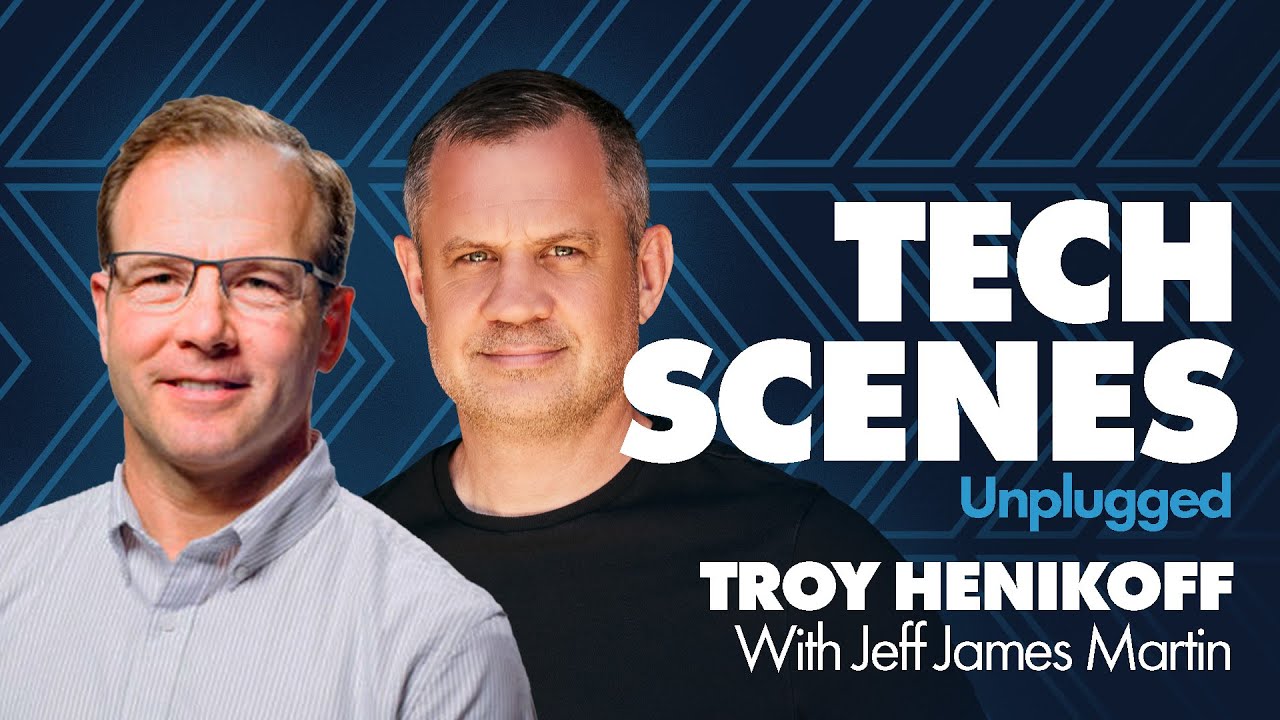
Tech Scenes Unplugged with Troy Henikoff, Managing Director of Math Venture Partners

Entrepreneurship, fundraising, and practical advice for startup founders :: with Troy Henikoff

Troy Henikoff, Managing Director of MATH Venture Partners, on Fireside Chicago, April 9, 2020
Episode 3 | Troy Henikoff on how #GiveFirst grew the Chicago startup ecosystem | Episode 3

