Interview with Troy Henikoff, Co-Founder of SurePayroll

In this 2011 interview, Troy Henikoff recounts the founding and evolution of SurePayroll. The original concept was an internet‑based HR portal, but a market analysis of payroll giants ADP and Paychex revealed a larger, more lucrative opportunity. Leveraging the web to deliver payroll electronically, SurePayroll eliminated legacy costs (paper checks, call‑center reps, regional processing centers) and gave small‑business owners direct, online control. The company grew to over 30,000 customers, raised $17 million in venture capital, reached breakeven around year 4, and was sold to Paychex for roughly $115 million after about 11 years of operation. Henikoff reflects on the nature of entrepreneurship as a serial activity, the importance of an exit for investors, and the challenges of building an annuity‑based B2B business versus viral consumer models. After the sale, he founded the Chicago accelerator Accelerate, mentoring ten startups annually, providing seed capital, legal support, and intensive mentorship, resulting in multiple follow‑on fundraises and job creation. He highlights one portfolio company, TapMe, as a high‑risk, high‑reward venture.
Chapters
Troy Henikoff, co-founder of SurePayroll. Thanks for joining me today. Sure. Congratulations on an outstanding exit. I'd love to ask you some questions about starting SurePayroll, how that went, and also how the, the exit went. So for starters, you and 2 co-founders started SurePayroll. And between the 3 of you, how did that idea come around? What was the genesis of it?
Actually, it's kind of interesting because the original idea wasn't even payroll. And the original idea wasn't even mine, it was one of my co-founders. So he had this idea in early '98 that the internet was here to stay. Who'd have thunk it? And that the internet was really good at delivering information to people and to businesses widely dispersed at a low cost. And so when he was thinking about how you could leverage that, he had been an entrepreneur and small business owner, and one of the things as he grew that was a problem was HR. So he said, wow, we could bring up an HR services portal that would have all of the documents and regulations and forms for every state. So we'd have to have 50 copies of this, right? And once you bring it up, it's really low cost to maintain. And we could service hundreds of thousands, hundreds of thousands of businesses across the country for no incremental cost. And we could charge them $1 an employee a month. Who wouldn't pay $1 an employee a month to make sure you're in compliance with all the regulations? So that was the genesis of the idea. And we started doing some research and went to a bunch of HR shows and looking at the marketplace and realized that if we had all this HR information, because we'd also have a database about your employees and stuff, that we'd have to connect to payroll. And so then as we started doing due diligence on, well, who are the pay— players in the payroll market, we looked at the 2 biggest publicly traded players, Paychex and ADP. And so where do you go for information? You go right to their public filings. And if you go to their public filings and you look at the income statement, you pause because they made a lot of money. And we said, wait a minute, there's a lot more money in this payroll processing side of the business than there is in the HR side of the business. And with the internet, we could actually deliver services much, much more cheaply than they were doing it the legacy way, using mainframe computers, paper checks, paper reports, and delivery people. We could deliver all of that stuff through the internet at no, almost no incremental cost. And so we shifted to payroll, and that's how we got into the payroll business.
At the time, were there other internet-based payroll services also launching?
So technically, there was one website, and I believe it was called Payroll Online or Online Payroll, that had actually launched right about the time we were launching, and so they were first, technically. They never got more than 100 clients, companies they were processing payroll for, and they never really made an impact. So we were one of the first that really made a real impact. Today, SurePayroll processes over 30,000 small business customers.
Wow. And how did you break away from the pack over the years?
Well, so we had a point of differentiation, and the big point of differentiation in our case was that we were delivering all of this stuff electronically, putting the entrepreneur in control. So in the old style of payroll, I don't know if you remember using ADP or Paychex in the old days, but you probably had a rep who would call you at a pre-appointed time, and you had to be near your landline phone because we didn't have cell phones back then. And if you missed the call, it was a disaster because then you called into some pool to somebody who didn't even know you or your business. But if everything went well and you did get the call, that person at the other end of the line would start asking you the names of all your employees, how much each one of them makes that pay period, typing it in. There are lots of opportunities for errors in the telephone. Then that operator would hit a button and submit it to the mainframe and say, thank you, Bob, and hang up. And then you just had to hang on and wait because you didn't know how much money was coming out of your bank account. You didn't know taxes, any of that. And the mainframe would process it, ka-chunk, ka-chunk, ka-chunk, and spit out paper checks and paper reports, and they'd get bundled together in a package, and a delivery guy would come out here. He'd be double-parked, that guy with like the Ford Fiesta with the rusty fender, and he'd run upstairs, and you'd have to sign for the package, and then he'd leave, and then you'd have to distribute it to all your employees. And it was only then when you opened the package that you knew how much money came out of your account. Compare that to our model. Where you as the small business owner go online, you see how much everybody got paid last pay period, you edit, make any changes from last pay period to this pay period. If there are none, you're fine. Hit a button, tells you how much money will come out of your account. You're an entrepreneur, you may not have that much money. Uh-oh, can't pay myself this period. Go back in, edit your pay down so that you can make payroll, hit the button, whew, I can make that, submit it, and then it all happens electronically. All the reports get generated, the direct deposit happens, all the employees get emails telling them they've been paid so that they can sign into the secure web server to see their pay stub, and you don't even have to be there. You can do it from the beach in Hawaii. And not only is it easier and it puts you in control, but think about the cost structure. So ADP had over 10 million square feet of office space in this country and regional processing centers to support that. Paychex had 114 regional processing centers, and with SurePayroll, we did it all out of one central location. So we didn't have to pay for the paper reports, the check, the delivery guy, the car he came in, or the building he came from. We could take all that cost out of the system. So it was disruptive to the payroll industry.
How many companies have you created or helped create?
It depends how you count. It really does.
They don't all have to have been home runs, but—
No.
Well, when did you start your first company? How old were you?
So my first company, I started right out of school. I was 21 years old in 1986, and it was custom software. And at that point, honestly, I didn't know what I was doing other than I was providing a service, writing software, solving people's business problems, and people would pay me for it. I literally didn't know the difference between a balance sheet and an income statement. I had an engineering degree, hadn't had any business classes, and it was shortly thereafter that I realized I needed to learn about this stuff. And so I ended up going to Kellogg in the evenings to get these skills that I didn't have with my undergraduate degree.
So, an estimate of how many companies you've started?
So, directly started—
Or helped start?
Half a dozen, probably. I've been very involved in mentoring and helping probably a couple dozen others as well that I'm very active
in. Entrepreneurship seems to be a serial activity for entrepreneurs. That is, you know, the love of continually creating. Would you agree with that?
Yeah, and it is that creating that I love. My passion is for, as I said, creating something out of nothing.
Right.
Creating jobs that didn't exist is— there's nothing more rewarding than looking around and realizing all these lives that you've had a positive impact on, whether those are your direct employees, even in the custom software business, walking into some of our clients and seeing our screens on literally hundreds of monitors was cool.
And how important, beyond the obvious, is the exit? So in the case of SurePayroll, you had an exit. You sold to Paychex.
Correct.
Recently for $115 million. And obviously that's important from the point of view of you have investors and the investors have to have a payday. Had you not had investors, would it have been as important?
No. So the whole ecosystem is important. We couldn't have started SurePayroll without Venture capital. If you think about payroll, and particularly roll back the clock to 1999 when we started, it was very expensive to build websites. It was expensive to have all— own all that hardware, and you had to own it, security. So we spent 7 figures before we processed our first payroll, and then we collected $19.95 from the client. And it's an annuity revenue stream.
Is this like a retailer where you You know, they have the dollar bill under the counter in the restaurant.
I did have the original invoice from our first $19.95 up on my wall for many years. Yes, absolutely. But you— so because it's annuity revenue stream, it builds up over time relatively slowly, and you need to fund that cash flow from somewhere. And SurePayroll raised a total of $17 million of venture to fund that over time.
How many years did it take to hit breakeven?
Probably we were breakeven around year 4, 4 or 5, in that range. Probably year 4. The challenge with breakeven in an annuity revenue stream is we could have been breakeven. We couldn't have been breakeven in the first year, but in the second year, if you wanted to be breakeven, we could have scaled back our sales force, scaled back our spend on customer acquisition, and been breakeven. But we wouldn't have had a very good future. And so you wanted to continue to grow the business and grow it aggressively. But in a business like payroll, it costs you hundreds of dollars to get each customer by the time you pay the commission and the marketing and all that. And that literally the first time they process payroll, you get— and our prices have gone up a little bit— We get $25, $30. But the lifetime value of that customer is thousands of dollars. So it's a great value in the long term. But if you grow too quickly, you chew through too much cash. So there's this balance. So we could have been break-even if we needed to earlier, but we wanted to continue to grow. And our investors wanted us to continue to grow. So we reinvested that in customer acquisition.
So in total, SurePayroll was from startup to selling, was that '99?
Yeah, so we formally— About 12 years? 11. We formally incorporated in December of '99, and the sale officially closed in February of 2001. So it was just over 11 years, and our first payroll was processed in April of 2000, so we were operating for just under 11 years.
That feels, from our experience with the book, to be fairly typical in terms of it was not an overnight success.
No, it's not.
Is that true for your experience with a lot of companies?
So certainly—
Can you have an overnight success?
Well, there are some overnight successes, right? We've all seen Groupon, $1 billion in revenue in 18, 24 months, whatever it is.
It's also in a way though the last experiment from something which previously had failed.
Yep. Yes, it is.
So in a way you could say, well, it's an overnight success, but it's an overnight success on top of previous Efforts at the same company funded by the same investors that did not work.
Even if you roll back to the very beginning when Andrew started with the point, I think you're still only looking at 3, 3.5 years to go from zero to $1 billion in revenue. It's good. It's good no matter how you slice it. So there are some instances of that. Most of those tend to be consumer-facing. Most of those tend to be viral. And most of those tend to not be annuity revenue streams. So an annuity revenue stream like payroll, you know, our average customer stays longer than 5 years, we get money through that time period, they take longer to build up that base. So certainly in the annuity revenue stream business, it's going to take longer. B2B tends to take longer also. You don't have the kind of viral wildfire spread like you do in the consumer space. I mean, even look at Zynga, the gaming company. I don't know their exact numbers, but I believe they're pretty close to $1 billion in revenue, and they're only 3, 4 years old. Yeah. Crazy rapid growth. But again, it's all viral consumer-facing.
Speaking of rapid growth, what are you doing now? Can you tell us about Accelerate?
Sure. So one of the things I've always been passionate about is starting businesses in that early stage. And when I started, I had nowhere to turn. I had to stub my toe a lot, make a lot of mistakes. And so Accelerate, which is an accelerator That's slightly different than an incubator. It's based here in Chicago and very similar to Techstars, Y Combinator. And we take 10 companies each year and put them through a 90-day, very rigorous boot camp, surround them with mentorship, give them a little bit of seed capital, pro bono legal, and literally more mentorship than they can handle. So last summer we had over 100 mentors come through and help our 10 companies. And then at the back end of that 90 days, last year we were at the House of Blues. We rented out the House of Blues, had all 10 companies present on the main stage to a floor of 250 investors. It was standing room only. And it's an awesome experience. Those 10 companies today, all 10— so we're just short of 6 months out from Demo Day. All 10 are still operating. 8 of the 10 have raised money. Cumulatively, they've raised about $6 million. They have created 60 new full-time jobs and are poised for success.
Which one of the 10 are you most excited about? You have to choose one of your children.
Which of my children do I like the best? They're different. So, you know, there's a company TapMe, which is an online platform for gaming, for advertising in games, kind of like Google's AdSense AdWords is a platform for advertising and websites. TapMe has the opportunity to totally disrupt the marketplace. It's the one that probably has the highest potential return. It's the one that's probably the highest risk as well. You know, there are others that are doing really, really well and are a little lower risk, lower return, if you will. We have on the whole spectrum. But if I— the one that's the most swinging for the fences would probably be TapMe.
That's great. Troy Henikoff, thank you so much.
Sure.
More from Troy
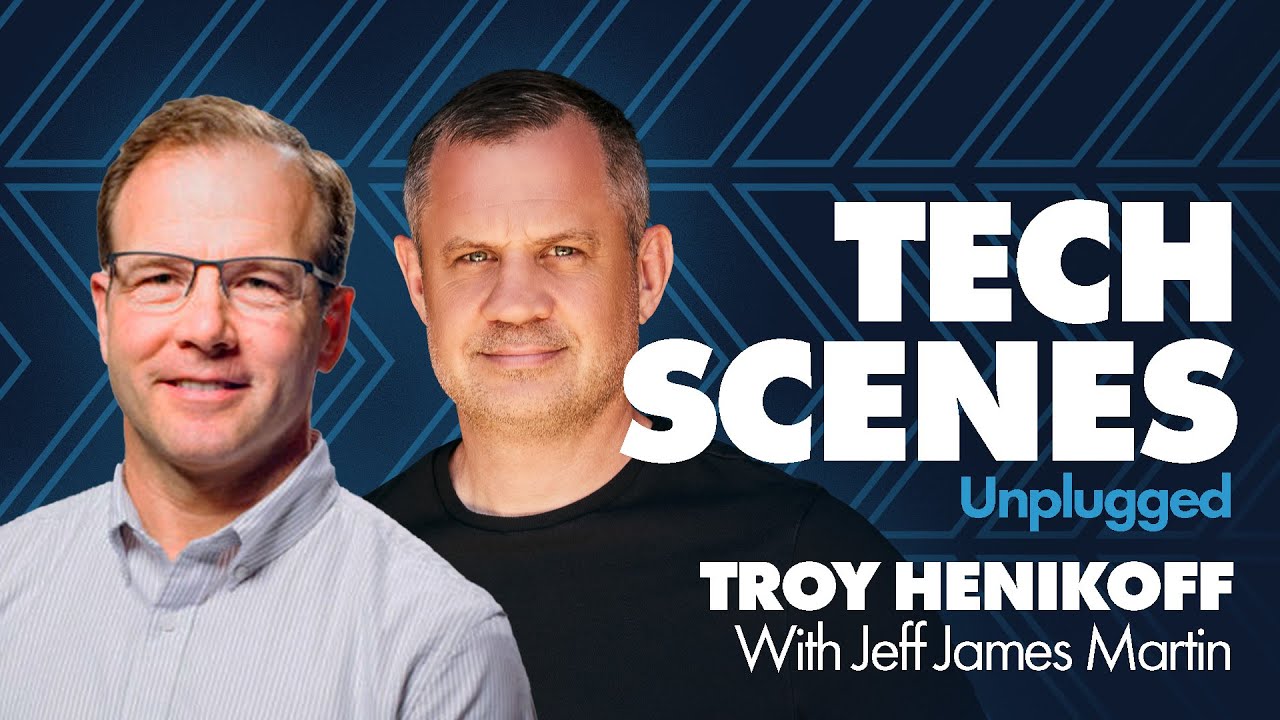
Tech Scenes Unplugged with Troy Henikoff, Managing Director of Math Venture Partners


Entrepreneurship, fundraising, and practical advice for startup founders :: with Troy Henikoff

Troy Henikoff, Managing Director of MATH Venture Partners, on Fireside Chicago, April 9, 2020
Episode 3 | Troy Henikoff on how #GiveFirst grew the Chicago startup ecosystem | Episode 3
