30 Best Ways to Get Construction Leads (2026)

In this 30‑minute video, Tanner Smith teaches home‑service operators and contractors how to consistently generate enough high‑quality leads to reach $100K+ months. He begins by explaining why relying on word‑of‑mouth alone is insufficient and introduces a mindset of solving partners’ problems first. He then outlines a "master list" system for tracking and nurturing relationships, and presents 32 concrete lead‑generation tactics grouped into six categories: (1) partners who need estimates (developers, investors, architects, real‑estate agents, mortgage brokers, owners’ reps, general contractors); (2) partners who need reliable crews (interior designers, property managers, HOAs, vacant retail spaces/landlords, investors, aging‑in‑place professionals); (3) referral sources (home inspectors, insurance agents, restoration companies, other trades, supply houses, estate/probate pros); (4) early‑project spotting methods (active job sites, 3D‑rendering firms, print shops, title‑page method, permit records); (5) personal network tactics (past clients, double‑dip method, Chamber/BNI groups, "cruise" referral network); and (6) five bonus tactics (Google profile & reviews, unsold estimates, new‑homeowner mail, home shows/events, maintenance plans). He provides a weekly outreach cadence (Mon‑Fri) for building the master list, explains how to amplify efforts with highly targeted paid ads, and wraps up with five key takeaways and a call to join his free "Scale to 7" community for deeper training.
Chapters
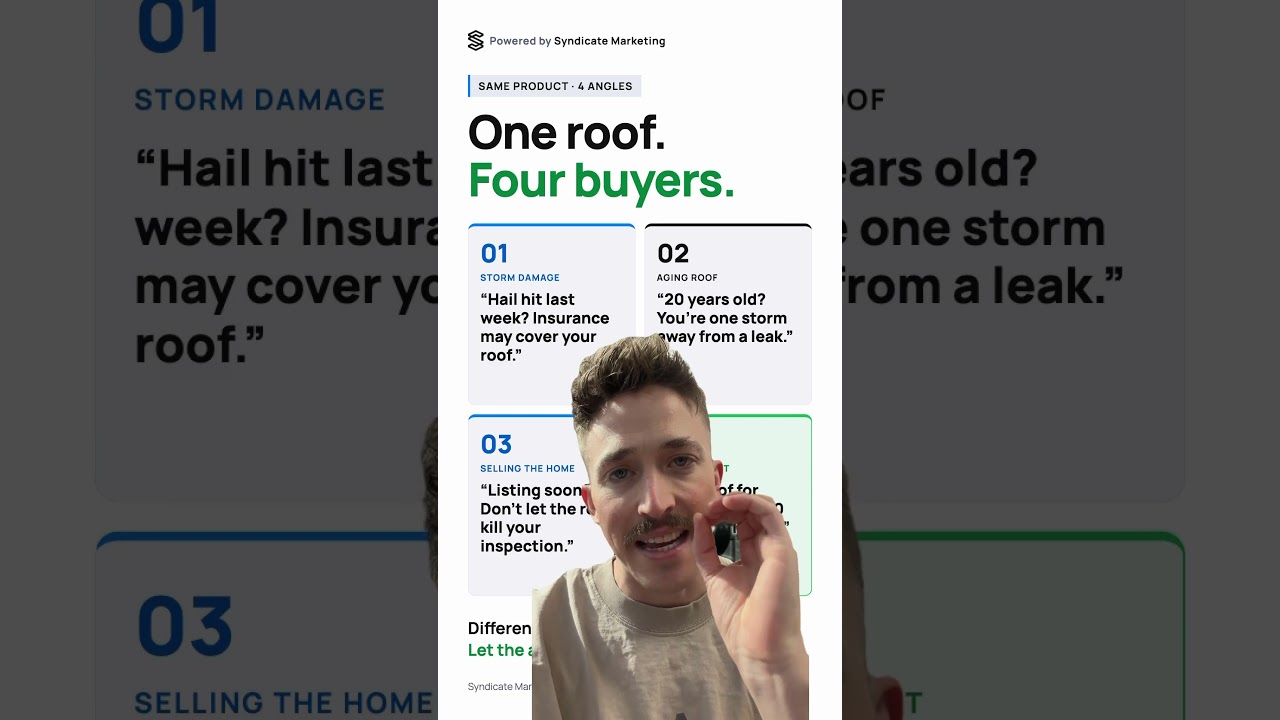
Yo, what's up? Welcome back to the channel. If you guys are here, you obviously know that the only goal of this channel is to help home service operators and contractors consistently unlock $100K+ months. The challenge with running a business and starting a business is if you can't get to that $100K+ month range, you're really just still trading your time for money and you are still assuming all of the risk that comes with running and owning a business. So let's get you there today. We're talking about 32 ways to get construction leads. Now, if you're not a contractor or general contractor, this video can still apply to you, even if you're in HVAC, plumbing, electrical, roofing, et cetera. another form of home services. There's gonna be a ton of sauce in here that can help you guys get more consistent, predictable leads and ultimately create a conveyor belt that will allow you to hit those revenue goals you guys have. Let's dive right in. Can you obviously close deals through word of mouth? Absolutely. But the reason why we're not going to count word of mouth as a lead source is because you can't predict it. You can't scale it. You are not in full control of that. I like to think of word of mouth as just a cherry on top. It's gravy. If we get word of mouth referrals, amazing. I'm going to continue to ask for them. I'm going to continue to try to push them and promote them, make sure that any word of mouth referral that I I get, I'm going to take care of. I'm going to treat it like gold because they really are that— they are gold. But I want to help us to get outside of word of mouth. In consulting with the hundreds of business owners that we're currently working with right now, this is kind of a main problem. They say, hey, I want to get to, you know, a million dollars or $2 million a year, but I'm only able to operate off of word of mouth referrals right now. We're going to solve that problem today by accepting the fact that word of mouth is no longer going to be something that you're going to depend on. You can now take control of your business and responsibility for the growth of it. So let's just dive right This is going to sound stupid, but I ultimately got this from Alex Hormozi, and it makes a lot of sense. Sometimes just dumbing things way down, it helps kind of the light bulb go off for us. And this is really what Alex Hormozi says. He says, if you want to double your business, double your lead flow. If you want to triple your business, triple your lead flow in a way that makes a lot of sense. So ultimately, volume of leads is really, really important, but not just to help grow and build the revenue the way you want to. It also matters in terms of helping you pick the ideal jobs, the people that you actually want to work with. So So ultimately more leads, you get a pipeline full of leads. What that allows you to do is to get more estimates, right? You're in front of a lot more buyers. What that happens is if you're operating from a place where you have a lot of estimates, you have a lot of leads, well, now you're kind of cherry picking the best people, the people that will be the easiest to work with, the jobs that will have the highest margin, the ones that are gonna be a lot easier for you and your crew to perform. And this is honestly where I see a lot of contractors struggling is they're taking on jobs that are not really in their wheelhouse. They're taking on jobs that are going to be a lot harder for them and their crews to actually get across the finish line. Maybe it's a lot tougher of a client to work with, but because they don't have any leads and they're not getting estimates out, they're kind of desperate. So they're stuck with the people that are really wanting to work with them. So if you can pick the best, what ultimately ends up happening here is you can grow. You're able to find the better jobs, the better clients, the ones that will actually probably send you more word of mouth referrals down the road. But then ultimately you have a lot better margins as well. And when, when you have better margins, You obviously can reinvest back into the business, reinvest more into your advertising, into your marketing to become that number one go-to contractor or operator in your market. The mindset that we have to adopt here to unlock these 32 different types of lead sources are the following: We have to operate from a place of solving people's problems first. A lot of times when you want to try to go and get into a door or create a relationship with somebody to unlock a lead source, you're just. Kind of making it all about you right now in 2026, moving forward into 2027. People are trying to solve problems. So if you can come in and be a solution to a unique problem that a potential lead source has, you're going to ultimately be the person that they're going to send business to. So step 1 is find their problem. Step number 2, be the one who solves it. Yes, you can find a problem, but if you can't actually solve that problem effectively, then guess what? They're not going to send you work again and again and again. The great thing with these different lead sources we're going to walk through today is that they build. Okay, this is something that is going to pick up momentum like a snowball rolling down a mountain. If you can continue to solve problems for these people and do it at a high level, they're not just going to be, you know, kind of begrudgingly sending you leads. No, they're going to be literally happy to send you these leads because you're making their lives easier. And that's ultimately this process. Okay, so here's what I want you to do. First things first, I want you to create what's called a master list. And every single person on this master list is going to go there. You're going to put their name, the type of You know, industry or type of lead source that they're going to be. You're going to talk about their problem, and then you're going to lay out kind of the next steps of what they need to do or what they need solved, and ultimately how you can go and solve their problems for them. So this is an example of kind of like a master list, right? We might have a real estate agent here. Their problem might be that hey, there's some repairs that their potential client needs before closing on a home. Next step is going to be I'm calling them on Tuesday. Maybe you have a property manager. There's a lot of turnovers on short notice. You're gonna you know drop by on Wednesday. To walk through and help them solve their problem. You have an interior designer, there's trades who, you know, don't show up on time. They're trying to get a job across the finish line. They have maybe a really high-profile client and they can't afford to have somebody that's not dependable, right? You might want to invite them out for coffee on Thursday. Maybe there's an insurance agent that you're working with or can network with that needs fast storm repairs. Maybe you're a roofer and, you know, a storm just rolled through and everyone's houses just got pelted with hail. Maybe you can be someone that can come in and get roof repairs done in such a timely fashion that they can then get their, you know, their homeowners new roofs and get them on their way faster. Maybe you want to call them on Friday. There's a lot of things you can do here, but the key is that this master list needs to be something that becomes your baby. This is where you're not just hoping and praying that you're going to get leads. This is ultimately where you're manifesting and creating and building a discipline, a real muscle that needs to be flexed on an ongoing basis to generate you leads. So ultimately, we're gonna separate these 32 different ways to generate leads into 6 different groups. And, and here's ultimately how we're gonna break these different groups down and these different 32 lead sources. Number 1 through 6 are gonna need your numbers. Number 7 through 12 are gonna need reliable crews. That's kind of the main pain you're solving. 13 to 18 are people that just simply asked, hey, do you know a contractor? It comes up in frequent conversation with their clients. Number 19 through 23 is all about spotting projects early on, being in the process Early allows you to get that referral and get that lead. And ultimately, 24 to 27 is going to be your own network that you're building, that you're mining, that you're developing on an ongoing basis. And then lastly, I've got a bonus if you stick to the end of 5 more ways that most contractors, most home service operators completely neglect that I think can put you over the top with leads, volume, and revenue in your market. So here we go, ways 1 through 6. Here they are. We have developers and investors. We have architects, we have real estate agents, we have mortgage brokers, we have owners' reps, and general contractors. Let's start with developers and investors. These are people that need a real estimate, a real budget before they can raise any money on a deal. A lot of these people are doing one-off deals, multifamily home projects, maybe large, you know, commercial construction projects, and they need a budget so that they can actually go and raise money and can actually get people to fund this. If you can come in and provide an incredible job, be communicative, do a— do an amazing job with working with these individuals, not only can you literally line your pockets with a ton of cash, but these people also know a ton of other developers and investors. Okay, architects, they're really focused on staying on budget. They have a specific parameter and kind of box that they have to play in. And if they don't have real pricing and have someone that they're working with as a contractor, they're not going to be able to provide accurate budget to their clients. Number 3, real estate agents. Tons of these real estate agents have had had to take on and wear additional hats to simply move, uh, volume and move, move inventory the last couple of years, right? You used to just be able to get away with not really doing much and kind of cherry-picking the people and the buyers and the sellers you're looking for. But with the interest rates where they are, with where the economy is at, I mean, real estate agents are now becoming glorified project managers for their clients. So ultimately, a lot of times these people are needing real repair remodel costs to close deals. They're factoring that into different buyer and seller concessions, and you can build relationships with these real estate agents in a real way. They're going to help you to once again get a ton of lead flow. Mortgage brokers, a lot of times these guys now, once again, they're not closing a lot of, you know, first-time, second-time homes. They're doing a lot of renovation loans. People are staying in place for longer. You might have had a family that was looking to maybe upgrade their home. They would maybe move to a separate home if they could, but they're now at a 2.5% interest rate, right? The market's going crazy. Interest rates are 7.5%, 8%, and they're like, we're just going to be staying in place. So a lot of the home service operators we're working with and even contractors are now getting a ton of deals through mortgage brokers because they're not doing a ton of renovation loans or even HELOCs. So being able to come in and provide a contractor estimate relationship with a lot of these mortgage brokers and individuals that are doing HELOCs, once again, you can be— you can have so much business you don't even know what to do with it. You have owners' reps. These people are simply looking for a reliable builder to recommend. They're looking for ways to make their clients' jobs easier. And ultimately you have general contractors. One of the things, if you are a general contractor, Right, being able to sub out your work and your specialties and work with other general contractors that don't want to do it. This is just another way for you to ultimately create relationships. So these are ways 1 through 6 to generate leads. Ways 7 through 12, okay, these are people who just need reliable crews. Let's talk about it. We have interior designers, property managers, HOAs. We also have empty retail spaces, landlords and investors, and aging-in-place pros. So let's talk about interior designers. They're hiring trades out on behalf of their clients, and oftentimes interior designers have a lot of high-end clients that they need work for. So ultimately, once again, building relationship with one interior designer opens up a lot of opportunities for you. You have property managers. One contractor I was talking to the other day got their foot in the door with a property management company that has over 1,000 doors. You think about it this way: they're going to go in, prepare by getting that one client. They now can fire everyone else that they were working with. They don't have to go and really do. Any marketing anymore. They simply are working with that one individual and they have more jobs, more work than they know what to do with. Now, I obviously wouldn't recommend that, right? You don't want to put all your eggs in one basket. I would still continue to build. And I was having a conversation with this gentleman the other day. I say, hey, listen, continue to build other sources and scale your business so that if you happen to lose your property management company as your only client you have, you're not screwed in your business. You can continue to scale and grow and operate effectively. But HOA is another thing here. They have to Oftentimes they have shared buildings, community clubhouses, pools, and these things are always needing upkeep. Empty retail spaces. So every vacancy that comes in, they're going to need a new build-out. There might be another tenant that comes in and needs to get, uh, you know, a bunch of TIs or things across the finish line before they can open up. So being able to go in and find the owner of the retail space, um, working out a relationship with them, they obviously want to get these vacancies filled. They want to get new stores and other businesses in the mall, in the retail spaces, as quickly as possible. By coming in and showing that, hey, I can provide a really great bid, I can get jobs done quickly and efficiently, they're going to refer you to all of these people, maybe have you be the preferred contractor for any business or, or, or for any business or retailer that moves in. What's great about the investor space is very few of these people actually want to do the work themselves, right? Their sole job and their sole focus in their business is to simply find and hunt the right deals, put everything in place, and ultimately sub out everything to somebody like you who can perform the work and services. So once again, people that are doing a high volume of flips, depending on the market, could be great for you and could be a relationship that could pay dividends for years to come. Lastly here, number 12 is aging-in-place pros. There's a, you know, boomers are getting older and older every day. The boomer industry is booming right now, pun intended. There's a lot of senior living facilities that need upgrades. There's a lot of therapists, You know, rehab facilities, things of that nature that are gonna come into the market. It's kind of a really big trend right now to kind of get into this community. And once again, everyone in this space knows each other. If you can get into the aging-in-place professionals and different services, could be huge for you. At 13, we have home inspectors. Insurance agents, number 14. 15, restoration companies. We have a bunch of other trades here. Supply houses, estate and probate pros. So obviously when it comes to home inspections, right, they're looking for the issues and problems of a home before somebody closes. Having you as has a relationship to say, hey, listen, I got a guy that can solve this, fix this, fix that, fix that, could be huge for you. Insurance agents— these are people that need a claim, they need a trusted contractor fast. They're looking to, you know, get these people's jobs completed as quickly as possible. So being efficient, making sure that your name is the first one out of their mouth, is huge. Restoration companies— they're gonna come in and dry it out, they're gonna make sure that everything is taken care of there, but somebody's got to go in and rebuild it. That person that they need to come and rebuild the whole thing very well could be you. Supply houses, people that are working here buying materials and supplies, they're hearing on a daily basis, hey, who do you recommend? Right? Getting relationships with these people, becoming the preferred contractor, preferred, you know, sub within these different trades could be massive. And then estate and probate pros, families that are inheriting these homes are thinking, hey, rather than just throw this on the market right now, maybe we should make some renovations. Maybe we should fix and try to flip it. It's pretty common. You know, being the professional that gets recommended by estate and probate pros is huge. So 19 through 23, these are focused on how to spot projects before anyone else bids on them. So this is going to sound crazy, but active job sites. You actually might go into an active job site, look at the person who's managing it or the superintendent, and just come in and add your name to the list, build relationships, see what's taking place. Maybe that somebody fall out, maybe they're looking for somebody else to come in. Great way for you to generate leads. 3D rendering firms. So this is kind of an interesting thing inside of architecture, even interior design. There's now kind of this whole whole subcategory inside of these different specialties of firms that are doing 3D renderings or AI renderings. And their whole job is to, hey, let's put the project together before bidding, before anyone knows what it's going to look like. So our clients can actually envision and see what it's going to be before we build it. Getting relationships there is massive. And then creating that tight feedback loop between the 3D rendering firm and the client gets your way in the door. Print shops. So architects are printing their plans there first. You could literally go to the local, you know, local print shop that might specialize in printing blueprints and saying, hey, listen, I know you've got a lot of architects that are coming in here. I'm a general contractor. I specialize in X, Y, and Z. You know, can we work out a relationship where you can maybe introduce me to some of the architects that are coming through and I can become the preferred person there? I mean, there could be a lot of different synergy in that type of relationship. Maybe a little bit of a stretch, but still, once again, these are just ways that you can generate leads. 22, the title page method. 23, permit records. These are both ways that you can go in and see the plan set list. You can figure out exactly who to call. You can literally just cold call them, offer to take them out to coffee, get a coffee, take them out to lunch, and ultimately build that relationship. Ultimately, the payoff here on these 5 is that you're going to be in the conversation. You can kind of insert yourself into the mix before the bid even exists. And once again, if you're already there, could be huge. So let's just take a deep dive really quick on this title page. It's ultimately going to be a call list for you. And the way that works is, you know, you're going to get the project directory. You can get it from a bid platform, a permit, a job sign. You're going to pull that title page or the project directory. There's lots of ways you can do this right now using AI. It can scrape this information, script the contact information for you, especially if it's a public directory. And then what you're gonna do is you're gonna call every single name on it, not just the general contractor or the superintendent, right? Make sure that you're building relationships and having conversations with every single person on it. And then you want to get on the bid list and you want to add that information, the main person of contact, onto your master list and then follow up with them consistently. It's actually pretty amazing that in blue-collar industries, home service businesses, and construction and contractor work, how a little bit of consistent, diligent follow-up goes a long way in an environment where people don't answer their phones, they're slow to get back to somebody. Simply doing something like this, being very forward-thinking, getting your name in the conversation early— is there any reason why you wouldn't get the job as long as you're capable and able to actually perform the services? Honestly, probably not. So ways 24 through 27, let's just talk about this one. It's working your own network. Okay, so we have past clients, the double dip method, Chamber and BNI groups, and then your cruise network. So it sounds crazy. Sometimes we focus so much as business owners on acquiring new customers, generating new leads, we forget to continue to nurture the relationships with those that have already paid us, that already know, like, and trust us. So continue to nurture past clients, check in on them, send them text messages, send them emails, maybe check in on the project and see how things are holding up. That can go a long way, not just for them to give you warm referrals, but also for them to say, hey, listen, I have this other project Like this other thing I need done, can you actually perform it for me? Number 25, the double dip method. So ultimately you can go in and bid the whole job and then you can actually perform all of the trades within it. So as a, as a GC, one of the great things about it is saying, hey, listen, I'm not just going to be the GC on this deal and bidding the whole job out. I'm actually going to bid the job and I'm going to go find a way to actually be the sub on everything else underneath it. Chamber and BNI groups. So this is kind of just a grind. Nobody wants to do it. But can it work? Absolutely, especially if you have more time than money. So you get into a room full of local referrers every week. Now, to participate in one of these groups, you're gonna have to also refer work to people, and that's just kind of the way that this cookie crumbles. It's kind of a you scratch my back, I'll scratch yours. So if you can get in there, build relationships, send clients and business to other people, they will return the favor. And ultimately, here, your cruise network— why not try to create some sort of a referral bonus for those that are actually working for you or the relationships that you've developed? Say, hey, listen, anyone Anyone who sends us a referral gets a $100 Amazon gift card. Just finding ways to gamify your internal network and your own referrals can be massive. And you know, how much does a $100 Amazon gift card cost you? You get maybe 10 referrals from people, that's $1,000. You know, what are the chances that you actually close 1 or 2 of those different referrals? It's really warm word of mouth, people in your network, chances are very high. Now, if you made it this far, here are the 5 bonus ways that most contractors skip that I think that can give you a really, you know, a leg up on the competition. 28 is Google profile and reviews. This is massive. As a homeowner, someone that's doing due diligence, they're gonna be going to your Google reviews, they're gonna be checking out your website, they're going to be ultimately looking you up online. And the way that you show up online is gonna be the way that they assume that you show up in real life. So it's important that you're really building your Google reviews, you're building your profile, you're showing up organically and investing time and energy to respond to every single one of your Google reviews. Every single one of your jobs that you do, you should have a whole process and system and automation to ensure that every single person that does work with you is leaving you a 4 or 5-star review. Uh, there's a whole training that we're gonna do on this, the way that you actually build reviews. We call our 5-Star Review System that does it for you on autopilot. But ultimately, this is a huge way that you don't want to overlook. Unsold estimates. So, you know, as you generate leads, you know, you're getting a lot of quotes, you're getting in front of people. One of the things you want to make sure that you're doing is just because you might not have closed somebody 2 months ago, 3 months ago, 6 months ago, maybe now things have changed. Maybe they are in a better position financially. Maybe the timeline is just just better. Could be a lot of things. So unsold estimates, the leads that you have talked to, make sure you're following up with them. You have a whole process and system to re-nurture your database, stay in front of them, and retarget them is the word we use in advertising. Once again, we have a whole process and system that goes into depth and detail on this, but that is a massive opportunity. Uh, one thing here is new homeowner mail. Getting in front of people that just bought a house is huge. Maybe they have unfinished basements that need to be done. Maybe there's whole automation systems and, uh, you know, home theaters that need to be installed. Maybe there's, you know, back yard, fencing, landscaping, walkout basements, pools that they're looking to get done. Getting in front of new homeowners is massive because they're going to be investing in the home, making sure that it's going to be livable for the next foreseeable future. Home shows and events— this is brutal. It's a grind. Uh, it's something that nobody likes to do, but yes, there's a lot of money to be made here if you actually show up to home shows. You have a presentable booth, you're personable, you have great swag that your company's branded out with, you just look very professional. You can get in of thousands of homeowners in bulk in one fell swoop, and then ultimately collecting that information, their phone numbers, email address, having a way to actually capture that with some sort of an incentive. Maybe it's a giveaway you're running, maybe it's, um, some sort of a free estimate that you're offering to them, something of value. You then have more data in your database you can actually retarget, nurture, and build relationships with. And ultimately here, maintenance plans. So what do I mean by this? Well, a lot of times as contractors or home service operators, we're so focused on getting the huge home run deals that we don't think about just hitting singles on a consistent basis. One of the ways that we've helped a lot of our customers and clients at Syndicate Marketing really scale their revenues and ultimately scale and create predictable lead flow is by getting your foot in the door, maybe with a, you know, low-cost service, $99 initial consultation or an estimate or, you know, a tune-up, something of that nature. You now have a relationship, a really good touchpoint with that customer. They've already given you a little bit of money. You've saved them maybe time or headache or frustration or just worry about how something is performing or what it could look like. And then ultimately, if it's not the right time for us to sell them something big or to really have them transact with you in a big way, they will eventually. And if you have built that relationship with them early, they're naturally going to want to reach out to you in the future. So ultimately, this is how we can reach homeowners directly and really give ourselves a competitive advantage that a lot of contractors aren't going to be willing to do. You do these just 5 things alone, I mean, who knows what your business could be like in, you know, a year to 2 years from from now. So ultimately what I want you to do here is pick your 5. Obviously I'm rattling through these, making it kind of just very high-level surface, 40,000-foot overview. But what I'd rather have you do is go really deep and aggressive on 5 of these different people or categories than try to just dip your toes in with all 32. So pick whatever the 5 are that make the most sense for you. And I know I've got some examples here— roofing, maybe it's 14 insurance agents, maybe it's home inspections, maybe it's HOAs, maybe it's permit records. Records, Google reviews. Maybe if you're in, uh, remodeling, it could be interior designers, real estate agents, architects, past clients, home shows. Whatever it is, pick your 5 and then create a plan to go super, super deep on it. And that's exactly what I want to help you with right now. So here's how you're going to work this list of your top 5 and how you're going to actually get momentum and traction, start seeing lead flow coming in. You're going to work your list every single week. So you're going to build on Monday, you're going to add 20 new names to your list every single week. On Tuesday, you're going to call at least 10 of those partners on your list. And I don't care if you've already had a conversation with I want you to call them, follow up with them, just make sure that you're staying in front of them. And if it's new cold calls, okay, just call 10 more. On Wednesday, you're gonna call 10 more. I want you to try to find a way to book one coffee visit or one lunch appointment with these individuals. Take them out, provide value, understand their business, and actually invest time into that relationship. On Thursday, go and meet, take somebody to lunch, go to your networking group if you're gonna be doing the BNI as a strategy. But ultimately Friday, your job is just to recap, make sure that nothing is slipping through the cracks. And you actually are moving these relationships forward. Now, I'm a paid ads guy. I own a marketing agency called Syndicate Marketing. It's kind of interesting that I've waited until the very end of this training to talk about how we can actually use paid ads to dump gasoline on this whole process. And the reason why I've waited this long is because most contractors starting out that want to get to $100K a month, they need to have systems and processes in place first before they can just expect to be super profitable and successful with paid ads. So that's ultimately why I want you to pick 5 Start working them, getting traction and momentum. But once you have a system in place, you've kind of built that muscle of generating leads and relationships. What we can then do is dump gasoline on it, and we can literally fast forward this whole process and accelerate it, take it to a whole new level. And here's exactly what this looks like. I mean, if you have your referral partners, you're calling them one at a time. What we want to try to do with ads is get ads in front of them that are so targeted, that speak to them so clearly and directly, that they're going to ultimately know your name and maybe have seen your ads before. You ever even call them. Think about how powerful this could be. I mean, going after interior designers, for example, if you're a general contractor that's been running ads in your local area with an advertisement that's something like this: Hey, listen, if you are an interior designer looking to actually get your interior design project across the finish line, but you can't find somebody who's reliable, that actually can operate efficiently, that knows how to communicate clearly on timelines, and ultimately do it for a budget that can be flexible, I want to, I want to be your guy. Here's exactly how it works. We have an interior design program that's gonna actually walk you through exactly how we work with interior designers to ensure that their clients get the best result possible and can stay within budget. Click link below, and on the other page, I'm gonna walk you through exactly what our system looks like and how you can actually sign up for our interior design program. I mean, a video like that that is just showcasing you, your personality, your quality of work, that's communicating directly to the problem— once again, going back to the training at the beginning of this video— that your referral partner has, they're naturally gonna be interested in your solution. And you can honestly build those relationships and even generate lead flow, have them start calling you. It completely flips this whole model on its head. On past clients, here's how it works with paid ads. You might want to call them whenever you remember to do so. Maybe you're like, ah, I should have followed up that person. You know, they said reach back out in, you know, 3 months, or hey, I want to check in and see how that job's going for them. You get busy, life gets busy, it's not gonna work. Ultimately, what we want to do with paid ads is create a reminder for them to refer you and even rebook with you. You can maybe create an ad that says something like this. Hey, listen, you're seeing this ad because we, you know, you've been your client of XYZ company and we did your insert service here. What I want to walk you through is just show you some of the other work that we're able to do and really, you know, showcase our quality of service with X, Y, and Z. So maybe if somebody, for example, needed a pool, maybe they need an additional pool house that they want to do it. Maybe they, you know, want to add, you know, pool resurfacing Or maybe they want to actually retile their pool. So if you built a pool for somebody, maybe get in front of them with your your pool maintenance arm of your company. Or maybe hey, we want to build a pool house for you, or another storage unit, or third car extended garage. Like getting in front of them with specific ad content that's forcing them to see is really powerful. And here's what's cool about your past clients: you have your name, email address, and phone number. You can actually take the email address and phone numbers, upload it into Meta, which is Facebook and Instagram, as something called a custom audience. With that custom audience. what you can do is literally create specific ads that will get shown just to those individuals on your custom audience. So you can go and spend $5, $10 a day, nothing crazy, and just be hammering these individuals, your past clients, with really powerful and relevant information to kind of get more work, more bids, more, more, more services with them. Here, homeowners, you can go door-to-door, right? Door-to-door can be really effective. I used to do door-to-door sales. I know how effective that can be with growing and building and scaling a home service business. I actually right now now am operating a multi-seven-figure, um, home service business as well, and we have a whole door-to-door arm of our company. But if you implement paid advertising, here's where it gets really cool. You can get in front of them wherever they're searching. So rather than hoping and praying that somebody's knocking on the door and it's just the right place, right time, they're responsive and want to hear you out, you can actually get in front of them on social media as they're scrolling and solve their problems. Now there's a whole training on that we can do on, on paid advertising going straight to homeowners, but ultimately Ultimately, what I want you to know is that this is one of the most powerful forms of scaling and growing a business. And if you want to learn how to do this, once again, we'll have tons more trainings on it. But just know Instagram, Facebook, they know everything there is to know about the pains, problems, frustrations, and wants of a homeowner. They know if somebody's looking to remodel their basement, they know if somebody wants to get new landscaping done, they know if somebody's looking to replace the grass with turf, they know if somebody's looking to install a pool, whatever your niche is. If you create ads that are very specific to the need and solution a homeowner is looking for, Meta will show your ad directly to them. And ultimately, the key here is that ads are not going to replace the work you're doing. You should always continue to reinvest back into your manual efforts to build out your systems and processes. But if you have it going, ads are going to multiply it in a massive way. So ultimately, now you have a choice to pick which path is yours. If you, you have time or money, pick your lever. So ultimately, there's kind of people that have more time than money, go beat the doors. Don't invest in ads just yet. Work your master list every single day, knock doors, visit people in person, call up, be aggressive, be consistent. Consistency is gonna win. You know, you build that path to generating consistent lead flow. If you have more money than time, okay, figure out how to run ads and duplicate yourself maybe earlier in the process. I still wouldn't recommend it if you don't have any type of lead source going yet, but this can be something that you can run to really aggressively scale your business. So ultimately, to recap here, here are the 5 main takeaways that I hope that you gathered from this training. Number 1, more leads More leads simply means more estimates. More estimates means that you're going to be picky with the people you work with, and ultimately you generate more margin per job. You can actually grow your business and work with the people you want to. Number 2, focus on solving your partner's problems first. Every single referral source or partner that you can think of, come in and provide value and solve a problem first before asking for a lead or asking for a job. They will naturally send you work if you know how to solve problems. Number 3, put people into your master list and work it every week. Go back to the Monday, Tuesday, Wednesday, Thursday, Friday cadence and just be consistent with it. Doesn't have to be crazy, but hey, taking a couple hours a day is going to go a long way. That's a skill that is going to compound. We've all heard about compounding interest. This is something that is going to compound in your business. Number 4, pick the 5 ways that fit your trade and go deep. Don't try to go crazy on all 32 of these right now. Pick the 5 that are best for your trade. Trade, best for what you do. Go really, really deep with them first and then slowly expand and add more people to your master list. Number 5, but if you have more money than time and you really want to find a way to duplicate yourself, start running ads, investing in building the entire digital advertising arm of your business. It will dramatically scale what you're currently doing. Now, I hope that this video has been helpful. If you are looking to actually scale and grow your business right now and unlock those $100K months like we talked about, join my Scale to 7 School community. This is all about home service owners, contractors that are looking to build a multi-7-figure business and the exact process and systems and disciplines you need to make it happen. You're gonna find things like our Contractor's Blueprint. It's a step-by-step framework for building a 7-figure home service business. You're gonna find more trainings like this one that will go really in-depth, in detail, and provide step-by-step solutions on exactly what you need to do. And then last but not least, you're gonna find a bunch of different owners owners on the exact same path as you. Getting in a room with people that are like-minded trying to grow their businesses and being able to network with those individuals can be priceless. So ultimately, here's the link. I'll also put it in the description if you want to join there. It's completely free. I'll see you in my community. And by the way, see you on the next video.