Botox, Fillers, Inlections Oh My!
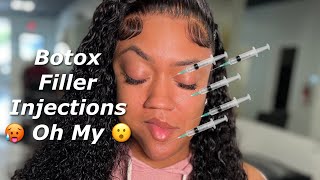
LaToya Kelly visits her friend Rosemary's medical spa in St. Louis to try Botox and fillers for the first time. Rosemary walks through the treatments, pricing, downtime, and the difference between Botox (relaxes muscles) and fillers (add volume). LaToya gets her first Botox injections and explains what to expect: results in 2 to 4 weeks, re-treatment every 6 months.
Chapters
This video that you are about to watch is me going to visit my friend that owns her own medical spa, and, um, I walked in here just expecting to meet with a friend, and I left with Botox, fillers. Yeah, and this was yesterday. So, uh, yeah, how do I look? I know, right? I look like I had nothing done. So this is just a video of my experience, just kind of like I did with my surgery in 2016. It's just a video of information because it's things that I don't know, it's things that you may be interested in that you don't know. So let's go with me to the medical spa. So should I introduce you as Rosemary? Yeah, or Doctor? Okay, all right, you guys, I'm here with Rosemary and say hello. Hello. So she opened up a medical spa. We're here in St. Louis, Florissant, um, and I am nervous because I always said I would never do anything to my face. And I want to support her because she supported me through all the years from Kansas City to St. Louis. And this is so taboo, somewhat, in the Black community. And yes, uh, I'm so nervous.
The stigma around it and even conversation about it, people— that's most of the questions that I get. I'm like, is it okay? I don't know. I don't know if you have any information. So yeah, it's definitely a taboo subject and people that look like us.
And so, okay, so what would you— looking at me, look at these shoes, these are cute. Those are my freaking shoes. She's not styling and profiling, so I don't know, like—
so first of all, you are beautiful, you have really beautiful skin. Okay, so the first thing, first of all, when a client comes to me, the number one thing I like to talk about first is skincare, because if you're not taking good care of your skin and using the correct products, all the procedures we do is a waste of money.
Okay.
So that's the first thing that I always tell my clients. Let's first work on skincare and then get your skin looking good and healthy, and then we can start doing the procedures.
Okay.
So looking at Toya's skin, Toya has beautiful skin. So I mean, there's definitely a few things that I would recommend.
Okay.
As far as skincare skincare to you too. I mean, but I— again, we have to talk about what you're using already. Okay, what your allergies are, what, you know, what you've been into before we get into that. But definitely there's a few products. I do sell medical-grade skincare. Um, the beauty about these products is that they are— the percentage of, um, the ingredients in the products is much higher than what you could get at a store.
Okay.
And so that's the beauty about it. First, it's, price-wise, it's economical to spend on higher percentage of products that will actually have corrective change on your skin. And so you're not doing, just collecting a lot of products, which is something that I've always done. I go to the store and I'm like, oh, this will do this, this will do this. But at the end of the day, is it making the change that you're looking for? So that's the first thing we talk about. What are you looking for? What are you looking to change in your skin? And then after we go from there, we talk about the procedures. So the procedures I'm offering right now is I'm doing Botox, I'm doing filler, dermal fillers. We're doing microneedling with PRP. To explain that, PRP is plasma, platelet-rich plasma. So what I do is I get your own blood, I spin it down, and then we get that healthy— we like to call it like liquid gold, but it's a healthy part of your plasma that we infuse back into your skin. Microneedling basically is— am I talking too fast? Microneedling basically is I create micro-injury into your skin. So basically like little injuries on your skin. What that does is stimulates your body and your skin to produce collagen to heal your skin. So it helps with laxity, with, you know, if your skin has started getting a little looser around the Areas, fine wrinkles, like in the early stages before you start using Botox. And so it helps with that. It treats the fine wrinkles, it treats the laxity in your skin. Sometimes it does treat— I've seen it actually treat people who have really bad scars. I've seen it treat somebody who had actually a chemical burn, as bad as a chemical burn, and after multiple treatments, you could see that she was completely gone. So that's, I mean, that's the, it's an amazing treatment. The other thing is a chemical peel. I like that for, actually, if you have good skin, I recommend for my clients to do it twice a year. You know, just to get rid of, to do a deep exfoliation on your skin, basically. But if you're treating acne scars, I say for the first, to do 3 treatments in a row, and then we give it a little bit of time, and then we see what, how that goes, and then we add more treatments or we do a different treatment. Okay. What it does is that it's the medical-grade peels, they actually go to the dermal layer of your skin. It's not like a regular peel that you get at a, at an aesthetician, right? Because it's medical-grade, it's deeper, a more high percentage of the ingredients that's in there. So it goes all the way up down to your dermal layer and then to where we need the corrective change to happen. That's the, the That's the whole ingenuity about this whole thing. We're getting to that level to treat those areas that you've been trying to treat for years. So it takes 7 days. I tell my clients to make sure, you know, to plan it around times when they don't have some exact downtime. You're not having a bigger event. You can go out, I mean, definitely, but there's a period between day 3 and day 7, day 3 and day 5-ish, 6-ish, where your face is is gonna— you're gonna be peeling like a lot, like layers of skin. It also depends on how much damage you have on your skin.
Okay.
And you're trying to treat. I also do like to be, to be real with my clients. One treatment, if you have a lot of extensive damage on your skin, one treatment is not enough to get that all out. But you will see a progressive improvement of your skin with multiple treatments.
Okay. With that, so looking at me, What would you, if, what would you say about my face? So I'm just going to pause the video right here and I want you all to know that I am your advocate, okay? Because I get to ask these questions that you may not be able to ask someone other than making an appointment. So if you have questions that you want to ask, number one, I'm going to ask her a lot of questions and keep watching because I ask whatever comes to my mind. And number two, if you see something at the end of this video that I did not ask, drop a comment and I will get your question answered for her. I will give her my phone and let her comment away, okay? So I want to make sure that we get answers to our questions because this is about to be a lot of information.
Okay, so first we'll talk about skincare, like I said, and then, um, we'll go to, to— well, first I would— I want to know what it is that you use first and what What are you looking for? Like, you know, do you look into the mirror sometimes? Actually, I've been looking at my face and I can see like now I'm starting to have my frown lines. I get frowns and I'm actually going to get those treated because your face looks beautiful. No, no, but you can see like my frown lines are starting to show. Okay, you know, so I'm gonna get those treated because I, I want to treat them. And the other thing is, and the other thing about Botox, like I try to— I like to tell people especially new clients, is that there's prophylactic treatment. So if you start it early, some people will say, well, my skin, you know, my skin is, I'm not old enough to be using it, to be doing Botox, I don't have the wrinkles, whatever. But there is prophylactic treatment. You start using it early to where your skin, it helps your skin so that later, first of all, the wrinkles don't appear as fast as they would if you hadn't started the treatment. And also, after a period of time, you're using it less and less because your skin is starting to get relaxed, starting getting used to it. So that's another advantage to use— starting using Botox early.
Okay, so back to your skin. Uh, so right now I use something called like, uh, Mario—
do you—
have you heard of him? Oh, something, uh, his, uh, it's, um a lighter face wash because my skin will start a rash. Like, it'll— it's very sensitive, I think. Um, so I use that, um, or cleanser, and then I use a toner, and then like a light moisturizer, just rub it in afterwards. And that's pretty much it. Growing up, I had really, really, really bad acne, and like, I have scarring. You can see, like, you see it?
Yeah.
And it was like here and here. Um, So my chin is the one thing that when I look in the mirror and I was like, oh my God, I just hate these scars. Like, depending on the light and you could just see the scarring. So that would be one thing that I've noticed about my skin, but other than that, you tell me. Okay, so, oh, and questions. So one thing about this is pricing. Like, this is a very expensive—
yes.
Procedure, so, or all of it is not cheap, right? So what do the prices range? Because I feel like that's a lot of people, a lot of people would be like, oh, I'll come in, but how much are we ranging from?
Okay, so that's a good question. Um, and when I first, I say like skincare, when I used to go pick up products, and I'm, you know, I'm not going to like down talk any product because all I have, I can say is that all skincare is not created equal, right? So if you're looking for something that's actually going to create the change you're looking for— let's first go back. What I was going to say was that when I used to go buy products, I would end up at Sephora buying different products because this says it will do this, this says it will do this, this says it will do this. So I have all this stuff on my skin— on my counter, but none of it is actually is actually doing what I wanted it to do, and I spent how much in a month? You know, maybe at that point, if I'm spending $20 here, $30 here, it's— I'm not seeing like it's a lot of money instead of going and buying one product that has what I'm looking for and spending, let's say, $100, $120, and I know it's going to last me 3 to 6 months, and it's actually going to be right what I'm looking for, right? So I guess Price is also relative, you know, and when you're looking at it and you're like, oh my God, I just spent, let's say, $500 on products that's gonna last me 3 to 6 months, but you know they're good products, right? And you won't have to go and start looking and buying every week something different. That's the whole— that's a whole— that's— you see what I'm saying? Yeah.
So product-wise, it will range between $200 and $500 or $1,000 or—
yes, based on what you're looking for. For pretty basic, let's say for your face, uh, say we get a face wash, we do hyaluronic acid, which is something I recommend to all my clients.
I'm going to fast forward here because this is all information that we're going to go over once we talk about the products at the end of this video.
So those are about 5 products. So those would range, by the time you're done, would anywhere about $300 to $400 and it will last you at least 3 to 6 months or so, depending on how many times you wash your face.
Okay, so we start with the cleansing of the face and then I think most people's big thing are now fillers and Botox, so would you say that these are a luxury?
Like, uh, you know, honestly, it depends. It depends on who you're asking. I was just talking to someone—
that's true, because you'll find a rich lady that says this is a necessity for every day.
Exactly. And I just talked to somebody yesterday, and they were like, I don't even take care about skincare. And you're like, well, even sunscreen, which really is— yeah, really, I would say a necessity, you know, something that everybody should be using. So that's a very I have a question to answer for everybody.
Yeah, Botox.
Do you, do you, do you need it or do you want it?
What is the difference between Botox and fillers? That's a question that a lot of people—
very good question. So Botox, first of all, Botox is, um, a brand name.
Okay, okay. So, um, is Botox a form of a filler?
No, Botox is it Botox is a brand name of a neuro— a wrinkle relaxer or a muscle relaxant. So the person that created the first one, they were able to name brand it. They call it Botox, and ever since, everybody has known it as Botox. But there's different kinds of, right, muscle relaxants or, you know, wrinkle relaxants. So, um, so that's what it does. Basically, it relaxes your muscles. You know, we have— especially for people who have dynamic movement, like move your like smile for me. Okay, so you see when she smiles, when you frown, all those muscles, especially you see all that movement around there, that's muscle movement. You know, she doesn't have a lot of frown lines. Like, act surprised. Let me see. All right, not too bad. Like, you know, I don't see a lot of movement up there, so that's pretty good. And then smile really hard. All right, so you do have a lot of movement around the So the objective is for this to be smooth? Yes, to smooth that and relax those muscles. Basically what it means is that the muscle underneath your skin is working really hard, so it's scrunching your skin. So that's what that is. Filler, like its name suggests, it fills a space. As we age, we start losing, uh, face fat in our faces and our body. Your bone formation starts shifting as you age, so people use filler to fill those spaces. So instead of having your skin drooping, you add filler, it expands, and filler, like I said, it's mostly hyaluronic acid, so then it expands and it fills those spaces that your face is starting to, to form.
So Botox people would use to relax those muscles, and fillers you would lose— use to fill in spaces that are kind of deflating with age or weight loss, or— right? Okay.
Yes.
Fillers are what people use for lips, right?
Yes. Um, because you're filming—
tell me to beef up my skincare. So I want to know, my question is like, what will I see from medical-grade skincare?
I'm trying to answer your question like in the best way possible. It keeps your skin having that younger looking, firm, firmer. Yeah, firmer. What else is a better word to describe it? I know I should, I should have this, but yes, it just— your skin always looks healthy, basically. Okay. Yeah.
Okay.
Without putting a lot of things, and like you said, you don't like to use makeup. I feel like using these products that will bring out all the best in my skin, making my skin look hydrated, making it look healthy, making it look tighter, firmer, younger. If I can get a product that does that so I don't have to hide— so when you wear makeup, it's about because you want to wear it, it's not because you're hiding something from your skin, you know? That's the— that's where I think your money should go to.
Okay.
Yeah.
Okay, well, you tell me what to do.
Okay, so, um, we'll do— we'll do the— I'll do the Botox, but definitely, like I've said, we'll beef up your skincare. Okay. Well, yeah, we can start however you want it. We can do one product or two products. If it's true, I would like for you to get the Hyalis, which is the hyaluronic acid, and a face wash, and then we can see how that goes. Okay. You probably have some products at home, right? No? Okay, then we can do a moisturizer and a retinoid for the evening, so then you're, you're completely done and you can, you know,, and you can start the whole regimen knowing that you're using good products. Okay.
Yeah.
Okay. Yes. Another thing that I like to also talk about is, um, and is the— I using an eye cream. That skin actually is different from the rest of the skin on your face. So using a cream that is more, even more gentler than what you use around your face, especially if you're gonna treat around your eyes, that's something else that you invest in. Yeah, and it's more, even more important as you age because that skin becomes more and more, um, the laxity drops as you get older and older. And that's where you see that we have the, you know, the, um, it gets darker, it gets looser, you can see, um, it gets, it gets thinner, you can see blood vessels underneath it. So yeah, so it's very it's important to start treating that area. Okay. Yeah.
All right. Okay, so my last question is, as far as maintenance, right? I'm out— look, I'm like, this is a wig or something. So if I get this stuff done today, how often do I have to come back? How does it wear off?
It does. So it's, um, let me, let me We're still doing it, right?
Yeah, she's getting stuff ready, you guys. Oh my God.
So it takes about 2 weeks to get to like almost— right, right, like I said, to where, um, and then over the next couple months it just starts slowly going down. Some people after a few months they're already ready, but if you like don't want any movement on your face, some people it can take up to 6 months before you need to redo it again. Yes, your muscles will go back, will get the strength back to do, you know, to move like they were before. And that's why we see over time you can actually get those muscles to actually sort of, I don't want to use the word weaken because people get scared of those words, but so that they relax a little more so they're not going back to that big movement that they had before, but more of a softer movement. So you end up, it ends up, your Botox ends up lasting longer.
Okay, got you.
Yes, or most of the time it ends up lasting longer. Okay, so this first time, I don't know, you know, it's the first time, so right, I'd say how long, but you will be able to tell like after how many months. Okay, I, I got Botox around my nose.
You did?
I told them I did, like, I got it in December and frown.
Let me see.
And then I started noticing— I don't see anything. I see I can see because I noticed the change and then I, when I did, I did this, you can see a little bit of it is coming back.
But I don't see what I see on mine.
And so it's like, what, 4 months? Wow.
So it just varies.
Okay.
Yeah.
Because for me that was my biggest, like when I scrunch it, scrunch just like that. Actually, I think even more. Okay, so we're getting I'm so scared.
I'm gonna take it like a champ, but it actually doesn't—
it's just a little sting.
Okay. So I did the consent, um, I would say paperwork, but it was on a tablet. So I did the consent, um, information, and then I, um, she took pictures for befores, and then we are going to get to the actual injections, which— oh my God, I can't believe I'm doing this. I still can't believe it.
Sorry, I'm just going to wipe your face around there as we're going to work. You don't have any makeup.
I told myself I would never ever ever ever do anything to my face, ever. Ever. Here I am.
I don't necessarily—
this is all for you, okay?
For me? I appreciate it. Thank you very much.
I mean, I, I, I've benefited I would do it, of course, because I won't have these proud wives, but I'm scared.
And you know what, I never— I don't necessarily think I ever told myself I would never do it, but I never thought I would ever do it either.
So, let's see.
So we have— here, I'm just gonna put this on your lap so that I make sure that I'm getting the cut. All right, so I'm gonna have you move your face around so that I can move the muscle. All right, now frown like you were earlier before. So we're gonna treat this muscle right here. It's a very small needle. That we're using. Not too bad, right?
We're I'm surprised. It's like a pinch. It is. I thought it was going to be like a jab.
Yeah. The other thing I like to tell clients before is also that the more— if you like alcohol, limit alcohol. And typically, you know, you came in, we did our consultation today, and we talked about it today, and so we did it today. But the information that you get is because anything that would cause you to bleed just because you're injecting into your face. Am I still supposed to frown? Oh yeah, well, now I'm going to have you smile.
Okay. It felt like cool when it was going in.
It just felt cool because I refrigerate— after I mix it, I refrigerate it. Because that kind of helps with also pain. It feels kind of cool. People, um, they welcome the coolness on their face, especially when it's warm, right?
So yeah, warm seems like it will burn. Cool is more of a sensation of coolness.
So yeah, that wasn't too terrible, right?
No, it wasn't. I expected a lot worse. All right, you guys, okay, it's not bad. It's not bad.
No, you just have a little skin bites, but it should go away. So no, uh, make sure you don't lay flat, um, What else? I mean, it's not very hot outside. I don't know if you're going to be sitting up.
No, I'm going to be in the house.
Yeah, so for the next 4 hours, yeah, I wouldn't go to a sauna or do anything. I would have to lay flat, massages or whatever, just yeah. Okay, let it work in with the area that we put it in.
Okay. Yep. And then, so these are the products.
So these are the products. This is the oxygen infusion wash that I was telling you that I really like. It's, um, so it's dermatologist tested. It's, you know, cruelty-free, sulfate-free. It's very fragrance-free. It's really gentle. I love it, to be honest.
And this I should use morning and night? Yes.
Okay. What I do is I, I, you know, I put some on my hand. It's a press bottle, so whatever. And then I add water, pump bottle, and then I add water, and then you'll see like it's that sort of like a foaming effect.
Okay.
When you put it on your face, it looks— yeah, it starts foaming on your face.
Okay.
It feels like— it's so soft on your face, even though it has that effect. You feel like it should be a little rough on your face, but it doesn't have that effect at all. So I like it for that reason. And also, after I wash my face, my face feels really clean and very— I'm sorry, I left some of this stuff in there. Feels clean, but it still feels moisturized, not like dehydrated from like most soaps. Okay. So that's good. This is the highlight. This is like if you were only to buy one item, that's the one I would say. That's a hyaluronic acid. That's full of hyaluronic acid. It is great. It's like a drink of water to your face directly.
So how do I use this?
So I use one pump on my face morning and evening. Yeah. After I wash my face, my face, that's the first thing I do. And like I said before, like after you showered, when your face is not super dry, I put that in because it's gonna trap the moisture and it's gonna give your face some moisture too. So it's sort of like a double whammy that way. So that's what I would put next.
You don't recommend a toner at all?
I think I don't use a toner. I think it's a little harsh on your skin, especially especially if you have sensitive skin.
Okay.
For these products that we're using, because of the level of the ingredients that we're using, it might be a little too harsh on your face. Okay. Yes. So now if you're going to use these products, I would say just not to use a toner for now and see what happens for the next 2 weeks. Okay. And then we can reevaluate because at 2 weeks I also want to see your face. Either you can do an post-appointment here, or we can do a phone appointment, but we'll definitely meet up so we can also talk about how the skincare products are going.
Okay, you could probably come over.
Yeah, okay, that's true too. I could always come over. And this is the Bio Cream. This is the moisturizer. Okay. I don't have a big bottle of this. Most people buy just two at one time. You can pick up one. I can bring you another one if you really like it. Because I don't— for some reason they've been out of— they sell them so fast that they run out of them. So I only have this small 50ml bottle.
So what is the difference? So this will hydrate my skin and then this is for firming?
Yeah, and it's a moisturizer too. It's for firming and it also keeps your skin like— like I said, it's always working to regenerate your skin and kind of flush out all that old skin and keep your skin looking glowing and, you know, and healthy. That healthy look, that's what that does for you.
So do I use these both? Yeah, one after the other.
Yes, so you use this in the morning. So you wash your face, you use the Hyalis, and then you put this on.
Okay.
This is an eye cream. I don't know, we talked about it. I'm not sure how you feel about getting it now or later, just because you are starting to have those laugh lines around your eyes, and we've treated your eyes. So you want to, you want to, you know, like keep it up, keep it up. So I would do a Lumière eye cream in the morning and in the evening.
Then you—
so you do this, this, an eye cream, and then this in the morning, right?
And then you have a sunscreen.
Jesus Christ.
Okay, look, I don't know if I would even remember to do all of this. I barely— well, we're getting better now, but I was at a point with this baby where I could barely brush brush my teeth in the morning. So you're getting to it. I mean, you look good. You look like you're doing something. I am better now.
Um, yeah, so it's pretty—
I mean, you just wash.
This comes first. It becomes like, like second nature. I mean, when you think about it, you're like, okay, so then I'll need a moisturizer. So you use the moisturizer. This I'm sure is probably an addition. I don't know if you've been using an eye cream. Yeah, so that would probably be the big addition, um, for now.
So let's wait for the 2 weeks for this one. And then the first 3, I can change my regimen to be this because that's just an extra step that I may not—
yeah, actually, yeah, let's do that. Um, I brought a scrub. I don't know if you like to use— I do like scrubs. And I can use it 3 times, 3 times a week. Okay, this is really good if you're looking for scrubs.
I do like scrubs.
Yeah, so let's do this and then we can keep the rest And then also the retinoid, we can add it at 2 weeks after we see how this product's working. Okay, okay. Yeah, because the retinoid is— especially if you're starting to use a retinoid, um, it takes a little getting used to, but once you get used to it, it's going to be the best product you ever use. Okay. So, so I like to introduce that by itself so we know how it's reacting to your skin. Okay. So we'll just do those for now. Uh, as far as Um, SPF.
Oh, that's the sunscreen.
This is a sunscreen.
So would I just use that if I'm going in the sun? Like, if I'm not in the sun, don't use it, right?
Um, if you're using— going in the sun, yes. Um, I use it like almost all the time. I work in a basement and I always put a sunscreen. I don't know why, because I always feel like I'm gonna go outside at some point. But, um, do you use a sunscreen right now?
No. But I have horrible allergies, so I rarely— I don't go outside much. If I go outside, it's in the car and back in.
So you probably use this if you go outside. If you— do you want to wait on that?
Yeah, we can. Yeah, we can wait on that. Okay.
But yeah, summer's coming, so you probably should invest. Yeah, good sunscreen.
Yeah.
And this is— yeah, this is good, and you can use it under makeup, and it's transparent, so it kind of adapts to to your skin, but we can wait. I can get you like a little travel size and then you can try that first before you invest on it. Because I find like sunscreen is so hard for— like, they don't have really good sunscreen out there that's really good quality for our skin. They always end up being too— either too pasty or, you know, so before people buy, especially if you're going to buy a product that costs a lot, I want you to like first, so we can wait on that.
Okay, cool.
Okay, good. All right, I love it.
So what'd you think? Did I answer some of the questions you had? Because I got a lot of answer questions. And where's my dog going? Anyway, uh, I did get a lot of answers for questions that I had, so I hope you did too. If not, drop a comment in the, um, box below and I will get your questions answered. Um, oh, so you're probably wondering, so if you can see there, there's nothing. Like, then when I frown, so this is what it looks like. Oh, and I smile. But it has been a day. I got this yesterday. So, um, the objective she said is to wait 2 weeks for the optimal results. And it's been a day, so I mean, already I still think it looks great, I guess. I don't know, what do you guys think? Thumbs up this video if I answer some questions that you needed, and, um, I'll see y'all in the update follow-up video.
More from LaToya

St. Louis, Missouri - Lasts 4–6 months - Takes 4–6 hours - Investment: $3,000 www.TTDoesitall.ai
What are #ktips? Here’s your answer! Schedule at www.TTDoesitall.ai 🩷 #extensions #ktipextensions
4-6 hours install and last 4-6 months #ktipextensions done by the right stylist the right way 💕
Located in St Louis Missouri 💝 Consultations available www.TTDoesitall.ai 💕#ktips #natural

K Tips take 4-6 hours to install and last for 4-6 months with proper care! #ktipextensions