Braiders License, Relaxers vs Natural Hair, Social Media Influencers and More!
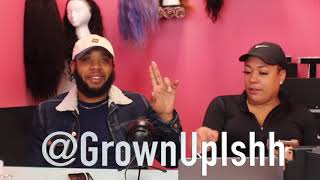
In this live YouTube podcast recorded on February 24, 2020, hosts LaToya Kelly and Anthony Ford discuss a range of topics relevant to Black hair care professionals and consumers. They begin by detailing the Missouri braider’s license, explaining how the 2018 law created a state‑mandated online training program, the lack of a final test, the certification process, required $20 fee, notarized registration, and the implications of being on the state board’s radar. They then reflect on their cosmetology school experiences, emphasizing sanitation practices, customer‑service training, and the diversity (or lack thereof) among instructors. The conversation shifts to a “pro‑choice” stance on relaxers versus natural hair, weighing the health risks of chemical straightening against the benefits of natural textures, silk presses, and the importance of proper hair training. They critique the hair‑care industry’s aggressive product upselling, expressing skepticism toward extensive product lines and highlighting the financial burden on consumers. The hosts also discuss the role of social‑media influencers who push products and “hustle” viewers, warning listeners about misinformation and the commercialization of natural‑hair care. Finally, they touch on alternative styling methods like Sisterlocks, noting minimal product use and the desire for more authentic hair‑care education. Listeners are directed to the full episode on grownupish.com for the complete discussion.
Chapters
Hey guys, how are you?
We live now.
So we live, baby.
All right, so it is super strange. What is it, the third week in February? Yeah, so this week I have some— well, hey, y'all know who it is by now, hopefully.
Um, TT and Anthony Ford.
Yes. So we are live because my cousin actually suggested we go live, and she was like, you know, it's a good way to interact with people, see what's happening, and also we can get feedback, questions, answer stuff. So the last couple episodes we had some things to follow up on, and the first one was not really important, but I was trying to figure out the name of that show in Seattle. Remember?
Yes.
With the women. Did you ever realize what I was talking about?
No.
Sex and the City.
Man, get out of here.
I was like, it was a show that was really popular in Seattle with rich women, and I could not think of it. It was Sex and the City. Yeah. I never watched the show. Apparently it was good.
I used to watch it, but I didn't know that was Seattle.
So that was the mediocre topic. The second really, really, really, really big thing— you don't think it's gonna be big, do you? I do over-exaggerate though. So I wanted to get into from the beginning the conversation about the braider's license.
Oh, okay.
So when I first brought up the conversation in, uh, the first— our first together podcast, I said some things which, if you want to hear that, you're gonna have to go back and listen if you have not yet. But, um, I said some things that my sister was like, uh, make sure you protect it with the stuff that you said, right? In other words. So I was like, you know what, you're right. Plus, I think we needed to provide some more information on the braider's license because I, I didn't know anything. So I did look it up.
My cousin said she was gonna actually she actually wanted to come on and talk about it because she's a braider.
Okay, I mean, I think so. I mean, especially for people who don't get my stuff together. Yeah, well, not for you. You got your cosmetology license, so you're not one of those that needs this information, right? Yeah, you, you covered by the blood. Amen. So, uh, so I looked it up. The law did pass in 2018. The law passed in 2018 for there to be a braider's license in the state of Missouri. So what I was saying on that show was that the criteria hadn't been released yet, right, for them to be able to. But apparently it has now. And, um, you surprised?
Uh, yeah, I didn't know that.
Really? See, that's why I was like, I need to get it now. I need to get the info out there. Yes. So I was like, let me see what this stuff is because I still had in the old text messages to my sorority sister as a lawyer the information like on that, the old articles and the old um, the— what was it— the, the legal stuff, like behind the scenes, what they were passing. So I checked on the link of those and it has that it passed in 2018. And I put like the website on the website, like on a grownupish.com website, 2 H's, y'all. But I put like all the information to do it if you want to. So I actually did it. Oh, I did it, uh, Sunday, Saturday. Really? Yeah, I was like, let me see what this is about. I just want to know. So I got on the website.
Excuse me.
I got on a website and, um, I saw how to like sign up for it, signed up for it. Um, it's— it took me— I noted what time I started and finished. I started at 5 PM and I finished it at 8:30. So what it is is a video Um, it's like a website, and just like any online training, you gotta click through the videos and it times you. Like, you have to watch it. You can't skip through, you can't fast forward. You can rewind, but you can't go forward, and you have to go through the allotted time to, um, to actually finish the course, right? I was thinking that there would be some type of test at the end. There wasn't even a test. So it was— I know, I don't know. So it was like literally like almost—
was that like a test? Did you have to like ask the question?
No, no, watch the videos. It was like— it was really informative though. Like if you do not have any— like I, of course, like I said, I went to college anyway. Yeah, I mean, well, you know, like a refresher, yeah, whatever. But I mean, if you have not gone to cosmetology school, like I really do think that these things are beneficial for you. Um, and I'm gonna say another disclaimer just in case you don't want state board on your assets. If so, okay, so I'll get to that second. So if you really want to become like licensed, you want to be legal, you want to go expand and do this, this, and that, and maybe some things that you're doing require a license, or maybe you're feeling like your clientele is slow because you don't have your license and stuff like that, I would recommend you do it for that. Now if you like, listen, I've been working from home, I never want to work nowhere else, I'm cool with what I'm doing, and state board never came to my establishment, I'm good, then don't do it. You know, like, I'm not— I can't advocate whatever I want to, but I'm not gonna— I don't know, it's each individual's situation is different. Um, what— so what was the second part I was gonna say? Oh, so if you don't— if you do it, it puts state board on you. Like, it puts your name out there. It basically shines light on YouTube to show, okay, this person is licensed as a braider now, so now they will check on your establishment once a year. Whereas if you not, they gonna leave you alone unless somebody reports you. Um, so if you doing everything right, you doing good, you good at what you do, you're not shady to nobody, you're not making nobody's scalp bleed and all that stuff, then you good. But if you are doing anything— and you have to look up what the what the braid license entails. Like, if you even straighten somebody's hair with a— with heat, that is— you need a cosmetology license for that.
Wow.
Not even a braider's license. Yeah, you can— you cannot— you can't even straighten a leave-out. Like, that's how deep this license is. There was no test, there was no follow-up. You print out your certificate at the end of it, you fill out your, um, your little, what is it called, your certificate. You register, fill out the registration with state, for state board. You mail that off along with $20. Don't send cash, y'all. Check, money order, cashier's check. Please don't send $20 bill. Um, you never want to mail cash. I mean, some people are young, you know. If I was 17, maybe I didn't know that. But, uh, right, cash money. Um, You send that off and then you have to get the registration form you fill out notarized. So I would say if you have a bank account, go to your bank, um, UPS, FedEx, stuff like that. Oh, the part that I felt like was really like I could have dealt without this was the customer service communication. Like some— but I guess to some people it's not obvious. Some customer service is not obvious to everybody, and I will Thank God for some of my old jobs and to my college stuff that I had to learn a lot of customer service type stuff with my job.
School taught me that. School taught me that customer service manner is everything, you know. And service starts at the shampoo.
Yeah.
And you know what I'm saying?
I even had, like, in cosmetology school, they taught us that, you know, we're supposed to walk our customers to the door. See, I'm too—
that's that other people's stuff.
Yeah, I'm not really a wild person to the door. I'd be like, come on girl, I gotta get ready for this next client.
All right, sit down.
No, but and then another thing that I think I really enjoyed was the sanitation.
Like, you see, that's exactly what—
that's the main important thing is washing your hands between clients. If you dropping something on the floor, not picking it up and putting it straight back in your client's head. It was— it's a lot of things that if you don't really learn this stuff, you, you don't know it. Um, and I mean, cleanliness, like, it's very important when you're working with people's scalp, period. So, okay, that was my spiel. Did y'all think that was informational?
Like, it definitely was informational.
I think so, because I didn't know. I've been following this since 2018 and never realized that they even put the stuff out there to do it.
The funny thing is is that it's not even like a test.
It's not hard to do. Yeah, it is. And I can respect that because it's like, obviously y'all not going to teach me how to braid. I know how to do that. Y'all not going to teach me my crafts. Just like cosmetology school, they don't teach how to braid. They don't teach how to do a sew-in. So these things—
my school did.
Well, you went to an African American school, I presume.
No, I didn't. I went to a Grabber. It was diverse.
No way. Sew-ins?
Yes. They taught us sew-ins. We used to learn how to weave onto a track, honey. We learned how to braid, do all different types of braids, like fishtail, French braid.
Yes.
They taught us everything.
You lucky son of a gun. Yeah.
And I was in, like, you know, I knew how to do a lot of braids anyway. And then I was already doing hair, so I was comfortable. I was walking around the class helping people braid.
Cosmetology school. That knows.
We had a whole course on braiding.
That must be—
I loved my school.
And here's another thing, my cosmetology school was in Kansas. Mhm. Because, yeah, we'll go into that. But I— no, oh, you did? Oh, well, when I went there, yeah, I did. But I'm from Missouri, right?
I know that.
Y'all better, y'all better get it right. Y'all better not do me with this Kansas and Missouri stuff. No, but technically when I went to school there, I was living in Kansas. Um, because yeah, but yeah, that's dope though. Yeah, that's very dope.
We learned all of that stuff. That's why I said we learned how to do all different types of hair, you know what I'm saying? Kinky, curly, straight, Asian hair. You learn how to color that, you know, all of it. When in my hair school what textures are for what, what products are for what textures. So yeah, we learned all of that.
I chose my school because I knew cut— I mean, I knew hair extensions and long kinky hair. I wanted to learn other textures, you know, like I want to be good at cutting color on other people.
And that's what I was thinking too, because I knew people— I thought I learned more. Yeah, black hair.
Oh really?
Yeah, I learned so much more about black hair. I learned how to properly take care of our hair because growing up you see stuff and you think that that's the right way to do it and then you learn like, oh my goodness, they've been doing it wrong all this time. That's why they bald-headed.
Like what?
You know, like just like relaxers, like how to properly apply a relaxer.
Ooh, I've been burned.
You know what I'm saying? Color, how to properly apply color, you know what I'm saying? Why people hair don't change and do the things that they want them to do, you know what I'm saying? Like, it's so much. I learned a lot.
So let's do that. Let's talk about— let's talk about relaxers.
Relaxers.
Yeah. How do you feel about relaxers?
I am pro-choice about relaxers. I feel like not every girl is a natural. Not every girl wants to be natural and is comfortable with being natural. Like, I use my mom for instance. My mom does not like get with the natural stuff. Her hair is real, real tight. She just, she don't. So she likes her hair straight, you know, she like the creamy crack. And you know what I'm saying, you have people who, you know, like my aunt, like she's more natural, she loves her natural hair, she loves her natural curl pattern, but she does get, you know, protective styles, you know, her sewing installs and stuff like that. But yeah, I'm definitely pro twist. I don't feel like everybody needs to be natural. Like, that's just like, oh, I'm not, you know, Black if I'm not natural. Oh yeah, whatever, you know what I'm saying? Or I'm not proud of my hair because I'm not natural. No, this shit is just nappy and I want to find it.
I need stuff done.
But some girls, I do feel like they should be natural. Like, a lot of people don't realize that they have nice textured hair. And like, I'll get in somebody's head and I'll be like, you shouldn't even relax your hair because it's a really, really nice texture, you know what I'm saying? They'd be like, nah, I can't. Go without a perm, I'll be like, watch this, you know what I'm saying?
You can't, you can't.
Let's train your hair. Let's, you know, properly train it so it can be manageable and natural, you know. And it's, you know, it goes a long way with that. So I mean, it's all, like I said, per choice.
Yeah. I, I think that you do more with natural hair and stuff than I do too, so your perspective is different. I think for my customers in general, I just don't believe in relaxers for my clientele, you know.
Like, I mean, it makes more sense. Like, they are getting— yeah, they're getting frontals and closures.
It just does not make sense. Like, I have clients who will relax their edges and their edges is always sewn in. It's like, yeah, stop doing that. You just causing more damage. And like you said, a lot of people don't know how pretty their texture is underneath them chemicals. And then just the harshness of them, the smell of them. Sometimes the smell of relaxers, I'd be like, you just relaxed your hair, didn't you?
Yeah, yeah, you can tell. Like, I've been trained. I know, um, I can, I can feel it. It could just like— they can come in and I just took some braids down, I need to shampoo my hair. I can actually look at the texture of your hair and tell that you relaxed your hair. I could feel it, I could smell it. It's— it flat irons different.
Like, it smells even when it flat irons.
Yeah, like, it flat irons different. And funny thing is that I realized that, um, natural hair silk press is way better than relaxed hair. Like, it, it moves better, like, it shakes better, has a different type of sheen to it. Relaxed hair, it's it's saying it always seems like it's not as full. I know. Yeah, you know, like it's kind of—
yeah.
But I will say that, but like I said, pro-choice. Like, I, I know girls who like to hit the edges up, you know what I'm saying? Ain't nothing wrong with that because sometimes they always, you know, they don't always want to wear a wig or a closure or whatever like this, so they can get a quick weave and leave a little leave-out so I could be sleek. Yeah, some girls need that.
Right. So, so relaxers leads me into products. What do you feel about products? You know, like when you are in cosmetology school, they do teach you upselling. Um, you know, a lot of customers ask you as a hairstylist what your— what do you recommend, you know? So how do you feel about that?
Um, I'm pretty good with recommending, um clients to a product. Like, I get a lot of questions about the, um, the wet and wavy hair now, like the curly hair, any type of like hair with curl pattern, and they want to wear it wet down and put a product on it. I always, you know, they always get those questions. And yeah, and that's like really, really— and we're like shampoos and conditioners. Like, a lot of people always ask me like, what shampoo conditioner to use for my natural hair, for my weave, and stuff like that. So I give them a few ideas.
So I am very— I am— I don't really— I don't feel products like that. Like, I'm not a fan of products. I'm not a fan of shops that really try to get you, hey, here, buy this and use this. I'm not a fan of the upsell.
Oh, okay, I get what you're saying.
And remember, we talked talked about, like, the hustle. Like, to me, that feels—
that feels a little more—
it feels like I'm hustling them to buy products to upsell so I can make a profit off of this product. When— but okay, I'm gonna let you finish, bud. Uh, so no, like, okay, so for instance, when I was in hair school, the products that they had, we could not use on my clientele that I was bringing in.
Yeah, we did.
Right, well, you went to a Black one, so it's different. So this one, it was like—
We was diverse. We was not Black.
So what were the professors? I mean, not the professors, the—
The majority were white teachers. The majority were white teachers. I had one Black teacher, but the rest of my teachers were white. I had a male white teacher. Then after that, I had a female white teacher, then I had a black teacher.
And see, white people rarely wear sew-ins, so— They tell them—
But the black teacher taught us that.
Okay.
The black teacher taught us to braid, and she taught us the styling part of school. So we learned how to do, you know, different curls, and we learned how to do our braids in her class. We learned how to do the sew-ins and all of that stuff. They taught you like how to glue on the web. She the one who taught us how to make the weft, like put the hair on the weft and make it. It was an old machine, and I'm sure they have like newer machines now, but the machine was like, it looked ancient, but it was like the dopest thing ever. And we were actually making tracks, like our own tracks. I'm like, shoot, if I had like weave, I'd be in that. But yeah, it's very time consuming. Okay, so it was very like, when I say diversity was diverse, majority of the the students were white kids. Like, we had a lot of high school kids that just got out of high school. It was a few grown women, older women, and then, you know, you had your Blacks scattered through. It was diverse, very diverse.
So we had this product line that they were introducing because when we first started, it was Pravana, and then they started using Joico, and Joico has this line.
I love, I love Joico, man.
They have this moisture line. Between that and, um, there's one more with, um, KeraCare that Jeremy, who colors my hair and stuff, that he's— he showed me about. And they have like one that's like the, um, taking out everything, strips it of everything. The other one adds the moisture to it. So it's like 2 steps to the shampoo, and then I love the Joico conditioner. Um, but I personally think that, okay, when you're washing these people's hair, you shampoo it, you put the conditioner in it, you wash out all that damn conditioner, and what are you left with? They real hair, right? So when I was in hair school, like, when I was— when I would get done with their real hair like I would flat iron their hair and everything, press it out, and I would be like, I ain't put nothing on your hair. Like, I may spray a little bit of oil on it at the end just to give it that shine and soft feel, but I didn't put nothing on it. And they'd be like, you didn't put nothing on it? No. So I felt like when people are selling you all these products for this, this, and that, unless you have a condition like psoriasis or, or some kind of dry scalp, or, you know, like, unless you have that, you don't need all these extra products. Now, when it comes to weaves and stuff, if I notice this hardens it better, or mousse for the wet baby hair, that's different. But as far as like products, oh, if you really want to keep up with your hair, I really recommend you use this moisturizing shampoo 2 times a week. And then I don't believe in that.
So there's— that's funny because I just watched, um, a YouTube, like, I think it was a documentary. I'm not sure where, um, where it came from, but somebody sent it to me and I watched it, and it was about, um, Black women in the natural hair care, um, like, you know, movement and stuff like this. So they talked about like the millions of dollars that Black women— oh my God, I think I want natural hair care products and cabinet full of that stuff, man, you know what I'm saying? And they have like 2 and 3 deep conditioners, shampoo, conditioner, you know what I'm saying, mousses, you know, oils, all this other different stuff, and I was just like looking, I was looking, I was like, it's funny how a lot of women go natural to save money because they don't want to like buy weave. Some women, you know what I'm saying, like who are actually into the natural look, so they like wear the afro and they wear their twist outs and stuff like that. They feel like they're saving money because they don't spend money on weave and, you know what I'm saying, getting all your coins. The industry is getting all of your coins.
But the problem is so much stuff.
It's a hustle to keep the maintenance of your real hair. Like, natural hair is really hard to maintain and it's very expensive to maintain.
You— but you really believe that?
I mean, I believe that.
So when I was wearing my hair curly— so two things. One, I just got Sisterlocks started on my hair.
You got a nice texture of hair though. But continue, because some people don't.
Okay, but I didn't know that. Like, I had no clue. Even when I would wear it natural, I would just braid it up. Or it would be half natural, half relaxed all the time. And then I was getting my middle part relaxed, you know, I would give up and then just relax it again. So then when I felt like I wanted to, um, wear my hair natural, I dyed it jet black. And when I tell you that dye straightened my hair to the T, and I was so mad, but it was just like I just gave up. Like, the dye straightened your hair? Um, yes, the dye. I was so irritated. Yeah, like even with me getting these Sisterlocks, she was like, um, your hair— even she thought it was straight. Like, it was like the back— my hair is super, super curly in the back and nothing on— like nothing. And she was like, it's still straight. And I'm like, girl, you better put some water on this. I got some texture back here, some curl pattern. So she put some water on it, was like, dang, I wonder if I had just did this on the front if it would have been— how the hell did she do that? Is it like a sister lock? It's a whole technique. No, it's not a braid or a twist, it's a technique. So, and I'll get her on there so she could talk about it. And they use like a tool and it's a, it's a whole thing. Little as heck, but I like them little because once they grow out it'll be so pretty.
Yeah.
Um, but the process, we gotta really talk about this process. We'll get to that on a whole nother time, but Even with Sisterlocks, it's all about not using the products and nothing like that. But when my hair was— when I was wearing my hair naturally curly, I wasn't— all I would do was submerge my hair in the shower, wash my hair with like a Denman brush, and I would brush my hair through. And I would just put like clear gel on it, and I may put like a little bit of argan oil on my hand and just like rub it through my hair and just go. I have a towel with me in the car just in case it's dripping, but like make sure it wasn't running down my back. But I would just let it air dry and wear it like that. And I get what you're saying, like, it only took me 2 products, like, but you gotta put it on your hair when it's soaking wet. And you— and I feel like, just like, that's another thing though, these YouTube hustle videos, you cannot— but it's so sad. I feel so bad for the followers and subscribers of these people because it's a hustle. Like, if I am mixed, okay, I'm blazing Yeah, and, uh, I'm teaching y'all how to make y'all hair like mine, right? Like, and I'm selling y'all— now I got a new hairline, y'all. TT Does It All Curls Define. That ain't gonna curl define y'all hair like it's mine. So it's like, people be hustling.
But that's why I feel like it's so many different products. Everybody's trying to find what works for them, you know what I'm saying? But you have to They gotta figure out what their hair texture is, how to properly care for it. A lot of people just can't, you know what I'm saying, shower with it, boom, you know, put a little product on and go. Like, I know people who straight, like, have to put the product on there, twist it up, put, you know, the flexi rods on it just so we can have some type of, you know, look to our style, or, you know, and then also being moisturize at the same time and treat your scalp and all of that. It's like a lot of— I've seen so many people, like, it takes a lot of time. It takes a lot of time and energy to take care of your natural hair. Some of them just get some weave. But no, like, that's funny that we kind of like talked about that because I've seen another, um, it was a small animated film and it was actually an Oscar-winning like just won an Oscar, whenever the Oscars was just on, but they won an Oscar, but it was talking about, it touched on like black hair and being natural and, you know, I guess so loving your hair and black people loving their hair and who they are and like representation on film and then, you know, cartoons and stuff like that.
So let's take a break and then we'll come back and we'll touch on that video and give them the information on that video and stuff. But for all of y'all on our lives right now to watch, or actually listen to the rest of this, y'all going to have to tune into the podcast. It's grownupish.com. Make sure y'all tune in. Thank y'all for watching live with us, but the rest is there.
Bye.
All right, so let me end this one and then I need
More from LaToya
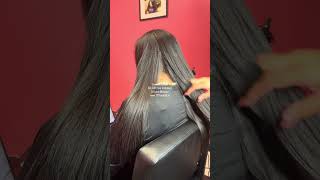
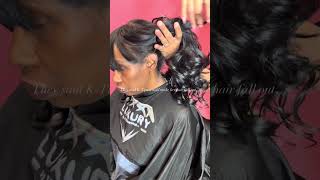
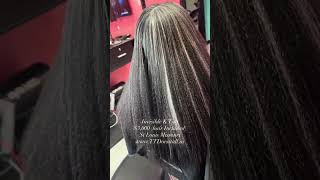
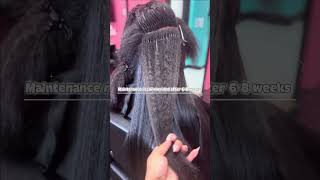
St. Louis, Missouri - Lasts 4–6 months - Takes 4–6 hours - Investment: $3,000 www.TTDoesitall.ai
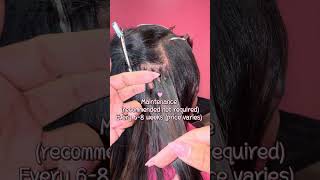
What are #ktips? Here’s your answer! Schedule at www.TTDoesitall.ai 🩷 #extensions #ktipextensions
4-6 hours install and last 4-6 months #ktipextensions done by the right stylist the right way 💕
Located in St Louis Missouri 💝 Consultations available www.TTDoesitall.ai 💕#ktips #natural
K Tips take 4-6 hours to install and last for 4-6 months with proper care! #ktipextensions