FAQs Answered: Hair Extensions

La Toya Kelly answers questions about sew-in extensions: wash with water and avoid moisturizing shampoo, use high heat sparingly, wear them 2-3 months max, and give your scalp breaks between installations. She debunks miracle products like Blue Magic and alopecia creams that prey on hair insecurity.
Chapters
Attention to all my powerful ladies out there! Are you feeling lost in the crowd? Maybe the bills are stacking up. It's time to stand out and rediscover your unique purpose. With this guide, not only will you find your true calling, but you'll also learn how to monetize it. Imagine making up to $10,000 a month just by being you. If you're intrigued, tap in right now. The link is in the description. Hey everyone, I was doing my client's hair and we were watching other hairstylists on YouTube do hair when we saw this young lady frying this other young lady's hair as she was straightening it, and there was smoke everywhere. And we just really got to talking about how to wash extensions, how to care for them, how high should your heat be, um, how long should you keep your sew-ins in, um, and all those type of details. So hopefully you like this video. If those are questions you've always had, thumbs up this video and tune in.
So your question was basically about how do you wash your sew-in when it's in, right?
Right.
So how do you usually wash it?
I just use like a good, you know, shampoo like Mizani and then the conditioner or, uh, Joico. Is it called Joico? Joico. Yeah, Joico. Or, you know, the moisturizing— you were saying use Dawn?
Two videos on my Instagram of how to wash your your bundles when you take them out. So I was talking about when you take them out, I don't use moisturizing shampoo on my extensions because it's gonna weigh it down. Okay, so if I need moisture on my hair, I can need it on my real hair, but the extensions don't need it.
So how can you keep it off of one and on the other?
What I recommend is not putting product underneath at all. Like, you don't want any shampoo or conditioner to get—
in this. It's important to note that while I generally recommend avoiding moisturizing shampoos inside sew-ins, everyone's hair and scalp conditions are different. If you've purchased extensions that might not be of the highest quality, you might have to adjust your care routine accordingly. However, for those with specific scalp conditions or hair loss, always follow the guidance of healthcare professionals and use the necessary treatments and shampoos. This advice is based on general observations and may not apply to all individual circumstances.
Braids, this net, none of that. Do you do that, try to get it in there?
I got a little squirt bottle too. I was really going at it. I mean, I've been watching these YouTube videos and some people know what they're doing and other ones don't. But this one lady said take the conditioner, put it in the squirt bottle, look how you would color, and just squirt it in there and get it in there. So now what do I— what should I really do?
Well, it's her advice, that's great. To, but for me personally, and you be the judge, all these braids, this net, this thread, it's all up underneath, right? How is all that stuff getting out? Yeah, it's not. All of it's not getting out. So when you go to your natural hair healthy, you just, you just run water through it. But so if it smells bad or something, like, I understand that some people are like, I go to the gym, my hair be smelling like I gotta wash underneath. Just let the water run through it to run, you know, whatever sweat and all that stuff out. I get that. But don't try to put any products underneath your sew-in because it's just gonna build up in there. It's just gonna build up in there. A lot of people ask, how do I take care of my hair underneath the sew-in? Right, you leave it alone. That's the point. Cavemen, their hair is flowing down their backs, right? They don't do nothing to their hair.
That's the best.
Even with your regular hair. Yes.
So we're not gonna—
your body produces natural oils.
So, so, so what you eating? I eat really good and healthy. Yeah, so pretty much for both, for the weave and your regular hair.
The weave is what it is, you know, like, so don't—
so she— no shampoo.
You can shampoo it. I mean, don't put like moisturizing shampoo on your extensions because your extensions are naturally how they're supposed to be.
Be.
Okay, you get what I'm saying? Like, when you buy a bundle, how it comes is how you really want it, right? You don't want it weighed down like this, this drop, right? You would not even have that if you use moisturizing shampoo because it would just— it's a film over it.
Yeah, yeah, I know exactly what you're talking about.
Like this, my hands are still dry, right? That moisturizing shampoo, you touch it and you can feel, right?
Yeah, I just washed this.
I didn't do anything to that, and that's the first time I've had And if you are working out or you do something where you're like, oh, underneath my hair I could just tell I've been sweating, I need to rinse it out, rinse water through it. I'm with you, you know, like I don't say just don't do nothing, but even when you do that, you have to make sure you thoroughly get the inside dry.
Okay, okay.
So yes, some people say like you should only leave your extensions in for 2 months. Some people don't want to do that, some people can't afford to do that, they need to keep them in longer maybe, or maybe it's I'm— they travel, maybe it's like, I'm traveling to you, I can't come every 2 months, or maybe it's come 3 months. I've had a customer keep her sew-in in for 7 months.
What do you recommend?
I personally would do 2 months. I don't— I, I can't say that I recommend that because if I had a sew-in and I wanted it to stay in longer, I would keep it in longer, you know, like, so I think everybody's different.
I'll put it this way. If I could do my own sew-in with my head in front of me like I do everybody else's, I would not take my sew-in down after 2 months because I know the longevity that my sew-ins give. So that's what I mean by it really depends. It depends on who's doing your hair, because if I'm doing my own hair and I do it how I do my customers, which I can't possibly because I can't see in the back of my head like I see theirs, But if I could, my hair would not be coming down after 2 months.
3 months would be definitely my max. There's no way I would leave something in 6 months. Yeah, I don't— that's half a year.
And the girl who does it, she's clean. She's not dirty. She don't stink. Her hair don't stink.
She just wash and take care.
She takes care of it. Her real hair is longer than these extensions.
Now what does she do? What you tell her to do?
I'm telling you, it's just something about being able to pull up a receipt. You see at the top is the timestamps. And the dates, right? So this is from my phone, actually just showing the process of me doing her hair. And you see how long her real hair is from the beginning. And then I got the side-by-side shots, and you can see her. And she is still a client of mine. And if you're subscribed to my channel, you know one thing I hate is that beehive pattern. So you know this got to be old because I'm not doing that in 2023. Now I still got the same flat outcome for her hair that I always use the same braid pattern now, and she gets a flat sew-in. So as you saw, her hair is still extremely long. We used curly hair extensions and I twisted her hair in two flat twists on the top, and you'll see me hold her natural hair right here where it's showing you her hair is still full, thick, and long.
Well, I've been through it. I swear, this is like— I was spending money, and I say this is the third one probably in the last 6 months. I would just— it was either too tight. I haven't felt nothing. I'm just so happy. God, just thank you, Jesus. It's just so— I mean, nothing's hurting. It's going in easy. The braid pattern, it's nice. I mean, I am a picky one. I am. I mean, not—
but I don't think you're picky. I think you want it done right, you know?
But stop saying— and that's what, that's what people have told me.
People like you— that's because they feel like, oh, she's asking me for this, I don't usually do that, now I got to do this. If you doing it that way in the first place, it's not picky. You just asking for it to be done.
And that's what everything that I do. If I'm selling a house, you like what you like. I'm not going to sell somebody something I'm not going to live in.
You are not picky, you're particular. That's your new P word, particular.
Yeah, but I'm a happy girl today. Okay, I think you're on today, but I mean, you do not—
and I even do it because I get— sometimes I get fooled. I'm like, oh, this says it'll work with my natural hair, and when I put it on there after washing it and curling, and when it dries, it'll do this. It dries and it's white. Like, why is my hair white? You know, like, it's always something. It's either it's It don't last. It started to poof up. You got to add gel to it. You got to do this. It's like, it usually the products do not do what they say they're going to do. So honestly, the best, like you said, less is more. Um, it ain't broke, don't fix it. Some people— I had one customer talking about hair, uh, um, homemade or something like that, and I'm like No, she said she was putting it on her leave-out before she went to bed, and when she wakes up every morning, she was flat ironing it.
Well, you see all these—
I mean, was frying her hair off. Her hair literally was this long. This is my first time meeting this girl. She was raised around white people. She didn't know, you know, she don't know a lot of Black hair care stuff. So I was just telling her, that's not for us.
Like, yeah, no, no.
Well, you see this when you put stuff on your hair and you put heat heat over it, you're frying your hair. That's where all that smoke was coming from in this video.
Yeah. Okay. And that's— okay, so I was thinking originally like that, but then I, I kind of go back and forth because you'll hear one thing. I was watching a video the other day and the girl said, I turned this, this flat iron up to the highest heat.
I turn mine up to the highest heat, but I work fast.
Yeah. But yeah, she said, and I passed through really quick. But yeah, so what about, you know, you see these products, they say if put it on your temples where it's weak at, it'll make it, um, it grow. All that gross stuff, all that stuff is just—
and you in the medical field, your son's a doctor, come on now.
I know, but you know, you, you— but do you—
I mean, these is convincing.
You think— I mean, this stuff is convincing. I mean, this is sales. You think— no, it's not.
I know I'm asking.
Hair is going to grow, it's going to grow, or it's not going to grow, no matter what. Thank you.
There's no magical cure of Yeah, like you say, if it's gonna grow, it's gonna grow. Sometimes hair follicles are dead. Like, you don't— you no longer have a hair. You've killed those cells, so there's nothing there to grow. So some people are trying, it's not gonna happen.
But you, when you see these commercials, you know, they'll show one person bald head and then this one with a head full of hair, and you'd be like— even though you know deep down, you know, like what you just say is true, you're like, well, maybe Just maybe.
You are correct, they are convincing. Those girls that are on the relaxer boxes, some of them did not have relaxers. Their hair was pressed. These girls are now grown telling the stories. She is on a relaxer box and did not have relaxers. They did not have relaxers. That's what I'm saying.
Are we just a vulnerable group of people?
They prey on our insecurities. Our insecurity is our hair. I know. Our hair is everything.
That, I mean, But I love that I am not my hair. I tell myself that. I've seen this.
Well, you don't suffer with hair loss. That's like me saying I sell a product for alopecia, right? If I do your sew-in and I put this alopecia cream on it, by the time you take this sew-in out, is your hair gonna be growing? Now mind you, if your hair was gonna grow, it's gonna grow anyway because I don't pull tight, you know, right, right? But I'm gonna sell you this cream, it's gonna be about $57.
A pop.
You probably don't need two. You know, like, if I was a hustler, I could literally do that.
Yeah.
Oh my God, I could do it. But it's like, these companies are hustling us.
My husband called, so I had to pause to answer that. But I'm back, and I want you all to drop a book in the comments if you're still watching this far.
Okay, so I heard like you shouldn't get, you know, weaves back to back. Um, because if you get weaves back to back, then your hair is not getting oxygen and it suffocates your hair, and then your hair won't like breathe. And you know, it needs time to just have— because it's kind of got something on it like a cap, and it's suffocating, and hair follicles need oxygen to breathe.
So think about locs. You think their hair isn't breathing? Yeah. You don't think it's breathing?
Oh yeah, it's growing.
Yeah, yeah, but I'm saying that hair is all intertwined up in there and I mean, it ain't— it's fine. They not putting grease and moisturizer and oils. And so Sisterlocks, for instance, your hair grows and grows. You're not supposed to even use product, like you're not supposed to use grease, you're not supposed to use oils, you're not supposed to—
so we've been doing it all wrong. I mean, Black people, they look, they remember that Blue Magic stuff?
Oh yeah. I didn't really touch on Blue Magic as much as I could have, but think about the name Blue Magic and think about the actual product if you've used it before. What's magical about Blue Magic? Absolutely nothing. Nothing's magical about it.
So if I took my hypothetical alopecia cream and called it Magic Alopecia, like that's going to make more people buy because they're gonna be like, oh my God, it's gonna do something that I never thought it would, which is magic.
And sometimes, so, you know, you see the names they make these items like magic, blue magic. It's— there's nothing magical about it.
Like, let me know if y'all here with me.
Drop something blue in the comments because this should have been like 4 videos, but I'm gonna keep it going as one for y'all. Which don't want to sit on.
Look at your hair though. I have not touched your hair with any oil and it's shiny. Like, I literally just pressed it out, it's shiny.
It must have been your flat irons.
You think my flat irons—
hey, when I do it like that, this is your hair.
It's your hair. Should you, um, give your hair time to break, right? If you're trying to go get your ends clipped or you're trying to do like a hot oil treatment which you just say you don't believe in all that anyway. But it— I mean, it is. Look, yes, the only time I would give my scalp a break is if I had— so you're not gonna have this problem, but let's just say you had a sew-in that hurt so bad when you got it done, um, your scalp when you're taking it out was just tender, you know? Like, I would give my scalp a break from, from that flare, the tension.
But see, when I get one like that, you don't got to worry about it. Let me get her seam ripper. I'm getting that crap out.
No, but it still hurts. So I will give your hair a break from that pain, you know, like so you don't ruin the follicles. Yeah, so you don't just rip it.
And how long of a break would you give that to your head?
Maybe a week if your head is still hurting. Another break I would give my hair is, um, people come to me straight after a relaxer, and that's terrible, right? Just like a scab on your skin. That relaxer sometimes is like giving you scabs and stuff, and you never really know where and how it didn't burn until it starts scabbing up. So I tell, um, not to come until you've had that relaxer in for a week. So until your relaxer has been in a week, because that's after that week the scab starts to come and the itching start and the flakes start to come. So you need to wash that out first, and then, and then we can do a sew-in. Because if you—
why would you put a relaxer on your hair and then want to come for a sew-in? Some people—
I mean, if you got it relaxed, they're just relaxed. And then some people do it for the leave-out. Um, but I tell them, you don't have to do it. I can show you how not to flat iron your hair all the time.
Yeah, once you've done this, I won't be doing this again because I don't do very good. So it'll be whatever comes out, that's how it's going to look.
So what I tell people is, um, if you tie your hairline down with a scarf at night, you definitely need a scarf at night, and that will keep your leave-out flat.
Oh man, this feels amazing.
The scalp—
yeah, nothing hurts, nothing hurts. There's not like— usually it'll be like there'll be just one spot that just feel like I got to get this out, and then I'll like go home and then I'll rip that out. I get my seam ripper and rip that out, and then it'll be hanging and won't look right, that one spot. But there is just no tension nowhere.
You're surprised? Oh yeah. So in my videos, did you see that when I was saying that it doesn't hurt?
Yeah, but you, you didn't believe it. But I, I, I must have believed it. I believed it because to come, but I'm like, so then my second thought was I was thinking like, okay, I'm gonna go, but I bet, you know, she just did it really nice for those videos, and she's just gonna probably rush everybody, rush me right through or something. That's what I was thinking. I'm like, and it's gonna be— it's not gonna be that way, but it's exactly what I saw in the videos. Yes. Yeah, it was. It's nothing crazy. What you see is what you get.
This is your first time?
Oh yeah, I'll be back too. Yes ma'am.
So where did you—
how'd you find me?
On YouTube? Uh, so I had a bad, um, sew-in and it hurt. Me and my daughter kind of tried to salvage it.
So you were searching for—
so I was like, how do I— it was like, I was like, I can sew, I'm a seamstress, I, I'm sure I could probably put one track back in. Well, I put it back in, but it kind of fell out. I don't know if I didn't do the lock stitch right. So I was just watching and I was like— and then it was like TT Does It All, and then I kind of like looked at the address, I was like, oh man, she is here in St. Louis. So I'm like So I went on and I think I even sent you a couple questions, like, um, and my daughter kept saying, you need to stop, Mom, because you're going to ask so many questions and then she's going to be like, what the heck? And so that's how I found you. But yep, it is exactly— it's the real deal. It's the true blue real deal.
And how late was I?
What, this morning? Uh-huh. Coming to your appointment? I knocked on the door. I got here about, what, 25 minutes too, because I didn't know where I was going. Both were here. You were here before I was here.
Look, I was like, oh, she's here.
Yeah, it's just been just a wonderful experience, the whole thing.
Are you sure I didn't pay you to say this?
No, I'm a true person. I don't mind— pay me to say nothing. Listen, I'm a very outspoken woman, and you said I'm not—
you're not thinking you're Particular. Yeah, that's a good word. Start using that when you tell people, I'm very particular.
That's—
I mean, that's a better way of saying picky. But you're just particular. You know what you want. Oh, it's not picky like, uh, I don't know what I want, but whatever you pick, I'm gonna say something crazy. No, I know if it's for me or not.
I know good service. I mean, with my hair, I know I know what it should look like. I know what you want it to look like, right? Right. I mean, it's not like anything that's kind of cock-sided, or, you know, you just go and you just look, and it's just like you get home and you're looking in the mirror. You're looking in the mirror when you're there, and you kind of like, I don't know how this is going to work out, but I'm just going to sit here. But y'all don't see nothing weird or off-center.
You see the mirrors in front of you.
I ain't hiding nothing. I would be in told you by now. Like, look, um, somebody told me about this lady who braids hair. I was trying to tell her, I was like, well, I've been hurt, please don't hurt me. And I was like, you know, because my friend was like, well, you need to tell them, know you're really tender-headed, which I'm not that tender-headed, it's just they really do hurt you. And, um, she was start talking in her accent, she was She's just like, look, you need to just sit here. And I was like, something just said, Linda, get your stuff now, just leave. I just got up and left. I'm like, this is not going to work. And so then I was sitting in my car, like searching for somebody else to do it. She comes out to the car, she's like, come back in, I've been doing this for an hour. I was like, mm-mm, that is not, just her whole attitude, disposition, I was like, don't kid yourself. So now when I have that first inkling, like something's going to go wrong, I'm not gonna pay for it. I'm not gonna let you start. I'm just gonna just not do it. That's what you— I mean, you got to go with your own gut feeling of what, you know. But this has definitely been totally, uh, a totally different experience than what I've experienced. I don't know.
We'll make the thumbnail to this video a client maybe walking out on a hairstylist, grabbing her bag like, no, I gotta go. And the hairstyle's like, no, come back, come back.
That's what she did. She came out to the car, I was like, I'm sitting in my car and she's like, you come back in, I tell you I'll do it. And I'm like, no, I could just— yeah, because it was like she was telling me up front, like, you know, pretty much she told me it was going to be pain and that, you know, it'll go away. I think that's what she told me, you know, y'all, or something she said. She said something to make me think this is not gonna be good.
Red flag.
This is not going to be good. But one of my other friends went to her and, um, and then another friend said, you know this, my mom was like that. One stylist I went to, she said, baby, my mother real observant. She said, look at all these women that come in here, you notice none of them got no hair or edges. So it was one of those, you're looking around and you're like, well, what does everybody else here look like? Not good, not good at all.
And I also tell people and I don't think they believe it. I literally give everybody the same service. So like the same sew-in I'm giving you, if my mom had the same hair and had wanted the same leave-out, she get the exact same thing I'm doing to you. Like, right, it's not that I'm doing something special on my mom that I don't give my other customers, you know? Like I give everybody the same full effort.
No, but some stylists, some people just don't know what the heck they want. Yeah.
And then it's like, I don't know what to do.
You don't know what you want. Like, how am I supposed to know? I know what I want. I usually do. I just usually can't get anybody to understand or do it the way, you know, right?
So that's not picky, that's particular.
So you bad, you know what you doing, ain't no doubt about it. Girl, that's so cute.
And you don't have to worry about— you don't have to worry about twisting it, untwisting.
Girl, I feel like I'm cute.
I feel like Puerto Rican. I was so excited to upload and edit this video, so I hope you guys enjoyed it just as much as I enjoyed creating it and editing it and uploading it for you. Make sure you drop something blue for that blue magic and a book for all the educational content up in this video. And I'll see y'all in the next one. Stay tuned.
More from LaToya
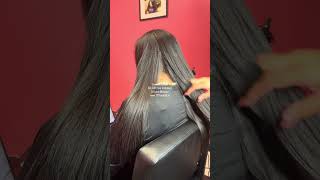
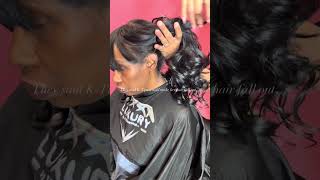
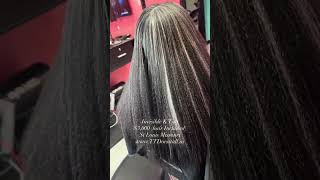

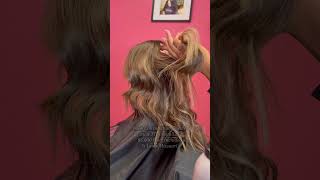
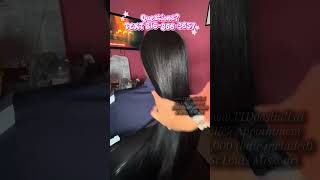
St. Louis, Missouri - Lasts 4–6 months - Takes 4–6 hours - Investment: $3,000 www.TTDoesitall.ai
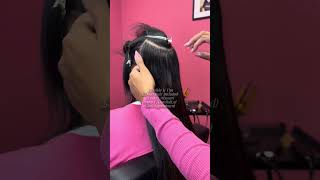
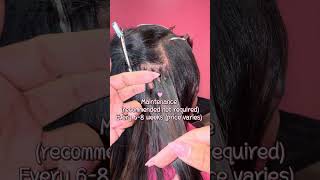
What are #ktips? Here’s your answer! Schedule at www.TTDoesitall.ai 🩷 #extensions #ktipextensions
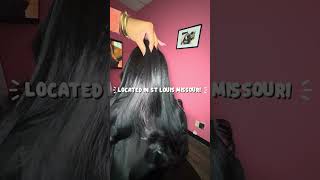
4-6 hours install and last 4-6 months #ktipextensions done by the right stylist the right way 💕
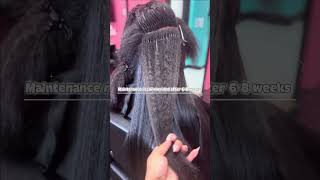
Located in St Louis Missouri 💝 Consultations available www.TTDoesitall.ai 💕#ktips #natural

K Tips take 4-6 hours to install and last for 4-6 months with proper care! #ktipextensions