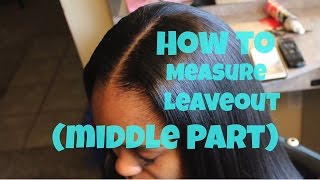
In this instructional video, TT Does It All demonstrates a step‑by‑step method for measuring and sectioning the natural part leave‑out when creating a middle‑part sew‑in hairstyle. The tutorial covers locating the exact center of the client’s head using facial landmarks (nose, widow’s peak), determining the appropriate width of leave‑out on each side to conceal track lines, and shaping the part with rounded edges rather than squared corners for a natural, flat finish. TT shows how to test the section by moving hair left and right to ensure no scalp is visible, how to create a small oval/triangular section near the hairline for a seamless blend with extensions, and the importance of re‑checking the part while the client faces the stylist before braiding begins. Throughout, TT emphasizes patience, precision, and the need to adjust the client’s head position to maintain a true center. The video concludes with a behind‑the‑scenes anecdote: the creator records the voice‑over from a hotel room in Reno, Nevada, and accidentally injures his lip, asking viewers for advice. LaToya Kelly adds a closing call‑to‑action for subscriptions, comments, and shares.
Chapters
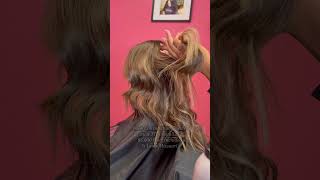
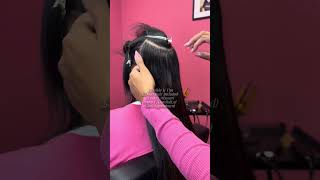
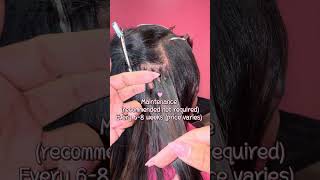
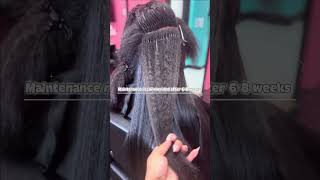
Hey, how are y'all? It's TT Does It All. How y'all like the new intro? Okay, no, never mind. But this is TT Does It All, and this is a video on how to measure your natural part leave-out for a middle part sew-in. So first, you want to determine where the center of her head is, and that is very difficult for some people. Um, look at my video of the tools that I use to see what kind of comb this is, but, um, You want to see exactly where the middle of her head is, and I use her nose as a focal point. And sometimes I have a widow's peak to see that as well. Second thing you want to do is determine how much to leave out on each side, um, to cover up the tracks. You don't want anything to be visible, so that is very important. And you may not get this on the first try, but as long as you catch it before you actually start braiding, you're good to go. And me, myself Even when I part the leave-out the initial time, I may not get it, or it may look right, but then once I am like looking at it from forward, I notice that, okay, this isn't right. But I use round edges, and, um, around the back when parting, I don't use any corners. I don't like a squared look. To me, it's just really boxy, and I want it to be really natural and lay just nice and flat. So to me, corners do not give a flat finish. After I've got the natural part leave-out sectioned out, I place my finger in the middle of the leave-out section and I move the hair to the left and then to the right to just make sure that I can't see my skin through the part. So there is where you see I'm moving it left and right and I'm just making sure that I can't see my skin through it. So here you see that the hairline is coming back into the extensions and it doesn't go just straight down, and this is the section where I'll show you how I achieve that look. So right here you see me parting a little bitty, kind of like a triangle out here, and this is next to the leave-out in front of her hairline. And I don't use corners with natural part leave-outs. I only part round. So I'm parting a little oval just to kind of get the hairline to have that comb back section so that there's something to comb into the extensions. So when the wind blows, you don't see her hair. And this will be your final look once you get everything together. So at this point, I actually turn her and angle her so that she's facing me and that I can look and make sure it's parted directly down the center, make sure the parts are straight, so that once I start braiding, that's it. I really do not want to take any braids down and correct anything. So this is your, this is your position where you want to double-check and make sure that everything is sectioned out perfectly. I want to remind you all that no one's perfect. I thought wrong right here. I thought that it was good to go, and once I start braiding, I could see the imperfection. Sections, I could see like, hey, either this isn't going to be enough or this side is kind of slanted, and I had to adjust her head to where she's facing me. Because if the client is moving around, if they're not facing you, or she's not directly in the center, you can be off with your parting. So you want to make sure you're really paying a lot of attention to that. And even if in the beginning it takes you a lot of time to get that straight, you want to make sure you take your time in the beginning And then once you get better at it, you can speed yourself up, but the initial thing is taking your time and making sure that it's correct. So you ever wonder what I look like when I'm actually recording the voiceover for these videos? Well, now you have it. I'm actually in a hotel room in Reno, Nevada, and I am recording this voiceover while my pageant girl— pageant queen, I should say— is actually down there doing her business. So yeah, you guys make sure you're actually tuning into these videos because I'm actually working while working on these.
So all right, back to the video. If you enjoyed this video, please subscribe. Don't forget to comment, rate, and share this video with fellow stylists or clients that you want to see my work. So I just busted my lip. Yeah, 2 seconds ago I was recording, everything was good, and now I look like I got lip injections. This is my life. I have been filming nonstop since I've been in Reno, and I have been editing on my free time. Um, now I have a busted lip, but, um, yeah, I'm sitting back on the bed. I'm sitting back on the bed and my computer— you know how you like kind of have your knees up, you're kind of— your legs folded and my computer, the keyboard of it was against my leg and the top of it just like tilted forward and knocked me right in my mouth and I am basically with a busted lip now. It's Tuesday, so I still have a couple of days to work here in Reno with my clients, so Yeah, I don't know what the freaking heck to do. So, um, anyone have tips for a busted lip? I don't even know. I'm like, should I go to the emergency room? It was bleeding. The skin is, um, the skin was punctured. So yes, it is. It like, I don't know, it's just crazy. But yeah, I don't know what to do. I'm such a big baby. I don't like pain. So