In this solo talk, the speaker explores how drama naturally emerges in workplaces, especially startups, by framing work as a stage where people play the roles of victim, rescuer, and persecutor – the classic Karpman Drama Triangle. He opens with a poetic excerpt from David Whyte that likens work to theater, then explains each triangle role with concrete founder‑employee scenarios, illustrating how these roles trap people in reactive patterns that generate friction and suffering. The speaker emphasizes that individuals can shift from these limiting roles by cultivating self‑awareness, stepping into a meta‑level perspective, and choosing proactive, creative ways to co‑create with colleagues. He ends with a practical prompt that asks listeners to identify a triggering person at work, recognize which triangle role they are assuming, and consciously decide on a new, more constructive response.
Chapters
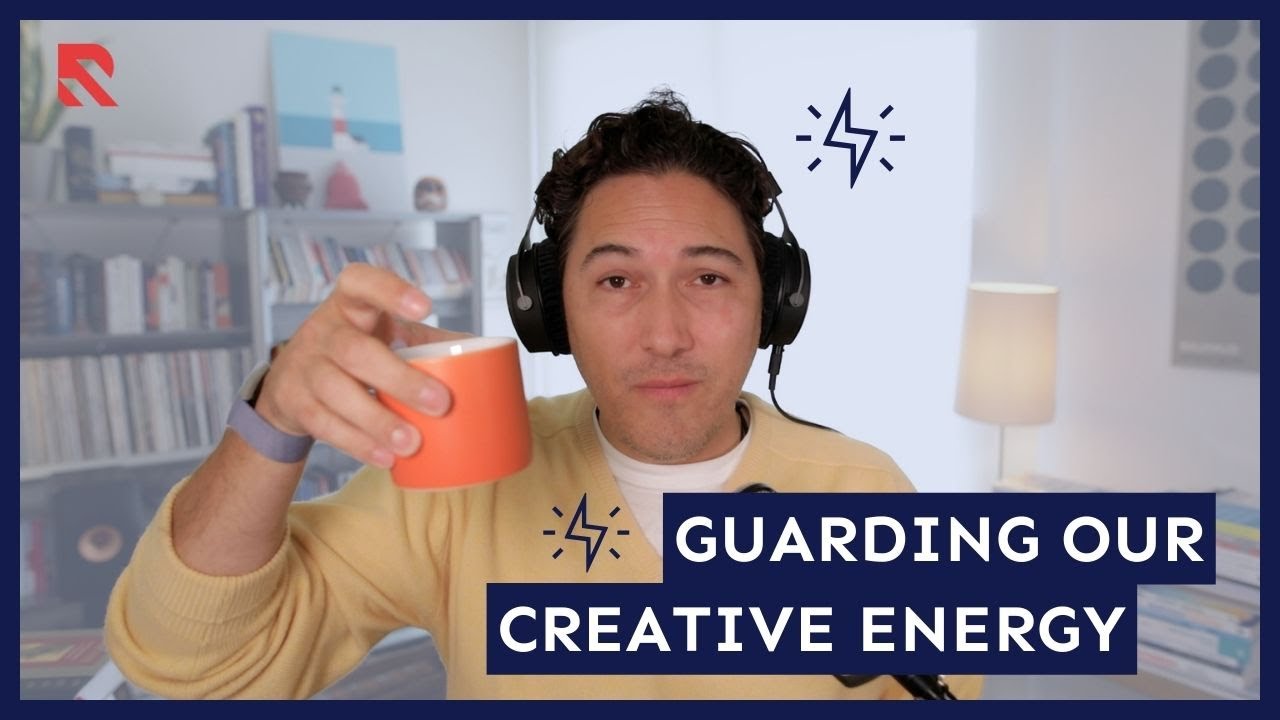
Don't you love a good story or reading a book where there's comedy, where there's drama? But do you want it in your startup, in your company, at work? Maybe not. Let's talk about it. It is part of human nature to Feel alive, to show our emotions, to share our ideas, to act upon whatever is important for us. And when we are interacting with other people and those other people with us, there might there might be an exchange of energy, of ideas that maybe we don't like or they don't like, and drama unfolds. Have you faced it? Maybe in an ever-changing business world where we are full of challenges, we would say that. The volume of drama is way higher than comedy at work. And I think we should always also look into comedy and levity and doing things in a lighter way, bringing our minds to open instead of being closed into these, the tentacles of drama, of doing things in a way that we feel vulnerable or attacked or things like that. And I see this as a wonderful opportunity to explore together, you and I, in this episode, How drama unfolds and why is it relevant to know about it and how to face it so we can together go and fulfill our goals and feel successful. Let me start with a part of a poem from David Whyte on his book The Heart Aroused. It's, um, the first paragraph of what's called The Difficulty and Drama of Work. Let's go. Work is drama, and our inability to live vitally upon its stage has as much to do with the modern loss of dramatic sensibility— the lost sense that we belong to and play out our lives as part of a greater story— as it does with the acknowledged alienation of the 20th-century work environment. To quote a Shakespearean cliché, Repeated to death because it is so stubbornly true. All the world's a stage. Work is theater, the place where life unfolds to our tragic or comic satisfaction. So all the world's a stage, right? What does it mean? That at certain moments we are actors and we are interacting in this place with other actors. And this is what Dr. Stephen Cartman brought up in 1961, where he developed The drama triangle. What does it mean? The drama triangle speaks of 3 roles that we can take or people around us can take in any situation. It's not only about work, but now we would like to talk about the work environment. And the 3 roles that we can take are the victim, the persecutor, and the rescuer. What does it mean? When we are, let's say we are a founder, And at some stages, we hire a person to do certain work, let's say operations, and we want this person to organize our company, to organize the pipeline, to implement some systems to fulfill our work. And this person does not fulfill our requirements or is not coping with this, we can play the victim, right? We can say, oh, this person lied to me. I thought he or she was going to be the right person. I heard that the previous experience was doing something similar, but results are not coming. So we play the victim. It's not about them, it's about us. We feel hurt, we feel that things are not going well. And of course, our mind is about, we did our best by hiring this person. It's not my fault, it's the other person's fault. And this is about playing the victim. Now, what happens here is that, as you can see, we lose all the power of choices of doing something relevant about it by downplaying into being the victim and blaming others. The fun part is that when there's a victim, usually there's another person that becomes the rescuer. So what has happened to me when I was an entrepreneur? I have faced this, and I was playing victim every time I got home and I wanted my wife To hear about how hard my day was, and I wanted to vent up. I wanted to open my heart and to share what was happening, and my wife became the rescuer. What's a rescuer? It's a person whose role is to take care of the victim, is to say, oh yes, I hear you, but don't worry. Have you tried about this? And this role can perpetuate as long as the victim There. But if you see, if that person is just pampering the victim, the victim stays as a victim and the rescuer stays as a rescuer. So this is the part that it's interesting. There is this interplay between the different roles. And there's a third one that it's the persecutor. The persecutor would be the role of a founder, as in the first example, Well, we want this person that we hired to do the job. So at first we might become the victim, like, really, oh, I feel so bad, this person is not doing the job I hired him or her to do, right? So I'm feeling bad, and then suddenly I get this surge of energy, of rage, of anger, and I pinpoint and I blame this person on his or her face. By not doing the job. So I'm becoming a persecutor. I am blaming this person directly and making everything his or her fault. Do you see how this plays? This is a drama, and it creates a lot of friction, a lot of suffering, if we don't realize at first that we need to be aware of how this triangle unfolds, and then at certain moments we can play all 3 at the same time Just in a matter of seconds. Also, what's the drama triangle in your company? I want to ask you something. Bring into your mind that favorite person at work in your company that it's triggering you, that it's making you feel not appropriate, or that is giving you problems. Now that you have done that, go to the next stage, which is Okay, what about it? What do you want to do with her? What do you want to tell her or him? So the deal here is that there is this character and there is this reaction from your side. So are you right now on the 3rd stage, which is— would you recognize that once this person is triggering you, what do you want to do? Are you playing the victim? Oh, poor me. It's not my fault. Are you the persecutor? Do you want to go and, you know, take the sword and start chopping heads? Or do you want to be the rescuer? You're not doing the right job, so I will show you. This is what happens a lot with entrepreneurs and founders, that we feel in a way victim, that the others are not good enough, and then we become the rescuers. We are there for everybody. We want to do anything that our team members, that our even clients are not doing, and we are there for them. And eventually we forget that we have other choices. And this is where we need to step away from this drama triangle and realize what are the energetics and what's this dynamic that these 3 roles are having in us and how we are just being reactive. Because if we are self-aware, we notice and we calm down and reflect about how this drama is affecting us, we might change the choices and to be more proactive, to be more creative, to understand about how by playing a little bit more in a meta level, in a level in which we are not in any of these roles, but we are co-creating with the other people around us. We can be more powerful, we can have more choices, and we are more open to create new possibilities. And with this, we are not subject to comedy or drama, but we are there to work and to fulfill our dreams and our goals.