How do you grow the business without growing smaller as a founder?
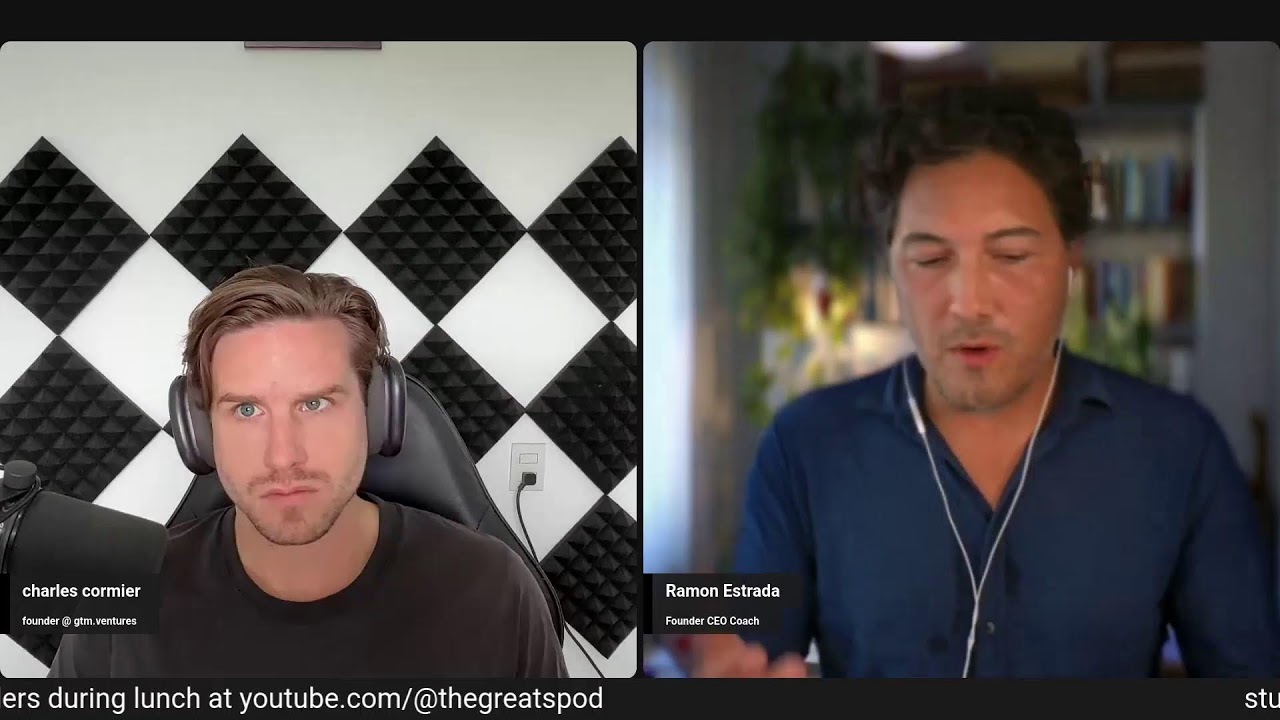
Ramon Estrada, founder of Copilot to Leaders, left entrepreneurship to coach CEOs because external success felt empty. He helps founders avoid becoming bottlenecks by doing inner work through tools like Human Design and Gene Keys, then delegating to high-ROI teams using Jim Collins' principle of getting the right people on the bus.
Chapters
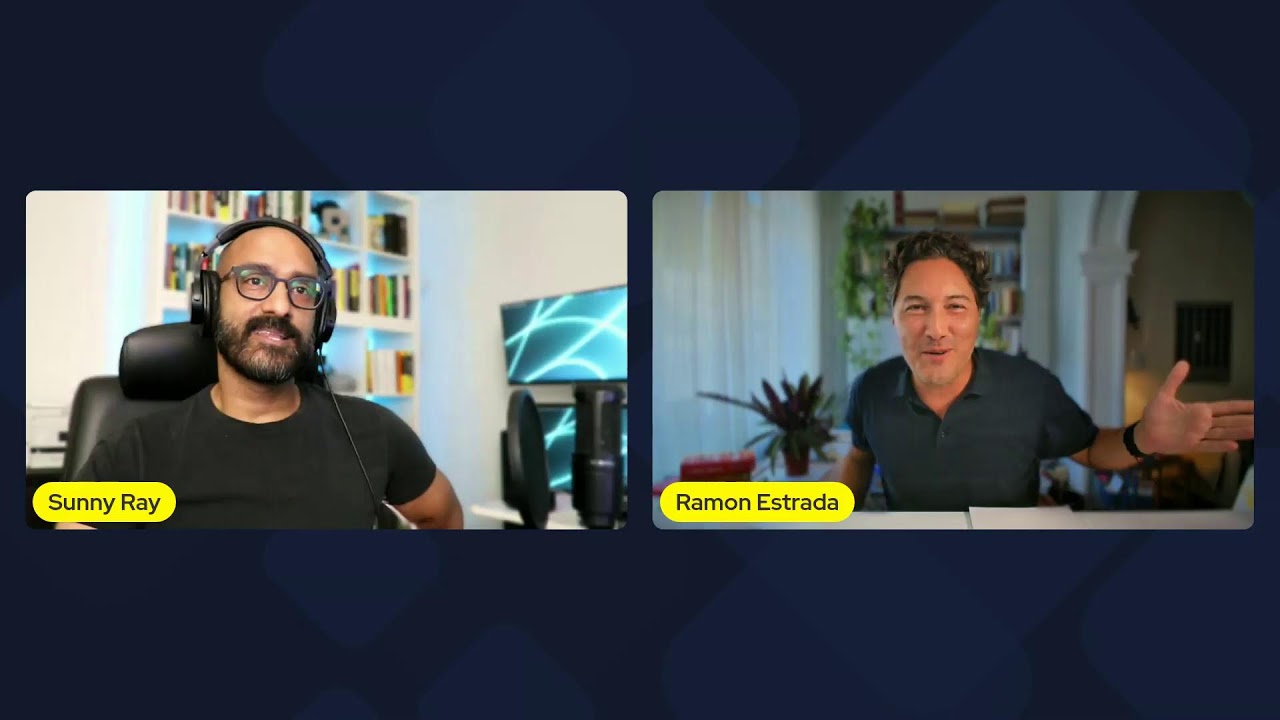
Welcome to another CEO Wisdom Pod. We have Ramon Estrada with us today. He helps founders and CEOs scale without losing their soul. We're going to explore what that means today. He is the founder and CEO at Copilot to Leaders, also has a bunch of other businesses, founder and creator at Business is Art, Co-Creating, right? And ran a couple of startups in Mexico before moving to Spain. So Ramon, welcome to the podcast. Tell us a bit more about yourself and what you're up to.
Thank you, Charles, for having me here, and hello friends, it's a pleasure. I would say I'm a Mexican-Spanish man, uh, in midlife, uh, now living in Barcelona, which is an amazing city. And, uh, I've been always, um, I've always been quite curious in my intellectual being and also quite deep in my let's say, spiritual realm and what I'm chasing for deep purpose and meaning. And throughout my life, I have been— I studied my MBA at the IESE Business School, then I did a lot of executive education programs, some of them in Harvard and Berkeley. But I was deep inside my heart, I've always been an entrepreneur. So I did the consulting, I worked in real estate up until after the MBA, I started like having side businesses. But eventually I had success with some of them, and with some of them I failed. And actually, I would say that no matter that I was winning, you know, playing the book, I wasn't happy. So that's what brought me to coaching. That's how I became a coach, mostly by hiring a coach and then being there in a 10-month program. And for the past, you could say, 10, 12 years, I've been coaching mostly all sorts of executives, directives. I'm an executive coach, and lately in the past 4 or 5 years, I have focused mostly on founder CEOs because I totally understand what it is to start from zero and also scaling the company. So that's a little bit of myself. I'm also divorced and I have 2 kids, Emilio, 14, and Leonard, 10. And I also have a Weimaraner dog here with me, which, uh, he keeps me company.
Why merge to coaching? Because a bunch of people would say like being a founder is like being in the arena, right? Like, were you tired of being in the arena? Were you a gladiator for a decade or so and then you were like, uh, yeah, this is too much? Or was your purpose more on the coaching side of things? Explain that transition.
Yeah, I would say I don't know if entrepreneurs want to be in the arena and being gladiators or maybe being the Caesar. Right. I think eventually people want to be there. We have— they say that adventure is created twice. Once in our mind, where we have this big vision of what we're going to build. But in a way, part of that is who we are going to become. And then the second time is day by day, by downloading and manifesting that vision in execution. And that's what you say, Charles. It's about being in the arena, being a gladiator. Yeah. I haven't stopped being a gladiator, or even— yes, at one stage I wanted to be a Caesar, and that was the shadow side of me. I wanted to be seen. I wanted for my achievements to, in a way, to show my lack of self-worth. And this is where the coaching starts, because sometimes we want to do things externally and we want to have validation, we want to make money, we want to do a lot of things. But we shouldn't ever get our value by what's external. We should get it internally. And this is where, through coaching, I have made the bridge between my spiritual life, my, let's say, consciousness development journey, and my activity outside. But as you mentioned before, I am also launching communities, online communities with coaches, with entrepreneurs, and I'm really active. So I've never stopped because it's part of me. I'm a passionate guy. If I'm just sitting listening to my clients, I get, don't get me wrong, but bored because I want to also be part of the action. So that's why also I'm a coach, not a consultant, because consultants, they bring ideas, frameworks, and then they are not there in the action. And I do that with them. That's why my company's name is Copilot to Leaders, because I want to be with my leaders, I want to be with my clients, Sitting side by side in their journey of growing their companies and also getting to know themselves.
And what pains do your clients suffer from?
Where can we start? Let's say—
The biggest one.
No, no, but you said when you were starting, it's like, okay, yes, helping my clients to scale their businesses without losing their soul. Why do I say soul? Because in a way, yes, it's a little bit transcendental, but we lose our sparks, we lose our energies when we are founders because we get lost in— we are not even looking at our bodies, right? But our bodies, there's a lot of tension, there are pains. Emotionally, we can get triggered so easy. Actually, in my case, I faced that I wasn't the best version of myself and I knew that emotionally. I was grumpy at stages or I had a lot of joy because entrepreneurship is a roller coaster, right? We can be— there are ups and downs. And also our mind, our ideas, the quality of our ideas will be determined by the quality of our energy, of our consciousness, of our body, our attention. And lately, all this combined is what I call the soul, because I believe that no matter— we don't talk about this as entrepreneurs, especially like men, different to women. Women can share more about their feelings and what's happening, but men We swallow a lot. We get together just to play sports or to talk about games. We don't share our stories, what are our struggles. So going back to the pains, sometimes the pains, we don't even want to see them. That's why most of us were extremely busy. And this is one of the symptoms, busyness, because we don't want to stop. And funny enough, I'm not stopping because I'm walking right now, right, on my treadmill. But I'm doing this because it helps me to be grounded and I wanted this conversation to be casual. But externally, there's the pain of the company not growing as we want. We might have also the pressure of investors, of co-founders, conversations that are not running easily. Our team might not be aligned. And actually, I work mostly not with startup founders, but with scale-ups or companies Entrepreneurs that are growing their companies, because that's when they don't recognize the culture or the company anymore. So there is this big dream, big company, there's an investment of energy, of money there, but there's not a recognition to what's happening. And that creates a lot of confusion, chaos, and also it's draining their energy.
What's the price of, uh, bottling your emotions? Because I guess most founders do it for decades and decades. They still have their big exits, but in my opinion, they lost like a couple of years of lifespan. And, uh, they— it's just like, they personally, they're messes as well. They're like corporate robots to their wives and kids, and that part doesn't scale, right? That energy blockage. So what's the cost of like, uh, not speaking up or not having a safe place to talk, a community, right, to put that energy out into?
Energy is not created, it's only transformed, right? So we don't move it around in a proper way, it will honestly make us sick. According to Endeavor, there's research done by Endeavor, one of the most wonderful communities of entrepreneurs, they say that 94%, 94%, of entrepreneurs face at one stage mental health problems. That's suffering, you know, because we are not showing up in the best version for our team, for our kids, for our spouses, for our partners, and even we're not enjoying the ride. That's 94%. And just what you mentioned, sometimes we are so busy and thinking that once I sell my company, or now I was reading an article from The Economist 2 days ago that the valuations— and there are a lot of zombie unicorns, companies that were valued in 2021 above $1 billion, and now they are not with this valuation. Imagine the pressure that the founders in those companies have. It was mostly because of a bubble of investment, I would say. And one case of a founder that I recently, in a way, I've been in touch with him on social media. He's not my friend, but I wish. He's a really cool guy. His name is Blake Mycoskie. I don't know if I'm pronouncing properly his name. He was the founder of Thumbs, and he was an extremely successful guy. And eventually he names it, and he has a new podcast, and he's talking about the void, the enormous problem of selling a company where externally he was successful, but he felt like shit. internally, and he lost all the things that you mentioned in a way. So that's important because sometimes our company is the thing that supposedly is giving us meaning, but that's a lie. The meaning should be our connection with the vision and the dream and who we are becoming. And with that, if we are energized, if we are passionate, we are going to show up every day in the arena in the best version of ourselves possible.
Hmm, yeah, and pains of founders, right? We mentioned bottling emotions. I guess stress is another. Isn't like clarity another one that's sort of related to that? Like when there's so much noise around you, you don't know what's the next step, you don't have clarity of thoughts, right? You do have the precious data points coming in, but you're not making anything out of it, and most of the time you plateau, right? Like, have you seen that?
I've seen that a lot. Usually, which kind of problems founders come to see me is that, hey, I want to scale my company and I would like to get your point of view because things are not clear. And it's just what you named, right? But sometimes that's not the problem. I would say that most of the founders that have reached a company with revenue above $10 million or something like that I mean, in a way, they are outstanding business leaders. They have done a lot of things, but they are so blinded, so confused, so drained that they don't see the light beneath themselves. They don't value themselves. And there's something here essential for me, Charles, to mention, is that at one stage I was a founder. And I raised capital and I did some things. But when we are starting, we are the gladiator and we are doing everything. We have the sword, we have the axe, we have the machete, we have everything and we do everything. But when the company is scaling, we need to delegate. And here's the problem: by that stage, founders do not know themselves. They don't know What are their true light? What are their talents? And that's key because at one stage we need to delegate for the company to scale and founders become the bottleneck of the company.
Yeah, I can totally see that. Uh, what about the teams, right? Like, recruiting is hard enough, keeping these people is hard enough, right? It's super competitive. Like, how do you build these teams that Have high ROI and low attrition?
That's key. That's one of the major problems, having the right people. You know, Verne Harnish is one of the experts in scaling companies, and he names cash as one of the problems. Having teams is, is the second, you know. And I would say that we need at one stage to change our identities from being a jack of all trades and to being a specialist. And this is essential to have the proper team. We also need to know ourselves because we need people eventually that will do things that we don't want to do or that we are not that good at. I studied industrial engineering, Charles. At one stage, I had a fintech company in Mexico. I really wanted to democratize finance, and there happened something happened. I was in love with the vision. I was in love with marketing, with sales, and I hated follow-up of operations. But I didn't realize that because I thought, okay, I studied engineering, I've done consulting, I know processes, I know systems, I implemented ERPs. But that's not my— the top of my capacities. And I didn't see that until it was too late. So to have a proper team, we need to know ourselves. Then second, We need to find really brilliant people and to be humble enough to know that we don't need to be the smartest person in the room. Jim Collins says we need to have the right people in the right seats of the bus. You know, so the transportation goes, and the leader is the one that makes all these brilliant people work together on an aligned vision and where everybody knows How they contribute to that dream.
Interesting. Your goal setting, uh, method— do you have a goal setting method? Because I have tried goals, uh, for 10 years. Nowadays I, I go like more free-flowing, and I've seen even better results, ironically. What's your methodology to, uh, to goal setting and achieving?
Okay, uh, for me or for my clients? What I bring to Both. Okay, I would say for me, I'm not really— in myself, I've seen that for me it's essential to be in the present moment, to know what I need to do and what's my next step. Every day I have morning rituals, and this is why I'm naming. But I have a really long-term vision. I want honestly to be one of the top, top founder coaches for founders. But in a way that I'm not the methodology and I'm not the systems guy. I'm really bridging the inner work and the outer work, right? So that's my long-term. And every day I show up and quarterly I compare how my business is going. Now for companies, I really invite most of the founders because this is how I work. I work with the founders like, let's say, a pyramid. And from there, once they are clear about everything they know themselves, They have the clarity where the company is going, how's the meaning, how they connect there, who they become with their company, and all that. We go down to the leadership team. But for me, the leadership team, and especially the founders, they need to have what again Jim Collins mentions, a BHAG, a big hairy audacious goal. They need to have and know where their Everest mountain is, and that's 5 years, 10 years. And once that time comes, they need to move to the next one. We need to have crazy, crazy ideas of impact. I had a session with a really successful entrepreneur, he's one of my best clients, and I went to Vienna to work with him. And what happened is that we were talking about his goals and I told him, yeah, but now why don't you multiply that goal times 100. The conversation changed because it was irrational, but that opened his mind. And from that, we go a little bit, okay, that's in 10 years. Now what do we do to go there from now to the next 5 years and from this year? And what he's doing is he's also thinking about transitioning and what he's going to do. But I don't work I don't bring, let's say, my own methodologies. I work with what it is, but I help my clients to dream big and to be recharged enough and clear enough about where they are moving, because I really love working with brilliant people. I learn a lot in every session.
How do you get your clients? How do you get all these brilliant people to come to you?
Well, it's great that you mentioned you being a go-to-market expert, right? I would say that has been— I'm right now, I've done a lot of— let me go back one step. Carl Jung says that the first half of our lives we live for other people and in the second half we go with who we are, right? I faced major changes in the past 2 years. I got divorced. And I have really been cutting out a lot of the work that I had because I was extremely busy, but I was working with some executives on some industries, corporates, and all that. So I have really worked right now making my niche for founder CEOs with companies that have, let's say, above €10 million, where they have these kind of problems: not knowing themselves, lack of energy, and no meaning. That's really special. That's a niche. So I'm right now generating content on LinkedIn. I also collaborate with the School of Founders at IESE. So I am developing my network, but it's something that I'm working right now, to be honest, is going and touching and to get the recognition of, of the people I want to work with and who I definitely can help them. But they are coming right now, funny enough, also bit by bit through word of mouth.
Do you also do events? You have a huge network as well. You've been through Harvard. You still attend these startup conferences or events, I guess, in Europe mostly, right? So is that part of the strategy?
Yeah, well, part of the strategy is being there in front of as many eyeballs as possible, quality eyeballs, also a talk at Oxford in November called Business is Art, Entrepreneurs Are Artists. And through that, I got a lot of conversations. I've been invited to podcasts because for me, Copilot to Leaders, let's say it's my company. I have my program, 90-day program, which is called The High Frequency Founder. But my community, or the umbrella of everything that I'm doing, and my business philosophy is that business is an art and entrepreneurs are artists. So I'm connecting with a lot of movements and with people that are there because my work is in the boardroom. Let's say that's one of the circles. Then the second circle is the inner work, which is connected to leadership, to spiritual development. And the third has to do with creativity. It's like being in an art studio. So I'm going in places now. There's this Cannes Festival right now in the In France, and I wasn't invited this year, but I hope to be there next year with really creative and amazing entrepreneurs.
You keep talking about the divorce thing. How's that been for you? Like, it's one of the hardest things in life, right? It's like a part of you sort of dies and then you need to go on. How was that for you?
It's been tough because right now, so I brought it up, my kids just arrived. I have them this weekend. And the thing is that we live and die many times. Our identity is changing. And this is something that founders do not realize. Sometimes life catches up. And I was married for many years with my best friend. She's an amazing person. Of course, I'm married in love. We married in love. But then eventually the relationship changed. We changed. And then we need to decide. not to continue, right? But I'm here in Barcelona because my ex-wife is from here, our kids are here. I'm from Mexico, I could be living in other places. So eventually, the more we know ourselves, we can be more intentional about who we are becoming and who do we want to be. So that was tough. And another key moment 2, 3 years ago was my father died. Also, that's also tough. And all these events, as well as getting divorced, moving out of a city, so it's a lot of stress. And I'm naming key moments where also founders faced a lot of stress. And we need to align and we need to calm down, to come back to the body, to recharge and to move on. But thank you for asking. I would say that now I'm fine. Also, what cost me a lot of suffering was seeing the kids cry about that. You know, my parents divorced when I was a kid, but I've been through a lot of changes. Also, my mother had brain cancer when I was 12 years old, and she passed away when I was 18. So I've been in these life and death cycles throughout my life. So that's also why I can connect deeply with people's suffering.
Yeah.
There is this saying about being a wounded healer.
Yeah, no, that's, uh, you need to feel it first before you can help others. Um, and startup founders, like, how do you get their trust enough for them to be open to talk about these things, right? Because if you don't get to the bottom of these, I guess helping them progress is hard. So what's your methodology to have them open up?
There are 2 sides on the work. There's one part which is understanding the vessel, the container, you know, that's a company. So first is understanding for them and I to connect in the way that, okay, I'm getting what they want to do with their company, right? That's a little bit more intellectual. That has to do with experience, business experience. So that's one side. But the other side is more about the importance of themselves. I sometimes use 360 assessments, um, which help to— for them to show, to have something objective. And I really go deep about other things. I use astrology, I use something called Human Design, I use something called Gene Keys, I use ancient wisdom to give me light about opening conversations with the founder. And they don't— the founders, they maybe do not get that, and they're like, what is this guy talking about? But usually, usually it really opens a mind about what some founders are looking for, which I also think that entrepreneurship is a spiritual development journey. Because think, just think about it, Charles, the person we start after 5, 4 years of really going through out of our comfort zone time, time, time again, we change. And that's why also in Silicon Valley, a lot of founders are going to ayahuasca and they are doing a lot of these kind of things because they know that something— they need to upgrade their operational system. And the operational system of the companies themselves is the founder. So yeah, I would say that we need to talk in all levels, what they are doing externally and what's inside. And yeah, my role as a coach now, I have been talking a lot but I also do questions. But now you're the one with the questions and I'm just bringing answers or doing my best.
Last question, uh, how do you get good at asking the right question?
Well, there's training, honestly. Um, nowadays with LinkedIn, everybody can be a coach, everybody can be a whatever on the title, but usually, uh, coaching, there's training. Right? And I would say that questions are in the human nature. You have kids, right? And many probably like, and why is this? And why is that? And what's happening with this? So we ask, and the way we ask, we grow. But there are methodologies, there are certifications, there are serious programs. I've been to a 10-month on ontological coaching, which is who we are, and from there what we do, what we achieve. I've been to Berkeley on Leadership and Executive Coaching. I am also a professional fellow on the Institute of Coaching. So I also try to, to be aligned and to be with top coaches that help me to upgrade my practice, my craft. And I would say coaching is an art as well as entrepreneurship. Many people can leave the same MBA, they will do something totally different because we all have our ideas, we all have our methods, we all have our own personalities.
Yeah, I love that. Thanks for being on, Ramon. Can— where can people find out more about you?
Well, I'm on LinkedIn with Ramon Estrada T, Instagram @ramonestradati, and also actually I'm launching a workshop on June 7th. It's called the Founder Energy Reset. You can find the details on my LinkedIn. I would love to connect with anyone in the audience. And have this conversation going. And also my website is www.ramonestradati.com.
La verdad es Ramón and Charles for another.