The Loneliness of Founders at the Top, and the Courage to Face It.
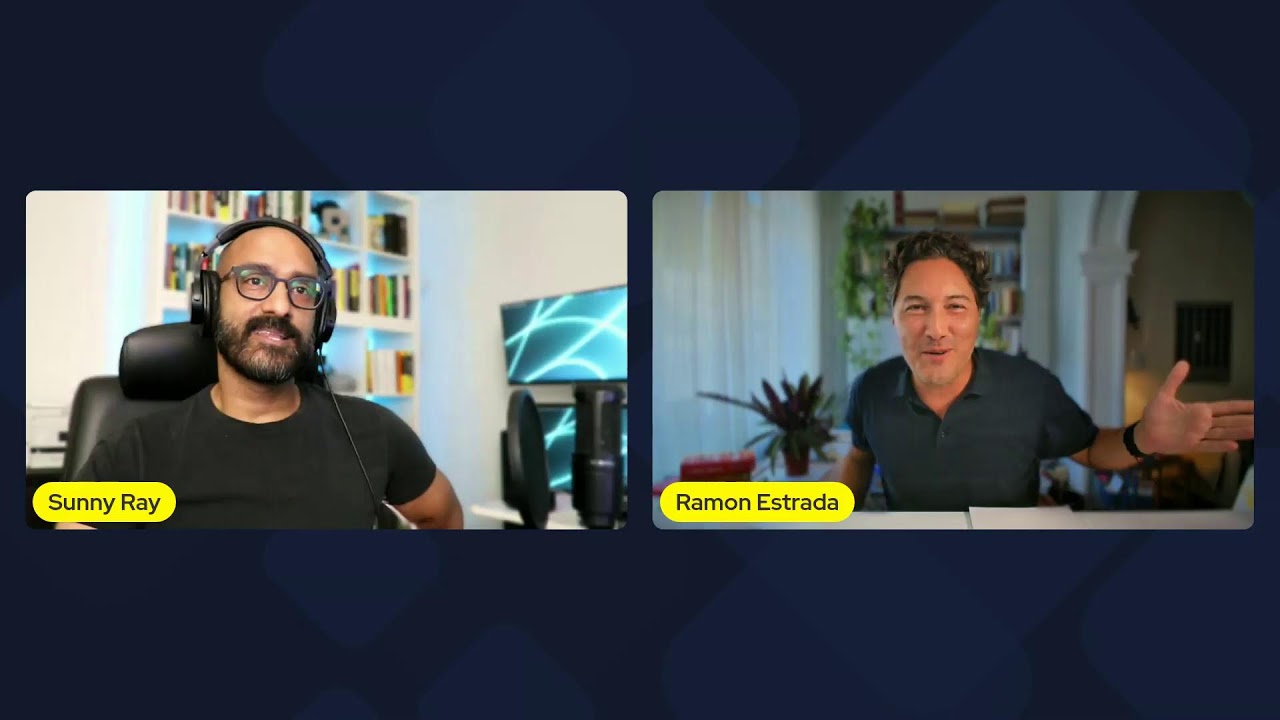
In this interview, host Sunny Ray talks with executive coach and former serial entrepreneur Ramon Estrada about the hidden challenges founders face as their companies grow. Ramon shares his journey from industrial engineering student to building multiple startups—including a fintech that earned a 7x return—and the moment he turned to coaching to help founders scale themselves before scaling their businesses. He explains how AI is democratizing entrepreneurship, but also stresses the need for inner alignment. Central to his coaching is an ontological framework (OAR) that focuses on the observer, and a "three rooms" model that integrates the boardroom (external decisions), the inner life (personal well‑being), and the art studio (creative expression). He discusses practical tools such as 90‑day programs, the use of astrology/Human Design as conversation starters, and the importance of courage, self‑observation, and becoming one's best self—drawing on ideas from Dr. Joe Dispenza and quantum visualization. Throughout, Ramon emphasizes that founder loneliness, fear, and identity crises are common, and that addressing them through systematic, inner‑work practices enables sustainable growth and personal fulfillment.
Chapters
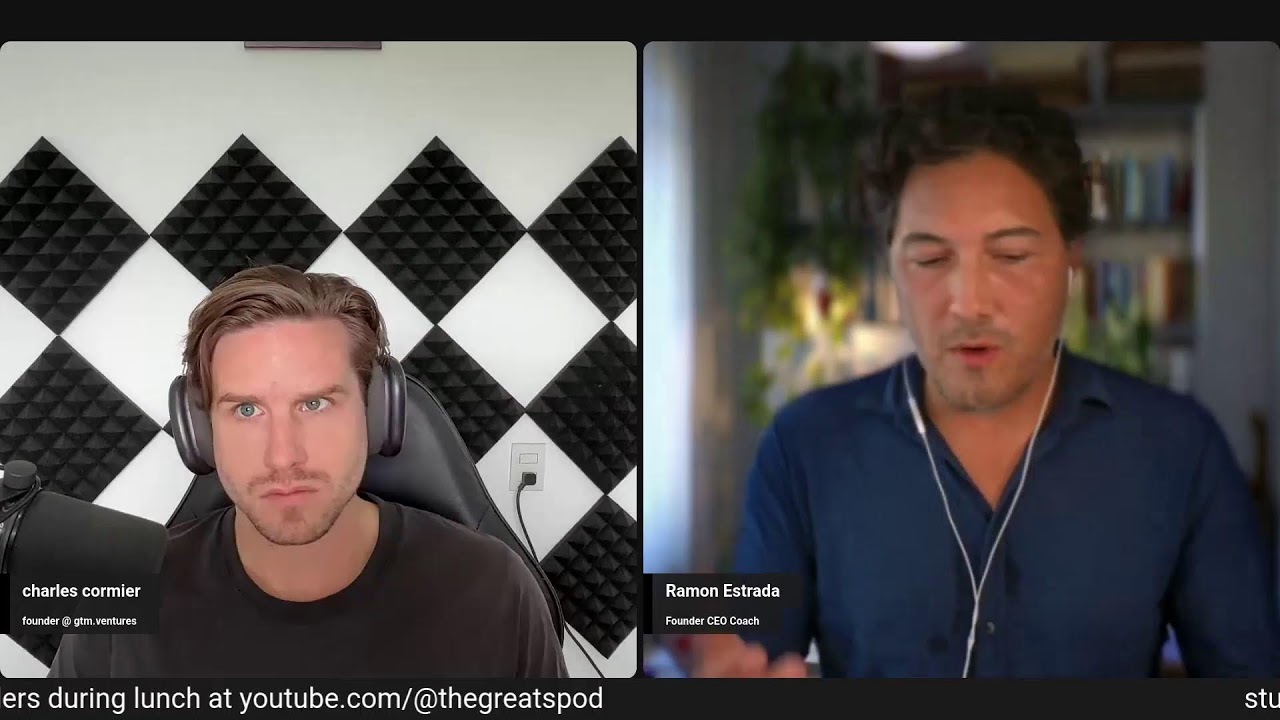
All right, we're back. We're live. What's up, party people? My name is Sunny Ray. This is the Sunny Ray Show. Took a little hiatus for about two weeks. Visited my parents. Got back yesterday. Had our first interview in a while. Back for the second one for the week. We're just ramping up, and my first my guest today is Ramon. Really, really excited to bring him on. He's an executive coach for founder CEOs. He's an industrial engineer with an MBA. He built a string of companies, one named a top 50 innovative startup, another returning 7x in 18 months before he turned to coaching, helping entrepreneurs scale their companies by scaling themselves. So, definitely by far one of my favorite topics. I'm going to bring on Ramon. How are you doing, sir?
I'm really good, Sonny. And you?
I'm fantastic. Just, uh, yeah, Friday, home stretch. No big plans. I've been on the road, like I said, for about a week and a half. Glad to be home and, you know, getting, getting back in the routine. So, Ramon, uh, tell me what, uh, you sound like you have a very interesting career. Um, why don't we just touch on, I guess, like what you're most passionate about today and what you're doing with with coaching other founders, right? I speak, as you know, Charles and I speak to 15, 20 founders a day. We're interviewing people. We're talking to people. And being of service to them is our passion. So, the fact that you've now dedicated the next part of your career towards that is very exciting. So, maybe double-click on it. There are a lot of coaches out there, advisors out there. But you seem to have a very different and unique perspective. So excited to hear about it.
Well, thank you for the question. First of all, hello to all the coaches out there and of course the founders. I guess that in the way that I see things, Sonny, is that entrepreneurship, it's a highly creative and magical way of doing business, right? It's not about buying a franchise of Subway or Domino's Pizza and just putting a a business rolling, I think it's highly creative. It's highly creative because we are building something out of nothing and making it in a way that not only impacts the world positively because we are solving problems, but why not, it's generating wealth. And hopefully there's a positive also development for the entrepreneur and his or her team. So as you can see, I have— I'm really passionate about it. And I'm dedicating now— I turned 50 3 months ago, and I am dedicating now my life to this after being doing several kinds of executive and leadership coaching endeavors with different sorts of executives, corporations, whatever, and being before that an entrepreneur and also working as consultant in PwC. Now I am all in Bridging the inner world, the inner world of entrepreneurs, their passions, their purpose, their meaning, and building something that is properly placed as a company that needs to grow by itself. So that's a little bit of the dance that I do, the inner and the outer work.
Do you— I don't mind kind of jumping into the deep end here, Ramon, but do you believe that especially in this day and age of AI when job loss is obviously something that a lot of people are thinking about, they're wrestling with, but do you find that maybe AI will accelerate the world towards more entrepreneurship? Because I mean, from a job perspective, I can see how AI is damaging somewhat, but I can appreciate how from a founder perspective, AI is empowering, right? So I don't know, do you see AI, I mean, just how How does AI fit into this mix of entrepreneurship as you see it?
Yeah, well, I'm getting honestly goosebumps by your question because I think this— we are in the brink of a massive change. It's going to disrupt everything as we see, and I'm not here to plant any seeds of fear. It's just things are as they are, friends. Things are as they are. When the car came into the industry, all the, all the people that were, um, in the way working for carriages and horses and all that, they had to switch the way they do they did things, right? Or even in the medieval ages when people were writing and there was not a printing industry, right? Gutenberg made that. And so we need to change in a way. And actually entrepreneurship by itself, it's a highly— we change by just being entrepreneurs and doing our things because we are going to be facing the unknown. We're going to be outside of our comfort zone every minute. Now, Externally in the context of business, AI in many ways is going to flatten the way entrepreneurs do their work because it's not only about the prompts. It's about all the information that needs being gathered. I think right now we're in the brink of bringing more entrepreneurs, yes, because there will be many people that will have to reinvent themselves. The first thing that I say to all those people worried about their jobs is that They need to start thinking which unique problem with their vision, with their experience, they can bring a solution into the world. And using AI is fascinating, right? When I started studying my industrial engineering career back in 1994, imagine that, we needed to become an entrepreneur. We needed to develop for one year a business plan. Now you can start a company in 2, 3 days, a website with all that just by answering some questions. So yes, AI is going to bring more entrepreneurs. Entrepreneurs in the sense could, could be small ones, but we could be making 6, 7 figures, way more money through our entrepreneurial work than just working within a company. So I see, yes, changes, And I am super hyped about the opportunities that will come.
You know, again, I know I have a bunch of questions and we're going to get to those, right? But I like to kind of stay in the moment. Double-click. So I'm somebody now. Let's just say I've been thinking about entrepreneurship. I have a career. I've focused on some industry for the last 10 years. Either I'm about to lose my job or I think I might lose my job. I really do want to pursue this passion that I've had, right? How do I— what do I do?
Where—
like, I mean, I know your focus, by the way, just to call it out, is more, you could say, later on in the journey, right? When entrepreneurs are at that 20 to 25 employee stage. But you've gone through all of this as well, right? So, what are those fears that people are facing? How do you help them kind of overcome it and actually get to that stage where they have a company of 20 to 25 people?
What comes to my mind is first naming that we think that we are facing something new, but in, in a way it's not new. Uh, have you heard of the PayPal Mafia? Elon Musk was part of the PayPal Mafia, you know. So sometimes within a company that grows, that scales, many people leave and they do amazing things with that. So I think that, friends, probably yes, uh, Knock on wood that something bad happens, bad temporarily. But here is the moment to be courageous. And I know, Sonny, this is one of the keywords in your show. Being courageous is not not feeling fear. Courageous is to move forward and to be who we are and doing the things we need to do despite fear. So I see this as an amazing opportunity for people to reinvent themselves and not be whining and complaining about the shitty job that they have. And now it's the moment to really take a stance and to bring something of value that is unique to, to you. Everybody has skills, everybody has experience, everybody has a unique point of view. We don't need to be thinking about building the next SpaceX. We can start small. We could have been an entrepreneur in the lifestyle business, you know, something that it's comfortable for us, or we want to disrupt an industry. We're speaking right now, they say that the next unicorn will be just with one person. I think it already exists. I heard that a few weeks ago. I don't know about that, but being an entrepreneur is not only about scaling and money. It's about feeling proud about creating something new. And why not working with the people that we want to, having joy, having enjoyment, and also creating a massive impact? And why not financial results? We need money. Money is not good, it's not bad, it's neutral. Money is what we make out of it. I don't know if that was enough or if I'm just going around your question, Sonny.
Well, I just love how much energy you're, you're bringing every answer and you're Passion just kind of comes through. And I haven't even had my coffee today. So thank you. You are my coffee, Ramon.
I'm drinking water.
I got water. I got water. But so Ramon, maybe let's now double-click on your story, right? You were an industrial engineer in Monterey before any of this. What did engineering teach you about people that you still kind of use in the coaching chair?
Yeah, eventually we will come to some terminology, but first let me clear out, I'm not an engineer. I studied engineering and it gave me a point of view. I'm way more than an engineer. Sometimes in our language, I think that I am an accountant. So what happens to these people, going back to your previous question, that are going to be changing jobs? They are going to think that their identity is changing and they are— they have this existential crisis. So first of all, we are way more than the things we do. Now, I studied industrial engineering and systems. Why? And I'm sorry about being this puristic, but I'm trying to link the questions. Okay, Sonny. So for me, it's industrial engineering helped me because in my mind, there's a part of me that is highly intellectually curious, and I really like understanding how things work. And this systematic approach of thinking of possibilities, chains of decision-making, decision trees, cause and effect, you know, a little bit Newtonian, really works. But systems are more quantum. We're speaking about possibilities. So this part of engineering has helped me in my understanding that there are many pieces in place. When we just think, no, I'm just going to move this and the way is that way— no, no, no. Sometimes There's a network effect, right? So this is why I don't minimize any of the decisions. And I go with my clients a little bit deep about what could be the consequences. And sometimes the key for coaching is finding the simplest move, the most energetic, efficient move to get the result, because we tend to overcomplicate things.
Oh yeah, I'm definitely guilty of that one. So Ramon, you've, you've started 6 or 7 companies. Which one taught you the most? And, and was it a, like, a win or was it a scar?
Um, you sent me these questions before, and actually it's 8 companies, to be honest. Right now I am the 7th and the 8th at this— at the same time. And, uh, I've been an intrapreneur, you know, developing companies within a holding. That was beautiful. I raised— we raised money, I created a new team, I had to navigate the politics and all the rigidity of being in a large corporation while being an entrepreneur. But I would say, and then I did also, I started with side businesses. And this is something about for these new entrepreneurs that are coming. I was making the same money being a VP on a really high level in a holding corporation. I was making the same money with my side business than with my work. But in my work, I was dedicating 95% of my time, and in my side businesses, I was dedicating 5% because I was running companies and hiring people. But I could spot the possibilities. At one stage, I decided, of course, I said, okay, if with 5% of my time I'm making the same money, what's the, what's the equation here? I will dedicate full time And I will make more money, right? What? Well, that was the idea. That was the spirit. I started. I founded. It was by myself, a fintech company. It was the one that was considered one of the most innovative companies back then in 2012. We wanted to democratize finance in Mexico because I'm Mexican. Now I live in Barcelona, but back then I was in Mexico. And I would say that this is where I made my PhD on the need of scaling yourself as an entrepreneur to scale the company. Because externally, we were doing everything right at one stage, but I realized that I became the bottleneck by my decisions, by my point of view, by getting validation out of other people, and of course also the loneliness of being an entrepreneur. That led me to hire a coach and eventually to become a coach, not to do coaching. I still wanted to be an entrepreneur, Sunny, but to become a better leader, to become a better version of myself so I could run the company. But life came out. I had a kid, my first boy came, and then we had the opportunity of moving to Barcelona, and this is where I decided to leave everything behind, close everything, and to restart my career as a coach, full-time coach. And this is where I am. So it became with a scar. Of course, sometimes we are so attached to what we are doing externally that we are no longer seeing ourselves as founders. And when the company could not grow properly, be profitable because it still required money and resources, And the family decision of moving out of Mexico did not allow me to raise money. Nobody was going to get money in a startup that still needed money and the founder was 10,000 kilometers away, right? So I had to close it. I felt like a failure and I was depressed and I felt really bad. But here I am, brother, helping other founders to grow their companies, scale their companies by scaling themselves.
You said something there that I wanted to kind of pick on was that be your better self. That might be the theme of my life for the last, I would say, year and a half. I came across some writing from a guy named Dr. Joe Dispenza who talks about this idea of identifying, uh, and becoming your best self. Can you talk about that? Like, what does that mean? And to me, that is the ultimate unlock. But I'm so curious to hear about it from your perspective.
Um, yeah, first, as a coach, I'm, I'm, I'm, I'm really curious about your story first. But if you want, uh, I'll give you my perspective. Or can you share why you are in this becoming part of what, what's, what's triggering in you? And then I will give you my sense of why I think it's really important, please.
So, so what's the question is what's my story or why, uh, am I trying to become my best self?
Yeah, what's bothering there?
Okay, not, not, not, not, uh, maybe not bothering, but okay, so let me try and see if I can articulate this. So I, and I think most people I know, obviously have this ability to manifest, to make the invisible visible, right? Um, the thing that the vision of our whatever, our future Now, and I've been able to achieve a lot of the goals I'd set out for my life. But but there's still a little bit of doubt, as in like did I really achieve that or did I get lucky? Or and and if I really have this capacity, how would I really put it to the test? Right. So this this thought came into my mind a few years ago, and I thought to myself, okay, the way I could put it to test is if I made my goals. So absurdly like out of this world. And if I could go and get these goals, then without a shadow of doubt, no one can tell me one way or the other. And I will have proven to myself that I have the ability to turn the invisible into visible. And so on that pursuit, I, like I said, I came across, uh, you know, just Dispenza's work. And what he really cracked for me— I've, I've always been intrigued by, you know, Spirituality, meditation, yoga, and then I'm also equally interested in science and technology and business. But those two worlds were very separate. My eleven-year-old a couple years ago coming out of church, you know, one morning asked me that, "Hey, how do you reconcile these two worlds?" And I said, "Don't. You don't. They're different. You don't need to." But that was what led me to be more inquisitive and to dig deeper. And I'm like, "Wait, could it be that they're connected?" And long story short, that led me to quantum. That led me to essentially realizing that when you close your eyes and you imagine your best self, those are like these electrical signals firing off in your brain. And then if you can feel what it would feel like to be your best self, right, these chemicals start to be released throughout your body and It starts to change the very nature of who you are, and you add an atomic chemical at a you know spiritual at a scientific at a quantum at every single level you start to become that Sunny or that Ramon, and that was a powerful idea because if you can become your best self by just closing your eyes, then what happens is when you open your eyes. You're no longer chasing, and then my entire life story is about chasing. It's about running after things. It's about getting the girl, getting the money, getting the whatever, right? The customer, getting the investor. And I realized that like running after things is like a failed pursuit. It doesn't make any sense. Instead, like I said, you can just simply become and. attract. And just, uh, and then all of a sudden the Ramons and the universe show up in your universe, and, you know, uh, the, the moments and the health and the wealth all start to appear. So I'll shut up, but that's kind of, I don't know, my summary of my recent discovery, which has changed my life.
Sonny, how many times have you talked about this openly in public?
I, I, 15, 20 times maybe in the last couple years.
Yeah.
Like, I— but I also stream 5 times, 3 times a day. Like, I do a lot of content, but most of my content is where I'm asking other people questions. Rarely do people turn the mic on me, but you can see that I'm definitely not shy to share my opinions.
Yeah, yeah. But, but this part, honestly, thank you for your openness, uh, because founders— the chronic pain that founders have is loneliness and and not being able to, to share what's happening. I say the world bubbling, right? It's like something is happening now we don't share because we're mostly focused outside. What are we doing? What are we achieving? I wrote this on my notebook. It's like the R is for results. Everybody, we, we are looking for results, right, as entrepreneurs?
Mm-hmm.
I need to change, I need to achieve the girl, the— or the man or whatever, right? Something external. Uh, I need to Um, to pitch, I need to make— I need to take the money, my first client, the product-market fit, everything it's outside, right? And for do that, to do that, we have the 8 actions. But there's something that goes before that, is the observer. How do we observe? What's our point of view? This is the ontological way of coaching that I learned. Ontology means being. Who we are. And something that I want to bring is the part that as we are doing things, when we don't get the— when we don't get— hey, when we don't get the results, we usually go back into the action, right? We do more, we change a little bit, we tweak, we come back, we come back, we come back. But there will be a time when that's not enough. You can hire the mentors, you can go with the online courses, you can read as many books as you want, but you will need to go back from the results into the way you observe the world, who you are. And this is where this kind of coaching of becoming a larger version helps. Because you mentioned going to church, I have studied a few spiritual traditions in 20-plus years, and Siddhartha the Buddha Said in a way that we are all, in a way, if we are in a human form, we are going to suffer. And now there is this— the fun part is that becoming, we could either do it through suffering, like hitting the wall, the walls, and getting hurt and noticing that we are not going to go through that wall, or we can in a way change ourselves. By doing this intentionally, and this is the invitation that Dr. Joe brings: is that yes, we have a vision. We want to achieve more, but we also want to be more. Most of the entrepreneurs that I know, they start telling that they see a business opportunity, blah blah blah. But in a way, entrepreneurs, we will love what? We love freedom, the freedom of choosing. What we are going to be doing, the way we are going to be doing. We are also really interested in using our unique talents. The company will look a lot like you, Sonny, as a founder or like other founders. And we are usually going to be not delegating the things that we like and delegating the things that we don't like. For those that delegate, because at one stage, We all want to control our baby, right? But it's freedom. We want to use our unique talents, and we also want that the impact that the company is bringing is linked to us, that we have a sort— some sort of a meaning. It makes sense. Otherwise, it feels like a Groundhog Day. So since we are navigating as entrepreneurs unknown territory, because usually No matter how many times you have been an entrepreneur, it's— you're going to be facing with this challenge for the first time because every person is unique, every moment is unique, blah blah blah. So we need to be enlarging the version of ourselves and to be more flexible. In neurolinguistic programming, they say that the most successful people are the ones that can upgrade the map of the world easier, that we can learn new patterns, that we can recognize things in a different way. It's not right now about knowing more. It's about how we can change our point of view and of course ourselves.
Super interesting. Yeah, because I mean, there's so much talk about AI alignment, but I wonder how much of it actually is about just like inner alignment, right? Or just like knowing yourself, which sounds corny, but I don't know, I find AI to be— I feel like it forces me to become my best self because I can delegate all those items that I never enjoyed doing to AI and have it done for me instantly, right? So Yeah. I, I don't know. I feel like if you use this tech in a, in a slightly different way than maybe the— what the average person is using it, you can find your future, uh, you know, you can use it in, in a very powering way. But if you don't know yourself, it can almost be disorienting, just kind of like social media, right? Like right now we're presenting to people, we're using social media to hopefully share experiences, but Equally, it could have been used to pollute our minds, right? So I know I'm kind of— I know these aren't the questions I told you I was preparing for you, but I've also gotten feedback recently to not stick to my script so much and kind of go off the beaten path.
That's the moment. That's from the question.
Yeah, that must be life. So can you tell me, so one of your ventures returned something like 7x in about 18 months. Like, what did you understand then that you know, most founders miss?
It was one of the ventures that I started as a side business while I was working full-time, and I wouldn't say I was an entrepreneur in the definition that I started something from scratch. So what I did, my first, uh, business in which I invested and I dedicated a lot of time, I was with a partner and we bought a mortgage broker franchise in Monterrey. It's in the north part of Mexico. So we were following the rules. I was in real estate, I understood the industry, I had some contacts. So we purchased this franchise and we were mortgaging— we were, um, helping clients that were buying apartments, condos, houses, land to get a mortgage. And we got paid by the banks. No, we were doing most of the hard work and bringing clients to the bank, and we got paid like around 1-2% of the of the credit as a fee. But what I realized was that following the rules really limited me and the business because we needed to have an office in a shopping center, and we were— we had this brand that it wasn't that sexy, blah blah blah. So I started to think, okay, what's the business of the mortgage broker, of this, the franchisor? It's— they are interested in getting as many, as many mortgages into their pipeline because of course out of the commission that I got paid, they stick to— they, they had a part of that, right? So what I did is I, I joined forces with another, another partner, not the first one with the first franchise, but with another, and it was in another company in another city. And what we did, what we did was We created our own brand and we got inside really massive real estate developments, you know, 4 or 5 buildings with 100, 200 condos. And we put a team of people inside of the work of the chain of process change, you could say, of sales. And we became the mortgage department of these large real estate development. What happened? That we had to pay salaries for 1 year for 2 people. They were there all the time, but we didn't pay for an office. We didn't pay for utilities, electricity, blah, blah, blah. It was just salaries. But we managed to entitle, to give a mortgage to around 150 condos, apartments. So, the return was massive. What's the reading here? It's thinking outside of the box. Nobody had done that. We had to negotiate with the company that gave us the franchise. We said, we're not going to be using your name. It's just going to be, let's say, our own name. We are bringing this branding, but we will use all your infrastructure and you are going to just help us by giving those permissions to do this, and we— it was a home run. And actually, we were in a way milking the cow for 4 years, but we, we had massive returns. So I would say the bottom line here is thinking outside of the box and doing things simple, finding the way in which I can create the value, solve the problem in a simple way, not overthinking it. Actually, doing this in this way was easier Than what we did with the franchise, with the first franchise in the, in the, in the shopping center.
So, so somewhere in there you went from building companies to coaching, you know, the people who build them, right? So, so what was the moment that you realized that essentially was your, your, your life's kind of purpose and your work?
Ever since, Sonia, I started— sometimes I'm sorry, I'm looking up on top. I don't know why I get inspiration for my answers, but I would say that I knew ever since I was really young that I wanted to be an entrepreneur and be related with business. I grew up with a lot of financial and emotional instability. Mostly my father switched jobs really often, so I was living in ways in the shadow of what it means to provide for a family.
Mm-hmm.
to show up at work no matter of your capabilities and not really having a fulfillment way. And also my father tried to build a lot— some companies. So I had— I grew with this lens, let's say. And then when I was in high school, in, in the history class, one of my professors introduced us to what was the Industrial Revolution and all the consequences of people living in the factories in Manchester, even kids working 12, 14 hours, no schooling, no housing, no nothing. And he introduced these— he wasn't even an entrepreneur, he was a manager. His name was Robert Owen, and he was in Scotland, and he really changed the paradigm. He created housing for the families, he educated the kids, he paid them properly, and no matter everything that he did, the company was most of the— one of the most profitable companies in all Scotland. So when I heard this story, I got goosebumps, right? And I was maybe 14, 13, 14 years old back then. And ever since, I knew that business could be done for good. And throughout that time, of course, I was really young. I never thought of myself as an entrepreneur, but I was selling things to have money to go out with my friends or going to the cinema with my girlfriend back then, you know, I was always like finding ways to identify problems and do that. So I had been through that lens a lot of time. I did my summer internship in my MBA at Endeavor, which back then it wasn't that big. Now it's massive, and I really love that network. And when I finished my MBA in 2006, I had not a really clear business idea about what to do, how to become an entrepreneur, and I had an offer from McKinsey to be an a consultant there, and I declined the offer. I decided to move into real estate again, but I had the option of becoming a territorial director and develop businesses. So I thought, okay, I cannot be an entrepreneur per se with my own idea, but I can develop land developments and apartments. So I took it there. So I've been through entrepreneurship and so, and then I have seen the pain. I have felt the pain. And I have coached many entrepreneurs or highly entrepreneurial people. I want also to name the people that sometimes are working in corporations or even in family businesses, and they want to make this business part of their own. They want to use their unique talents. They want to really make them grow, grow in their, in their own way. I consider these people entrepreneurs as well.
Yeah, that's, that's super interesting. So, Ramon, you also talk about 3 rooms that most people keep separate, right? The boardroom, the inner life, and the art studio. Can you walk me through what happens when a founder connects them?
Yeah, I would say that the boardroom is the typical— let's think of the entrepreneur in his or her office, and it's making decisions about the business, right? And, and they have to, to show their numbers to their board, to their investors, to play properly the tactics and defining the strategies. That's the boardroom. It's external work, right? But then there's another part in which, as I showed in my diagram, we need to— we have an inner life. I think the life-work balance, I say that's a myth. Dead people do not work. Life is one. But we could say we have our work life and we have our personal life. That's different. Right? But life— work-life balance is a myth. We, we are one person, and every person that works with us has a family, and he or she are a son or a daughter of someone. You know, we are all people. And the inner work— if we are not connected with our inner work as founders, we are not going to be good leaders, and we are going to bring a lot of suffering to our teams and also to ourselves. What I have seen is at least 2 or 3 cases of founders who have been really successful in making exits for their companies, and when the companies are gone, it's the worst day of their lives. They feel the void of dedicating all of their identity in the boardroom part, in the external part. So that's the inner work. It's really honoring who we are. And then there's the third element, which maybe it's a little bit more in my sense of this business is art is that we are all unique. We all have an inner life. We all have an idea of what a company needs to be done. I studied my MBA, I did programs in Harvard, Berkeley, blah, blah, blah. But the way I show up with my unique talent— just think about it, Sonny. If you look at a painting and it's a Picasso, does somebody need to explain to you that it's a Picasso, or it's quite clear with the way the painting is done?
No.
A Picasso is a Picasso, right? And this could also happen with music. You listen to something and you know it's Jon Batiste, right? Or some artist. So we all have our own way of showing, and I believe this is like the, the artistry, where what we do is not only the science, it's not only hard work, it has a lot of maybe spiritual way of connecting with others and with our inner world, but there's also the creative artistic side. So I bring the 3. I help people scale their companies by looking that the glass has no leaks, that it's working, that it makes sense, that they feel good about it. And the 3rd is that they are using their unique talents where they need to do it. We cannot be— we are not jack of all trades. We all have to use our energy and our talents in the way that it's only unique for us. And with this combination of these 3 parts, the company grows by itself without a lot of effort. And that's the difference between having power and having force or doing things by force.
You know, most founders have never heard the word ontological. Can you define it the way you would explain it to, let's say, a skeptical CEO?
Yeah, this is actually this model that I wrote down, OAR. It's an ontological model or way of thinking. It's that we all want to achieve results, we want things to happen, right? So, um, I'm taking a train to Madrid in 1 hour actually, right? So I want to take that train. To take that train, I need to end this call, get my bags, you know, I need to do things. Right? So there's a path toward the result. But to do that, for instance, I don't like running. So I want to be— I wanted to be in a place of peace and presence with you. So I had to prepare before I did all these things to take the train. I needed to be mindful about where's my wallet, preparing everything, and also by being present with you in the way— in the best way possible. So I am preparing my own being. how I present myself for this call, and maybe you won't even notice when we are done that I will be taking a train, you know. So ontology, ontology, it's the study of the being, who we are. And you mentioned something that I got really excited with, the conversation with your 11-year-old at church, because you said what we do, or in a way you said like our spiritual life and our work is not communicating, right? That there are like these 2 different aspects. According to ontology, that's not true, and actually that's the big challenge. This separation between a spiritual life and science, in a way, or how we do things, happened in the Renaissance when there was this implicit negotiation between the church and the scientists. Because before that, in the medieval times, the earth was flat, right? There was not a lot of science and going together. So this separation still stands in the companies. I just had a call this morning with a coach and we were thinking about— I was getting invited and noticing if I could join forces for some particular things with an executive coaching firm. And we were agreeing that in the business world, most companies are not willing to go into the inner work. is mostly about performance, so it's mostly thinking in the scientific way, right? But we need to bring everything together if we want to bring wholeness into what we do. There is this definition of success, Sonny. The name of the person, I have it here, sorry. Oh, I don't have it, I lost it. But there is a definition of success, what success is. And success is what happens out there when it's aligned with what is happening in here, in here. There is this alignment. Who's successful? Elon Musk by being the first trillionaire, or someone that is doing something that is happy with what's happening outside but is really joyful about inside? I don't think money is necessarily a metric of success, and success is deeply dependent on our own point of view.
I mean, even money is— isn't it just like a reflection to some extent of who we are? You know, I don't see money as something that I need to get anymore, but it's something that I need to almost like grow into and deserve, if that makes sense. Like, I have to earn it, which sounds obvious. But yeah, no, I love this idea. So, you know, you say that you do not just change what a founder does, you change the observer they are, right? And so can you talk a little bit more about that? And obviously, I mean, just even yesterday, like my wife is a devout Christian. I go to church with her, but I've read a lot. My parents are Hindu. I've read a lot about Buddhism and everything in between. And I love this idea of observer. And I remember just like a couple weeks ago over breakfast, I was talking to my 2 girls about this idea that I'm like, do you guys have this voice in your head? This like voice that's like talking? They're like, yeah, yeah, yeah, yeah. Like, you know, and I'm like, so do you think you are that voice? They're like, yeah, I guess, right? It's like, have you ever thought about the fact that maybe you're the one who's listening to that voice instead of that voice? And so I'm just trying to like plant that seed in their mind that, you know, that, that— because that voice can be Paralyzing, right? Like sometimes you don't if you don't understand the source of that voice, you can identify with it and become it. Whereas you know when you're kind of like observing that voice, it's life can be a bit more playful and joyful, and all of a sudden you don't get attached to these things, and it's like oh just because someone said this to me doesn't mean that I am that, or just because I tell myself I'm this, it doesn't mean that I am that. But I have this like detached kind of view of it, right? So I don't know, can you talk about that? And what does that actually look like inside of a session when you're, you know, dissecting that?
Well, first, um, I have like a macro journey. I have a 90-day program where we have a micro journey, right, about where the person first is finding who this person is really honestly. I, I, and I even, I, I'm going to be open with you guys. I mean, you speak about Hinduism and Buddhism and Christianism now? Well, I use astrology sometimes, right, about as conversation starters. Because friends, astrology is this— yeah, it depends on who's talking. I'm not a New Age guy who is looking for whatever peace and love. Honestly, I have studied the spiritual religions and ancient wisdom for 20-plus years. So if you want to plant seeds in agriculture, you don't plant a seed in the winter. You plant it in the spring, you know, there's an order for things. So I use astrology, I use Human Design, I use tools to make it a conversation starter with the person to really see what's happening in the inner work— in the inner world, sorry, but it's inner work, it's really deep. Plus I use my intuition a lot about the person. I have talked to hundreds of people, maybe thousands, And I have a lot of intuition, so I'm there like, okay, what makes you unique? And then also, where do you want to take your company? Who do you want to become in that journey? And then what's on the way? What do you need? Why aren't you there? And sometimes it's, no, no, no, I want to grow 10 times my company. I'm like, no, no, no, let's do it 100 times. Let's dream big. So the contrast is more clear about what this person needs. So that's a little bit of the macro journey of this path. And then of course I can continue the, the working with this person. But then every session, again, it's like a GPS. Where are you? What do you want to achieve in this session? And how we go there. But also I have in my mind and in the design of the session the larger journey. And for me, I would say there's a difference, and I want to point this out, Sonny, about being a mentor and being a coach. So far, I have done a lot of things and talked to many people. I'm 50, you know, I'm a little bit old in some patterns, in some way of thinking. And yeah, I have seen a lot of things, and sometimes I give my opinion. But what I love about my work is that I work with amazing and talented people, extremely intelligent. And friends, nobody's going to know more about your industry, about your work, other than yourself. My role is to hold the space and allow the person to think more clearly. How? Maybe clearing some thoughts. You mentioned about the voices.
Yes.
Sometimes we get attached to our thoughts, right? We think about things and we think we are that thought, or we're attached to our emotion. What's happening to us? And sometimes we're not even reading about our bodies. Founders do a really lousy job at taking care of their bodies, and then they pay the bills, right? So we need to take care and to realize all these 3 parts. So I sometimes tell them things, what to do, but mostly it's helping them become more. The answers need to come out of themselves. That's how growth true growth is. Just think about AI using the right prompts. Many answers will go there. But if— imagine that you are Michael Jordan. Imagine that there's no effort in playing basketball for, for, for, for you. Every time you go, you just jump into the court and you win and you win and you win and win without effort. That's going to be awful. We like to earn the points. We like to take the shots, you see? And this is the value. By doing the work, we become a better version, but we need guidance. We need someone who compassionately and non-judgmentally is there with us that allows us to really to take the quantum jump of becoming a larger version of ourselves. And I believe that we all have that. Growth is not stopping when we are babies, kids, and teenagers. Growth, maybe it's not external that much in a way, but internally the possibilities are infinite.
Hey Ramon, you know, uh, I only got through like not even half my questions, but I also know you have a train. So what I was gonna say, or offer rather, is maybe we do a part 2, uh, next week or something when you're settled down. Um, I'd love to have you back on and We kind of touched on the engineer who built things, the philosophy. But the next part of my interview was going to go into the founder's inner life. And then, we're going to talk about courage, the reset, and the road ahead. And just get your pulse on the vision for what you're building as well. So again, I don't want to rush it. Like I said, we're kind of at the end of our time. We have a lot of people watching as well. I really, really appreciate all of you for tuning in live. That means a lot. And Ramon, yeah, like I said, you were my coffee this morning, my friend. I, I haven't had my creatine and coffee, and so I'm, um, you just gave me that energy I need.
Uh, so I can also be your chamomile, your ayahuasca, or your Red Bull, whatever you need, my friend.
Perfect, perfect, perfect. Love it. So, so, Ramon, maybe before I let you go, where do people, uh, learn more about you? How do they learn more about this program? Um, and then, yeah, maybe help me land the plane after that.
Yeah, thank you. I would appreciate if, uh, we, we, we connect maybe some links on the site on the notes of the show, but I would say that it's easier for, for people to connect with me on LinkedIn, on Instagram, @ramonestradati. @ramonestradati. I would just say let's keep it simple. I love connecting. Let's use social media first, and I'm here to build connections first of all, and to know more of your audience and making new friends.
Awesome, awesome. Like I said, uh, Ramon, maybe in the next coming weeks whenever you have some time, we can do a part 2. Like I said, I had a lot more questions, and I think this is a very, very, very interesting topic. Yeah, and not Not enough people talk about it, or I mean, rarely anybody talks about it. Yet in my view, it might be the most important thing. Like, if you're not building up yourself every day, then good luck trying to make it in business or family or everything else. Like, uh, it's so key.
Cool.
Thank you all for tuning in. Uh, Ramon, hang out for 10 seconds. I'll just bring the stream to an end.