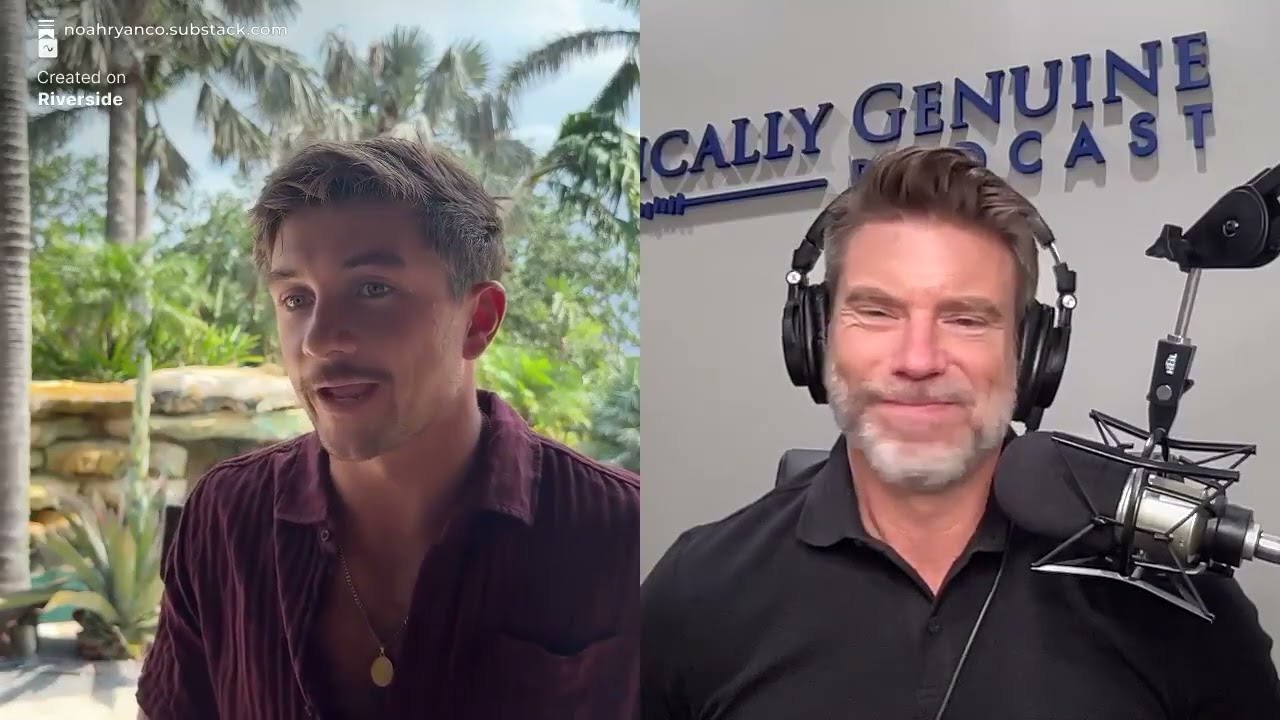
How (and why) to max out your DHT

Noah Ryan talks with hormone expert Hans Amato about DHT, the potent form of testosterone that shapes personality and performance. They cover what blocks DHT production (soy, certain fats, stress), how gut health and inflammation affect hair loss and acne, and specific supplements like Lactobacillus reuteri and BPC-157 that may help.
Chapters
Fellas, what's going on? We are back, season 2 of the Noah Ryan Show, and we have a very special guest today. We have Hans Amado. If you guys don't know, Hans is Mr. Testo Nation. He has some of the best stuff out there, especially when it comes to DHT hormones, thyroid, IGF-1, essentially changing your biology, rewriting your biology to become more of a man. Hans, thank you so much for coming on.
That's pretty sweet, man. Thank you. I really appreciate this opportunity.
Yeah, I know. Well, we just spent like 35 minutes trying to figure out some technical difficulties. Um, brutal. Maybe having high DHT makes you worse at tech. I've never seen a high DHT IT worker, no offense. Um, but I was thinking about that and then I was thinking about the fact about how so much of our personality and our skills and our traits are a byproduct of our hormone profiles. And I thought about this when I started looking into DHT and seeing that high DHT improves spatial awareness. High DHT also seems to decrease verbal fluency, and a number of these other things that we think of as traits or skills, but in reality can be manipulated by your hormone levels. Were you the one that was talking about DHT and spatial awareness and some of that? Did I learn that from you?
I don't think so, but I've definitely talked about like how someone is, uh, their personality can change based on their hormones and neurotransmitters for sure.
Gotcha. And when we look at that, and if we were to paint a picture of like a high T personality or a low T personality, and I think we can differentiate between high T and high DHT, but for now, What, like, paint us that picture, like that contrast. What do you see in those differences of an individual when they're high T versus when they're low T?
All right. So high T can mean a lot of things. Uh, let me just say DHT is about 10 times as strong as testosterone, but it's 10 times lower, uh, than testosterone. So if someone has like 1,000 nanograms per deciliter testosterone, they can have roughly, if they have a 10:1 conversion, 100 nanograms per deciliter DHT. So if you think about like you have these two pools, um, it's not just you have 1,000, or we can use any metric like this, let's say 1,000, uh, testosterone. Now you have two pools, it's double as strong if your DHT is at least a 10:1 ratio. Think about that. DHT is so small, but it's 10 times more powerful. You have two huge pools making more androgenic. So testosterone also binds to the androgen receptor. Like when we look at androgens, you look at the structures, you look at DHEA, androstenedione, testosterone, DHT, androstenedione, all of these different steroids. They have the same structure to testosterone, but they bind differently to the androgen receptor. And given that, they have different actions. DHA is only about like 70% as anabolic as testosterone, but it's structurally very similar, right? So they bind differently to the androgen receptor based on the structural differences, and it's very small. So if, uh, DHT is structurally different to testosterone and it will bind differently to the test— the androgen receptor and create different changes. That testosterone will not have. It has unique benefits. And so very often when you look at studies, and this is more so prominent in animal studies, where if you inhibit DHT, you lose, for example, insulin sensitivity, you lose muscle mass because it's anti-catabolic. The 5-alpha reductase doesn't just create DHT, it deactivates cortisol, for example. It creates neuroactive steroids, which is GABAergic. So all of those 5-alpha reductase steroids is going to make you feel a different way, which is more dopaminergic. Like the, the increase in dopamine from androgens seems to be very dependent on DHT itself. So when you are a high 5-alpha reductase person, which I like to prefer to say, because if you're natural, you're optimizing 5-alpha reductase, you're not just getting DHT, you're getting all of the other steroids as well. So you're getting the dopaminergic steroids, you're getting the GABAergic steroids, so which makes you driven, feel amazing while being calm at the same time. That's what I more so see the 5-alpha reductase personality. It's just easier to say like someone is DHT dominant.
Gotcha. That's a good way of putting it. The 5-alpha reductase personality versus the high T personality. And you know, we know that there's a lot of misconceptions when it comes to what does testosterone do to you. We see a lot of people take steroids and they start getting roid rage. Now what a lot of people say is like, that's not roid rage, that's estrogen rage, because the way that men create testosterone is by aromatizing it and turning it into estrogen. But like, we look at some studies online where it shows like you give someone who's already relatively benevolent testosterone and they become more philanthropic. So it seems like testosterone is kind of an amplifier of those preexisting traits. You mentioned that it changes your personality. Would you say that it changes or does it amplify something that's already in you? Like, will high testosterone make a good person bad and a bad person good? Or will it just make a bad person worse and a good person better?
I like this conversation because, uh, it challenges what we believe to be. Like, it's very easy to say, I am this, I am that, I am anxious, I am depressed. Like, it creates your identity. And so suddenly when you start boosting your testosterone, DHT, it's like, okay, well, I am no longer like that. And it's like, okay, was I like that? I— and that's not my identity. So I would say, like, it can change you. Like, even if you look at someone that's schizophrenic, like, okay, let me put this, this example. Let's say um, you, you just spent Christmas with your parents, like you're out of the house, you're spending Christmas with your parents last year. This, this Christmas they see how you are. Now you start maximizing your testosterone, DHT. This upcoming Christmas you see them again, like how are they gonna portray you? Are they gonna say you are different, right? It changes you. You might actually have new personality traits. So coming back to your question, um, does it make someone more of who they already are. I would say if someone is prone to rage, it will calm them out because it's GABAergic. But if someone is prone to addictive personalities, again, it can calm them out, make them more single-minded, focused on what's really important in life. So I would say like it can help to eliminate some of the bad stuff and make you more good, but it obviously can't make everyone a saint if that's a thing. But it's interesting about the roid rage that you mentioned, like estrogen does control anger and rage. But DHT can also cause that in a way where you don't tolerate bullshit as much, right? So you're more like, okay, I had enough of this. And some people might seem to see that as aggressive.
Interesting. It's super interesting. And I think the re— I'm extremely fascinated in the mechanisms behind DHT and 5-alpha reductase enzyme as a whole. As you mentioned, you know, it has a huge impact on neurosteroids, right? The conversion of pregnenolone in allopregnenolone for one. My DHT, my 5-alpha reductase system was destroyed really, probably by Accutane and SSRIs. Like those wrecked me pretty hard, but I think they especially wrecked my DHT. And I slowly crawled my way back and I slowly started turning those enzymes back on. And all of a sudden, like all of these things that I knew were inside of me, but just felt like biologically unfeasible came to the surface, right? Like my tolerance for bullshit that used to become like a tolerance for bullshit. If there's any bullshit, I get anxious. Is now I become more— I have more agency. I just feel so much more in control. I feel more in the driver's seat. I have this cool, calm collectedness. I notice it in social interactions as well. I notice it when I walk down the street. I notice it not just with how I interact with the world, but how the world interacts with me. And this is something that's so— it makes life easy. It's quite literally life on easy mode. And I genuinely believe that. I believe this is how men are supposed to feel. Most people never experience that because it seems like everything nowadays lowers DHT., right? Everything seems to inhibit the 5-alpha reductase enzyme. Now, there's a certain line that people toe there when they see that, and you've discussed this. I read your most recent newsletter about these things that seem in vitro or in vivo to reduce 5-AR. I think it is in vitro to reduce 5-AR, but then in clinical trials, they don't really seem to do so. Lycopene being one of those, turmeric being another one. I think also if you have high DHT, you really kind of stop caring. I don't really care. I drink beer and I do random stuff. I microwave something in plastic the other day.. But what are these things that we can say beyond reasonable doubt should be avoided, right? Because they inhibit 5-AR. And then once we get there, we can have a more advanced conversation. What are the things that people sometimes fearmonger that may not be as problematic? I'll go first. That's right. But you know, we'll go from there.
Yeah. Drugs, right? So don't avoid these 5-AR drugs. There's a lot of other drugs like ketoconazole, which is the antifungal, which just crushes hormones. So if you take that antifungal oral, that's also gonna crush your DHT.. But, um, in terms of the more natural things that you need to avoid, it's more like soy. That's going to be on top. Like even at a dose where it doesn't lower your testosterone, it does lower your DHT. And it doesn't have to be the high isoflavone soy. It could literally be like a low isoflavone soy. I don't know if it's exactly the amino acids or something else in the soy protein, but that's one thing that you should be avoiding. I would say like that's almost like one of the biggest ones. The other ones, And this is something I question at the moment because there's not a lot of research on this. It's all of this polyunsaturated fat research. Like let's say for example, the study on sorghum. So sorghum increases 5-alpha reductase in vitro, which is like cell cultures, right? They add the sorghum to it. We don't know exactly what the active component is that increased 5-AR. Then they also looked in that same study what inhibited 5-alpha reductase and it was linoleic acid, which is omega-6, 18-carbon polyunsaturated fatty acids. And there's studies to suggest that the more unsaturated a fat becomes, so it's like linoleic acid has 2 double bonds, arachidonic acid has 6 double bonds, the fish oils has, uh, sorry, the arachidonic has 4, the fish oils has 6, right? The more unsaturated it becomes, the more potently inhibits 5-alpha reductase. I would just like to see something that's in vivo because like everyone say, hey, you should be avoiding green tea, you should be avoiding coconut oil, you should be avoiding like lycopene, like inhibit 5-alpha reductase. But when you look at the studies, it's like, I see no drop in DHT in the serum or the prostate. And this is why I don't like these cancer-specific studies because they only isolate the prostate. And I've very often seen a difference between the serum levels and the brain levels and the freaking liver levels compared to the prostate levels. Like every single organ can have a different response to a certain compound. So the main thing I avoid is going to be soy. That's just the main thing. If I have sushi, I'm gonna have some soy sauce. Who cares?
I don't care.
And then the second one would be if someone is sensitive to gluten. So people with celiac disease and even like non-celiac wheat sensitivity, they can also have low DHT. High testosterone, low DHT. That's kind of like the main things. Keep inflammation low, maximize your nutrient density. That's what I would focus on.
Yeah, it really is. I think like DHT and mitochondria, those are like the canaries in the coal mine. For health as a whole. Like, those are the proxies, the— what do they call them— the apex species, like the frog in the water, to be indicative of how the environment is as a whole. If you get a list of things that people generally agree are healthy for you, for like in our context, like in our sphere of health, those are typically things that are going to be good for your androgens and they're going to be good for your mitochondria. So like when they say like, what do you do to like improve your mitochondria? What do you do to improve your androgens? You pretty much just follow the commandments that people have for being healthy, right? Like avoiding and mitigating inflammatory components across the board, whether it's light, whether it's EMFs and whatnot. It's interesting that you bring up soy. It's interesting that you bring up soy sauce. I love soy sauce. I do tamari, which is gluten-free soy sauce. My thing there where I'm like, "Oh, it's okay," is that it's fermented and hopefully that fermentation damages some of those isoflavones. I'm purposely not looking into it because I don't want to ruin soy sauce for me. Is that true? Is soy sauce still having that anti-androgenic effect?
I have no idea because I've only seen studies on soy protein, so let's hope it's fine. Cool.
Well, I'm sure that I could ask GeekBot and he'd figure that out. Um, I have something I want to add onto that as well. You know how many vegans are always in my post being like, yo, look at me, I'm jacked and I have high testosterone and I'm vegan. And you look at them and they are jacked, but you, they don't have chest hair, right? They don't have beard. They don't have a protruded jawline. They have a baby face. And that's very indicative of high T, low DHT. And these are kind of like the, the, the distinguishments between high T and low— high T and low DHT. I think a lot of times like they'll show high T, low DHT as like personas and like high DHT will be like Khabib Nurmagomedov, just like thick dark hair. And then high T is gonna be like someone with the baby face, but still muscle mass. And I think that typically comes down to the fact that, you know, testosterone is more anabolic. DHT is more phenotypical outside of your muscular, musculoskeletal structure, but we do seem to see that DHT increases muscle hardness and it also seems to reduce fat accumulation or like, uh, lipogenesis. Um, what, what are the physical characteristics and features, um, present when you have higher DHT?
I would say the first thing you're going to notice is going to be looking harder. Like I know, like let's compare um, like a DHT steroid. So you could either inject pure DHT, and I think the reason why pure DHT is not as anabolic as testosterone is because it's deactivated so quickly in the body, so you need really large doses of it. But then when you look at DHT-type steroids like Anavar, Masteron, Primobolan, they're, let's say, slightly less anabolic than testosterone, but they're going to enhance your physique in a different way. They're going to accentuate the V-taper everyone is looking after. They're and it can accentuate your facial features, which everyone wants. It's just gonna create a more manly physique. It's not that bloated round physique that testosterone would create with high estrogen. The DHT type steroids is gonna make you leaner and calmer. That's usually just what happens. There's obviously exceptions to the rule, but I would say your skin is darker, your nipples are tighter. That's gonna be like one of, that's one of the signs if someone is on steroids, nipples are tighter. But like, High DHT, low estrogen, your nipples are gonna be tight. Poofy nipples doesn't look good. Your physique is gonna be tight. Like everything, your waist circumference, everything is gonna be thinner because androgens increase your IGF-1 as well, which is negatively correlated to BMI. Like everything is so interconnected.
Hmm, very interesting. I think that is the one thing that I've noticed. I used to be bigger. I used to be bigger. I used to be stronger. I used to weigh more and I had bigger muscles. But I looked kind of bloated almost. I looked very bloated. My face looked so bloated. Once I had that switch, and I vividly remember when it was, it was like my androgen system turned back on. I leaned out, I slimmed out, and my muscles just got harder. I became significantly more vascular. I got like more like straight lines on my face and my body. I look like a different person. I posted a photo and people are like, this guy got jaw surgery. This guy got like facial reconstructive surgery 'cause it changed the way that I look. And we have to understand, and you probably know this as well as anyone, I just posted something today about like pigs, right? How wild boar and domesticated farm pigs, those are the same species. One has just been in a high-T environment where they have a bunch of other high-T pigs that they need to fight for territory and for mates. So it increases their testosterone. They just look more battle ready. They have tusks, they have brills, they have bigger necks. Like that is the role of androgens. The role of androgens is to make you more competitive, right? The role of androgens is to make you have a higher rate of success against your counterparts, which brings me to this question of like, okay, yeah. So if you want to look like a bat, like if you want to look like someone who is, you know what, battle ready, if you want to look more like have more physical demeanor, muscle is not going to be the solution. I mean, how many guys do we know that have major muscle but then get mugged by 130-pound Dagestani wrestler because they have no DHT. Anyway, what I'm trying to say here is like, what is the feedback loop? Like, what are the non-biological things that have an impact on your androgen system?
You're going to have to elaborate more on that.
So we're talking about like, okay, eat this, don't eat that, you know, optimize your thyroid. We haven't talked about that. We will. But like improve IGF-1 by taking, you know, this compound or eating this food. What about like the psychological component, right? Like the, the, the high-T lifestyle, the pro-androgen lifestyle that has an impact on that feedback loop. Like we know for one that competition and winning increases your testosterone. What are those other things from like a lifestyle standpoint that people think like, oh, that's, that has no correlation with my hormones, but they actually do? Yeah.
Yeah. I find this very interesting because there was research when I looked at the testosterone differences between different genders, it would seem that Black individuals have higher testosterone at that time, they just took testosterone, not DHT, had higher testosterone than the white individuals. And then they had to make correlations because it was just like an observation study. It's like, well, these individuals are living in a more dangerous environment, so they need higher testosterone to adapt to that environment to be able to fight and survive. So that's exactly what you're talking about. Like when you become domesticated, it's like, well, I don't need my adrenals, I don't need to defend myself. You know, all of these things already set in place for me. But when you go out to the wild, you have to fend for yourself. You have to be the leader. Hey, you have to take charge. Your body can either, well, it's forced to upregulate its own testosterone and DHEA production so you can do what needs to get done. But what I have found is that some people respond to a stressor, even a beneficial stressor, in a negative way. Testosterone drops, cortisol increases. And I don't know if this is a mindset thing or a physiology thing, but some people in a stressor, they get a spike in testosterone that helps them to adapt to that. So maybe it's a mindset thing, maybe it's a nutrition thing. I don't know exactly what it is, but some people can react negatively. But I would say like most people can react positively if the mindset's right.
Yeah, I think it's a skill, right? And like all skills, some people are born with a certain aptitude. Like we have people that are just natural born leaders, natural born killers, natural born high-key phenoms. And thank God for organized sports because they funnel all those guys into that so they're not on the streets raiding us on horseback. But I also think it's a skill that you can learn, right? Like you can learn how you react to situations. You can be an observer and you can say, okay, typically when I get under stress, I shut down. But I know in order for me to get this high T feedback loop, I need to take it by the balls. I need to go and I need to be scared and I need to go and do these things. I need to have some courage. That's what starts it. This is the problem is people, they let themselves like acquire learned helplessness. They say, uh-oh, that was scary. I'm never doing that again. This reaffirmed my decision to not go out and take life by the balls and get what I want from it. When in reality their key to success is right on the other side of that one interaction. And instead of having a fixed mindset, having a growth mindset and say like, how can I get better at this? How can I approach this in a more high-T manner, for lack of a better term? So you brought up a good point there too, where it's like your body won't produce testosterone if you don't need it, right? It's biologically taxing. It's a biologically expensive hormone. Um, what does like a human need to signal to his body to produce testosterone? Like what are, what are the requirements?
Oh, let's start with the most basic is gonna be you need enough calories. Mm-hmm. Then you have to be not malnourished. Those are the two most important ones. You don't need to be in a stress state and you need to be sleeping well. And they looked at the Western individuals and they looked at the hunter-gatherer individuals that had the same level of testosterone despite the hunter-gatherers being in the sun all day, walking 2 hours or like being active for 2 hours a day at the same level of testosterone. It's like, how is this possible? Well, your testosterone production requires calories. It requires energy. If you're gonna spend 2 hours of that, all of that calories, you don't have enough calories to create your testosterone. So it's not gonna be as high. This is why we typically see with athletes that testosterone is quite low depending on how hard they are training, right? So you need calories, you need your micronutrients. I think you're a really good example. Like you're, you're very lean. Um, and your testosterone. I think you posted that it was like 800-something, which is really good. Like, that's not very common for people to be very lean and quite active and have high testosterone sometimes. So whatever you're doing, you're doing it right. Right, so calories, micronutrients, those are top. Then you need to be training but not overtraining. You need to be sleeping well. You need to be managing your stress, but you shouldn't be eliminating all your stress. You should be creating competition. It could be friendly, it could be unfriendly. I don't think it really matters, but I think a lot of people need to be grabbing life by the balls more often. But I want to, I want to play a little bit of a devil's advocate here as well. Because like you can reach a point where you're becoming really proficient with the skill and you feel like, I'm high T, bro. Like I'm not scared. I can talk to anybody. It's like, just because you've mastered that skill doesn't mean you have high T. Like that's on the flip side of it. Like you can see like a 60-year-old, he's like proficient in what he's doing. He's a very good leader. Look at his testosterone, it's maybe like 200. And so it's like skills and your androgens doesn't always, but what I would also say is that androgens help you to create a skill much faster. So let's say you're going to talk to people and you, you're gonna get more comfortable in the process. Androgens can help to speed that up.
Hmm. That's a really good caveat. That's a really good devil's advocate as well. We do know that testosterone makes effort feel better, but it's also like, if you— it's, I think in my opinion, it's about constantly finding bigger ponds, right? Because testosterone's really good at getting you to scale up those hierarchies, right? But if you stay at the top of that hierarchy and you beat the game, It's gonna pop back down. And I noticed that too. Like when I get comfortable, I notice it. Like maybe I'm just super attuned 'cause I fixate on it, but I know when my DHT's high and when my DHT's low and it gets low when I get comfortable. So the key is really, in my opinion, always finding bigger ponds. And I think it's also about finding wars in like your day-to-day. And I'm not saying like find wars, like actual battles, but like find competition, find those struggles in your day-to-day life, right? Even if you're in the most monotonous work ever. Like, I work from a computer most of the time. I always find a way to gamify it. I always find a way to, like, competify it, to make it a war, right? Even if it's with people that have no idea, even if it's with my friends, and I'm just like, I'm having a competition with you. You may not know it, but I am, right? Like, I seek those out, and I feel that feedback loop. And if you get off that pony, you lose that momentum, and it's not going to work. What, like, what do you do competition-wise?
Besides lifting and trampolining, tricking, those are the main competition things. Funny story. So my wife asked something about, I can't recall, who do you want to beat with your physique? And then I told her there was this photo that I took and this was about 10 or so years ago. I felt like I was looking really good. I was like 9% body fat. And I always felt I compared myself to that. I was like, even 5, 6, 7 years later, I was like, man, I didn't beat that level there. And I was like, finally, damn, I beat that. It's like that was my competition. I think maybe it's unique to us, maybe it's a mindset, but it's like even if you reach your goal, you always feel you want more. It's like, okay, there's gonna be a next level. Maybe up to a point, of course, you don't wanna go too extreme with this, but you're always, at least for me, competing with yourself. And if you're gonna compete with someone else, you're gonna compete, and I think competition is healthy. Like, you're not a sour loser if you lose, right? But it's still like, this is going to be competition, whatever it's going to be. We're going to have fun, but maybe there's going to be like a slight hint of competition with everything you do.
Yeah, that's true. Um, and yeah, I think being a sore loser, that's not the way to go either. I think that's probably going to lower your team even more. Um, yeah, it is fascinating. Um, but anyway, I think that's enough for the psychological component. We'll go back to the biological. Because there's some things here that you really opened my eyes to. And I think a lot of that's the interconnectivity where it's like, oh, everyone's like, I wanna boost my DHT. How do I boost DHT? And you come and you say, it's not just like you wanna boost your DHT, boost your testosterone, right? You wanna boost your DHT, boost your thyroid. Let's hone in on the thyroid 'cause thyroid's a huge conversation, especially on our side of the internet. You know, a lot of people hone that as like the primary organ. It's an endocrine organ, the primary organ to focus on for overall health and metabolism.
"What impact does the thyroid have on our hormones?" So, the more research I do, the more I feel like this list is expanding. Like, because everything is integrated. Your androgens affecting your thyroid, your thyroid's affecting your IGF-1, it's affecting your androgens. Like, this loop is just going crazy. So, your thyroid hormone modulates your lipids, enhances, significantly enhances the production of testosterone, also cortisol, also DHT. Yes, it produces more cortisol, but it also deactivates it fast with 5-alpha reductase. So it just significantly enhances all of your hormones, enhances cellular energy production. We have more cellular energy, you have more dopamine, more neurotransmitters, better signaling. You're just feeling better. You're in that high energy racing style. You're like just ready. You're just not like jittery, caffeine jittery. You're just like racing ready. That's what I would say like a high thyroid state does. Like obviously if you're going hyperthyroid too much, that can give you the same symptoms of, of like being hypercaffeinated, which is also not good. You wanna be balanced. Um, the, the, the reason why I like thyroid so much is because when you give thyroid to men, they're— because you have a 5-alpha and a 5-beta ratio. 5-alpha reductase creates the most powerful androgen, DHT. The 5-beta creates a neutral or even antagonistic steroid to the androgen receptors. So you have two pools. Again, we're back to pools. The big— like, if both of them are 50/50, they're both competing 50/50 to the androgen receptor. So just by giving thyroid, you automatically shrink the 5-beta and you increase the 5-alpha even more. And just by this competition, you have even stronger action on the androgen receptor because of that. So it doesn't just activate 5-alpha reductase, it also enhances that ratio between the two, which is what I like so much. And then it obviously increases your DHEA, which converts into DHT, increases your IGF-1, growth hormone, speeds up metabolism, and so on. Like, Yeah.
Okay. You mentioned DHEA. DHEA, very important neurosteroid precursor hormone. A lot of people experience really good results when supplementing with DHEA. Some people experience really bad results and it seems to be whether or not that converts into estrogen or DHT. Is that just a genetic roll of the dice, you know, or are there things that people can do to influence that conversion? And is that just improving that 5-alpha reductase enzyme? And inhibiting the aromatase enzyme.
Yeah, you point out really good things because when you look at the study, they always look at the average changes. So you see the average increase. If you supplement DHT, the average will see an increase in DHT. The average will not really see an increase in estrogen. But when you look at each individual, this one is getting a drop in estrogen, this one is getting an increase in estrogen. So what I would always recommend to someone's like, Pick a safe dose if you want to go oral, depending on the individual. What I've seen mostly in young individuals, 25mg safe, 25 to 50mg is safe. If you want to go topical, 15 to maybe 20mg per day is safe.
Okay. Yeah.
And then test, always test.
Yeah. A note on that. I mean, I think out of anybody, the way that you look at studies is probably the most thorough and just like, in depth. And I, and I really like that. And you brought up a good point. It's like you're looking at the average outcome, right? So if the average outcome says that DHT remained constant or estrogen remained constant, what that could mean is that somebody experienced a 50% decrease in estrogen and somebody experienced a 50% increase. So it's like, you're like, you're not the average, right? You're the outlier.
Yeah.
And that's why for me, it's like before I go to studies, I go to Reddit. I wanna see what people are saying, right? Because anecdotes are data. Like anecdotes are just You know, enough anecdotes. That's data. Like anecdotal evidence is evidence. So I think that's something to keep in mind. I think a lot of people, they have agendas, right? Like they have an agenda that they're pushing forward, whether they know it or not. They have a bias, right? They may be aligned with some certain group and that group's identity is predicated on the use of a certain hormone or the importance of a certain drug or something like that. And they're going to do everything in their power not maliciously, just by human nature to push that and, you know, cherry-pick that data. I cherry-pick data too. I purposely try not to align myself with any group, right? But I still tend to cherry-pick data and I kind of just gotta be real with myself and saying, okay, I have no skin in this game. I have no, I have no side. My only objective is to figure out what works best for me and for others. And nothing like no outcome will ever like be an impact on my character or my identity because I don't align my identity. With any of this. I think you're the same way, like you are an investigator, like you're a detective. That's really what it comes down to. So I think that's really incredible. DHT aside, you know, going back to thyroid, what else, like why else do you prioritize thyroid? How do you prioritize thyroid? I think that at one point you did experiment with supplemental T3, is that correct?
Yeah, yeah, yeah. So the way I go about optimizing thyroid is just to eat a nutrient-dense diet. Ultimately, your body needs vitamins and minerals to create thyroid hormone. You need the vitamins and minerals for just freaking everything, testosterone, IGF-1, and everything, as I mentioned, integrated. So at a very simplistic level, you just need to eat micronutrient-dense foods, check your hormones, and then see which is high and which is low, and then you figure out, and then it gets more complicated. But let's just stick to the low-level stuff. Vitamins and minerals minimize oxidative stress. I always have two rules. Are you eating nutrient-dense foods? Are you absorbing those nutrients? And then are your body actually utilizing those nutrients? And then are you keeping your oxidative stress low? So this could be training, but it could also be someone having gut issues. They could have a viral infection, like they have sleep apnea. Like, so anything can cause oxidative stress. And it's always those two. And nutritional deficiencies can also cause oxidative stress. So it's always like, again, like this catch-22. But anyway, that's how I focus on my thyroid. The reason why I focus on my thyroid is because I was hypothyroid in the past. That would significantly influence my sleep quality. I took forever to fall asleep. I could not regulate my temperature. In the day I was cold, the night I was getting heat sweats. I was just like sweating it up, couldn't sleep because it's too hot. My sleep was very restless, interrupted all of the time. Almost always woke up between 3 and 4. I had to take some freaking calories like milk, sugar, aspirin, and just bring my stress hormones down so I can sleep. And I always woke up groggy. I was cold, as I mentioned, and the colder I felt, the more depressed and anxious I was. That's how I felt. And the warmer I became because I optimized my thyroid, because I was eating more, I was eating more nutrient-dense foods, I was minimizing my stress, like all the good stuff. My temperature was coming up, my mood was coming up, my anxiety was going down. Like everything was improving. Every health symptom was improving because my thyroid was improving. So that's why thyroid's so important to me. And then later I learned like, okay, yes, it's important for your testosterone and DHEA, but I don't really care about those. If I'm cold and freaking freezing, my sleep is horrible and I have gruesome anxiety.
Interesting. I wanna touch on that. I experienced something very similar, but you brought up a good point. It's like, I don't really care about hormones, I just care about my thyroid. At the end of the day, you know, what do we all really want? I don't care about any of my bio— I don't care what any of my biomarkers are. I care that I feel great. I care that I have energy. I care that I have a good mood. I care that life feels bright. Honestly, that's my only heuristic that I'm going for. I just want to get that feeling when I look around and the colors are bright, the birds are chirping, I'm happy, I'm in control, I feel a sense of agency in my life. And I found the best way to do that is to keep inflammation low, to keep my hormones high, and to keep everything else balanced. I experienced something similar, like when I started doing this kind of fruit till noon experiment, cutting out poofas entirely, like pretty much the Shred Maxing protocol that I put together. I fell into that accidentally and then I ran it. I talked to Anabology. I had him on the podcast and he started talking about his honey diet, which is kind of the same thing. It's about like ramping up your metabolism and that's kind of where I went down that rabbit hole. When I was looking at that, it seemed like, okay, the mitochondria and glucose shuttling, like those are the primary factors that are contributing to this. Like I'm like focusing on the mitochondria. We know that the thyroid has an impact here too, like with the heat and the temperature and the thermogenesis. Is that entirely thyroid? Is that like what other factors go into that feeling of warmth, that feeling of energy that you get outside of thyroid? Just so we have the whole picture.
Yeah, thyroid, insulin, IGF-1, your androgens because it enhances the free thyroid. You wanna have low free fatty acids because they inhibit the entry of T3 into a cell. You want to have low cortisol. Your norepinephrine synergizes with your T3 to enhance thermogenesis. Like, all of these things are so interconnected. But I'm a big testing guy. You want to make sure you test because one thing I don't like at all is when people are speculating like crazy about their diets and like, this is happening and like, look at this mechanism. It's just like, dude, you have no idea. You've not tested anything. So I prefer to test, like if someone is having a mitochondrial issue, it's like, okay, let's test your intracellular micronutrients and maybe your genetics to determine what you need more of based on your genetics and what you're deficient in inside a cell because of maybe oxidative stress or extreme training or those kinds of things. Like targeted approach instead of like going ham on random stuff you don't even know you need. So that's kind of like my approach every time.
I agree with you 100% on that. When I was at my leanest, when I was like too lean, and that's when I got those labs. I got my labs at my absolute leanest. I was down like 18 pounds from what I was a few months before. Cardio like crazy. I was doing sub-7-minute 5Ks, and I'm not a runner. I've got very short legs. I got stumpy legs. I'm built like a tree climber, not a runner. Testosterone was high. IGF, HP1AC, all of my, like, my fasting insulin my glucose, my fasting blood glucose, all super low. Um, IGF, IGF was below average. I think I always have low IGF. Um, prolactin and blood urea nitrogen was high. Um, that was from overtraining. Um, did some things, lowered my training volume, lowered my training intensity, prolactin and BUN lowered. Um, I think that's also a hard pill for some people to swallow, especially for like the extreme trainers. Is that overtraining is a thing. You only grow from what you recover from. You can cause more harm than good, particularly in oxidative stress. But what I came across, I want you to touch on the overtraining. What I came across when doing the Shredmaxing protocol is like, if you want to recover better from training, improve your mitochondria. Like your mitochondria are the rate limiting factor. It seems like to me where it's like if you improve your mitochondria, you recover better from training. You recover better from training, you improve mitochondrial function, electron transport chain signaling, mitochondrial biogenesis, then you can train more. I'm kind of fixated on mitochondria. Are there any other factors when it comes to training and recovery that are equally as important? And I'm sure there are, and I'm sure that they're deeply connected with mitochondria. But for you, outside of mitochondria, what else is there?
Again, like everything is so interconnected that it's difficult to say because like What are you doing to maximize your mitochondria? You're doing basically the same things to maximize your testosterone and thyroid hormone and IGF-1. Like all of these things that you're trying to optimize is basically the same. You might be trying moxi here for the mitochondria or something like carnitine and stuff like that, but it's ultimately going to be the same approach, right? So for me, it's like, do this, do the same things. It's gonna come down to diet, minimize oxidative stress, maximize your nutrient density. That's, that's the first thing.
Yeah, I knew you were gonna say that. Um, another thing that we discussed before, and I think we discussed this on our call when we were originally supposed to do the podcast, um, a lot of people, they blame high T for acne, they blame high T for hair loss. Um, looking at you, you know, that's obviously not the case. We've discussed this prior. You think that it's more of an inflammatory thing. Can you go into that a little bit deeper and say like, why do some people experience those negative side effects when increasing testosterone either exogenously or through natural ways?
Okay, so let's start with the acne one. So acne is because of inflammation. It's not just your, the sweat gland that's getting blocked, right? That doesn't in and of itself cause inflammation. It might be whitehead or blackhead, you squeeze it out, it's gone. Like it doesn't actually cause inflammation. Now you have bacteria in there that's feeding on it and that is causing inflammation. So it's the microbiome of the scalp or the skin that's causing that. So if you use, for example, certain antimicrobials, or if they treat acne, they give people tetracycline, that's antibiotics, like that's killing the bacteria in your gut. But there's a strong gut-to-skin axis. The healthier your gut is, the healthier your immune system, the healthier your skin is going to be. Also, um, there's many different kinds of hair loss that people can get, um, stress-related, immune-related, uh, I, I'm not a big fan of what people define as like the androgenic alopecia So I would— I'm not going to deny there are genetics involved in it, but ultimately there is a connection between oxidative stress and hair loss regardless of what kind of hair loss you have. And these people that say it's DHT, have you tested your DHT? Have you tested any other inflammatory markers? Have you tested your micronutrients? Like, none of this has been tested, right? In most cases, at least for me, when I was shedding at my craziest is because I was consuming stuff and it was flaring a head fungus that I had. And once I eradicated the head fungus, I could eat whatever and it wasn't causing any hair loss. So that was at least for me the case. I also experienced hair loss when I was like stressing like a maniac, but I was able to recover that by just eating better and dealing with the stress ultimately. So when people get acne from androgens, it's because their scalp microbiome is not good. And I would argue the same is true for head the microbiome is also in it. Good. Something is wrong. Like if you're gonna do enough tests, you can see like, okay, this is wrong and this is connected to hair loss and the androgens is just speeding it up because like ultimately why do you have low testosterone to begin with? Because of nutritional deficiencies, oxidative stress, same stuff that's causing hair loss. Now you're putting testosterone androgens into your body that's not supposed to be there maybe, right?
Mm-hmm. Okay. Very, very interesting. I, for example, I'm looking back at photos and when I was living on the beach in Mexico, I was smoking organic tobacco every day and I was drinking Corona and mezcal. And my skin has never been so clear. I was in the sun all day. All I was using was beef tallow, perfect skin, perfect hair, everything was perfect. And I cut it out and I start getting skin issues again. Looking into it, like tobacco, and alcohol, both potent antimicrobials. But we also see sometimes people will take a round of antibiotics and those cause acne as well. So are you saying that it is primarily a, like, a gut component? And if so, like, is it a specific strain of bacteria that needs to be killed? Is it a leaky gut factor when it comes to like hair loss and acne are almost always intertwined to like when people experience like serious shedding, they get the hair loss, they get like the red scalp, and then they also get the acne. Anyway, like have you honed in on that anymore when it comes to the gut component?
At least I know for me, whenever my gut was at its worst and it was triggered by whatever, this is when I experienced the most shedding and hair loss. So when your gut is at its healthiest, and don't assume because you have no symptoms you don't have gut issues because I've worked with many people that said like, oh, I'm having amazing bowel movements, my digestion is fine, no GERD, no bloating, nothing. Do a stool test, boom, you have an overgrowth of a lot of pathogenic bacteria. And what are they doing? Creating toxins that's inflaming you.
Got it.
So I would say like for me, it always tracked back to gut issues. Like oxidative stress can come from a lot of stuff, but the most often that I've seen is bacterial or fungal of origin. So test gut and then so it's probably gut related or skin related. Like acne is absolutely gonna be skin. There's some bacteria that's on the skin that's causing inflammation, but that could be modulated from inside. You don't have to use anything, anything topical.
Gotcha. So you're getting a stool test. Is there a specific stool test that you're getting?
Yeah, I like Gut Zoomer because it's the most comprehensive. They're specific in the US, but you can ship to worldwide as well. But that's the one I would go with.
Gut Zoomer. Very, very interesting. And then when it comes to actually treating or pathogenic overgrowth, obviously it depends on the specific pathogen, whether it's bacterial or fungal in nature. Are you of the belief that these things can be treated with natural antimicrobials or are you one to just bite the bullet and go with tetracycline, doxycycline, something like that?
I'm not a big fan of antibiotics because ultimately what you see is that— I had a guy recently that I worked with, he had acne. He decided to bite the bullet and go on antibiotics, erythromycin. It worked quite well. 3 months later, acne was back. It's like, okay, well it temporarily solved it. So the way I want to go about it, it's like I like a strong antimicrobial that's specific to the pathogen you have overgrown. Then I like a prebiotic and a probiotic that helps synergize to change the environment of the gut because the environment allows pathogens to grow. They don't just grow for no reason. Like there's an environment, it's like fungus in your kitchen or bathroom, whatnot. But the environment is there for them to grow. So change environment, they're going to die.
Gotcha. Super interesting. Speaking of gut environment, we have our favorite probiotic, which is Lactobacillus reuteri. That is something that I took and I never experienced— I never expected to have such significant, like, results and experiences from a probiotic and a non-refrigerated probiotic at that. You were the one— I was put on a lactobac— L. reuteri by someone else, but you were the one that really opened my eyes to like the mechanisms behind it. Can you explain like why Lactobacillus reuteri has such a significant impact on hormones, both from a clinical standpoint and also from an experiential standpoint?
Yeah. So the, the main mechanism that they found was it lowers interleukin-17, which is an inflammatory mediator involved in inflammatory autoimmune conditions like destructive conditions that just destroy you. So when you lower your interleukin-17, which increases with aging, you end up with more testosterone, more oxytocin, more IGF-1. Oxytocin in and of itself is unique that it stimulates 5-alpha reductase. It's in and of itself anabolic. I don't know if a lot of people know this, but when you take trenbolone, uh, not that people probably do, but trenbolone significantly increases oxytocin levels, and that is speculated one of the mechanisms how it's anabolic and helps with libido and mood benefits and so on.
Really?
Yeah. So I would say the main mechanism is probably by lowering inflammation. That's gonna be the main one. And if you get secondary benefits like increase in IGF-1, testosterone and so on, and thyroid hormone, lower cortisol, that's what they found in animals. Good for you. But that has not been the case for me. I used 200 billion units of the rootery, but it was the LR, I think 08 strain of tonic. My blood work, I did not see a change, a beneficial change in any of my labs, unfortunately. But I did notice like the recovery benefits, the mood benefits, like those kind of benefits. So it must have been a reduction in inflammation probably.
Okay. Have you experimented with oxytocin intranasally?
I have not, but I was thinking about it. Have you?
Yeah, I experimented with it last night. I love it. I use intranasal oxytocin. I don't know, I think I'm a firm believer in like you can kind of restart certain biological processes by simply just reintroducing them exogenously. I really feel like I re-kickstarted my 5-alpha reductase enzyme by just taking a bunch of DHT-enhancing herbs and androgen-enhancing herbs and maybe even norepinephrine-enhancing herbs. But, I did the same things. I struggled with anhedonia and oxytocin turned that system back on to a certain extent. I still use it when I'm just overstressed or when I've been training really hard. It's cheap, it's super easily accessible, and it's also like having a glass of wine. Like, I'm just super chill on it. You know, it's a lot easier to make connections. I think we talked about— were we talking about it? How like, yeah, it improves your ability to create connections, but also makes you more racist?
No, I don't think that was with me.
Okay. I don't experience that, but someone was talking about how like it increases feelings of tribalness, you know? I don't experience that. I just become a total chiller. It feels very similar to like buthea superba, except like a little bit even more chill. Fascinating though.
What was your experience with buthea? I just want to compare notes.
I take a lot. I take it before the gym primarily because of its like PDE5 inhibition effect. I also take it before having to do things that otherwise seem insurmountable. The first time I took it when we were still experimenting with it, I was in Miami and I was just like super stressed out. We just drove all the way to Miami. I had to do all these things. And when I'm driving and doing something, I get overwhelmed. With multitasking. I took the Buthea, 30 minutes later, all of these things that were prior overwhelming me, they just became linear. And it's like, okay, I do this, this, this, this, and this. I think what it does to me the most is it linearizes my thought and it improves that spatial awareness. It makes problem solving easier and it makes anything that otherwise would be hard for my nonlinear ADHD brain to focus on. And in conjunction with that, like, I feel unafflicted by the world. So if I'm going and I'm in an uncomfortable environment or if I'm at the gym, I just feel like it's almost like Moses's sea is separating. You know, it's like the external world doesn't affect me. The external world moves for me as opposed to me moving for the external world. That's how I feel on it. I didn't get my DHT tested after taking it for a while, but I got my estrogen tested, my E2 tested, and my E2 was super low. I don't know if correlation equals causation. I was wanting to test that out because I think I read somewhere, there's not a lot of studies on Butea, but Butea was saying like could potentially have an impact on estrogen. Mine was super low after taking it for a significant period of time. Now I actually combine it with black ginger. I take those two together.
Okay. Well, I think I have tasted, I just have to see my notes, my estrogen. I don't think it moved at all for me. Butea for me was more of a libido boosting herb than anything else. Dioscorea, that I'm using now is much more like that entrepreneur, like get shit done kind of mental state that I enter. The one that was based for me for calmness, which is augmentin, and I was using like 2 tablespoons of that, like 1 tablespoon in the morning, 1 tablespoon at night. And it was just like, what? Yeah, it's a huge dose, I know. But it was like really putting you in that I don't care about anything state, right? So I think if you combine like with Dioscorea, that's put you in that mode of that I'm gonna get shit done mode. With the calmness of the agmatine, I think you're going to get a lot done.
Interesting. Yeah, I like agmatine a little bit. Um, I use it for like, uh, tolerance resetting. I use agmatine for tolerance resetting. If I have anything like kind of like an addictive habit or behavior, NAC and agmatine and BPC-157, it completely removes it. Like, I, I just like, it completely made me quit nicotine. Like, I just was like, I don't want to use nicotine at all anymore. Um, yeah, the butyrate one's interesting, you know, it's like It makes me feel like everything is gonna be fine. Everything's in my control. And this is just what I have to do to get this stuff done. Like, this is just what I have to do. It's like my brain is all scattered. I don't know what to do. I shut down. I take Butea. It's like, all right, cool. Here's what we're doing. It almost like, it makes me like more of a leader immediately. I feel comfortable leading larger groups. That's super interesting. Dioscorea is also something interesting. You know, it has the protodioscin similar to tribulus. Tribulus is very stimulating for me, extremely stimulating. One time I took it before going out when I was in Mexico and it made me like, it made me a madman. It was just so stimulating. And that was on half a dose. That was on half of a dose. I respond like just crazy to these compounds. Have you tried tribulus? And if so, what has your experience been with that?
I have tried the NOW brand and when I was like in a really stressed state, it was working really well to calm me down. I don't know how much protodioscin I had in there because it wasn't standardized for that. It was just standardized to saponins. So I was taking 3 grams, 3 grams of it. That was working really well. When I was not in a stress state anymore, I tried it again, didn't really feel benefit. So I have Nootropics Depot's 20% prodiosine product on its way. So I'm gonna test that out. But a quick question, have you also tested your growth hormone or just IGF-1?
Just IGF-1 and it's low.
Yeah. How low?
I can pull it up for you. Just below reference range. But something interesting about IGF-1 is I think I'm like a hyper-responder to IGF-1 because if I take anything dairy, colostrum in particular, right now I'm eating cheese and yogurt, I'm not having problems. But if I take anything dairy related, it gives me acne, it gives me like weird neck acne. And I looked up the mechanisms, it has actual exogenous IGF-1 and that increases IGF-1 production in the in the kidneys, I believe. But yeah, I guess like I talked to Aboud Bakri about this as well and he's like, yeah, you might just have low IGF-1. So then when you hyperrespond to it, you feel that way. Curious your thoughts.
Yeah. So I just actually finished like a huge course on IGF-1. So this is fresh in my memory. The reason I asked about your growth hormone is like, I wanna know if you're converting growth hormone into IGF-1 or if there's, if your growth hormone is also low because that was kind of like the case with me always. Um, since I started testing. So, um, what was I gonna say? But usually when someone is eating low carb or they're like lean as you, they might experience low DHA and IGF-1 and usually free T3 as well because their calories are so low. So even if you're eating carbs, like, it depends on how much calories you're consuming, or deficit, surplus. If it's a deficit, this is typically what you would see with someone that's on a ketogenic or carnivore diet. Like, it really depends on how much carbs you're having, but it's going to go down. That could be one reason. So that's why I asked about the growth hormone.
So I'm looking at my labs. I got to pull my other labs as well. But my DHEA, I had my DHEA done recently. It was actually above reference range. This was after I started eating more fats and stuff and I stopped. I was still super lean, but I stopped doing like the true shred maxing protocol. My SHBG, that was actually a little bit above Normal. I mean, I'm looking for my IGF. My IGF—
where are you?
My IGF-1 was 139 nanograms per milliliter. So that's in the low range. It's interesting. I once tried taking ipomurelin and CJC. I think I noticed it a lot, but I think it gave me acne. So I took it for like a few days and then I had to stop. Once again, you know, me just assuming that that mechanism was the IGF that was causing the acne.
Yeah, like it definitely does enhance sebum production, but if your bacteria in the skin is good, it's not gonna cause issues. But sorry, I also wanted to mention back to Augmentin, what was I gonna say? So people, there's a lot of studies talking about like the sympathetic nervous system, you know, about the alpha-2 adrenergic receptor, right? Which is the autoreceptor for the sympathetic nervous system.
Alpha-2 what?
The alpha-2 adrenergic receptor.
I'm not familiar.
All right, so when you look at the sympathetic nervous system, your catecholamines, noradrenaline, adrenaline, they bind to the alpha and the beta adrenergic receptors. Most people are interested in the beta because it helps with fat loss. The alpha-2 adrenergic receptor is the autoreceptor. So if you bind that with something like augmentin or clonidine, you decrease your overall sympathetic nervous system. That the autoreceptors are desensitized in people with OCD, excessive energy, ADHD, and so on. And so this is why something like Aquatine, but usually needs to be taken in much larger doses because it works on the receptor, is gonna help to bring that sympathetic nervous system down. Because if someone has a desensitized receptor, they're gonna have an excessive amount of sympathetic nervous system activation, which is why the tribulus was giving you those kind of symptoms because you're probably already in a sympathetic dominant state.
Did you say clonidine, the beta blocker?
No, clonidine is an alpha-2 agonist.
Oh, adrenergic. Yeah, the— yeah, clonidine.
Yeah, yeah, yeah.
Interesting you bring that up. I was prescribed clonidine in college because they gave me Adderall and I'm like, I can't sleep when I take Adderall. Like, take this, uh, what is it, alpha-2 adrenergic receptor blocker?
It's agonist.
Yes, agonist. It stops adrenaline from reaching your heart. Is that— is that the mechanism?
Yeah, basically shuts down depending on the dose, your sympathetic nervous system, and it spikes your growth hormone, IGF-1.
Cool. So I took clonidine and I took clonidine at night once, and it was the one time I could sit down and read my economics notebook or my economics textbook without feeling ADHD. And I was like, what's the deal here? Right? That was what kind of put me— and that was before I actually understood anything about biology, but I was just like into pharmacology because they kept on giving me drugs. That like totally solved my ADHD in the complete opposite mechanism that was typically used, which was stimulants. So what you're saying is like for people that have a problem of excess brain activity or maybe a dysregulation of brain activity, L-arginine sulfate and clonidine, those are like needle movers in your opinion?
Those are the ones that I would go for.
Yes.
The clonidine is going to be stronger because it's a drug. L-arginine is also strong, but you have to experiment with a dose. Like I mentioned, like I was using, because I tend to be sympathetic dominant as well. Like 2 freaking tablespoons per day. And that was kind of like very nice touch for me.
Interesting. Well, I think we both kind of determined that we're sympathetic dominant when we had these technical issues and we were freaking out. We're both just freaking out. That's fascinating. Okay, cool. Which brings me to another question. Creatine. I assume that you're a fan of creatine.
Yes, kind of.
You look like the poster child for creatine. Like you holding a creatine and flexing. I'd sell a lot at like NutraShop. Um, I can't take a lot of creatine without becoming a type A psychopath. Like, it's good. I have unlimited energy. I can work throughout the day, but it makes my fuse so low. Like, it just makes it where, like, I'm almost— I'm just too aggressive with everything. Um, I talked to Aboud Bakri. I think Aboud's like us where he's sympathetic dominant, and he's like, yeah, I do the same thing. I thought it had to be just freeing up too much SAMe, which left me with a little bit too much, you know, precursors to methylation. So I had like too many methyl donors. Could this be something correlated with, you know, have you, have you experienced that? Have you noticed that at all with creatine at any particular dose?
No, I've used like 20+ grams, never noticed that. But as Aboud said, like it's very likely that it's going to be methylation related. Like it's supposed to be calming, but if it's stimulating in a weird way, it's probably methylation related.
Gotcha. And then hair loss component when it comes to creatine, um, people sometimes they say it's because of DHT. The mechanism is too far-fetched. People that take DHT boosters and don't experience any hair loss experience hair loss with creatine. Someone, I believe it was George Fuhrman, said that it's dopamine related. We do know that BDNF can increase hair loss. Um, we also know that something with your tryptophan to kynurenine metabolization, if there's something broken in that, tryptophan gets converted into something else that deposits in the scalp and potentially calcifies those hair follicles has an impact. Have you, do you have any hypotheses on the creatine hair loss connection?
I would like to know, I would like to see like a study on what people say the hair loss comes from, which form of creatine they're using. Like I suspect that people are getting hair loss from the monohydrate, not from like the HCL or the other versions of creatine. So it's not creatine, it's that they're perhaps getting a slight inflammatory response because some people are having some gut issues from creatine monohydrate for some reason. Not sure why.
Interesting.
I think that would be my main hypothesis.
Okay. We should actually try that. We can post that on Twitter and we can tell people who experience shedding from creatine, which I think that I do just from like, I stopped taking creatine just because it was making me too hyperactive and I start regrowing hair. I don't, it's not that I just stopped shedding. I start like regrowing hair right here. I get the little baby hairs. And it just grows right back. So I will switch to that. I will tweet that as well and say we're doing a little experiment. I'll have them ping you. That is— that's fascinating. On the topic of hair loss, like, you have this— the phenotype of jacked, big beard, perfect skin, full hairline, right? It's a phenotype that we see and we're like, oh, it's just genetic lottery. You seem to— like, you've done the research on it. You said that you've experienced shedding before. When we talked last time, you mentioned a few very interesting things, niacin and cardamom. What are some other non-traditional things that you've used for hair growth and hair loss prevention? And what are the mechanisms that you found?
I would say maximizing your IGF-1 because it has been found that people with low IGF-1 experience more hair loss. But guess what IGF-1 stimulates? It stimulates your 5-alpha reductase. All right. So getting your— maximize your IGF-1, that's going to be key. For regeneration in any part of the body, then minimize your oxidative stress wherever that's coming from. So for me, what I have found, because this was a recent experiment for me, after December, I was drinking probably like most people, too much alcohol, and that just messed up my gut. Like I tend to have a little bit of a sensitive gut since beginning of last year because I used a supplement that messed me up. Anyway, I drank too much beer, started having stomach issues, Started developing food sensitivities because of that. Started developing extreme hair loss. Like when you put your hair, your fingers through your hair, it's like just massive strands coming out. Like that kind of hair loss. It's like, oh shit, I'm just gonna shave all my hair off. But it was related to fungus. So I started applying a lot, like a 50/50 blend of coconut oil, MCT. That's antifungal on the scalp. There's studies showing that coconut oil helps to regenerate help with hair regrowth. Start applying that. All of the topical issues went away. Hair loss is like close to zero. There's like zero hair shedding. And now I can eat foods that used to cause hair shedding for me, which was like, let's say it was a beer with wheat in it. Let's say like a Weiss beer, or I was eating like chili foods or something that would give me hair loss because very often foods trigger hair loss. Eat those foods, no hair loss, no shedding because of the fungal environment on the— and also like those fatty acids in coconut oil, MCT, highly anti-inflammatory, right? No hair loss because of that. So like, so I'm very much more interested in the topical environment right now. Like I understand how important it is to maximize your nutrients. You don't wanna have a deficiency, you don't wanna have oxidative stress inflammation, wanna maximize your blood flow. But the topical environment is just as important.
Yeah, I see that a ton. A lot of people that experience hair loss, it's in conjunction with redness and shedding, redness and flaking, I should say. So definitely see that. Maxing out IGF-1, that one's interesting. Colostrum, right? Colostrum. A lot of people take that. I obviously like looking at things from like the marketing standpoint. People with colostrum brands, they're all marketing the hair loss benefits of it. You said that increases DHT and that seems like very, like very indicative of a lot of compounds that increase DHT but also improve hair health. DHT in and of itself is what causes your hair to be large and thick, right, and to stand up. People use pomade to make their hair stand up to indicate that they have high DHT. So, like, the DHT correlation is— it's so iffy. We know that DHT does play a role because inhibiting DHT seems to at least reduce the shedding. It doesn't regrow hair, it reduces the shedding. The best thing that I've seen from it is like DHT is like a Federal Bureau of Investigation agent that shows up to the crime scene and like helps that, like initiates that process. That's like people saying, you know, cut out sugar to stop diabetes when in reality like that's not the problem. What is your theory on like DHT's role in hair loss?
Yeah, so you first have to ask yourself like why is not everyone experiencing hair loss from DHT? And I think it has a lot to do with, again, like the microenvironment of it. Like how capable are they of dealing with oxidative stress? There are some in vitro studies, which I am not a fan of, suggesting that DHT puts the cell in more catabolic state, like a more catabolic, it's gonna fall out state. And it promotes oxidative stress. But why do some people not experience that? Perhaps because the microenvironment's much more capable, like high in glutathione and IGF-1 to deal with that and to be in anabolic state. So if you take back to our rudery, it inhibits or lowers interleukin-17 and all of the inflammatory markers. And what happens? The hair goes back into the anagen anabolic state, away from the catagen catabolic state. Like it shifts that ratio back to anabolism. So, and it increases DHT in the same way, like at the same time. So it's more like how capable are you as individual or, and your scalp, because your scalp is just a symbol what do you call that, a representation of something that's going on inside your body as well. If your scalp isn't healthy, you're probably not healthy. There is going to be some form of oxidative stress somewhere that you need to identify fast.
Gotcha. Makes total sense. I notice that I am the least inflamed when I'm on a beach. I'm never wearing shoes. I'm far away from EMFs because I'm in some third world country and I'm spending a lot of time hanging out with friends, drinking beer, eating food that's made from some grandma in a hut. On paper, a lot of those things would be inflammatory, right? Like eating, not caring about my food, getting all my water from water jugs and drinking alcohol and smoking organic tobacco. On paper, those are super unhealthy. In practice, it's a phenomenon to me because I know that alcohol is bad for you. I don't really like drinking alcohol when I'm in high EMF environments. When I do it, It seems to be better when I'm in state, when I'm in places like this, when I'm in the US and I really like can't be living that lifestyle. I have a desire to supplement endogenous antioxidants, right? Particularly liposomal glutathione or glutathione precursors like NAC. Do those have a role? Do those seem to be efficacious either in practice or in research and literature? And is it something that you personally deploy?
I don't really, really use antioxidants myself. I just wanna make sure my gut is healthy. Like I'm getting perfect bowel movements and it goes well. That, that's the goal. Like if that's on point, almost every other thing is on point for me. Like my joints are happy, like I'm happy, like everything is happy when my gut is healthy. And I feel like a lot of issues are coming from the gut if people having symptoms or not. But it's interesting what you mentioned, like you're in the third world country because I've seen this many times before. People go on vacation, all of their issues go away because like stress inhibits so many things. And it's not just like the stress that's in the front of your mind, it's also the stress at the back of your mind. It's like things you don't think about, like I have to do taxes next year. That's a stressor, open files running at the back of your mind, stressing you out. Like now you're on a beach, like there's not a lot of stress there. It's like, it's very nice.
Yeah, it's real. I think if anyone's thinking about killing themself, the first thing that they should do is sell all their stuff and move to a beach because it works and it's nuts. I think that modern life is just inherently unnatural for our monkey brain brains, right? Yeah, sure. Are we special? Are we above the other animals? Yeah, 100%. I think that we have some divine components to us, but our hardwiring isn't very special, you know. Maybe our frontal lobe, but mine doesn't even work that well. So if you can simplify, simplify, simplify, I think it really removes a lot of those downfalls and those pitfalls of having maladaptive genes. I'm a fan of minimalism. I think your life is a little bit more complex than mine, but you probably also have a better capability of managing it because your DHT is so super physiological. But what are like other things, right? This will be our closing thing. It's like you've worked with a lot of people, you've spent a lot of time figuring this out and practicing on yourself. The biggest problem that everybody has is that they're overstressed, they're under— like they're under nutrientized, they're under fulfilled, and they're just, they're underperforming. They don't have that life energy. What are 2 things that they can implement starting today or tomorrow that are going to amplify that life energy?
Nutrient density and minimizing oxidative stress. Love it. That's gonna be like the simplistic version of it. Um, but I, I wanted to mention what you mentioned about, um, regardless of your androgens, because I, I can tie this in with when I started maximizing my androgens, it always came back to desire. What is your biggest desire in life? Because like when I was at my lowest testosterone, I was like, I have this desire in life. I want to accomplish this. Because let's say you ask yourself the questions like, okay, your androgens also plays a role with your decisions that you make. So let's say you decide that, and I'm not referencing this to you at all, I use this example a lot with my wife. It's like if someone wants to move to a beach and live there stress-free, very often I perceive that to be someone is not capable of dealing with the stress. They just want to escape. And once your androgens are higher, they're coming back to society. I can now deal with the stress because my androgens are higher. This is just how I perceive myself to be. If I had to go to live on a beach, like I would perceive myself to be running away from my stress because I ask myself when it comes to money, because I feel like money solves a lot of issues. Like that's not the main focus in life, but money does solve a lot of issues. So if you have a lot of money, where do you want to live? And if you don't have a lot of money, what would you do? Because not a lot of money is going to create stress for you. So for me, that desire was to be, I want to have freedom. But it's not the I don't have money kind of freedom. You're living on a beach with no money because that's not something you did. You are able to, and money is a tool, you are able to look after yourself. You do the test, eat the diet, spend the time, not be stressed because of a lack of money. And that solves a lot of issues. So like the reason I bring this up is because like I recently got an accountant and I didn't realize how much of a stack stress I had on myself. It's like just like outsourcing that to someone else. It's like, this just makes my life so much easier. It was like files running in the back of my mind, right? But my overall desire was still so big. Like I am gonna get to my goals regardless of anything. Like even if my testosterone is dirt, but once you get your testosterone, DHT higher, it just makes that process exponentially better.
It really does. I'm with you on that 100%. I see a lot of people that they go and they live— for me, that's all I ever wanted, right? I think that I was just really unhappy with life. Life was just always very boring for me. So I just thought that like being in a beach in a foreign country, making just enough to get by, having total time freedom, never having to hop on a call, never having to answer an email, like that's what I needed. And I got that and I did that for a year.. But then you realize like, oh, this actually just gives me enough space to think bigger. And I think my biggest regret was not having like bigger goals. And then, you know, I looked around me and I looked at the people that were continuing to do that, continuing to live in that life and live in that space. I'm like, that's not what I want from life. It did give me the space though, and it also made me realize how simple life could be. And if at the end, if I lost everything, it wouldn't be a big deal. I think if I make, you know, a bunch of money or if I make no money, my lifestyle wouldn't be that much different. You know, I'd have a nicer dirt bike. You know, I wouldn't have a boat or I wouldn't have as nice of a boat. It would be like these small minor changes. It's the same thing, just a different scale. And I think that's where real alignment comes from is if you can live your ideal life and just change the scale at which you're living it while avoiding the complexities that come with consumerism. And like you said, those open files in your head. Speaking of which, I need to get a new accountant. Mine is not very good. No offense, Mark, but— Yeah, but— Ryan Ayala, this has been super awesome. I want us to do this again for sure. There's so much we can just riff on. You know, like I said, this is episode 1 of season 2, so we will do this again for sure. In the meantime, I just got into Testo Nation— Testo Tribe, actually, your school thing. I've been going through some of those modules. So awesome. I also went through your DHT guide, also incredible. I will link both of those below. You're on YouTube again. You got back on YouTube. You got kicked off. You've been posting bangers on Twitter. What else are you up to? Where else can people find you?
I'm just mainly focusing on X. Like I actually heard this, sorry for a quick side tangent, what Elon Musk also talked about. It's like first you need to delete, like don't set ridiculous goals and then delete what's unnecessary and then you start outsourcing all of the good stuff. So for me, I'm just trying to delete. I think you're doing the same thing. It's just delete as much as possible from your life, make it as simple as possible. So for me it's X. I feel like I provide value without just draining myself too much. If you want to be on my newsletter, that's it. And I'm just helping people on school, man. I just want to devote all of my attention and energy there. Like I'm creating courses like Africamaniac, just trying to help people out. So that's where I'm hanging out.
You're so good at it. You use your androgenic elitism for good. I'm super grateful for it. I'm excited to share this with everybody else on Twitter. I appreciate you, man. We'll talk soon. Everybody, Hans Amato, you can find him everywhere @hansamato, I believe. Get him on Twitter as well, and then all of his links will be down below. Hans, thank you so much, man.
Thanks for having me, man. Cheers.