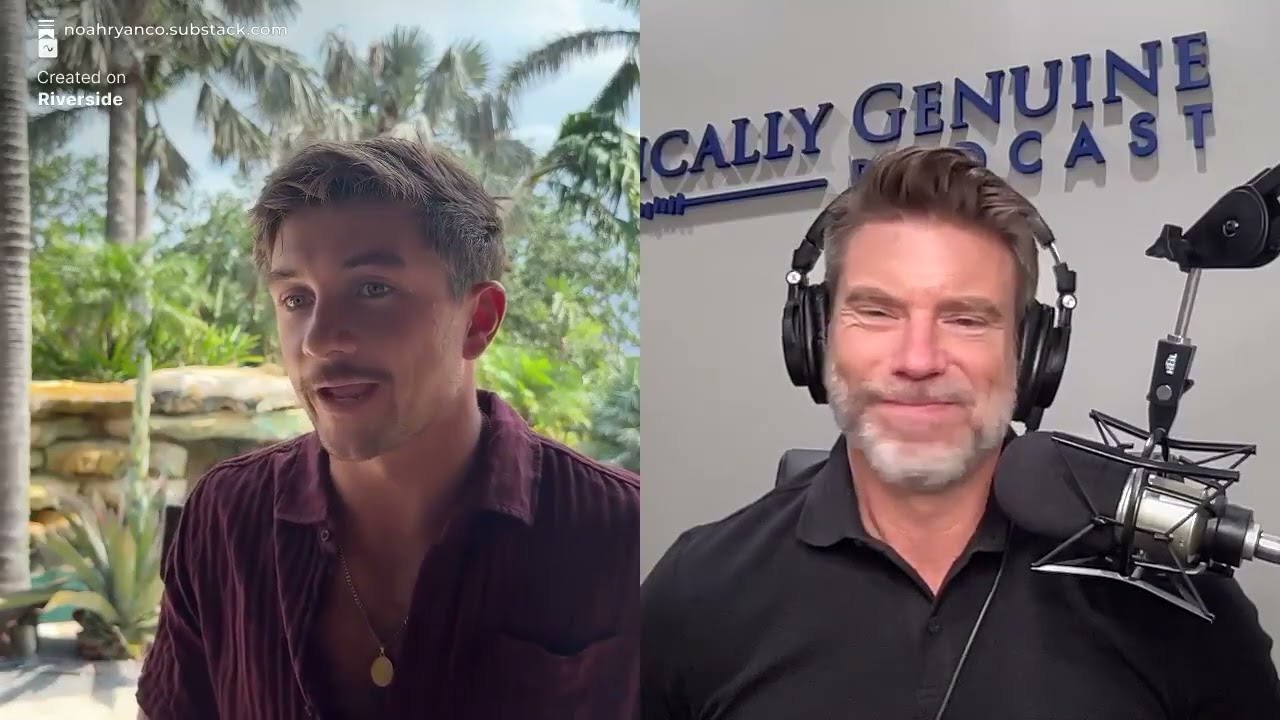
Pro-Androgen Protocol with Lucas Aoun

In this interview, host Ryan Ayala (Speaker A) and biohacker Lucas Aoun discuss a comprehensive pro‑androgen lifestyle aimed at optimizing testosterone, energy, and overall male performance. They share personal experiments with stacks that combine GABAergic compounds (glycine, magnesium glycinate, taurine, apigenin, lemon balm) and nicotine to achieve heightened focus and creative flow. Phenylalanine and L‑tyrosine are highlighted as underrated amino acids that support mood and cognition, with a tongue‑in‑cheek nod to Diet Coke. The conversation expands to core principles of a pro‑androgenic regimen: establishing nutritional baselines (vitamin B1/Thiamax, benfotiamine, dihydroberberine, metformin, PHGG fiber, blueberries, hummus/olives), managing glucose through post‑meal walks and glucose‑dependent amino acids, and enhancing androgen receptor sensitivity via L‑carnitine and specific training modalities. They also cover neurosteroid support (allopregnanolone, palmitoyl ethylamide), testicular cooling to protect testosterone, and cautions about oxidized supplements and 5‑alpha reductase inhibitors. Lucas promotes his YouTube channel “Boost Your Biology” for deeper content. The interview emphasizes that when androgen levels are optimized, daily life feels “easy mode” with reduced anxiety, increased confidence, and better adaptability.
Chapters
Gentlemen, what's going on? Welcome back. We are here with a good friend of mine who, if you follow me, you should probably know already. Lucas Owen. Lucas, man, welcome.
No, great to be back, man. Always fun to reconnect. And I'm keeping an eye out on your Twitter posts and your stories, and you constantly make me laugh, man. So love your stuff.
Not my intention. I'm trying to be educational here, but I will take it. So, Lucas, I know you very well. I've been following you since before I even posted anything on the internet. Your content was interesting to me. I think it was kind of like the introduction to the more like schizo lunatic biohacker, really taking things in your own hands. I mean, you are the ice over balls guy. I'm really excited to have this conversation. But, you know, why don't you give a little bit of background for people that may not know you? Who are you? How did you get to where you are now? And, you know, what is your area of expertise?
Yeah, of course, of course. Well, before I answer that, I'll, um, for those listening in or watching the video, I'm wearing nasal, a nasal strip here. So if you think that I've been injured by some crazy biohack, no, that's not the case. I've, uh, I wasn't playing with a sword in my backyard or anything like that. I was, uh, just using this. But yeah, um, so I mean, so I'm a qualified naturopath. I studied 4 years, you know, in Melbourne It's a pretty— one of the most highly regarded universities here to study that degree. Before I studied that, I was actually doing exercise science. I was, you know, very much into sports science. I played professional soccer myself, so I was very interested in like anything that I could do, take, or like learn about that could improve performance in the soccer field. I was into it, and I was actually experimenting with supplements back then when I was like 17, 16, 17 years of age. Because my dad owned a pharmacy. So my dad was a pharmacist, so I had access to all the vitamins possible. So I had unlimited supply of any antibiotic, any vitamin. My dad would just get it for me and grab it for me and says, here you go, play around with this. So I was pretty fortunate in that regard. I was very lucky and also unlucky as well because I foolishly was taking oxidized fish oil when I was younger without without even, without, without realizing until I stopped taking it. I was like, oh, the brain fog has disappeared after stopping fish oil supplements. And I'm like, okay, what's going on here? And then realized it was actually— it was like out of the fridge and I smelt it and it smelt like terrible, smelted, it smelled rancid. Anyway, long story short, from there I got involved in Australia's first nootropic startup. So I just fell in love with— I was really obsessed with nootropics and I still am, but that sort of, you know, escalated into understanding hormones and realizing that if I want to be the most optimal alpha male possible, I have to maximize DHT, allopregnenolone, testosterone, lower that prolactin, increase thyroid hormones, and just live that, you know, highly androgenic lifestyle.
Yeah, man, that's so interesting. We have such similar backgrounds, almost to a tee, just on different hemispheres. You know, I was very much in a similar boat. My parents were in medicine as well. So, you know, there was a certain point where I kind of just took it in my own hands, started writing scripts. That's super interesting. And also with the oxidized fish oil, I was probably in the same boat. I mean, I was ripping fish oil back in the day because, like, if you were into bodybuilding, I was into bodybuilding. Like, fish oil, omega-3s, that's the one supplement you need other than creatine for muscle growth. What do you think were some of the detrimental impacts that that may have had, you know, acutely and then potentially more long-term?
Well, acutely, having looked back at like understanding mechanism of action, what it's actually doing in the brain, I mean, I think one of the most obvious side effects associated with taking a rancid fish oil or, or for example, you know, exposing your body to oxidized fish oil is that it's just actually going to do the opposite of what intended purpose is, which is it will actually create a pro-inflammatory state in the brain. And one thing that I noticed when I was supplementing with the fish oil was that I would get the typical symptoms associated with like high glutamate. So I think you've probably experimented with glutamate-based stuff in the past, or I think you've— did you megadose MSG, or was that someone else?
No, I didn't make it as MSG, but sometimes I drink a bunch of Diet Cokes to to see what happens. Yeah.
Um, so yeah, basically the, the symptoms that I'd get from like oxidized fish oil capsules was like similar to what you would see with like high MSG or high glutamate symptoms, which is like ironically I was getting like overthinking, feeling tension, like particularly socializing. My verbal fluency was a sh— was terrible back then. Like, I just couldn't articulate myself clearly at all. Um, so you can imagine trying to create a business, you know, start a podcasting business with crappy verbal fluency is like terrible. Um, and then one day I just happened to like come across some Reddit thread, some on the Reddit r/nootropics thread. It was like, it was like caution with your fish oil supplements. And I was like, I clicked on the thread, the guy made a post about like rancid fish oil and what can happen with most supplements. And then from that, after reading that thread, I'm like, you know what, I'm going to stop taking it and let's see what happens. And then like 3, 4 days later, I actually felt less brain fog. So I was like, got to stop this.
That's a quick turnaround. Yeah, man. I— the fish oil that I was taking when I was in, in Oaxaca, man, I bought it from like the local grocery store. It was sitting in a swelteringly hot Mexican grocery store. For, for God knows how long. Who knows where it came from. That probably took at least a few years off my life. But that's interesting, you know, the MSG experimentation is super interesting to me. I'm not a, I'm not a big glutamate fan. I think I get enough glutamate activity from nicotine. Um, but you know, what is like— could you explain for people that may not know what a high glutamate state feels like?
Yeah, yeah. So glutamate, um, being the predominant excitatory neurotransmitter in the brain. It's competing with GABA. So GABA is like alcohol, puts the handbrakes on anxiety, helps with, um, verbal fluency and social lubrication. GABA is like the inhibitory. So you've got GABA as inhibitory and glutamate as excitatory. Okay, and so we've got those two different neurotransmitters that are constantly in flux and in balance with each other. When an individual has glutamate levels that are too high, what happens is they start displaying symptoms of paranoia, anxiety, tension, worry, stress, feeling a little bit on edge. And also you can get symptoms associated with neurotoxicity because we know that too much glutamate can cause neurotoxicity, which is why I'm a freaking massive fan of taurine. Because taurine— of course taurine is going to come up in this discussion.
I've got it right here, the only thing on my piece of paper.
It's Yeah, they're, they're the two. Just do those two things and you'll become the alpha male you've always dreamt of becoming.
That is the pro-androgen lifestyle.
Yeah. Um, but in summary, looking at taurine and, and its association with glutamate and GABA is that it's actually going to block the conversion of GABA into glutamate, and it's also going to, you know, minimize excessive glutamate signaling in the brain and promote more of that GABA shunt pathway. So it's a win-win. And that's why a lot of guys, I'm sure, in your audience probably supplement with magnesium, some sort of magnesium, or they probably use a topical spray. I, I personally don't take a magnesium because it was another thing that I learned after doing a Dutch test, you know, the, um, yep, comprehensive hormonal assessment is that my cortisol levels were so low. They were like— metabolized cortisol was like super low at the time when my testosterone was super high. So most guys know about the inverse relationship between cortisol and testosterone. I was, I was deliberately lowering cortisol as much as I could, and I was trying to maximize testosterone as high as I possibly could. And it did work. You mean you've seen my my score, it was like 988 nanograms per deciliter.
Yeah.
Um, but yeah, I'd say like that glutamate to GABA ratio, if a guy is listening to this podcast who has like underlying social anxiety or social tension or just feeling like they're constantly ruminating or overthinking, glutamate excess might be a potential target.
Yeah, interesting. I think that's really important that people go through the experiment of inducing a high glutamate state and then inducing a high GABA state and be able to identify and really make a mental note of what both of those feel like. Because then you can be in any present moment, you're like, man, my glutamate to GABA ratio is way off. Let me go do something that is GABAergic. Or maybe I need some more stimulus. Let me do something that's a little bit glutamergic, glutaminergic. But anyway, glutamatergic. That's it. Not glutamine. Yeah, that's super interesting. You know, I want to have an entire section to talk about taurine. I love taurine. You love taurine. Some people seem to have an adverse reaction to taurine, maybe from GABA rebound, but there's other hypotheses that I want to get into. But let's go back to what you were talking about of, you know, naturally increasing your testosterone to 988, which is like probably the highest really you can get in a natty reference range. What, like, what was the starting point for that? How I guess, how sustainable was that? And looking back on it, was it worth it? Was there anything adverse that happened that you didn't necessarily expect?
Yeah, so when I was like looking into what I can do to maximize testosterone as high as possible, I mean, I knew about the importance of certain dietary choices. Obviously, you have to predominantly focus on saturated fats and monounsaturated fats. That's a no-brainer. Hopefully guys understand that. So that's like heaps of beef, you know, chicken, like eggs, different like good high-quality meats and things, and a lot of organ meats at the time. So I was smashing a lot of like chicken hearts, like liver, beef liver. Um, never tried the testicle though. I, I still haven't tried the testicle. Um, but in terms of some of the other foods, like, they were just my predominant meat, protein, fat sources. And then if we're looking at like the carbohydrate sources, man, I am a really big advocate for a high carbohydrate diet as well. Like, I know most people will be like, oh, you can't combine a high saturated fat diet with a lot of sugar. Like, you're just gonna— it's a recipe for disaster. But I say to people, well, I mean, look, I've seen my blood work. I do my blood work twice a year. My testosterone's still really freaking high, and I feel like I'm not going to be prone to burnout because I'm not— because I'm pushing the boundaries physically. Like, I know you are. You train— you probably train every day of the week as well, um, or like probably like 5 days a week. Um, in a sense, I'd say like, well, if I want to keep that going for not the next year, but I mean for the next like 10 years, I want to make sure that I'm suppressing cortisol with the carbohydrate intake. And I'm fueling the thyroid with the carbohydrate intake. Because if I don't fuel the thyroid and suppress the cortisol with that glucose oxidation and supporting that glucose pathway, then I'm going to run the risk of, like, number one, lowering testosterone, number two, burning out, um, and number three, having hypothyroid symptoms such as feeling cold all the time, constipation, low libido, low free testosterone. Um, but yeah, in terms of that, like, all of the different biohacks that move the needle— training legs, like heavy squatting, deadlifting, twice a week, for sure would have had a very positive effect. Sprint training would have absolutely had a, a very positive effect. And then icing my balls would have to be I really pardon strategy.
Man, that is the ideal stack. Yeah, it's super interesting. I'm kind of in that same boat. You know, I'm a little bit concerned about maxing out saturated fats and then just spamming sugar. But, you know, I've been doing it recently because I consider myself a bad fat metabolizer. When I eat a lot of fat, I typically tend to get fat, but I can literally have, you know, I think 2 days ago I had 1,200 calories worth of dates in one day aside from the starches that I was consuming and all the orange juice. And, you know, I've just been getting leaner and leaner while maintaining incredible muscle mass, you know, glycogen stores always being full. So I just look large and pumped and just so explosive, like training twice a day, unlimited energy. But, um, you know, the big thing that I've been doing, I'm curious if you see merit in it as well, is I typically segment my fructose and overall sugar consumption and my fat consumption. And when I am eating fats, I am hyper strict about what type of fats I consume. I am maxing out the nutrient to calorie ratio. There's no room in my diet for polyunsaturated fatty acids unless they're coming from fish themselves. MUFAs sometimes, because the avocado here is— or avocados here are local and delicious, but primarily saturated fats in the form of coconut oil and, you know, red meat. What are your thoughts on that, on segmenting and partitioning the carbohydrates in your diet and the fats in your diet? You know, maybe not entirely, but like, would you— yeah, 17,000 calories worth of dates and then have, you know, an entire avocado on the side of that?
Yeah, that's a— it's a good point. I mean, I guess it depends upon a person's individual metabolism. So for example, a guy like yourself, you know, young, fit, athletic performance, like training very intensely, can probably get away without its metabolic burden that might happen if you're combining, you know, most average Americans, I'd say probably like they would be smashing a lot of saturated fat combined with the refined sugars, the processed, like high fructose corn syrup and different types of sugars that are actually going to lead to inflammation, insulin resistance, and things of that nature. Whether or not I've compared the effects subjectively, if I combine, let's say, let's say I've had like 500 grams of ground beef and then I've, then I combine that with like, let's say, some fruit after that, like blueberries or like you said, orange juice or pomegranate juice or dates or honey. I feel good. Like, I genuinely, I genuinely feel like I feel, I feel good. Energetic-wise. I feel my libido goes up for sure when I eat that sort of diet. Like, I've— I'll notice that I don't feel sexually drained after ejaculation. So that's like a, a big bonus. Um, no guy wants to feel sexually exhausted when they're having sex frequently because like otherwise, you know, you're missing out on all the benefits associated with like actual connection with your partner. Um, you know, the oxytocin pathway, which I'm convinced has some pretty phenomenal effects in, in the brain in terms of, um, like just emotional regulation and, and, and, uh, understanding other people's emotions and things of that nature. Yeah, but I'd say, yeah, experimenting with different carbohydrate sources. I mean, I'm still a big fan of like white rice Like, I just, I don't respond well to starchy carbs. I think I've mentioned before, I'm not a good responder to like potatoes and even sweet potatoes because of the starch content. But I am more of a fan of like, you know, white rice, sourdough, organic sourdough bread, which I freaking love. I mean, who doesn't like bread?
Olives. Olives.
Yeah, yeah, yeah. So yeah, that's, that's pretty much what I have, what I do now.
Interesting. Were you ever low carb at any point? I feel like in the past, you know, I've seen you do a lot of stuff in terms of, of kind of like modulating glucose spikes with the use of berberine. Or I remember like you were on a flight or something and you're doing calf raises in the aisle. Like, like a lot of people, especially in the pro metabolic space, they just spam carbohydrates. They have no concern about, blood sugar regulation or anything like that. And some people I've seen, you know, my friend Anabology, he's done really high sugar experiments with a continuous glucose monitor and he's had incredibly stable blood glucose. Like what? It sounds like you do have some mitigation tactics. What— how do you conceptualize the role of blood sugar and insulin spikes?
All right. So it's, it's important that we bring up this, this topic, which is like I do leverage a lot of GDAs, so glucose disposal agents, and I'm very strategic about when I'll deploy them into my regime or my eating windows. So dihydroberberine, which is the advanced form of berberine, 5 times more bioavailable than berberine itself. I'm convinced that works on par as well as metformin, um, in terms of its blood sugar stabilizing effects. You see bodybuilders that take metformin even when they're on cycle, when they're on TRT, and let's say they go on like a dirty bulk, metformin will, will keep them pretty lean during that like dirty bulk period. And that's because it's improving insulin sensitivity. There have been occasions where I've combined dihydroberberine, metformin, brewer's yeast is another like GDA, and I'd combine all of them together with a, with a dirty meal. Like, let's say I've had like I don't know, a dirty meal for me is like, is like, yeah, it's like, uh, lots of like probably some like milk chocolate. It's like 50 to 60% milk chocolate. I just love that. I respond, feel great after eating it. Um, but for example, like the dihydroberberine combined with like metformin and doing I mean, man, biggest— the biggest GDA you could possibly get is going for a walk after meals. Like, by far the most effective strategy. And I've got like a treadmill desk. I think you've seen videos of my setup. Like, it's just— yeah, it's a— it's an awesome, awesome setup for me. You know, even before this podcast, like, I'm still fasting and I've already hit like 12,000 steps on the treadmill whilst doing a a group coaching call. So like I'm really pushing the boundaries in terms of physical activity. But definitely think combining GDAs, like I'm also thinking about playing around with— I don't know if you've seen Glucose Goddess.
Yeah, she just came out with that new product.
Yeah, the Anti-Spike. It's a great name. I love the name for the product.
Branding, you know. Yeah. And enabling, like, yeah, eat Whatever you want, take my product and you'll feel great. Great. Sounds good. Got a good marketing team. Yeah.
No, I think she's going to do— I sent her a message yesterday congratulating her on the formula and stuff, and I suggested to her, I'm like, hey, would you— you should really consider adding in dihydroberberine into your formula because it's only 100 milligrams. Like, you think about the capsule size, her serving size is 2 caps. You throw in some dihydroberberine in there, it's not going to take up much space in the capsule. And in terms of the other ingredients, I think she has another ingredient that I'm surprised I didn't really know much about was mulberry leaf extract. Have you, have you ever used that or eaten mulberries?
I haven't, but I've dug into GDA quite a bit. I've seen mulberry used a lot, but I don't like— like you were saying, I just go on walks and put my feet in the ground and take a lot of B1.
Oh yeah, yeah, I forgot to mention, um, when I first got into Ray Peat, like that website in the forum, like when I first learned about vitamin B1, of course being, uh, the vitamin specialist in my dad's pharmacy, I could pretty easily just grab some vitamin B1 off the shelf. And I literally just— I'll never forget the day that I first tried vitamin B1 in like a pretty big dose. I think it was like 400 mg of thiamine HCL, which is a pretty big dosage. Um, when I first took it, man, it just completely removed brain fog. I had so much more energy. I felt like I, I was just— it just removed so much clutter and noise in my brain. And I was like, what the hell is this doing? Like, I feel so good on vitamin B1. It's like literally the most basic of all supplements, you know?
Yeah, it is crazy. It's, it's honestly, you know, what, what's the guy's name? Oliver, the— he's like Elliot Overton. Elliot Overton. That's right. Oliver Elliott. Yeah. I mean, like some of the stuff that he's put out in terms of, you know, B1 monotherapy, megadose B1 therapy, it seems very therapeutic. And especially, you know, for people like us eating a lot of carbohydrates and protein, that B1 is essential. We're not getting enough B1 in our diet. I don't care how much brewer's yeast you eat, you know, you're not getting enough in your diet to kind of metabolize all those carbohydrates. So I found it absolutely incredible. I mean, I just, I love B vitamins in general. Just supplementing B vitamins has been such a godsend for me.
And also as part of that is, um, the effects that high-dose vitamin B1 can have on yeah, that glucose stability and maximizing that glucose pathway because it's a— is it a— is it— I'm pretty sure it's a rate-limiting factor for pyruvate dehydrogenase. So that actually facilitates glucose oxidation. And it's out of all the different supplements I've got, you know, I've got my older brother, he's like a couple of years older than me. He's tried a lot of the supplements that I've recommended over the years. And the only one that he's ever really responded really, really well to was Thiamax. That vitamin B1. Like he said, that was the only supplement that really just massively increased his energy, removed brain fog. Um, and there's some pretty interesting data coming out on, you know, high-dose vitamin B1 against Parkinson's. And, um, yeah, it's, it's a basic one. It's a one that I think a lot of guys can potentially just experiment with without it causing huge, like, dysfunctional side effects elsewhere as well.
Yeah, I feel that way with that as well. Obviously, you know, tapering up, there is some concern about balancing the B vitamins, but if you're taking a solid methylated B complex and then start experimenting with some of the different forms of B1, whether it's Thiamax, whether it's— was it BTFD? I really like benfotiamine, you know, the fat-soluble form. Yeah, but that one's really incredible. So, you know, you said you don't respond well to potatoes. Some people don't. Um, you said you respond well to starch. What about fructose? You know, fructose is something that I, I don't know why, intuitively speaking, I love it. It works really well for me. You know, there is some, like, the notion that fructose causes non-alcoholic fatty liver disease doesn't really check out to me unless the liver is already burdened. You know, it's no different than, like, the vitamin A toxicity thing. It's like, yeah, well, like, if you're putting a bunch of shit into a liver that doesn't work, it's going to get overloaded. Do you think there's any concern there? Do you differentiate or have any caution around high fructose consumption?
Look, I've been— I'd say in terms of my level of knowledge around the fructose debate, I think what it really comes down to is we need to determine whether or not we're talking about fruit fructose or high fructose corn syrup or even some other fructose derivatives. If we look at, for example, honey, honey does contain a balance between glucose and fructose and then some other types of sugars. And we've seen studies suggesting that additional honey consumption, so adding in honey as part of a, a dietary protocol, will not perturb or disrupt glucose balance significantly. So it won't lead to elevated, you know, fasting levels of blood sugar. It won't, you know, disrupt the HbA1c score, and it should also have a normalizing effect on that insulin secretion. Debate whether or not, you know, fructose is, is bad for us— I mean, I'm pretty sure, was it, um, there was a guy on Huberman's podcast, was it Robert Lustig or something? He, um, featured on his podcast. He spoke about it in depth. But I look at it like this. Fruit is not just fructose. Fruit is fiber and polyphenols and flavonoids and all of these chemicals that are found in the skin, the rind, the peel, the pulp, and the, the other, other parts of the fruit. These have very powerful effects on the gut microbiome. And they can increase Akkermansia growth, which is a beneficial bacteria in the gut. And they can also improve whole body insulin sensitivity, um, by working on GLUT4 receptors and things of that nature. So if you're looking at like a fruit, you know, versus like pure— let's say an apple versus like pure concentrated apple juice— of course I'd rather go for the apple itself, the whole apple, because of the, you know, the skin, you're going to get all the other benefits associated with that.
Yeah, that's interesting. I see that as a really common argument. And then, you know, there's this other crowd, especially in the bioenergetic space, where they're like, doesn't matter, you know, give me that fruit juice, give me that Tropicana, give me it all. Even though structurally speaking, it's pretty identical to high fructose corn syrup. An argument I've seen there by the bioenergetics crowd is high fructose corn syrup contains a lot of starch that goes unaccounted for. So yeah, maybe there's 30 grams of carbohydrates in this corn syrup, but there's another, you know, 20 grams of unaccounted for starch. And that's where a lot of the problems come in. I don't know if I necessarily believe that. I, you know, it's potential that that is a contributor. But yeah, I mean, I think that makes the most sense in terms of just eating the whole fruit. I will say I do consume a lot of orange juice, but I take it with taurine, right, for that, for that liver, for that glycogen uptake, but we're saving taurine. We're saving taurine until the end. I want to dive deep into that. Okay. So that's really interesting. What have been some other important dietary inclusions that you found to really move the needle or just work well for you? You know, for me it's oysters. I feel like the king of the world. Anytime I consume oysters, I probably eat around 60 oysters a week as a conservative estimate. My boy Juan hooks me up every day. So is there anything for you that you've found to really move the needle both in your situation and maybe in some of your clients or other people as well?
Yeah. So that's really interesting with, with the oysters in terms of foods that have actually a noticeable effect on my biology and, and general health and well-being and particularly mental, mental clarity and memory is actually wild blueberries. Like I just freaking love them, man. Like, I just feel— I really noticed the nootropic effect. Like, they are so pronounced in terms of how they affect my brain, and they just make me feel like I'm on a high anandamide bliss mode. So I've just got like anandamide just buzzing in my— you know, I'm buzzing on anandamide. And that's because, um, blueberries contain that pterostilbene, P-T-E-R- terastilbene, and that is a fatty acid amide, uh, hydrogen— some sort of FAAH inhibitor which minimizes the breakdown of anandamide in the brain. So helps with like— it would potentiate CBD and CBG or THC. I don't use THC, kind of. I don't use any really cannabis products at all. I've used CBG in the past which just made me super ravenous hungry and, um, had anti-inflammatory effects, like it reduced pain and stuff like that. But, um, yeah, definitely I'd say like blueberries, you know, a whole punnet, it's usually about— it's probably about the equivalent of around $7 for one punnet. It's like 200 grams. I think that's— it's standard, like it's not, it's not a cheap fruit, but, um, you do notice the benefits in terms of the mental clarity. And, and I, I really do feel good when I eat wild blueberries.
I'm with you on that one. I've been having a blueberry smoothie every morning. And, you know, like you said, uh, the, like, anandamide breakdown inhibition, the anthocyanins, it really, in my opinion, is the one true nootropic superfood. I think there's certain true superfoods. Blueberries are definitely one of them. They're very evolutionary accurate, not that that really matters, But, um, yeah, I think everyone else— everyone would benefit from consuming a lot more blueberries. Anything else? I feel like I've seen you talk about a few other ones. Hummus, I know, is probably on top of that list. Um, and olives on the sourdough.
Oh geez. Well, this is, um, I was funny, I was saying to my girlfriend yesterday, she's like— I was trying to teach her how, like, I like to stock the fridge. And I'm like, I like to have at least 4 different types of hummus in my fridge at any one point because I like number 1, it works with anything. Have you seen Don't Mess with the Zohan?
Yeah, that's my favorite movie. I love that movie.
So funny, man. Like just how he uses hummus to like brush his teeth and all that sort of stuff. I don't do that for the record. I don't use hummus as sunscreen either. Like I do not do that, but I do love using it as like a— it's a, you know, some people say, oh, it's not that healthy. But if you get ones that's like made out of olive oil, not the canola oil, because there's a lot of companies that put canola oil in the hummus.
Yes.
Yeah. Not a fan. But man, you put that on top of sourdough bread with the olives in the bread and dude, it is. And then you put like minced beef, like beef mince over the top. It tastes incredible. Like, it's a game changer.
Sounds incredible. Have you dug into any justification? Like, when I really like a food, I'll just find ways to gaslight myself into justifying it. Are there any, like, esoteric benefits to elevated chickpea consumption?
Oh geez, I think we're inventing a new diet here, Ryan. It's going to be, it's going to be, um, the chickpea diet. The chickpea diet. Because at one stage there was the, um, What was it, the croissant, the croissant diet? Do you remember that? Yeah. Yeah. So look, chickpea consumption, I mean, from a biological benefit standpoint, I mean, there would have to be some nutritional benefits to some of the fibers. I mean, it probably modulates the gut microbiome, but I mean, it's a staple food in the Middle Eastern cultures and they love eating like chickpeas, big part of their dishes. If anything, it's going to help to turn a high GI food into a low GI food. So like, you know, bread, if you— it's not really the best argument because the hummus would be squashed. The chickpeas are actually compressed and down into like a paste. But if you're having chickpeas alongside rice and you mix the chickpeas in with the rice, not only you adding more fiber to the rice, so you're lowering the GI rating of the rice, but second to that is you're increasing the fiber intake of the whole meal itself. Um, and you see debates around whether or not we actually need fiber or not, but in my opinion, when I've gone strictly no fiber, my stools are not as good. Like, my poops are just not Amazing. But if we look at like adding in fiber, like my poops become like, you know, you get those ghost wipes and it's just amazing.
Yeah, everyone shies away from the stool conversation, but stool quality and motility is one of the best bioindicators of overall health. Like really everyone listening to this should be monitoring their stools throughout the day. Are they frequent? Are you going in the morning? Are they of decent quality? If not, it might do— it like might be time to start doing some digging.
Yeah, yeah, definitely, definitely. Well, I mean, as a naturopath, I mean, I spent 4 years studying this degree, and I think we spoke about stools in at least every single one of the classes, no matter what the subject was. Like, it always came up, and every single lecturer would say, like, make sure your clients have perfect quality stool, because if they don't, there's something wrong. And all disease begins in the gut, as you know, that's the quote. So yeah, I definitely believe in that. And I've been getting into different types of fibers, and I've been playing around with, um, PHGG. Have you heard about partially hydrolyzed guar gum? This will be your next experiment, Noah. Um, so partially hydrolyzed guar gum is a type of fiber from guar gum, but it's 100— I'm pretty sure it's about 99% water soluble. So if you add this fiber to like water, if you mix it around, you'll drink it and you'll be like, you won't even notice that you're having fiber. So if you put that PHGG on top of white rice, so let's say you add that, let's say you have like 2 teaspoons of, of this fiber on top of the white rice, you would be lowering the GI of that rice and you would not even notice it. You would not even— you can't even tell you're having extra fiber. So that's one to play around with if you, if you want to test that out.
Interesting. Yeah, because guar gum really, it gets under a lot of crosshairs. People don't like it. But this hard hydrolysis, does it make it— I mean, I think the issue that people have behind guar gum is the potential gut irritant effects. I assume you don't get any of that from this hydrolyzed form?
Not, not noticeable. I mean, if you look at the studies on both constipation and diarrhea, like, it seems to have a normalizing effect on both conditions. So it's not going to clog you up or it's not going to speed up transit time. So I doubt it's causing— if, if anything, it's going to lower endotoxin. I've seen studies suggesting that PHGG can actually decrease endotoxin and increase the growth of bifidobacteria. So it's a, it's a win-win really.
Interesting. I will check that out. I doubt I can get it down here, but when I go back to the States I'll try to acquire some. Moving on, um, on the topic of androgens and androgen function, uh, something important to talk about anytime you mention testosterone or any of these different androgens is androgen receptor sensitivity, right? The importance of having actual androgen receptor function and binding to actually get the effects of these androgens that you're maxing. Do you think that that is something that's worth focusing on? Is it something that's worth trying to move the needle Or do you think that those are relatively set in stone unless you become enhanced?
Yeah, it's a good— that's a great question. I mean, in terms of measurability, whether or not we even have the ability to measure androgen receptor sensitivity, it's like 99.9% of guys will never know their androgen sensitivity. But I do think it does play a crucial role in the reason why some guys require higher levels of testosterone in order to relieve symptoms. So you hear about guys that say, I'm sitting at 400 nanograms per deciliter of testosterone, but I still have good libido, I still have good energy, I still have good confidence, and I feel good overall. So I'm saying in these individuals, maybe they have better androgen receptor binding and they have less, I don't know, like BPA or xenoestrogens that are blocking the androgen receptor and so that they can get that physiological response that they're— that we're supposed to get from testosterone. But then there's a whole other side of the, the argument, which is those that are enhanced, um, those that go on testosterone, I mean, they're going to have differing levels of that androgen receptor sensitivity and receptor density. And, you know, one of the most potent modalities or therapies to upregulate those receptors is by taking injectable L-carnitine or mega-dosing carnitine. So yeah, big, big fan of that.
That's right. Yeah, we love L-carnitine over here. I found incredible— I haven't used injectable yet because I think the second that you start using injectable L-carnitine, that's like the gateway drug to SARMs. You know, I'm making an order of L-carnitine injectable. I might as well add some Anavar to that. But I've personally found incredible outcomes with L-carnitine. I'm a hyper-responder. But I, you know, I'm hyperresponsive to a lot of things and maybe that comes down to an AR sensitivity thing. It does seem to work though. You know, that combined with certain training modalities, we know that drop sets, like out of the literature, there hasn't been really any like super big needle movers, but the biggest one seems to be training to failure and then doing a drop set. Just that high intensity training. That in my opinion is a match made in heaven for androgen receptor sensitivity.
Also, Also, as part of that, um, Noah's, uh, you could do the Sam Sulek style partial reps. Have you seen him do those?
I've been doing those.
Yeah, I'm a big fan of those, like, particularly with the, um, the top third of the movement of a chin-up or, or like a really heavy lat pulldown. I think I was like lat pulling, lat pulling like 95 kilos the other day, just the partial, um, top third of the movement, and you get such good stretch of the muscle. And there's— I think Jeff Nippard did a video about long length partials having equally as good effects in terms of hypertrophy as like full range of motion.
Yeah, I've really been interested in that recently because of Sam Sulek primarily. And then I've seen Jeff post about it and then someone else posted about the anabolic effects of full length stretching. And I do a lot of mobility stuff. I love stretching. When I'm doing, you know, chin-ups and I'm like staying in that extended range, I'm literally just trying to like push with all my might to do that. I found some really incredible growth there. So that's super interesting to me, especially in the shoulders, the shoulders where there's already a lot of androgen receptor density, you know, that seems to work really well with the partials. So speaking of androgen receptors, we know that androgen receptors aren't just in the muscle cells, right? They're also in the brain. There's neural androgen receptors. And one compound that seems to upregulate those is tribulus. Have you considered the role that androgen receptor expression has in your brain? We know that, you know, with some of these compounds that we love, like DHT, the stronger androgenic metabolite, the primary effect are the cognitive benefits. Is androgen receptor expression in the brain something that you put merit or focus into?
Definitely, yes. I mean, there's, there's going to be a role in terms of, um, you know, the influence of these androgens in terms of neural function and brain function. I mean, the most obvious one is, you know, the allopregnenolone response there. Like, a lot of men that I know who have been on my most hated drugs on the planet, finasteride and 5-alpha reductase inhibitors, um, you know, these medications, they can lower levels of this important neurosteroid allopregnenolone, which comes from DHT, and and testosterone. So one strategy that I was playing around with, which also Ryan Ayala spoke about, was high-dose PEA, palmitoyl ethylamide, which is not the, not the PEA that's the stimulant, not the body's amphetamine. I mean, I mean the other PEA. Have you heard of that one? The anti-inflammatory one?
Maybe. I don't know. Those two are convoluted for me.
It's called— it's this really, really weird name. It's palmitoyl ethylamide, which is it's actually a cannabinoid mimetic. So it actually works on that pathway, but it actually stimulates the production of allopregnenolone in the brain. And you will definitely notice that when you take it in pretty high dosages. And I was— I think I'm due to get back on it because I've been off it now for like 3 weeks, but I was on it for about 2 months straight. Um, and I did feel the anxiolytic effects, really potent anti-anxiety effects. You know, just being calmer and like less stress reactive. But palmitoyl ethylamide can increase allopregnenolone levels in the, in the brain. And a lot of these PFS sufferers or people that have used finasteride or, or even saw palmetto or other herbal DHT blockers like lion's mane— not a fan— can you know, regain some benefits from PEA.
Yeah, interesting. I got to look into that. Let's, uh, that's actually something I have on the list is let's talk about some of these anti-androgenic herbs, the disaster that is the widespread use of 5-alpha reductase inhibitors and other compounds that really should raise a red flag for men in particular. We know that finasteride and dutasteride, I mean, I run smear campaigns on those weekly on Twitter they are quite literally castrating men, right? They're completely inhibiting 5-alpha reductase expression. That enzyme that not only converts testosterone into DHT, but it also converts your neurosteroids, right? Pregnenolone into allopregnenolone is run by one of the 5-alpha reductase enzymes. What are some of these other compounds that you think should be used with extreme caution? You mentioned saw palmetto, you mentioned lion's mane, which we should really get into, and then You know, also reishi. I think reishi gets way too much of a pass. Yeah, in reality it is way more potent of an effect. 5-alpha reductase enhancement.
Man, I mean, if you look at the number of clients that I've consulted over the years who have reported side effects of reishi mushroom, but they don't even like— they just haven't— a lot of guys haven't made the connection that it's actually reishi mushroom that's like fucking up their libido or just making them feel like terrible. I've seen guys that have reported like shrinkage of their actual penis, like not getting a full, you know, like a 10 out of 10 erection where it's actually like proper full blood flow. Like you got the brain connection, you got the arousal in the brain, like it has to be the whole cascade. But guys that are using reishi, they're using it for sleep. Now, obviously it's going to be awesome for sleep because it's like the most powerful it's a really good Shen tonic, so it helps with like the spiritual awakening. And I, when I was using, when I stupidly used reishi when I was like 19, I didn't, I didn't really understand the DHT blocking effects, but I remember having so many like déjà vu moments when I was taking reishi. Like I'd have so many like mini like spiritual awakening moments and just like feeling connected in different ways to like the world. So it could be— I wouldn't say it's psychedelic, but it probably has some effect on the serotonin 2A receptor, subconscious thoughts and things like that. But reishi mushroom, lion's mane, ashwagandha, saw palmetto, green tea extract, um, licorice root, white peony— like, these are herbs that men should be staying well away from because they either number one, lower DHT, number two, have anti-androgenic effects, or number three, they directly minimize DHT production in the body. Um, yeah, men, men should be trying to stay away from these ones because they're, they're notorious for causing side effects, which for most guys that I work with, maintaining peak sexual performance is priority for them. Like, they want to have that level of vitality and feel— like, actually feel the benefits of having higher testosterone and DHT. And if they're taking a simple supplement that, like, I don't know, maybe they're using Athletic Greens, and, you know, that might have some, some DHT— I'm pretty sure it has some DHT blockers in there— like, I wouldn't, wouldn't take it.
Like, yeah, I wouldn't either. So you said licorice root, green tea extract, reishi, white peony, adding on to that ashwagandha, saw palmetto, lion's mane, anything else?
The only other one that seems to get some negative effects is NAC, but the NAC and hedonia component is a different pathway. It's not so much related to the androgen side, it's more related to it blocking addictive qualities. And by virtue of modulating the dopamine system, but I actually believe that we need some of that addictive nature in us, particularly when we're trying to form good habits like exercise, or like we're trying to ingrain good habits into our daily life. If we're blocking the reinforcing effects, like the dopaminergic response to these activities, then it's going to be a lot harder to adhere to them. So if you don't get the runners' high let's say you don't get the runner's high because you've taken NAC for detoxification, then wouldn't that make exercising a lot more challenging? And because you're not going to get that rewarding response, you know?
Yeah, I agree. You know, same with BPC-157. NAC and BPC are kind of in this group. L-theanine potentially as well, that do seem to cause anhedonia in some, but it's a different type of anhedonia like the one that we're discussing. I, as someone who has struggled with anhedonia in the past thanks to SSRIs, still utilize BPC and NAC quite a lot, and I found it to be relatively beneficial with minimal side effects. Um, but these should be classified as recovery compounds, right? Compounds that you use when you want to recover, not when you want to, you know, go and do something of substance and ingrain a new habit, right? Like, you wouldn't go take some muscle relaxers and like, like who you are when you're recovering after a workout is a completely different state than when you are performing, right? Like if you say like sprained an ankle and you're recovering, like you're not going to go do sprints. So I think that's an important classification. I think a lot of people who notice anhedonia with those compounds are ones who have had stimulant issues in the past and are just chronically dysregulated. So then when they're having things that are kind of bringing these, you know, reward pathways back to homeostasis, their dopaminergic system back, that's when they notice some of those effects. Going back to this list, I wanted to add one more to this. Licorice root, green tea extract, reishi, lion's mane, white peony. What about black seed oil? We see that black seed oil may seem to have some antiandrogenic effects, but potentially that is outweighed by its incredible myriad of other benefits. Is that something that you tread with caution?
It is another one that I'll use or deploy recommend to guys only during periods of sickness, illness, or recovery from like a virus or something like that, because black seed oil is without a doubt one of the most potent antivirals. It's so good for the immune system. It's very effective in autoimmune conditions. Um, it's extremely potent, you know, hepatoprotective. It even supports thyroid function. But it can induce like a mild serotonergic effect. And there's studies showing that Nigella sativa reduces the turnover of serotonin in the brain. And some people— when I, when I gave it to my mum first, so I actually prescribed it to my mum just for general sleep and mood and stuff like that because I know she doesn't really care about like the dopaminergic effects that like we strive for. So like, do you not want to max out your bench press? Yeah. For my mom, I think she just became more like content and a bit more grounded and like a bit more relaxed in general. Wasn't telling me to like clean up my dishes so often. So that was a—
I got to get my mom to eat some black seed oil. That sounds incredible.
This is mom maxing. Mom maxing.
That's awesome. Yeah, you know, this brings up a really good point, and you mentioned it with the reishi of how it gave you almost like a spiritual zen-like nature. And I heard talked about a really long time ago, and it's always stuck with me, but the looking back into like, let's, let's get a little bit esoteric with this, like the warrior eats a very different diet than the shaman, right? He has different roles. The shaman does not need or want to be extremely androgenic and explosive. And he's not gonna have a high meat diet. He's gonna have a very pure diet that grounds him, that makes him more zen and able to connect with the outside world. And we find those people to be a lot more androgynous, right? I've never seen a jack shaman. A shaman is typically very, for lack of a better term, meek, mild-mannered, not very potential dangerous. So you have to ask yourself at this state, in this mode, which archetype are you pursuing? And make sure that your actions, behaviors, diet, and supplementation align with that. And we kind of lose sight of that because we're trying to look at everything from a biological and clinical lens. But there's a lot of benefit in looking at things from this more energetic lens as well.
Dude, you hit the nail on the head perfectly. I mean, that's a good way of— a good way of looking at it. Like, historically, did they need to be consuming compounds that would make them a bit more spiritually aware or like woke in a sense? Or were they using things like what Genghis Khan would use, which is like cistanche extract and, and other like potent androgenic herbs? Because they know they have to like, you know, populate the half of Asia or whatever, you know, 1%, 1% of Asia or whatever it is. But dude, spot on. I mean, I think, um, like some of these compounds, there's a time and place for getting into that spiritual mode, like monk, monk mode basically, which is like Yeah, like you go on retreats, like maybe a 1 week out of like every 3 or 4 months. You might want to deliberately go into those states so that you can become like introspective and more self-aware and build up that self-awareness state. But I'd say like most guys in the Western world, particularly in US and Australia, like, man, they've got busy jobs. Like they've got they've got like either a family to feed or they've got to like maintain peak energy and motivation. And most of the guys that I work with are literally like CEOs and executives and like they're burning the candle at both ends. So like, would I prescribe them something to go like less alpha, less male, or would I prescribe them something to make them combat and cope better with the demands of being a modern alpha male?
I agree. You know, we have to ask what's being attacked in the modern day and what is the primary deficit. In a lot of men, it's the androgenic component, right? It's the masculine component. It's what's being detracted from us. So maybe like it's good to have pulsing of that experience and that more alignment with the spiritual component, you know, the Zen component. I went through large periods of really focusing on that with the meditation and the compounds and the tea and all that stuff. And yeah, it was great. I learned a lot about myself, but that was not a good way for me to show up and operate in the world. I needed that explosiveness. I needed that androgenic signaling, and then I needed to live that pro-androgen lifestyle as well. And that's something we can get into. But the best way to conceptualize it is to pulse, to pulse, identify what state you need to be in at any present moment and make sure that your actions and behaviors are aligning with that. But moving on to that, you know, let's talk about the pro-androgenic lifestyle. I think we talked about that a while ago and like, oh yeah, like that's, that's, you're the only other person I've heard that to like kind of explain it that way. And it's really important because supplements are great, you know, we love our test boosting supplements and we can talk about some of them here. But, you know, you wouldn't take a nootropic if you weren't going and doing cognitively demanding tasks. Why would you take a testosterone supplement and not go and do testosterone demanding activities?
Yeah, spot on, man. Like, I mean, combining things that, you know, promote androgen synthesis and then aligning the activities you know, alongside that is going to be key. I mean, you know, lifting weights, you know, leading the pack or coming up with new ideas or pioneering something brand new, it's going to require, you know, higher androgen signaling. It's also going to require a lot of self-confidence and self-esteem. If we look at self-esteem and self-confidence, the confidence aspect is probably the number one This is after working with hundreds of men from around the world. They want self-confidence, like they want to feel confident in their job, at work, you know, at work, in the gym, at home, in the bedroom. And that really comes down to having a really optimized hormonal profile, which includes not only a high DHT, high testosterone, but also high thyroid, low prolactin, low cortisol, high GABA, high dopamine, low glutamate. This, this combination of this cocktail of neurotransmitters and hormones is literally what creates a man that feels confident within himself and also like high self-esteem. Like, this is what most men want.
I couldn't agree more. And the common argument is, but our ancestors didn't need these supplements, they were high T to begin with. Yeah, you know, that's great, right? Because a lot of these like activities that require testosterone have a positive feedback loop where they're going to raise testosterone. Competing, winning, talking to women, leading a group, putting yourself in uncomfortable situations. I think the first issue is that the bar is so low. Men can stay inside literally all day, watch porn, play video games, and never have the need to exert themselves. So why would their biology spend a lot of these, you know, energetic points to create testosterone when they don't need it? Second of all, the biological infractions that our ancestors experienced was abysmal compared to what we're experimenting— experiencing now. And that's why my favorite, like, adage is modern problems require modern solutions, right? Utilize these tools to get yourself in a state where high testosterone activities are easier and then build those feedback loops. So then you're already in the game. It's a lot easier to start, like, to continue training jiu-jitsu or fighting once you have the motivation to start in the first place. It's that first step of building those habits which you really need that super physiological support.
100%, man. Yeah, you hit the nail on the head. That's exactly, you know, that, that's exactly what's happening nowadays. And, you know, when I speak to guys that are like, oh, like, do I need to take this supplement? And I'm like, oh, well, dude, like, it's not the same. We're not, we're not living in the same way as we did 100 years ago. We're not exposed, like, back then they didn't— they weren't exposed to the number of pollutants and chemicals and things. So nowadays there's going to be a demand for you to fight back, and the only way to do that is through these biohacks and like these fringe— what they call fringe modalities.
Yeah, I know they make it sound ridiculous when in reality it's, it's doing everything that the modern medicine system in our modern culture— and you know, in my case, like, I was on Accutane, I took SSRIs for a super long time. For all intents and purposes, I should be the weakest, meekest, most measly anti-androgenic man ever. But, uh, you know, that's not the case. You can take it in your own hands. There is hope. I don't care how much of a soy boy you are right now. I don't care if you're skinny fat. Like, you can really change your life around. And I do a lot of these before and after photos to kind of show people that. Now, moving into our favorite thing, I think, the pro-androgenic herbs. I've got my favorites. I know you've got yours. What are some of the most efficacious androgenic herbs that you found to have great effects in yourself and others?
Yeah, first and foremost, I mean, the one that's stood out the most from my practical experimentation, plus what guys have said, is probably cistanche extract. It has to be, you know, cistanche in your pants is the, is the phrase. Um, that, that particular herb there is, you know, honestly one of the most potent androgenic herbs known to man. And also recently I've come across some bulbine natalensis. In particular, bulbine, man, that one there was giving me insane— like, I was getting extremely, like, sore, sore erections. It was that potent.
What is it called? Make sure that I don't accidentally take it.
Uh, bulbine natalensis. Yeah, be careful not to take this. Do, uh, do not take this if you're worried about hard erections.
Okay. All right, that's on my no-go list. Cistanche is great, right? Also for the nerve growth factor. People are taking lion's mane for the BDNF, NGNF, maybe some CTNF as well, but it's antiandrogenic, right? Like, cistanche is doing all of that and it's proandrogenic and it's pro, you know, vasodilatory and blood flow to all of your extremities. So, you know, that one's really incredible. What about tribulus? I love tribulus, dude. I feel so good on tribulus.
Yeah, man, uh, tribulus is, um, I think was it Georgi Dinkov made a post about it increasing DHT by, was it like 30% or something? It's pretty high. Um, I think it was like 25%, but tribulus is like, it just has to be good quality stuff. Like, I've played around with like 3 or 4 different types of tribulus and I only really noticed an effect from one of them. Um, but yeah, in terms of the subjective experience, like, it's You can tell it's a MAOI, like it's a monoamine oxidase inhibitor for sure. You get the— you do get that dopamine, serotonin sort of effect, or like just a mood elevation. Um, but yeah, definitely, I think tribulus is a, is a potent herb as long as it's good quality and it's standardized. I think it's like 40% protodyscin or something like that.
Yeah, yeah, 40% is even, you know, like low. I, I use, uh, Tonics and they have a really good standardization. I take a half dose of that and it makes like I've taken it before going out and I'm just like hyper DHT, like I feel 4 inches taller, chest is out 24/7, really incredible herb exclusively for the cognitive benefits for me. Another one on this list everyone is pretty familiar with, Tongkat Ali. What is your experience been with that one?
Man, I've got some pretty remarkable experiences with Tongkat Ali. I mean, in the past, I, when I first used Tongkat Ali, I literally thought that I was taking like steroids because I, I felt so good. I'm never going to forget the first week when, when you're a noob and a virgin to these compounds and you take them for the first time ever, sometimes they can elicit an effect that's like mind-blowing, like in terms of how you feel. I literally thought I was like, you know, just how you feel like sometimes if you create like a hyperdopaminergic stack. Um, I felt so good, so confident. I remember going on a double date with one of my best mates. One of my best mates brought this girl he was seeing, and I was bringing a girl that I was also dating at the time. And I made his girlfriend, so his girl at the time, laugh so hard she spat water into my girl's cup of water. It was such a— because I was in such a like hyper joke, like hyper sarcastic mode. That's when I can tell shit is going well, is when I start to become extremely sarcastic. I don't give a shit about what I'm saying. I'm not stuck in my own head and I'm able to just like dance in conversations. Like I'm literally, I feel like I'm just like I'm watching myself talking to this group from the outside. So I've like, I've got a third eye, like a bird's eye perspective of me and I'm like controlling myself from the outside.
That is so interesting because I feel that too. And like when I notice those states, I'm like, that's the state I want to be in. If I'm not like— it's silly goose maxing. If I'm not silly goose maxing, something's wrong. What is causing that neurologically? Like what's happening mechanistically that's getting into that state? How could you possibly replicate that state when the honeymoon phase of, say, Tomcat LE wears off?
Yeah, so that— I mean, that state is a— I really wish I knew exactly which neurotransmitters would be like peaking and, and which ones are low during those periods. But I would say there would have to be some sort of like dopamine D2 agonism going on. I reckon Tongkat Ali has— no one really knows this, but I think Tongkat Ali does have some, um, alkaloids in there that might have partial D2 agonistic effects, which probably would explain the prolactin reduction and the general health and well-being effects that people feel from Tongkat Ali. Um, and I remember the one that I used at the time, the extract potency, it was LJ100. That was the standardized form that I used, and they standardized it for a pretty high amount of eurycominone, which is one of the active constituents. But man, I've come across recently some other herbal medicines that have similar constituents as Tongkat Ali, like they're called— I've got it saved on my computer somewhere— cantharone, cantharone or something like that. But yeah, man, it's super potent.
You know, that's super interesting. I like, I honestly can't take Tongkat Ali. I can't take it in the regularly prescribed doses because it makes me a psychopath. Like I get genuine roid rage. From Tonkat Ali. Like, I went and I fought a pack of dogs this morning 'cause I took Tonkat Ali. Like, I get, it's crazy. And it's great because it's like applicable in a lot of situations, like having that just overbearing desire for like conflict and like just getting in fights and stuff, not actually getting in fights, but having that demeanor. But it's too much. Like, I can't take it. And I don't know if it's the downstream catecholamine effects or what, but like that's happened to me. It's happened to my friend Aboud. And I was kind of mentioning like, yeah, that's great for people that are typically low T and that really need some of those catecholamine effects to get them riled up, to get that fire going. But if your fire is already pretty high, you know, it can be kind of overbearing.
Yeah. Yeah. I mean, I've seen guys get a similar effect from tokareli and I think, yeah, probably the androgenic signaling in the brain or perhaps maybe there might be some GABA antagonism going on where you feel like antisocial, not antisocial, but like you're you know, not that keen to be pro-social in a sense. But I've got that effect from— what have I got that from? High-dose ginkgo biloba. Very high dose. That makes me a bit more like irritable. Irritable in a sense that I'm very impatient and I'm short with people, and I feel like there's I'm just competitive for the sake of just being competitive. Like, just like, dude, just relax. I'm saying to myself, relax, dude. Not everything's a competition, but it is on ginkgo.
Yeah, that's interesting. Now, do you think that has anything to do with like the acetylcholinesterase inhibition? We know that like high levels of choline can really mess people up, make them irritable, maybe even depressed. Or do you think that's more, you know, dopaminergically involved?
I think it's because one of the constituents in ginkgo biloba is a norepinephrine reuptake inhibitor. So explain it. The norepinephrine, man, that stuff, like it increases arousal and anxiousness, but it can cause aggression when too high as well.
It does. I mean, that's, that's adrenaline, you know, it's adrenaline. And I definitely feel it. I love that you like ginkgo. It's so funny. I don't know if you know George Fuhrman. He's a Twitter guy. But we kind of are all in the same group where we like these certain compounds and it's cistanche, it's ginkgo biloba. And then I think I'm like the biggest tribulus fan ever. But that's super interesting. Now, you mentioned a little bit earlier, maybe you did, maybe you didn't. It's a compound that I'm looking into, Butea superba. It's not utilized a lot, but it seems to be a very pro-DHT agent. Have you had experiences with that one?
I do remember trialing Butea superba a long time ago. Probably would have been like 4 years ago. I got sent a sample by a contract manufacturer. I only did like 3 days on that herb. I really wish I did it longer, but I'd love to— I would love to play around with it again to see what sort of effect it can induce. But yeah, like, it's probably— is it a Nigerian or African herbal medicine? Because I mean, I'm happy to take anything that's African.
I know all the Saharan herbs seem to be really efficacious. I mean, cystanchis, the Heron parasitic desert herb. But no, I think that Buthea superba is Southeast Asian.
Is it? Okay.
Yes.
Yeah. India, China, Vietnam, Thailand. I can't remember exactly, but I think— does Examine— I'm pretty sure Examine has a pretty good write-up on Buthea superba.
Yeah, I'm looking at a study right now. Hyperandrogenemia due to ingestion of Buthea superba. Sounds pretty good. That's a product that I want.
Sounds good, man. Sign me up. I'll do that.
Yeah. Are you guys still doing— are you guys doing clinical trials with this stuff? That's so funny. Moving on. You know, I want to talk about taurine. And before I do that, I want to talk about alcohol alternatives. I know that you're not, you know, a fan of alcohol. I'm currently not drinking, but in the past I've just found that alcohol for one reason or another works pretty well with my biology. Like, I got in the best shape when I was drinking a lot of alcohol. But my diet was incredibly strict. My lifestyle was incredibly strict and my training was strict. So I don't know if it was because of or in spite of. But you've mentioned some compounds that you've used to kind of get those same effects from alcohol without any of, you know, the inflammation, the gut damage, liver damage, neurological damage, or mTOR inhibition. What has your experience been with alcohol alternatives?
Yeah, so I have never been a big fan of alcohol because playing soccer professionally, all I could think about was like athletic performance. Anything I could do to minimize it, anything affecting my athletic endeavors, I would avoid alcohol. So I was like ingrained to never really drink alcohol. So even to this day, I don't drink at all. But in saying that, I think sparingly, like a few glasses of like good quality red wine and/or tequila or different types of alcohol, you know, can, can actually be okay, particularly for guys like yourself who are healthy, training hard, eating well, like living a good lifestyle already. Adding in a few glasses of alcohol is not going to cause any havoc on your biology at all. Like at all. But I'd say one herbal medicine that I've gotten a really good effect from is a Brazilian herb called Catuaba. Are you familiar with that one?
I can't believe we forgot to mention Catuaba. Catuaba and Miriapuama.
Yes, yes. That combination there is like, yeah, incredible for social confidence, being energetic, increasing libido, feeling heightened tactile sensations, feeling slightly more euphoric to music and just feeling like you're in the mood to party, which is like you're not always going to be in the mood to go out on Friday, Saturday night if you've had a big week. Sometimes it's hard to transition out of work mode into time to go out and chill and enjoy myself. And so Catuaba or Catuaba bark is a really powerful Brazilian herb for that.
Yeah, that's my, that's my silly goose Maxine go-to is the Catuaba. The dopaminergic signaling is incredible. I absolutely love it. I think it's used a lot in Brazil. It's used for impotency, it's used for libido. But man, it makes you, it makes you feel great. And across the board, it's relatively safe, you know, pretty effective antiviral capabilities as well. Some more function across the board. I saw before that you mentioned sometimes you'll taurine megadose as well. Is that something that you deploy occasionally?
Yep. Um, so I probably should have had some more last night when I was— I went to— went out, you know, I was out. That's why I'm a bit tired this morning. But, um, I could have done with some last night because, um, it does help with that reducing nervousness, making you a bit more like socially fluent and, and social lubrication, anywhere from like 5 to 7 grams of taurine. Like, it's a pretty big dose, but man, the safety profile is— it's pretty damn good. So taurine's a great one.
It, it really is. Yeah. And you know, this is an important point. I think everybody, when looking to take a supplement, they should first start with gathering data as to why they shouldn't take something., and then once they have all that, build up a strong argument as to why to take it. Now, in that lens, taurine does seem to have maybe a GABA rebound effect for some people. It makes people feel weird, and there's been times where I've taken taurine and I felt weird. I've chalked it up to its glucose shuttling capabilities, you know, its ability to really pull blood sugar out of your blood and into your glycogen stores. So when I take it with carbohydrates, I don't have that issue. Have you seen anything about that? Do you think there's any merit to maybe a GABA rebound or adverse feeling when taking taurine?
Yeah, I'd say there could be a compensatory rise in adrenaline if the glucose goes too low. Adrenaline or cortisol can rise back up to, to bring blood sugar up. It increases liver glycogen storage as well. So it's probably like I said, if you're, if you're going to be taking all these pro-metabolic stimulants like taurine, B1. Um, what's another one? Like, there's a lot of other B vitamins, methylene blue, coenzyme Q10, anything that ramps up oxidative metabolism. You're gonna have to meet that with the carbohydrate intake. And that's what I try and emphasize to guys is if they're going to be ramping up their glucose oxidation rates, they're going to have to ramp up their glucose intake And so taurine might be— Tutka is another one that I freaking love as well. Like, I take Tutka very often, about 1000 milligrams. I've bumped the dosage up way up to 1000 milligrams now, and I feel good on that.
Interesting. And do you use it primarily for the liver protective effects?
Liver, definitely, yes. And then also general gut health. Reversing, you know, helping with leaky gut, bile production, fat-soluble vitamin absorption. And I actually feel like it has a wakefulness-promoting effect, surprisingly. But anything that supports metabolism or improves glucose oxidation would have a wakefulness-promoting effect anyway.
Yeah. When I'm taking my pro-metabolic stack, I don't need coffee. Like if I'm taking B1 and methyl blue in the morning, coffee is not even on my radar. I love tudka. I love it for its bioflow capacity., right? Moving some of that sludge with Accutane, my bio flow is horrendous. But yeah, my fat metabolization is incredible when I take 2. I just digest fats so easily. It really is a miracle compound for me. It's like on my top supplement tier list. Now discussing going back to alcohol alternatives, like first of all, identifying what are, what are you looking for, right? What about alcohol makes you feel good? Can you project and observe that feeling and then reverse engineer that? Some people use compounds like kratom or phenibut, and those— I've used them in the past, I like them, but they do have a pretty high risk profile. Um, what are your thoughts on those, and are there any alternatives that kind of get you in that same state with a little bit less of a risk profile?
Yeah, so obviously phenibut, um, kratom, like these compounds are pretty potent in terms of like, yeah, mimicking the opiate or like enhancing the opioid pathway. Or fennibut's a powerful GABA-B agonist, so obviously that's going to really help with the social anxiety and making them feel calmer and more adaptive in a sense. But another pathway to look into there, I mean, if we look at the, the effects of alcohol, it does have some interesting effects on the serotonergic binding profile. So it does appear to have like 5-HT6 effects. Um, it does seem to interact with other serotonin receptors. But in terms of ways to mimic the effects, I mean, my go-to way is to, you know, massively increase GABA production. So we want to improve GABA production through things like lemon balm, taurine, picamillan, Um, what else have I used in the past? GABA itself. You can actually take— if I take GABA under the tongue, like a capsule and put under the tongue, then I can get a pretty powerful anxiolytic effect. Um, and then if I stack that with that L-phenylalanine and put the L-phenylalanine under the tongue, like GABA— let's say GABA on the left side and L-phenylalanine on the right side, you got GABA left, GABA and phenylalanine on the right. So you got dopamine right, GABA on the left, straight under the tongue, man. You're just going to feed your brain with the, the, the pathways that you want to activate for confidence and just feeling great in general.
Yeah, mixing GABA compounds, GABAergic compounds with some minor form of stimulus is, in my opinion, the best combination ever. I realized that because I was— I would be taking sleep supplements, right? Glycine, magnesium glycinate, taurine, apigenin. Lemon balm, highly GABAergic state. And then I put a nicotine pouch in and I would just have this incredible focus, this incredible creative flow. I'd be plowing through writing. I'd be plowing through like Photoshops and designs back when I used to do design work. It was the most incredible thing ever. Like it's a sneaky compound. And phenylalanine with L-tyrosine. I think I mentioned it to you. My friend Adam from Lifeblood made a, made a compound with that and I absolutely love it. Phenylalanine is underrated, dude. Maybe Diet Coke isn't as bad as it's made out to be.
Yeah, man, I think I definitely, definitely agree there. Yeah, there's a lot. There's so many different, like, experiments and things. Like, I just think maintaining that pro-androgenic lifestyle is just going to be the key for men to feel, like, awesome in terms of adaptability, energy, stress recovery, building muscle, burning fat, like and, you know, confidence, which is what most guys want. So, um, yeah, super, super crucial.
It's life on easy mode when your androgens are in check. Everything is easier. You get what you want just automatically. No anxiety, no stress. You're just like silly goose maxing. That is the best way to put it. Just cool, calm, confidence. It's really incredible. I mean, I think if there's one thing I could leave, uh, a lasting impact I could make on this environment in general and like this space, it's like live a pro-androgen lifestyle. Get out there, do things that are uncomfortable, possible. Make sure that your nutrition has all the fundamental baselines for you to be pro-androgenic, and then go do testosterone-requiring things. But, um, Lucas, I really appreciate you coming on, man. We should probably wrap up here soon. We should definitely do another one, uh, you know. Yeah, I, I mean, this, this is absolutely incredible. We could talk about this stuff all day. Uh, where can people find you? Where are you most prolific nowadays?
Yeah, man, great, great chatting as always. I mean it's fun to connect with someone else who's like, lives a very similar lifestyle and has a similar belief system. So appreciate the invite. People can find me on YouTube, so search Boost Your Biology on YouTube. Go ahead, please subscribe. I create so much content over there. But yeah, man, I'm ready to break my fast now. Go eat some steak and some carbohydrates.
I can tell you, it's a little hypoglycemic over there. Yeah, I can't recommend your YouTube enough. Like I said, I was binging your content way before I was creating my own, way back when you had like 3,000 followers. So I'm an OG, I'm an OG fan, you know, put me on that blacklist. But I love the stuff you're putting out. We'll definitely have to do this again. Thank you so much for coming on.
Awesome, man. Well, great to connect and we'll be in touch.
Talk soon, amigo.
Awesome.