Data-Driven Decision-Making for Digital Marketing Success | Key Strategies, Metrics, and Insights
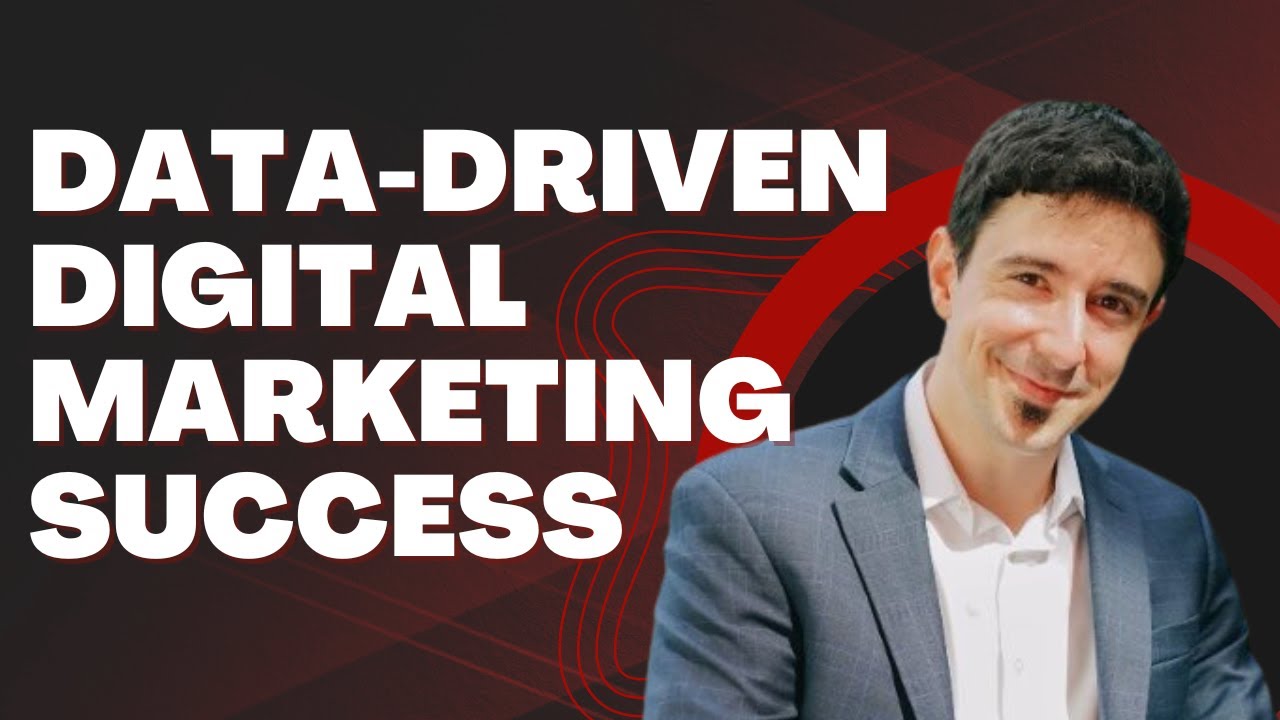
Hernan Vazquez, founder of ScaleDriven, explains how to use data to scale marketing. He tracks the gap between Customer Acquisition Cost and Lifetime Value to decide when to spend more or pull back. Low-budget short-form video ads and organic content mixed with paid amplification are his core tactics.
Chapters
Hey, what's up everybody? Thank you for having me. I'm really excited, really excited. Thank you for having me.
Yeah, yeah. So, so when we talk about digital marketing, right, you know, I'm like, okay, it helps brands reach their target audience for sure, and it promotes their product or their service. I mean, I have I've been trying to get this marketing thing down packed. I promise you, Hernan. I mean, since, since like 2019, right? You know, we're 2023 now, and I, I'm still trying to figure this thing out, right? Because it's almost— it takes a— it takes you— if you have a profession that's not in marketing and you're trying to market your stuff, you, you really need a whole nother person to really help you out with that, you know, for sure, right? You know.
Totally.
So, Hernan, the background of Hernan is very, very deep, very much of an expertise. from a marketing standpoint. And he is an entrepreneur and digital marketing expert with over 13 years of experience in creating advertising and marketing campaigns that focus on bringing clients and students more clients, right? And so it's exciting to bring you on. Thank you again. Tell them a little bit about yourself.
Yeah, for sure. So, so thank you for the introduction. I'm really excited to be here and I totally, totally see where you're going and see where you're at because, you know, usually we have a lot of people coming in to our own business because they have a good product or they have a good service or they know that they could impact a lot of lives and a lot of, you know, they could do a lot of good, but they don't know how to, you know, get the message, get the word out there, get people coming in, get revenue coming in.
Right.
And yeah, I'm a big data fan myself. We're always in dashboards, creating dashboards for clients, creating visibility. We're always like geeking out on data for clients and for ourselves. So yeah, so super excited to be here. And data has been, I think, a game changer. Once you understand what you really need to pay attention to when it comes to marketing, everything changes, right?
Right.
Because like there could be, or there can be, and there is a lot of confusion when it comes to what should I pay attention to, right? Should I pay attention to what my reach is on a post, right? Or how many followers I have, or what's my open rate on emails? Like there's so many data points that you can get when it comes to a marketing strategy, and that could be really confusing. Especially for entrepreneurs wanting to market themselves, especially when you're trying to get help. You know, you want to be on the same page when it comes to the help that you're bringing in, whether it is, you know, hiring a marketing person or a digital marketing agency to come in and help you, right? You want to be prepared and with the tools, even if you're not an expert, to have a conversation with these people and understand that their efforts are going to be aligned to your goals, which is growing your business, getting more clients, more revenue, you know, getting the word out there versus some other, you know, data points or some other metrics that sometimes people track or sometimes people, you know, pay attention to, which might not move the needle, right? Like, you cannot go out there and, you know, and deposit followers in your bank account. You can't, you know. So that's something that, that people, that people want to, you know, that a lot of people get— I kind of, uh, I think that they get like confused with, and some people, you know, they, they might end up wasting money or investing money and effort and time into metrics and things that don't really matter. They don't move the needle. So I'm excited to kind of, you know, go through the methodology that we use to understand which metrics are the ones that you want to pay attention to if you want to have a successful digital marketing campaign.
Nah, that's awesome, man. You hit— you just hit so many points right there. I mean, this could be like a whole course. I'm sure you have a course out there, you know, where you do things that— and it's interesting that One of the things that I took from that conversation just then was that entrepreneurs, they tend to, I mean, I look at it from experience, right? I tend to look at, and I'm a data scientist, I tend to look at like all the data, right? And I get overwhelmed, right? You know, from a marketing standpoint, I started digging myself into this rabbit hole, right? And I'm like, well, what is more important? Is it this? Is it that? If I'm trying to do ads, right? You know, what's more important for the ads, right? You know, if I'm trying to look at website stuff, traffic. What's more important? I don't know, right? You know, and, and I guess you're right, like you have to guide them in that certain direction to— is really what's your end goal, right? Is it to get more followers? Then let's talk about how we can do that. Maybe if it's to, uh, uh, see, you know, how many shirts am I selling on my website? I don't know, you know, maybe that's a whole nother beast right there.
Right.
Then ads, right? You know, your target audience, all that stuff. I tend to, um, for those things that I don't understand, what I tend to do is look for, um, I tend, I tend to look for Google, right, to give me the answers, right, you know. And then it gives me an overwhelm. It's like WebMD, all right, it just gives me everything and, and anything, and I don't know if it's right or wrong, and I just make the judgment call at the end of the day, you know.
Sure.
So, you know, so yeah, yeah, I mean, you, you hit everything spot on with the entrepreneur that really needs your help out there, you know. So you have a company, right? Well, first I want to back up, right, because looking at your Looking at your background, you, you have covered some pretty strong, uh, organizations, some pretty strong people, individuals, companies, things like that, you know. Uh, what has been— I mean, you got Russell Brunson, you have, you have, uh, Tony Robbins. I mean, I, I read the Tony Robbins book, right, you know, so I'm really big on finance and trying to make sure that, you know, the family is great from a financial standpoint, you know. From a marketing point of view, what would you say was like the most awesome, if you could talk about it, awesome client that you dealt with a little bit? Yeah, no, that's a great question.
And, you know, I've had really a lot of awesome clients. And what I like about marketing in general is that it always keeps you on your toes, right?
Mm-hmm.
You always need to be learning and you always need to be adapting and you always need to be evolving. So each client has been kind of a different experience, right? Based on their needs and based on what they needed to do. But for instance, some really, really good campaigns and really good experiences that I had is You know, I started, I cut my teeth in fiverr.com. You know, fiverr.com 10 years ago was not the fiverr.com that we all know about today.
You know, it used to come out of nowhere, right? And poof.
Yeah, yeah, for sure. Yeah. And then it's like you went there to get something scrappy done for $5, you know, or it was a rough bunch and we were there. So that's where I started. That's what the— that was the first time that a stranger over the internet gave me money for something, right?
Oh.
And I was running— I was writing articles on fiverr.com, and, you know, I started kind of documenting my journey and my processes and everything that I learned. And of course, people will try to reach, you know, outside of fiverr.com if you give them a good service and whatnot, and they try to hire you. And I always had this, this, um, this kind of approach where— which is like, say yes and figure it out later, right? Which is like, hey, can you do this for us? And I would say, yes, of course, right? And then I turn around and try to figure that out. But anyways, like, I've always been out there putting out content and putting out, you know, trying to put out as much goodwill as possible in the marketplace. And at some point I caught the eye of Frank Kern and Frank Kern team. So Frank Kern is one of the godfathers of digital marketing. And I don't have like any posters of any band or any movie posters. I always had, you know, marketing books and business books and whatnot. And Frank was one of my heroes. So he reached out, his team reached out to see if I wanted to come work with them because I was being so helpful on Facebook groups and some forums and whatnot. Yeah, so that was pretty cool. And then I remember that that was a great experience and I ended up being Frank Kern's CMO for 3 and a half years, you know, his main marketing guy and training everyone on, you know, all of his clients on Facebook and marketing and whatnot. So that was a great experience. But, you know, we were really data-driven back there. Like Facebook, Frank was a data geek. You know, he would eat data. He would like go through all of the data that we had collected, and then we will come up with strategies to get better customers and more results and whatnot, both for him and his clients. And that's when I realized the importance of data and understanding, you know, the one or two most important metrics that have to do with digital marketing, especially since we were advertising. We were advertising a lot. And, and then we needed to have a positive ROI, positive return on that investment. And I realized that just by paying attention to just a handful of good, good metrics, then you can scale an advertising campaign, you can scale the brand. So that I think that was, that was one of, you know, my first like big experiences that really changed my mind working with some of these big names. And then I was always trying to you know, uh, to, to get close to these big names and working with people that were in the place that I want to be. And it was always being helpful, putting stuff out there, putting good information out there, and trying to network, mastermind, you know, putting yourself in the, in the right room with the right people. I think that made a lot of, a lot of difference.
So, man, that's awesome. That's awesome, man. So it's almost like, so a marketing guru hired a marketing person, right?
Yeah, for sure. That happens a lot. Yeah, that happens a lot.
And I never thought about that, you know. I mean, I guess it does take away They're trying to run a business, you know, at the end of the day. And so they have to run the business. And so no matter what, they still need somebody to kind of think like them and be the marketing expert and then give that, uh, individual the, the key, the keys to the kingdom kind of thing. Yeah, for sure. Okay. All right. So, so look, so you have— you are founder of ScaleDriven, right? And, and, and that's amazing because when you look at the website, you think about what ScaleDriven is, right? You said, uh, you said on website that you help online product creators, software companies, and coaches and consultants develop high-level marketing strategies that generate revenue at scale. And, and that means a lot, right? If people really pay attention to every one of those keywords in there, right, it means so much, right? As far as capturing the audience, it's almost like you were marketing to us, right? You know, in a sense, right? And it's amazing. So when you go through that process of that high-level marketing strategy You know, within scale-driven, what are some of the steps that you're taking? You know, are you defining the target audience, right? Conducting competitive analysis, you know, is it all of the above, right? You know, talk to us about scale-driven and what you're doing there.
Yeah, that's actually a great question. So when a client comes to us, yes, we ask all of the run-of-the-mill questions like, you know, who's your target audience? You know, who you want to attract with your product, with your service? But I think that we also ask, a lot of questions that have to do with what are your goals with the company, right? What are your, you know, where you want to be revenue-wise? Like, what is a customer worth to you? I think that that's one of the key data points that you want to have when it comes to scaling a marketing campaign or an advertising campaign is the lifetime value of a customer, right? Like, how much is a customer worth to you?
How much is— From a financial standpoint? Sorry to interrupt. Like, you mean from a financial standpoint or like value? Okay. Yeah.
From a financial standpoint, over let's say over the lifetime of a customer, how much are they going to spend with you? Right? And ideally, I like to think as customers like as investment vehicles or let's say little houses. You know? So ideally, you will buy a house today because you wanted to appreciate. You know, and you want to increase the value of that house throughout time. Right? So that's the idea. When you're out there advertising, you're also acquiring customers. You're paying. To acquire a new customer and bring them into your ecosystem. And if you're doing things right, then the value of that customer will grow through time, right? So you have the value of a customer usually is divided in segments or in times, right? It's like at the time of the transaction, at the point of transaction, how much money people are giving you, right? Like the initial transaction, whenever they give you the first amount of money, how much that is. And then through, let's say, backend promotions or some other offers, backend offers and all that, you can increase that lifetime value, let's say over the next 30, 60, 90, 180 days, 365 days. So that's the first point of data that you wanna have in mind. And that is something that we help our clients do. It's like we help them acquire more customers, but we also help them increase the value of each customer that comes through the door, right? Because if you think about it, the other metric that we help them figured out, if they don't have it figured out, is how much are they currently paying to acquire a customer? So you have—
Oh.
The cost, what's called CAC or cost to acquire a customer, also known as CPA, which is called cost per acquisition, right? So that's the first metric. And then the other metric, it's the average order value or the lifetime value of a customer and whatnot. And the higher the gap between these 2, meaning The lower your cost to acquire a customer and the higher the lifetime value of a customer, then in the middle is your profit, your profitability, right? So the more you can widen this gap, the more profitable you will be. And in turn, you can spend more money to acquire more customers because at the end of the day, you are able to increase the lifetime value of a customer. I remember that I was working with this client. I was their marketing director. And they grew a lot during the pandemic. So they kind of rode that wave. That was one of the businesses that grew and blew up during the pandemic. They went from $0 to $100 million in valuation in 3 years, you know, because they rode that wave. So it was really big. We started with a small team and at the end when I left, it was like 150 people, you know, something like that. And the reason why they were able to grow that fast is because they understand— they understood these 2 metrics. They understood how much they were paying to acquire a customer through advertising and how much a customer will be worth to them over the next 30, 60, 90 days, right? And they were making, at some point we were spending around $1.5 million a month on advertising for this customer, and they were making 3 to 5x that money over the next 90 days because of these processes that they had. So if you pay attention to those 2 metrics, you can have a really successful, really, really successful business. And most of the guys that I work with that are spending a lot of money, like Grant Cardone, I was marketing director for Grant Cardone, you know, I advise Tony Robbins team and whatnot, they always have these 2 metrics in mind. It's how much are we paying to acquire a customer through advertising and how much that customer is worth to us over the long run.
Yeah.
So that's part of the process that we do when somebody comes to ScaleDriven, we help them figure out those 2 metrics And that allows us to scale.
Yeah, I mean, you just kind of generated so many questions, honestly. I mean, we're not going to dive too deep into it, but I have 2 questions that just came to mind, right, based off of what you're doing there at ScaleDriven. You know, that gap that you talked about, right, you know, is it a time where the gap is too close, or when you're going through this conversation, right, from a marketing standpoint, where you say, look, I don't even— I don't want to— you're not ready for me. I can't sign you on right now. This is— these are the steps that you need to do to get to this part prior. And then, and then it's okay, right? You know, because there's no burning bridges or anything. Just saying, hey, you're, you're kind of jumping the gun, right? You know, you need to handle these things first.
Right. Yeah. And that's a great question. And sometimes we do that. Um, usually what happens is that at ScaleDriven, we take, uh, clients that have traction. And by traction, I mean they might have a proven offer. You know, people are already giving them money for what they offer, whether it's a product or whatnot. So they, they're getting some traction already, right? Like, they, they get, they get money from the audience, whether it is a lot or a little. Maybe some people are out there hustling, or they're getting referrals, or, you know, they get a lot of social connections and whatnot, or they're in, uh, in events or in, in conferences and whatnot. They're networking, they're getting money that way. And we get a decent amount of people that are good at that, but now they want to scale. Now they know they have something that's working and now they want to put it on autopilot or they want to create, generate, and build the machine, right? They want to build—
Right.
To get those people coming in every single day. So that's what we help them do. And we can take people that are at that level, but they want more. Usually, you know, when there's like, to answer your question, when there's like the gap is too small, right? The cost to acquire a customer is kind of the same as the cost to, as what the lifetime value is. I think that's a great position to be in because if you think about it, there's only upside, right? There's only upside. You can have more products, you can have more services, you can have upsells and whatnot. So I really like that because there are some funnels out there. There's some marketing funnels, specifically when it comes to book funnels or low-ticket items, you might have seen I've seen, you know, right now everything is about AI, ChatGPT and whatnot.
Right.
And maybe you— I was scrolling earlier today on Facebook or Instagram and this product that was like 17 ChatGPT prompts for marketers or something like that, right? And they were selling it for like $10. And usually those funnels, they're not making any money. Like you are basically paying, you're recouping your investment and you're liquidating the ad cost. Because let's say that you're paying $20 to acquire a customer and they're selling a $20 product, right? So it's a wash, you break even. But the main point and why— what people— what most people are doing that, you know, Russell Brunson did it with all of his books, Grant Cardone does it with all of his books. We also did this for Frank Kern as well. Tony Robbins does it with all of his books. Any, you know, any big name out there, they do it with their books, is they're trying to acquire customers at a break-even or better position. That means that they're trying to liquidate that ad cost as fast as possible because they have a lot of other stuff that they're going to offer to them, you know, on the back end with their sales team or with emails and whatnot. So the point here and the goal and the goal of the game is, you know, there's a saying by Dan Kennedy that he says the person or the business that can spend the most money to acquire a customer wins. wins, right? So he who can spend the most money to acquire a customer wins. And I think that's true. And I think that even if you're really close when it comes to, you know, your profitability, you know, that's a good position to be in because you can advertise, you can get free buyers, right? Not free leads, somebody that opted in for a lead magnet or somebody, but free buyers, right?
Mm-hmm.
And then you can call them and offer them something else. The problem is when you don't have anything else to offer, right? Or Or when you don't have that backend developed, which we help, generally help our clients develop that backend as well with ScaleDriven.
Yeah, I mean, and that's amazing. It actually takes me to my next question because, you know, having the funding, right, from a marketing standpoint seems to be very important. I looked at like Starbucks one time and they spend a ridiculous amount of money, right? In my eyes, it's ridiculous, right? But I mean, look at them, they're a chain, right? They're all across the world. And, and it makes sense, right? You know, but they also make a lot of money, right? You know, so they're definitely not just breaking even, they're making profit, you know, right now, probably everywhere. And, uh, you know, organic reach, right, versus, uh, the, the, you know, spending the money and things like that, you know, standpoint, you know, is that something that you, you believe in really trying to go for organic reach first? You know, and foremost, or is that something where you say, look, we're going to parallel it, you know, do parallelism or something like that?
Yeah, no, that's, that's a great question. I think that when you're starting out, when you're, you know, when you're just starting out, when you're not making a lot of revenue from your business, I think that organic is the way to go because you're always paying for your traffic. You know, there's no such thing as free traffic. You're either paying with your time or with money, right? So you're either paying with your time you know, posting on, on social media or, or uploading content or trying to rank on Google, you're always paying with your time. I like advertising because it accelerates everything, right, with a little bit of money. But at some point, most of our clients come to us when they have— again, they have some traction. That means that they might have a community of people, they might have social media following, they might have a small list, and they want to take it to the next level. I really like to combine both. I really, really like to combine both.
Wow.
And there's some really, I would say, low-investment strategies that you can implement, you know, to actually, you know, you can do this with $5 a day or $3 a day or something like that that will get you a lot more mileage for your social media efforts. Something that we do, we do for clients, we do for every client is we help them create like short helpful videos. You know, which are usually between 1 to 2 minutes long. And these videos, they are posted on social media. They're posted on Instagram and Facebook and whatnot, and sometimes on TikTok. And now, and then we push a little bit of money. We put a little bit of money behind these videos. Right. And the reason why we do that is because, you know, that allows us to accelerate that process. But also we can reach their ideal audience with this content and whatnot. And then what we do is for everyone that watches 95 to 100% of those videos, then we show them offers, then we show them a lead magnet, then we show them, you know, a low-ticket product, or maybe we show them a presentation that they did and whatnot. And this like 2-step approach is really inexpensive. Again, you can do it with $5 a day. You can start there and you can actually start pushing out your content and that will accelerate your organic growth exponentially. Because you're putting a little bit of money behind your content. So I'm a big fan of using both, but initially you can, you know, you can go with organic and then launch the advertising machine.
Yeah, those are great points, and it just helped me realize that organic reach doesn't mean you're not using money, right? You know, and that's why I guess there's a, there's a mislead there sometimes, because I've talked to people that are in my field and say, man, I just want to do— I want to build a tech company. I'm building this tech company. You know, I want to market it, you know, but I want organic reach. I don't want to spend money, you know. But there they— you can spend money and still get organic reach, you know, in a sense. Yeah, for sure. That's good. That's good knowledge for, uh, for the audience and stuff. Um, so, so when I think about a data-driven approach, right, I, I do think about how it gives you the tools to better understand, you know, verify and quantify the results of your decision. At the end of the day, and in a data-driven world, right, an organization specifically, you can, uh, be more confident about the choices you make. So it supports facts and choices you make. Like, I, I chose this ad to do, and I know the data is showing me that I did what I needed to do. I made the right decision, you know.
Right.
And you can steer your organization towards success based on the facts, right, not an opinion of something. So, right, that's why I love data so much. When you think about, you know, the why data-driven mechanism equals success, you know, in your opinion, what does that mean to you? Why does data-driven equal success?
Because data doesn't lie. You know, I always say that, like, let's take a look at— let's take a look at the data. Let's see what the data says. And even like sometimes, you know, we have clients that come to us and they have this idea and they have this opinion, and then we have our opinion and we have our our way of doing things and we have our experience and whatnot. But that's why I think that, you know, data is so important because data doesn't lie. It's like, okay, let's try these 2 things, right? Let's try your approach and let's try our approach and let's see which one wins. At the end of the day, data is agnostic, right? It's like it doesn't matter. It's like whoever brought the higher return on the investment, you know, or whoever brought the larger amount of leads or whoever it's the most effective, that's what we're going to go after, right? So for me, what's really humbling about marketing, especially from a data perspective, is that it doesn't matter how much experience you have. You know, I've been doing this for a long time, but, you know, I'm wrong almost always. You know, some things that I know for a fact that they're going to work, they end up flopping real bad. And some things that I'm like, nah, that's never going to work, they end up working, right? So I think that that makes a lot of sense. And that's kind of the culture and the, The approach that I try to, you know, instill on the team at scaledriven.com and the people that we work with and our students that we coach and whatnot, it's like everything is a test. At the end of the day, everything is a test. You want to test, you want to collect data because data doesn't lie. It's really humbling. And you would rather be— or at least I would rather be successful than right, right?
Right, right.
I would rather be successful or make money or help my clients than be right. Right, right. So I think that, that, that's why I love data, especially when it comes to marketing, especially when it comes to making decisions.
So no, that's a great point. You know, it's, it's, uh, it's okay to be wrong, and it's okay to be right, right throughout it, but you're still learning, and that's how you're collecting the data, right, in a sense, you know. So that's amazing. So, so what data? Let's dive into it, right? I, I don't want to steal all your, your stuff from your company, right, you know, but you got to give us some some tips, right? You know, you gotta start us off with something. So if you were sitting there and you're saying what marketing data is probably the most important, right? You go into an organization, you see them, right? You got customer, you got finance, you got operation. I don't know, right? You know, maybe it depends. I don't know. What in your opinion is the most important marketing data you need to collect?
That's actually a really good question because I think that, you know, when you open, when you create, We try to give our clients a lot of visibility as to what's going on, right? We put together dashboards for them and whatnot. And you know how it is, like there will be some conflicting data, like there will be some stuff. And even in the, you know, if you ever run ads on Facebook or Google, whatever, you will find that some metrics are saying one thing and some metrics are saying some other things, you know?
Right.
And should I keep this running? Should I stop this? Like what do I do? And I really like to have, again, as I mentioned before, something that I call a North Star metric, right? Like if this metric is within our parameters, if this metric is within our KPIs, right? If this metric is like it's green, then we keep on scaling, we keep on spending, we keep on investing money. If this metric is not in the green, it's not what we want to do, then we stop. Right? So we try to keep it super simple in a complex world. And again, I think that the number one metric that we do pay attention to is that gap. What is the difference between the cost to acquire a customer on advertising versus the lifetime value of a customer, right?
Oh.
And when you think about it, the cost to acquire a customer will always have a floor, right? Because when you are out there, when you're advertising, when you're pushing your content another, you're also competing against other, you know, millions of other people. You're competing against brands with big pockets, you're competing against starting entrepreneurs, you're competing against everyone that wants the attention of your ideal target person, right? It's not just that you're competing against people that are competing with products and services that are similar to yours, but also you're competing against everyone else that's trying to promote somebody, something to that person. So cost to acquire customer will have a floor. You know, there's, there's a floor that this is what the marketplace is telling you that you are going to pay to acquire a customer, right?
Mm-hmm.
But the lifetime value of a customer doesn't have a ceiling, you know? So I see a lot of people struggling, especially when they're running ads, especially when they're, when they're new to this. It's like, oh, I want to lower my cost to acquire customers. I want to go ahead and lower, you know, Facebook is too expensive for me. I'm paying too much per click. I'm paying too much to get a lead and whatnot. And then it's a million times easier to turn around and try to increase your lifetime value of a customer, right? If you think about it, it's a million times easier to give that customer a good experience, to give them, you know, give them to give you more, get them to give you more money provided that you're giving them more value, right? It's so much Because you're only competing against yourself. You know, you're only competing against how good of products you have, how good of a service you offer. So people will trust you more and more and they'll, you know, they'll become better and better clients and customers for you. So I think that the gap, it's that. It's like at some point you will hit a floor when it comes to acquiring customers that's determined by offer and demand by the marketplace. But then the lifetime value of a customer, it's, you know, infinitely scalable. So I think that that gap is the number one thing that we pay attention to and how we can increase that gap, how we can increase that gap through time so that our customers and our clients at ScaleDriven, they become more and more profitable, right? What other services can we offer? What other things can we give value in exchange for, you know, for money? So I think that because I can tell you, yeah, we take a look at cost per lead. Yes, we do take a look at cost per lead.
We really do.
We take a look at how much they pay, let's say, to get someone on the phone, we do take a look at that, right? But then it becomes a math game and a numbers game, right? It becomes how much money you want to pay to acquire a customer, how many calls you need to have in order to generate one customer, how many leads need to come through your funnel in order for you to generate one call. So it's, you know, we work backwards. We work from the back to the front, starting with profitability all the way down to the cost per click. And then we know, okay, If we are tracking, if we are online with our goals. So, but our North Star metric is always that gap. It's the return on the investment. It's the return on the ad spend. It's how much we can widen that gap so that our clients are making more money. So.
Man, man, you just gave away all your stuff, man. Why you do that, man? No, I'm just messing with you. No, no, that's awesome, man. You know, so I usually end with what I call a dope nugget or gem, right? You know, summarizing everything. But before that, right, something just came to mind. I thought I need to ask this question to you really quick. All right. For any customer that's coming in to you right now, if there's something they can know, do they need to know their avatar or is that something that you would help them out with?
You know, we can help them out, but we can help them out. But at the end of the day, a customer, a client, most of the people that I, that I work with, they have a pretty good understanding of who their avatar is, you know, like, you know who you want to work with, especially if you, if you've been this, you know, if you've been in this for maybe a year or 2 and whatnot, you kind of know, like, and most people, you know, they don't give it, they don't give themselves enough credit as to their intuitive approach to, okay, this is the people that I want to help, right? Then you might have some findings and whatnot when it comes to advertising because you're saying, oh, my target market is, you know, I don't know, women, stay-at-home moms, 35 to 45, right? And that's cool, but maybe after running some ads we can say, oh well, you know, the segment that is 40 to 45 are the ones that are the most valuable to you, so why don't we put more money there? But I think that most people have a clear understanding on who they want to target. We just help them hone that in, right? And then with data, we come up and we say, oh well, you know, these are interests that we That we try, that we tested, and they're working. You want to, you know, go after them and whatnot. So yeah, so that's, you know, that's the answer to the question.
So man, that's— yeah, that's a good point, you know. So don't come in there green, all right, audience, right? Make sure you go in there knowing a little bit about your stuff, you know, uh, having some traction, things like that, you know. Um, all right, so what I have learned from this conversation, and I'll let you chime in for sure, but you know, um, one thing you mentioned you're only competing against yourself, right? You know, and I like that because a lot of times we sit there and we're saying we got these 10 competitors, right? You know, but we never include ourselves. And it almost makes us say we want to be like them or we want to be better than them. But there's a, there's a market out there for you, right? You know, you still can get money, they can get money, everybody can get money, and, and, and it's okay. And, um, and, and, and that one of the most important metrics to capture is that cost to acquire a customer and then the lifetime of the customer as well. And then accepting that you will make both good and bad marketing decisions, and it's okay, right? Like, I love that because a lot of times, right, you're— we're scared, right? But you have to jump out there and you have to be okay with that because that's how you collect the data. You'll never know if you're doing good or bad marketing if you're not marketing at all, right?
Yeah.
You're just sitting still. So is there anything that you want to leave the audience with?
I think that the last point that you made, it's great because this applies to life. You know, I think that there's a big resemblance, you know, as to how you approach your marketing, how you approach your business, as to how you approach life, right?
Totally.
It's like, and I think it was the more you fail forward, the more you fail, try to fail forward, but the more you fail, the more data you collect. Right? And if you approach everything as a test or as an experiment, okay, today I'm going to experiment launching these ads, or today I'm going to experiment with this post, or today I'm going to experiment with this offer. If you approach everything as an experiment, you become a data scientist of your own business, right? And then you can go ahead and you will find that success. I think that people are too afraid of failure, and the biggest entrepreneurs, the people that are the most successful that I've ever You know, work with they embrace failure because they know that you need to go through a lot of failures before you find a success, right? That's part of the process. So they get excited to test, and we get excited to test. We fail a lot, like a lot, a lot, a lot. But you only need to have a couple winners, right? And that applies marketing to entrepreneurship and to life. So yeah, so get out there and start collecting data.
So yeah, yeah, collect that data, man. That don't look at that spelling. Collect the data. That's what you— yeah. All right. So let's have a little bit of fun.
All right.
At the end of the show, the audience knows I like to play a game called Overrated/Underrated. And this game allows us, right, you know, I give props to Gary Vee because that's the motivational speaker that I follow that actually gave me the idea. But the game allows the audience to know that we, we have opinions about other things than marketing, right? You know, and digital marketing and Data science, right? You know we geek it out, right? That might be 99% of our time, but that 1%, we do have opinions about these things. We experience other stuff, right? In life, you know. So I'm going to ask you a series of questions, right? Or throw out a series of topics, about seven topics, and you get to decide whether you think it's overrated, underrated, or right where it needs to be. Ready?
Okay, let's do it.
All right, first one: apple pie.
Apple pie underrated. I could I cannot have enough apple pie. Yeah.
Yeah, yeah, yeah, I love it. Matter of fact, it was some data behind apple pie, uh, that I saw. It was like the most, uh, uh, um, taken off the shelf from like grocery stores and things like that. And, uh, because it was asking like, what's the pie that was the most taken off the shelf? And it wasn't actually because of the taste or something like that. It was specifically because of the quantity somehow. I mean, the, the actual, uh, the size of the average apple pie that's delivered in the Goji store. So it was because, you know, people want family sizes and that's the most that's offered is the family sizes versus anything. So it was interesting, but I would say it's just because it's good, right? Yeah.
Yeah. No, that's, that's great, man. Yeah, I could, I could go through an apple pie, family-sized apple pie.
All right. The printer.
The printer. Huh, I don't know. I think it's, you know, I still need it, so I think it's, it's, it's underrated at this point because, you know, we still need it. So yeah.
So I don't use it, man. It almost gets annoying to me when somebody asks me to print something out sometimes, but, but, you know, but I, I guess it is still needed. I just have trouble. As technical as I am, I have trouble with printers, man, sometimes, and I hate it. I'm like, why is it not working? Yeah, I think we all do.
It doesn't matter how good of a computer guy you are.
Yeah.
We all do. But, you know, I've been doing a lot of, uh, for, for some reason or another these past weeks, I've been doing a lot of, you know, going to post offices and doing some stuff and some errands and whatnot, and everything was on print. So I had to dust off my printer, which I don't have it in here. I had to bring it from the other room, plug it in and whatnot. So yeah.
Yeah. All right. Beaches.
Beaches completely overrated.
Oh, really? What? Yeah. Florida, man. You're out there in South America now, man. Overrated?
What do you mean? Yeah. I mean, I love, I love the mountain, you know. I'm a mountain guy. I'm a forest guy, you know. And also, like, let me rephrase that. There are some beaches that are extremely beautiful and, you know, extremely beautiful. But I grew up in Buenos Aires in Argentina and South America, and we are really, really south. And as, as I was growing up, we were going to these beaches here in, in near Buenos Aires and whatnot, and they were cold and they were, you know, windy and whatnot. And then I went to Brazil, kind of, kind of completely changed my mind. But yeah, that's why I think that in, in my core, they're overrated.
So yeah. Yeah, no, I could see how certain experiences throughout your life could, could have kind of changed your mind with certain things, you know. Uh, so I could see that for sure. All right, we talked about this a little bit earlier, so ChatGPT.
ChatGPT, I think right now for many things it's overrated, but just give it, I don't know, 6 months and, uh, and it will completely change the game. I, I'm a bit like, I'm a big believer. We're, we're using ChatGPT more and more and more, especially since ChatGPT-4 just came out like a couple weeks ago. So we're using it more and more and more. Um, I like it, and, but I think that right now At this point, right? It's it's it's there's a lot of hype around it, and there's a lot of you know FOMO around it, like Bitcoin or or or or or whatever a couple a couple years ago and whatnot. So I think that it will become part of our day to day. It's just that I think that you know you can do amazing stuff with it right now. I'm just really looking forward to see what it can do like six months or a year from now.
So yeah, man. Elon Musk. Musk just put out like this patent— I don't know, I mean, not patent, a petition. Like, uh, he was trying to stop—
Yeah.
People for 6 months at least, right, to stop using or trying to develop things that's bigger than ChatGPT or any type of AI stuff, right? Because it feels like— and I may agree that at one point we're not using any type of ethical mechanisms anymore, right? We're not caring about security of it, we're not caring about any of that, we're just developing it, right? These innovators are just so crazy with it now. They're just going crazy where they're like, it's so open, right? It's OpenAI. And They're able to do it so fast and they're creating it so fast and it's just going past our time and it's to the point where it's like the Michael Jordan of our era. So it's like it's just ahead of the game and they said that eventually if it keeps doing that, then we're going to be overpowered by these machines that are doing that.
Yeah. There's a great post by Tim Urban on Wait But Why. Wait But Why, it's a fantastic fantastic blog, and he has a, he has a post on, uh, AI. You know, he, he has a post about how we develop our brains and whatnot, and then he has a post about AI. And the reality is that if he— if it goes past like our level of our processing level, we won't even, we won't even see it, you know? So, oh yeah, yeah, it's, it's crazy. It's crazy.
So I need to access that. All right, so, uh, 2 more, right? The, uh, the— oh, electric vehicles. Let's talk about that.
Electric vehicles, I think they're underrated right now. I think that's the future, you know. I, I really think that's the future. I'm a big Elon fan, like, in general, you know. I'm a big Elon Musk fan in general. But, but I think that, I think that that's the future. I think that what they can do right now, it's pretty cool. But again, it's like ChatGPT is like, we're, we're in the, we're in the dawn, you know, of it. Yeah, it's like I think that you know more and more. You know funny enough, the other day on TikTok I saw an advertising a Lamborghini ad. Crazy! Never seen a Lamborghini ad before for their new hybrid. I think it's called. I'm not gonna remember the name, but I saw it and I'm like, well, this is first off TikTok. Second of all, ad from Lamborghini. You know, which is crazy. So crazy for two. And then third, it was the. It was the new Lamborghini, which is a hybrid. So I think that, you know, it's— we're just in the dawn of that technology, and eventually everything will be electric.
So. I agree. I agree, man. You know, I actually started an electric vehicle company out in Ghana, in Africa. And so we do a pretty good job of it. It's like making a lot of profit now. We have electric vehicles being imported in there because they don't have it, and it's saving a lot of— it's increasing, you know, jobs, right? Allowing people to be drivers and things like that, you know? I mean, I'm all in, right, for electric vehicle stuff, man. You know, being able to help out with the ecosystem as well, you know. So it's really cool, man. You know. All right. Last one. Ice cream.
Ice cream. I think it's where it should be.
You know.
Where it should be. Yeah. I think it's where it should be. I love it. I really like it.
What's your favorite? What's your favorite?
What's my favorite? It's dulce de leche. Dulce de leche.
Yeah.
It's a, you know, it's from here. It's from, you know, Buenos Aires. I was born here and whatnot. It's kind of fun. You know, on the other side of the beaches that I mentioned, you know, which are overrated. So yeah, so my favorite, it's definitely dulce de leche. Dulce de leche, whatever.
Ice cream. Yeah, yeah, yeah. Mine is just butter pecan, man. I think I grew up on it. My mom, uh, and dad used to always give me butter pecan ice cream when they always had it in the freezer, and I would always go in and— yeah, I still like it to this day, you know, for some reason, you know. Of course. Great, great, man. Audience, you know, you can reach me @MrDapperData on any one of the social media Definitely check me out. Check out my website, www.mradapperdata.com. Please subscribe to my YouTube videos at www.youtube.com/adapperdata. All right, till next time.
Yeah, if they go to scaledriven.com, they can check us out. My name everywhere, Hernan Vazquez, on social. You know, you can find me on YouTube and whatnot. We have an event coming up in Miami in August. It's going to be great, but we're going to add details to scaledriven.com. And yeah, that's, that's it.









