Here's How To Be Much More Productive...
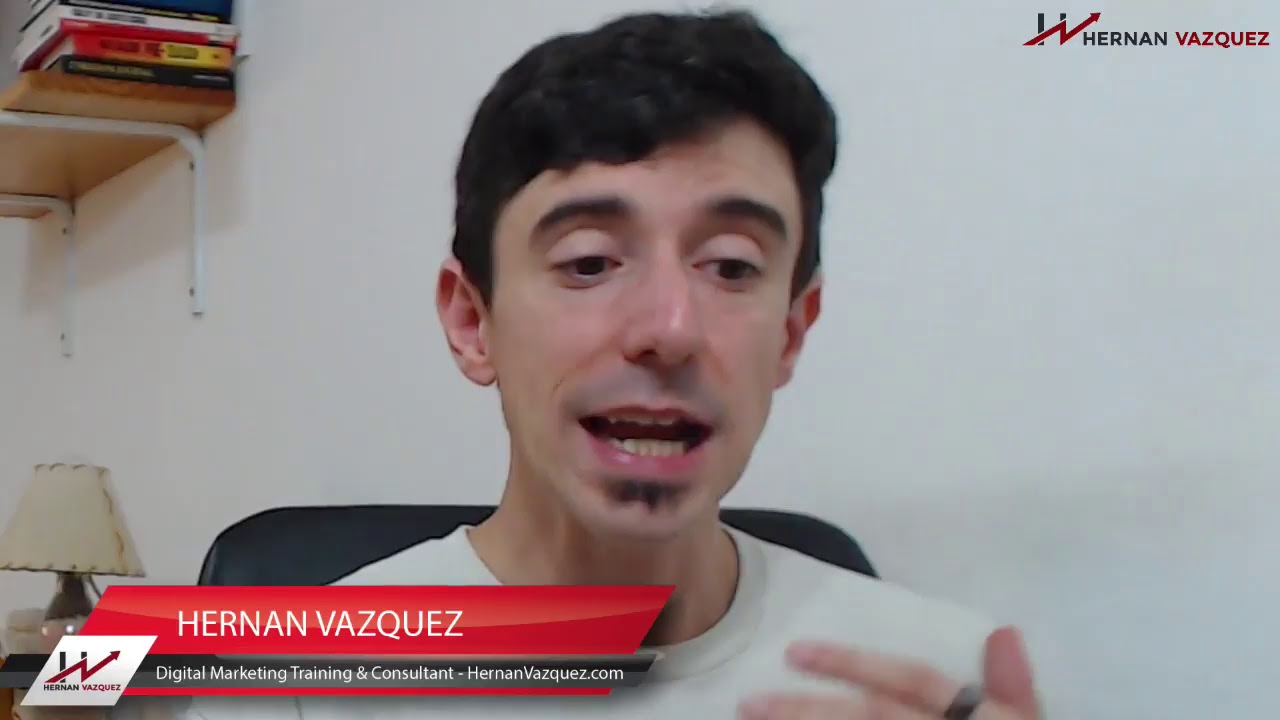
Hernan Vazquez shares three habits that help him run multiple companies: 90-day sprints with 1-3 goals per sprint, weekly planning every Sunday, and nightly planning to reduce decision fatigue. He kills projects that don't turn profitable within 30-60 days.
Chapters
What's up everybody? That is not what I wanted to do. Now we're live. What's up guys? How's it going everybody? What's up Eldon, David, Ali? Hello. How are you guys? Hope you guys are super well. Yeah, now, now we're talking. Now we're talking. All right, how are you guys? Welcome. Happy Sunday. Today is the 10th of February. It's actually pretty cool. It's been quite a, um, it's been quite a weekend, at least on my end. I hope you guys are crushing it. I decided to take this weekend off to kind of do a bunch of other stuff that I, you know, wasn't able to do before. All right, and sometimes that is that is everything you need to you know to kind of get recharged and get it going. So how are you guys? Hope you guys are super well. Hope that you guys can see me all right. You guys can hear me all right. What's up, Kathy? Thank you for being here. Thank you, thank you, thank you, thank you. All right, so let's talk about productivity. Okay, let's talk a little bit about productivity. I'm not by any means in this word a productivity expert, but I've developed some tricks that have allowed me to be. A little bit more productive through the years. You know, managing— at this point I'm managing, I'm partner of 3 companies and I'm managing a bunch of different clients and consulting clients and whatnot. You need to do a couple of things so that you become more productive or, you know, do more stuff if you want to, or actually do more high-level stuff because you don't want to be busy, right? You want to be productive, and that is one big difference. So with that being said, I'm going to tell you guys basically 2 or 3 things that I do on a daily and weekly basis that have allowed me to, you know, increase my productivity, not only because I do more things, but, but, but also because, um, you know, I do a lot of more high-level stuff. All right, so that is something that I want to share with you guys today, if that's okay. Now with that being said, don't forget to go out there and get a copy of my brand new book, Perpetual Profits. You can get that at perpetualprofits.net. All right, so if you, if you get that, you will learn a little bit about me and a little bit about what's working right now when it comes to my clients and consulting and whatnot. All right, so let's talk about productivity and how to be more productive. Here are 2, like, 2 or 3 quick things that I do on a daily basis that have allowed me not only to increase my output but also to do more high-level stuff. Over the past, I would say over the past 2 years, Semantic Mastery, which is one of the companies that I'm a partner with and partner of, we have like 30 or 40 people around the world working for Semantic Mastery. We have like mid-level managing and whatnot, but then I decided to, for my own consulting firm, I decided to put together a team, right? There's now 6 people working with me full-time, and the reality is that they're awesome. It's an awesome team. I couldn't be doing anything that I do without their help. for sure. But, you know, it wasn't easy. It wasn't easy for me to go from this mentality of doing it all to having a team. So some— one of the things that really, really helps me out is, I think I showed you guys this little thing right here, which I— which is always in front of me. It's always in front of me. I always carry it around with me, and it's called the Best Self Journal. You don't need one of these, to be completely honest. You do not. You just need somewhere to plan some stuff. And this is both a planner and a journal. Some people want to have a planner on one end and a journal on the other. I like to have it all in one end, and I've been using this for over a year. I have a bunch of, of those that are being used— that have been used, rather. And, uh, these are pretty cool, actually. These are pretty cool. So the first thing that this little thing, this little tool forces you to do is to set up 3-month sprints. What I, what I've learned, you know, working with super high-level people is that they do have long-term goals, right? They do have long-term, and they do have like daily goals and whatnot, but they mostly do things in sprints. So, you know, if you want to take up on a project and you want to know it for sure, exactly, instantly if it's gonna work, you need to get it to, you know, profitability, or at least making it some money over the first 30 to 60 days, right? And a lot of entrepreneurs that I know that they are able to grow several companies they work in sprints. So if at the end of the 90-day sprint that project didn't work, they just scrap it and start another one, or they just salvage what they can and whatnot. And this little thing right here, the first thing that you need to do is to set up 1 to 3 objectives, 2 to 3 goals that you want to achieve over the next 13 weeks. Okay, so it's roughly 3 months. So that is pretty cool because it gives you something to be working on pretty much, um, every new journal. All right. So that is number one. And number 2, what I also like to do a lot is— what I also like to do a lot is to plan my week in advance. So for instance, Sundays are the day that I sit down and I write down what I want to accomplish this week. And not only that, but then I review last week, but I sit down and I write down what I want to accomplish this week and what activities I'm going to be doing to accomplish those goals. All right, so for instance, you know, I'm traveling to Funnel Hacking Live on Sunday, and, you know, I need to write some more copy for my book funnel, so that is something that is going into this list, okay? And preparing for the trip, that's another thing that is going into this list. So planning your week in advance will allow you to have this panorama of what's going on, right, throughout the week. And then something that I have immediately, like if you're only taking one thing out of this conversation that we're having, is this: plan your day the night before. Plan your day the night before. That is like awesome for several reasons. Number one is because when you're finishing up your day, when you're finishing your day, you come with certain inertia, right? You come with the day of work. Maybe you're tired, maybe you're not, maybe your juices are flowing, blah, blah, blah, but you kind of know what needs to be done next day, okay? So you know what's going to happen next day. You need to use that momentum to actually plan out next day. And the benefit of that is twofold. Number one is that whenever you wake up the next day, you don't need to sit down and plan anything, all right? Because it's already planned. So you're not left wondering, okay, what should I do today, okay, to accomplish my dreams or to get to my goals, etc., etc.? So that is like a huge time saver. So you're not mentally switching gears. I'm just going through my planification for the day and I say, oh, okay, so it's 9 AM, I need to do this, boom, and just do it. So you know that you don't have this buffer between activities because you have everything planned. And that also frees you up the hours in the morning to do something else. Like for instance, I'm meditating or, you know, doing some quick workout, blah, blah, blah, or getting a green smoothie. So those things, like even if you're taking just one thing of the 3 things that I told you guys, which is number one, Working 90-day sprints. Number 2, plan your week in advance. And number 3, plan your day in advance. If you're only taking one thing, start getting into the habit of planning your day in advance because starting the next day knowing that you already know what you need to do, that you already know that you're moving forward, that you already know what's left to be done, I mean, it's an amazing feeling and it's so much like You know, it's so much—I don't know—liberating. I would say that is how I would call it: liberating. All right, guys. So, Jackie, look at that haircut! Looking good, man. Thank you, man. Thank you. Hey, brother, great production on Instagram. Okay, if you're not following Jackie Lombardi on Instagram, go follow him right now. That guy's a stud. Yeah, you should be. You should be, you know, doing some Hollywood acting or something, man. Come on now. You're making me look bad. Thank you for stopping by, my man. All right, so I wanted to— I want to share with you that stuff. Thank you guys for spending time with me. I hope that you are gonna kill it tomorrow. Have an awesome, awesome, awesome rest of the Sunday wherever you are in the world. And if you— if you are wondering how to actually deploy funnels and sales funnels that work for you and your company, that allow you to grow to an extent that you can build your business and and work, uh, on your business, right? Um, you should be getting a copy of my brand new book, Perpetual Profits. That is what you should be doing, okay? It's pretty cool, $5.60, and you can get it at perpetualprofits.net. Thank you guys for the support. I really do appreciate you guys. What's up, Byron? How are you, my man? So I really do appreciate you guys, and I'll catch you tomorrow. Bye-bye.









