How To Achieve Omnipresence With Your Advertising Ads
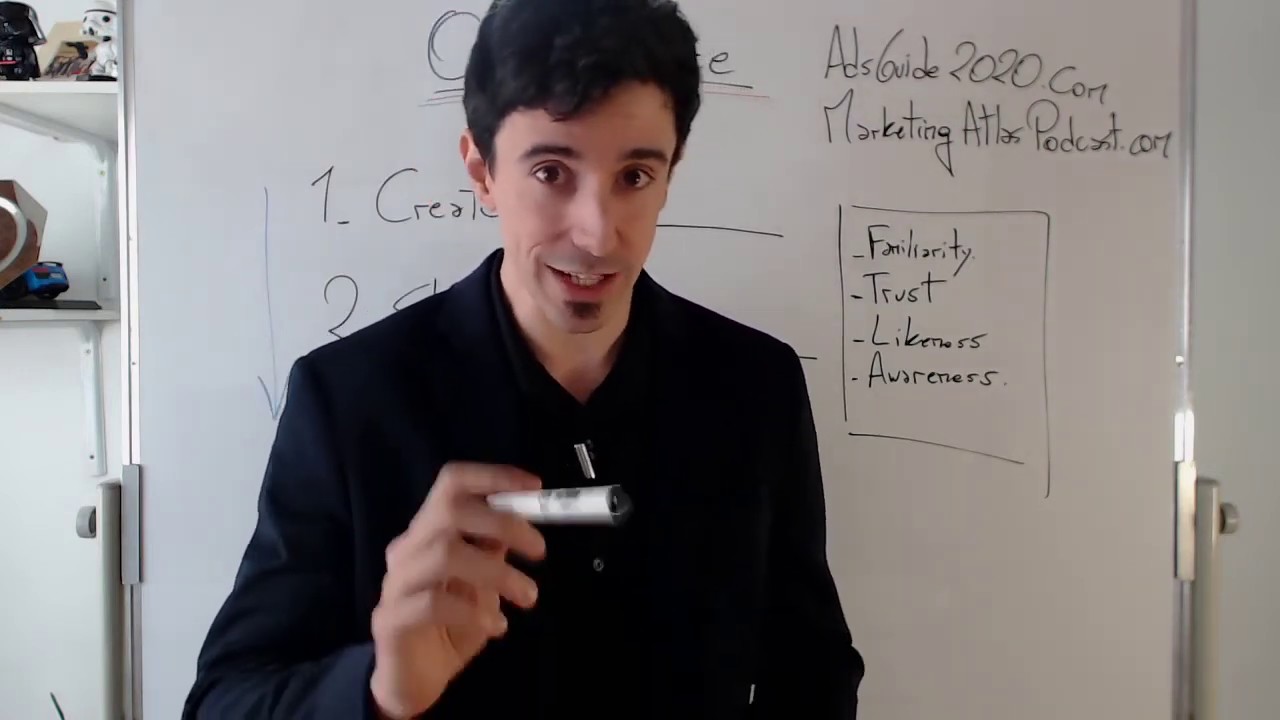
In this live‑stream, the host (who previously worked for Grant Cardone) explains why marketers should strive for omnipresence—constant, repeated visibility that builds familiarity, trust, and ultimately sales. He frames omnipresence as a psychological effect: the more a person’s brand appears across devices, the more the audience feels they “know” and trust the brand. The core of the presentation is a three‑step process: (1) create helpful, daily content (videos, podcasts, posts, blogs, etc.); (2) drive engagement and amplify reach by leveraging platform algorithms and paid retargeting, using engagement signals (watch time, comments, messenger replies) to place users into “buckets” for further ad exposure; (3) consistently present offers (lead‑gen forms, webinars, product sales) within that content and through retargeting ads, turning familiarity into conversions. Throughout, he cites examples from Grant Cardone’s agency, political campaigns, and Twitter celebrities to illustrate the familiarity‑trust loop. The session also includes two promotional announcements: an “Ultimate Facebook Ads Guidebook” (adsguide2020.com) and the launch of the “Marketing Atlas Podcast” (marketingatlaspodcast.com). The host ends with a call‑to‑action for viewers to comment, like, and share.
Chapters
All right, what is going on everybody? How are you guys today? Welcome to this live stream. Hope that you guys are doing amazingly, amazingly well. Welcome to this, uh, this episode. We're gonna be talking about omnipresence. How do you reach omnipresence in your marketplace using Facebook and Instagram ads? I hope that this is going out okay. I hope that the audio is a little bit better. I tend to do this and then I realize that I screw up in some way, shape, or form, so I need to redo them and all of that stuff. So bear with me, I'm learning. So, uh, hope that this is getting better. But most importantly, I hope that this adds value to whatever it is that you're doing. Okay, so if this is the first time that you're here with me, just let me know. First time in the comments, just let me know, and I would love to know where you're joining from. I'm gonna read some comments out loud in a minute. Okay, so let's hop right into this. The topic for today is omnipresence— how to generate omnipresence in your marketplace. Now, before we dive into this, I have 2 quick announcements to make to you guys. Okay, number one, is that if you want to take your Facebook ads to the next level, if you really want to grow your authority and your omnipresence in the marketplace, I strongly recommend that you go ahead and get a copy of my Ultimate Facebook Ads Guidebook, excuse me, Ultimate Facebook Ads Guidebook, that's how you say it, and by going to adsguide2020.com. That's A-D-S-G-U-I-D-E-2020.com. 2020.com. adsguy2020.com. Get it. It's really inexpensive. It's packed, packed, packed with value, and I think you guys are gonna love it. Okay, so that's number one. Number 2, I'm really excited because yesterday the first episode of my new podcast, The Marketing Atlas Podcast, dropped by. So if you want to listen to it, I talk about— the first episode is about how to fix any advertising campaign that is not working with 4 easy steps. If you want to Learn how to do it. Go to marketingatlaspodcast.com. Marketingatlaspodcast.com. There's a little button out there to subscribe as well if you want to check it out. What's up, Amir? What's up, Sergio Fletcher? How are you guys doing? Hope you guys are doing great. All right. So with that being said, let's talk about how to create omnipresence. I had the honor of working for Grant Cardone last year and doing during most of last year through his advertising agency, and I was in charge of the marketing for the agency. But not only that, I was also in charge of training the whole media buying team. There was like 15 media buyers there, it was like north of 215 clients or something crazy like that, and it was really, really cool. And one of the things that I learned is how these guys, or how these personalities, are creating omnipresence in the marketplace, okay? So I want to share it with you so that you can start applying that and actually get more awareness for your brand, get more good goodwill, and not only that, but generate more leads and sales. Okay, so this is a 3-step process that I'm gonna be sharing with you. Some of you guys already know about this, but it's a good refresher. Okay, now why would you want to create omnipresence? Okay, I was like sitting down at the Cardone, uh, you know, the Cardone headquarters in Aventura last year. It was— this was in September last year. I was sitting down and I overhear the marketing guys discussing about discussing about this TV spot that they were running, right? And I come from a hardcore direct response background. I want every dollar to be accountable, right? So every dollar that we put out there, every ad that we put out there, it needs to produce a result. Otherwise, it gets shut down. So that is basically what we're trying to do. But what happened is that they were discussing with Grant the fact that the guys, the marketing guys, wanted to pull the, um, the, um, the TV spot, and Grant was all about exposure. He was all about exposure, exposure, exposure. So it was definitely a different school of thought. But what I learned is that, uh, familiarity, um, omnipresence— what he was trying to achieve in the marketplace is omnipresence, right? He might not have had the best ROI ever. He might not have had like a 1,000% ROI on that specific TV spot, but what he had was a really high level of understanding of how the human psychology worked. And this happens with politicians as well. If you think about it, politicians are always out there. They're always trying to be on camera. Even, you know, I was working— one of my friends, he was working with a politician here Argentina, and there was a big quarrel, there was a big fight, you know, in one of these events, these big national events, about where each politician would go. And the reason why is because he would tell me, the reason why, you know, the different teams will fight over spots and places, it's because where the camera will be positioned. So if the camera would be positioned in an angle where the politician will look good, then they would want that spot, all right? And there's nothing wrong with that, but politicians really understand what omnipresence means, right? And what happens is that with omnipresence, with repetition, the more you see somebody show up on your screen, on your TV screen, on your phone, on your laptop, whatever that is, the more you breed this familiarity. I have a problem with that word. They become familiar to you, okay? And when they become familiar to you, It's like seeing somebody for the first time at work, right? When somebody comes in for the first time at work, everything is kind of weird, but then as, you know, you start becoming familiar with that person, then you maybe start becoming buddies and maybe you will start hanging out and all that. So it becomes familiar to you. The more you appear, the more your face and your personal brand appears to your audience, the more you become familiar. And this fact also becomes that it breeds trust in your audience. Because again, when somebody comes in for work for the first time, then you might not trust them, right? But as time goes by and you see them every day, maybe you don't know them, but you see them every day, and what happens is that they start becoming really, really trustworthy to you, right? So that is what happens. And then you start liking the person, right? Because you see him every day, so you start liking the person unless you do— they do something to betray your trust, you start liking that person. And then what happens is you become really aware of what's going on. So something that you need to understand always is that omnipresence, the fact that you're showing up every day, every single day, and in some cases multiple, multiple times per day, what happens is that you start breeding these, uh, effects in your audience so that your audience will start doing more business with you. They want to consume more content from you, and they want to you know, buy what you have to offer. Okay, so I'm gonna show you guys the 3-step process to actually create omnipresence that I learned after working with Cardone. Now with that being said, again, if you want to learn all of this, if you want to take it to the next level, go to adsguide2020.com and download my new Ads Guidebook. I think you're gonna love it. Now the first step is to— in order for you to be, you know, and to create this omnipresence is to create helpful content. Okay, so that is number 1, create helpful content. Now let's go back to the politician example. What happens when, when we have a politician always out there, you know, showing his face and showing his face and showing his face? It might not seem that they're creating helpful content, but they are for people that are following them. Let's say Donald Trump, you might not like him or like him a lot, it doesn't matter. What means is that when somebody, you know, like that comes on stage and he, you know, he's handed a microphone or whatever, he will talk and he will say something that is really helpful for some people, for his audience. He will really understand how the audience works. So the first step that you always want to do, and this is something that you want to do daily, there's 2 things that you want to do daily. Number one is to create content. Number 2 is to create offers. Those are the 2 things that you always want to do. Number one, did you create content today? Number 2, did you make an offer today? If you're creating those 2 things, your business will grow. So the first thing is to always create content, and this is something that you need to do on a daily basis. Maybe a couple years ago you could afford to go out there, maybe go live like a couple, a couple times a week, or maybe, you know, create content a couple times a month if you wanted to. But right now, with the amount of of content that is being put out, you need to step up and create a lot of content. So the first thing is to create helpful content. The best type of content that I like is helpful videos like this one, right? I really like to create helpful videos because I think that they convey better the message, but it could be any type of content. It could be a podcast, it could be, you know, images, it could be long-form blog posts, it could be pretty much anything. The main point is that you go out there and create helpful content. For instance, Twitter celebrities, what they do is they tweet. Right? So their helpful content, their content is basically 140 characters type of content. That is basically it. So number 1, create helpful content and make sure that you create it every single day, whatever your space may be. Okay, if it's Instagram, maybe you can create what, mini videos? If it's Facebook, you may want to create this long-form type of content. So that is step number 1. Step number 2, once people have engaged with your content, social networks have a really specific way of functioning. And you know what's funny is that I think it was Facebook who who invented this, but then everyone else copied it, is that the more you start engaging with somebody on Facebook, on Instagram, the more you start seeing their content. And then the same happened with Twitter. The more you start engaging with a tweet, the more somebody, the more tweets you end up seeing from that person. The more you start watching videos of a channel, the more you start seeing videos of that same channel, right? So what happens is that when you start creating helpful content, people will engage with your content, which takes you the next step, which is show more content to them. Okay, I'm an advertising guy. That means that I like to accelerate things by pulling— by pushing some dollars behind whatever it is that I'm doing. So that's the, you know, that's what I learned from these guys at Cardone, at Grant Cardone. So, you know, they would push money behind every piece of content pretty much. The reason why is because they want to create this massive awareness and this massive brand. So what happens is that when somebody engages with your content on Facebook and Instagram, let's say that they watch 25% of their videos naturally, and by natural I mean organically, they will start engaging more with your content, okay? They will start seeing more content. For instance, if you are a coach or a consultant, a quick tip, a quick hack that you can apply when somebody is adding you to their Facebook profile is to start a conversation with them. Just start a conversation. Just send them a message saying, hey, thank you for adding me, what do you do? And the reason why is because now if they reply back, they engage with you through Messenger, that's also a signal to the algorithm saying, hey, let's bump this guy up. So now you start showing on their timeline as well with the rest of your content, right? That's why engagement is so, so, so important. So you create helpful content, number one, people will engage with that content and they will start going and getting more content feed from your timeline. Again, I'm an advertising guy, so what I like to do is to, is to actually send more, create buckets of people. So if somebody watches 25% of a video like this one, for instance, they will get put in a bucket and I can go ahead and show them more content through advertising. That accelerates the results a lot. And the third thing that you want to do, the third step, is to, is to show, show them offers. Okay, I don't know why I put the width there, but show them offers. Offers. And this is where you monetize. This is where you monetize. So for instance, I like to put an offer every day. So right now my offer is go to adsguide2020 to get my brand new guidebook. But in your case, it could be anything. It could be apply to talk to us. It could be complete this form and we will reach out to you. It could be join my webinar. Whatever it is, this is going to be your sales process. So I personally like to put an offer in every piece of content that I put out there. And the reason why is because people might go ahead and take action in the first interaction, which is rare but might happen, or on the second interaction, which is highly like, uh, you know, it's likely that people will go ahead and, um, and use this, this second step to actually take action because they already engaged with my content the first time. But there's always something going on in terms of the offer. You always want to have offer out there. And the way you do this is, on my case, which again, I'm an ad guy, I'm an advertising guy, why— what I do is when people consume my content, they will engage with my Facebook page, they will watch my videos, and I will present them with an offer so that they can go ahead and buy the stuff that I want them to buy, or maybe they can show up for my webinar, etc., etc., etc. So what I do is retargeting ads. And you know, when you start retargeting and you start doing this, What happens is that you achieve this omnipresence type of reality. People will reach out to you and tell you, "I'm seeing you everywhere, dude. I'm seeing you everywhere. I found you through Facebook. Now I see you everywhere. I find you through Google and now or YouTube, and now I see you everywhere." And the reason why is because again, you're using this three-step process so you can actually create that omnipresence feeling. Now, people will start showing. People start following you on Facebook, right? And now what happens is that people will start. Following you on YouTube if you go ahead and get that YouTube, you know, that YouTube call to action, if you will. So there's a lot of opportunity for you to gain more business in a way that's cool, in a way that's not— I would say that it's not confrontational, if that's something that you want to do. And it really creates a lot of goodwill in your marketplace. Okay, so I hope that you go ahead and implement this. Again, number 1, create daily content. Number 2, the reason why you want to create daily content is because number 1, the content will get put out, people will engage with that content, but also number 2, people will start consuming more of that content that you're putting out through the, you know, magic of organic. If you want to accelerate this, you want to advertise. And number 3, you want to show them offers. I like to retarget with image ads mostly on Facebook and Instagram, but that's for another livestream. I hope that this helps. Really hope it does. Do you have any questions? Let me know in the comments. Let me know in the, in, in the section below, whatever it is that you're watching this. We're going live on Facebook and YouTube as well. I hope that this helps out. And again, 2 quick things. Number one, if you want to take your Facebook ads to the next level, go to adsguide2020.com, get my brand new guidebook. I'm pretty sure you're gonna love it if you want to advertise like a pro. Number one. Number 2, Stay tuned for the podcast, marketingatlaspodcast.com. Go there, you can subscribe. I'll keep you updated. And there's a lot of buttons to listen in very social networks as well, or very podcast platforms like iTunes, Spotify, whatnot, which is pretty cool. All right guys, thank you for hanging out with me for a little bit. I hope that this helps. Again, if you have any questions, feel free to post them in the comments below. I read all of your questions, all of your comments. I read them and And then if you feel like this is helpful, go ahead and hit that, smash that like button and share this with somebody that needs to watch it. Maybe there's a friend out there that needs to watch this. Maybe there's a boss or a coworker that needs to watch this. I'll see you guys on the next video. Thank you so much. Bye-bye.









