The Marketing Atlas Show - Episode 26
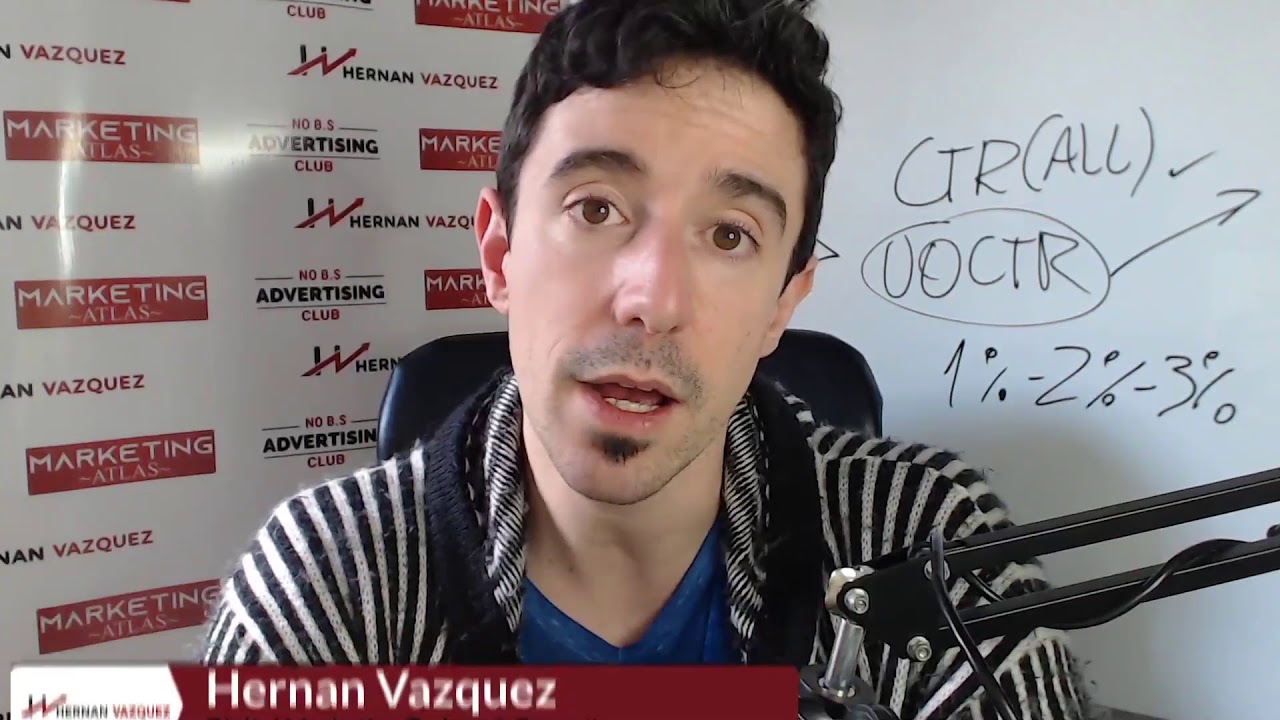
In Episode 26 of the Marketing Atlas Show, the host opens with a brief intro and explains the show’s purpose: to help viewers with paid media, email, and overall advertising questions. He debunks the common myth that advertising is a "magic bullet," emphasizing that ads only amplify an existing offer or funnel and cannot fix weak offers, sales processes, or funnels. He stresses that building a solid offer and platform (email list, Facebook group, Instagram presence) is the prerequisite to successful advertising. The episode then moves to live audience questions. The first question, from Jonas, explores Facebook’s new "sponsored partnership" feature for Facebook Groups, explaining how brands can formally partner with group admins to promote offers in a transparent, paid manner. The second question, from Arman, asks when a low‑spend ad set should be paused. The host outlines the concept of a "North Star" metric, the importance of focusing on a single primary KPI (e.g., cost per lead), and introduces the distinction between "CTR All" and "Unique Outbound CTR". He provides industry‑based thresholds (≥1% healthy, ≥2% good, ≥3% great) and advises pausing ad sets that spend around $10 without achieving at least 1% Unique Outbound CTR, unless the primary KPI is already meeting targets. Throughout, he reiterates the need for consistent advertising to build familiarity and trust, referencing Robert Cialdini’s work on influence. The episode concludes with a reminder to submit future questions via marketingatlasshow.com.
Questions this video answers
Facebook is rolling out a formal sponsored‑partnership model that lets brands partner with group admins. The brand pays the admin (or offers a cut/affiliate deal) and the partnership is disclosed as a promoted post within the group. It is not a boosted post; it is a transparent, paid collaboration that can be used once the feature is fully available.
If an ad set spends roughly $10 and its Unique Outbound CTR is below 1%, you should review the ad creative and consider pausing it—unless your primary North Star metric (e.g., cost per lead) is already meeting targets. Industry benchmarks: ≥1% is healthy, ≥2% good, ≥3% great.
Chapters
All right, what is going on everybody? Welcome, welcome, welcome, welcome to the Marketing Atlas Show. Today is, uh, what day is it? Wait, today's the 19th of August and we're in episode 26 of the Marketing Atlas Show. I hope that you guys are great. I hope that you guys are doing, having an amazing day today. Welcome to this show, and as you can see, I changed the scenery a little bit. So we have a little bit of a scenery change right here, right now. And you know, I hope that you guys like it. Yeah, it took me a long time. Took me a long time to just flip these things. You know, so so yeah, that's basically that's basically what's going on. Hope that you guys are great. Welcome, welcome. The main idea, the goal, the objective of this weekly show. Is to go live every week at 2 PM Eastern, and we go live on the YouTubes, we go live on the Facebooks, we go live on the Twitches, we go live— where else? We go live on Periscope. Periscope is still a thing, can you believe it? And I get a decent amount of views on Periscope, believe it or not. So we're doing that, and the main idea, the goal, the objective of this show is to actually help you with anything and everything that has to do with advertising, with, uh, with paid media marketing in general, email marketing, you name it. That's basically what we do here. And, uh, and, you know, and basically ask— answer your questions. So if you have any questions, please go to marketingatlasshow.com. That is marketingatlasshow.com. And I'll be more than happy to help you guys out there with your questions as well. In fact, you know what, I've been so busy and calls after calls after calls, and, um, that I haven't been able to actually check the, uh, to actually check the, the, the questions. And yeah, we have some questions there already. All right, awesome. What's going on, everybody? So let's talk a little bit about advertising in general, okay? And why I think that most people fail when it comes to advertising. And the reality is that, you know, one of the misconceptions that a lot of people have when it comes to advertising, specifically when it comes to Facebook ads, is that advertising is a magic bullet, okay? Advertising is not a magic bullet. In fact, advertising will not fix your marketing problems. It would only amplify what's already there. Let me say that again. Advertising, specifically Facebook, Google Ads, paid media in general, digital advertising, it will not fix your marketing funnel. It will only amplify what's already there. So if you have a poor, if you have a poor, offer, it would only bring more people to a poor offer, right? If you have a poor sales process, it would only bring more people to a poor— whoa, I apologize for that. That's, that's what I get to go live. Thank you guys. Um, so, um, so it would only get more people to a poor sales process, right? So that's basically what happens with advertising. So for instance, I was talking to a potential client, consulting client today, and we were on his onboarding call. I'm really excited to help those guys out because, you know, they have an amazing service, an amazing product. And one of the things that they're doing is they're basically going all in with organic, organic traffic, Instagram, you know, they have some outreach going on LinkedIn and all of that, and that's all good. And they're, the advertising part is missing. So we started talking about, you know, they started asking some really intelligent questions when it came to advertising. And one of the things that came up was the fact that advertising, you know, what are some of the misconceptions that people have when it comes to advertising? And one of the biggest misconceptions that people have, again, when it comes to advertising is that advertising will be a magic bullet. And it's not, it will not fix your marketing problems. Again, Advertising cannot fix a weak offer. It cannot fix a weak sales funnel. It cannot, cannot fix a weak sales process. So we were talking about the misconceptions and I told him, listen, a lot of people, they do advertising wrong. And the reason why they do advertising wrong is because they, they think that's a magic bullet. So what they do is immediately they start running ads to their sales funnels. And in most cases, that's fine. But they get discouraged when advertising does not work right away. And that's part of the process, okay? Advertising and advertising campaigns that work off the bat and right, you know, from the get-go, they're usually considered miracles, you know? I haven't seen an advertising campaign works right off the bat. Most advertising campaigns, they take some time, they do take a little bit of effort to make work. But if you stay, if you hold your course, if you hold your course when it comes to advertising, there is this high chance that number one, you will get better at running ads. Number one. Number 2, the pixel, mechanically speaking on Facebook, the pixel will get more intelligent, smarter when it comes to advertising and understanding who is buying from what and who is coming and not buying, right? Number 2. But also number 3, people will start getting familiar with your face, with your brand, with your logo, and it's really important to give people the opportunity to get familiar with your face. Nobody gets familiar with anything after a couple weeks of advertising or a couple months of advertising. It takes time, right? So for instance, last episode I was talking about Robert Cialdini's Influence book, which I still recommend from this week to this week, from last week to this week, I still do recommend it, by the way. But it's a great book, I do recommend you get it. And you know, he talks about, Familiarity. Okay, so how that familiar feeling can actually help you trust somebody, right? So for instance, when you start advertising, what usually what usually happens is that people will start saying, "Who the heck is this person? Who the heck is this man or woman? Who who are these guys? Who is this? Who is you know this company and whatnot?" But as you start advertising, you keep on advertising, which is the number one thing. It's easier to. to start advertising than to keep advertising. That's a phrase that I might put on social media, by the way. It's easier to start advertising than to keep on advertising. So one of the things that happens is that, you know, if you keep on advertising, you will breed that familiar feeling and people will start knowing, liking you, and trust you, okay? So again, marketing and advertising, it's not a magic bullet. It will not fix your broken sales process. It will not by any stretch, any means of the imaginations will go ahead and fix a poor offer. You can actually, as I told you guys before, you can actually get away with a really, you know, crappy marketing or really bad campaign or bad creatives or whatever, but with a good offer and a kind of mediocre marketing will actually go ahead and help you good at moving a good offer, a good product, a good service, a good software. But the other way around usually doesn't work. You know, if you have a poor offer, if you have a good poor product, Uh, you know, usually not even the best marketing in the world can help you. So if you want to start doing something for your marketing, for your advertising this week, is start finding a good offer, which is usually harder to do than going ahead and launching a couple of ad campaigns. Anyone can launch and go ahead and launch a couple of ad campaigns, but the hard part is to actually go ahead and coming up with a good offer. The reason why is because coming up with a good offer takes time, it takes effort, it takes testing, it takes takes tweaking, right? Coming up with a good offer means that you will need to be actively listening to the people that you want to sell to, that you want to go through several iterations of your product. Coming up with a good offer means that you need to build your email list so that you can ask them. You need to build your Facebook group so that you can ask your Facebook group. Coming up with a good offer means that you need to develop a platform, and usually developing a platform, meaning your Instagram profile, your Facebook profile, your Instagram followers, and all of that, it does take time, right? And it takes money sometimes. Like, that's why you advertise. So coming up with a good offer, it's the hardest thing to do. That's why you get a lot of people that they have a mediocre offer and they run a couple of ads, and instead of saying, hey, I got 200, 300, 500, 1,000 clicks and nobody bought, then it's the ads that do not work. I need to tweak the targeting, right? And it's usually not the targeting, it's usually the offer. So that is something that I do recommend you guys to focus on. Okay, so with that being said, let's hop into the questions right here because we have some good questions. Okay, cool. Let me actually go ahead and share the screen. And by the way, I'm going to be going through the questions of marketingatlashow.com. So if you have marketing and advertising questions, go ahead and ask them in marketingatlashow.com. Okay, cool. Let's go through this. All right, there we go. So we have Jonas. Thank you, Jonas, for joining us. Will you be discussing the sponsor partnership in Facebook groups? Yes. Indeed I will. So one of the things that Facebook is doing, it's rolling out this new feature and it's not active everywhere, just as a caveat. Usually the way Facebook rolls out features is that they will roll it out in a couple of, you know, focus groups or in a couple of, you know, specific territories or countries or specific browsers and all of that. It's the fact that Facebook is actually allowing us to have sponsored partnerships in Facebook groups. Now the way it works now, it's kind of a, you know, influencers has been doing this and group owners with a lot of group members have kind of been doing this in terms of, hey, you reach out to an admin of a Facebook group and what happens is that you can start talking with that Facebook group owner and/or admin and tell them, hey, listen, if you promote my offer on your Facebook group, I'll give you a cut or I'll give you free access or give you an affiliate deal or whatever, right? Now Facebook is going into the fact that people can actually start doing this from a more, I would say, open and honest way. Open and honest way from a perspective of, hey, if this is a promoted post, you need to signal it in your, in your group right now. Again, people have been doing this for a while, but now Facebook is allowing other people to actually come into talking with group owners and group owners can actually say, hey, we partner with X and X page X and X page being a brand page, right? We partner with X and X page so that you can actually get access to this discount. So it's a sponsored partnership or sponsored post in a group. Now, it's not the way that you might think as a sponsored post, which would be an ad, right? Or a boosted post in a group. That's not how it works. But it's a sponsored partnership, meaning that you would give either the admin a little bit of money, or you can actually allow them to promote your product or service through the Facebook group. So that is basically, that is basically what's happening. Again, this is limited. This is happening right now. This is actually going out there, uh, and you know, it's looking, it's looking good. But we will see how that works in terms of— we will see how that works in terms of how we can actually go ahead and implement this as they start actually, you know, opening this up to the rest of the people. They kind of, you know, they tested some of this stuff in terms of, uh, in terms of Facebook groups, and they tested some of this other stuff in terms of targeting Facebook group owners or targeting Facebook group members and all that, but it didn't work as well. So we'll see how that works and how that develops. Okay, cool. So let's go back into the screen share right up in here. And we have Arman, a faithful and loyal follower of the group and the show. So thank you, Arman, for chiming in. When launching multiple ad sets at a low ad spend per day, What is about a bad outbound CTR after spending $10 in that ad set that will let you know that you can pause the ad immediately? Okay, great question, Roman. And here's my answer to that question. When it comes to Facebook advertising in general, and when it comes to any type of paid advertising for that matter, what you need to consider is that there are always and almost always they will— there will be conflicting metrics in any dashboard, right? So for instance, on Facebook, What happens is that you will have conflicting, conflicting metrics because let's say that you're aiming to get a lead, right? You're sending people to a lead magnet funnel. So your goal is to get a lead, to get a lead for X amount of dollars, right? If you're sending them to, let's say, a high-ticket application funnel, your goal is to get an applicant for X amount of dollars. If you're sending them, let's say, to a demo for your SaaS, you get— your goal is to get a trial for X amount of dollars. Okay, so that is your goal. That is your what I call your North Star metric. That is the most important metric in your dashboard for that specific campaign, and it's really important that you're clear about your North Star metric. Usually, for most funnels, they're going to involve some some some sort of performance like cost per application, cost per lead, cost per purchase, whatever that is. All right, so that is number one. Now. When it comes to conflicting data, when it comes to conflicting metrics, what I'm saying is that maybe some of your ad sets, they have a great cost per acquisition, but they have some other metrics that they're not as good. Like for instance, your CPM might be too up, a little bit up, or your cost per click will be up on that specific ad set, or maybe your CTR, your unique outbound CTR, which is the metric that I take a look at that I pay attention to. Maybe your unique outbound CTR is way down for that specific ad set. So what, what needs to happen is that first off, you need to understand, hey, for this ad set, right, what is my North Star metric? Let's say that is leads. Okay. And I'm willing to pay $2 per lead. Okay. So what happens is that you might want to leave it running until you hit 300% KPI. So up to $6 or $8. Before killing that ad set. Okay. Now, if you didn't get any leads after $6, $8, $10, then you can kill it. Now, the best or a healthy unique outbound CTR, which is a metric that I, that I use— excuse me. And by the way, I don't use the other column or the other metric, which is called CTR All, you know. So there's basically a couple of— and I'm going to do this this way because I changed my, my whiteboard. As you can see, I changed it from from one place to the next to surprise you guys. So we have CTR. Can you see this? Yeah. So we have CTR All, right? And we have Unique Outbound CTR. Okay, the difference between these 2, if you put them side by side in the same ad set, it's going to be abysmal. It's going to be really, really high. The reason why is because this metric right here This metric right here points to anything happening in the ad, meaning the following: meaning that somebody will click on the ad, they might like the ad, they might share the ad. If it's a video ad, they might click the play button or unmute, and all of those actions count toward this. They count towards the CTR all. That's not what we want. We want to know how many people out of how many people are watching the ad or seeing the ad or getting the ad. Printed on their mobile phones or on their computers or whatever are actually clicking outside of Facebook, specifically when it comes to a conversion campaign, which are the conversion campaigns that we're going to be— the, the type of campaigns that we're going to be running the most. Okay, so when it comes to a unique outbound CTR, that means people that are clicking outside of Facebook. Okay, people that were on Facebook on their timelines, that was just scrolling, and they stopped, they saw the ad and they click and now they're out of Facebook. So that's why it's outbound. And it's unique because the CTR all will also count towards repeated actions. Let's say that I go ahead and I click an ad, I like it, I share it, I comment it, and then I press a lot of buttons in that same ad. They will all count towards CTR all. But unique outbound CTRs, that means that people are seeing the ad and each of them are clicking outside of Facebook. So I think that this is a really important metric for us to understand what's going on with our ads. Now, a good unique outbound CTR for most industries— and again, this is industry-related and market-related— would be 1%. So anything above 1%, anything above 1% will be healthy. Now, anything above 2% is it's good. It's really good, actually. So this is good. This is good. Anything above 3%, it's great. So if your unique outbound CTR is within these limits, above 1%, right, then you're good with your ads. Your ads are doing what they're supposed to be doing, which is getting people into your funnel. Now, if you're under 1%, then you need to work on the ads. You need to work on the copy. You need to work on the images. Because you want to make the ads more compelling so that you will get less impressions and more clicks, or more clicks for the same amount of impressions, if that makes sense, right? So this is a really good metric to follow no matter what you're doing, and again, these are mostly for conversion campaigns. If we're running a lead gen campaign, if we're running a Messenger campaign, if you're running a video views campaign, that's a different story. But for conversion campaigns, unique outbound CTR is really good. So anything above 1% is really good, it's good, it's healthy. Anything above 2% is really good. Anything above 3% is great. Okay, so if you're hitting 3% or more, then your ads are working. You're probably getting— you're probably getting really good results. Okay, now if you spend $10 and if you're seeing that and you didn't get any results, you didn't get any, you know, any leads or any add to carts or any purchases or whatever your metric is, then you may want to see, hey, is this ad set giving me more or less than 1% unique outbound CTR? If it's getting you less than 1% unique outbound CTR, then you want to go ahead and review your copy, you review your images and whatnot. So that is a healthy unique outbound CTR, but it will depend on the rest of your metrics. Now again, as I mentioned, you need to have a one, one North Star metric, which might be your cost per lead, right? If your cost per lead, which in this case it's CPL— I'm sorry, I'm new to this setup. As you can see, it's really different. That's why I'm having issues. But your CPL, your cost per lead, on this case, let's say that you're getting leads. This is more important than your unique outbound CTR. What I'm saying is that if your cost per lead, it's there for that ad set, even if you have less than 1% unique outbound CTR, who cares, right? Like, for instance, I have some clients that will come to me or some consulting students and people that you know I consult with, and they will tell me, well. My ads are getting buyers for, you know, for let's say for forty bucks, and my average order value is sixty. That's great. That's awesome, right? My my ads are working. My ads are getting buyers. That's fantastic. That's perfect. That's great. But my CPMs are too high. What should I do? Keep on scaling, right? Like it doesn't really matter because your CPMs might be high. Your CTR might be low. Your CPC might be low, but the North Star metric, the metric that you need to pay attention to, is not your CPM, it's not your unique outbound CTR, it's not even your cost per lead at that point, it's your cost per purchase, right? So you need to have a clear-cut metric that will tell you when to disable, when to enable, when to keep the ads scaling, and all of that. We'll have a lot of conflicting data, conflicting information when it comes to running your ads, and having just one metric to abide by And just having one metric to actually pay attention to makes things so much easier. It's crazy. Okay. So have that in mind as well. All right guys. So I don't see any additional questions. Let's see if we have anything else happening in the rest of the places that we have. Let me actually go ahead and hit refresh one more time because, you know, I learned this from Frank Kern, by the way, the more you hit refresh, the more money you make for some reason. And it's proven, it's proven it works. Okay, cool. So I don't see any more questions. All right guys, so thank you guys for joining me for a little bit. Again, if you have additional questions moving forward, go ahead and go to marketingatlasshow.com. That is marketingatlasshow.com to get your questions answered, and I'll see you guys on the next episode. Have a









