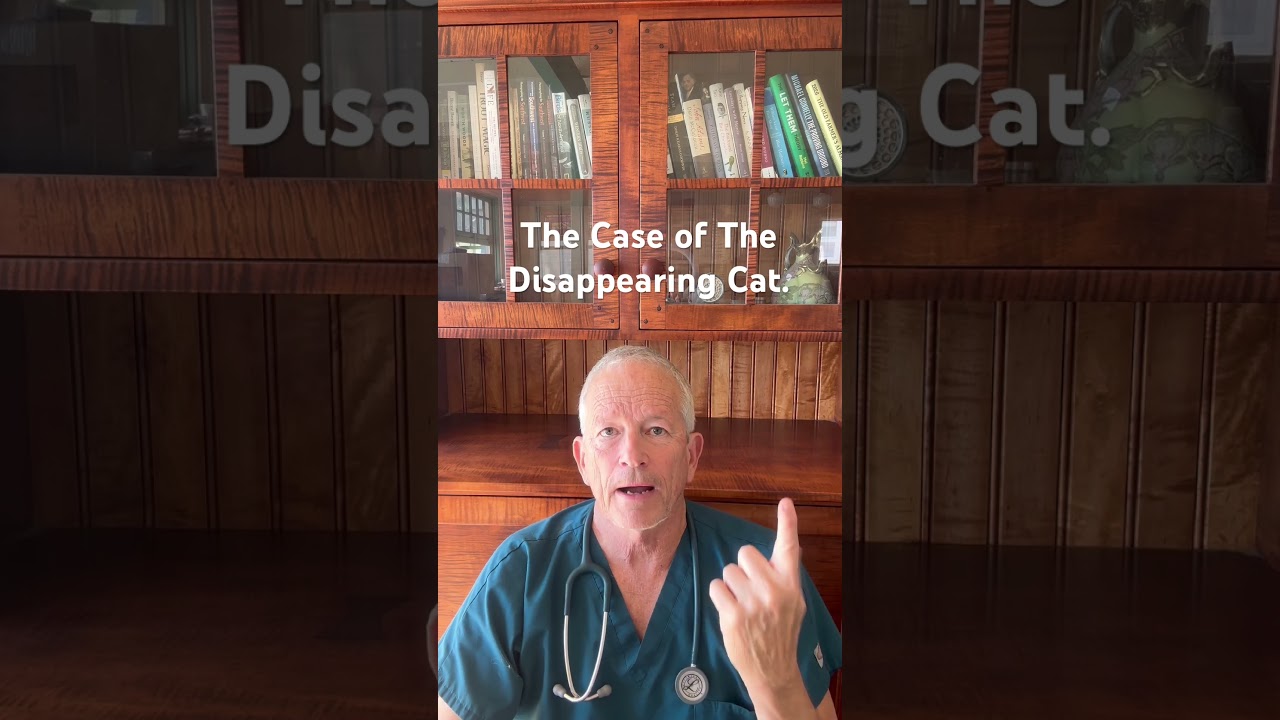
Dr. Kevin Toman, a veterinarian and longevity specialist, presents a protocol to extend cat lifespans by up to 20 years using rapamycin (Felicin), which slows heart disease affecting 1 in 6 cats. The protocol combines prescription drugs, dietary changes, dental care, and annual blood work for cats over seven.
Chapters
Well, hey you guys and welcome. I'm Dr. Kevin Toman. I've been a veterinarian for 40 years and I am a pet longevity specialist. Here's one thing I'll bet you didn't know, and that is current science suggests that you and I working together can increase your kitty's lifespan by up to 20%. How? With a combination of longevity science, correct veterinary care, and your home care. Listen, you guys, 20%, that's over 2 years for most cats. So why are we not paying more attention to that? I don't know, but I will tell you this: I integrate that science into my cat longevity protocol, and you are welcome to come along. Let's talk about longevity science for just one second. Over the 40 years that I've been in veterinary practice, I have been passionate about including longevity science in the care of every kitty that I see, whether that be simple things like dietary strategy, supplements that have been proven in my clinic or on PubMed, or the use of prescription longevity drugs, I will do everything I can to help your cat live their longest and best life. Let's talk a little bit more about prescription drugs, in particular rapamycin, or its branded big brother, Felicin. Rapamycin has been proven to increase lifespan by up to 14% in every mammal species studied to date. It also reduces cancer, cancer risk, reduces inflammation, and has been studied right now for its benefits in chronic kidney disease. But the biggest benefit of rapamycin or Felicin is the fact that it's now been proven to slow or sometimes even stop the progression of fatal hypertrophic cardiomyopathy in our cats, which affects up to 1 in 6 cats nationwide. Listen, you guys, for the first 37 years of my veterinary career, when I told you your kitty had HCM, it was a death sentence, but that is no longer the case with Rapamycin. So what does good veterinary care look like? Well, the reality is this: there are two things that comprise great veterinary care. First off is reducing inflammation, and the second is early diagnostics. What is not included in that list is the overuse of vaccines. Why? Because, well, let me, let me start with this. I'm a believer in vaccines, especially for outside cats, but what if I told you that every time I poke a needle through a cat's skin, I'm introducing the risk of fatal skin cancer? Does that change the calculation for you? Why should an inside cat be protected against outside cat diseases at the risk of creating skin cancer. It just doesn't make sense to me. So I'll stand down off my soapbox now and return to my discussion of inflammation and diagnostics. Okay, so if we exclude unneeded vaccines from your cat's inflammation, the second component to this is your cat's mouth. Cats are poster children for periodontal disease, which can not only create daily pain but also can shorten their life by up to 15%. What's the only way to solve this? With an anesthetic dental at your veterinarian's, and that veterinarian needs to take x-rays of every tooth in your cat's body. If your veterinarian does not have a dental x-ray machine, the Latin word for that is malpractice, and you should find a different veterinarian. Moving right along to diagnostics, every cat over 7 years of age deserves annual blood and urine tests. Why? Because not only does it give us an accurate assessment of their current health, but it gives us an early warning system down the road. What, what can you do at home? Well, certainly you can help us reduce your kitty's weight, because if a cat gets heavy, they're more prone to diabetes, they're more prone to arthritis, they're more prone to cardiac disease. So whatever you can do to take a pound or two off your kitty will be a huge benefit for them. The other thing that you can pay particular attention to though is their diet, and this is especially important if they have heart disease or bladder problems, and here's why. If your kitty has HCM or another heart disease, we need to make sure that their sodium, their salt level, is below 0.27% on a dry matter basis. Why? Because if it exceeds that, we're likely to create high blood pressure, which will come back to haunt not just the heart function, but also kidneys. The other thing is, however, and this is especially important for male cats, if you have a male cat that has been prone to bladder problems, you better pay very close attention to their diet. Why? Because different diets will create different urinary pHs, and you want to keep your cat's urinary pH down below 7. You can test this very easily with urine pH strips that you can find at any pharmacy in the United States, by the way. But here's the deal: some diets don't create acidic urine. Some diets actually create alkaline urine for an individual cat, and if that occurs, your cat is much more prone to bladder stones, and these bladder stones can pass down that little tiny urethra of a male cat and create excruciating pain and eventually fatal urethral obstructions. So listen, what I'm trying to tell you is we are all in this together, but My Cat Longevity Protocol is the very best way for for you to integrate the latest in longevity science with cutting-edge veterinary medicine and working together at your home care. I'm Dr. Kevin Toman. I run HelpingPetsLiveLonger.com, and I would be honored to help you. We are all in this together, and I look forward to hearing from you.