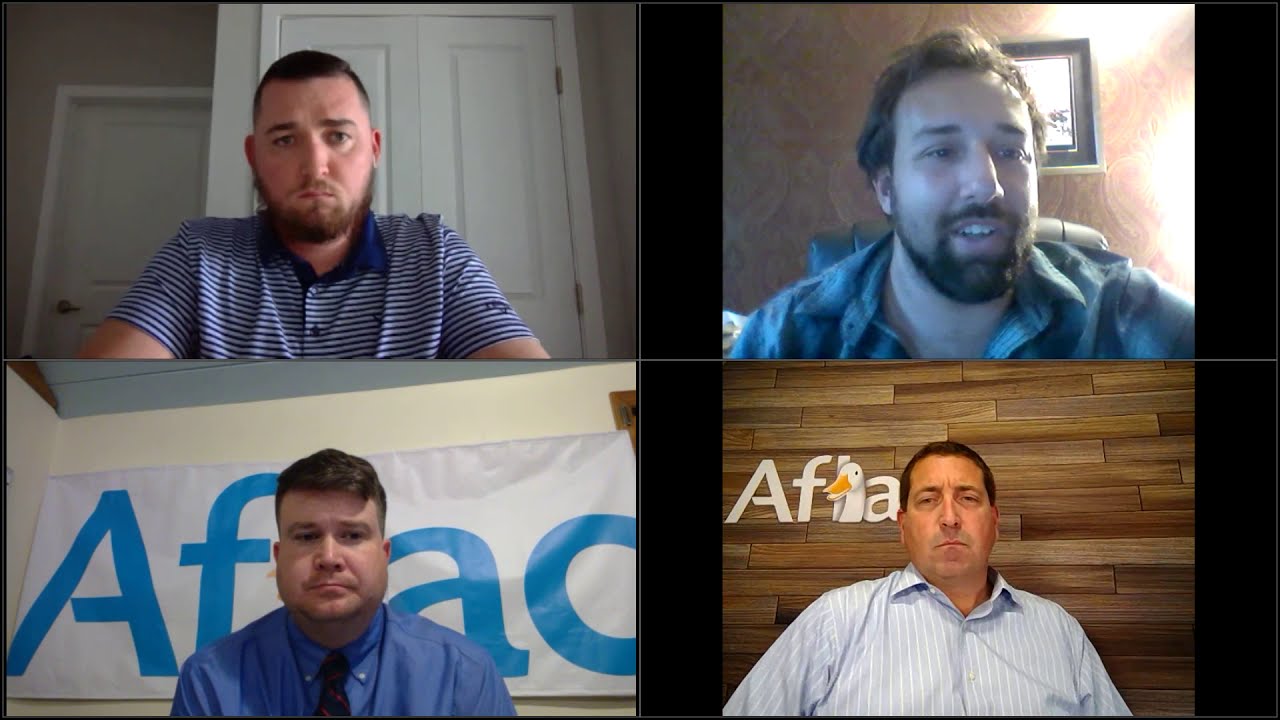
Prepare 4 VC Cohort 2 Demo Day

Four startups pitch at Prepare for VC's second cohort demo day. Barbroo makes customizable furniture with AR and local manufacturing. Ion Medical Safety built a SaaS platform to prevent surgical errors in a $21 billion market. NetWorld's Nekt Modem already has 3,000 clients and $350k revenue. Internet FM brings ad-free streaming radio to phones.
Chapters
Just get this recorded too.
Is Chris with us yet?
There we go.
Hey, Chris.
Hello.
Hello. Good. Yeah, we're all up here. Yeah, so thanks everyone for coming out. This is our second cohort of the Prepare for VC Accelerator and really excited to share all the great companies we're working with. And get to know, you know, have everybody in the audience here and also, you know, our exciting judges and team members on stage. So I'll give a quick introduction here, then I'm going to ask, ask our judges and panelists to, to do an introduction as well, and we're going to dive into, dive into the startup chats. We have 2 companies from our accelerator program that are presenting today, Tina with Hello Baru and Richard with Ion Medical. And then we've also had a couple audience members that later on are just going to give quick elevator pitches as well. And if that's something you're interested in too and we didn't get a chance to connect, just give me— or yeah, chat. select, you know, all panelists or myself in the chat and send a quick note on what your startup, um, what your startup is, and we'll see if we can get you up on stage later as well. Um, so, uh, yeah, from my spot, quick introduction here. I've, um, I've been involved in the angel and VC space. I'm involved with Boston Harbor Angels, EQX Fund, And started Prepare for VC almost, or about 5 years ago now, and the goal is really helping startups figure out the fundraising perspective, helping companies create better pitches, presentations, and really being able to share their story with investors, with customers, and potential partners as they grow and scale their business. So we've expanded a lot over the last year as well in terms of, um, now we have a community platform that a lot of you are on, and it's, it's been, uh, great to see all the interaction. We launched that about 2 months ago, and, um, there's been some great posts, connections, messages back and forth there, and that's something we're really focused on building up this year. And again, this is— we started on the consulting and advisory side and launched into the accelerator space back in June, and this is the second cohort of companies we're working with in this program. And really excited about how all the companies are progressing so far, and it's been great to see. I'd say one of the most exciting parts is how how all the companies we've worked with have been really helpful to each other as well, giving active feedback in all of our sessions and even making introductions to other people in their networks that can help each other out. So with that, would love to have— let's start with some of our team here. Yeah, Chris, would love to have you come up with an introduction.
Sure, great to be here. My name is Christopher Duby. I am a Prepare for VC team member. I'm also the entrepreneur in residence at Boston University for Trek Camp, and I'm also in the mentor program for the MIT Enterprise Forum. My day-to-day job is an executive coach. based around performance and helping startups with leadership, growth strategy, and all the intangible stuff that is needed to power through and to be successful on this, this long journey. So I'm very excited to be here and wish everyone luck.
Thanks. And yeah, now I'd love to have Yev come up and share a quick introduction as well. Oh, you're muted.
Very faint, Jason.
community for startups sponsored by Google.
Right now, I'm involved with a startup in premium intelligence, and I'm very happy to be part of our community.
Okay.
Startups, investors, advisors help each other move forward.
Perfect. Um, yeah, now, yeah, Steve, we'd love to have you introduce yourself as well.
Sure.
Thanks, Jason, and great to be here, everybody. I'm really excited for our founders, really proud of our founders. I feel like it's going to be an unforgettable Demo Day. So I'm Steve Vilkas. I've been involved in the Boston startup community for a pretty long time, and just to keep it short and sweet, A lot of you know me as the Dot Connector. So what that basically means is in my day-to-day and my passion, my why, I'm all about connecting information, people, trying to provide, you know, that very valuable, you know, connection piece and a little bit of stage fright, but not too much. I'm usually behind the scenes, but I'm going to put myself on mute so we can just Keep it going.
And then, yeah, we'd love to have both of our featured judges. Doug and Jaden are both investors, and we'd love to have you guys share. I guess we can start with Doug. Do you want to share some background on yourself as well?
Sure. So did you ask me, Jason, or did you ask the other guy?
Yeah.
Okay, so I'm old enough to have done a lot of different things. I'll paint with a light touch. So currently, the primary thing I'm doing is running a fund with a partner based in Madrid called Blue Goose Capital. We've been investing in Spain and the US, both coasts, all focused on early-stage healthcare device, pharma, and digital. And before that, and leading up to it, I've been involved in a lot of incubators and angel groups, MIT Angels and Sky Ventures, and been spending a bunch of time at Harvard Business School and ESAD, which is a business school in Barcelona. And recently, EIT Health, which is across all of Europe, organization with a lot of big institutions. It's healthcare-focused, and, and the same with CIMMYT. More ancient history, I've been a founder 3 times, 1 incubator, 2 tech startups, Bain history going way back, and some time at Microsoft as their GM for strategic partnerships.
Perfect.
And yeah, Jaden, we'd love to have you give an introduction on yourself and Xfund as well.
Absolutely. Hi everyone, my name is Jaden. I am— I work at XFund, which is an early-stage venture capital firm that started about a decade ago through a collaborative collaboration with Harvard University, Excel, and NEA. And so now we go out and we're agnostic to wherever, whichever schools people are from, but we do have this double bottom line of education as well as investing. And so we love to chat with founders who might be at the earliest of stages, and we'll even invest in people who have a strong idea, maybe they don't even have an MVP yet, all the way up until before Series A. And so we are very excited. I'm excited to be here and to hear what you guys all have to share. And prior to Xfund, I actually did work in the operating side of things at a company as the Chief Strategy Officer. Thinking about kind of how the different business lines within that company work together, and so it's exciting to to be on the other side of things and be able to use my experience in that space to chat with founders who are excited about building something new. So thanks for having me today.
Thanks for being on here, and yeah, and then just I guess a quick introduction: you guys are both gonna. Or everybody's going to hear, you know, the full pitches later on. Or I guess, yeah, coming up. I guess we'll start, we'll do the order of the presentations. So yes, start with Tina for a quick introduction, then Richard as well. And then, yeah, and then we're gonna have both of them do their longer 10-minute presentations with judge feedback and Q&A, and then audience feedback and Q&A as well. So, Tino, yeah, if you want to give a quick intro here.
Yeah, sure. So, um, hi, nice, nice to meet you all. I'm happy to be here. My background is in operations for 12 years between the US and Europe and corporate finance, starting in investment banking, then workouts and turnarounds, and then overseeing mostly manufacturing companies. And, um, I came up with this idea, uh, to— of Baru and the underlying operating principle because I was frustrated a few years ago by not being able to get a custom bookcase aside from succumbing to this medieval process. And so we've changed the industry and we've streamlined it and we've digitized all of those processes to improve the industry and make it less wasteful.
And then Rich?
Yeah, Richard Norris, founder and CEO of IOMedical Safety. I have a master's in technology management from Pepperdine, so that's some of my schooling, and also background in systems engineering and 15 years of healthcare experience working specifically in acute care hospitals nationwide in the implementation of electronic health records and patient safety and quality. And we'll be working as Ion Medical Safety to resolve some of the patient safety issues that exist in the world today.
Perfect. Yeah, Tino, I just enabled screen sharing if you want to pull up your deck here. And then for everybody in the audience, we do have at the bottom of the Zoom, there's a Q&A option if you want to submit any questions there throughout. We can basically— we can pull you up to stage to ask them during the Q&A portion. Each of the presentations are going to be about 10 minutes long, followed by the judges' feedback and Q&A leading into the audience session here. And then also, you know, anything you want to send through the chat throughout, we'll be monitoring. monitoring that as well. So yeah, Tino, take it away.
So hi, thanks for having me. My name is Tino Go. I founded a company called Barbroo. We've invented a way to revolutionize manufacturing. We're starting in the furniture industry because there's so much waste in it. It's easy to disrupt. At the same time, we're supporting local businesses. We're creating hometown jobs. And saving the environment. The furniture industry wastes $9 billion every single year on logistics and inventory management. The competition's inefficiency is Bahru's unfair advantage. The furniture industry has an 18-month operating cycle from design to delivery. Our manufacturing system shortens it to just 2 weeks. At the same time, Varu solves a problem that 1 of every 2 buyers experience. They find what they love, but they can't get it in the size, material, or color they need. Varu makes furniture buying super easy. Choose the model you want from our pre-engineered design catalog, customize in augmented reality, and we deliver it in 2 weeks. So here's how it works. Let me move this out of the way. Sorry about that. After you choose a product, you see it in your room while changing colors and materials. Size it to fit. When it looks perfect, simply click on the Buy button. And we deliver it in 2 weeks. If you don't want to use our augmented reality app and if you already know the specs, then order it on our website by choosing the color, material, and the dimensions for any product before buying. Those did— the digital manufacturing instructions are automatically sent to a hometown manufacturer.
Jason, do you want us to hold all questions until the end, or is it okay to ask occasionally during? I'm happy to go either way, so whatever you think is best.
Yeah, we can do the full presentation and then open it to the Q&A.
Got it.
Because ultimately we've got manufacturers with idle robotics, CNC machines everywhere. We've created a capital-efficient, zero-footprint distributed manufacturing network. We'll be less than 1 hour away from 135 million households. At the same time, we're saving the world. We're not shipping trees from Appalachia to China to Malaysia and then back as furniture. We're supporting local businesses, we're creating hometown jobs, we're reducing tons and tons of waste. And we're eco-positive. With every sale, we plant 3 trees to replace more than the wood that we use, to capture more than the CO2 emitted from the electricity generated and used and the delivery fuel from that local delivery. Here's how Baru can build better products than the competition for the same selling price. Our virtual supply chain avoids 50% of the cost structure in the furniture industry. The industry spends $9 billion for the management and distribution of inventory. Baru's eliminated most of those operating costs from our business, and we're using the savings for higher quality materials Local manufacturing services, higher margins to grow revenues, and higher profits for investors. We can maximize customer satisfaction. We're focused on it, on the things that customers care about: customization, high-grade materials, excellent customer service. Our competitors are at a disadvantage because their cost structure is so wasteful. We're selling wholesale to businesses as well as direct-to-consumer, but among consumers we have 2 target groups: adults under 40 who want it online, easy and fast and customized, and then all of the folks who've looked and looked and looked to buy, but they can't buy what doesn't exist. Barbers made it super easy to buy what every individual wants. We're expanding the market by about $3 billion from the existing $18 billion. Because that existing $18 billion of wood furniture is all crammed on the left side of this chart. Most retailers only offer, offer standard selections in limited sizes and materials. We're expanding buyers' choices to almost any size and configuration. And we're offering custom quality at crate and barrel prices. We're laser-focused on cut furniture for the home and office first. We already have inquiries for both home and office from buyers, and we can do both with the same manufacturing partners. And beyond furniture, we can work with the same manufacturing partners to dominate all interior renovation product— project. We launched in 2020. We partnered with Google in June on their employee perks website— program. Microsoft and Apple have invited us to participate in their perks program, which is managed by this company called Passport Corporate. We're now in 15 regions, all from customer demand. We'll add 45 regions as customer demand continues to grow. We're also working with office furniture dealer partners. We've got hundreds of profitable partnership opportunities. Our first partnership employee perks program has 700,000 potential customers. We're building partner relationships with designers, furniture dealers, and businesses with direct customer connections exactly at the time they need furniture. There are many benefits from these partnerships. We've got repeat customer revenues, low customer acquisition costs, partner sales efforts, and, and we'll still own those customer relationships because we get their contact information. Baru can grow up to $1 billion in sales and we'll have zero manufacturing investment or inventory because our manufacturing partners have already invested in their factories. We'll have manufacturing partners in the top 60 metro areas with a manufacturing partner within 1 hour of 2/3 of the US population. Anyone in those regions can buy from VARU with a few taps on their phone. We've had tremendous growth in the past 6 months with little marketing. We've had growth from the 3rd quarter to the 4th quarter of 87%. Our average Q4 monthly growth rate was 57%. We're already on trend to beat December sales cadence. 29% of our revenues are from repeat customers, which is awesome for a non-consumable product and for a company that's on— that's only been selling for less than a year. I've recruited the rockstar team. Kevin has been a software engineer his entire life. He's managed major projects for NASA and GE. He built our awesome AR to e-commerce platform. Melinda has been in digital marketing since starting at Google. She's advised Fortune 500 companies like Walmart, Volkswagen, and Procter Gamble. Leland is recognized nationwide for manufacturing automation. He was the 2019 president of the Cabinetmakers Association, so he's well trusted in the industry and he knows it deeply. Ashton is a veteran growth hacker. She's expert in high-converting digital marketing and social media. My own background, as I've explained, is in operations and finance between the US and Europe. I've overseen hypergrowth from $12 million to $85 million in just 5 years. I've also overseen a $1.2 billion business unit. I also— I wrote the patent application. We're raising a $1 million seed round. We'll We'll use 70% of it to accelerate our revenue growth. That includes sales, marketing, and corporate partnerships. We're focused on corporate partnerships because we've seen that's a cost-effective way to get revenues. We're able to focus on revenue growth because we've already invested $345,000 on our technology. Angels invested $260,000, founders invested $170,000. We foresee a lot of strategic partners and acquirers among online and traditional businesses. We'd be an incredible bolt-on business for Wayfair or Alibaba that could scale super fast with a massive existing customer base. This could easily add billions of additional revenue and profits for the company that puts their marketing juggernaut behind an acquisition like Baru. As we use Varu's technology for non-furniture categories, there'll be new sets of major partners and large buyers. We want the right investors to join Varu. We'll revolutionize manufacturing, we'll create hometown jobs, we'll rebuild local economies and save the environment. This is really the perfect time to invest in Varu and pour jet fuel on the fire to, to grow revenues massively.
Great presentation. And yeah, I'm going to turn it over to Doug and Jaden, whoever wants to start to kick off, you know, feedback and Q&A here. And again, everybody else, you know, you can either use the Q&A function, we'll call up, and we'll call, you know, we can call anybody up to ask a question from there, or, you know, you can also chat us in the, in the chat box with any questions as well. Tino, actually, if you want to leave your presentation up for, for the Q&A too. Awesome.
Would you like to go first, or would you—
Sure, sure, I can, I can ask questions. Maybe we can toggle back and forth, because I'm sure some of the same questions—
Once I get rolling, I'm going to need a few minutes.
You'll keep going. Okay. Okay, uh, okay, great, sounds good. Um, thanks for sharing this with us, Tino. Uh, my first question is kind of about the manufacturers. Have you done any, like, research with them to see if they're willing to do, like, single-order, uh, manufacturing? Like, if somebody orders one product that's a specific way, are they going to be, like, excited about doing that one print?
Yeah, we're already, uh, shipping and selling and shipping in 15 regions. After we get, we get the sales, we find the local manufacturing partner. They have no problem with it because of the target manufacturers that we're partnering with.
Got it. And how does the end consumer experience? Like, open the box, are there instructions for the assembly, especially with it being a custom product?
They don't— it's completely assembled for them. It's delivered assembled for them and There are no hidden costs in the transaction. You purchase and it shows up placed in your home in the right place. It's all, it's all, yeah, it's completely turnkey.
And then what, what type of operating team is necessary for this? Like, are consumers working with a designer that's helping them to say, hey, this design that you came up with is not feasible to physically produce? Maybe you should change the dimensions, or is it just like completely automated where they say, this is exactly what I want, and it's delivered whether or not it will be like structurally sound?
No, it's all been pre-engineered and pre-designed to be within a range of manufacturability and a range of, you know, we've pre-engineered it. So if you think about it, it's Think of buying shoes. When you expand or when you change a shoe from a small to a large, all of the internal components and all of the mechanics, all of the stitching, all of that changes according to rules. We're doing the same thing with furniture.
I see. Awesome. And I'm wondering about defensibility. How do you ensure that Wayfair doesn't decide, we're just going to go do this without you? Which part of it is patented? And what stops them from just rolling this out?
Okay, so the patent claim is on the system of manufacturing using augmented reality as the data generator, as opposed to a reporting tool for catalog data. And the other aspect, which is even more defensible, is we're treating our suppliers like customers. We're treating it as a true multi-sided marketplace.
Okay, awesome. And long-term, are you imagining that these wholesale orders are going to be more of your target customers versus the direct-to-consumer type of situation? What's the— when you see this 10 years from now, what's the vision for the company?
We are a supply chain solution, so we don't necessarily have to— each customer group, whether wholesale or direct-to-consumer, may want some sort of level of exclusivity and some sort of a different complexity of choices and to avoid the paradox of choice. But there— we're a supply chain solution ultimately. We can serve the individual who has this odd spot And we can serve the, you know, certain wholesale customers who, who have to increase their conversion rates.
Got it.
And I guess last question, what are you looking for in your investor partnerships, apart from like the monetary component?
I think there should be good alignment in the fact that we're doing— we're creating a marketplace. And we're, you know, there's, there's a huge social impact effect because we've taken $9 billion of nonproductive costs through logistics and we're reallocating it back into our communities and better materials for our customers, the buyers of the products. And so part of creating this marketplace is incentivizing all of the folks differently than is in a typical vertical integrated manufacturing system. So there's got to be good understanding of that.
Got it. Well, thank you so much. Doug, take it away.
Okay, well, first of all, just a general comment on the presentation itself. You covered a lot of ground very effectively and very efficiently, so very high marks on delivering your message. Stepping back from presentation quality and focusing on questions that I begin to have, thinking as an investor, to begin with, and this is going to overlap with what Jaden started with, but I want to push on it harder and go deeper into it. As I listened to this story, You know, you are, of course, based on the design of this system, you're very dependent on those manufacturing partners to be able to deliver on-time, high-quality goods, et cetera, et cetera. And while it's easy to talk about those things, it's not easy to get it accomplished. There have been other attempts made in the past, where people were really trying to kind of customize to the desires of individual customers, and in general, they didn't work out well because they didn't scale well. Now, a lot has changed, and the last time I came across this kind of idea was some years back, but, but I think that, that issue is still present. So if you could talk a little bit more about why these manufacturers who have you know, manufacturing capacity that's being unused. And here they get, you know, individual order for a certain size, a certain color. Are they— are the customers able to create any changes in the design, or is it just a template and all that's being changed is dimension and color? Just talk us through a little bit more about how you're going to, you know, deliver on this promise of high quality, 2-week delivery, No problems. You've got a lot of different manufacturers in this whole thing. I'm just trying to get my arms around where quality control comes because you've got so many dials that you're, you're able to twist and your supply chain is as fragmented as it is. It's, it's the, it's the nature of what you're doing, which sounds very exciting, but I'm starting out a little skeptical on the ability to deliver this at scale.
Yeah, and so this is the, this is the customer's experience. They choose their product class, they select a style, they scale it to the size they need in the materials that we offer and specify, they purchase.
Are there any limits to adjusting the size? I mean, can I have it any, you know, different people say, well, I wanted 30 inches, I wanted 32, I wanted 43.5. I mean, are there any limits? Is there any bundling of sizes, or you just think this will work at scale even if people are working within a style that's been defined, but size could be anything they want?
It's within the realm of— within the bounds of manufacturability. So we've pre-engineered it for the existing materials, the raw material stock. and manufacturability.
Okay, but let's focus on, on the actual, uh, delivery, you know, the machines and the people, to the extent it's not fully automated.
It is.
Let's assume that, that in one day they get, um, 10 orders for a particular kind of furniture, and each of those 10 orders is choosing a different design and, and a different set of sizes. And then the next day you get 10 orders for the same design, but every single example is 1.5 inches different in every dimension. Now, when the manufacturer goes to make good on these, on these very attractive promises, tell me about how they're going to be able to reset efficiently every single time for every variation in size. Because manufacturability is, you know, in a certain sense, doesn't feel like a limit at all. All things are manufacturable. The question is, how can you rapidly and efficiently shift as these parameters shift to deliver on time, with quality, 2 weeks, at the right price?
In the old days of mass production and batch production and setup costs, Yes. That was true. We've avoided that. We have the— in step 1, we have a 5-step system. In step 1, buyers preview and customize our pre-engineered, pre-constrained products. They can select the materials that we've already— that are— that we are offering. So everything has been designed and engineered within a range of sizes.
Is manufacturing completely automated here? You just type in the specs and the final product comes out?
Almost. From that customer order, we are encoding— we are wrapping that order with a code that drives the robotics, and we are ordering the materials that we've already pre-specified. In the third step, and we are sending it to a hometown manufacturer with the CNC automation, and we are delivering the materials from local distribution to that facility.
What is that?
Uh, it's a robot.
Okay, so these, these hometown manufacturers with idle capacity, they're fully set up to have this, this kind of automation, fully robotic?
Yes.
Because that's essential. So yes, my questions were generated by being much more familiar with, you know, earlier forms of manufacturing. So if this is fully automated and robotically done from soup to nuts, this becomes very interesting, particularly if the adjustments from one order to the next order also don't create any issues. And I, I guess by definition you're asserting that they don't.
That's correct.
Yeah.
Wow.
And, and they've already made these investments in this fully automated robotic system?
That's correct.
Wow.
All right, so that's— this sounds really interesting based on the answers you've given. Let me, um, move just for a second to, um, And this is brief, and then I'll be wrapped up here. But I'm— first of all, the terms that you propose for the financing are, you know, I think you've gone right to something that you can sell easily. And that is always my advice to every startup. Don't waste time pushing the envelope on the terms. Get that out of the way. So your 20% discount, $4 million cap is absolutely— I wouldn't even talk to you about it as an investor. I'd say, okay, if I believe the rest of the story, we have nothing to talk about. Those terms are fine with me. So again, thumbs up on that, because lots of times people don't do that. The million-dollar seed, what kind of runway is that going to give you?
That'll give us 18 months with our, with our full core team, and we're a gross margin driven business, so that could take us into the tens of millions of sales.
Yeah, well, let me just say first of all that that's exact— that's the perfect answer that, that you just gave. So it's kind of like your terms. Um, I'm always unhappy if it's 12 months or less. I'm always happy starting at 18 months. Because it gives you enough time to get to meaningful milestones and have another 6 months to raise the next much larger round. So again, thumbs up on your ideas around runway and finance terms. This sounds very interesting, so I'd like to have a conversation with you.
That would be a great pleasure.
I have one more question that just came to mind. Have you seen any competition in the startup space that's doing anything like this yet?
Yeah, there's been rumors around a company called Made and Modern, but they're building a plant in Sacramento, and they raised the fund. I saw a pitch on Um, I saw that they raised a $5.5 million seed round. Um, a veteran of Dotonbori, which is a company that imploded due to logistics and inventory and working capital costs, um, was— is one of the co-founders of Made in Modern. Um, other than that, but they're not selling yet, so I don't really know what they're really doing. I just heard rumors. Um, I, I'm not aware of anyone that's doing exactly this. We're— we are, with our operating model, we've addressed a lot of the issues in, in prior businesses that have tried to do this distributed manufacturing model, you know, by completely making it turnkey for both the buyer side as well as our client manufacturer side. We've completely made it super easy for both sides of the transaction, and prior companies did not.
Got it. There's a company that I saw recently that's a little— it's— they're in this along the same vein with custom designs accessible to everyone, available in bulk as well. It's called Naya. They're a Harvard i-Lab startup. You should definitely check them out and kind of see what veins are the same and like where you guys differ, differ, because they're, they're doing something very similar. And so this reminds me of that.
Yeah, but they haven't gone all the way to delivery. They're letting you design it. Yeah, they're, they're only taking you to the step of the design what you want. We're not giving that. It's— we're not a— we're not a white We're not a blank slate where anyone can design their thing.
Mm-hmm.
You know, eventually we'll have a login where interior designers— you know, consumers right now have 20,000 variants for every model that we offer. And once we have that login for professional buyers like interior designers, then they'll have 200,000 variants because they're equipped to deal with that level of complexity and choice. And they need it for their clients. But yeah, it's— we're not like Nayo where you design your own thing and then try to get it manufactured.
Got it. You're more— these are specific options you have, choose from these. And I guess just last question, thanks for entertaining all of our questions. For this Baru technology you're talking about, you mentioned that these robots are already in every manufacturer's warehouse. And so what do they need to add to what they're already doing in order to be compatible with this? Like, what tech— is it just a code that they're running? Is there like a specific hardware that they need to install? How does that look?
It's not every manufacturer, but enough manufacturers out there. There are thousands. From conversations, I estimate there are 4,000 of these machines nationwide. And so, but we're only We're only needing 300, less than 300 to cover the top 60 metro regions in 1-hour delivery radiuses.
Got it.
And so that's, you know, we achieve $1 billion of sales with just 3 hours of manufacturing machine time per day in each of those workshops. That's how it, you know, that's 2,000 units per 1-hour radius. So that could be That could be the, you know, the Boston area. We have 2 workshops, one on the North Shore and the other one a little bit southwest of Boston. So imagine those 2 workshops working 3 hours a day, serving— delivering 4,000 units per year and $6 million worth of sales per year. So we're not assuming a deep, you know, ton of— it's super scalable and it doesn't assume deep penetration where we need to go head-to-head with other retailers.
Got it. Well, thank you.
Sure.
Yeah, no, great questions and feedback there. And we had a couple audience questions. Kind of showcase now. And let's see. Yeah, so one— just trying to figure out if this pops up on the screen or not. But yeah, one from Stefan about what type of returns have you had and is the AR measurement accurate enough to not have this happen?
Yeah, we've had one return over the past 6 months, and it was not due to the product issue. It was, I would call it, discretionary. And so what we did was we, we took it away, we refunded the, the purchase price, and, and as a dissuasive As a dissuader to that, we've added a restocking fee now.
Sounds good. Yeah, and then the other—
Also on the measurements, we always ask for them to measure because there is, there is an error rate with the augmented reality still.
Yeah, and then the other question we had here from Anon is How do you ensure reliability of the product with such high variations in product design?
You know, it's— we're not doing anything different from a custom cabinet, custom kitchen cabinet maker. And the machines are the same machines. And so it's— we've pre-engineered it so that there's high reliability in all of the sizes that we offer, in all of the materials that we offer. We control quality by, by producing the machine code, and the machines will cut with 1/1000th of an inch precision. And we also specify the materials so that, that also contributes to the quality control. And then the workshops that have these robotics, they are already the, the top of their region, they're the best in their region, and these, these manufacturers, they, they are regional operators, they live and die by their reputation. And so we further reinforce the quality control and the desire to perform well by delegating down to them all the way to customer contact. And so they have their own reputation on the line also. Perfect.
Yeah, again, great presentation, great answers all around, and appreciate all the feedback and questions here. So yeah, I guess if you stop sharing. And yeah, I'm gonna post a quick poll here. I'm gonna repost again after Rich's presentation too. But yeah, this is just to collect interest for after the presentations here. And then I'll also be sending this out in terms of, yeah, to all the attendees afterwards, to, yeah, in a follow-up email as well. But yeah, if you want to start sharing your screen. And yeah, excited to have you introduce Ion Medical to everyone.
Jordan had a question. I've met with Jordan a year and a half ago, and he asked why it's taken us so long to raise funds. We've chosen to build our business because it's been a struggle to raise funds. And so, you know, forget it. Well, we, we bootstrapped until now. Now we're growing. Now we're in 15 regions of the country. We know how our operations scale. We know how we have a predictable path to unit economics. We're profitable in January per unit. And so, yeah, now we're reintroducing the fundraise to be able to hopefully get funding a little bit more easily than, more easily than a year and a half ago.
Sounds great. And with that, yeah, I'm just gonna close this here again. I'll reopen again after Rich's presentation. But yeah, I would love to have Rich, excited to have you come up and share, you know, the exciting work you're doing with Ion Medical Safety.
Sure. Richard Norris, I'm the CEO and founder of Ion Medical Safety and the Precise Tech Corporation. We are a nonprofit and a for-profit public benefits corporation in a unique organizational structure to deliver our products. We're also working on a founder circle peer-to-peer donation program that's going to be a huge impact for this social product that we're putting together. The products we are developing are the Precise Surgical System and the Ion Life application. We are a software-as-a-service comprehensive system that is going to be designed to prevent medical errors and save patient lives. Some of our major benefits from developing such a system are going to be improving patient outcomes, developing a learning healthcare research system which no one has ever built, and we're going to be the first. We're also going to have the ability to do surgical best practices development in the— with the ability to advance medical science. Our target customers are going to include acute care hospitals, ambulatory surgery centers, and plastic surgeons. There are 48 million plus surgeries every year done in the US and 300 million worldwide. You can think of us as Providers will need our products and services everywhere the knife touches the skin. This is going to give us a US market opportunity of approximately $21 billion. The problem we're solving is medical errors. Medical errors have now been identified as the 3rd leading cause of death. There's over 440,000 patients every year that die from preventable medical errors. This ends up having an extreme cost on the healthcare system of about $23 billion in the US and $318 billion globally. So it's very, very costly to the, to the healthcare system, a lot of waste. So the reason we're going to be doing this now is what we recognized is that providers don't have a comprehensive system or platform or software as a service to prevent these medical errors and save lives, and that's what we're going to develop. Our solutions are going to include 2 products. One is the Ion Life, and it's going to be a personal learning healthcare system. We're going to be focusing on surgical processes that go across diagnosis, pre-op surgery, post-op, and research. Our Precise Surgery is going to include managing your surgery, communications with your provider and your caregivers, You'll understand your cost of surgery before you have surgery and all the impacts of that through your insurance, as well as you'll own your personal health information, which is something that everybody wants but nobody really delivers upon. And then also be able to participate in research. The other things we're going to provide is the ability to prevent surgeries by using our Ion Life application. You'll be able to proactively remain healthy. You'll have artificial intelligence personalized health profiles that'll prevent the chronic diseases that usually lead to a surgery. So the goal here is to keep you healthy and out of the Precise Surgical System through our solution called the IonLife Personal Learning Healthcare System. Our main system, which is the Precise Surgical System, if you do get into a surgical situation, it will be the world's first learning healthcare system. And what we mean by that is that it learns. So in other words, it will, it will gather through advanced technologies on this platform the ability to learn and deliver on the promise of personalized medicine for each individual person going across the surgical care spectrum. And this will advance medical science. The system will work on lowering the healthcare costs in the system. Provides metrics, transparency, and accountability. It delivers on best practices. Compliance is really important. You know, as a surgeon, you just can't go off and do what you think. What were the best practices around that? Also communication, which is the number one thing that happens in patient safety so that the teams work together and this creates cultural competitive advantage and it improves those patient outcomes that we're going after. This is an architectural design of the system itself. You can see we start with the patient care platforms and diagnosis at the top, across surgery into pre-op. The most important part here, and what we don't have today in the surgical process, is the learning healthcare system. This is where researchers can influence practice and where the practice can also influence research, and this information can be shared and brought into our command centers into our artificial intelligence engines and algorithms and building out our knowledge network learning systems to develop best practices and also deliver on blockchain and other promises. The other things that are important is the provider technology platforms of precision medicine and genomics, all the electronic health records that are out there, and the surgical technologies like Da Vinci robots and other things can all interface with this system and all act together as one system on one major platform to optimize the surgery for you as personalized medicine is realized. Our large market opportunity here for the US, there's over 6,200 acute care hospitals at about $1.21 million in revenue a year. We have ambulatory surgery centers a little less at $871,000, and also plastic surgeons making sure that they're maintaining best practices and compliance at about 661,000, giving us our total market opportunity of $21 billion. And this increases dramatically because of the number of surgeries that go into the world, about 6 times larger, about $126 billion. So this will be a large multi-billion dollar company. Our market feedback so far, last February we were asked to go to Startup Grind 2020. We were selected as one of the top 300 startups in the world because of our social impact and the ability change surgeries and impact surgeries and mainly improve patient outcomes and help people not be hurt through the surgery process. We've talked with Johns Hopkins University. They've indicated their engineering schools would be very interested in our project. They want us to get with them as we get further along. Also Penn State Hershey Medical Center, we've spoken with them and they, they were wondering if we had this built and they're really interested in our product. So we've had great market feedback and some validation there. as well as being selected as the top 300 startups in the world. Our competitors that are in this space— this is a new area that's being developed across the healthcare spectrums. There's a company, Surgical Safety Technologies, they're out of Canada. They've developed what they call an OR black box technology. They check the boxes here under patient safety and outcomes. They do have the learning healthcare research built into that, so the surgical teams can learn from this recording that goes on in an operation in the operations room. And that creates a cultural competitive advantage because those teams can work together and learn. So they're a really, really good— what we see as a potential partner in this space. Also, Active Surgical is an interesting company. They are run by some physicians that received a $10 million grant from the federal government. They went off and developed some surgical tools that gives surgeons the ability with augmented reality to, in real time, visualize when they're performing an operation with their surgical tools to see where blood is perfusing through particular tissues so that they don't nick an artery or cut a vein and have a bleed in the middle of a surgery, which is a scramble to stop the bleeding for the patient. And they also are into the patient outcomes and safety and in the learning healthcare research there around that with the cultural competitive advantages. We see both of these companies as potential partners. Our goal is to check all the boxes across here. We have the ability as a nonprofit to raise donations. We have the ability as a for-profit public benefits corporation to raise investments. So we intend to have a large social impact. We will do the patient outcomes and safety, the learning healthcare research. We're going to provide our system to providers for zero cost. So they're gonna be able to adopt our system and then customize it to their environments. So the major costs of the systems are going to be foregone, thus lowering healthcare costs. We also envision a way for providers to do clinical franchise model where they will be able to take their best practices and franchise them back to other providers and generate revenue, which also lowers healthcare costs and helps providers. And best practices development is always important. We have the cultural competitive advantage. We have an integrated mobile app. And we also intend to do a vertical on malpractice insurance offering, ensuring our system is the best and ensuring those providers that use it and become certified on it. Our team is put together of a group of technologists and medical professionals. Bert Sedeño and Neil Novotny are from my master's program at Pepperdine. We have Dr. Bruce Offutt, who's our CFO, and he's also a lawyer that helps us with contracts and other things. on the nonprofit side and for-profit side. We have David Scherer, who's an engineer, and he's helped me with some of the systems engineering on this. And we have Dr. Scott Rothley, who's an anesthesiologist, who gives us advisory help on the development of our product specifications, which we're in the middle of developing further. Our go-to-market plan is we're going to deliver Precise Surgical System for zero cost. We're going to target our acute care hospital surgeries Ambulatory surgery and plastic surgeons. The goal with the Precise Surgical System through the PreciseTech Corporation is to drive revenue through 9 revenue streams, which is licensing, upgrades, maintenance, the custom implementations, mixed model surgical suites. We have our Eye on Life application that'll have a revenue stream, trainings and certifications, Precise Surgical System franchise and clinical modules, and then also our mouth practice insurance offering. These are some of the breakdowns that we have right now for financials. Our donation revenue streams, we're driving our Founder Circle peer-to-peer donations that we're rolling out that just launched about a month ago. We're working on major gift donations right now from major corporations. We also have a lobbyist in Washington, D.C. that's working for us with government grants through FEMA and other government agencies to provide us the funding to develop our product specifications further. And this is all donations, so this will offset any equity investments. Also, our provider revenue streams, as we had discussed, the PreciseTech Corporation will have this implementation, non-recurring, bringing the custom implementations into the providers. We have the licensing, the upgrades, the IonLife application. We have Precise Surgical System maintenance, trainings and certifications, franchising. clinical modules, the mixed model suites, and the malpractice insurance, which will all drive revenue into our organization. Our funding phases in product development right now, we're in phase 0. We are looking for about $4 million to build out our specifications and demo planning and MVP. That'll take the rest of this year to get that nailed down so that we can begin coding and product development. Moving into 2022 and 2023 to build this out, get the pilots in place, work closely with acute care hospitals as the first clients early in the product development stages so that we get it right for them and we know and we vet these things out through the simulations and the pilots. Then we go into product launch in 2024 and then we move it to other clients and move it forward. So it's build once, use many. as we go across and grow our client growth through 2025 and beyond. Our targeted investment here is about $4 million. We're looking for this product development specifications through SAS, which is the largest private software development company. We've spoken with them. They said, yes, we can put together specifications, a demo, and an MVP for you. We're estimating that to be about $2 million with teams that will need to be brought in working with clinical operations in an acute care hospital sandbox to test that. EHR and integrations and other things across the platform and the high technologies we, we propose. Also, we're looking to establish our operations in Massachusetts. We have identified through TechSpring and MassChallenge and others, there are sandbox areas even through MIT that you can go into and actually develop your products through these things with actual interfacing to EHR systems and other technologies. We want to build out our team resources. We're looking to build out our board of directors and advisors, increase marketing and media awareness. And then there's always the legal ramifications of all things. Currently, we have a 506 exempt securities offering that is in place. We would like to also grow this into more crowdfunding, like a WeFunder campaign, and also do Regulation A+ offerings. So we're thinking about $500,000 to get out there and get into the private placement market, market and work with broker-dealer networks to raise the additional funding to build the system. And this is our contact information, and thank you so much everybody for listening. I'm open for questions.
Thanks, Rich. Um, yeah, great presentation, and yeah, great job here. Um, excited to open it up to Jayden and Doug, and again, anybody else, um, in the audience that has questions, uh, please use the Q&A box or the chat feature, and we'll get them asked accordingly.
Amazing. Doug, do you want to start this time?
Well, I was gonna say your starting worked well the last time, but if you prefer that I start, I will.
It's up to you.
All right, all right, so you made the first offer, I'll take it.
All right, sounds good.
So Richard, it sounds like a very interesting project. There are a few things One or two things I want to offer as suggestions for the presentation itself, and then there are things that I'll focus on thinking as an investor. So, and, and these will be— these first couple of thoughts will be easy to deal with, but I do think it's important. Um, in terms of the, um, the way each slide is composed, these are very, very busy slides.
Yes.
You've jammed a lot of information and You know, when you're making a presentation, particularly if, you know, God willing, we're able to do presentations in person in the future, people are going to not be listening to you the way you want them to. They're going to be studying all the detail in these slides and trying to figure out what all those words say. What you want the slides to do is frame the kind of— that part of the conversation that you want to have with them. So they use the slide to quickly get a view on like, what are we going to talk about next? And then you want them looking at you. You want to be very careful to avoid really, really busy slides.
Okay.
At least this is, this is my view. Another thing is, you know, the, the nature of the language that you've chosen. I have no doubt that this system that you're talking about can deliver a lot of value. But When you start out telling me anytime a knife touches the skin and prevent medical errors, I will tell you as a listener, what I was expecting to hear is not this is a, you know, digital-only software as a service platform, but somehow, you know, I almost was thinking, wow, is this automated surgery? Because when I think of medical errors in the surgical context, I'm thinking of incorrect surgical technique, which this doesn't directly address. It's not a substitute for bad hands on the surgeon or incorrect diagnosis. So all I'm suggesting is that make it really clear right up front that what you're talking about is this data collection, you know, distribution of best practices, etc., etc. This is not a substitute or a new way that surgery actually happens.
Okay.
So that's just one other thought on that. Um, in terms of, um, you know, thinking about this as an investment opportunity, the first thing, you know, I mean, I do have some sense of what a 501 is, um, you know, not-for-profit. As an investor, I immediately start thinking, wait a minute, if this is 501, why am I here? And then this for-profit public benefits corporation, I actually have no idea what that means. And I practiced law for 30 years in large firms doing nothing but M&A and public offerings and venture capital. Maybe I forgot, but I just have no idea. Maybe it's something new.
It is.
It was something where it's like, to me, okay, if it's not-for-profit and it's a for-profit public benefits corporation, this doesn't sound like oh boy, this is going to be an opportunity to make a lot of money. And just one more thing on this, that when you talked about that first $9.5 million, I think I saw that $4 million from grants, $5 million from government, only $500,000 from private capital. And as an investor, what I'm looking for is an opportunity, if I believe in the opportunity, I want to put money to work, and I want to protect my ability to put more money to work as value goes up. So an investment opportunity that's too small immediately leaves out an awful lot of investors. So there may be very good reasons for this structure. I'm just saying, as a private capital investor, these things were confusing to me.
Okay.
You want to address that last thing about, you know, um, what these entities are and, and how you're making a great investment opportunity available to private capital?
Yeah, the, the important thing to realize is that a for-profit public benefits corporation is a new structure that has been created in the last few years. What this does is this allows the for-profit corporation to take into account its social impact on the balance sheet. So it's not just about bottom line profitability anymore. It's also, well, wait a minute, we made $100 million in sales this year. How much social benefit or impact did we provide on the balance sheet? And it is about profitability. You know, don't get me wrong, everybody that has a for-profit corporation is there for profit, but it also takes into account the good that it's doing. And we, we formed this on purpose, and the structure is formed on purpose because the nonprofit capabilities give us the ability to do this back here where we can offset the equity investments, lowering the risk to the investor but still increasing the profitability across that investment. So the ROI could be greatly enhanced by having us—
Let me ask you a couple of quick follow-up questions.
Sure.
So for the equity that comes in first, what kind of valuation are you thinking you would put on this business and what percentage ownership would that capital buy?
Well, on the Precise Tech Corporation, you can see revenue starts in 2024. We were looking for an investment of $4 million, right? So whether we raise that through donations or we get it from an investor—
Yeah, but this is an—
it makes an enormous difference to investors who are hearing your story and are thinking, what's in it for me?
Well, think of it just like a $4 million investment and there's stock.
You have an idea of what value you want to put on this business independent of how much you're asking private capital to provide for you, you will have to have an answer like, okay, what kind of valuation at this stage are you planning to use to translate the amount of investment from private capital into a percentage ownership?
That is correct. So as we, we're looking for the $4 million, we know that probably most investors are going to go, it's not even worth $4 million, so why would I give you $4 Okay, fine. Then what would you offer? What would you bring to the table? Because we expect that we're probably going to be pulling in the government grant money and other things. So if the $5 million comes in from government grants and we build product specifications and minimal viable product and demo, now the investors— it becomes a lot more interesting if they got in with some kind of a small $250,000 round for a bunch of stock. in the Precise Tech Corporation early. So you could look at the Precise Tech Corporation today and put a valuation on it and come up with that and say, okay, this is the most we'd be willing to risk into this. And that would also benefit us in this $4 million, $5 million raise that we're trying to get to.
Could you put up the slide that is the $4 million raise, how you're spending it? Because I want to—
there's the spend right there.
That product development up top, did I hear you correctly that this $2 million would basically get paid to another organization to build the product for you?
No, that, that is an outsourced team of expert software product development people. It's a team of people that are experts in developing the software specifications before we start coding. Because code is very expensive.
Why do you say outsourced? Are they part of your company or are they— They're outsourced.
They're outsourced. They are not in my company. I do not own these people or have them, but I intend to buy them and bring them on site to develop the software specifications. So think of it as we're going to build a million-dollar home on the cliff in California overlooking the ocean. What's the architectural plan? And that's what we're going to develop with that.
Okay, because, you know, this, this first step is obviously very fundamental to what you're doing and to the value that your product will have in the future. So, I mean, I've built 2 companies and all of my engineering talent was offshore. Okay, so it's not like I'm opposed to the idea of looking outside your own organization. But you're going to need to be able to say, well, inside my organization, this is the kind of expertise that, that we have to kind of run the process of designing and then managing the building of this product. So, you know, you'll need to have a crisp answer on that. I'm going to wrap up with just—
Resources here, Doug. I'm sorry, it's in the team resources here. We wouldn't have the SAS team with no one to help manage the internal deliverable, right? You have to build these team resources further. We know that we would need to bring—
Then I would just say that the team resources need to include people that are fully capable of defining— and this is my view— defining what it is you want built and have enough expertise To be a critical thinker about what's being delivered to you. If you don't have that inside your company, that's correct, then the development process is not going to seem reliable enough.
That is correct, and that's why we're looking for the investment. Okay, how do you go obtain that, right? It's like, okay, I want somebody on this full-time. I'm going to be on it full-time, other staff on full-time. How do we pay for all that? And then how do we make sure that SAS is doing their job and we're maintaining it. How do you maintain schedule and budget? You know, you've got to be on these guys.
Israel, Germany, the Ukraine, Belarus, and I can tell you that there's a lot of management of these engineering talent.
Absolutely. And you're right, you can go international with these, with groups.
Well, in fact, that's often the case as long as You have enough expertise inside the team—
Correct.
—to truly be managing them as if they were engineers reporting to your CTO.
That's correct.
Really responsible for the design, the quality control, etc., etc.
That is correct.
Okay.
That is absolutely correct.
Well, I'm going to wind up, but, but just make one more comment here. It relates to something I said earlier. When you're an investor, You care, of course, a great deal about valuation. But you care every bit as much about your ability to put money to work. So I've been in the venture community for— oh my God— 40 years. How about that? Amazing. I can't believe it myself. Anyway, I can tell you to a certainty that, in general, the people— funds that want to lead a Series A together, and there's often 2, depends on how much you're raising, et cetera. I'm painting a very different picture from the one I'm seeing. I'm saying if a startup wants to go raise a Series A, at that point, and you may be a good deal before that, but at that point, those investors are going to want to own 15% each or more. they're going to want to control 30% to 40% of your company when they're done with the A round.
Okay.
Now, we may look at this as, okay, no, this is earlier, but the pathway for this to be an investor opportunity, if you want to continue to raise capital and it's private capital, they are going to be laser-focused not only on the good you can do, not only on the degree to which you can control, but whether or not they can put enough capital to work and own enough of the business. So, if this is a tremendous success, it's a big payoff. And last comment on this, it is less than 10% of the investments— and I'm generalizing, but boy, are these statistics close for everybody—
Right.
Less than 10% of the companies that a venture firm invests in produces essentially 100% of the return.
Okay.
And the VC never knows which 1 in 10 or 1 in 20 is going to be that one. They have to believe that each time what they're investing in could be that one. And when you think about that, and I teach this subject and walk through these numbers, we're not going to do that here, but I can tell you that you will lose investors unless the opportunity for them is that your investment could carry their whole fund. And the fund, after the carried interest, you know, the— and taking into account all the expenses, etc., etc., you're going to have to produce 3x to the limited partners.
OK.
After you subtract all this stuff. To produce 3x, you need— based on my normative math here— you need one investment on average to be returning somewhere between 35 and 40 times. That's the math.
OK.
So it can be very different if you have a socially motivated investor, grants, government, even individual angels who may not care about any of this. But at the point where you are looking to get money from institutional private capital, from venture funds, Everything I just said is 100% true. So you just think about how to integrate that with your story.
Okay.
Yeah, I would definitely say ditto to a lot of what Doug mentioned about kind of how we would see things from the investor side. Just to dig in a little deeper on some of the things that you talked about, if you could go to the revenue page where you talked about the different streams of revenue.
Great.
Yeah, so for here, I'm wondering what incentive the customers have to switch over to these different things that you might offer. So like, for example, the malpractice insurance, if they already have insurance, that's fine and good. Like, what is the pain point that causes them to switch over and to kind of be onboarded in all these different ways? Um, to what you're offering?
It will probably be cost-driven. You know, if you can save them costs and they're using your system and then embed— if they're embedded in your system, which they would have to be to get through, you know, that would be probably the last revenue item you'd approach them about. Um, thus you see how it shifted. Uh, it would be cost-driven because we know we are not going to go create a malpractice insurance company. We're going to partner with someone that's in the malpractice insurance business and get them to write that insurance on the ability of the system to prevent error, right? Because you're going to be able to measure, monitor, track things through metrics that are going to prove to the insurance company you're operating in compliance here. And that's powerful because insurance companies are all about risk. So if you have the facts that indicate we're under control, we're operating at a very high level of reliability here, our risk has to be lower. Write the insurance for us. And that's how we see that being done. And it'll probably be an insurance company that, that is in that business, and we'll, we'll do a pass-through on that. We're not going to create our own malpractice insurance company. In fact, that's the one thing to realize here. We're more of an aggregator. So think of us like Uber. We're not going to launch satellites. We're going to use them. We're not going to build the Da Vinci robot. We're going to use it. We're not going to use, you know, we're not going to create active surgeries or box. We're going to use it. We're going to bring these things all together into one system based on what the surgical practice is for a specific public health community, right? So if somebody says, well, our, you know, our population health management here is very focused on PDM, Well, then we'll design things for pediatrics for you. And that's, that's the focus here, is to make it— everything in the healthcare industry from this perspective is very custom. So we're a very custom job shop here. So you're going to have, well, we have an old anesthesia machine and we need to use that and get that onto the platform. How do you do that? And they're like, we're not buying a new anesthesia machine for $1.5 million. We don't have the budget. We're a community hospital in Iowa. How are you going to do that? We've got to encapsulate that and bring that on the system. So everything will be very custom. That's why we have this large non-recurring implementation costs up front. You've got to adapt to their surgical process and teams.
Okay, so it's kind of a customized—
Very custom.
And who's the buyer? You mentioned that like surgeons would be using this, acute care hospitals, all that stuff. But like, who is your team approaching at these hospitals to say, hey, buy this?
Well, what we're interested in doing is, as we approach the acute care hospitals, we want them to partner with us in the development of the product specifications. So imagine walking in and saying, okay, we're going to focus on diagnosis. Tell me your dream diagnosis process. And let's start there. And then let's start working on that product specification that we will adopt for your practice. And that's where it all begins, right? It's all product specifications. So somebody says, well, I want the swimming pool to face the ocean. No, I want the swimming pool in the basement, honey. Okay, what— where do you want the swimming pool? And, and it's— and it's very custom. So you want to go in and you want to work with these acute care hospitals or ambulatory surgery groups or even plastic surgeons to develop Those specifications for the product.
Awesome. And can you tell me a bit about your team? I'm not sure if I missed a team slide, but—
Oh, sure.
Oh, there we go. So are you all full-time right now, or just—
We are not. No one here is full-time. We're all working for a future benefit. We do get some stock options that we have set up. For people here that contribute, and we really need to build our team. And that's the reason on the ask, the team resources. We should have surgeons in here, medical doctors in here, nurses in here. Well, okay, that's fine. But if you're going to go out and get those resources, those aren't cheap. Those cost a lot of money. And why would a medical doctor want to come in here and just volunteer? it becomes more difficult. And it's, it's, it's very difficult to do everything on a very part-time basis. So we're trying to move from part-time to full-time with the investments to take it to the next level and get the things specced out and, and then start building it. So we're right at the beginning. So this team will probably most likely may or may not be here. They probably will not be the team that will go into the product specifications as we'll have like Doug had mentioned, you have to have people that can manage those resources that are outsourced on the product specifications development. I would envision that we would have several tech people that would be working for me in that realm, and I have a lot of software development background and experience doing health IT. So I know, I know a good business analyst, I know a good project manager, I've managed those teams, run those teams. I know what I'm looking for, but go buy a healthcare IT project manager. They're $130,000. Where's that come from? You know, I mean, these are not cheap resources, as well as business analysts too, probably cost you $100 grand. So when you go get into these worlds, you better have some wherewithal in order to get this built out and get this, you know, really go after it and get it done.
So, and what, what is your runway that you're expecting with your raise?
Okay, on, on the, the $4 million here, well, here we've got— it would probably be 12 to 18 months to get the product specification demo and that developed and ready to go into coding. And then from there, you would have to get the additional investments to do the coding. And we're— we've done some estimates around it. I believe the system to code it properly and build it out would be about $15 million. But just like all things, as you're adding resources, you'll see over here that we grow our headcount pretty significantly here once product is launched, and also pretty significant amounts of headcount that start to come on board here to get this done. We do envision us, you know, being a 100-person corporation in order to get this built out and get going. There are so many things that have to happen across this development process to make this a reality. And one of the things we discovered is, why isn't this built, right? Why didn't IBM go build this? Why doesn't Amazon come in and do this? Why doesn't somebody come in and do this, right? The big reason is because of the investment. If you're going to go do this right, this is a $100 million project to do it right. You might be able to cut the corners and get away at $50 to $75 million, but to do it right, you're dealing with people's lives here. This is not a willy-nilly type of technology thing you want to go do bits and bytes. Somebody didn't get the report or there was something got hacked. These are people's lives. You're building a system that saves lives. So you have to get very, very serious about the development of this and who's involved. and making this work perfectly to save lives. You don't want to build a system that hurts someone. So there's regulatory involved. There's, you know, surgeons, nurses, doctors, pharmacists. You have the full spectrum in an area where surgery is the highest risk across medical errors, and it's also the most profitable. So it's an area that people are very interested in optimizing But you better have it right and you better do it right. So it's the investments. IBM is not going to spend $100 million and then go out and try to sell it to the acute care hospital for $10 million, and they're all going to say, we can't afford that. And the stockholders are going, why did you invest $100 million of my money and you can't sell it? So that's one of the reasons why we give the system away. We're giving you the Ferrari. But you're going to maintain it. Now, all hospitals have $1.2 million a year and could do an implementation of this. I know that because I know the budgets. And they'll do it because one medical error is $10 million in legal fees. And you ruin your reputation and everything else. And they don't have one medical error. They have a lot of them because I worked on those for several years and did the CMS reports. That's where all this came from. I understood what was missing, and I said, if you were going to go fix this, you need a system, not a patient safety tool, which is what we have today. And those are good, and those help, and we will use those, but we intend to bring all of that onto one platform and make this happen.
Got it. Thank you.
Yeah, great advice and feedback all around. And I'm going to post— I'm going to post the poll again. And again, if any of you guys have any questions that didn't get answered, you can ask them in the Q&A or the chat now as well. I'm just going to get this. Yeah, I'm gonna get this back up for all the attendees here. Yeah, thanks again, Rich. Great presentation. If you— yeah, if you want to stop sharing now. And again, after this, you know, we'll connect everybody on that based on their interest levels, and we'll also send out a follow-up email, you know, if you didn't get a chance to submit here or if there's other questions you want before, for your interest as well. And we have a couple people that have— Yeah, a couple of our attendees that are also going to come up and give a quick elevator pitch and Before we do that, and if you're not on, on the list here and you want to, just use the raise my hand feature. But yeah, before we do that, gonna have Chris from our team is going to share a quick video that we have introducing one of our new programs and offers. This is a free resource as we're basically offering elevator pitch feedback as we pick and choose over the next— basically, we're going to pick and highlight the top 21 startups to watch in 2021. And we have a submission I'll share after the event as well to get up on that list. So again, it's going to be for free pitch feedback on how you did on your elevator pitch and also—
Okay, as Jason said, we're putting together a new program and we have a lot of growth that's going to be happening in Prepare for VC over the next couple months. 2021 for us and for the startup ecosystem is huge. So without further ado, I'd like to introduce you to the top 21 of 2021 program. Brought to you by Prepare for VC.
Hey, Chris, it's just, it's just, um, just the audio.
Are you able to see the screen now?
No, we're seeing you.
I think, uh, let me try this. Um, oh no, here we go. Now we can see your screen.
Perfect.
Take 3. Perfect. And again, yeah, I'll send So the info for that is in the community event on our, on our community page, but I'll also send out in a follow-up email as well. And just to highlight a couple of the startups in the audience, I'm going to start with Steven Leventhal, if you want to come up and share your introduction. I think you should be on the stage now.
Hi, everyone.
Hey, Steven. I'll invite one of our other panelists up here as well. Yeah, Misha, if you want to, if you want to get us started.
Hi, can you hear me?
Yeah.
Perfect. So the number of people working remotely has grown over 11 times in the US since the start of the pandemic, from 4.7 million pre-COVID in 2019 to 52 million as November 2020. And all those people have a need for reliable, stable, secure internet connection on their laptops domestically internationally, anywhere and anytime. But that's not how it works today. Right now you have a bunch of solutions all together that you need to use in different times. We in Nekt World created a solution that's called Nekt Modem. It's generated us over $350,000 of revenue in the year 2020. So we have more than 3,000 clients. And it's a combination of hardware and software working together to provide you that connectivity, secure connectivity, through the power of mobile networks. It's our proprietary hardware and software, so our USB modem and our software that allows you to purchase data plans in 113 countries around the world and run your VPN subscriptions.
1, 2, 1, 2, 1, 2.
What is that? Sorry.
Sorry.
So yeah, in the year 2021, our goal is to reach 100,000 clients, and we raising a seed stage of $1 million as of right now. Let's talk. I'm Misha Rodominsky, founder and CEO at NetWorld.
Perfect. Yeah, thanks for sharing. And yeah, it was great to see, you know, your product in action last time we chatted as well. And yeah, excited to have you share with our community. Yeah, Steven, would love to have you come up and share what you're working on as well.
Sorry about that. You can hear me now?
Yep.
Okay, so, um, I'm Steve Leventhal, co-founder of Internet FM, and I'll give you the spiel. 50 years after FM radio's heyday of the 1970s, Internet FM is bringing the car radio into your mobile phone. The Internet FM app features a clean, easy-to-use interface with no ads and no clutter. There is no need to sort through thousands of radio stations to find what you want to listen to. Internet FM is hand-curated with a selected list of the best streaming radio stations on the planet, bar none. Our partner radio stations are programmed by experts with decades of music experience and boast huge curated libraries as much as 10 times deeper than commercial radio. Internet FM is led by a team of experts in radio broadcasting, computer programming, rock musicians, graphic arts, marketing, public relations, and finance. Internet FM is going after a piece of the $20 billion plus streaming market with a low-cost subscription model. We have ambitious plans to deliver the next generation of human-to-human interactive radio for the next 50 years. Thank you.
Appreciate it. Yeah, great job. And, um, Yeah, thanks for submitting your, your video as well. Exciting, yeah, exciting product and background you're working on. Um, let's see. And then, yeah, so that's our— that's the full presentation here. Basically, yeah, really excited that we had everybody come up and, you know, great jobs all around. Exciting feedback from all of our judges. And also for the last part here, I'm gonna just stop the recording.