The Art of Persuasive Pitching
In this Prepare for VC virtual event, host Jason Kraus introduces a panel of three experts—brand strategist Olivia Konticka, angel investor Eric Bolen, and venture partner McKeever “Mac” Conwell—to discuss how founders can craft persuasive pitches and what investors look for. Olivia presents a "Top 10" list of pitching techniques, covering how to demonstrate worth, use persuasive language, forecast responsibly, repeat key messages, create constructive friction, handle objections, be assertive, involve the team, be relatable, and manage slide cadence. The VCs then share their perspectives on founder likability, coachability, and the importance of passion and team dynamics. They outline red flags such as poor market knowledge, weak unit economics, lack of traction, and evasive answers, and describe their due‑diligence process (initial 20‑minute pitch, Q&A, deep‑dive, and detailed diligence). The conversation moves to practical matters: the role and types of investor decks (teaser vs. full pitch), essential KPIs that vary by business model, appropriate follow‑up timing (6‑9 weeks, quarterly updates), and etiquette for persistent yet respectful communication. Eric highlights alternative financing options (bootstrapping, revenue‑based financing, venture debt) and stresses that capital is a tool, not the goal. The session ends with final advice on building long‑term, healthy companies and contact information for the speakers.
Chapters
Hey everyone, yeah, thanks for joining our event here. I'm excited for this chat on the art of persuasive pitching. We're gonna have Olivia, Eric, and Mac, you know, as our featured presenters today. Really excited for that. Just gonna share a quick intro video. This is through the Prepare for VC community, which I think, you know, all of you have joined and signed up for the event here. And yeah, I'd also, you know, like to keep this engaged as well. So if you guys want to, yeah, introduce yourselves in the chat, feel free to share, you know, LinkedIn, your, yeah, LinkedIn or other connections there as well, or even, you know, what, what you're working on with your current startups. And then, yeah, and then, you know, as we go, we're going to start with a a presentation from Olivia, and then we're gonna have a panel with Mac and Eric as well from the VC side on what they look for in pitches and presentations. And again, we're going to keep it open if anybody has questions through the chat along the way, and also additional questions we can open up to, like, unmute and ask directly towards the end as well. So just gonna start with a quick video here on what we're up to at Prepare for VC. And so yeah, this is part of our—
let me stop sharing here—
um, this is part of our event series. Uh, definitely check out the other events we have coming up as well, you know, interact in our community page. And excited to hand it over to, um, yeah, to Olivia to kick things off here and, you know, start with the introductions on all of you.
Yeah, thank you so much, Jason. Um, I'm very happy to be with you all this evening. My name is Olivia Konticka, for those of you who don't know me, just a brief intro and by way of background. I'm a brand strategist and innovation consultant. I work with founders, thought leaders, and organizations to stay essentially one step ahead of the curve by building growth roadmaps, enhancing business workflows, and developing market visibility. I have a specialty in persuasive communications. I actually have a law degree and a certification as a mediator. So persuasive communications in both my personal and professional life have served me rather well. And within the startup community, I've worked with over 30 founders to launch clear and cohesive concepts, everything from early stage on all the way through launching Series A funding. So I'm very excited to have you all this evening. And yeah, I'll leave it to Eric and Mac as well for intros.
Do you want me to go, Olivia?
Yes, please.
Okay. Eric Bolen. I am— I do a few things. I'm an investor at a couple angel groups here in Boston, Launchpad Venture Group, which is about 150 members, and then Walnut Ventures, which is 40 members. Also an LP in a couple of funds, including Mendoza Ventures, which invests in AI and fintech. I'm also a mentor at several accelerators, including Techstars. And then I also advise companies directly, pre-seed, seed stage, and scale-ups. here in Boston and also overseas internationally in Dubai and Berlin and Sydney right now. So nice to— thanks for having me.
Thanks.
I guess I'm last. McKeever Conwell, better known as Mac. If you follow me on Twitter, it's Mac the VC. I'm a software engineer by trade, 2-time startup CEO with one exit. Used to work for the investment arm of the state of Maryland, where I started the first and only state-backed pre-seed fund for women and minorities in the country. And now I'm in the process of raising $10 million fund for Rare Breed Ventures, a pre-seed-to-seed venture fund with a minimum check of $10K. We're raising in the 506, so I can publicly solicit. So every time I get a chance, I'll shout that out. We specialize in everything, so we're industry agnostic. We do everything but life sciences, and happy to be here.
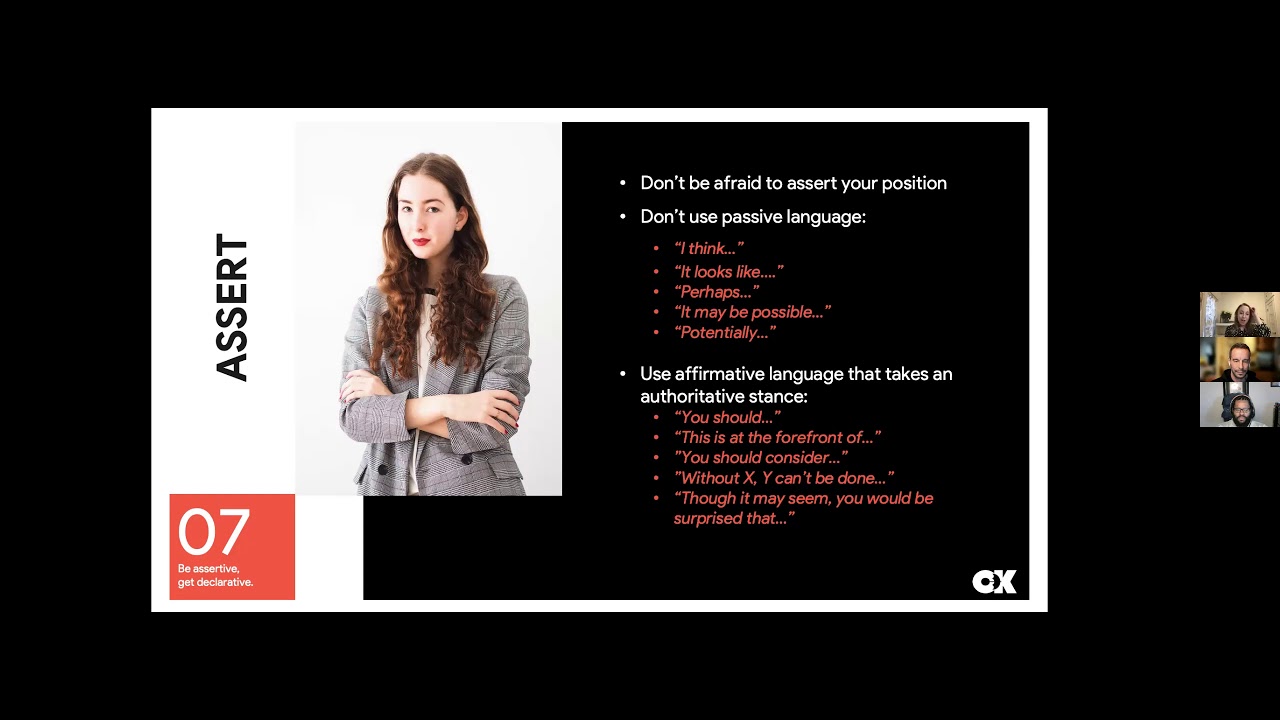
Great, thank you to you both. So we'll start the evening's session essentially with our top 10 tips So we've collaborated on these and we'll certainly post them on social media later on, either today or tomorrow. So no need to frantically take notes, but essentially— here we go. Hopefully everyone can see my screen. So first and foremost, I don't know where everyone else is, but here on the East Coast, it's just after 5 o'clock. It's been a long day, so take a deep breath. You're here, you made it through. But we also wanted to congratulate yourself for landing a pitch meeting. So pitch meetings and landing them, first and foremost, are probably 50% of the curve uphill. It's not necessarily downhill from here, but we definitely want to take the time to congratulate yourselves and, you know, the fact that you've made it this far. So the first thing that we wanted to chat about or are essentially worth, showing your worth. What are investors paying for? What's the amount of experience that they're looking for? So we found in terms of showing your worth, demonstrating why you're worth what you're asking for. So if you're early stage asking for $50K, if you're later on and you're asking for $5 million, you still have to show substantial proof where that money is going to. So tout your background, don't be shy. Essentially, you're looking at your secret sauce. So what makes you different from others? Startup funding is incredibly competitive. You go on Twitter these days, I mean, the market is completely saturated. So here we want to show, you know, show your worth, don't be shy, and definitely make sure you differentiate yourself from others. Language. I went through law school. I got my certification as a mediator. I spent a lot of money on learning these tips in terms of using the proper language. But in terms of using persuasive language, metaphors, similes, and analogies— these phrases and terms will definitely differentiate you from others. It's going to make your pitch a little bit stronger. So if you use terms like compared to, Whereas we've demonstrated our value by unlike X, we've provided. So here, instead of saying I, I, I, you're actually putting yourself as a differentiating company amongst your industry. So forecasting, this gets a little tricky in terms of financial planning and forecasting. You never really know where your market is going to be 100%, but based on your research and your experience. We all know the, the phrase from Aladdin, from Disney's Aladdin, I can show you the world. So that's essentially the information that investors are looking for. So based on industry trends, where do you think your company is going to be in the next 3 to 5 years? Is there going to be an uptick in the market for your product or service? And why should they invest now versus 6 months from now or 5 years from now? A lot of investors will say, you know, this is a great idea, but you're not quite there yet. You're not right for me now. Definitely, you know, look into those opportunities and say why you're relevant to your market now. So repetition, rinse and repeat. This is more of a psychological cadence that you can set throughout your pitch. We all know that repetition helps with memory. So whether it's repeating your brand story, which we all know from prior events that we've done, brand story repetition is increasingly compelling throughout your pitch. And it's especially compelling if you include a more personal note. So a customer quote, a client mentor, famous figure. So it actually brings your brand story to life. And we want to make sure that you are reiterating your value prop. all throughout your pitch and ending in a strong statement. So make sure that the last slide is essentially your closing statement for your argument to make sure that they are left with something that they'll remember for the days to come. So friction. Friction by itself is a term that has pretty much of a negative connotation, but we like to consider this more so as kind of like movie storytelling. So if you consider when you go to a movie, there's usually a buildup. There's, you know, obstacles, there's gunfighting, there's hills to climb, there's a lot of things that are going on, but causing that friction will actually make the solution that much more satisfying. So when you're identifying the problem and solution in your pitch, we all know that those are key elements in terms of your slides, but what's the rationale behind including them? So we're driving Driving home on the negative emotions. So create a little bit of frustration, create a little uncertainty, sadness, FOMO, fear of missing out, and then make sure you're soothing with your solution. So essentially, this is your formula. As an end result, you'll create an empathetic VC. Objections. There will be questions, there will be holes and gaps. I most certainly can assure you that there will be curveballs also that are thrown from each VC. It's hard to prepare everything that they will ask within your pitch meeting, but we would recommend in terms of addressing objections, if there's any uncertainty, address it during your pitch, or if you don't have the answer prepared, make sure you follow up accordingly. So if a VC leaves the meeting saying, I'm not sure. Yeah, but it's not the right time, or I don't really think the other, you know, stakeholders will, will agree with my rationale. If they leave with that thinking, you've already lost your opportunity. So make sure that you're answering any objections, and if you can't answer it at that time, make sure you follow up accordingly. So assertiveness. Pitching can be intimidating. I've worked with founders early stage all through Series A, and that nervous factor never quite goes away. It could be your first pitch or your 50th, but investors are essentially looking for assertive leadership qualities in terms of who they're bringing on. So don't be afraid to assert your position. Don't use passive or wishy-washy language. So I think it looks like perhaps this is all language that I'd probably tell somebody that I didn't want to date, you know, if they asked me out on a first date. I think I'm busy, you know, it may not be possible to schedule this for this evening. Instead, I would use more so affirmative language. So you should consider this is at the forefront. Though it may seem you'd be surprised that So more affirmative language will definitely take a more authority— authoritative stance. So inclusivity. This is a technique that I use actually every, every single day with my team. So if you keep saying I, I, I, it makes you seem like you're a solo shop. But when you have actually team members in the background, even though they may not be listed on your website, or maybe included in your pitch meetings. There's power in the collective force that's working behind the scenes. Investors want to see that. If they're investing in you, they're investing in the people that you've hired as, as your team as well. So the collection of the minds is actually more persuasive than investing in you as a solopreneur. Relatability. We all know WALL-E. Clearly, I like my Disney references. But we're all human at the end of the day. So no matter our roles or titles, whether you're, you know, a founder who is working full-time and starting a gig on the side, or if you're a VC who has a million followers on Twitter, at the end of the day, we're all human. So there is a likability factor that VCs are looking for. They want somebody who could be mentored, somebody that's coachable, somebody that they actually want to work with and have a regular conversation with. At the end of the day, it's somebody that they not necessarily have drinks with, but somebody that they would consider qualified as a, as a business partner. And the last one is something that You usually see when you go to movies, silence is golden. I also like to compare it to website design. If you have too many words and graphics with jumbled up thoughts on a website, usually your ideas and your value prop doesn't have enough room to breathe. So make sure you set a natural cadence to your presentation. Take pause, pause moments with open-ended questions. Transitional sentences as well. And remember that, you know, you don't need to rush. I know that usually you have X amount of time to go through pitches, but this is your time to shine. It's your time to set the stage. It's your time to prove your value and your dominance, and you want to make sure you maximize that time as well. So I wanted to open up with a couple of questions for our VCs.
Let's see if I can—
all right. Hopefully that stops sharing my screen. All right, so if Eric and Mac can unmute. So I wanted to throw a, you know, a little bit of a curveball in the beginning. Let's talk about likability. So what are some of the personal qualities that you're looking for when a founder is pitching? What qualities make you more compelled to say, you know what, I like this person, you know, this might be, this might be something that I'm interested in?
Yeah, let me do it. Matt, you want to go ahead?
No, go ahead, Eric, it's all you.
Okay, so a big thing for me is coachability, right? And I think a few things that you threw out there in terms of assertiveness and leaving white space or so on, I think that kind of tie into that as well. But as a founder is pitching and then listening and taking in questions, we really look for signals whether that founder is listening to what the advice or guidance or the questions are that are given, right? And then how can the founder adjust accordingly and how is the founder actually responding to it? And sometimes you have founders who are very— there's one thing about having conviction about it, right? But at the same time saying, hey, you know what? If you don't know something, say so, right? It's okay to say, you know what, good question, I don't know, let me get back to you, right? As opposed to trying to get over it and try to get to the next question and act like you know the answer, right? So again, I think it's good to be assertive, it's good to have a conviction, but if you don't know something, say so. Also, sometimes you see founders multiple times, right? And the VCs or angels give feedback in terms of the pitch and the positioning and the direction, or maybe there are gaps in the pitch. And when they come back, you know, you better have it— you better have evolved, right, and improved your pitch at that point. And sometimes we do, you know, most of the time, if they're coachable founders and they have a learning mindset, they do that. Sometimes we have founders who didn't adjust a single thing, right, and that's not a good sign in terms of even how they run the business.
Mac, do you have anything to add?
Yeah, I would— I agree with Eric on all accounts. What I would say is, Your passion comes through in the pitch, right? And granted, that should not be a thing that investors lean heavily on, but I will tell you, it will sway folks, right? Like, people will get excited by your excitement. So keep that in mind. The other thing is, to add, one thing I look for is the way— if you're pitching and you have your co-founders with you, I look to see the way you interact with your co-founders. I look to see if you talk over each other. I look to see if you argue about things. I look to see if you contradict each other, because that's a sign of how you work as a team. And, you know, if you're not working cohesively as a team, that's already a negative indicator. That's also going to be a sign of how you're going to work with me, right? This is how you work in general. So I'm always looking for the little things also when you're pitching. But Eric hit on all the other key parts.
Okay.
Yeah.
Maybe one other thing. And I think, Mack, you kind of alluded to this too, is what's the personal— what's the backstory here, right? Why are you as a founder founding team doing this, and that's really important for me. You know, it's not about the money usually, or it shouldn't be about the money, right? There's usually some kind of backstory on why the founder thinks that, you know, I am the one to solve this particular problem. I know it's there. I'm the one to solve it, right? I want to know why. And what that tells me is if you do have some reason to do this other than money, that if things become difficult, right, as they always do during startups, you'll stick with it and you'll figure out a way to do it. And as opposed to giving up. And it's just that it's not a shiny, bright, shiny object, and you go on to the next one if things become difficult.
100%.
Yeah, it's interesting that you guys touch on the why statement because I've heard the struggles amongst founders. You know, those that have a why of financial gain are in pretty much for a rough road, right? Unless they, you know, reach their milestones within the first year or so. But otherwise, you know, what is your why? Are you setting the stage for as a groundbreaking leader in your industry? Are you Providing for your family? Do you really want to be an expert in X, Y, and Z? So that in itself will help you sleep better at night, because if it's just the money, you're definitely— you're in for a lot of sleepless nights.
Yeah, Olivia, one other thing, just as you're touching on money, right? I think the other thing that we look for is, you know, raising money, that's not the goal, right? The goal is it's a tool for you to build a healthy business and a healthy company. a long-term sustainable company. That's what you need to be focused on. You know, one of my pet peeves is when there's a celebration around closing a round and funding and so on, right? Great, right? Celebrate that, but ultimately what you should be celebrating is revenue and customers, right? Focus on that.
100%. And, you know, to all these points, the reason why it's important for you to be— you're solving a problem that you're truly passionate about, Like when we talk about getting— when this process gets hard, let's be honest about it, it gets really hard. Like there are going to be dark days, there are going to be days where this is not going to be fun, where you're going to be struggling. And it's going to be what's going to keep you going when it gets really hard. If this isn't something you truly care about, you're truly passionate about, are you going to stick with it? Like we look for that, and that's part of the passion that we look for when you pitch, because we want to see if this is something you're truly passionate about, it's going to come out. Like, when you start to talk about this problem, we're going to notice that, right? And those are other things that we look for in a pitch.
What about raising objections, right? VCs have different ways of raising objections. You can either do it throughout the pitch, right, and kind of, you know, this interruption cadence, or you can do it in an email afterwards or at the end of the pitch. How do you typically like to approach a founder with your outstanding questions?
Yeah, so for me, I'm typically going to ask you questions throughout your pitch, right? Like, because there, there are specific questions I'm trying to get to. And I'll also say this, right? When you first meet me for the first time, I'd rather have a conversation than a full pitch. And that's just unique to us in our firm, right? So when you meet me, or when you meet somebody else on our team, the first meeting is typically a conversation. You can have a deck if you want, but that's not what I'm looking for. I'm looking to have a conversation and get some key indicators from you. And then the second meeting is where we have the pitch. And even then we're gonna stop you throughout and start to dig in on the partners that we care the most about, because sometimes founders will use their deck as a crutch to get through all the things that they wanna get through, but I don't need to hear everything that you wanna tell me. There's specific things that I wanna hear for me to help make my evaluation, but that's how we work at Rare Breed. And every fund is different.
Yeah. And as Max said, I think every fund is different and every investor might approach things differently in terms of the form or the cadence, or the way that the meetings are structured. Just give you some insight in terms of how we do things, both at Launchpad and Walnut in general, the approach is similar. We have— we take a look at 3 to 4 companies a month, and each company gets 20 minutes to pitch, and then there's 5 minutes of Q&A, and then subsequent to that, there's 5 minutes of internal member deliberation, whether we want to take that company to the next stage. So at that point, the company pitches for 20 minutes, and then we have Q&A afterwards. If that company moves forward, let's say at Launchpad where we do pre-seed rounds, the next stage is what we call the deep dive, and that's where you take another hour, hour and a half with the CEO and the co-founder to dive deeper into the business, and that's where we might have them pitch and might stop and dig deeper into the business, so it's not a clear sequence in terms of that previous pitch. If they do pass that deep dive, then we go into due diligence, and we separate that into business and then technology due diligence, and that's much deeper as well, and again, the form is slightly different there. And we'll dig deep into the business there with the founders as well as employees and potentially some reference customers.
And I know that both of you have a wealth of experience in terms of being on the side of listening, right? Listening when a founder comes in. But what typically are kind of like red flags or leaves you thinking, yeah, but you know, this isn't quite right for me? You know, what are some of those things that you're thinking about that cause moments of hesitation and actually I was gonna let Eric—
Okay, I'll go ahead. So a few things, right? I think there's— you always look at from a purely investor perspective, hey, you know, I'm looking at, let's say, 20 companies this week, right? Of those 20 companies, or let's say once of the 12 months, and I'm drawing general not just my personal perspective, but let's say you look at angel investors, right? Maybe on average an angel investor does between 5 and 6 to 7 investments a year, right? So the odds are pretty low for you as a founder. So you've got to look at the odds as well. And then for me as an investor, why am I giving you that money versus the other 20 companies that I saw this week, right? So it is a numbers game. And for me personally, I need to believe, okay, first of all, Well, what's the probability of you succeeding as a founder in this particular market? What's the potential of this company, including the size and the potential exit? And then at the same time, what's the period here that I'm looking for a return, right? And especially for early-stage investors looking at pre-seed, seed stage, if you look at historically, you know, the rule of thumb was, well, gee, you know, 5 to 7 years. That's really not the case. As an early-stage investor, you're looking at 10 years, right? And, you know, you know more about your children sooner than you do about much investing in startups, right, about how well they'll turn out. So it is a long-term game. And so you are looking at and really placing a bet, especially early stage, on the founding team and the market itself. And, you know, one thing that sometimes causes me hesitation is, more specifically, as you're going through the pitch, is if the founder or the founding team really doesn't understand the market. There are a lot of times when you get to the competition side, And you have the 2x2, and that startup is that only one in that upper left, upper right quadrant, right? And we're the only one, we're first to market. You know, sometimes you see companies doing pitches, and then the investors are sitting there on their laptop Googling competition, right? And the number, you know, sometimes the top result is a competitive company or substitute company, right? So make sure you really deeply understand your market and what you're getting into. And be honest about it as well, right? I think honesty about competition, about your strengths and weaknesses is really important.
I would say the things that give us pause more often than not is around traction and like how far along the company is and whether or not, to Eric's point, you know, how, how much do we believe in this company or how competitive is this company compared to not only the other companies in the space, but all the other companies I've seen. over whatever given period of time. Like in a given month, I'll see 100 to 300 companies, right? So that means in a given quarter, I'll see 300 to 900 companies and I'll invest in 0 to 4, right? So if I see 900 companies, I make 4 investments, like clearly I'm gonna say no far more than I'm gonna say yes, right? And so that becomes difficult. But what I will say is the things that give us pause in the pitch immediately is if you're talking to us about a space and we start asking you questions about competitors, and like there are competitors in the space that are fairly well known that you don't know of, that's gonna give me pause, right? If we start asking questions about your numbers and you don't know all your numbers or you don't know your unit economics, that's gonna give me pause. If it feels like that you're, you're tiptoeing around things and don't wanna answer certain questions and you're trying to talk your way around it, like you're not gonna be able to talk your way around our questions. Like we know what information we're looking for, right? So like, yes, you may be a great storyteller, Yes, you may be going the right path, but if I ask you a direct question and you're trying to, you know, be like a politician and kind of talk around it, like, I'm going to notice that. It's not going to be missed on us. Those kind of things give us pause. So when you're pitching and you're going through the Q&A phase, you know, be honest, you know, answer the question. If you don't know the question, don't know the answer, it's okay to say, I don't know, but I'll get back to you, right? But those are, those are very tactical things in the pitch. that we're going to notice. Like, if there's anything that you don't want us to know, we're probably gonna ask about it. Don't try to hide it, right? 'Cause a lot of stuff that founders try to hide very often aren't big deals, but they become a big deal because you tried to hide it. 'Cause if you tried to hide something in the pitch, what are you gonna hide when we have to have board meetings? What are you gonna hide when your company starts to go through issues and, and you really need our help, right? Those are indications. Those are little indicators that, you know, we look for.
Yeah, and just to add to that, Matt, you talked about the numbers, right? And this is more specifically for the CEO role, right? If you're the CEO, you better know your numbers inside and out. You better know your customers and know your product, right? Don't, you know, sometimes we come across CEOs who then defer to their CTO, or I mean, technically, technically she's fine, but ultimately on the top level, you need to understand what your product does, what your product vision is, who your customers are, why your customers behave how they do, and why they buy your product. And then know your unit economics and other financials inside and out. You have to know that as the CEO.
So we talked a little bit about, you know, getting the yes, right, in order for someone to sign on. But what about if somebody has those moments of hesitation and they end up saying, you know what, this is not the right time for me? When is it okay for a founder to actually follow up with you, right? When does it become too nagging or too, you know, like, like, here, hi, you know, here's my, my red flag, you know, I'm ready to go now. When is it appropriate and not appropriate to follow up?
Yeah, you know, this, this happens where, you know, I'll tell a founder not right now, get some more traction. They'll come back 2 weeks later. Like, you probably haven't gotten enough traction in those 2 weeks. Now, if you have, Sure, like if you go from 0 users to 20,000 users in 2 weeks, feel fine, reach out to me. But generally speaking, your follow-up is going to be somewhere from between 6 weeks to 9 weeks, you know. Give us some time to breathe, give some time to, you know, because in the meeting we're going to give you feedback. It's going to take you some time to work through that feedback. Like, you're not going to work through that in a week. You're not going to work through that in a month. Like it's going to take you some time to get through. So kind of work on it. What I would say was more than like, more than likely to happen is you're going to put us on like quarterly or bimonthly updates, add us to your update emails.
Hmm.
And then when you have a significant change in the business or in traction, then that's when it's a good time to reach out to me. Or if you have a specific question, like if you reach out to me the next week because you had a very specific question that I can answer, that's fine. But then don't ask me a specific question every week, right? You're trying to build a relationship, you're trying to build a cadence, but within reason. And so, you know, like, it's okay to reach out, just don't be a jerk about it.
Yeah, I would say just maybe turning it in terms of just some recommendations for founders, right? I think you ideally, when you talk to investors, an investor isn't interested right now, get a good understanding of what that investor is looking for, right? You know, the question is, do you fit with potentially within that investor's portfolio in terms of their thesis and approach. If that's the case, great, but you might not be ready at this point, right? The investor might be looking for— and again, investors have different criteria. I'll say maybe an investor's looking for $50,000 MRR, right? Or $1 million AR, whatever those factors are, try to find out as much as possible from the investor who says, no, not right now. And then if you can meet those numbers, let's say within 6 months or so, that's a great story to tell because you can go back to the investor and say, look, you said this is what you're looking for. I've achieved that within that certain timeframe that I made a commitment to, right? And I think that's a good story to tell. Ideally you don't, and I think to be fair to founders, I think investors should not give a kind of an ambiguous answer in terms of maybe not right now, but I'm not going to tell you exactly what I'm looking for because some investors have the fear of missing out, right? I don't think that's I think you should always give clear direction to those founders. So, and if it's a hard no, it's a hard no, right? Say so. And if it's a real— it's a good solid yes, then let's talk about next steps at that point.
One of the last questions I had before I open it up to the group for Q&A, investor decks, how important are they really in developing a persuasive pitch? So I've designed decks, I've created the messaging behind them, I've worked with founders founders and, you know, adding all these little, you know, creative design touches to make sure that they look professional and on par. And even maybe just to show that they're a little bit bigger than what they actually are behind the scenes. But how important is the investor deck in your decision-making process?
Mack, you want to go ahead? Oh, yeah. Okay, so it is important. I think the deck is still one of the main documents that investors look for by default. I don't You know, personally, I will use some other formats as well, but I think you have to have a deck. Now that said, I think there are 2 types of decks or maybe 3, right? There's a teaser deck, which is basically a subset of your main pitch deck that you'll use. And then there's, you know, you've got to think through, a lot of times you see decks that are used for pitching that are really documents for reading, right? That have way too much text. So you also need to think about having a pitch deck, which is a deck that really supports your story, what you're verbalizing, right, and talking about, and being able to, you know, not to have to be too verbose on the slide, because you have too much text on the slide, what's going to happen is that the audience is going to start reading and not listening to you, right? So there's, you know, Olivia, you talked about designing the deck, right? I think the design in terms of structure and content and style is really important. But you also have to understand what the forum is and the type of audience you have for them to actually consume that information.
That's a great point. All right, so I want to throw it out to the group. Oh, go ahead.
I was just going to say investor decks are super important because you don't know what— you don't know the process of the firm you're speaking with, right? Because at some venture firms, You're not gonna get a chance to pitch to everybody. You're gonna pitch to one person who's then going to take that information back to their team. And so they're gonna be people on their team who are only gonna know you based on whatever they regurgitate from you in your deck.
Mm-hmm.
Right? And so if your deck doesn't clearly define what you do, well, you better hope whoever you pitch to can regurgitate everything you told them, but they're never gonna know your business inside and out as much as you. So make sure you do have a deck that can be clear, cuz you never know the process That's a really great point.
So I'll open it up to the group for Q&A. We had a couple of questions already come in. So one of the questions from Dalton I'm seeing, what are the best questions that a founder or CEO has asked you during a pitch?
Well, look, whether it's during a pitch or not, I think the important question is, and again, this is more guidance and advice to founders, and this is even when I have a one-on-one with somebody, right, ask whether I'm interested in investing, right? Don't be shy about it. Ask those investors. Don't leave without having a clear answer, right? I think that's the best question that you can ask. And then 2 is, you know, I think that never leave without doing that, right? But I think what's important too is it's a 2-way street, right? You as the founder also need to understand and have chemistry with your investors, right? You don't And, you know, some occasionally you go just for the check, but that shouldn't be the default. That should be the exception, right? Usually you want investors who are strategic investors who can provide human capital and expertise in addition to the check, and you have to get along with them, right? This is a long-term relationship. So you have to ask those questions in terms of, you know, the way— how do they work with you as a startup once they invest, right? What kind of support are they providing? What are their expectations, right, in terms of even tactical things like investor updates?
Yeah.
Right? And how did they work with you? What are their expectations 3 or 5 years from now? You know, what other partnerships could they build with you? So I think understanding what that investor brings to the table is as important as for the investor to understand what the startup brings to the table for the investor.
What about KPIs, right? We're looking at a lot of different KPIs in terms of traction and metrics at an early stage. What are the most compelling metrics for you to see during a presentation? Again, it depends on the product or the service and the market, but what are some of the things that you're looking for in terms of numbers?
It's all about— it's all industry and business model specific, but really we're looking for whatever KPIs drive the bottom line, right? Whatever it is that drives the bottom line or shows a growth at the bottom line is what we're looking for, right? So like We might not be looking for the amount of users, but it might be the amount of transactions you're having every month, or how, how active your users are. How long are they spending on the product? Right? We want to see like your order value. Is it growing over time? Like, it all depends on the business model, but it's like, what indication— what indicators are there in your business model that shows growth? So like, let's say you have a marketplace and you have transactions, but every transaction is a different price.
Right.
So even though you might do, you know, $20,000 in revenue one month with 2 transactions, but you might do $10,000 in revenue the next month with 2 transactions, right? In that case, I'm not going to be looking at revenue. I want to look at how you're growing your amount of transactions every month, right? Like, that's going to be a better indicator, a better driver. So it all depends on the business or the model, but being very clear on what are the KPIs that drive your bottom line. And if you're not clear on that, Feel free to have that discussion with VCs and other mentors beforehand, before you— as you're building your pitch, right? Like, that's a great question to reach out to me, like, hey, Mac, you know, these are key KPIs that we're working on, you know, is there anything I'm missing? And we might be able to have a back-and-forth email about that and even have a discussion before you even think to pitch me, right? Like, those are the kind of things you can look for advice on.
Is it accurate to say that those That those KPIs would be different depending on a pilot program, for example, or validation within a customer segment?
It could be, but it depends on how you structure it. It could be different or it could be the exact same. It really depends on how you set everything up.
Yeah, I mean, everything that Max said in terms of it, it's business model specific, right? But in terms of, you know, Olivia mentioned pilot, right? I think other than specific KPIs, A great thing to see, and what you don't see a lot, is when companies are actually able to convince their customers to have paid pilots or paid tests, right, or to prepay for their product, or as opposed to giving away product for free for the first 6 or 12 months, they're actually able to compel their customers to start paying very soon and start turning that revenue lever on sooner rather than later. So that's a really compelling, compelling case a lot of times. And, you know, you might see that 1 time out of 10, But when you start saying, hey, I've got paid pilots and they're actually funding product development, that's a great story to tell.
This is more in terms of, you know, setting the stage for being polite in your emails. I'm sure you have some founders that keep pinging you via email, and there might be some founders that you don't respond to because at some point you're like, okay, enough is enough. But how appropriate is it for a founder to kind of ping you if they think that they're getting lost in your inbox?
Yeah, I think it— I mean, you've got to, like any human communication, you've got to understand the person on the opposite end, right? Understand their, I guess, their behavior and their culture as well. And sometimes that's hard to do. I think it's a balance between being persistent And at the same time, understanding when it's a no, right? And, you know, in terms of being persistent, I think sometimes investors also look for you to be persistent because it shows that you have a knack for selling, right? But again, like an annoying salesperson, right? Don't be annoying and be overbearing either, right? Understand when the signal is there that you should back off or that the answer's no. I, you know, I think it's always important for both sides to be polite and professional, right? I try to answer all my emails. Sometimes, you know, frankly, emails get lost, right, in the slew of emails that investors get. So I think following up a few times, that's good to do. And hey, I'm bumping this up on your inbox, just want to make sure you saw it, right? And I think it's a fair ask for a startup or a founder to ask the investor to at least reply, right, in my mind.
So, you know, I'm somebody who's very public and open with my persona and with people being able to reach out to me. Because of that, I get way more communications a day than I could ever respond to, right? So I would tell you, be persistent, keep pinging me. The one thing you don't do, don't send me a message and say, forget you, Mac, you know, you never responded to my email, or you never responded to my DM. You're not real, or you fake, or you don't care about entrepreneurs. Do you think trying to shame me is going to make me want to invest in you? Probably not, right? Do not put a message on Twitter and be like, I reached out to Mac 10 times, he never responded. Well, I don't follow you. I didn't see your DM. It's only so much time in a day. I'm sorry, but now that you put that on Twitter, good for you. Probably not investing. Right? Like, there are ways for you to still continue to try to reach out to me without you trying to shame me for not responding to an email that within the 24-hour day, that's only so much time I have, and I have a family and other obligations to do, right? Like, this job isn't my life, even though for a lot of VCs it can become that, right? But being polite will get you a lot further than you trying to shame somebody, because Like, I'm gonna miss on a lot of companies. I'm only gonna be able to invest in a few, right? Like, I'm not, not gonna be great. I'm not gonna be perfect, but we can't even start to have a dialogue the moment you do something like that.
Yeah. Sorry, one other thing, right? And I think it's important distinction to draw here is know your audience, right? There's definitely a difference between venture capitalists and the angel investors, right? I mean, VCs, I think, you know, I'm not going to speak for you, Mac, but I think in general, right, VCs, that's their job, right? A VC may be spending 40% to 60% of the time on sourcing deals, right? And the other time, obviously, raising money for their own fund and doing other things. Angel investors, you know, the typical angel investor is a high net worth individual, right? Maybe a doctor or lawyer. They've got day jobs, right? So you've got to understand that as well. It's not their full-time job to source deals. I think most angel investors are very generous with their time, but respect that time too, right, when you get it.
One of the things that I always think about is there's always an aha pivot in a pitch, right? There's something that a founder says and you're like, you know, that was what I was looking for. For me personally, it's seeing if a founder has done research in terms of things or other companies, portfolio companies, for example, that they might be able to become complementary sponsors of, you know, to make sure that, that it's more in line in terms of what you're looking for, for your portfolio progression. So what's kind of that aha? Is there something that you're looking for that a founder will say or do to make that really good last impression for you?
So this is easy, right? If your traction number is big enough, None of the other stuff matters, right? Like, does the pitch matter? Yeah, the business matters far more, right? Like, the best investments I've ever made were in companies that were just growing so incredibly well that it was like, yeah, I want to be a part of this, right? Where, where like, there were like, if they never pitched me, I probably still might have jumped in, right? So like, yeah, the pitch is important, but you having a good, solid, successful business is far more important. Like, that's the goal. We're investing because we believe that you can grow that company. So if you come into the room like, look, my name is XYZ, this is the problem we're solving, this is our solution. Over the last 6 months, we've grown by 38% month over month. 4 months ago, we did $40,000 in sales. This month, we did $128,000 in sales, right? Like, I literally know a founder that had a pitch that was similar to that who raised $1.5 million in 24 hours, right? Like, at the end of the day, if you have a good company, you can get there. So if you— so like, if you can hit me over the head with something like that, we're good.
It's funny you say that, Mac. I actually had a conversation earlier today with the company, and, uh, so, so we had a half an hour conversation, right? And we talked about the business for about 20 minutes, and about between minute 20 and 25, we started talking about revenue and traction. And, uh, the answer was, well, in, in 2019, we ended the year with about $75,000 ARR. Last year we ended up with about $1 million, you know, in December, a few months ago, right? $1 million AR, and we're expecting to do about $2 to $3 million by the end of this year. I mean, if you hear numbers like that, you're like, okay, I'm pretty much sold there, right? Let's talk more. So, you know, the traction that that company has was pretty amazing, in addition to the investors that they were able to get over the past few months, and then also the partnerships that they were building. So it was a clear-cut case, like, If I could write a check today, I would, right? So, so yeah, traction is, is one of those big things that you look for.
Great. Is there any last thoughts that you want to leave to, to our group of participants before we close out for the evening? Any last thoughts?
I think the big one is You always remember, like, fundraising is not the goal, right? Like, we as VCs get overhyped all the time because founders think that if you give me VC and they write you a check, all your dreams will come true. That's not what this is, right? What we do is we give you a tool to help you grow faster. That's all the money is, is rocket fuel to grow faster. Right, at the end of the day, you're out here to build the best company you possibly can, and that should always be the goal. And as long as that's your driving goal, you're on the right track.
Yeah, and I would say, understand that dilutive venture capital money is not the only avenue to build a good company and to grow, right? You know, I think a lot of founders think that's the only, only, only thing that's available, right? There are other avenues. There are plenty of good, solid companies that were bootstrapped or maybe have gotten some friends and family and early angel investors. that have grown very well, that never had to go down the venture capital road. If let's say you're a SaaS company and you start producing profit, you can look at revenue-based financing. If let's say you are even a company that is, let's say, in the $2 to $3 million range, you can look at venture debt. That's another option. And sometimes you combine venture debt with venture capital, dilutive capital as well. So there are a lot of options out there, right? So make sure that you really understand philosophically what kind of company you want to build long-term, And I think that impacts your culture as well. And then what options are available to you? And then ultimately, what's your funding strategy? And like Max said, you know, the goal is to build a good, healthy company that's there for the long term and not to raise money. Money is only a tool in your toolbox.
Awesome. Well, thank you so much to both of you for joining us this evening. I saw a couple of questions in terms of the recording. And the PowerPoint. The recording will be available through Prepare4VC. The PowerPoint will be accessible. I'll be posting it on my personal website, oliviacuntica.com, for you to, to be able to access it. And if anybody wants to reach out to you guys, what's the best way?
You can find me on Twitter, it's @MattConwell. I put in the chat earlier, it's@ with my name that you can see here on the chat and on the screen. find me on Twitter, find me on Clubhouse, best way to get to me.
Okay, and for me, I'm not much of a tweeter, do that on occasion, but best way to reach out, just connect with me on LinkedIn.
Great, Jason, thank you so much for having us, we really appreciate it.
Yeah, thank you, and what's the best— Olivia, what's the best way to connect with you?
If you find me in the digital web, I will likely respond on Twitter, or you'll find all my information on my website.
Sounds good. Yeah, no, great discussion, everyone. And yeah, thanks to all of our audience members. Great questions. And yeah, great, you know, great chat going on here as well. So excited, excited for more of these. Definitely check out some of the upcoming events on our community page and feel free to reach out if there's anything else, you know, we can help you in your Thanks again.
Thanks for having me.
Thank you.