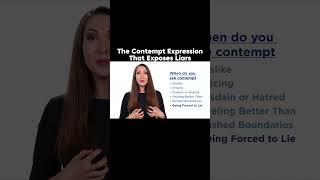
Vanessa Van Edwards (speaker) explains when contempt appears, focusing on everyday behavioral cues and contexts: contempt shows up around dislike or a sense of superiority, aversion to discussing money/pricing, disdain or hatred, reactions to pushed boundaries, and when people are forced to lie — the latter producing verbal hesitations and dismissive responses.
Chapters
When do you see contempt? You might see it, for example, when someone just dislikes something because we feel better than it. We also sometimes show contempt about pricing. This is especially for people who feel dirty talking about money or don't like talking about money. They're contemptuous, literally, of having to talk about money. And so you'll see they'll show contempt around dislike. You also might see this around disdain or hatred. You'll also see this when someone feels better than they're better than someone, better than an idea, better than something. Contempt has a weird aspect of superiority around it. We also see contempt around pushed boundaries. The other time you see contempt is when people are forced to lie. As humans, we hate to lie. Deception gets us into trouble. It makes us feel dirty. We don't like it. And so oftentimes, if people are lying, they'll literally show contempt through the lies. They'll say, yeah, I know, I. I don't think I ever saw that. Nope, don't think I ever did. And that's because they literally feel contemptuous of the position that they're in. Contemptuous of the lie, contemptuous of you for making them lie.