How to Land Your Dream Job in VC or PE | Tips from a $1.7B AUM Fund Manager
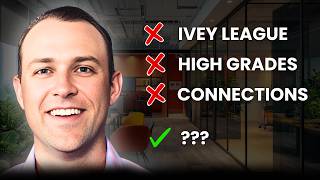
In this episode of the Profit or Pivot podcast, host Matan Hazanov interviews Jim Ferry, a partner at Boston‑based growth‑equity firm Volition Capital (≈$2 B AUM). The conversation begins with an overview of Volition’s focus on $15‑$60 M growth‑stage investments in B2B SaaS, internet and consumer businesses, and clarifies how growth equity sits between traditional private‑equity buyouts and early‑stage venture capital. The bulk of the interview centers on how Volition hires analysts straight out of undergrad, processing roughly 2,500 resumes weekly, using an AI‑driven screening tool to narrow the pool to ~150 candidates before a human hiring committee conducts interviews, super‑days, and final selections. Jim outlines the traits they prioritize: exceptional non‑academic achievements (sports, arts, entrepreneurship), grit, intellectual curiosity, and strong social skills. He warns against common resume mistakes (over‑inflating duties, lack of diverse experiences) and stresses the importance of genuine interest in startups, thorough preparation, and the ability to think on one’s feet. The discussion also covers interview tactics (probing questions about portfolio companies, personal fit, and candidate‑generated questions), the value of networking, and how candidates can differentiate themselves by sending deal ideas or demonstrating sector knowledge. Jim shares his own unconventional path (public‑school background, Providence College, extensive interviewing practice) and his view that grades and Ivy‑League pedigree are merely table‑stakes, with adversity and diverse backgrounds often being better predictors of success. He describes Volition’s hiring committee approach to build a balanced analyst class and notes a roughly 50 % success rate for hires, emphasizing in‑person interaction to assess writing and critical‑thinking abilities. For aspiring investors, Jim recommends reading industry newsletters, following daily funding news, and proactively reaching out with relevant deal ideas. He discourages unpaid internships, arguing that compensation signals firm quality. The conversation shifts to AI’s impact on investing: Volition treats every company as an AI‑enabled business, distinguishes AI‑first versus AI‑native firms, avoids hype cycles, and evaluates AI integration, barriers to entry, and data advantages. Finally, Jim offers a perspective on the AI search war, predicting Google will retain dominance due to its ecosystem and ad stack, while OpenAI will capture niche consumer search. He concludes with his mentor’s investment mantra: product, market, and especially management are the three of five key factors, with management execution being paramount.
Chapters
Hello everyone, welcome back to the Profit or Pivot podcast. My name is Matan Hazanov. Today we have a very special guest, Jim Ferry, who's a partner at Volition Capital. They are a growth equity firm based in Boston with just under $2 billion of assets under management. Today we're going to talk about his journey getting into private equity and venture capital, how he hires people, what to do to really stand out as a young person that's looking to break into a very competitive industry, and his perspective on investing in the age of AI. Jim, it's so nice to see you. I guess the first thing is maybe just walk us through an intro of yourself, what you do at Volition, and Volition itself.
I'm one of 5 partners. I've been here 11 years or so. Volition is a growth equity fund out of Boston. So I think if you think about the private equity universe, that's basically investing in, you know, private companies, obviously. And I think a lot of people hear PE and they think of large buyouts, and then there's kind of early-stage venture or VC. Volition is in that growth equity realm that kind of sits in between those two, I'd say. So our investment mandate is investing somewhere between $15 to $60 million in high-growth businesses, all kind of tech businesses for the most part. We do a lot of B2B SaaS as well as kind of internet and consumer. Businesses. The commonality is a lot of them are kind of capital efficient, haven't raised huge sums of institutional capital to get to product-market fit. For us, the way that we define that is typically over $5 million run rate or $5 million in kind of net revenue. And yeah, we're investing out of our fifth fund, is $675 million, as you mentioned, you know, just under $2 billion of assets under management. So that's kind of, kind of where we fit. And I've done a lot in internet and consumer-type businesses. So think anything that's kind of high-volume transactional, could be like a marketplace or high GMV with a take rate or something like that, has kind of been my bread and butter, uh, over my 11 or 11-plus years at Volition.
That's great. So maybe just walk us through what's the difference or fundamental difference between private equity and growth-stage venture capital?
Yes, I mean, uh, Growth equity fits under the private equity umbrella, but I think that the way that you're defining it is a lot of the way that the people tend to think about it, where private equity tends to be buyouts. We're kind of investing in businesses that are high growth that maybe want to invest in product or sales and marketing to accelerate their growth faster. So let's say we get involved with the business at, you know, $10 million of revenue. Hopefully we can kind of scale that to $50, $100 million and beyond, and at that point Many times the PE, or the private equity, is the buyer of that business. So they're coming in, they're, uh, that's kind of the exit or liquidity event for us and the founders. And that can be, you know, full majority sale, or, you know, 100% of the business, or could even be 55% of the business or something. There's a lot of big private equity funds that have raised a lot of capital. They tend to be the most logical acquirers for a lot of the companies that we invest in. Obviously, other routes for liquidity could be a strategic acquisition or IPO as well.
So one of the things I want to focus on, you know, you've been on the podcast circuit a little bit. So if people want to learn more about, you know, go deep dive into your story a little bit more and Volition, you know, there's plenty of people out there that you've spoken with, and I'm happy to share those links. One thing that I found very interesting about your story and Volition Capital is, is one that a lot of investors face and people that became investors face, which is the call it the glut of talent that wants to get into the industry. Like, there is not a week that goes by without talented young people that want to break into venture capital and private equity. It looks very sexy on the outside, and it's a great industry obviously to be in, and you can make a lot of money. And you know, it's just— it's become sexy, you know, with Silicon Valley the show and Shark Tank. It's like, oh, I'd love to be a shark and just criticize people and make money off their labor. I mean, it sounds like a great job, right?
I hope people don't view that's what I do.
But yes, that's what I, you know, when people don't— most people I talk to don't know what venture capital is like outside of my professional life. Like, oh, what do you do? I'm like, I'm a venture capitalist. I was like, that's with stocks? Or like, I'm like, no, not really. It's more like Shark Tank. You know, people come to me and I get to reject them and feel good about myself. That's basically venture capital.
I get a lot of people asking me for stock picks. I'm like, you're asking the wrong guy. That's not the industry that I'm in.
That's right, that's right. So, uh, it's crazy because, you know, when you hire people— we talked before and you said something pretty wild, and I've experienced a little bit of this myself. So this is more for people that are looking to break in, right? When you look for an analyst, you said you got 2,500 resumes, and I assume these are quality resumes. These aren't just random people from Indeed or something. Like, you're going after top talent here. So just walk us through, like, how do you even filter for that? Like, what does that process look like?
Yeah, and just to clarify, we got 2,500 resumes in a week and then we had to shut it off. So like, like, that's how— to your point earlier, I think there's a lot of demand where people want to get in this industry and there's very limited supply or, uh, job openings. So I'll give a little background that Volition has a traditional growth equity sourcing model, which is, I think, important to understand. So, uh, that model is trying to break through to founders and find proprietary deals. So our analysts, uh, we tend to hire right out of undergrad. There's a lot of other firms who will hire people that have done 2 years of banking or consulting or something. We tend to like to hire at undergrad because we can kind of train them into our philosophy and our underwriting style, um, and that's been a successful, uh, process for us. So right now I think we have 15 analysts or so And, you know, some of them wind up deciding this isn't right for them because they're young in their careers. And for a lot of them, we help place them at our portfolio companies, actually, or maybe they go on to do something else. And then there's some that, you know, continue to rise in the ranks here. And I think there's me and one of the other partners, Tommy Han, both started as analysts and have kind of been here since then and made our way to partners. So if you do well, there's a lot of room for growth here, which I think is unique. So given we hire right out of undergrad, Uh, we get— let's just use the 2,500, uh, number. Uh, we get an unbelievable amount of resumes prior to AI. Poor— we have a talent team, um, internally, and they help both our portfolio companies hire as well as, uh, hire, uh, at Volition. They used to have to kind of sift through them, and sometimes we divvy that up. It is so hard to differentiate from the unbelievable resumes that we get. A lot of us, you know, who are partners now joke that if we applied to Volition now, we would not get hired because the bar has been raised so much for how impressive so many of these resumes that we get are. Everyone has a 3.8 to a 4.0 GPA. There's, I think there's grades—
which is basically perfect for people who are expecting English.
Yeah, yeah, well, maybe we can get to that. So that's like the standard, like you gotta have over a 3.8 at this point. All of them have really impressive internships. I feel like everyone speaks multiple languages these days, et cetera, et cetera. So ultimately what we're looking for is someone that has exceptionality in something. That could be, academics is harder to be honest, 'cause they're all exceptional in academics. So it's like something else. For some people that's an instrument, for some people that's sports, for other people that could be the arts or photography. And just something that they have excelled at in their life points to this is like someone that knows work ethic and will be gritty and a good analyst for us. So the way that we, so we kind of have fed that framework into an AI platform that helps us go from 2,500 down to call it 150. So now we're down to 150 and those are kind of manually reviewed. We have set up a hiring committee 'cause this is one of the most important things we do is hire. We're in the people business, so all the partners are very involved in it. We have a hiring committee and a process where 2 people interview. We, you know, rank them based on some attributes that we think are important for the analyst role. If they pass that, they then come in for a super day where they meet the rest of the team. But that's kind of the high level. I'll pause there.
So for 1 analyst, how many people would you typically— of the 150, how many do you need to— would you interview for like 1 analyst?
It's a good question. Of the 150, I'd probably say 100 or no. Well, we're hiring more than one analyst. So let's say we're hiring 5 analysts. I bet you 100 of them are interviewed and then we kind of narrow it down to—
So like 1 for every 20, for every 1 role kind of thing.
Yeah, yeah.
2,500. I mean, if you kept that spigot open, you would get many more resumes, probably get 5,000 plus.
Yes. And we do, because like even when we turn that off, you get people who know someone or you get kind of inbound, which are always great because those are people that may know Volition and know the attributes that we're looking for.
Yeah.
I mean, if you put it in the framework of like college acceptance rates, like this would be the most elite college in the world.
Right, right, right. I remember looking at stats way back in like 10 years ago when I was more new to venture capital and the rates of people getting in. I think— I don't know, I can't quote the stat, like the source, but I remember seeing it's like getting into Major League Baseball. Like, that's how difficult it was back then to get into venture capital. And being— yeah, and then once you get in, it becomes a pyramid.
Like, there's only so many people that make associates, senior associates, then it gets narrower and narrower. So, uh, it is a small world. Uh, I think a lot of us know each other. Uh, we know our, you know, the people who are earlier stage investors that could be a feeder into us, a later stage, our competitors, and you know, it is, despite the pool of capital, a very small world.
Right. I usually tell people that ask, like, it's probably going to be easier for them to marry rich and then get their father-in-law to give them money. And that's how— that's their path to being an investor. Like, that's probably the easier path. Yeah, you just— you could just select for maybe a girl that's a little bit more desperate that has a rich father, and you'll probably get there quicker, you know? Yeah, more likely. Not my strategy, but I would have done it if I felt that was my only option, you know? Because, yeah, not my strategy. And listen, like, there is an element of luck in this.
Like I said, like out of the 2,500 resumes we get to 150 using AI, I'm sure there's amazing candidates in there that just for whatever reason wasn't picked up by the AI, but we just need to start to narrow it down somehow. And there are ways where there have been times when someone didn't make that initial cut and they differentiate because they reach out to us and they do something unique, like send us a company pitch or here's a couple of companies that I think could be interesting opportunities for Volition. Or just kind of network their way in. And honestly, like, that's a lot of the analyst jobs. So I like, I tend to have those calls or, you know, double-click on those type of candidates.
Got it. That's a bit depressing though, because imagine you've done everything right in life, you got the grades, you have the extracurriculars, you're exceptional in every way, and then some AI bot just rejects you because you missed a keyword in the, like, it's a bit depressing, no?
Definitely. I don't know how else we narrow down 2,500. All of everyone that applies is like, you know, I think 90% of them are, you know, candidates that have a good enough resume probably to pass the bar. But, you know, that is depressing, but guess what? I think that's what every industry in the world is doing right now that gets a lot of resumes. At least we're not doing a lot of AI interviews yet. That's still face-to-face and, you know, shaking hands with someone across the table if they pass the first couple. Zoom interviews.
Got it. So where are you posting these? Like, how are you getting that top of funnel?
Yeah, um, it's a combo of like a LinkedIn post and having it on our website, and then posting at some of the schools, um, where we have had success in the past hiring. Um, they have internal portals. Um, we used to do a lot of on-campus recruiting, but we just feel like We don't really need to do that. We can still get the resumes regardless. And then we also have a referral program where if the analysts bring in, you know, someone that they know that they think could be a strong candidate, and if we hire them, there's a little bit in it for them.
You mentioned that they have to show that they're exceptional. I kind of have a similar philosophy, like it's not just about grades, it's about are you just exceptional? Because obviously you want the best people, you know. So do you have like a couple of examples of recent people you've hired and what stuck out for you that was like, oh yeah, this person really rises to the top?
We have a couple people here that are national champions at the collegiate level for their sports. Like, one was a beach volleyball player, for example. We have a lot of, of kind of Division I athletes. I think that's important as well, as a side tangent, because those people for the most part have faced failure as well. And this is a, you know, large funnel, low hit rate business, so you need to be able to bounce back from failure and have that grit. Athletes have performed well. Um, we just hired someone who was a professional photographer and has sold hundreds of thousands of dollars worth of their, um, their prints and done art exhibits in 4 countries around the world. Like, that was a really interesting one. Someone else, um, was a line chef at a Michelin-star restaurant. Um, obviously that doesn't necessarily translate into what we're doing here from an investment perspective, But to me, that's like, in order to do that, you have to perfect your craft. Um, and that takes practice and grit and determination. And those attributes, I think, translate, translate well.
Right. That is quite interesting. It's, I see that, um, that theme with a lot of other people, including myself. It's not so much of their technical ability or skill. It's that they are the type of person that works hard to achieve success. And that you can't really teach some, I don't think you can teach that. Someone that, like, if they need to have it or they don't.
And you can't teach people skills. That is really important. There's a lot of people that I think are book smart, and I think we know— I'm sure you know those people, uh, from, from your life as well, that have all the grades and they've been given every opportunity in life because they got lucky and were born into maybe a wealthier family, and they went to SAT classes since they were in middle school, and they've, uh, you know, they're, they're gonna look really good on a resume, but maybe they're lacking that, you know, interaction and, uh, social ability, which is a lot of what this industry is. Uh, obviously it's picking good investments, but it's not like the stock market where you can just go buy shares in, in, in the company. You need to win over a founder who wants to work with you. And we sometimes joke, but, uh, it's the truth. If you statistically look, our investments tend to last longer than the average marriage in the United You gotta like the person that you're gonna partner with. So part of it is winning, a lot of it is winning over founders that wanna work with you, even if you're not the highest bidder on valuation.
I see. So maybe you have kind of the initial filtering using that, but what are some of the common mistakes you would see on a resume or cover letter that would kind of bring the candidate down or up, let's say?
Yeah, I think, People did this. I think there's people that overstate what they actually did at an internship.
No, not on a resume. People are—
yeah, and I'm sure you've seen those where it's like, I know someone was a lifeguard and they like, they make it sound like it is the most amazing, you know, professional job in the world and how they managed all these people. I think that's like, that's fine. Like, you could be a lifeguard. We all know what a lifeguard is. And I actually think that's That's good if you've had other jobs, they're still young, they should have these kind of jobs where they're just trying to make a buck in the summer. So I think that's one. I personally like when people have had a variety of internships. I think that we're in this world now where young kids are asked to specialize early on in their life, whether that's in sports. If you look, like when I was young, you played every sport in the season and now before the kids are 10, they have to choose, like, this is the one sport that I'm going to play all year round. Um, and I think that's happening a little bit when it comes to people's careers. Someone tells them, hey, you should get into finance and private equity, and they just go to college and they're kind of walking that line to, to get there without much thought to testing out other internships. And sometimes I think that gives you perspective on what you like and what you don't like, and then you know, just working in a different career, maybe, you know, you're thinking about companies in a different way. So I like people that have had a variety of internships instead of like 3 growth equity ones, which some people do.
Um, yeah, that's quite interesting because you think that— listen, I think people would make the mistake of doing the opposite of what you're saying because, hey, if I'm going to go into a growth equity shop, why don't I just really get experience at a growth equity shop? What is the benefit of that? Yeah. Okay.
It's not a bad thing. Like we do hire people that, that do that, but I think there have been times when someone then comes in and they do the job for 2 years and then they realize, hey, you know what? I actually wanted to work at a startup or something, which is fine. They're still young and we'll help them. And many times we've, as I mentioned earlier, placed them at one of our portfolio companies. But I think that some people just think that they have to get in this job and, you know, and so Like for me, for example, I did have one private equity internship while I was in college and they invited me back. That was my sophomore to junior year. And then junior to senior year, I decided instead of doing the same thing again, I wanted to try something else. So I worked at Fidelity for the summer on the public market side. Just from that, like it was a great place to work, but I learned that I didn't wanna work at a big company and I like the private markets more than the public markets. That was a great learning experience for me. And that's, so I feel like I chose the right path 'cause I tried a couple different things.
You also have a pretty interesting story when it comes to getting hired 'cause you didn't go to an Ivy League school or anything. So what was your path?
Yeah, so I grew up in Cumberland, Rhode Island. I went to public school there. That says, our public school, like they just tried to get you in college, like going to a good college, like, wasn't even on people's radar, like they're not pushing kids to go to Ivy Leagues or anything like that. So I had a, I loved it. I would do it all over again. But when it's time to come to apply for college, like I didn't even really think about like, hey, these are like the top schools and I probably should have been doing all of these extracurricular things in order to get into them and maybe care a little bit more about my grades in high school and less about sports. But, I wound up going to Providence College. My dad went there, my sister went there, my uncle went there. So it's kind of been like in our family forever. It's a school where a lot of folks have alumni in their family that wind up going there. And I loved it. It was like an amazing decision. I think that I majored in finance there. I think they do a great job at preparing kids both academically and socially. As I mentioned, that's a big part of it. To be successful. Um, and even since I've— since I graduated, you know, 12 years ago, they, they've really built up the business school there. Um, I've gone back a few times to teach classes. There's a new building. They got a— now they're, they're starting to get recruited from, you know, the big bulge bracket investment banks and some PE funds and so forth. But when I was there, that, that was not the case. So I had to network my way into this industry. So first off, like, I took every single interview I could get, even if I knew that I probably didn't want that job. Um, so I took, you know, it's, uh, in, in interviews to be a sales rep in insurance, uh, interviews at fund of funds, um, basically anything I get in the business realm, because interviewing is a skill and you need to hone it over time. Um, I think I got pretty good at interviewing. There's some where you walk out, you're like, ah man, I could have done better there. And, uh, it's like anything, practice makes perfect. Um, so I continued to kind of network my way with folks that have a commonality to me. Whether that's if they're from Rhode Island and in the private equity space, they went to Providence College, if, you know, we had a mutual connection, and I try to get the intro. And I wound up talking to someone here who actually went to Providence College, who's a little bit older than me, Mike Wilkins, who's our CFO. So he's on the back office side. And it's funny, he kind of tried to talk me out of it at first. And we laugh about this. He's like, this is a grind, you work long hours, blah, blah. And he's not wrong, but I think it's the most fun industry to work in, which is why I've been here since undergrad. So he kind of brought me in for what I thought was more of an exploratory, just learn about the industry type day, and wound up meeting with a bunch of the partners here. And at the time, we were a small firm. We were, you know, investing out of a $250 million fund. There was 12 people or so. It was one of those interviews where I feel like all of my interview prep paid off. I came out of it and I remember I was talking to my dad on the phone, he's asking how it went and I was like, "I nailed that." Like, I didn't even really think I was walking into an interview, but that was the best interview I've ever had. And then I got a phone call on the other end, it's one of the partners that gave me an offer. So, the rest is history. So I joined in 2014.
What were your insights about interviewing? Was it just getting your reps in or did you kind of like get some insight over by doing it so many times?
Yeah, I think getting your reps in, a lot of people ask the same questions. So it's anticipation of the questions. I think it's a lot easier easier now, honestly, with AI to prep for interviews. Um, and like, you can ask like, hey, what are the— what are common questions that people are going to ask me for growth equity interview? Um, and you get just better at thinking on your feet. Um, like, there are times when even when I'm interviewing, when I ask questions just to see if people can think on their feet. Um, such like, I sometimes ask people to, um, you know, convince me of something. I don't care what it is, I just want to see, hey, can they— can they think of something, uh, really fast to talk about? Because a lot of As I mentioned, what we do is social. It's talking entrepreneurs, reacting to a conversation, and trying to win them over.
Very interesting. I remember when I got my job at Constellation Software, which is by most metrics Canada's largest tech company.
Sure.
In my final interview, you know, I didn't— it wasn't a recruitment process. I didn't apply for an interview or anything like that. I didn't apply for the job. I met somebody that was looking for— it was a whole story in and of itself. But my final interview was with the COO of the company. Um, who's managing this project I would be working on. And it was a 20-minute conversation. Again, he made like the 20— I think back then it was 25,000-person organization. He's number 2, number 2 in the company. And I remember going into it, and I did a lot of prep, and I made sure that my answers are very tailored to the company and what I thought they needed someone like me for. It was a, it was a corporate venture capital group. So one of his questions was like Why do you think we need this? My answer to that, because I prepped and I understood why they needed, because it wasn't obvious, uh, is what really got me the job. I learned after, it's like I really nailed, like I understood why they were doing this. Like, yeah, and it wasn't obvious why. It wasn't just, oh, let's go make money in the— it wasn't even just strategic. It wasn't that, it wasn't that simple, you know.
Yeah, I think that's really important. Like, being prepared is so critical. I get really irritated when I can tell that people have done zero research on Volition because we have podcasts, we write a lot of blogs, we're very transparent on our website. It's very easy to just spend 45 minutes and you're going to know a lot about the firm. And I think back to when I interviewed, like, I knew every single portfolio company. I knew— I couldn't tell you a lot about them, but I knew enough to give you a sentence or two on what they did. And a few of them where I dove dug deeper on. So if someone asked me like, hey, what's an interesting portfolio company, I could talk about it articulately. Um, and even I knew a lot about the people there. Uh, so one of the partners went to Notre Dame. I knew he's a big Notre Dame football fan, so he comes in and I know who the quarterback of Notre Dame is that year, and we're talking about that. One of them's a big skier, so we talked about skiing. So that's, once again, that's the little things that you got to do to get a job, but also that translates into how you're going to act as an employee to win over an entrepreneur or something like Right, right.
So, um, I remember one of my favorite questions when I'm doing these kinds of interviews with prospective interns or analysts is, which company in our portfolio do you like the least and why?
I do that one as well. Um, everyone does the which one do you like, telling me it's so easy. People tend to pick one that they know exited at a good price. So that's, that's a great question.
Yeah, because it forces one— it shows if they're ready, if they prep, and it gives them an insight of how— what the thesis is and how well that company would fit the thesis, because sometimes it's obvious, most of the times it's very hard to answer that question effectively. Um, what's— you know, do you ask the type of question like, what's your biggest weakness? Um, and no, no, because those are questions people are anticipating and prepare for.
Um, and they're going to have a canned answer where they're going to tell you their weakness and how they turn it into a strength. Like, what am I learning about that person there? Um, I think what's— I, I, I try to dig into— well, there's like some basic, like, high-level finance questions that I'll ask. I'll ask people what sectors they're interested in, ask them about the portfolio, make sure that they did their research and so forth. Uh, but then a lot of it is like, hey, can they think on their feet? Can they have a casual conversation? I'm a bit— I'm a sucker for the interest section on a resume at the very bottom. I always gravitate towards there, and I like to learn about someone personally. Um, and that's the, the, the social test for me.
So what are some of your favorite questions that really gives you insight into the person?
One of them is, how would your friends describe you? And that tends to get us talking.
What if they said, I don't have any friends?
That's gonna be tough because once again, you gotta have—
you gotta be social.
Uh, so that, that's, that's one, uh, that I like because it tends to dovetail onto a lot of other questions. Um, I actually know that someone who, uh, interviewed here. So, uh, they asked someone that question and they, uh, said something that was surprising. They're like, let's call one of your friends and see what they say. So they called them live in the interview and the kid, the kid reiterated facts. So that was awesome. Um, another one that I like is, what's the, you know, there's a couple variations. I'm giving all my secrets away for people that are interviewing, by the way. So, but another one is, uh, What's the, the, you know, toughest challenge you've ever overcome in your life? Or what is the hardest thing you ever learned? Something along those lines. You really get to dig into someone a little bit deeper than kind of the surface level questions like what's your biggest weakness and so forth.
Right, right.
What about you? What's your favorite question?
I do. I do like the questions where I— one of the things I feel gives me a lot of insight is prep. The, the level of someone's prep really just tells you, I think, 80% of what I'd like to know about them if they're going to do this kind of job, because a lot of it is research and being diligent and being on, like, it's just, um, so I, I really like to dig into their perspective on the venture market, um, what part of— for those kinds of questions, what they think about our portfolio, our thesis, things like that. Another thing is, uh, I try to filter out for is people that are genuinely interested in startups and innovation and supporting entrepreneurs. Because one of the things I found is that no matter how exceptional someone is, you have to have a genuine desire to do this job. Because it's not— once you get in, it's very hard. It's a grind. It's not sexy. You're doing a lot of nonsense for years before you get to do the fun stuff, like, you know, negotiate term sheets and be a big shot on the board. You know, there's a lot of grind to get to that point where it's even remotely, like, uh, fun from the— from the outside perspective, like how people perceive it to be, right? So one thing I try to filter out for is people that are just in it because it's sexy, so to speak. So one of the ways I figure that out is I ask them, okay, well, what do you do today to support entrepreneurship or to learn more about innovation and things like that? The type of answers I expect to hear is, oh, I go to events, I talk to, I read the news, I do this. And then from there I can dig in, oh, which events or which news? Or, you know, it goes from there like, oh, what did you learn about XYZ? What do you think about this thing in the market? And then you just get to see how serious they are. Because if they're not living and breathing kind of this stuff, at least, in whatever capacity they are as a student or as, you know, a couple years into their career, I don't think they'll be successful in the role.
Yeah, I think that's great. Um, it's actually one of the things that we grade people on is intellectual curiosity. That is one of the most important attributes to be successful in this industry, which I think relates back to what you just said of like just being interested in it. So we're— I'm talking to hundreds of founders on an annual basis. Daniel's probably talked to thousands, and they all have, you know, taken the risk to start a business in a certain sector and getting caught up to speed on that sector. It takes intellectual curiosity, and you need to be stimulated by that, or you're not going to enjoy this career for sure.
Um, yeah, it's a great point because, yeah, everything— every— yeah, good. I was gonna say, every founder you come across, if they're like serious, if they're like a qualified founder, they look at the world in a different— like, they, they have a thesis about where the world is going and how to capture significant value in a very short period of time. And your— the job, especially if someone that's doing initial filtering like an analyst, like they have to figure out if this is serious or not. Like if you're not interested in that, you're gonna— it's good— you're gonna hate it. You're gonna hate this job so much, you know, if you're not willing to go out there and just learn about things that you don't know anything about usually.
Yeah, it's— yeah, it's long hours and it's a grind as you mentioned. So if you don't like that, it's going to be a long couple of years for sure. One other thing I wanted to add though, like you asked one of my favorite questions, um, to ask people, but I judge a lot the questions that people ask me because that gets back to what is their level of intellectual curiosity. And I always try to leave, you know, 10+ minutes at the end of an interview for them to ask me questions. And, um, you know, there's times when people ask like, what's the— what's your average day look like? And it's all those canned answers that I don't love. Uh, when people come with a really insightful question, I think that's great. Like, there's someone asked me the other day, tell me about a portfolio company of yours that didn't go the way that you expected post-investment. That's a great insightful question. Um, and, uh, yeah, so someone asked me a unique question that I haven't heard before, that tends to stand out.
That's a great point, really. That, that's, that's advice I've received, uh, going to this kind of interview process as well, and it's Very true. Like, that's the way to really stand out. And by the way, the fact that the interviewer— it says about the interviewer that they give that much time for questions. It's also insight for, for the interviewee. Like, that is the right— that, that is— that's a good sign, I would say.
Yeah.
Um, we mentioned grades before, and I know it's table stakes to have very high grades, but how important are grades really?
We have to scan through resumes somehow. And the easiest way is to start with the GPA. So it is table stakes. And I think it's probably in the, I don't know what our parameters are, but over 3.8 or over 3.7. But that used to mean something back in the day. There is a lot, it's unbelievable how many people have 4.0s now. And that just didn't exist if you rewind 10, 20, 30 years ago, there's a lot of data on this around grade inflation as well. So I mean, if you put yourself into the shoes of the college or university, if people have better grades, it probably means that they get better jobs. And if they get better jobs and make more money, they can donate back to the school's endowment and the school can prosper. So like they have a vested interest in a way to, to give kids better grades these days. So I, to me, I never ask people about academics in an interview because that's already been like, it's table stakes. It's been vetted on the resume already. They wouldn't be there if they weren't smart with good grades.
So, but what I hear is that it's not actually, may not even be a determining factor if they are smart given the grade inflation.
Oh, I don't think it is at all. Um, I think as I mentioned earlier, even like some of the best schools in the country, sometimes there's someone who was very fortunate. And, you know, I was very fortunate to be born into a kind of upper middle-class family as well. So like I had a lot of the opportunities, but, you know, I didn't do the SAT prep for, you know, 8 years or whatever, but like the same way that interviewing is a skill, so is taking the SATs. And there's a lot of people who have kind of been groomed to get into these schools since they were young kids. And that doesn't necessarily mean that, they're smarter than someone that goes to a lesser-known school. And just because that maybe that person didn't have all the advantages in life that the other person had. And honestly, like, we love someone who comes from a background that isn't, you know, I say this, but this is now my kids. But like, you know, we love someone who's not the child of a partner at a private equity fund. I love to see someone— we just hired someone actually who, you know, whose parents immigrated here from Ukraine, and they couldn't even speak English. And they were a doctor there, and they had to drive a cab here because they didn't, you know, understand English. And it— the story of that and how they kind of showed up here with no money, and he somehow worked his way to an Ivy League school. Like, that's an amazing— that's the American dream. And he's the first kid in his generation to go to college. So That really resonates with us.
That's really cool. Going on that theme of Ivy League schools, like, is it— do these schools predict quality? Because there's a lot of media out there, especially in the United States, that like, you know, there's— they're not necessarily filtering for the highest quality people. What do you think about that?
It's not a predictor of quality. There's obviously quality at those schools, but just because you went to an Ivy League school doesn't necessarily mean that you're going to be successful in this career. Part of it is what I said, some of those kids have, you know, from the start, been kind of prepared over time to always go to an Ivy League school. And, you know, everything that they've done in life is just getting them to that point. And for some of them, they've never faced failure. You know, you get someone who goes to, you know, pick your Ivy League school with a 4.0 GPA, and they're, you know, aced their SATs and so forth. They might not have ever faced adversity in their life or failure, which, as you know, in this industry there's a lot of failure. Um, and whether that's trying to get a deal done, went over a founder and source a deal from, you know, first conversation to investment, and then post-investment of what happens to that, uh, investment. And some people don't struggle on, um, struggle with failure and kind of rebounding from that. Um, I also think that like sometimes someone who goes to a non-target school may not have the opportunities that someone that goes to a target school have. What I mean by that, like for me, I had such a chip on my shoulder because I needed this to work out for me at Volition because I didn't have anything else to fall back on, uh, in this industry. And sometimes you go to a target school and someone's interviewing with 15 other growth equity funds and they don't really care which one they they work at, as long as that, who's ever gonna pay them the highest and give them the highest title, which isn't always great. So that's not to say that we have a ton of successful Ivy League kids here, and we hire a lot from them, but we're looking for attributes of grit and someone that can overcome adversity and so forth. And then we've had a lot of success with people from like NESCAC schools, for example. A lot of them are athletes, they're really smart, they're kind of a tier below Ivies from an academic perspective, but we've had a lot of success there as well. I don't get too caught up in where people go to school. That's not a predictor of success in my mind. There's a lot more to someone besides what college they went to.
My success rate when hiring people, meaning the ones that work out that are somewhat competent and useful, is like 50%. I don't know if that's good, but just, this is my, my, my success rate. What do you think is a good success rate and how is that? And when I say not successful, I mean like they can't read or like they can't write. They don't have critical thinking skills, not much. Like, it's, it's very scary. Like, they, they don't know how to form a coherent thought in writing, can't think critically. They may not be hard workers, and it just strikes— and they've went through the entire filter. They went to the right schools, they got the best grades, they had the extracurriculars, they passed the interview, obviously, and still and still and still they can't form to get— like, they don't have critical thinking skills.
So we used to be a lot worse at it. Uh, we've gotten a lot better, partially because we have implemented a hiring committee and more formal process and structure. Um, we have a talent team that, uh, does a better job of running this but also recognizing talent and different walks of life. So we don't have— we look, we think a little bit about like an analyst class coming in. If let's say it's 5 or 6 analysts, um, which is potentially what our class will be, uh, next year, um, we don't want all the same people. Like, you might want to couple athletes, maybe jocks. You want some out-of-the-box thinkers who are maybe more artsy. You know, you want some people who are like, they're just going to work hard, but maybe, you know, they're safe. They've been in growth equity. They know what they're getting into. Maybe some other people who don't come from a growth equity background, and this is a little bit newer for them. So, you know, I think that it creates a balanced portfolio of people in a way. So I think that's important. And because of that, there probably are some people who aren't the best fit in, you know, 2 years down the line. And I think we recognize that and that's okay. But it's hard to put a percentage on it. But I struggle to say now that we're having the issue of, hey, they can't read or write or think, partially because of our process. When we used to get into issues with that, it's when we didn't interview people in person. Like if they're on the West Coast or something like that, and it's over Zoom, it's easy to fake it over Zoom. And if you come in and spend a day with someone, maybe grab lunch with them or a meal, you really get to know someone. And that's a good indicator of who they're going to be in the office. So I think it's incredibly important to meet people in person.
I want to get into investing just a little bit. But before that, do you have any final advice for, you know, people either in their early or mid-career that are looking to break into venture capital or private equity, or people in school, high school, university, what have you?
Yeah, just read a lot on it. Uh, there's plenty of books, there's plenty of newsletters, um, and to follow every day that tell you all the companies that get funded. So you'll get a sense of what are the trends in the industry, have an opinion on companies. I think that's really important. And don't think that because you have a 3.9 from a really good school that that automatically gets you into the next process of an interview. So Just throwing your resume into a pile of 2,500 people is not how you're going to get the job that you want. You've got to do something to stand out. Reach out to certain people, send them potential companies that fit their investment mandate, and do some research. Find a mutual connection or something like that and, and try to differentiate yourself and stand out and recognize that there are so many smart people with unbelievable resumes, great backgrounds, speak multiple languages. So you gotta figure out a way, how do you separate yourself from—
I do wanna actually, one more question, 'cause this is one I talk about a lot, is paid versus unpaid internships. Now, in my stage of whatever I do, I would never hire an unpaid intern, but also a lot of people do take unpaid internships. So how do you look at unpaid versus paid? Would you encourage people to take unpaid internships at this point? Just what are your thoughts on that?
Probably not. Because I think it's kind of market to get paid now. So if someone isn't paying you, it might say something about, about the firm. You shouldn't be taking one internship for the other because the other one's giving you $4 more an hour than the other one. Doesn't matter in the long run. Like, this is not your career, uh, or it could become your career, but your internship, like, you're still in college and you don't have a family to support or a mortgage, so don't try to optimize for the most dollars in an internship. But I definitely say if you're putting in the hours, you should probably get paid for it.
I guess my main question when it comes to investing is how has AI, the proliferation of tools like ChatGPT and LLMs and all that stuff, changed your approach and Volition's approach to investing, if at all?
Yeah, I mean, we, we try to avoid hype cycles generally. And I don't know, let's rewind to like other hype cycles that I've seen over the past few years. Like Web3 was the big hype cycle a few years ago.
The $1 million pictures of a rock. Like I never bought into that, believe it or not.
Yeah. Like I didn't understand it.
I just couldn't wrap my head around it.
I couldn't wrap my head around it, but at the same time, we— December tends to be a slower month for the industry because a lot of people shut it down or decide, hey, I'm going to raise in January off of a strong year. We took, uh, during that Web3 hype cycle, we, uh, as a firm all kind of divvied up subsectors of Web3, whether that's NFTs, DAOs, you know, uh, stablecoins or something. And, um, we all had like a budget to just go like try a bunch of things, buy stuff, figure it out. And then we, we all kind of did a little presentation to teach everybody about what we learned. And I think what we learned coming out of that was like a lot of this Web3 stuff is pretty fuzzy and they call it Web3, but it's still living in a Web2 world. So like the market wasn't mature enough at that point for us to get involved. You know, there are obviously a couple of companies that did well, but there was a lot of money lost on Web3 and we did something similar for AI. And what I can say about AI is it is real relative to Web3. There are real life applications and use cases for it today, not in the future. And but at the same time, there's companies that we talk to that are getting a— that are pre-revenue, that are going to get a $200 million pre-money valuation on the West Coast. So like, what are you underwriting for there? You're underwriting because ultimately they're going to raise more capital. They're probably going to be a hyper-growth business. You'll take more dilution over time. You're underwriting to like $10, $20 billion, who knows, trillion-dollar company. There's only so many companies that get to that scale. So that's not our model. We're not going to be chasing those type of companies. Fundamentally, I believe every company is an AI company. If you're not an AI company, you're not going to be successful. But there's these companies that are AI-first who are adopting every AI tool that they can and, you know, integrating it into their product. And then there's companies that are like AI-native who are like truly an AI company, if that bifurcation makes sense. I think the valuations on these kind of native AI companies are crazy right now, so we're not going to buy into the hype cycle. But we are looking at and have invested in companies that I would consider, you know, truly AI-first companies. You have to be at this rate. A lot of our— I'll call them legacy portfolio companies— have integrated AI into their products, you know, in a lot of different ways. So that's kind of how we're playing in it today. And there's a quote that I'm sure that you're familiar with that AI doesn't replace humans, AI replaces humans not using AI. So I think that's kind of the way that we're thinking about it. And then there's the other quote that AI is potentially overhyped or overestimated in the short term and underestimated in the long term. So there will become a time when I think valuations may become the norm because every company is an AI business, so they're not getting these crazy valuations. And that's where we'll play. But the last two things I'll add is like we're always thinking about differentiation as well. So I think there's a lot of AI companies that I would describe as a wrapper on top of someone else's technology. There's low barriers to entry to recreate that product. So to me, those are potential— like that's going to be less successful in the long run. So if you're like an AI-first or native AI company, what are your How do you differentiate? What are your barriers to entry for someone else creating this technology? There's a lot of consulting companies out there that have a bunch of people and they're just telling large PE funds like ourselves and, you know, buyout funds, how quickly can someone recreate this product using AI? And if the answer is under a week, like that's going to really hurt you on valuation. So there's different ways you can, you can differentiate from that, like having first-party data that is unique to you. Integrating into a bunch of different systems, uh, where you need some type of relationship where someone can't spin up on their own. And the list goes on. Um, but every company we look at, there's a question in diligence of how is AI going to impact this market. Um, so it's top of mind. We're looking for AI companies, but we're not going to pay, uh, illogical multiple on them. Long-winded answer.
That's great. Do you have any perspective on who's going to eventually win this kind of AI search war, whether it's Google or OpenAI, Microsoft. Do you have a perspective on that?
Yeah, I feel strongly about this. Who knows if I'll be right, but I do want to draw the difference. Like there's GenAI search, which is like consumer search, which is, you know, replacing what a lot of people think about as Google today. And then like OpenAI does a lot outside of just ChatGPT for consumers. There's companies that are integrating OpenAI into their product. And like, I think those can be both, you know, be separate companies, but they're almost two different use cases. So When I think about GenAI search for consumers looking stuff up online, I think a lot of people think OpenAI and ChatGPT are gonna be the winners there. I think Google ultimately wins. They are the number one browser in the world. They have disproportionate market share. They have the number one mobile operating system in the world with Android. A lot of people in the US think about Apple, but globally Android is the winner. So they can integrate AI into their phones. Um, they're the number one, um, uh, search engine. They have the best engineers. Uh, so if you think about a lot of the crazy, uh, compensation packages that Meta and OpenAI and stuff are giving to people, a lot of— they're trying to poach those engineers. A lot of them are already at Google. They already have them. Uh, and, um, I think in order for these, uh, chat or GenAI search engines to be successful in the long run, they're going to have to implement ads. And Google has the most built-out ad tech stack that's very complicated. That'll be harder to kind of recreate and integrate into all the systems. So I generally think that what it's going to start to look like is the Google— if you just open Chrome today and, you know, you search into the search bar the way that we always have, If you type in Nike shoes, it may look pretty similar to the, to the results that you're getting today. But if you type in Greek goddess Nike, it's gonna look a lot similar to what ChatGPT looks like. So ultimately, it becomes a hybrid of what it is today versus what ChatGPT is. And I think that's kind of, they're already starting to implement that with the AI answer above the fold. But I think that'll kind of continue to progress. So. Will ChatGPT steal some market share? Yes. But I still think that Google will be the dominant player in the market. Who knows if I'm right, but that's my strong argument for it.
So it seems like a very well thought out perspective. Only a few months ago, people were kind of counting Google out of the whole war because they screwed up so many times in, you know, it's like Black George Washington, whatever stuff that they produced. Like the models just weren't working. It was—
Yeah. Like the new Gemini 3 update is unbelievable. Like to me, that was the leap. I think they're going to be a fast follower and do it a little bit better every time because they have one of the best businesses in the world. They're probably reluctant to disrupt their CPC Google Ads business on search.
Pain of destruction.
Yeah, absolutely. But they're going to have to. And I think they recognize that. So, I mean, I'm sure you saw the letter, like OpenAI had this red alert of, hey, we're falling behind. And I think part of that was the response to Gemini 3 and how good even like some of the video and image generation was. It seemed to me ahead of all of the other generative search engines. And the last thing I'll mention on this, I forgot to mention, is Google is also a highly profitable business that has other lines of business that can subsidize some of their AI work where, you know, some of these other, you know, startups in the generative AI space are burning a lot of money. And at some point, they're going to have to make the economics work. I think you only do that with advertising because they're already charging a subscription and it's a little hard to charge someone a subscription and then say, oh, by the way, we're also going to serve you ads. Think about all the streaming platforms. It's one or the other. You can either receive ads or you can pay for subscriptions.
But yeah, that's a very interesting perspective. My last question here is, what's the best investing advice you've received?
Um, that's a great question. Uh, God, it's hard to boil it down to one, but one that resonates with me is there's a partner here, Roger Hurwitz, who's kind of been one of my mentors, and he always says there's 5 things that matter in investment. It's product, market, management, management, management. And, um, we're backing management teams just as much as we're backing markets and, and, and the, the actual product, if not more, which is why they're 3 of the 5. And I've seen scenarios where the best product doesn't always win, um, because the, the— it's the management execution that, that wins. So we're trying to back really good founders who can carry a business, uh, who we feel like can build a really large business. Um, and I think that is probably more important than do they have the best product in the market.
That's pretty sage advice. Uh, Jim, it was great speaking with you. We're going to leave more information about Volition Capital and, and you down below. And thank you so much.
Yeah, thank you for having me. This was great. Appreciate it.










