Inside the Product Playbook That Led to a $100M Exit
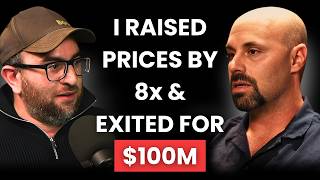
Interview with Mark Friedman (hosted by Matan Hasanov) describing Mark’s experience as head of product at Mortgage Automator, a SaaS for private real estate lenders. Key points: Mark joined when the business did ~$600k ARR and helped grow it to >$10M ARR, contributed to product strategy (a weighted decision scorecard for prioritization), executed an aggressive repricing (example: renegotiated a client contract to ~$6,700 USD/month, ~8x prior rate), and the company was later sold for over $100M. After exit Mark joined Stonefield Capital (private lending/real estate). The conversation covers customer segmentation (good vs bad clients), the importance of hiring trusted people, saying no to scope creep, lessons on scaling, and detailed views on Canadian vs US real estate markets. Practical advice and book recommendations (Drive; Brian Tracy; Jeb Blount) conclude the episode.
Questions this video answers
From $600,000 ARR to over $10,000,000 ARR.
Approximately $6,700 USD per month (about 8x the prior rate).
The company was sold for over $100 million.
Chapters
My guest today is a successful entrepreneur. He helped take a software business as head of product, eventually helping the company get to a hundred million dollar plus exit.
First year was just chaos. I'm always up for a challenge. Bit of a masochist. I like pain.
Do you have like a framework for thinking through product decisions?
You still need people to make decisions. You can't rely on an algorithm to make every decision for you. I called up one of our biggest clients. I ended up charging them about 8x for the exact same function. Came in the next morning. I just slammed down a contract. You're not raising their price to $6,700 a month. I said, I already did. One of the partners, he looks at me and goes, how the did you do that?
He's a real estate marketer.
Today, no one's selling you a gold mine. They're selling you something that is going to require a ton of work to put into it and you can make it into a gold mine. But it's not going to be that.
From day one, the US is completely different. You can buy property in most places, actually make money.
Yes. If the protections you put in place aren't actually protection, us protecting us in Canada might as well make it a free throw because they do a really good job pretending that it is actually benefiting us.
You helped the company get from 600,000 to 10 million. What lessons can you share?
There's a few things that I would say, but the number one most important thing is.
Hello everyone. Welcome back to the Profit or Pivot podcast. My name is Matan Hasanov. My guest today, Mark Friedman, is a successful entrepreneur. He helped take a software business as head of product from 600,000 ARR to over 10 million, eventually helping the company get to a hundred million dollar plus exit. And today he's going to be sharing his thoughts and insights about what it means to be ahead of product, how to grow and scale a business, especially from the product side. Now he's also a partner at Stonefield Capital Group where he is a private lender in real estate and private equity. He's going to share all his insights about the Canadian and North American real estate market and why the Canadian government should do a better job at helping people get into their first home. Mark, thank you for joining us. Your background is pretty interesting. You've been an entrepreneur basically your whole life. At some point in your career you decide to join this relatively small startup doing like $600,000 in revenue. Why did you decide to join them as opposed to starting something on Your own and walk us through that decision and what you were doing for them.
Yeah, absolutely. So prior to that I was running a startup who was building robotical tenders. Completely different business. I've been in a bunch of them already at this point. No two even close to the same. When I was doing that business, I was also working part time at the same time at the Schulich School of Business. I ended up getting my. It was called Robo Goalie at the time or Score more was the original product. And we got to a point where I wanted to scale it to the NHL. We got a few different sales, but we could not build something that was actually going to make it in the market that I had originally intended. By the time we actually sold our first units, we basically said, there's no way that we're going to be able to make the kind of revenue that we want. The market assumptions we made at the original points were not what it turned out to be. So we reevaluated and I had to shut that business down because it just wasn't going to be worth the grind. So I ended up working at Schulich for a few more years while I was figuring out my next business was going to be. Meanwhile, I reached out to one of the co founders at the time, his name was Joseph Fuchs. Was checking in to see how he was doing because we have a history and he was just telling me how they were basically drowning. They needed a new head of products and they were talking about the industry they're in. I knew nothing about lending at the time. I'd been in engineering and I had been in business for a long time. I had finished my MBA and I tried to run three businesses up at that point. So it kind of ended up being a fit. We talked it out. I met with the other co founder, Pavel. We hit it off. We went through a bunch of interviews and he says, yeah, I think this will work. I would been there first. Non engineer and non sales hire that ended up joining the company.
This business was called Mortgage Automator, right?
That's correct. It was in the private lending industry is basically building a SaaS product for private lenders that operate purely in real estate. So yeah, this was completely new to me. It went from, you know, a little bit more of, you know, relaxed schedule. I mean when I was doing both the business and I was working at Schulich at the same time, it was chaos. Once I dropped the business, it became more relaxed. Wasn't used to it anymore. I like the go Go, go. Why I joined because it was just something new, it was something fun and it was a challenge. I'm always up for a challenge. Bit of a masochist. I like pain and it was going to be brutal. In order to enter a completely new role and completely new industry, but still loved it. First year was just chaos. Basically completely learning all the customers, being thrown into customer facing or client facing interactions within my first week. Literally not knowing almost anything about this business. Had an elite demos within a month. Having to basically start engaging with our head of engineering. And I remember that first meeting where Pavel throws me in front of the group, says this is Mark, I gotta run to a client call, he's gonna tell you about this feature we need. Good luck. And just got introduced to half the team at that point and started trying to explain and figure out how to work with them. It was looking back where we started and where we evolved to was kind of chaos.
There's a canard in the tech world that nobody knows what head of products do or product managers, you know, broadly speaking do. Why don't you walk us through what that role actually entails.
Sure. So it kind of evolved like it depends on the scale of the company. As you're smaller, you're kind of doing everything. The larger a company becomes, the more segregated all the roles are. So I mean in the early days, combination of sales, account management success, a little bit of marketing, we were working with actually guiding the product, building out requirements, working with engineering, like at certain points I was helping almost debug code. It was kind of crazy support we were doing. There's not, there's not a role in that company that I didn't do in the early days. And basically being the head of product at that early stage where you don't have any non engineering or non salespeople is everything. And then you start to get to a point where you can't anymore. You're just basically burning out and you start bringing in where, where's the biggest gap and then you start splitting and segmenting the product when you get larger. And like near the end of that, basically what we're doing is defining the roadmap. What features do make the most sense, what kind of customers do we want to target? How are we going to build things to make sure that we can get something out to the market pretty quickly. But not isolating a good segment of customer, that's going to be strategic for us later on. So the higher level discussions came, you know, by the end of the four years in the early stages, we had those, but they were mixed into everything else that went on day to day.
Interesting. Do you ever, like, butt heads with, like, the head of engineer or the CTO type people?
There's not one person that we didn't butt head with at one point, but we ended up finding ways to work together. Like, we just knew we were on the same team. In the early days, it was. It was harder from a work standpoint, but easier to get along. We were all at war. Like, it's. It's basically one of these things where, you know, you go through the shared trauma of the people around you. We would argue back and forth of what was possible, what was not possible, what we were going to be able to get out, what requirements made sense. There were arguments on a regular basis. But we like still to this day, the CTO today, still love him. Great guy, the former cto. Great guy. We still get along, no problems at all. As, as it gets later on and roles become more segmented and you're not kind of in the same war, it's a lot easier to butt heads and retain good relationships. Well, harder, worse relationships later on. It's better early on. The more you went through together, the more you guys can deal with anything that comes out.
What do you have, like, a framework for thinking through product decisions? Like, how does a company decide with their limited resources what features to build out, what to do, how to really think about their product development.
So we actually had a pretty. We went through a lot of different iterations. In the earliest days, we would have something, you know, we classify things as, you know, what's an emergency, like, what's showstoppers, people can't operate without. And then there was. It almost became at certain points, who was screaming the loudest and who would get certain people's ear. And then we had to basically make those decisions. But we realized really quickly that was not going to be sustainable. And what was a showstopper for one person in theory, may not be a direction we wanted to go, because people ended up using our system in very different ways. And people that were, you know, power users needed more and more and more in order to operate their business. When they adopted something that wasn't, you know, fully fleshed out or it wasn't complete, you know, there were a hundred showstoppers. And then are we really going to sidetrack our entire development to handle those versus we have to take a look at where do we actually want to be in five years? Is this the market we want to go to we shut down this product, do we move over to this other one? So those decisions changed over a period of time, and we ended up coming up with something that was a really good guidance tool for us. We came up with basically, like a decision matrix to some extent, that just added scores. And the way this worked was we said, you know, what are our main goals? And we said, you know, you know, profitability. We want to make sure that customer satisfaction is another one. And then we wanted to look at, you know, just kind of strategic direction that we were looking at, and we broke all those. Those pillars down into their little components, and we basically made it that whenever you're submitting some kind of ticket or some kind of issue, you need to, at the most granular level, fill these out, and then it funnels up and puts a score in front of us.
What would have the biggest weight in that score?
It actually depended at the time that we're looking at. The idea was we went through this entire process once, and then we had the score, and then immediately, two days later, our CEO said, no, we got to change our direction. We have to go over here. And we all looked at each other and went.
So throughout the scorecard, we threw the scorecard.
So what we did is we ended up putting variables across the board, and we said, okay, so let's make sure that we can always adjust the weighting of this. So what we would do is we'd have a strategic meeting, you know, every month, every two months, and say, guys, this is how we're looking at this. This is currently our number one. This is currently our number two. This our number three. Here's our weights across this. How do you want to adjust this? And then we would change that around. And then all of a sudden, all of our issues, you know, we had 500 issues that are in our pipeline, and we would readjust them and reweight them and say, okay, the next decisions we're going to make like this. And that worked significantly better than the early days, because all the work was wasted in the early days, and we'd have to redo and redo. But then the idea is we could still, like, you still need people to make decisions. You can't rely on an algorithm to make every decision for you, especially when the people that are filling it out, all of us, don't have the same understanding of certain things as you. You do your best, but it's a. It's a really good guidance tool, and that kind of helped us. So depending on where we were, we could Pivot very easily, make a new adjustment to our roadmap without spending hundreds of hours and, you know, tons of people's time and basically decision making and thought power that could be used for anything else. So it was actually a great tool that helped us a lot. Now, how we rated those really depended on where we are and what we were seeing in the market.
What are some of those factors, like walk us through maybe top five things you would look at?
There were certain points where we would look at our. We would look at our expenses and we'd say, look, we're driving up our fixed expenses. We need to find a way in order to cut this at this point, or a variable expenses. And we basically look at this and say, where are we spending the most amount of time? Why is our engineering team spending so much time on bugs and whatever it may be? Rather than building new products, we drill down. We'd say, what is the root cause of certain problems that is spending those times? And we'd look through those ones and we'd see how many items were related to each other. And we'd say, okay, if we solve these three problems, you know, 20% of these go away immediately, and it frees up this much time. That was a big one we had. The other one was we would go and look at our. We were using canny at the time. So we were looking at a. A software that could like, let customers throw feedback to us. And we'd say, what are the most people voting on that they want? We said, okay, we want to focus on customer satisfaction, especially if we were trying to drive referrals. So what we would do is we go find some of the clients that were complaining the most that about certain things, and we go and we'd fix specifically their problems. And then we could drive a referral. Hey, listen, we want to show you that we're active, we're proactive. Can you right us a review? And those kind of things would work. Strategic ones would be, you know, that's the future development. Like, we really want to get into this market over here. These are the five things that we really need to do. Are we willing to sacrifice this other point in order to be able to make sure that we can enter that area and then we would drive it over there. So again, it changed regularly. And that was actually, again, one of our benefits that we could change so easily and adjust our entire roadmap as needed.
Do you recall a product decision that you made that helped a company, like a single product decision that helped the company get to over 100 million and exit there.
There is no, like, magic bullet. There was no one thing, but there was a combination of a bunch that really helped. One of the biggest. And this wouldn't even be a product. It could be partially a product decision. One of the big things was in the early days when you start and you launch a product, you're way behind your customer, your competitors. Like, most of the time, you're not coming out with this fully polished product that is just obliterating the market. Like, you know, when OpenAI did ChatGPT and yeah, okay, it's just light years better. That doesn't happen regularly.
I don't think it could do math yet, so.
Couldn't do math yet.
It could do math.
No, it could not. Well, I still correct it once in a while, but. So we were behind for a very long time. But the idea was that our customer service was just so much better than the competitors. But what happened after a while is we started to catch up and we started to get better at a bunch of things really, really fast. But there's this mentality. There's this mentality you have when you've just been obliterated by your customers. Well, you suck at this. Well, your thing's not good at this. Well, it's not good at this that you, you price yourselves way too low for the service that you are providing. And eventually, I remember having these really long, heated, I wouldn't call them like, are not argumentative, but we were against each other. We always, you know, we, we fought in conversation in order to make sure that we could actually get to the best output. And one of them was, we need to drive up our pricing. And the three partners were adamant, there is no way in hell anyone is going to pay what you're suggesting. They're going to pay for this product. This is never going to happen. You know, I mean, I think at the time we were charging, you know, 800amonth at the time. And, you know, if you look at that now, it's probably 4x. It's closer to the average of what it is, and realistically, it retains that value. So I took it upon myself. And, you know, at the time, I don't recommend people do this. I called up one of our biggest clients, I looked at what they were paying, and I jumped on a call with them and I said, all right, we're at contract renewal. This is great. You guys got a really easy discount when, you know, you guys started. But look, I want to show you all the metrics and I lined up the metrics, I lined up the features that we were running, and I went to them. I. I ended up charging them about 8x what they were charging per year for the exact same functionality. And realistically, they got a ton of benefit up to that point. And this is in US Dollars. I think they were paying about. I think we're paying about 11, 1100 Canadian. And we ended up getting like 6700 US a month is what we're at.
And I kind of did that without support of top.
No support of top management. They guys, at the point, I was still doing account management for some of our difficult clients, so I never told them I was raising the price. I was just going to go do it anyways. I come back the next day and this is. I was working really late, came in the next morning, my CEO sitting at his desk, and I said, I want to call a meeting. We all went together and I just slammed down a contract and I said, here you guys go. I said, what the hell is this? I said, you're not raising their price to $6,700 a month. I said, we already did. They all signed it happily. And they all looked at me and I. One of the partners, he looks at me and he goes, I swear on.
This podcast, you can say whatever, perfect.
He says, how the did you do that? And he says, what did you promise them? What did you screw up on a roadmap? Any problems, anything since you're telling me that you got them to $6700 and you're not giving them one more feature? Said, yeah. He goes, guys, we got to raise our prices. So then we went on a bit of a rampage of actually driving up prices, you know, two two x, two and a half X. And that gave us so much breathing room because now the pressure wasn't on as much. In order to make sure that we're bringing on new clients, which was killing engineering, because we always, anytime a new client came on, they had to. We had to develop a ton of features for this client. We couldn't develop our future roadmap. So the big product decision I made is actually realize our value and make sure that we're charging accordingly. And then we started that. That started like a chain reaction because then we could throw out our shitty customers, we can start to the ones that were just driving us nuts, and I could throw them to our competitors. And that was a huge benefit we had. Like, if we had someone that wasn't a good fit, we say, you know who's a good fit for you competitor. And we would throw them over to competitor A and say, I'll make the introduction for you. Here's what they have that is way better than us and will work wonders for you. And we were okay with that. Losing customers, charging appropriately for what our services were. And it was a huge mentality shift for us.
There are so many interesting lessons there. One, increasing pricing is counterintuitive a bit, especially by that much. But it is true. I know I used to be a part of Constellation Software and they're well known in the market for when they acquire software businesses to change the pricing. It's part of their underwriting. I was never involved in M and A, but I know part of their underwriting was can we increase prices here? Are they selling below market value? Whatever it is, it's a very scientific process that they take. Like they really. So it's very interesting. The other is that you went out and you just did that without approval and it was a big risk to you, I imagine, right?
Yeah.
But you had a lot of conviction so I assume you did a lot of work to get to the point to have that conviction. And third is that you got rid of clients that were not good clients for you. That is another counterintuitive thing like why give up business? So I actually want to start with the last piece, like what does it mean to have a bad client?
So this is actually a really interesting point because people will try to get rid of their biggest pain in the ass clients and you have to actually differentiate between the type of pain. One of them is someone that is driving you to be better. And the other one is that is expecting you to do more than you have actually, you know, than you should be doing for them. One example was we were dealing with an Australian client. I won't say the name, but I was their account manager in addition to everything else because we divided it between three partners and myself. So I was their account manager. I would finish my day's work, you know, 6:30, come home, spend an hour and a half with kids and then I would jump on at, you know, 8 o', clock, get ready. And at 9 o' clock I would be discussing with them for three hours to four hours. And I'm just doing this till 1:00am and every single time, no matter that the advice I was giving them like they were unique. They were our entry into the Australian market. There was no one that was doing private lending in Australian market when it came to a SaaS product and we were dealing with them and dealing with them and we realized that they actually didn't want, they weren't going to use our software correctly. They basically just wanted us to build custom software for them and it was not ideal. They weren't going to actually try to utilize a system and help us build a platform. And what we realized they weren't going to adopt, they weren't going to, they weren't going to try and change anything to be more efficient. They just wanted to do the same thing they were doing and basically beat us up for price. And they wouldn't learn, they wouldn't adapt. And it was just, it was, it was wasting hours and hours and it was burning me out and it was burning our engineering team out. And this client just like was not ideal. So I ended up finding someone that would have been great for them. I said you should go to here. It'll solve everything you need and it's half the price of us. Good luck. Versus we have another client in the US and they would push us like crazy. But they were a, they were incredible in the servicing arm and that was an area we wanted to be great in. And they would just drive us and say your numbers aren't working here. This report isn't working like this. This isn't like this. And they were demanding a ton out of us but they were directing us and telling us how the industry works and giving us person pain in the ass. But I love them to death because they helped us actually enter into a few new markets. They were like, you know, our big voice. They were anchor tenants in that place. They gave us all the insight we possibly needed and they, they gave us referrals on a regular basis. So we did a lot for them and it's, it's a give and take relationship. Like you're going to give them a lot of custom development that is probably beyond what you should. And that's also a lesson is always do more for your customers than you expect them to give you. But we did a ton for them. But they helped us open, open a ton of doors. So that is two different versions of pains in the ass. But one is actually on your team and the other one's just trying to suck everything out of you. And you got to be careful of that.
Right? How do you develop the conviction to go to that, that customer and raise the price?
I, that's a hard one. That's also just me being a little hard headed after a while. There's only so many times where you can just tell someone something and eventually words work for so long and then you kind of have to have the risk that you're going to take on to just do something. And I was willing to deal with the consequences because the consequences of not doing that was actually killing me more than I thought that the punishment would be if I did it wrong. But I was also convinced, like, I mean, I had the data to back it up as well.
So that's what I'm asking. What was the process or methodology to convince yourself that this is the right thing?
So we were looking at, we were looking at the wrong metrics when it came to run pricing. The idea was that one of our partners never wanted to be punitive to someone because they were successful in business. So a lot of the competitors were charging based on assets under management. And I was actually, I agreed with that. I didn't think that just because you were wealthier or you were doing better or you were more efficient, we should be charging you more. But what it came down to is what should we be charging? We did a bunch of research, talked to a bunch of my friends that were in product, talked to a bunch of other people in the industry, went to, you know, conferences, whatever it may be, and just try to ask the same kind of questions. And it always came back to the same thing is what are the resources it uses internally, number one? And number two is what is the actual value you are bringing to that business? Now, it was incredibly hard for us to pinpoint how much our product improved their revenue, but it was very easy to figure out how much it decreased their costs and made them more efficient. And then it was also incredibly easy to figure out how much of our time it used. And it all came back to the same kind of metrics that you typically hear is how many seats do you have? What kind of ticket flow are you putting into the system? What kind of features are you utilizing? And the reason that, like, I think the two that are most important is how many seats do you have and what features are you utilizing? And charging based on those makes a ton of sense because the more users that you have, the more kind of problems they're going to submit, the more people you have to satisfy. On our system, you had investors and you had borrowers. The more clients they're operating with, the more potential headaches they have from third parties that are bugging them, which flow through to us. And when we looked at the numbers compared to another client that was paying the same as them, it was, it was about, I think was about 20x the number of complaints and tickets and problems that this customer was doing. So an 8x increase on their costs was still a deal in comparison to the person that was paying almost the exact same as them. So those were the metrics that I was convinced of. And at the time it was hard to get time with the partners to really drill down into that. Everyone was just scrambling like crazy. There was, we were having people bring our lunch into meetings. We were eating during client meetings. We had, you know, we'd have to run out in the middle of a meeting saying, I got to go to the bathroom for a second, I'm really sorry. I come back and just keep going. And this is, you know, 12, 14 hours a day. So to try and have like strategic meetings to really discuss this became harder and harder. So that was the data that I supported. We tried to get in front but it was too hard to have that discussion. And again, like me, some of the partners are also very hard headed and they have a way and they have a process. So once in a while I had to push boundaries. But again, I think it got to the point where not doing it was more painful than doing it.
Going from zero to one, like to get to that 600,000 is a particular skill set. Most people don't have it. But going from 600,000 to 1 to 10 million, that's a different skill set also. And then 10 million to 100 is, is also a different type of skill set. You helped the company get from 600,000 to 10 million. What lessons can you share about scaling that? Like how did, how do you actually go from that from point A to point B?
So there's a few things that I would say. But the number one most important thing is people. It's probably very similar to what happens when you're going from zero to one as well in a different way. But the big thing was bringing in people you trust. We wasted so much money and so much time and so many resources on bringing in people that just weren't a fit. And if you go look at that company today, the people that were my closest network, the people that I knew, the best, that were incredibly hard workers that I vouched for, are the thing that helped scale that massively. So I brought in someone that was our head of sales for a little while. Another person that was our, is currently now our head of product took over my role. If you go look at the engineering team, it's all people that they knew and worked with prior to that that came in our head of account or Head of support was a close friend as well. And these are the people that you just trust and you build that relationship with. And it helped drive us there because these are people that would just go to no end in order to make sure that they supported this business because you vouch for them. So they wanted to bring it back and do the same for you. That was a huge one. Another piece that I would say is saying no is. And that's one of the things they say is the biggest role of the product manager is to say no. We would never have scaled if we kept trying to be everything to everyone. And we did for a very long period of time. We got a new customer on, we accepted everything. Someone yelled at us, we're going to do that. A new market came up, we're going to take that on. And eventually we had to say no. We cut ourselves out of any market that wasn't in North America, dropped off everyone that was there, despite the fact that they were just, we were the name brand there. They were going to flood to us if we went. We were going to go after a completely new market like credit unions and realize that this would be way too big of a nightmare to take on at the moment. We stopped that one. We were going to enter into the entire investor management and compliance space. We dropped out of that one at a certain point and we had up to that point said yes to everything. We started off as a document management solution, and then we went the entire loan origination system, entire loan servicing, then we went to fund management and we grew this whole product suite incredibly quickly and then started building CRM on top of that. And then we basically had to pause and say, I know it's worked to us up now, but it's not going to work going forward. And that's a hard thing because especially when the founders looked at it and they go, but that's what got us here. And you have to kind of make that big. No moment of yes, it's worked till now, but at a small scale. And now that we're trying to get to this larger scale and it's actually the thing that's hurting us the most interesting. So that would, I would say, is probably the difference, a big difference, especially the 6 to 10 and the 0 to 6 is that no is a hard thing to do in the early stages, but it becomes essential as you get bigger.
That's a very good point. I said, I've sat on a lot of boards for startups of all sizes and a lot of the product Feedback gets to the board level. Not a lot, but. Sorry, a lot does, but not everything. And so one of the things I've always been a bit curious about is how to take customer feedback, what kind of customer feedback to take seriously and which to ignore.
That's, that is still a problem I struggle with today. It takes, there's no, there's no right or wrong answer there. You have to kind of feel it out and you have to know, you have to know if you trust your partner to give you that feedback. You have to make sure that you understand enough of the market in order to actually to, to know whether or not you should be listened at or whether or not you should know you should trust the customer more than yourself. What we would typically do is we would never rely on one customer ever because they're customers are innately selfish, like they care about their own needs and they actually don't always know about what's going on with everyone else as best much as they think they do. There's, it's very difficult for them to understand. And once I was in software, I started to understand a lot of these businesses in the market a lot better than some of the customers. But when what they knew more was the niche, like the niche parts of the business that you couldn't get from having a broad perspective similar to consulting in that way. So I would not move on any one customer's advice without at least validating it with some of their competitors. But I obviously wouldn't give them their exact information. I would broadly understand if these were challenges for them. And then we tried to create little advisory boards of people that could actually consult with us on some of those customers know that there's something wrong. They don't know what to make, they don't know how to solve it. But they can always tell you when something's wrong. Their solution works for them and sometimes it doesn't, but it will not. It 100% will not work for everyone else. And they're adamant that they do know that it will. So it's, it's, it's a hard point. You have to be good at kind of balancing their emotions and also getting information out of them.
You guys eventually sold the business for over 100 million. I don't think we could say the exact number. Yeah, but why did you guys decide to sell as opposed to keeping the party going?
So the three partners that were there, I think, and I can't completely speak for them when it comes to this, but I think their plan was always to Sell eventually. I think they'd all established lifestyle businesses at one point or another. And I think the idea was that we don't want this to be a lifestyle business. I would like to exit this and then get into advisory and then work on other businesses and be. I think they're days of being founders, like pure founders from startup. It was gone. And the idea is that they wanted to jump into other businesses and try to build things that were already relatively established and the only way to truly do that with a decent pile of cash would be to exit. So I think that was always the idea was that they wanted to get to a certain scale and do that. For me, I was honestly, I love software, but it burned me out. It was a lot in a short period of time. I think they always talk about like even consulting, they say, you know, like one year in consulting is two years in industry. I swear in the four years that I was there, it's felt like more than a decade. So I think there was only a limit that I could go. And my big thing was I, when I started I had a four month year old kid and I have another one now. And the idea was that I don't want to be working 14 to 18 hour days during their childhood was my big thing. I may go back to this later on. In five, ten years I might go into something else that is the equivalent of a software, who knows. But right now I love the flexibility and the idea of not being into that grind and the idea was to exit at some point so I could be there with my family, which a big thing. It was just life stage.
So they sold a business. You joined as a partner at Stonefield Capital.
Yeah.
Right. So what's Stonefield Capital? What do you do? What does the company do?
Sure. So after I, I left, everyone told me go take a few months off. You know, you've deserved it. So anyways, after a week, Chris Carter.
Says, yeah, yeah, had him on the podcast, he said the exact same thing. He said, guys like you, Danny says, don't neglect your, you know, go back and take care of the things you probably neglected. But while you're building the business.
Yeah, but you can get that done in a week. Me too. But yes, that's true. You needed to. But I wanted to like my, my whole goal was I want to find the next thing. Right. So I ended up looking around and I had a, I got an offer within like a week and a half to join another company and I turned it down. I said, no, I'm done. I don't want to work for anyone else ever again. I want to start something myself or I want to be a partner in something. So I went to about three different people that I knew started talking. They're, they were really good. One of the guys I still have a good relationship with, I talk to him regularly. But the big one was that a friend of my wife's, believe it or not, actually was running this. And he said he's been trying to grow for the last little while. He doesn't, They've been not stagnant. They've been growing relatively steadily, but it's getting chaotic. They can't breathe anymore. And he says, you know, you've seen everything in this industry. You've seen, you know, 400 plus lenders. You understand how this works. Would you like to come and build something special? And I had seen businesses that were running 120 million with three employees. And I'd seen that we're running 120 million with 35 employees. And I said, I want to build, I want to build that first one.
And I've seen 120 million with like 200 or 300 employees.
Exactly. So it was one of these things. Well, the assets under management also not necessarily, not necessarily their revenue. So we were looking in this, in this business going, I want to build this with you. Is this your, your vision? And I had a good conversation with him. And the big thing is I asked him what's important to you. He says, well, I want to sustainably grow the business. So it wasn't going to be 14, 18 hour days. That was my big thing. He says, number two is I want to be able to spend time with my kids. He has kids the exact same age with me, which is amazing. And he says, I just don't want to work with. I said, sold. Those are my top three.
And the second we had that have the opposite perspective.
Going to work with assholes. You want to be away from home.
That's right.
I understand that too. That was my last business.
But I mean, but it sounds like a great list of things that most people would want. Right? Yeah.
Your priorities change. I mean, well, some people, you notice how money wasn't number one, number two or number three.
Right, right.
I want to be able to build it over time and maybe get there to a point where I can sustain my lifestyle. But the big thing was I wanted to make sure that I was just happier at home because if you, the amount that you're putting into work, you can't come home and Be present with anyone. It's just brutal.
Yeah, but I don't get that you prioritize something else over money. Why?
Well, I mean, I did exit.
It's more money.
More money. That's fair. I mean, don't get wrong. Everything is easier with money. 100% it is. But what you kind of realize is you, I left the business after four years, right. I mean, don't get me wrong, it's a buddy of mine, I got replaced in a week.
Right.
And you start to think that when you go into a place that you're special, that you're going to be like, look, everything I'm putting in here is never going to be forgotten. I'm going to be monument, like they're going to be like singing my praises. This, you build this up, you kind of put yourself on a pedestal. Then you realize how quickly, the second you leave something, how quickly you could be replaced. When it comes to, when it comes to your environment, I'm very zero replaceable.
Oh my gosh. One of the most replaceable people in an organization.
Actually. Your replacements over there. He's coming in after this podcast.
That's right. You could do my job with AI today, especially with these podcasts and venture capital. Here's the AI man. All good.
They've got your voice, you recorded, they got your video. You're good. You don't move that much. We're good. So, yeah, that was a big thing. Money was important, but not anywhere near as important as it was before. But why did I go there? Just the people. I, I look back at what my favorite parts of that entire business was and don't. I love the software. I actually like the mortgage automator. Yeah, I love the software. I love the, the industry. But honestly, the people are what made everything worth it. Just, they're just wonderful. Especially in the early days, what we went through together, like you, you were going to have those people as friends for the rest of your life. There's just no other way around it. And I wanted that again because by the time we started getting large, the time we got to 60, 65 people, you start to lose that. I, by the end I walked around the office and I actually didn't know someone's name. I never had that for the first three years that I was at MA for. Not that I want another 60 person company. I'm through that. Managing people was fun, but also a pain in the ass. But now I just want to make sure that I love the people I work with.
Right. So this decision to join Stonefield is driven more by your criteria for what, your lifestyle, what you want your lifestyle to be rather than the industry itself.
No, I love the industry as well. I went into that because of that. But yes, the reason I want to work with Stonefield, like I had offers from other, other private lenders. Why specifically Stonefield was the people.
So you want to stay in that kind of space. Real estate, private lending, all that stuff.
Yeah, it's honestly a wonderful space. When I joined originally I, you know, I left higher education, I was in robotics, I was in banking and then I went, oh yay, mortgages. This is self employed and they don't show the income that they need to. Maybe they have a lot of debt and they can't get a heloc, they don't break their mortgage so they need someone in order to cover that debt. And we were talking before the show even about, you know, some of the predatory lenders, you know you're paying 20, 30 plus percent. So the idea is that if you can consolidate that to around 10 or a little bit above that, in theory, it's saving you a lot of interest every year and you give them an exit to refinance. So that's kind of what we do. We just secure ourselves against real estate. Whereas others might secure themselves against businesses, they might skill themselves against other assets. We're purely in the real estate stuff.
And so this is the first time you've been doing the lending before you were on the software side.
Exactly.
Now you're on the lending side. How's it, how is that for you? Like I imagine you have to learn a lot of new things or you can actually take the skillset you developed at the software business.
So I can use, I can take that skill set 100%. But there's a lot of nuances. Like I said, I get a broad perspective now that I'm digging deep. I start to, you start to have these aha moments like oh man, that's what my clients were talking about when it came to this. Because you're actually going through a lot of this like from cradle to grave versus you know, I would dive in, take a look at something and go, okay, I think this is the best option. Dive out, go to someone else's problem. But one of the big things that I was, I was really good at back in MA is I wouldn't just surface level solve a problem. If someone had a problem with their accounting, I would completely rebalance their entire book. I would rebuild it if they had a problem with Their origination. I would dig into their software systems and whatever the CRM was try to connect and I would figure those things out. So there was a lot of translatable skills that came from that but very different kind of job. I'm still a little bit of a jack of all trades when we're in here because there's you know there's four of us. You can't not be that. But it is very different. Way less hectic but rewarding in different ways.
So how do I get money from you guys?
Huh? You have a house.
I sure do.
You can. So the goal is you don't want anything long term from us. You, you don't want long term from any private lender. The idea is you always want to exit. It's short term loans. It's supposed to fill a need. Idea would be if you had a really quick purchase the bank's going to take three months to close. But you want to give a cash offer. You want to beat everyone else that's out there. If you need a quick close someone could lend money in order to put the money down. You can make a cash offer to that person. They say sure, absolutely. I'll take this. And then you refi out to a bank. It's. It's a strategic.
I actually did that for the first time about nine months ago. Closed on a. On a property. It was a quick decision and I couldn't get money from the bank that quickly. And it was very expensive.
Yeah.
You have to go to private because they charge you fees and this and that. It's not. I. It's very difficult to like it's more expensive. That's just the reality. 100 but we did it. We created so much value in the property and we took it out. We got a. Financing from a. One of the big banks within nine months. Thank God. Because we've created so much economic value from that. Hundreds and hundreds of thousands. I'm thinking well of course if I, if I know that in advance I'm willing to pay the extra 1 or 2% lending fee or something because I know on the other end of it I can create hundreds of thousands of dollars in value. But you have to do that like it's very dangerous. You have to like know what you're doing. Right.
You need to have a good partner. You don't go to random private lenders that you potentially because there's some that are like any industry. There's some that are ruthless.
Right.
And then there's some that are great partners. And especially the more you kind of establish a relationship of hey, this is what I'm doing and then you have flexibility and then you say listen, I'm going to exit, you know, nine to 12 months. Can you guys give me a break if this happens? Absolutely, you can do that. And the goal is being a good partner. And then on the other side there's the investor side where you're getting pretty damn good returns for a fixed income investment. So it works really well. And I like the idea, number one is I like getting people out of tough situations on the borrower side. And then on the investor side I like making friends, family and business associates money. It's, it's, it's rewarding, I like a lot.
So you've been in the real estate like industry for many, many years at this point and we're in Toronto of course, but the same could be said about major cities all across North America. That real estate kind of shot up in value at 2020 because capital was basically free and there's stimmy checks and all that stuff. And then interest rates start to go up in 2022 and real estate prices started to plummet and it became much harder to maintain your mortgage and it just bedlam in the, in the real estate market. What's your perspective on the real estate industry today? Where is the real estate market a good place to invest in today? Should people hold cash on the sidelines? Should we go all in on the latest Airbnb investment or crypto? What do you think?
That's a, that's a difficult one to discuss, but maybe yeah.
Rock being sold for like 50. A picture of a rock sold for $50,000.
You should buy my NFT, but it's down from 90.
It's down 90% in value. When people like selling for 1.8 billion, which I do that as a type of property.
No, hey, if you can guarantee that you should absolutely do that. You can live in a rock hard one. So funny enough, well there's the rent versus buy question, then there's the do you invest for as an investment property? I believe it's your primary residence. It is still worth it as long as you buy the rights. As long as you buy the right kind of property. Right now condos have taken a massive hit. You're not going to see the same appreciation that you're going to see in the semi and detached market. The 2 million plus properties take up took a massive hit as well. Might be ideal for that as long as tax implications for, you know, you Know these luxury tax and those kind of things don't continue to be a massive burden on large scale properties. Basically the big things are that it would be a benefit when it comes to investment is number one, you have to buy. Right. If you do not get a good price on your property, you're not going to make it up from efficient management, renovations or like a lucrative sales price. If you do not buy the right property, it's done. So you now is a good time to try and steal properties away from people. Absolutely. Then you can make up for it. Like you kind of said at this point you got a very expensive financing at the time. You, your timeline was a crunch but you still made a lot of money because you probably bought the right property.
It was. I was shocked. I was able to get the price exactly. I mean I know why. You know the seller was a bit desperate there. They had three times a triplexes had three tenants that like were not one of the tenants was not good.
Yeah.
And they couldn't get them out. Like when you buy a triplex like that you need to renovate. You'd be able to get at least the main tenants out and the tenants weren't willing to sign over there to, to to leave.
Right.
So I made it a condition that of closing eventually said okay, I'm not going to make it a condition but we still want to proceed with that. We were lucky enough that they were willing to sign that they were going to leave tenants and so they left the day before closing.
Wow.
It was. I got. We got very luck. But because of that it scared off so many buyers.
Absolutely.
And just the property looked terrible. Like it looked terrible today. You'll see the property like oh my gosh. It's a completely different.
But that's the kind of property you want to buy. That's like that's what you're looking for is people don't want to put in the work for a lot of things. And if you're willing to put in the work then you an absolute killing on it. Don't. You're not going to buy completed properties that exist at this point where you're going to make a ton of money. That person. No one's selling you a gold mine. They're selling you something that is going to require a ton of work to put into it and you can make it into a gold mine. But it's not going to be that from day one. So if you're not buying decrepit properties you don't have a, a strategy. You know to subdivide lots and build multiple properties on it. If you don't have a good approach and you didn't buy right, you're not making money in that. Now when your primary residence comes in. Absolutely right. You're looking at 6% appreciation a year over the last 35 years on average. You're looking at. You don't have to pay capital gains on whatever your purchase versus sale was. There's. That's an absolute win. I actually argued my wife for a little bit saying we should rent. I ran all the numbers and calculations and I admit I was wrong. It is still worth it to buy purely because you don't have to pick applicants. But for investment, be careful, don't jump into it. If you're going to have a strategic partner, like example, a private lender, make sure you choose the right one and make sure you have enough capital in order to cover your problems. If you don't have capital, cover your problems, you will get in a very bad situation.
What do you think the interest rates are going and the real estate market is going for the next couple years?
I think that there is way too much value and wealth tied up in real estate for this collapse to continue long term.
Now you're saying from a political.
Yes, okay, yeah. I think you have too many people that are of the voting majority that have all of their wealth tied up in real estate. And if you keep this decline happening long term, you are going to lose power. Now that said, our Canadian dollar might collapse massively during that period of time, which basically offsets that for the people that want to move to Florida. That said, I don't think real estate will continue on the decline as it has long term. I think you're going to have to bump it up. Whether that's with foreign investment, whether that is finding ways in order to decrease interest rates, whether that is making the qualification ratios better, I don't know completely. But there's a few things that I still would not touch, which is micro condos. I think that those ones are. No one wants to live in a 400 square foot, you know, little cube.
Oh, no, we have a couple of those.
Yeah. I mean, if you can do it, by all means. But they have to be in really.
Good locations on the subway line. Relatively new buildings.
Exactly. And if it's like student housing or it's something along those lines that also helps universities. Exactly. Aside from that, like, I just, I.
So we're good.
I don't know. I think you're fine if that's the location you have, you're okay. But yeah, those are the biggest.
You don't want to buy like a 300 square foot condo in like King City or something?
No, of course not. Like, it's going to be great over here. Like, no, no one's, no one's living these things. If you're moving out of the city, you want land, don't tell me you're going to live in a cube. You're not going to do that. We're not New York. If you're going to say we're close to New York. It's downtown Toronto. It's nowhere else. Right.
So I love startups and technology and all that stuff, but at heart I'm a Jew, which means I love real estate. It's like I'm not allowed into my synagogue unless I have real estate. It's just like, sorry, you can't, you can't accept you into the shul, you know, So I love real estate. That's like my, I always, I will always be involved in real estate in some capacity. One thing I've noticed that we did our first US investment about a year ago and the process of buying real estate in the US from getting a mortgage to the, the economics of the property is so different in a place like the GTA or Canada Broadway, because I've looked at other parts of Canada as well. Ottawa and Calgary and Montreal. It's relatively the same except just different price points. Right. The US is completely different. You can buy property in most places and actually make cash flow. Actually make money?
Yes.
It's more risk because properties actually decline in value. In bad cities, they can actually decline in values to be a bit more careful. Whereas in Canada, generally speaking, if you're in a decent, like prices are going up over time, that still hasn't. We still haven't had those major issues like they've had in the US Why is. So why I bring this up when I got a mortgage, I got a mortgage from RBC in the US And I've also tried to get a mortgage from RBC in Canada. They are so difficult to get a mortgage in Canada. Oh, you make this much money, we're just gonna assume you don't make that much. Oh, your real estate makes this much in income. We're just going to take half it off. Oh, we're gonna. Their interest rates are X percent. We're just gonna assume because the government that the interest. The qualifying rates are much higher, not 3%. We have to qualify at 5% and it's like they take, they. It becomes next to impossible to actually get a mortgage. Especially when the average prices are like over a million dollars. Who can afford that? You have to make hundreds of thousands of dollars to be able to just qualify for a mortgage. Even if, even if you had the down payment in the U.S. here's the difference said, oh, the property. Here's a property. Does it cover the expenses of the mortgage and all the expenses you'd expect in a property? Yes. Show us your down payment. Show the down payment. Boom, you're approved.
Yeah.
Very simple, straightforward, you got it done. Why, why are we so.
Why so my opinion is, number one is that you.
Thank you for hearing my right.
Yeah, no, I get it. I've said that exact rant multiple times because when we learned about the US market, when I was looking at the way that they process this, we, and we looked at Canada, we said, what the hell? Number one is oligopoly. You have five Canadian banks, right, that basically control the market. They want to contain it that way. In the US you have tons and tons of banking systems that are available to give you cash. There's a big, very big difference. Number two is protection. Canada has this guise of we're protecting the borrowers. You're also hurting them in different ways. In the US it's kind of like the wild, wild west. Like if you're stupid enough to go buy a property that isn't going to cash flow and you put yourself into debt, good luck to you. Like by all means, there's a power of sale versus foreclosure model in Canada versus the U.S. and for those that don't know, power of sale means that if we have to as an institution get our money back, we have the right to sell your property. Any equity that remains is returned back to you as the borrower. In the US it's foreclosure model. I own your property. If there's any equity, I retain it.
Oh really?
Oh yeah. Especially in red states. So it can be really bad. You can have a million dollar property owe 50,000 and yeah, they foreclosed the property. You just lost, you know, $950,000 of equity on your property.
Whoa.
Yeah, there's, there's ruthless. You got to be even more careful.
In the US should become a lender.
In the US like that's the direction you went immediately.
We'll talk about, to make more money.
Man, we'll do predatory lending strategies as part of part two. They have, it's, it's, it's night and Day. There's no protection in the U.S. so you've got to be a sophisticated investor. But there's more opportunity for a person that doesn't have the funds to be able to purchase and pick these up. I remember when I started, I had a few books that I was looking in the real estate market of let me, I want to do rental properties in Canada. I start picking them up and the first thing is, okay, first you have to have a cash flow positive property. And I just literally knocked 99.999% of properties in Canada. I'm like, all right, what's next? That was it. It was over immediately. In the U.S. this, this is abundantly clear. Like you can actually have rent that covers your mortgage.
It's very, it was shocking to me.
Yeah.
And like we're talking about in big cities, normal, proper normal. It's not like you're not going to a slum or like the ghetto or something. You're actually buying in decent areas that are growing, that are appreciating in value. And you can still, if you're a little bit not smart, but if you're just a little bit diligent, you know, you don't have to be so smart to know this is, oh, here, my expenses, here's my income, I have to buy, here's my mortgage. If I buy a certain price, that's it. Or if I improve it a little bit, I can increase the rent.
What kind of means to have when like, you know, what are my tenants going to actually pay when it comes to this? Like, it's pretty easy.
It is very straightforward. I was shocked. We did the project. We did, we're like, you know, fully, fully normalized.
Yeah.
You know, bring in 1500 US a month just like that, with appreciation 3 to 5% a year on the value of the property. Yeah, that's like the irr on that is fantastic.
It's insane. It's insane. And you saw it. I saw it in my, in the industry, when we go to privates in.
Canada, the purchase price was low enough that 1500amonth was very material.
Yes, absolutely. It covers it. And you're netting like, and you just, you're looking at this going, why doesn't this exist in Canada? It doesn't. Very, very remote areas. But like at that point the property values fluctuate so much that it's not worth the risk. You're talking, you said in major cities.
Major cities, out sorts of major cities where, you know, you're talking about a price appreciation 3 to 5% pretty consistently for 50, 60, 70 years.
It's insane. It doesn't exist here. Maybe it will one day, but it doesn't exist here right now. What you're here, you're basically trying to do is you're. You basically need enough cash in order to cover the difference between that and hoping that the appreciation of the property eventually offsets that, and then you're okay, and then you're just coasting on your rent. But, yeah, that doesn't exist. That doesn't exist here in the US in privates. You can see the difference between the Canadian market and the US Market is in Canada, it's all like most of the business that you're getting. Privates are going to be like your primary residence in the US it's all fixing flippers. Everything in privates is fixing flippers. Like, we're going to, we're going to give you construction loans, we're going to give you renovation loans, and everything is geared towards that because this is what everyone's using privates for in the US because it's just such a lucrative market.
Right. Is that a bad thing? Like the. Canada is not more like the U.S. in that regard? Because let's say in the 2008, 2009 financial crisis, Canadian real estate wasn't as impacted. So that's like, if I was playing devil's advocate.
Yeah.
And I. Yeah, they would say that. Yeah. Is. Is that right? Do you think that we're doing the right thing or should we become more like the US in this regard?
I would say that the US has its problems when it comes to that, but I wouldn't say that over the last few years Canada is any better. So at the moment, if. If the protections you put in place aren't actually protecting us, protecting us in Canada might as well make it a free for all because they do a really good job pretending that it is actually benefiting us. Oh, you, you won't be able to afford that mortgage. Don't worry. You won't be able to get into the real estate market because you don't have the income. You don't have this amazing. Okay, so now that we've now increased my salary up to the point where it needs to be. Let's go look at housing prices. Oh, it's, it's doubly out of range of what it was before. So are you really protecting Canadians or are you increasing the wealth of the people that actually already own property?
It's very annoying because a lot of people in politics talk about Housing affordability. And they say, oh, we have to make housing more affordable. While at the same time on the municipal level they increase development charges.
Yes.
On the, on the, on the federal level they're increasing or the property taxes on the municipal level. Also on the federal level, they're making it harder to actually borrow. So you have to make more money in order to, to get the thing. They're increasing capital gains taxes like things that are not supposed to. Things that would make housing more affordable. They don't do. They do the exact opposite. Especially on the municipal level.
Your. Those, your taxes on development, your taxes on land transfer.
Land transfer. That's the other one.
Your land transfer that you're looking at. You're looking at. God, like your qualification ratios. Like you're not making this easier for anyone. Oh, it's great. You offered an FHSA. Greatest vehicle that we have at the moment, $8,000. Amazing. I'm sure that the price of housing isn't going to increase beyond what you're going to earn your FHSA over whatever. How many years exactly. Yeah, Great. Great vehicle. $8,000 a year is, is not even putting it down.
What, what you don't know, what you're not realizing is that if you take that 8k and invest it into like the latest fart coin or something and you grow by like a thousand percent, then you could buy a real estate.
Yeah, that's the only property.
Yeah.
That's why this generation doesn't care about their going into crypto. Yeah, they're going to crypto. This is why. Because it's the only chance you have a real estate. So they're not protecting us if they can actually do real protection. You want to, you want to improve this market? Let's drop the taxes for builders. Let's make sure you drop your land transfer tax. The bullshit tax. That does. No reason to be there. We're already paying property tax. We're already paying enough in order to own properties at the moment. Luxury tax, sure, it's stupid but like just get rid of all the tax at this point and make housing more affordable by stop taxing people for purchasing the primary residence investment properties. Do what you want. Right. Like realistically, that's don't do you want.
To with real estate investing, but it's.
A business versus you want to get people there in their first home different. I still don't think, I still think we're tax death. But when it comes to your primary residence, you're actually not helping people.
Right. So, so it's it's interesting. So you're saying, okay, well nominally the government is saying they're protecting borrowers, but they're not even doing that. If they were doing that and actually work, maybe there's an argument that there is like a just different philosophies. The US Wild Wild west will have more bankruptcies for more people becoming rich and wealthy because it can. They could just build a business around real estate. In Canada you have less wealth, but it'll be more, so to speak, more people will be able to own property as a whole because the whole economic environment is safer because there's less bankruptcy. So there's less people being right.
It is, but that's not happening. No, it's exceedingly harder in Canada for a non wealthy person to enter into real estate. And it is, but it is and it is way more advantageous for someone that is already wealthy to retain their wealth.
Right.
In the US There's a lot more, there's a lot more opportunity across the board no matter what your wealth position is. Right, but there's also a lot more.
To ruin your wealth in the U.S. yes, but you know, the U.S. entrepreneurs are just built different there because they'll go through multiple bankruptcies before they hit it big. And it's just okay, like, well, I'll just go like I did something, I failed. Sometimes I have to go bankrupt to kind of reset the clock, which is probably bankruptcy is a very serious thing. Shouldn't do it willy nilly obviously, but like that's part of the business goes bankrupt, not them personally. And it's part of life. Like that's business. Here you'll have much fewer success because you have much fewer risk takers because you, and you'll have much fewer bankruptcies.
And there's less, less earnings that you're going to get. And then when you finally sell, you also tax significantly on it as well. So the benefits go away. Now for every success story you HEAR about the U.S. you don't hear about, you know, the seven people that basically ruin their life.
Right.
That said, it still happens here.
Right. And then that's the, you know, I think our GDP was growing in line with the US up until 2015. Something happened, something crazy happened. Like the Liberal government was elected for the first time in many years and our GDP has grown 1% over that entire period. It's called the last decade lost decade in Canada because that, we basically haven't grown as an economy on an absolute basis. On a relative basis, we haven't grown. And because immigration Skyrocketed. Our GDP per capita is actually shrinking. It's actually kind of sad. So if you don't have risk takers, you don't have a economy. Right. Our best entrepreneurs is the startup game that I deal with every day. Instead, the ones that can build in the U.S. with rare exceptions, go build in the U.S. of course. It's the capital. They have a bigger market, better tax scheme for them if they're successful. It's just. Why would they build here?
Yeah, I can't argue that at all.
Okay, great.
Yeah. Can't. It's hard. It's. It's one of these things where. And we have this conversation a lot. Like even the guys that sold from ma, they're saying the next business is going to be the US like if, if they do build another one, it's going to be the U.S. it's just way more tax advantageous.
Right? Yeah.
They had to pay, they have to pay extra taxes to leave this country in order to be able to, to, to get out of here. Even if you have your wealth, if you don't live here anymore. It's brutal.
Really?
Yeah. Millions you'd have to pay because they.
Have to like sell that, at least on paper, sell their property and pay the capital gains on that.
Pay everything to exit here.
Right, right.
Scary.
Or even if you don't sell. That's the thing I heard right.
Yeah.
Not tax advice obviously, but because I looked into that myself.
Yeah.
It's funny because I bought my first property when I was 20, just turned 25, turning 26. And I did it with 5% down. And CMH, the Canadian Mortgage Housing Corporation, they allow you, they, they insure mortgages. They have the same thing finding me and Freddie Mac in the US they have something very similar, I believe, where if you're buying your first home, you could do with a very small down payment and they'll insure it if you qualify as a, as a borrower.
Makes it expensive, but it makes it.
More expensive for the borrower. But the actual interest rates are lower because it's insured. The banks are giving you a better interest rate. Right. So I bought my first house. It was a summer detached in Thornhill, which is very, very nice area in the suburbs of Toronto. It's like one of the best areas, I think in the country and right beside a park. Beautiful house. Whatever. Cost me $618,000 in 2015. Yeah. That's when I did the deal. Closed in January 2016. The house today is worth, I don't know 1.1. One point, probably 1.2 if you look at it. And someone in my position today, the exact same position, with my income, with my whatever, would not be able to buy that house. Just would not be able to buy the house. And I was very fortunate. Obviously. I saved up money, did all, everything I, I should have done. Right. I lived in a one bedroom basement apartment with no windows for months just to save money so I can put a down payment. I did that. But even someone did that today, you.
Still can't do it.
Can't do it.
Yeah, I bought, I only got in because I bought a condo in a place that everyone told me not to. It was in Keel and Finch. It wasn't the greatest neighborhood and everything like that, but I found something that I thought was unique and I said, I can make this appreciate. We ended up appreciating 30% within a year and a half. And then I used that as my down payment to actually get out of that area to go somewhere else. But it was a $300,000 apartment, which go find something like that. It was a thousand square feet. 300, $300,000.
One of those older buildings.
Yeah, but you can't, you can't find it for that price anymore. I mean, maybe today you might be able to, but still you do like.
Renovations and all that.
Renovated the whole thing and ended up flipping in a year and a half. We lived there for a bit in a place that everyone told us not to. And if I didn't do that, I'm out of the housing market.
I can't think. It's just a bit of a rougher area for those of the Americans. It's a bit of a rough area. Toronto doesn't have such rough areas like you have in some places in the U.S. but for Canadians it's pretty rough.
We made it easy for a rental for the school that was right next to it and the subway was coming up. And I said those two things right there. I'm buying.
Was there a time you felt that you needed to pivot in order to profit?
Yes. Not at a true pivot that you've, that you'll probably talk about, but we mentioned that we're, we're not going to be global, we're not going to fill these systems. We never changed the essence of the type of product we were in. So it was never a true pivot. But we were supposed to be a document solution. Then we're, I think Pavel told Joe or one of our partners in the early days, he says just Building docs, right? Yeah, absolutely. We're never going to do accounting, right? Never going to do accounting. So, okay, so we did accounting, okay. We're never going to do fund management, right? Never. We did fund management. Okay. We're not going to be a CRM, right. We build a CRM. So constantly just adapting all the time to say, is this the opportunity we want to be? Happened dozens of times in this business. And the idea is we were wrong some of the times, we were right some of the times it's, you only fail when you give up was the big thing that we sort of looked at when it came to those pivots. And sometimes we had to make a decision and go back on it, like really quickly afterwards. Don't let something dwindle when you know it was a mistake.
Do you have any advice for struggling entrepreneurs today?
Lots. Go build. In the US There is. It is a endless struggle. It is very lonely. There's not a lot of people to talk to this about on a regular basis that actually understand. So find a community if you can. You're gonna have to push through a lot of shit and you're gonna have to somehow discern what the good and what the bad ideas are. And only you are going to be able to determine that. And you're right. No matter what you choose, I just keep going. Just keep going. And you're going to have to deal with a lot of pain and make sure that you're actually up for dealing. Like you. You don't know what you're getting into. I can tell you what you're getting into. You don't know what you're getting into until you go through it. But even if you don't succeed financially or with your business, the lessons that come with it are unparalleled anywhere else. Um, so it is still worth the journey. Just put everything you have into it when you do it. Uh, don't half ass it.
That's. That's great advice. Uh, what's the best business advice you've received?
Uh, best business advice I ever received was care about your customers because the customers are the thing that are actually going to make you like. Treat them like no one else in the world and provide the best customer service you possibly can. Because at the end of the day, you're only worth what you've provided out to the rest of the community or the people that you work with. And there is never a situation or rarely a situation where putting extra work and put extra value in the people that help support me in the early days has not come back to pay for itself in space.
So my last question here is, do you have any book recommendations?
Yeah, my three favorites. Two of them are sales books, and one is kind of a motivation. Dan Pink, Drive or the Puzzle Motivation. You can look up his TED Talk. It was one of my favorites, but I read Drive as well. It was great. And then Brian Tracy and Jeb Blount were my two sales books that I left. As an entrepreneur, you are going to be in sales. There's no way to avoid it.
What's the name of the book?
One of them was the Psychology of Selling. Was. Was Brian Tracy. And the other one was People Love you or People Buy you by Jeff Blount. I think there's two of them. I can't remember which one I liked better. Yeah, so the whole idea of Jet Blount is. Is you. They're not buying a product, they're buying you. So you better be really good at selling yourself. Brian Tracy just talks about, you have to believe in order to be able to see. You have to believe in what you're selling in order to be able to actually sell it. And Dan Pink's was puzzle Motivation was there's three things that motivate a human being, and it was autonomy, mastery, and purpose. So autonomy, you have to be able to actually work on your own. Mastery, you have to be able to get incredible at something. And purpose, there has to be a mission for why you're doing something. And that was when I started. Leading teams was the most important thing in the world. So both of those two groups helped me tremendously.
Mark, as I learned a ton, by the way. I. I thank God I have such great guys. I learned so much.
This.
This conversation was really good. You gave me a chance to rant, which about the real estate market in Canada.
So that's very special.
Thank you.
You could have had an hour on that one. Yeah, I would have been listening. Really happy.
Thanks.
Thank you.










