Melissa Lantsman: Why Canada is Failing & What it Will Take to Fix It
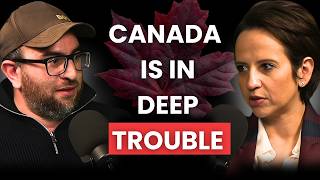
Conversation (podcast/interview) between Matan Hazanov and MP Melissa Lantsman (Deputy Leader, Conservative Party of Canada) discussing Canadian politics and public policy. Major themes include critiques of the current Liberal government on crime, inflation/cost-of-living (housing, food), economic policy and venture capital, immigration/talent retention, and a sharp focus on the rise of antisemitism after October 7. Lantsman frames Conservative priorities as freedom, free markets, smaller government, tougher criminal justice, and policies to retain capital and talent.
Chapters
My guest today has had a meteoric rise in Canadian politics, rising quickly to become the deputy leader of the Conservative Party of Canada after 10 years of.
Liberal soft on crime policy. Violent crime is up 50%. Sexual assault's up 75%. Gun crime up 116%. For the first time in this country, younger people do not believe that they will do better than their parents. I don't know how to say this other than learn dupe shit. You can ask anyone. Is your life better today than it was 10 years ago?
Would you say the Conservative Party stands.
For freedom, for justice, for liberty, for free markets, and for leaving people the heck alone?
The cost of, of living has skyrocketed. Food, inflation, the cost of buying a house is almost impossible. Their economy is weak.
Like higher spending equals deficits equals inflation equals, you know, less money in your pocket. Home ownership is not a dream anymore. It's sort of a nightmare. I think there is a tremendous number of Canadians that are working harder and harder and not seeing the benefits of everything that this country has to offer.
What's your thought on Trump?
Trump, for me more than anything is a wake up call.
Why do you think Canadians haven't resonated enough to the message of the Conservative Party?
Like the government can't be the answer to everything. It can't actually even be the answer to anything.
Since the October 7th terrorist attacks on Israel is a unprecedented rise of anti Semitism in Canada, I think if governments.
Right across the board, they're stoking it, if they're not willfully ignoring it, I think we are in deep, deep trouble here. There's lots of times within Jewish history that a thousand people have died in a day. The only difference is, is that on October 8, Israel was a state and Jews fought back. We haven't had once, not the last prime minister, not this one, stand up at a podium and say, you know what? The anti Semitism in this country is out of control. Not once.
January 2025, your party started off with a 25 point lead. What happened?
It is impossible to talk about this election without talking about.
Melissa, thank you so much for joining us. This is very special.
Thanks so much for having me. I'm excited.
So I'm going to start with a bit of a difficult question that I know a lot of the people that, that I know have been asking. In January 2025, your party started off with a 25 point lead against the Liberal Party then. So if the elections were held in January, it's likely your party would. There's like a 95% chance your party would have won certainly a minority government, but almost certainly a majority government as well. But when the elections happened in April, only a few months later, your party only won 42% of the popular vote and roughly the same amount of seats in Parliament. So what happened?
Well, look, I don't think you can ever say only 42% of the vote. That's a pretty high watermark for Conservatives. And I think there's a misnomer that somehow you're 25 points ahead. We finished the election with almost 42% of the vote. Eight million plus Canadians voting for us. A very different voter coalition than traditional Conservatives have had in this country in terms of the pools of voters. But look, you didn't win, so I'm not going to sit here and spin you. So after every election, you sort of go back to the drawing board and start to look at the pieces of what happened. I think the party's doing that from one perspective. I think it is impossible to talk about this election without talking about just the complete collapse of the ndp, a traditionally progressive party that splits the votes and nervousness around, around, you know, the Conservatives forming government and a lot of that vote ending up with the Liberals. So lots of things to think about, obviously, the, you know, the issues ahead of us and. But I think what we've done, and frankly, primarily what Pierre has done with this party is open up, I think, a new trajectory of lots of people who had never voted before, never voted Conservative before, to, to almost have a permissiveness to support a new direction in this party. So not the way that we envision the election certainly happening, not the result that we wanted, but a lot of gains made and a lot to work on to make sure that we get over the finish line the next time.
Right. And what was surprising to me when I did some research preparation, is that the last time the Conservatives won a majority, which was like 14 years ago, they did with under 40% of the popular vote. Right. And that is when the NDP was strong for sure.
Look, if you told, if you told anybody that you could lose an election in this country with over 41% of the vote and over 8 million Canadians voting for you and even a coalition of Conservative voters that we'd never seen before. If you said that in January, I would call you nuts. And then there is sort of a lot of things that lined up as a once in a blue moon cycle, if you look at it. And I love, I love the data and sort of the individual riding level races but, you know, you lose seats with 500 votes when you're sitting at 47%. That's not something that would ever come out of my mouth in January. So we got to figure out what it looks like going forward, how to expand on the coalition that Pierre and the team have created and how to grow a voter base while doing our job at the same time. Like the important job of an opposition.
Right. So what were some of those lessons, or what is Pierre and the party and you doing to expand the coalition? Like, maybe get into some specifics.
Yeah, look, I'm going to, you know, I'm going to reserve, I think, talking about sort of the mechanics of elections off of a podcast. But I think going back and looking at, you know, some of the places where we might have fallen short with some voter demographics, seeing what could be done from an engagement perspective, a policy perspective, you know, making sure that we're prosecuting this government on a lot of the things that it promised. You effectively have a prime minister right now carrying out much of the Conservative platform, and we want him to take the ideas, but we do see also a prime minister who promised a lot and is coming up short on results. So it's about making sure that we look like a government in waiting, that we are a government in waiting, that we're prosecuting from an opposition perspective, that we're challenging bad legislation, that we're supporting things that will help Canadians, Canadians, you know, move forward in, in their lives, and that we're exposing the things that are awry with government. That's what an opposition does to make sure that we shine a light on the things that the Canadian public doesn't see, the taxpayers don't see, that are. That are being, you know, hidden from, from plain sight.
What would you say the Conservative Party stands for? If you can, like, break it down to a couple of key points, like this is what we are, and the Canadians that aren't aware of that, maybe they should be, and that will convince them to vote for you the next time.
Look, on a, On a, on a, On a bigger scale of how it, you know, how, how, how you would see it as a, as somebody who lives in this country, we want a country where you can work hard, you can get ahead, you can afford a home, you can raise your family the way that you want. We can have a proud military, a safe streets. Those are, Those are the things you can do. You know, for the first time in this country, it's interesting, younger people do not believe that they will do better than Their parents like that. That's gone. And I know that we'll, you know, we'll probably dissect some of the things of why that has happened from a policy perspective in Canada. But we are a party that stands for freedom, for justice, for liberty, for free markets, and for leaving people the heck alone.
So the opposite of the Liberal Party.
Effectively, you know, effectively the opposite. And certainly, I mean, certainly the opposite of this version of the Liberal Party, I'll tell you, and I've said this before, and, you know, I don't know who's watching, but I'm feeling like a mixed marriage. And I say that sort of in jest. My mom was a Liberal and my dad was a Conservative, but my mom was like an old school Liberal. Like she believed in balanced budgets and all of the things that the Liberal Party used to stand for. And she said something interesting. I lost my mom a number of years ago, right before I ran the first time. And she says, I didn't leave the Liberal Party. The Liberal Party left me. So we're looking at a very different version of the Liberal Party under Trudeau and sort of certainly the ministers that move here and I think that they're trying to move the party back to some semblance of normal.
You know, when I look at the demographics of the country, The Liberals and NDP and all the left wing parties tend to get 55 to 60% of the popular vote. The Conservatives are typically 40 or less. Is Canada fundamentally like left wing country? Is it an information issue? Is it like, is the Conservative Party doing something wrong?
Like, well, look, if you look at, okay, so take away the, the left wing, right wing, traditional constructs of, you know, of all of that, Progressive voters versus more Conservative voters. Like, we have a very different mix of what voter coalitions look like today. So a Conservative Party today has young people, has working class people, has union, private sector union people, which is like almost entirely different than what a Harper government or a Harper coalition had. So the lines in the sand are no longer necessarily on the basis of progressive versus Conservative or left wing versus right wing. It's about where you are in this country, what you have, what you think you deserve and how you're going to get it. So I actually think there's sort of an interesting thing happening in, you know, in the, in the Canadian public. And it has a lot to do with, you know, the, as Pierre has said it before, really pretty eloquently, the have yachts and the have nots.
That's cute.
That's pretty. It's pretty accurate, too, depending on, you know, depending on sort of where, you know, where you're born, what your experience was in, you know, in this country, working hard, getting ahead, like all of those things that were the Canadian promise that are just sort of falling apart.
I like the term limousine liberal because it encapsulates this idea that progressives mainly, they would enact these policies, but they never see the effect of it on.
The ground because, yeah, sure, not in their, not in their world.
Right.
It's. I think there is a tremendous number of, Of Canadians, no matter sort of who you are, where you came from, when you got here, what language you speak, what color your skin is, like, all of that aside, that are working harder and harder and not seeing the benefits of everything that this country has to offer. And we're squandering, I think, the opportunity as a, as, As a country writ large to do some of the things that we should be doing really well.
So just back to the election, quickly. You mentioned the collapse of the NDP as probably the primary reason that the Conservatives didn't win more seats. Right. A lot of people talk about Trump's involvement, the tariffs being one of those policies that came out around that time because he just got elected. Did that have any role in the loss of the Conservative Party?
Yeah, sure. I think, you know, I think Trump wanted a weaker negotiating partner, and I think he said the, he said that part out loud, and I think he said it out loud for everybody to hear. You know, we're worse off today than. And every month since the election, we've got more, you know, more tariffs, and we're paying higher tariffs on almost every, on almost every sector, certainly steel and aluminum and canola and all of these, all of these things that are new. Like, you have a guy who said that he would be the negotiator with Trump, and the Canadians are worse off. I think that's the case with everything. We've got a federal. Well, we don't have a federal budget yet, but we've got the budget watchdog saying that where the public accounts are, we're in the deficit territory of $68.5 billion right now. This is bigger than Trudeau. Right. This is bigger than the most expensive prime minister in history.
I've heard it's even approaching, going to approach 100 billion.
Well, look, I don't know where it's approaching, but we saw it at 51 in the, in the last, in the last iteration, and that would have been half the year, and then 68.5. So that's a 30, 32% increase from, from, from that time. And a lot of campaign promises, a lot of spending promises. So look, this is, you know, I, I, I don't need to explain to you and probably none of the people that listen to you, but like, higher spending equals deficits, equals inflation, equals, you know, less money in your pocket or at least the value of the money in your pocket worth less, which is.
A hidden tax from consumers.
It is a tax and it's a food. Like, we've got, you know, food inflation is out of control in this country. Like, you can see it in the community that I represent, which is traditionally like not the first community in the country. And I say that understanding, like, how lucky we are here, not the first community in the country that would have, you know, food insecurity issues, but we have families that, you know, that can't put food on the table. We've got food inflation that's 70% above the inflation target. You know, add in all kinds of dietary restrictions and the tariff cost of bringing that in and you've got a recipe for diseases, disaster in communities that traditionally didn't feel it before.
Kosher food, for example. I keep kosher.
Yeah.
It's like, I'm telling you, like, double, double, everything's almost double over the last few years.
And you're looking on an average grocery bill, if you, you know, if you're, you know, if you're a family of four, you're looking at 700 more this year than last year.
Wow.
Like, that's a, for the average Canadian, for the average Canadian family of, of four.
Wow. That's pretty crazy.
Yeah. So take out all the special occasions. Take out all of the, the, you know, the special days that you want to celebrate as, as, as a, as a family. Take out the holidays and 700 bucks just to feed yourself.
Wow. Maybe we'll get you into a little bit of trouble here. But I'm curious what your thoughts are on Trump as President of the United States.
Just generally, look, as a Canadian, it is like, it is an incredibly, like, difficult conversation to have because a traditional relationship that enjoyed that, that had both parties on both sides of the boarding enjoying like a very, very close friendship, like strategic military, people to people, ties entirely free trade with all of those things, with all of those things and the uncertainty around them. It is really, really hard as a Canadian to think of anything else rather than our own resilience and a self reliance on the things now that we have to build here. I think Trump for me, more than anything is a wake up call as to the opportunity that we have in this country and what we have managed to squander. And I say the royal we, as in the last 10 years, what the liberal government has managed to squander in this country in terms of building ourselves up. So, you know, almost a, almost a thankfulness for, for a guy that took a guy down south to, to remind us what we truly have here and the potential that we have here.
That's, that's a great answer because I listen, you know, I'm, I'm also like of two minds because I tend to lean more conservative myself. And Trump, you know, is a conference as a conservative for all those foibles and flaws. That's what he does. And a strong America generally means a strong Canada, a strong Israel. You know, it's the United States, a bulwark against all the terrible ideologies and countries that would do us harm. Right. So that generally is good. But obviously you look at how he's been treating Canada and it's a different thing entirely. And obviously I'm Canadian. I live here.
I love this, I mean, I love this country so much, I think, I think I won like the birth lottery for being born here. So I'm the second kid of a family, so first one in my family to have been born here. And I just like, don't want to give up on this country. So no matter how you, you know, no matter how, how much I think things are broken, I also, I also think that there is so much ingenuity in this country to be able to, to fix them. And I think that sometimes it takes a guy like Donald Trump to remind us of that.
Right. So you mentioned you're, you know, you're willing to fight for Canada. You're staying here. Obviously you're.
I'm staying.
You're in the fight, you know.
Yeah. If I'm packing my bags, then we're in real trouble. So I'm not going anywhere.
You let me know I'm not going anywhere.
You got to drag me out of here.
That's great. And we need people like you really, to really fight for Canada. I'll tell you, a few years ago, I'd say before the COVID restrictions, it was unthinkable for someone like me, for many of my friends, family to consider leaving. Canada was never perfect, you know, like no country is perfect, but it wasn't really a discussion point. Now, just about everyone I know, and I know a lot of people in all different walks of life. There's. Anyone who can leave, is trying to leave Canada. The brain drain is very real. It's not a new thing. I think it's accelerated capital and people, talented people, those who have options are leaving Canada. Like, how do we stop that?
Look, you certainly see the capital outflow and there's lots of things we can do on the tax side, on the investment side, on developing our own sort of God given resources in this country. On the people side, I think it's, Look, I think it's a little bit different and you worry about the ones that you lose because they're the job creators, they're the innovators, they're the ones that take risks. I think it's really, really hard to just uproot your life and move somewhere. And I think it's an option for many, many people, both from a, you know, family and life perspective and then from a, you know, a regulatory perspective of they probably work, some of them probably work in jobs that are regulated. It's not so easy to get credentialed in other countries. It never has been. I think we have to do everything in order to keep people here. And again, that's on the investment on the tax side, but it's also on just the cost of living on, on the cultural issues here, on the, the getting the sense back of like bravado that you can do anything, like you can be from any, any family, any background, any walk of life. And if you worked hard and you did everything right, we've got to be able to provide that dream. And that dream has to do with home ownership and that dream has to do with, with opportunities in, in the workforce. And that dream has to do with stopping to, you know, to, to, to put forward a lot of these policies that are making it impossible for people.
Right. So let's get into that because the cost of living has skyrocketed. You brought up a couple of great examples regarding food inflation. The cost of buying a house is almost impossible in major Canadian cities and.
Minor and smaller ones too.
Right, right, exactly. Their economy is weak. Our economy is, you know, We've lost net 8, 000 jobs since Prime Minister Carney took over. Right. In April. We've lost net 8, 000 jobs.
80,000.
8.
80,000, yeah. Over the, over the course of the time. 80,000.
Regardless, we've lost jobs. And you think the opposite would happen because Mark Carney is an economist and all this, all these credentials are very nice. I'll put up a couple of charts for, for the people watching. Let's take just the first metric, GDP per capita. Yeah. As soon as Justin Trudeau was elected in 2025, you know, you see GDP per capita going up and then going back down, meaning it's not, it's a flawed metric, but it's a good proxy as far as we can have for the productivity of the economy.
It's not such a flawed, it's not such a flawed metric because it tells you the picture of, you know, how, how, how you're doing. And what's worse about the GDP per capita is actually like, it's in, it's in the 2022 federal budget. Maybe they left it in by accident, but it's on page 24, 25. They've got the chart from the OECD and it talks about GDP per capita. And we've got the worst outlook for the next 30 years of any of those advanced economies. So we've got a really, really big problem, you know, in terms of our own productivity. And we're juicing, frankly, we're, as a country, you're juicing the GDP number with, with, well, with, with, with immigration as well. And so you've got, you've got super flawed metrics. And then, you know, the government sort of comes out and tells you that, you know, you're, you're amongst the, you know, the best in the G7. Or you have like a low, you know, a low debt per GDP ratio in terms of, in terms of borrowing. But like, it's, it's like it's all nonsense. Like, you can feel it. You can, you can ask anyone, is your life better today than it was 10 years ago? And the answer is no. And I'll, you know, I'll ask you, like, is your life, I mean, probably in a different stage of your life, but is your better in terms of, you know, financially, family planning wise? Like all of the things that you're supposed to do. Is it better now than it was 10 years ago? The answer is like a resounding no a lot of the time, right.
I've noticed it's much harder to make money. It's much harder to do any. Like, just in my own business, venture capital, we'll get into it, right? It's, it's, it's chaos. Like in Canada, it's almost. If the government wasn't pouring money into the venture capital ecosystem, there will be no venture capital ecosystem in Canada. There's no private money, and the private money is going towards later stage stuff. I'll have to get into it. But I want to focus on this idea of GDP per capita a little bit. I try to, I try to steel man my opponent and a little bit like, are these people just dumb? Like, if you, like what, what are they doing that's wrong that they think they're doing right? Like, are they just flawed in their conception? Is it bad execution? Is there something fundamentally wrong with the Canadian people economy? Like what, what is going wrong here?
I think it's a worldview that's, that's just very different than, well, mine or yours are one that makes sense in my estimation. Government can't be the answer to everything. It can't actually even be the answer to anything. You don't have an economy that's going to be productive and fast pace if the government is the sole investor. Government doesn't know how to do stuff. It's that simple. If you've ever had to try to get a passport or try to get anybody on the phone at cra, like I use these examples because they're constant examples in my own office on a daily basis. Like why on earth would you want government doing those things for you? And fundamentally that's the, you know, that's the difference of view. And then when you make government so bloated and so fat and so excessive and it does things that it never had core competencies or did before, well then it becomes very hard to remove government from all of those things. And that's what we saw. You know, we saw this, we talked a little bit around the time of the pandemic and we saw sort of the creep of, of of government getting bigger. And when government gets bigger, it's impossible to shrink.
Right? I mean, the government should only involve, be involved in those things that private industry shouldn't be involved in, not because it wouldn't do it.
Better security. Like, like, you know, the things that, the things that matter. And then in those cases, like they're not even doing a good job. I mean, the, the, the, the crime rate here in the, in the GTA and the, you know, the place in which we are sitting, the place where I represent is we're telling stories that, that I never thought was possible. Like my parents chose this place to get away from like the big city and the crime. And that's why like people choose to live in a place like this. It's here. So the core competencies of government and what they're even supposed to do right, they're not doing right.
And talking about violent crime, I'm gonna put up A chart here also. What you'll see and what the audience will see is violent crime going down up until Justin Trudeau was elected in 2015. And then it skyrockets back up.
Well, you ask yourself, like what, like what happened?
Exactly.
So here, I mean, here's the very obvious of what happened. Like, we have, you know, you can say that it's, you know, policing and prisons and all of that, but we have, like, very distinct changes to laws in this country. C75 is one of them, if you, you know, if you want to sort of show a chart of that. But it was their bail reform law. So they weakened, you know, they weakened the conditions around bail. They made it less onerous. And they, you know, they're letting people out at the earliest, you know, at the earliest and least onerous conditions. That's sort of how I want to frame it. And that's what it says in the law. That means violent. Like violent offenders are repeating crime. Sometimes they got caught in the morning and they're doing it in the, in the afternoon.
Are you telling me that if you don't punish criminals, they're going to commit more crime?
It's wild. It's wild. So, and then we have, you know, we have things on deterrence which are like, if I, you know, if I told you that violent criminals, people who use guns in crimes or knives in crimes or, you know, were engaged in or created, you know, did sexual assault, they can, they can have house arrest rather than, you know, the needed penalties to deter, to deter crime. Like, it's not like, it's not that complicated. It's not us saying it either. It's mayors, it's cops, it's police unions, it's everybody that's like sort of walking around in their community like, wtf? What happened?
So most of policing is done at the municipal level, and even a lot of the crime is adjudicated or prosecuted at the provincial level. What role does the federal government have in bringing down violent crime? What would the Conservative Party do?
I mean, the Federal Criminal Code 1, I think it's, you know, I don't even think it's called bail reform. It's like tightening up bail. The good news is we don't have a lot of criminals in this country. The bad news for us is that it's the same criminals committing crime over and over again. So, look, it's issues like that, it's tightening up. It's enforcement more than it is the code. But certainly C75 and C5 would be first and foremost Things that we would change. The government has said that they're going to do something, but it's kind of like tomorrow never comes. They sort of talked about this for 10 years and now when it's sort of slapping them in the face and there's shooting after shooting in communities like Vaughan where innocent people who are bystanders to all of this are getting killed by people who are out on bail. And then of course we have the ridiculous solutions that liberals have to go after law abiding gun owners rather than getting guns off of our streets by they say we're gonna get these guns off the streets while they're asking you to take your gun out of your safe.
Happens to be. Criminals are not going to listen to the government. No.
Then they're going to spend $750 million even though they know this plan won't work. The administer administration this much and that takes cops off the streets, that takes scanners out of the port, that takes money out of the leaky border where the guns are actually coming through. Like it isn't that complicated. And to you know, to get a pointy headed professor in front of a bookshelf telling you that there is like all kinds of complications with this. Like it's not that complicated for criminals.
In jail, that seems like a good policy.
So it's.
That's again, I just, I think you're right. It's a worldview because again, if I look at the other side, I'm saying like guys, you don't need a study to know that if you put criminals in jail that you'll have less crime.
Well, they won't be able to commit crime. Like there's just like a physical like reality there. Like if the person is in jail then they can't commit more crime.
No, these people maybe just have bad ideas and therefore that leads to bad policy. It's not that they have good policy and it's just not working out. It's not in the execution, it's in the idea stage. Like these people just have very bad ideas.
Yeah, there's a lot of bad ideas floating around Ottawa. I'll invite you and anyone who's watching to come to Ottawa and see a whole bun about ideas. For.
I'll pass. But thank you for. Thank you. Let's talk about housing because just, I mean I'm 35 or 36. I forgot what age I am. 49. People do the math at home, whatever. Thank God I was able to get to the housing market when I was 26. I worked very Hard, smart, worked very, very hard. I lived for a time in a basement, one single room in a basement with no windows, just to save enough money for down payment. I was very lucky. I got into the housing market. So I'm good, thank God lot and I've had a decent job for, for a long time, so I can afford and all those things. But most people I know can't afford a house.
Right.
The average home of, the average price of a home in Toronto and places like Vancouver is over a million dollars. That's including condos, including today, when the price has already gone down a bit. And to get a mortgage today, you have to have a household income of over $200,000 and a down payment of $200,000. Is there a realistic path to fixing that issue? And what would the Conservative Party do to solve it?
Yeah, look, homeownership is, is. It's not a dream anymore. It's sort of a nightmare for, for a lot of people and, and rightfully so, because, you know, without a home, like, you can't do the other things. Like we, we use this example of like, a home is more than just like, you know, four walls and, and, and some windows and eventually some flowers in front. It is like the key to everything else. It's the key to family planning. It's the key to like, you know, having a foothold in the, in the, in the world. And it's, it's based on a very, very realistic dream that you can come here and work hard and get a house. Like, that's like, my parents moved here in the, in the late 70s and they like, they moved to this neighborhood like in the, in the early 80s already buying a home for like a fraction of obviously, the price of a downtown Toronto parking spot these days. But it led them to be able to do everything else and it led them to a certain kind of freedom that, that you can't enjoy. It led them to be able to, you know, have kids and raise them and like, you know, holds functions like it was more than just like the physical house. So that's why the, that's why the dreams sort of exist for so many people. And like, it's not, again, like, it's not that complicated. The majority of a home, like a third of it is taxes, it's regulation, it's, you know, development charges from our, from our municipalities. Like, we have, like, fundamentally the federal government has like, a big, big tool, and it's like the biggest part of the public purse. And so we can reward those who get out of the way of home building and punish those frankly with a bit of a stick approach of those who are in the way. Cut development taxes, open up our own free land. Like the federal government sits on lots of their own land, lots of their own properties that aren't being used. Being able to get partners in the private sector to develop that land. There's lots of things that the federal government does, but building bureaucracy after bureaucracy. So I think we're on bureaucracy number four now. So this one is $13 billion so far in announcement of building 4,000 home.
Homes which, which comes out to what, like three.
Yeah, $3.2 million for you know, for a container effectively. And I don't want to live in a container. I certainly don't know why anybody wants to live in a 3.2 million dollar container. But all of that aside, like again, that's another bureaucracy, another office to tell you about the things that we need to do to get out of the, the way of housing. Like all of this is like, I don't know the scientific term in it. I'm going to just use cuckoo bananas. Is, is, is how I look at like it is taxes, it is regulation, it is the availability of, of land and we've got land and we've got lumber and we've got labor. Like we are rich with all of that and putting it to, to good use by getting out of the, of the way. Like my, there's a theme in all of this. It's like get government out of the business of doing stuff that it doesn't need to do.
Right, right. I'm down with that idea.
Yeah, I figured you might be.
Now I like to believe my fellow citizens are paying attention enough to politics so they can make informed decisions, have an informed vote. But it seems like many Canadians are okay with the status quo where they believe that the same party will change things even though their stated policies are almost the same as the prior one. Why do you think Canadians haven't resonated enough to the message of the Conservative party when it's clear the status quo isn't working for them? Just like you said with food inflation, housing prices, cost of living, that.
Yeah, yeah. I mean we haven't really even got into immigration and all of these like all of these other issues that were issues during the election. Look, I think it's a, it's, it could have been a one step approach. It's going to be a sort of a two step process to, to, to get there. I think there are lots of things that we can, we can do to build the case. And I think there is lots of things that they are going to see that Canadians will see is not going to be different. Remember this was like, might be a different guy in a different suit like central banker that's been involved in government for many, many years who talks a big game. And I like the game that he talks because he's talking about our platform and we encourage him to do more of, more of the platform but it's going to fall short on results. Like he's got, he's, he's, he's got some really big challenges ahead of him. So it's like nice to talk a big game with the elbows up and like all of the, you know, all of the slogans that they're using, building bigger, faster, generationally like whatever the keywords are, the buzzwords are there. There's going to come a time where Canadians are going to want to see results and we've got to play our role in one being I think a constructive partner in making sure that Canadians lives are better off opposing the government where it makes sense and then exposing like the, you know, the idea that building containers as houses or potentially making somebody who shouldn't be rich, very rich in this country.
What is this? I couldn't think of a more cringe like tagline as elbows up. What does that mean? It's like the dumbest thing I've ever seen.
It's certainly like, it's certainly, I thought.
It was like get up to fight. Elbows up.
Yeah, well it's like so I'm not a hockey fan, I'm a big baseball fan. So it didn't, it didn't mean anything to me. But my under, my understanding is, is it's you know, more, more hockey references. I, I don't, I don't quite understand what, what that all, you know, what that all meant in terms of going forward. What I do understand is that we have like a very, very important job and it's to you know, to prosecute, to prosecute the case. To show us as again a government in waiting and to make sure that you know, that Canadians know that there is a better way for a, for a, for a country that's going to stand on its own two feet, be less self reliant on our partners and develop what we have. I can talk for, you know, we can talk for hours about, about some of the things that we've squandered in this country like our beautiful natural resources. We've got LNG and We've got oil out west, we've got critical minerals. We've got everything that the world wants. And we send people packing at the door because there's some version of no business case or it's just too hard to do stuff. And I don't think that these guys are different. I think they talk a better game. But at the end of the day, I think the results will show. Show.
Right, that's, that's a great point. I want to talk about something that's very close to my heart.
Yeah, let's do it. Let's. Let's talk about you. Let me, let me, let me take over here. Tell me about. I know, I. Look, I know a little bit about what, what you do, and I, I suspect that it's been, like, incredibly challenging. I'm going to just take over the interview here in terms of sort of moving forward and seeing, seeing a, seeing a future in, in the world that you occupy and, you know, when you're not doing fancy interviews in studios.
Well, my passion and what I've been doing for many years is investing in startups, mainly in Canada, but also US and Israel and even Europe. I was the managing director of the venture capital armor of Constellation Software, and there's a lot of news about Constellation Software over the last week. Mark Miller, who's taken over as CEO recently as time of this recording that happened a couple of days ago, he's the guy who started the firm that I eventually took over. I worked with him, you know, for a number of years, and he's amazing, and I think he'll steward that company very well. Well, what we're seeing right now in the venture capital ecosystem. Well, let me set the table first. I think investing in startups is a critical component of making sure Canada or any nation remains competitive. These are the future. These are the jobs of a modern economy. Talking about the productivity gains we'll get are coming from technological innovations. If you're not investing in that at home, commercializing them, you're not going to create significant amount of jobs. Productivity will fall. We all understand that. So venture capital in Canada has declined every year since 2021. At its peak, over the last year, it's declined by 25%. And you would think, well, maybe that's a global issue. That's happening everywhere. Not true. In the US over the same period, call it roughly a year and a half, they've increased. They're doing about 75 times more in absolute basis in terms of investments in startups, while their economy is only 10 to 15 times larger. And on a per capita basis they're doing 10 times more investments in startup. Right.
Right.
So it's, they're just blowing us out of the water. Part of that is because our best and brightest go to raise capital from the United States.
Sure.
And move their businesses there for a lot of good reasons. I even, it's a question I asked myself, should I cancel our portfolio companies to move to the United States? And there's a lot of good reasons for that and some not good reasons for that. So that's, that's setting the table.
Yeah. And look you, we have deep, deep pools of private capital here that are not necessarily being put to work. We had a couple ideas during the election. I'll circle back to, to, to those ones sort of keep, you know, keep, keep money here and keep people interested in investing here. And that's sort of a capital gains. Taking capital gains off of anything reinvested in, in Canada. Making sure that we're, we're sort of keeping like not only just the capital but the, the, the, the talent and we're, we're developing like the, the regulatory environment around red tape makes it, makes it a bit difficult. Government sort of picking winners and losers and generally losers, you know, doesn't ingratiate. I think a lot of, I should say like a lot of confidence in sort of what we're doing from what we're doing the royal. We, what the Canadian federal government is doing from, in that capacity. And I think there's like an issue of, you know, of core competency of making sure that we own our ip. All of these things we have again like this is one of those things. We have so much here and so much to offer the world and it's like it's our own policy and our own sort of small minded thinking that stifles that, that view or that potential. And it's like this ongoing theme of like look at how much potential this country has and look at the policies that are put in place to stifle that potential.
Right. A lot of the best and brightest AI minds and some of the innovations in that a lot of them came right from Toronto.
I know. And right downtown.
Yeah, it's, it's incredible. And like we're just not taking advantage of that. Of course there's a lot of good things happening as well. I don't want to, sure, yeah. Negative. But I look at the stats and it's just, it's abysmal and, but a.
Lot of it also has to do like the, the sort of, the real issues, like I, I've got a, I've got a couple friends. They, you know, they, they live sort of in the Waterloo area and they've like, they've made a life there. And they're sort of younger cousins or brothers. Like, same story. Like, they graduate, they're engineers, they get wooed by some new company in Texas or somewhere where it's more affordable to live, where they can actually buy a home where somebody will do this. We have a talent attraction problem. We've got. Immigration streams are out of whack in terms of who we could attract to this country. And, and then of course, like the, the obvious, like, cost of living issue here, right?
I mean, you go to a place like Texas, right? No, no income tax or your highest marginal tax rate is 37%. Cost of living is lower. You're getting paid more for the same job.
You can pay me enough money to live in Texas. But I could see why that would be attractive to somebody who's starting out their, their career. And what we have to do is we have to, you know, I don't know that a 37% tax rate is ever is, is, is, is possible in our, in our near future. I would love, I would, I would love to get there. And there are so many things that are great about Canada, but we do have to make it more attractive for people to want to stay here.
The beautiful thing is, I think the highest federal marginal income tax in Canada is actually lower than the United States. It's 33%. Just Ontario or all the provinces have their own.
That's right. That's right. People forget that there's one taxpayer at the end of the day.
Right, right, exactly. So one of the interesting things is I do want to get into some of the policy prescriptions of the Conservative Party when it comes to fueling private investments and innovation. I just want to talk about the government a little bit. The data I saw, and this is crazy, when I saw this, I was floored. About 80% of all venture capital investments in Canada can be sourced right back to some level of government. 80%. So if you were to remove that. Right. There's no venture capital industry in Canada. And you can see this in the numbers. Pre seed and seed investments, meaning the early stage of venture capital, is declining at a crazy rate. It almost doesn't exist because the government largely stays at, at the earliest and.
Most from, From a risk perspective.
Right, from risk perspective to the extent the government should be involved at all. And I'm of two minds of this they should be involved where private capital is not.
Right?
Right. Private capital is all over the growth stage and later stage and private equity, they're not at the early stage, but the government is focusing also on later stage and growth stage and all that stuff. So it's crazy. What was the conservative.
Well, there's an obvious, like, I mean there's an obvious thing where the, the government shouldn't compete with the, with the, with the private sector. Like there is a, like sort of a very clear sort of miscalculation there. Look in terms of government investment into industries, particularly at like 80% that's never going to be sustainable and it's never going to, you know, create the growth like government investment as far as, you know, as far as the belief that it should, you know, that it should exist in these places, should be there to, you know, I'll take the Prime Minister's word to catalyze the private sector. We again, we have deep, deep pools of private capital like in this country. And I think the job is to unlock sort of the policies around how to make that work in Canada. So you know, potentially our pension funds are not building more highways in Turkey than they are here. Government could be invested in sort of buying massive assets. We just don't have that many of them, or at least not many that are for sale. Government can sell off massive assets. Airports and bridges and things that are where the number starts with a B. I think there's all kinds of things to unlock capital and I think the biggest one I think is a reinvestment tax credit from a capital gains perspective. And then also on our procurement side, the government buys a lot of stuff. So in terms of making sure those procurements processes are lined up with our national interest buying from Canadian firms, Federal government's one of the biggest buyers. Provincial governments follow military defense, like all, all of those things we should be buying here or where it makes sense.
Right. Those are great. I want to suggest you, you know, when I think about a.
Bring it on like when I think.
About capital allocation, I'm thinking myself as an, I'm an investor. So I have to think where is my capital best put to use. So if I can easily move money between Canada and United States, the United States already has a lot of natural adventures. Bigger markets, larger population, more co investors. Just there's so much there already. So we can't compete necessarily on that basis. That just is what it is. So we have to find other ways to compete for investor capital. One of the ways Just leaving all that aside, the United States has a lot of great policies around encouraging investments in private companies. One of them is called to qualified small business stock. Right. So in short we'll put up some more information on the screen where the first 5 million or 10x whatever you invested in in a small company I think there's a standard to that is completely tax free. The higher of the 2. So either 5 million or 10x whatever you invest it. So imagine you invest in a private company startup meets all the qualifications. You make 5 million or 10x your investment. You get to keep that tax free just like that. So right away, just at the outset, as a Canadian, if I want to invest in Canada versus the US I'm better off just investing in the US all else being just on the basis of that policy.
Long yeah, look, I think there's like, there's all kinds of, I think incentives that, that, that you look at and at the same time there's a bigger job to do on the, on the size and the scope of government and making sure that you know that shrinks to a point where it's, where it's sustainable that you don't have to depend on the, the, the tax revenue to pay for things that we don't want and we don't need. So a two pronged approach but like certainly things that, that need to be looked at here.
What do you think about that policy? You guys want adopt that interior.
Well why don't we, why don't we, why don't we chat and we do the math on the policy. Here's the thing. I'm smart enough as a politician to know that you just don't agree to everything because right on the spot. But there's sort of a lot of smart people in our orbit.
Who have.
A lot more experience with this and I think bringing them into the conversation is one of the things that our party prides itself on. Making sure that we get the right people to the table and understanding that the bureaucrats in Ottawa aren't necessarily the ones to be writing where we're going to use people that actually know stuff.
I know people.
If you ever need suggestions, you're, you're, you're invited. The, the invitation is me.
I'm not, I know great people that, that are actually great with this stuff. Talk offline about that. But so that's great. That's the most I can ask for, just for the consideration of some of these great policies that exist in other countries. But I think the public needs to be educated that if you don't allow private investors to fund all the innovations that happen locally, there's not going to be jobs for them. Like there's going to be less jobs for them.
So that's, yeah, look, I mean we've got sort of labor market issues right across the board, particularly you know, youth unemployment. I think that gets that, that gets worse. Demonizing the private sector is not something that we're, you know, ever going to be a part of. But making sure that there is, that every policy that's brought forward is, you know, is a fair one and then there is benefits to I think wider sects of the population is I think how you balance smart public policy. And again there's, I think a bunch more people that know a lot more about this and I think bringing them to a table about figuring out like we can figure out the politics of this. But if it's truly going to build the country and truly going to build growth, then I think anything is worth considering.
Right. So, so I want to shift over to anti Semitism because what we've seen since the October 7 terrorist attacks in Israel is a unprecedented rise of anti Semitism in Canada. And you would think like, hey, there's the biggest massacre of a Jew since the Holocaust just happened. You would expect the anti Semitism to go down a little bit, people to reflect a little bit on what's going on. But the opposite happened. Anti Semitism increased by 150% since the. And the latest stats I saw from Stats Statistics Canada in 2024 is that of the 1300 religiously motivated hate crimes, over 900 is targeted against Jews. That's like 70, about 70% and Jews make up less than 1% of the population. Anti Semitism is an epidemic in this country. What, what the hell is going on?
What the hell is going on is I think you have, I think you have governments right across the board. They're stoking it if they're not willfully ignoring it. Here's my view on. I don't know that anything has been different since October 7, except for one thing. And I say that knowing that there is lots of times within Jewish history that a thousand people have died in a day in the, in the story of the, the, the Jewish people. The only difference is, is that on October 8th this year Israel was a state and Jews fought back. And that was never going to go well in, in, in the world. In an age old world that has embraced anti Semitism at various parts of. We had a relative time of quiet after after the, after the Holocaust and then sort of, it's, it's sort of back to normal. But this is, you know, from a, from a government perspective, this is egged on. It is used as political fodder. It is a government that it is perfected saying one thing to one group and another thing entirely to another community, dividing the population. And it is a calculation for votes. And every time there's like a sprinkle of hope on something that's going to take care of the Jewish community, there is an overextension on the other side to appease the radical mob that has taken over the street. And I don't mince my words with this. I think we are in deep, deep trouble here because I don't think what starts with the Jewish community community never ends with the Jewish community. When they're done with the Jewish community, they're coming for the Sunday people next. And the more the government acquiesces to, to, to that view, I think the bigger trouble we are as a Western civilized nation.
Right. I mean, it's a bit crazy because I live in a predominantly Jewish area.
Sure.
And when these psychopaths that are the pro Hamas psychopaths come to protest Israel, they come to our neighborhood, like actually my neighbor neighborhood, and they harass Jews. They go outside of synagogues and they're not saying, they're not going to the Israeli embassy or the consulate, which they do sometimes as well, but they're going to Jewish neighborhoods. At what point I, I'm a, I believe in street free speech as much as any conservative. At what point does the right of their free speech turn into harassment from your point?
Well, I think it's very, it's actually very clear and already delineated in law. And we don't have a law problem. And the thing that, like when you go to, everybody goes to Ottawa and they just create more and more laws, nobody ever talks about the laws that are, exist. We have an enforcement problem. We have a severe enforcement problem. Like the criminal code is very, very clear on what is inciting hatred. It is. I'm not a fan either of restrictions on speech and rights. Like, just because I don't like what you say doesn't mean you don't have a right to, to say it. But there is, there is a very clear delineation of, of what is incitement of hatred and hate speech. And then unfortunately, there's no enforcement. So I think rather than, I think, talking about how to sort of expand the reach of government, we've got to Give our police forces, first of all, the political backing that they need in order to enforce the law and the tools that they need. You got a mayor in the city of Toronto, and I'm going to spare no words here who spent the better part of her career marching to defund the police. Police. There's a bit of a, bit of a, bit of a bit of an issue there. And you know, where, where, where you live is in a neighborhood within that jurisdiction where there is, you know, people screaming pro genocidal slogans across the street like there is like very clear law that says that that's, you know, that's not okay. And, and a lack of enforcement. So there's gonna be lots of conversations about what more laws that we need. And I am like a big believer, believer in the fact that we have what we need. We just need the guts and a government that is willing to say from a podium that this is not okay. Here's what we're going to do about it. And we haven't had once, not the last prime minister, not this one, stand up at a podium and say, you know what? The anti Semitism in this country is out of control. Not once.
That's right. It's very shocking. And not only that, but just recently, you know, Prime Minister Carney decided to recognize the state of Palestine. I'll put that in quotes because it still doesn't exist. And in the statement, it was a ridiculous statement saying, you know, Hamas shouldn't have no part in the government. All this nonsense should be elections. But I mean, it doesn't take like a 10 year old could figure out that the recognition of a state soon after October 7, while the war is still going on, while there's still hostages before, or the Palestinian Authority has had elections, is just rewarding this kind of behavior. They've just rewarded terrorism. So my question to you is, obviously I know you've spoken out about this publicly, but what do you think about, you know, that approach of the, the liberal government and what would the Conservative Party do differently?
Well, look, I, I mean, first of all, I think we've been very clear in terms of where we stand on this issue. We're going to support Israel's right to defend itself. And, and this doesn't end until Hamas drops his weapons, returns the hostages and surrenders entirely. And we wouldn't be in this situation because there would be no talk of recognition. The Prime Minister laid out a whole bunch of conditions, all of which are nonsense to begin with. We have now somebody who leads the Palestinian Authority who's in the 21st year of his four year mandate, who has a martyrs fund set up to reward the families of terrorists who have killed actual Canadians. Canadian. So like, it's not a, you know, it's not a conversation. What would the Conservative Party do differently? I mean the answer is everything. Because that wouldn't sort of be on the, on, on, on the docket. I think there is a, you know, I think this is, this is a time in history that is, is, is, is going to be judged. I think the, the Prime Minister made a grave, grave error on, on, on. On rewarding terror. Not just an error for, for Canada, but an error for Western governments right across the world to appease the most extremist elements of their societies in order to win votes. And I don't think that many people will forget this. What they do about it is one thing, but you will never appease the most extremist elements of society.
I've seen a troubling alliance. I've seen this since I was at York University. I went to Schulich, which is part of York University. One thing that I didn't quite understand is know that you, you have socialists and communists making common cause with jihadis. I don't know what else to call it. You know, like people that really believe that everybody in Canada should live under Sharia law, the most brutal version of it, and they made common cause whereas they should be natural enemies.
What do you make of that bigger conversation? Obviously, look, I'll never understand, you know, I'll, I'll never understand the co op like the co optedness of, I don't even know how to say it, the, the foul that the darkest elements of society co opt and make common cause with things that are completely against sort of everything that they stand for in terms of their said progressivism, whatever, like put that aside. But I think it's a bigger conversation about pluralism in this country and what it means. Look, I fundamentally believe in the right for everybody to come here and worship who they want and do it in safety. And the government's primary responsibility is to make sure that that can happen and not fan the flames of division as they have been doing. This has never been an issue in all of the sort of, in all of the times in the last, I don't know, 50 years in this country. There is a reason that there is so much division now and I think it's being egged on by a government who sees electoral fortune in it. And I think that stopping and thinking about that what it means, means more broadly, you know, to live in a, in a country side by side with a neighbor that maybe you have political disagreements on, but sort of needling those, those disagreements and driving division, I think is, is on the government.
Right. And I can tell you from anecdotally, at least my friends and family, the Jewish ones especially, they are very concerned. Like, the rise in anti Semitism is a significant concern. And it's like. Doesn't seem like it's. It seems like it's getting worse.
Yeah, look, it's permeated our schools and our universities and our police unions. It's, you know, it's done no service by, you know, by the ridiculous addiction to, you know, DEI nonsense that sort of subverts different groups based on where you're from. Like, all of this needs like a, a restart. But if you have, like, if you have a government that doesn't recognize the problem. Well, we're, We've.
We're.
We're. I don't, I don't. I don't know how to say this other than we're in deep shit. My French.
This is gonna be my final question. I. This has been very illuminating to say the least. What's the most important question you never get asked?
Are the Jays gonna win the World Series? You know, it's. I don't know. I get asked all kinds of questions. There's nothing like, really, I'm one of the. I think I'm one of the politicians where there's like, not a lot of things that are, that are off limits and there's not a whole lot of questions that I won't answer. So do your best.
So thank you, Melissa. This is very helpful. For those interested, we'll leave some information about you, how to get in touch if they want to. And thank you so much for joining us. Sure.
Somebody's going to look at this one one day and then come back at me for things that I had said here that we didn't do. So I, I look forward to that day and to have this live in history. But thanks for having me and thanks. Thanks for everybody for watching.










