My Journey From Broke to Rich Within 8 Years
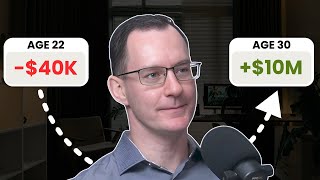
A recorded YouTube interview where host Matana Zanov speaks with Alex Cypliarsky about his rise from roughly $40,000 in debt in his early 20s to building a multimillion-dollar business over the following decade. Alex traces practical steps: starting with door-to-door/impulse sales (chocolates, kiosks), learning leadership and sales systems, partnering to broker quality-control testing equipment about 11 years prior, and scaling through consistent focus on sales, marketing and business systems. He shares a concise sales framework (GRAC — Give value, Resilience, Accountability, Continued growth), hiring criteria, handling rejection, the role of cold outreach, and book recommendations (Traction; One Minute Salesperson; Never Split the Difference; Brian Tracy).
Chapters
You don't understand fundamentals of business. Eventually the system crumbles, and that's exactly what happened. And so I had to figure out a way to make things happen. Quick. Left with $40,000 in debt, but the skill set necessary to make it right the next time anybody can make a sale. If you ever got somebody to do something that you were very interested in because of your influence, that's a sale. Some of the biggest and best sales I've ever made in my life started with a no. Don't listen to people that are more screwed up than you.
Hello, everyone. Welcome back to my channel. My name is Matana Zanov and today we have an incredibly special guest, Alex Cypliarsky. Alex's story is one that many people can identify with. When he was very young, he's tried to start many businesses and failed quite miserably, putting himself in incredible debt of over $40,000 by the time he was 22. And Alex, being an introvert and someone who's not good at sales, naturally pulled himself out of that funk and and built multimillion dollar business, made himself into a multimillionaire by training himself how to be an incredible sales leader. And I think today anyone who's interested in starting a business, anyone who's interested in becoming a better salesperson, has to listen to what Alex has to say and the insights he's gained from decades of training himself to be an exceptional sales leader. Alex, good to see you.
Good to see you too. Pleasure being here.
Take us back, man. How did you get into debt and how did you get out of it?
So getting into debt was pretty easy. I was about 19 when I started my first proper business, so to speak, from scratch. In sales, the business model is pretty simple. You would need to teach people, or really learn yourself how to impulse a complete stranger in 40 seconds how to give you $20. That was literally the business model. We did that outside of major retail stores. We sold crap. And you teach enough people to sell crap and then ultimately you became a leader and then a manager. And I officially got my keys and ran my own office in Winnipeg out of all places, where at my peak I was overseeing over 30 sales guys and we were generating pretty good profits until everything went bad. And when I moved back to Toronto, I, at some point things were not looking good. And although sales were good, I didn't understand the fundamentals of business. And because of that, no matter how good you are at sales or even leadership, you don't understand fundamentals of business. Eventually the system Crumbles. And that's exactly what happened. I started using my credit card and my line of credit at some point to pay people salaries. And that's how the debt came about and left happy with $40,000 in debt, but the skill set necessary to make it right the next time.
So wait, you were selling like in the kiosk, like tajkalas and whatever? Like, what were you selling?
Just honestly, garbage. It was toys. We sold various car cleaning products.
Just anything?
Yeah, like very much. Anything you can get your hands on from China. And that was it. That was. There was no real value to people. It was just about learning how to impulse a person, a random stranger. That was the business.
So you. I've known you since we were kids, basically, and you're not a natural salesperson. You're always a bit of an introverted type. Right. Incredible athlete, by the way.
Oh, thank you.
How did you get into like 19? Most people go to university, go get a stupid BA degree or whatever. You didn't. You went right into sales. Like, why?
That's a good question. Well, so around the time you and I met, which would have been forever ago, about 23 years ago, my parents, that was their second immigration and you know, I saw what they were doing and the way they were handling money and the way they were struggling and that, that's when I realized, look, you know, these guys are on a terrible trajectory. They are not going to. To make it. Like, there's no way they're going to retire. And so, you know, I started realizing that for myself, I needed to make a change and sort of step in to, to help them out. And, and yeah, just. My mom actually introduced me to chocolate sales. She, she said to me at some point, hey, you know, Alex, there's. There's a way for you to make some extra cash. Go sell some chocolates. And I like that idea because they were struggling so bad that I didn't want to ask them for any money. Like, it was not a good situation. And so I actually put on that big cooler on my, my tummy and I went out and I was selling chocolates. And I did that on weekends or, sorry, weekdays after a middle school. So it would be like grade eight or grade seven. And throughout the, my, my sort of initial stages of the career in selling chocolates, it was terrible. Like, I would clear about $50 a week, which was enough for me to pay my basic expenses and not to worry about asking mommy and daddy for, you know, money to go to the 711 to buy a Slushie. But that was, you know, like, that was bad. And I felt like everybody that I would sell was buying out of pity, which they were, by the way.
By the way, selling for pity. That's great. If I can get sales with pity, I would do it all day, every day.
Yeah. So. But what pissed me off is that pity sales are very. They don't yield many, you know, much fruit, so to speak. And so I saw these girls and some guys, and they were clearing 200, $250 a week. And that's when I got interested in sales because I realized that they were doing something. They were working the exact same events they were working. They have the exact same chocolate, the exact same bag. They're not that much prettier than me. So what is it that they're doing that that is helping them quadruple, like my production? Well, I get people to buy out of pity, but they're actually getting people to want to buy. So that's when I learned that R and D principle, the rip off and duplicates, where you're essentially figuring out, okay, okay, listen, ask questions. What are these guys doing? And so by improving basic things like smiling more, increasing your volume, by being able to, you know, just approach people in a more friendly way, like little things, improving your script, I actually got to that level as well. I was. At some point, I was doing over $200 a week myself, which in grade seven, considering my parents were making just a little more than that a week themselves, that was pretty decent money. And so my best day was $150 in one day. And I felt invincible. Like, I was like, this is amazing. And about three days later, they shut down the business because they were operating illegally, because they had no permits. It was just a shady business, but who knew? So that was my first exposure to sales. But just to kind of take us back. I was never, like, I never did sales or cared for them. I was a super shy kid when I was younger, maybe even now, some of those habits were, like, if my parents would take me to friends or whoever's house, I would stand by the wall and physically pick at the wall until somebody would call me over because I just had no interest in speaking or maybe I was too shy to speak. So everything that I learned from that, from my sales journey, came from the chocolates first and moved on to the other things that I started doing after.
So you're 40,000 in debt. You're 22. I mean, a lot of people, 22 are similar debt, but that's because they got a degree, a useless agreement. So the time you did it through failing in a business. Right. What happened next? What'd you do?
So what happened next was pretty critical because just, you know, like, when you're drowning, you're in debt, and you don't have a formal education, which Eastern European European parents love, when their child does not have formal education, then you basically, you're in a position.
That's sarcasm for those who don't pick up. If you don't have a degree and you have Eastern European parents or Russian parents or Jewish parents, you're basically not. You don't exist to them.
So, yeah, they're not a real person. So, yeah. So basically that. And then I had a child on the way to add things. Yeah. So it was, you know, it was a good situation for everybody. And so I had to figure out a way to. To make things happen quick. And basically, the one thing that I really learned when I was in that business that got me into this debt is I learned how to build relationships. And as a result of understanding how to effectively build relationships, I got approached by my colleague, or at the time, my employee, who introduced me to an opportunity, and he's like, alex, listen, I'm working for this company. They're doing it wrong. Like, everything they're doing is incorrect. So the one skill you learn in that sales business, because just so you understand, it was 100% commission and the salaries were low. So you have to figure out a way how to have these people buy into you as a leader, to stick around because they are not there for the money. You know that. So you got to be a true leader, somebody people can follow and understand that your vision is so strong that you believe in it so blindly that they would be comfortable basically not doing what they're doing. And as a result of that, there was one relationship that was built, and he approached me around the time where everything failed, and I did a few other things after. But he said, alex, listen, I'm working for this company. They're terrible. They're doing everything wrong, and I think you and I can do it better. And just to give you context, you know, at the time he approached me, he had other people or potentially, you know, relatives he could have approached. But he came to me. And so as a result, we. We talked about. Seemed like a great idea, and he was right. And that was 11 years ago July.
What was the business?
So the business was in quality control. It was about selling equipment that helps people or helps manufacturing facilities test their Materials before those materials go out into production. So before the building became a building, the metal that went into the building had to be tested, whether it was for tension or for hardness. So those are the machines that we would sell that do the test and we would sell them to these companies that will do their in house testing and we would basically broker the deals. Because we didn't produce the equipment, we would be able to connect the manufacturer to the end user and make the difference. And so that was 11 years ago.
That's so random. Such a random business.
So left field. Considering what I've done before, considering that I have zero education in engineering or really any understanding of quality control, it was, yeah, like, because you gotta understand, I went from selling chocolates, telemarketing windows and doors. I did collections for a telemarketing collections for a known credit card. I sold diamonds, you know, and then I went on to digital sales, digital product sales, and then this QA or QC project out of nowhere.
And how were you able to assess that it was a good opportunity if you didn't really understand it?
So honestly, I believe, I gotta say it's not, it's very difficult not to believe in luck or some like external forces. The timing couldn't have been better. And the person, my partner, whose name I will not mention here, but I love him, he is an incredible guy. He's so sharp and he understands, he understood things on the level. He also, you know, like, he was never educated in business per se. He did some education, but he understood the game. And to me, seeing somebody who's never been educated in business, understanding the fundamentals, I was like, okay, this is the guy I want to work with because I can offer this set of skill and he can offer a complimentary set of skill. And because we have different set of skills, I think they'll work together well and gave it a chance. And here we are.
That's amazing. So since then you've made many, many millions of dollars in sales in this business. You've become very wealthy as a result of that. We're not going to mention net worth, but I do have it for people who will pay me money. I'm joking. But you've become very wealthy from, from this business and you started your own holding company and you're involved in many different things now. So from that day one till today, what are some of the big lessons you learned in terms of building a business and all that?
Yeah, so. Oh man, there's. Where do you start? I mean, you learn fundamentally that a Business, I would say the foundation of everything is sales, marketing and business systems. Sales, marketing, business systems. If you're good at these three things, you will probably dominate every business. But you probably don't have the ability to be great at all three things. So you need some way to supplement for at least one or the other. So sales, they keep, they keep you going. Because if you don't have sales and you're not qualified for any cool VC companies, then you got to figure it out. You basically have to fund your business through sales, which was where we were marketing. Over time, marketing is what gets your brand trust developed and it, it really helps your sales. Right, because it's all, it all feeds the other. And then the third thing is business systems. You have to understand how businesses work and the rhythms and habits needed on weekly, monthly, quarterly, annual basis to be able to truly scale your organization. Doesn't matter where you are, whether you are with a bunch of debts and a child on the way and no education. By understanding these three things, that's sort of what got us to where we are today and continue to grow in the right direction, we feel.
So we can't mention specific numbers of the business because you're packaging it up for sale, hopefully, which I want to talk about. But you've surpassed tens of millions in sales. You have double digit growth every year since you started. Right. So you've done tremendously well just with this business. I know you're involved in other things as well, but I do want to focus in on your decision between you and your partner when to sell the business. Because I know a lot of people in my line of work, whether it's VC backed or not, they come across a certain point where they have to decide, do I sell, do I keep going with this?
Right? Yeah. It's a tough question, right? Because see, the thing is, if your business is in line with your core skills and it sort of feeds your purpose, selling a business is difficult. It'll be painful, right, because it's your baby, you built it, you took the time, you know, and although it's making all sorts of money and you know that on exit you'll be able to make all sorts of more money, you lose purpose to an extent. Right. You know, so you're essentially, you're selling the one thing that kept you up and running and super, super focused and busy and.
Right.
Purpose. Right. And so, but at the same time you're kind of thinking ahead. You're thinking, okay, well you know, let's think about it this way. If I sell this business, is there anything else that I can then immediately jump on wholeheartedly that will help me to regain that back? And so that's where it is, right? Like, we're open to the sale, but we don't need the sale. You know, we're happy to. We're doing everything to make it happen, but we don't, you know, like, if it doesn't happen, we'll still be happy because we're doing what we love.
That's fascinating. Every single entrepreneur, startup, founder, innovative company or not, whether it's they're going to get backed by a VC or not, they have to learn sales. It's such a critical skill to have. It's something that I need to improve on, something that I work on a little bit. Even if you have money to invest, you have to go sell the entrepreneur to take your money. If they're, if they're the hot, you know, startup on, on the street, what. So I have a lot to learn from you just on that front alone. Do you have like a sales philosophy? Sales philosophy or guiding sales principles? Yeah.
Yeah. So I would say everybody, even if they don't tell you they have some type of a philosophy in sales, and that's when the reason you know that is because their decisions, their language, their body, everything, it speaks my philosophy when I'm trying to make a sale to another person. So mine is, it's the grac or the grac principle. And in simple terms, G stands for give value first. You gotta understand that anytime there's a transaction, your job is to give, give, give, give, give, give as much as you can. Bring real value to somebody before you could even consider asking them for anything in return. So giving value first is. It's that the concept of, you know, if you want the fireplace to give you heat, you got to put the wood first. It's not going to be the other way around. So that's G. R stands for resilience in sales. There's just no way around it. You know, you're going to get hit. You're going to get hit with no's, you're going to get hit with challenges. Sometimes you're going to get hit with no's and challenges, and some days are truly terrible days. But you got to learn how to build that resilience and stand up, get up, pivot if needed. The industry failed. Okay, well, let's figure this out. Covid hit. Okay, let's figure this out. And actually, a couple of entrepreneurs on your podcast, they did a Fantastic job pivoting that. That is, to me, the best indication of resilience when you could take a crap situation and make it even better after a crisis while everybody else is screaming and crying and failing. The third thing is accountability. If nothing else, you're a starting entrepreneur. You got your product, you want to share it with the world. The only thing you got is, you know, your ability to follow through on what you said you would. You know, if somebody doesn't know you, you have an amazing product that's probably going to change their life for the better. You told them you're going to call them at 10:30, you better be calling them at 10:29. So at 10:30, the phone rings, you told them you're going to send them a quote by that day. That means you need to miss a date so that with your truly yours true whatever, your, your girlfriend, your wife, that's what you do. You miss a date. Because in the beginning, accountability is how you build brand name for yourself. And that's how large organizations eventually scale to a point of an unstoppable reputation, or what you call a brand trust. And then, yeah, it starts there. And then the last thing would be the C, which is the continued growth or, or learning along the way. When you start, you're just excited. You're like, hey, I got this product. I'm going to share it with the world. But you don't know things like you don't know you don't have any skills, or maybe your skills are weak. You got to improve them. So continued growth is very important. So those four core principles, they sort of. This is what we talk to, what we talk about with our sales team. That's what I've always trained people on. And this is how you build the foundation of the right mindset, so to speak, to successfully push whatever product or service to the people that need it.
Did you come up with that?
Yep. Well, I can't say that I, like, I didn't take it from other books, but it is ours. We didn't trademark it, but everybody's working it.
As of right now, the Internet knows trademark by Matan. If you want to use it, I'll charge you a very low fee. Thank you for that.
Thank you. That's very kind of you.
So a lot of people will tell me, you know, they're not natural salespeople. They feel that they don't have the skillset, they're not outgoing. Whatever. The thing is, they can't handle rejection. Well, do you think that the sales skill set can be learned by basically anyone, or is there kind of like a naturally excellent salesperson and let's just hire someone like that and let them figure it out?
Yeah, that's a good question. So, okay, so first and foremost, I will start by saying that anybody can make a sale, right? Like, if you ever got somebody to do something that you were very interested in because of your influence, that's a sale. You've, you've just created a scenario where you sold an idea or a product or a service. But to play at that high level where it's, you know, you're selling a very high end or potentially a very niche solution to a large corporation, that takes a bit of a different skillset. So although technically anybody can learn that skill set. Right?
Right.
It's kind of like comparing, you know, little league to triple A hockey. Like you can, you know, move around, you can skate on ice, you can shoot the puck, but you're not going to, you know, you're not going to be competing in World Series or whatever. Right. So I would say that work to your skills or to your core. Yeah, to your core skills. If you are happy, if you love sales, you will naturally want to get better and learn. And as an entrepreneur, I think it's a fantastic thing for you to be amazing at it, but it's not essential. And the reason I say that is because you can outsource that to someone who's good at it. And so by you teaching them, by you sharing that excitement and giving them a structure or framework where they can utilize their biggest skills to make those sales for you, that's kind of how you leverage someone else's skill to meet your needs.
Right. But startup founders, they need to sell all the time, whether it's the product, Right. They need to sell employees to join, they need to sell investors, and they can't. A lot of times they can't answer that. A great entrepreneur, even if they're not going to appoint themselves as the head of sales or whatever, they stop to sell the head of sales to join their company for below market value. Right?
Yep.
Right. So those people, can they learn the skill set or is it. There's some people. Hopeless.
Yeah. So look, I'm guiding you towards the.
Answer that agrees with me.
Obviously, optimistically speaking, I would say anybody can learn enough skills to get one person to do the right thing. And I have very amazing examples of where preparation is a thing. You know, where you lack in skill, your preparation will make up for it. If you prepare for three hours straight for a single conversation with an individual. And it is well executed. It's practiced well with somebody who's. Who, you know, who knows what they're doing in the field. It is likely that when you come in into that conversation, your confidence will just exhume. Like, you will be so sold on it yourself that you're literally selling your emotion to that person. So I believe it is possible. Is it something that everybody will do? Like, let's be real here, unlikely, but it is, in my heart, possible.
Right? So let's take someone that is interested in learning this skill set. Okay? They're a beginner, they're novice, they're either young, or they're just starting their first business. Where do they start?
Good question. So for the. The beginner people that are learning the foundational skills of sales, right, the entrepreneurs, they're like, hey, look, I got this amazing product. But I, you know, I would start with confidence. That would be probably my number one. Because I often asked entrepreneurs or even the sales staff that I trained, I always ask the same question. It's like, hey, guys, what are we selling today? And the answer is, well, we're selling this quality control piece, or we're selling the service, or we're selling crap off the table. And. And the answer is no, that's not what you're selling. You're selling yourself. Because before the person gives you a chance to talk about the crap on your table, they need to like you enough to be able to give you that opportunity. So you're always selling yourself. And if your confidence is absolute garbage, people will feel that. And essentially, by feeding your confidence, by improving your skills, you're improving that thing that admits to the person that you're dealing with. That's what you're doing. That's honestly what sales is. It's about if you're not at least looking at, like, you're confident enough, do you know what you're talking about? That a person's like, man, this person knows what they're talking about. Meanwhile, you're like, I've never touched this product. I have no idea what it is.
I always talk like I know what I'm talking about with so much confidence.
But that's right.
People don't question you if you're confident.
Right?
That's great. You know, someone gave me this advice. I read it on the Internet somewhere. I think, don't go to the Internet, but when you venture out, sometimes you find nuggets of information that are useful. And they said, like, I used to do this before going to do interviews for, for a job or whatever. And they say just like spread yourself out like big, you know, get, get this kind of feeling, this adrenaline where you sure. Big, right. Because that gets your mind thinking a certain way, your blood flowing in a certain way that you present yourself as more confident when you actually sit down in front of someone where the power dynamics are, are so skewed.
Yeah.
Is that like the kind of like how do you build confidence? Imagine take a person like what. What do you recommend? That's just like a tiny example, but yeah. What would you tell one of the people you're training to build confidence before they go out and do a sale?
That's a good one. Yeah. So I'll tell you what I do, right? Everybody does it differently. Well, for building confidence, one of the things that I like is I do like self talk. Right. You straight up, you talk to yourself anyways, you just don't know about it. But if you talk positive about yourself, that's, that will help. So I have my morning routine where I'll say nice things about myself and my wife till this day will make fun of me for it.
You say it out loud.
I do.
You're the best.
Yes. And I say it in the bathroom so it's like extra echoey, you know. So yeah, so that, that's a helpful thing because you gotta remind yourself, you know, you had a tough day and your mind is like, oh, you suck. This is not for you. But man, sometimes you just, you can't, like, you don't have the opportunity to suck. You just don't have it. You have to make things happen. So you got to re. Switch the script in your mind to, to do that. Working out is a thing. I know. You know, there's, there's been studies on that it, both males and females, that when you work out and you feel good about your body, that shows, you know, Even if your body is not where you want it to be, that still shows when you're confident because you, you're like, hey, listen, I put in the hours in the gym. I deserve people to feel the way I feel. And it's, it's a thing. It works. Preparation, when you don't know something, taking that extra time, that's a recurring theme in sales. The people that better prepare for a phone call, the people that better structured their day, their week, their month, etc. They will do better, you know. So I would say preparation is the thing that builds confidence. If you don't know the product, we'll Read up about it enough times until you're like, okay, I get it. I understand how this product or service is, gives value to my clients. So when I share that with my client, even if I'm the stupidest person in the world, I know that they're going to benefit as well. And when I feel that, when I feel personally that I can, whatever product or service that I'm sharing can truly benefit the person I'm speaking with, it's a different dynamic of a conversation than when it's like, hey, man, I need you to buy this because I have bills to pay. And that's the difference between people that are. We're probably going to touch. Touch on that as well, maybe. But that's the difference between people that are just starting sales. Like, I'm here to sell, so I make money to people that are physically trying to help people, and as a result of their help of other people, are earning a ton of money.
So the way to frame it is the consequence of someone that's adding value is sales, rather than I'm doing sales. And therefore the consequence of that is helping people. Something along those lines.
Yeah. I mean, Zig Ziglar said it best. You know, if you help enough people get what they want, you. You will get everything you want.
Mm. Would you say that that's the difference between. Outside of actual raw sales numbers, the difference between an average salesperson and an exceptional or great salesperson? Is that or is it something else?
Yeah, so I would say that's definitely a part of it. Right. You know, once you have your core values and your fundamental skills in place, which. Which one of those core values is again, we talked about give value first. That would be an essential piece, piece of, piece of skill, or really a mindset that you're throwing out there every single time you're. You're connecting with another person. So, yes, I would say that's absolutely what separates people that do well from people that don't. Because, again, the reality of things is this. The people you're speaking with, they couldn't care less about your mortgage. They couldn't care less about your problems, what you're going through. And here's the thing, too. If you show that you're struggling, they're not going to do business with you. If you show that you're going through problems and whatever, they don't want that, nobody wants to deal with that. It's a show out there. Every phone conversation you are on stage, and you got to do a great job taking care of them. And if it's anything less than that, you're setting yourself up for failure. Don't do it. Best not to make the phone call when you're in a bad mood than to make it and ruin a relationship.
Mm. So here's something that I've struggled with is how to handle rejection. I mean, the first time I learned about this is like going to clubs when I was 14 or 15. And, you know, you learn, okay, after if you hit on like 10 girls, one desperate girl is going to, like, be interested. So I learned a little bit about handling rejection very early on. But, like, in sales, like, okay, you had to make so many calls to maybe get one person interested. That could really hurt your self confidence, your self esteem. It could just make you want to give up at some point. Like, how do you handle the rejection? Even if you're successful, you have a lot of rejection.
Yeah. Yeah. So that's. That's a great question. So it sucks. Rejection sucks. You know, there's no person in the world that will tell you, you know what? I'm completely immune. I don't believe them. I think that, you know, it starts off by the mindset, right? Like, if I'm reaching out to you and my true goal is to help you get a product that's going to make you millions or change a life or help your whatever situation, and I know that, and I. And I'm convinced that I'm here for you. When you reject me, it's like, well, bro, like, I've given my. Like, I'm just trying to help you, and you reject me, then it's not me, right? So it's. Then you stop going from this is personal to, I've done my best, I've gave as much value as I could, and this is just not the right client. That's how it starts. And then eventually, when you start seeing money, cool things happen. So give you an example. Tracking is fun. So if you know you're making $1,000 a week in sales, right? And you know that to do that, you had to make 100 phone calls, right? So then you know that for every phone call you make, you're earning $10, right. Like, it's not proper math. Yeah. But it's this what it is. So let's say you have a situation where you call the person and they tell you not nice things. Well, listen, at the end of the day, you can be upset and talk to your, you know, to your spouse about it. And can you believe that you could do all those things? But What I learned to do throughout the time of just learning resilience is you're like, hey, man, thanks for 10 bucks. Let me move on to a person that's going to be able to be better helped than you were. So it now becomes, hey, I just made 10 bucks anyways, who cares? Let's move on to the next person.
The way I deal with rejections that anyone that rejects me for anything, I just. I assume they're rejecting me because they're an anti Semite. So I was like, okay, I don't even want to do business with this guy because he doesn't like Jews. So that's the way I deal with it. Yeah, yeah, that's to be true in my case. Nobody will reject me for. Unless it's that reason, you know.
That's awesome.
What do you think about that? Is that a good strategy?
Yeah, I mean, it's a strategy. Yeah. But I would say absolutely. Learn how to reframe your mind. And listen, here's the thing with sales, like, talking about resilience. Somebody taught me this, like, a very long time ago, and so I don't break the microphone, but the first thing that happens when you do sales, you know, you're like, you're going in a straight line and somebody smacks you out and you're off your path. And when you're starting out, you're just like, young, and it hurt my feelings. And so you're here. And it takes forever to, like, get back and back on track. And then again, next thing you know, boom, slap. But funny thing happens is that next time somebody smacks you, you're not all the way in the dumps like you were before. It's a little less and a little less. And then this happens over time. They smack you and you just. I don't care. And that's really sales in a nutshell when it comes to resilience.
Right, right. So all my training as a teenager getting rejected by all the people in the discotheques. So it paid off a little bit.
Yes, I think so. That's a tough one, by the way, because those are actually personal rejections.
Oh, yeah. They're rejecting me personally as a. As a human being.
Yeah, those are pa.
So here's a controversial. Not a controversial thing, but it's an open debate. And certainly in a startup land with VCs and all that, which is cold calling, does it work? Should people even be doing cold calling? Is there just. Or do we focus more on, like, inbound, like, say, like, doing good digital marketing? That type of thing, or is it just appropriate to pick with phone and call your customers? Potential customers.
Yeah. So, yeah. So I. First of all, cold calling does work. There's so much data, it fades off.
By the way, cold calling works.
It does. There's a lot of data. There's a lot of companies that. That you could. Training companies and actual companies that have done it effectively. Is it easy? Absolutely not. But what I would recommend for those people that are open to the idea of cold calling is to understand their target market. Right? Because you gotta know who you're cold calling. You know, spray and pray method in cold calling doesn't work. You know, you have to target the exact list of potential people that you could truly bring value to.
Right.
And so if you do that, you're gonna do well. And actually, in the book Traction, it's a good book, good read by Gino Wickman, he suggests that when you make a list of the businesses that are actually gonna be able to benefit from your value, you will probably close a great majority of that list because they're your ideal target market. And doesn't matter how you reach out to them, over time, they're gonna understand that you're there for them.
So, so, so here's another, I guess a little bit not controversial, but open for debate again, also learned from my time in being a teenager. That's a theme today, I guess, for some reason, which is. Is a no an invitation to try harder or is a no no, how do you overcome objections?
Right? So first of all, sometimes a no is not an invitation to move forward. You know, the context matters. But I do have to say that some of the biggest and best sales I've ever made in my life started with a no. And it's not just because I read it in a book. It's because I lived it. And so from a point. So here's an example. You call a client and you've done your best. You're giving them value, you're helping them out, and you're like, hey, so can you tell me, are you happy with the technical specifications? And they're like, no, I'm not. I'm not happy with the technical specifications. Do I just say, okay, great, thanks so much for your time? No. Right. I'll ask them. I'll ask a question because I care. Hey, what is it that you would do better? Like, what? What can we change? What can we improve for you? And boom, it starts a conversation, and the person's like, whoa, this person is open to help. Really fix My problem. Although they offered me a solution which I thought was set in stone, all of a sudden there are opportunities here to make the solution more catered to my needs.
And.
And that no turned into a purchase order.
Interesting. So if you're hiring, let's say a junior salesperson, for example, you want to find the person you can train. What are some characteristics you're looking for in that person? Like if you were to interview them?
Yeah, that's a very good question. So there's three. Okay, so let's start with a positive attitude. That's a big one. Right. You want to make sure that the person you're dealing with, on average, they're pretty happy with. Like if on the interview, I'm screwed.
I'm not getting a job with you then.
Exactly. No, but if. Think about it. If you're. If you're dealing with a person who's down and they're not selling you, this is what they're. This is the presentation of what they're going to share with your clients. Is that somebody you want to put in front of your clients? So I'd say positive attitude is a thing. The way they present themselves has to do with it as well.
Should it take showers too? Is that like a. I mean, it.
Helps if you do telephone sales. You don't even have to do that.
Is optional.
Yeah, exactly. It's beautiful. I would say the other thing is communication skills. They need to be well articulated to. To be able to share a message or sell themselves, really. But the way you do that is through communication. I would say that alignment with our core values. We do talk about it. Like on our interviews, we talk to our people about the core values. And you could see when there's a spark. You could see that like, whoa, like I. This is it. Because a real. Like. Or these bigger organizations, they actually hire and fire based on their core values, not just performance. And so when you see a person that's aligned with what you stand for as an organization, that's. That's a big. Let's say what is a green flag versus a red flag?
Yeah, that's. What's.
What's the opposite? Yeah.
Okay.
Yeah. So that's. That these are the things that I'd say the fundamentals that we'd be looking for.
Right. So would your advice change at all if you were selling enterprise software versus the kind of quality control machines that you're selling today? Or is it kind of, hey, sales are sales.
Yeah, so more towards the sales or sales. Right. Because people are people the way you help people is the way you help people. The only thing that would change is that structurally, you know, your follow up frequency may be different or the qualifying questions that you're asking clients will be different to understand their deeper needs. But overall, I mean, if you look at the grand scheme, so structure, it'd be about the same. There's no real difference.
What's the best advice you've received in sales and business in general?
It's good. It's good. Whoa. So there's a lot. I would say the one that resonates with me the most was don't listen to people that are more screwed up than you. In other words, listen. If a homeless person is telling you how to be a millionaire, I mean, maybe not. Maybe don't listen to that guy. Maybe listen to an actual millionaire because they've already done it. They're an expert. But I will say you got to listen to tried and tested experts like Matan.
Not like that's an endorsement, by the way. He's endorsing me for everything, always and forever.
Yeah. And I will say, like, as an example, when Matan and I, we would connect quarterly and I would ask him business related questions, and the things that you shared with me were so frigging valuable that when integrating them into my day to day, into my business, those double digits wouldn't happen without you. That's all I have to say to that.
Can I get a piece of the action?
Yeah, yeah, I'll give you. I'll send you.
You're just in the civil court case.
So essentially you got to listen to experts. Because if you, again, if you listen to, and I will say this too, because parents are a thing, right? Like parents, they want the best for you, but they're not. Like, I remember a very funny moment when my mom, she. She was telling me about, you know, like, wealth and what my path in life should be towards wealth. And I just read a book where it talked about how you probably don't want to listen to people that are poor on how to teach you how to be wealthy. And I may or may not have said, hey, mom, like, you're poor. Why are you teaching me about wealth? It may or may not have not gone well, and I don't recommend it.
But don't recommend speaking to your mom.
About wealth or about her being poor and teaching you about wealth. Obviously, parents have the best intentions for you. So listen to them. I mean, look, at the end of the day, you're a human being. You're gonna have to take all this information, whatnot, but maybe cross reference what they said with the person that actually made millions and see if the stars align. Maybe that's what you should do.
You know, there's this been, there's this proliferation of life coaches. Okay? Invariably every single life coach I know has. No offense to those that I may know or not. Okay, if you think I'm talking about you, I'm not talking about you. Okay? You're the best. But every life coach I know has a screwed up life where they have, they don't have their life together. It's such an interesting thing. I'm like, what is going on here? They get like a certificate online, takes them like a month and they become a certified life coach. And like, I don't get it, man. Anyways, that's just on the theme that you were saying.
Yep.
Except for you. I know you're a life coach and we're friends and we know each other. I'm not talking about you.
Everybody else, that's a tough one. Right? Because it's funny, I was listening to a podcast and stalking these guys and they were about my age and they wore the watches that I dreamt about looking at, not even buying, just like, hey, can I look at that watch? Like, it'll mean a lot if I can look at it. And they're wearing them and they're all sorts of cool. And then you talk to them about their personal lives and they're not married, they're not interested in relationships, they don't have children, they have zero interest in prolonging their, you know, them. And so it's painful. And so I talked to my wife, I had this sort of discussion where I'm like, look, these guys are doing so well financially. What they're talking about is you literally need to earn over a million dollars a month in take home income to be able to sustain the lifestyle that they're referring to. And she's like, well, you know, but are they happy? Like, are they truly. Can they be proud of the kids that they raised? Can they be proud of the relationships that they have with their significant other? Are they givers to the community? Is that what, like, is their life more than just the money that they earn? And I was like, whoa, that's a good point, sir.
It's 90% money, 10% the other stuff, right? 95%. You're right, 95%. Yeah.
Yeah. Thankfully you corrected it. Yeah.
So do you have any advice for struggling entrepreneurs? I know a lot of people today that they're struggling because their business isn't doing well, they can't raise capital, they're in debt like you were many years ago. What advice do you have for them?
Yeah, so. Well, let's start with the basics. A day at a time. That would be number one advice. None of this happens overnight, and I don't want to give timeframes either, because some people do it relatively quickly and some people don't. But a day at a time. The second thing is remember that you're bringing real value. If your product and service is out there, you've done something that. Look at the stats, you're in the top 10th percentile of the world's population already, minus the wealth that's coming. You just gotta understand that you created a gift, you developed a gift that people need to be able to benefit from. It is your job to share that gift in the way that best helps those people. And if you're you, if you get that, there is no stopping you, and you will do well. And I've been there personally. There's people that have had a way worse story than me and they've pulled through and so will you.
That's beautiful, beautiful advice and wisdom. Most important question I'm going to ask you today. Should we invest all our net worth into crypto? This is financial advice, by the way. You are going to be legally liable for anybody losing their money.
Right. Personally, I wouldn't. I will say that if you've done enough research where you're like, yolo, you know, let's make it happen. And you do that, then, cool, man. I won't judge you too hard, but yeah, I wouldn't do it.
Okay, interesting last question here. Do you have any books, resources, courses you would recommend an entrepreneur looking to build a business or someone to want to. Someone that wants to improve their sales acumen?
Yeah. That's good. So I would say, as I mentioned earlier, the book Traction, for anybody in business, I think that that's a fundamental book. Because remember, being an entrepreneur is not just, you know, creating a product. It is about marketing it, selling it, creating an operation system to deliver it effectively. It's a structure. So the book Traction does a fantastic job teaching you that structure. If you haven't learned it yet, learn it. Because if you're looking to be at that level where you know, you're truly not caring for what people think of you because financially they don't matter in your life, then read that book.
Who's the author?
Gino Wickman. Gino Wickman? Yeah, he's a good guy. The other book, I'd say for beginners, for sales, it's the One Minute Salesperson. The One Minute Salesperson by Spencer. I want to say it's Spencer Johnson. That book is. I'm pretty sure I read and listened to it at least 50 times. It is a fantastic book. It will help you as you're learning as you're on your journey from sales. If you're looking for like a seminar or course, just listen to that book and take notes. That will put you on the right path. For the advanced guys, I would go with the book Never Split the Difference by Chris Voss. Voss Never Split the Difference. That's a fantastic book. He's an FBI negotiator. Like he basically, he negotiates in the most critical time sensitive points period. And some of the stuff he shares is so, so valu. I use it every day. I'd strongly recommend that book as well. So those probably be my, my top books. One more I'll throw in as value add. I would say Brian Tracy, you're learning basics of sales. Brian Tracy is the sweetest, nicest, easiest to understand person when it comes to learning fundamentals of sales. And I think with him, even if you're like, legitimately you feel like you're stupid, you've never done this, or you don't believe in yourself, when you listen to Brian Tracy, that will change.
And he has like a podcast or something.
He's got a podcast? Yeah, he's got books. I would listen to his YouTube videos on fundamentals of sales. It's all free. Like right now it's free. Before, you know, 50 years ago it wasn't, but now it is, so.
Wow, that's some great advice. I learned a tremendous amount about sales. It's this type of information you have to pay a lot of money for usually, but we're giving it away for free. How great is that? Okay. Thank you, Alex, so much for joining me today.
My pleasure.
Sam.










