Business Acquisitions, Family Time & Topps Baseball Cards | Behind The Mike #MUIYB Podcast
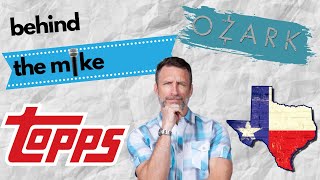
In this episode of the "Behind The Mike" podcast, host Mike Michalowicz and co‑host Jacob have a free‑form conversation that weaves together pop‑culture commentary, personal family memories, observations about millennial social habits, mental‑health trends among entrepreneurs, and a deep dive into business exit strategies. They start by riffing on favorite TV comedies (Curb Your Enthusiasm, Arrested Development, Nathan for You) and segue into Jacob’s recollection of annual trips to Long Beach Island, highlighting how family traditions create lasting anchors. The discussion then shifts to how millennials, raised on social media, lack face‑to‑face conflict‑resolution skills, which impacts both personal relationships and workplace culture. Mike cites research showing entrepreneurial depression and anxiety rates far exceeding the general population, linking this to the surge in startup formation. The conversation turns to the recent news that Topps, the baseball‑card company, is going public via a SPAC merger, prompting a broader talk about when and how founders should plan an exit strategy. Mike outlines two archetypes – a full exit versus a “comfort play” lifestyle business – and stresses the importance of revisiting the plan annually. Jacob adds perspective on modern acquisition structures, such as retaining equity and serving as a consultant post‑sale, and shares a friend’s roll‑up experience. Later, they reminisce about personal collecting habits (Star Wars cards, baseball cards, comics) and the frustration of family members discarding valuable memorabilia. This segues into a light‑hearted exploration of barter concepts, the historical use of salt as currency, and the challenges of modern bartering. The episode concludes with anecdotes about wildlife (turkey flight, crow terminology), a DIY electric fence to deter garden pests, and a brief wrap‑up of the topics covered.
Chapters
Foreign.
There's other extraordinary ones. Like I think Curb youb Enthusiasm is probably one of the best. I love. Right. Love it.
Right.
But I. It just didn't achieve Seinfeld level because the exposure wasn't there. The platform wasn't there. So I think it's once a decade that you have this show that just hits at a mass level.
You know, I think for Kirby Enthusiasm, it's too two things. H. They're on hbo. They're not on like a. And then also they do things that you can't do on regular tv. That's why they're on hbo. Like they say things that would get them in trouble. So.
Yeah, yeah, yeah.
You went that route. Yeah, yeah, yeah. I was actually watching. I was watching Kirby last night. There's some episodes on there that just.
Have you seen. I know we've discussed it before, but. Arrested Development.
Oh, yeah. I love Arrested Development.
So the best show, I think of all time. Not of all time. An extraordinary show perhaps, though, I think is one of the funniest shows is Nathan for you. Have you seen that one yet?
That's the one where he goes and helps businesses. But yeah, yeah, I have seen that. I. I haven't like watched a lot, but yeah, I've seen.
I got addicted to. I watched every episode. Man, it to me, it's the best. It's such a dry humor. It's so funny. But the crazy thing is the ideas he comes up with or his production team, they legitimately work. So he walks. The. They're absurd. But also just on the order of legitimacy. So the business owners who don't know they're being scammed say, okay, I'll try it. So it's kind of funny.
That is funny. Yeah. Yeah. Cool. Do you want to do a little intro here and then we'll.
Yeah, I mean, we're already in the flow. Brat.
I know.
So you my friends, there was a little sneak peek even before the intro. You're listening to Mike up in your business. This is me and Jacob blown behind the scenes. We. Yeah, we talk about just stuff that's going on internally. Our own thoughts and hopefully you gain some insights into your own business and also just have a interesting behind the scenes conversation. I do ask a favor. We want to get your questions. So email me. It's ask Mike. Mike Michalowicz.com and we would be honored if you rate and review the show. Just go to rate our podcast. Yeah, we own that domain RateOurPodcast.com that.
Is pretty awesome that we got that. That domain.
So, dude, 80 degrees today, man.
I know, It's. It's absolutely insane. Like I said, I came into my office here and I opened the door and it was just like I got punched in the face by humidity. So I had to put the air conditioning on for the time. First. First time.
It's. It's April 28th. It's 65 at least up here. Right. As of right now. And it's 10 o' clock in the morning, but by this afternoon, 80. That's why I'm wearing a T shirt today.
Yeah. Looking good. Like. Like in the.
Oh, dude, check this out. So it says Hartman's. And on the back here, that. Oh yeah, that is. That's from Long Beach Island. So ever since I was a baby, I presume my parents took me ever since baby. But ever since I can cognitively remember from five years old on, that was the annual summer trip. We go for one week to Long beach island, sometimes two weeks. My parents would rent a house. And then we continued. My wife and I continued the transition, the tradition. Once my parents got too elderly to go anymore, I think it. We. We maintained tradition. And they were still going. They were our guests. And then now my parents are just too old to travel. They're still alive, but too old. So we've continued to go. And next year will be my 50th consecutive year of going.
That's crazy.
Yeah, yeah. So this thing, Hartman's, used to be this little amusement park on the island. And it's funny, you know, I grew up in the 70s. I remember little parts of it. Dude, there was some stuff there that, like, it's absurdly dangerous. Like there was this trampoline park and it was a. Concrete sidewalks everywhere. So it's a big concrete and in the middle of each section was a small square where there's a trampoline on springs. So it's all surrounded by concrete and you're bouncing on trampoline. There's these little pads that were like made of leather. So it really wasn't a pad that was out maybe about six inches from the trampoline. Should you just stumble a little bit? But dude, every day someone's leaving bloody torn up.
Yeah.
Unbelievable.
You'll never see that again.
Now, have you ever seen. There's a documentary called Traction Park. You know, Action park, right?
Yeah.
So Action park was an amusement park in New Jersey. And the founder of it wanted to make a park that was so extreme. And this was in the 80s 90s, so extreme that you felt the Adrenaline rushes. So they had these different rides and so forth. So there's a video or documentary about it called Traction Park.
Park. Oh wait, I think I did hear about this. Where there was so many accidents, people got hurt so much they had to close down. He closed the park? Yeah, yeah. I don't.
And I don't. Yeah, I don't know how they survive this. So a couple things that. Three things. One is he. He would just make rides. He's like, I want a tube, a water slide where you go down and it looped, it loops. He just built it without any testing. And the first thing he test was they sent a mannequin down, it flipped, it came out destroyed. Like it came out in pieces. They modified more. Then the guy sends his own son down and he's like, I'll give you 10 bucks. Go down. Kid comes out, back injury. He goes. The torque is so hard and so rough. It was like dangerous then. Such thing. One thing.
2.
My wife Krista, she went there with her boyfriend when she was a teenager. He. They did a thing called a tar Dan swing. You. You swing and you jump into this big pool. He ripped his shoulder out. When he landed, his shoulder popped out in the. The water was such a big severe drop. Couldn't move his arm. They talked about in the documentary. Oh yeah, there's one kid went to the Atarizan pool and his shoulder ripped out. That was him. And then there's video, like they have like historical video. Krista is in one of the videos. Like, I swear to God, we. We're watching it and we're like, oh my God, that was Krista. And so the kids, and we were all watching, we rewound it and she's like, oh my gosh, that's me.
So can you find the timestamp on that? And I want to. I want to put it. I want to. I want to look at.
Yeah, yeah, I actually. I will find it for you. I took a picture of the screen and she'll hate you for it because her hair was like, you know, it was the style at the time. So. Picture of Krista at Action Park Attraction Park.
Oh, that's so funny.
Where was your go to place? Was it great adventure?
So sadly my family didn't. We didn't really go on a lot of vacations. I wish, I wish we did. Yeah, I wish, I wish that I was like lucky enough to. To be able to do something with them like every year.
Yeah.
Getting choked up. I just have allergies. No, no, no. There was a Handful of vacations that we went on that I can remember one distinctly was we went to Niagara Falls around for my birthday. Yeah. And we ate at the Skyline Tower, I think it's called, where it wrote, the restaurant rotates 360 degrees while you're eating. Cool. That was cool. That was really cool. Yeah. Yeah. It was weird in my family because my brother is seven years my senior. So when I was, you know, just getting into the age where we could go on vacations and do stuff, like, he was, like, not wanting to hang out with the family, and he was.
Yeah, yeah, yeah.
His own thing. And then my dad just, for some reason, he just never liked to travel, which is weird because my mom, like, loved to travel. Like, we went out to Utah to visit my aunt.
Oh, that's cool.
Yeah. So there was no real, like, go to place. Just like a handful of. Of things that I remember.
Yeah, I. I believe tradition is. Is actually a really powerful tool. And that's what we're trying to do with our own kids, is set up an established thing. It was funny. Like Krista said, you know, one day, if we could afford a beach house, that would be a dream. And this is like two, three years ago. We've actually. We set up an account we're intentionally saving for, but who knows? And then she went to our kid, she goes, if we buy a vacation house one day, where. Where do you want it to be? They're like, it has to be Long beach island, which, by way, is ridiculously expensive. And it's like, well, what about, like, Myrtle beach or South Carolina or Georgia or, you know, there's always beautiful coastal lines where it's a lot more reasonable. And they're like, no, but it's tradition. That's when you start realizing, wow, that that kind of anchors, at least from my perspective, kind of anchors your family into certain memories, experiences, and then they start replicating it. One additional tradition we have, every time we go to Long beach island there, you go down what they call the causeway, and you go over this. It's like two or three bridges that. That hop little mini islands, and you go onto the main island, Long Beach Island. Well, when you go over these bridges, what we used to do is right before we went on it, we started doing. I don't know why, but we would play a song by Jimmy Buffett called Volcano. And we started it when our kids were young. We just. Maybe it was on the radio at the time and just cranked it. There's no Crossing the bridge without Volcano playing. You have to get volcano playing. So much so that my son. I heard this from his friends. He. My son was with a couple of his college buddies, and they were going to Long beach island, and as they approached the bridge, like, oh, pull over, pull over. They pull over. He's like, we gotta find volcanoes. Like, we can't cross the bridge without volcano playing. And that. That's legit. Choking up. I was like, yeah, that's a tradition that may stick, you know.
Yeah, it matters. I mean, definitely. And I think, you know, I think people are coming in to realize how important. Having a familial unit. Yeah. Interact with each other regularly makes a huge difference in. In people's lives. That's why I. I was always a big proponent when I started cooking of families sitting down together and having one meal together.
Yes.
There's actually. There's actually a great reference to this in. In that. That show Ozark that. That I told you I watched.
Yeah, yeah, yeah.
So it's a family that. They're laundering money together, and they're involved with the. The Mexican cartel. Right. But then there. There's this young girl, Jason Bateman, right? Yeah, it's Jason Bateman. And. But the one thing that they do every morning is they have breakfast together. And there's this one girl who lives in the town who's like this. She literally lives in, like, a trailer. And, you know, she comes from a bad background, all this stuff. And so she comes over and they ask her if she wants to have breakfast, and she's like, how many days a week y' all do this, like, this normal. Like, you guys sit down like this all the time, you know? And so I just thought it was, like, a great reference to, you know, not having that. And then, you know, seeing a family that does that, and it's just like, whoa. Like, this is. This is a thing. Like, yeah.
Is a thing. I was. I can't recall who I was talking to. Maybe it was a podcast interview. But the millennial experience and around tradition actually seems to have faded because, you know, we're all on our devices. We're all so, quote, unquote, busy. We're all. There's always something to do, so there isn't this connectivity. And as a result, I was talking to this business owner. I said, yeah, when millennials come on board, it's a whole different experience. You got to give them family they haven't experienced that. Give them tradition. And, you know, we do it this morning. We have a daily huddle, except for Tuesdays, which is Kind of weird. I'm going to try to over roll that while keeping Kelsey's away. I'm gonna try to get Tuesdays going too. Like, why miss one day?
Yeah.
But that tradition becomes something we anticipate. It's not like, you know, it's always like fun and amazing. I'm sure that family breakfast is like, isn't like every breakfast is amazing. But an amazing moment will happen if you have breakfast every day together. And so what this person was arguing is that businesses need to bring in that familiar experience, tradition, and also socialization skills. She goes, I can't remember her name, but she goes, you wouldn't believe how many kids are afraid to pick up the phone and call for something because you order pizza. You see everything's on your device and you don't have to interface with people. There's no potential conflict. And you know, when you, when you're talking to someone, there's personalities, there's, there's emotion, there's life moments that are happening.
So you.
Not everything is always the same. And he said, this is a real skill that a lot of these young folks don't have. We're not exposed to that.
So, Yeah, I feel like the greatest disservice that social media did for my generation is preventing awkward interactions and exchanges and.
Yeah.
Forcing you to talk to people face to face and be uncomfortable.
Right.
I. That's so important is being, being uncomfortable in a situation and, and learning how to adapt to that and growing from that, expanding your, your, your social toolbox and. No, but it's like now it's like, well, I don't want to go to that uncomfortable place because I don't have to, because I can just do this and completely avoid it. Yeah, I, I don't like that at all. I think it's, I think it's, it's causing a lot of problems in society that, that we're going to have to deal with in the next.
Oh, there's going to be major consequences. Well, I believe depression is up. Anxiety is up, like all these things. So yesterday I interviewed Leslie. Oh my God, I can't remember her last name. M. I think it's Leslie. M E H, M, the author of Swagger. And we were talking about the entrepreneurial journey. Journey specifically. And that entrepreneurs have. Oh, I'm sorry, it wasn't, it wasn't Leslie. So it was Dr. Sabrina Starling who said this, that entrepreneurial depression compared to the general population is at a rate of two times higher. Anxiety is like three or four times Higher. Like all these kind of disorders. Now we see a rise of entrepreneurship from the millennials because you can't get a job, you know, you can't get a traditional job. And so there's this increase in entrepreneurial startups. So now here's a field that people have a propensity to be experiencing anxiety and stuff with a community that doesn't know how to deal with that effectively. That could be a real freaking problem.
Yeah. You know what's really interesting is, I mean, these last two years, everything's become politicized. Like everything is now ingrained with politics. It's like you can't even get away from it. But so when I looked at the analytics for, for us and, and just trying to like, see the data and, and where things are and kind of flush out, you know, game plans for things. The two biggest states that have grown our audience have been. We'll take a guess. I want to see if you can take a guess. The, the two biggest states.
Two biggest states mean like actual US States.
Yeah. Where people are, are listening to and engaging in content.
Our stuff the most.
Yeah.
So this was, yeah, this is my guess. So New Jersey, just because this is our locality, you know, and then I would say maybe California just because there's a lot of upheaval and shift there.
I don't know. It's actually almost the exact opposite. It's Florida and Texas. Really. Yeah. And, and the re. The correlation is because they've opened up their, their states and their economies are growing the most. So I, I, at least I think that that's where so interesting turn up the exact opposite.
And I don't think there's been much consequence. Like, I don't think when Florida and Texas opened up the, you know, the no mask requirements. I don't know if the disease rate is any different than it was before.
Florida or I, I don't know about Florida, but I know that Texas. Texas is down. Texas is actually down. New Jersey is up. And Texas is, is completely open. And New Jersey.
I wonder, I wonder, you know, when it comes to the masks and stuff, if people weren't wearing the masks in the first place. Just because you changed the law doesn't mean people's behavior changes. So when you said you got to wear a mask in public was really being enforced. So has anything really changed? And maybe, maybe. And it's a generalization, I don't know. But maybe most people weren't wearing masks. Maybe the disease was more rampant in Texas in the beginning and they got through it, you know.
Yeah. Well, what's amazing too is I think that the, the news likes to rag on DeSantis in Florida. But I think he's done, if you look at the data, he's done a phenomenal job with that state. I mean they have the highest population of elderly in the entire country.
Yeah.
And you know, they're like, they're plugging along and they're doing great. I mean their numbers looked really good for, for like a lot of the pandemic. So it's just wild. I actually do, I do have a, an article though, to segue into a business question.
Yeah.
So I don't know if you heard this tops the baseball card company.
Yeah.
Is going public. Did you hear about it?
No.
Yeah. So my question to you is, and I'm going to relate this to business. Did you, did you have any card collections when you were growing up? Did you? Yeah. You did? Yeah.
But you're laugh at this. It wasn't sports cards. I collected Star wars cards. So I'll get out of here, I swear to God. You know, the Darth Vader card, Luke Skywalker. But then there's all these kind of secondary and tertiary characters. I had Grand Moff, the like the evil leader, like all these different cards. And it wasn't to collect a trade. I thought it was cool and had their statistics on the back. It was just like a baseball card. I did some baseball cards too. I was into the Yankees. I went to. I met Phil Rizzuto. That's like an old, old name.
Oh, Phil Razuto. That's awesome.
Yeah, the guy who's on that meatloaf song, you know?
Yeah.
So my dad took us out to a game and it was something related to the work he was doing. So we were in a box seat and right next to us was Phil Rizzuto.
That's cool.
Yeah, yeah. So that was. Yes. Did you click cards?
Yeah. So I played baseball for a huge portion of my life and I collected tons of baseball cards. Funny thing is, out of nowhere, a few years ago, my mother just decides to go in the basement and just start throwing stuff out. And I come, I come back one day to the house and I hadn't been to my parents house in a while and I go, I'm like, hey, I'm gonna go get some, some of my collectible stuff in the basement. I go down there and half of them are going. I'm like, mom, where are my baseball cards? She's like, oh, I, I cleaned up. I said, does that Mean that you threw them out. And I almost lost it because I know for a fact that there. That there were some in there that were worth a lot of money. My comics were gone. Just threw my comics out. And I hate to say this. I don't know if it's because she's. She's getting older. She threw out my mags. Like. Yeah, yeah.
Why'd you throw out my poor mags?
Come on, that's ridiculous.
Playboy 1984 edition.
I don't think that, though. There wasn't. There was. There's maximum. There was probably some Maxim mixed in there and then some Stuff magazine. Nobody remembers Stuff magazine. That was great. But. But, yeah, it's just like, oh, come on. I still have one binder left.
You have at your house now that I have.
Yeah, yeah, Baseball. But I haven't gone through and valued them or anything or. But I mean, these are, like, tops cards from, like, the 80s and 90s, so there might be a couple in there. I mean, I was a big fan of the Phillies growing up, obviously, so I collect a lot of the. The Phillies guys. Like, Darren Dalton was probably.
Yeah, yeah.
Favorite player, Lenny Dykstra. That's. Oh, wow.
Classics.
Yeah.
I had Rigetti spaghetti, the pitcher from the Yankees. It's interesting. My mother. Same thing. Cleaning out the house. I mean, nothing. And she's just constantly trying to throw stuff out and so not even ask. Like, stuff gets thrown out. So I was lucky. I also collected comic books like you. I took those with me right. During college, and I had them every. Ever since.
Yeah.
But sure enough, same thing. She's clearing things out. I wonder if it's. As you get older, it's like a reverse nesting. It's just like, we got to clear this stuff out so there's no burden left behind or something. But there was literally a. I was over there last weekend. There was a block of wood. My mom's like, oh, I'm gonna throw that out in their basement. I'm like, no, we use that to rest stuff on because sometimes their basement floods and stuff. Like, I. I just leave it. Please leave it in case I have to come here and rest on it.
That's exactly.
So this is everything.
This. This was. My point, was she went and threw a bunch of my stuff away. She didn't even inquire first. Like, give me a heads up. Yeah, you're gonna say, hey, in a week, I'm gonna throw this stuff away so I can come and, like, grab what I want. Yeah. Number two. I could understand it. If it was like one room and all this stuff was like taking up the entire space. But the, the amount of physical space that my stuff that she threw out, negligible compared to all of the other crap that is there.
That's all your brothers. She loves your brother, not you.
They do love. I do actually love my brother. I hope she listens this episode, because it's true.
What are you doing?
I know, it's so annoying, but. Yeah, so, so that really, that really frustrated me.
What was the business angle for the Tops?
Oh, yeah, so. So the business angle. So, so just let me read the thing. So Tops is going to go public via a SPAC merger with Mudrick Capital acquisition. The deal raised 571 million in tops for value the company at 1.3 billion. And the former Disney CEO and chairman Michael Eisner will serve as the chairman. Is there anything that Disney doesn't touch?
Right, I know, I know.
I mean, it's crazy. If you ever look at a, at a flowchart of images and graphics of everything that Disney is about, I mean, they're, they're, they got to be bigger than Amazon. It's insane. It's crazy. Maybe. But anyway, so the business question is, so this is their exit strategy, right? Go public. Sort of an exit strategy. At what point in your business or starting your business should you have an exit strategy? Should you know, from day one have an idea? Oh, yeah, yeah, you want to go in? Or is it just one of those things, hey, I'm going to start this and then I'll muddle my way through and figure, figure it out. We go along.
So from my experience, there needs to be intention throughout, because the way you position the business is different. There's two scenarios, two typical scenarios. One is a full exit, meaning that the owner of the business at a certain point completes their contribution to the business. They're gone and they've been rewarded monetarily. The other one is a comfort play. It's just like this business makes me comfortable. I'm just gonna keep it going until the moment I can't work anymore. And then the business just disappears. It's kind of the two things, and there's all these versions and hybrids and stuff in between. I used to think, and I hear it reported often, that, you know, you start a business, you better replaying the exit from day one. Position the business so that an acquirer wants it and you can structure business that an acquirer wants it, where you show historically increasing profitability. You have systems, you have, you have Intellectual property that's protected, then they have these actual assets that when they acquire, they have those protections. You have long term contracts with your customers. So when this buyer comes in, those customers come across. Like that's how you can position it. But a comfort play, just, you know, I just want to be happy. Maybe a lot of the effort you just don't even want to make because that makes you this uncomfortable making the effort. So you just, you know, play it out. I think either way that you start, you should reevaluate it every year. And I do it. I. Every December, toward the end of December, I start my seven. My four week vacation on December 7th goes till November 7th plus. And during that second week in December, I start going through what serves me, what do I want in regards to the ownership of the business. And it hasn't changed, but maybe one day it will. And the day it changes, that's when I got to come to you guys too and say, listen, here's my plan. I think I'm done or whatever. But every year I sit here and say, I just love we're in a lifestyle business. Like, I love what we do. I want you and our colleagues to be wildly successful, have no reason ever to leave here. And that motivates me. We got to grow this company. We're just not big enough to, to satisfy all those visions and dreams we have for ourselves yet. And like, that's my driving motivator. The flip side is we're not really acquirable. Like, who wants the Mike Michalowitz brand? Obsidian? Like it. You know, there's an author guy, but who wants that? So there is no plan there. One thing that's interesting though is I.
Think you're wrong on that. I think you're wrong.
Yeah, you're right.
What's. Well, I was going to say the derivatives. So, I mean.
Oh yeah, the derivatives, that's true, that's true. And there's been some notable authorities that have just kind of inquired about what we're doing and maybe we can partner up and stuff like that in a more formal way. But this doesn't. It just doesn't appeal to me. But you know, one thing is interesting about Kelsey is she's positioning us that it's not dependent on me just for that inevitable situation. There's gonna be a day that I'm not here and it's inevitable. So she's planning for that. And there's a. Listen, there's a day that none of us will be here, but can the business continue on and continue to serve. So she's actively looking at that. And it. I don't think there's ever an intention to sell but could present itself. But there is an intentionality about continuance beyond the lifestyle owner guy who started it.
You know, do you think it's more common when people are having their businesses acquired nowadays to basically sit as a consultant or a board member and just keep a piece of equity? Is that a reasonable request anymore or is it just like they want you out?
Yeah, no, I don't think they just want you out. I think in service based businesses in particular, the business owner may wield influence with key customers and key vendors and employees themselves. Like imagine like say we, our business got sold and they say, you know, Mike, you're gone. Kelsey you're gone. Like we don't need leadership. We got this. Now you, Jeremy, you'd have a new boss and you know all this new stuff that could throw turmoil. Like who's this jerk? I don't, I don't want this person. I like working with Kelsey. So they often retain, they call it key person. They even get what's called key person insurance. Key persons to stay for a certain period of time to support the transition, to make it comfortable. But interestingly, a very close friend of mine just sold his company and he structured it just the way that you're talking about. He made a substantial amount of income from the sale, but he still owns 10 or 15%. And his real play is that 10 or 15%, this company is doing a roll up that acquired his. They're acquiring very like companies and they said within their intentions. Within five years this whole rolled up package is going to be put to the market and sell for a massive premium. That's what these guys do. They're a private equity group. They know how to do rollups and, and, and sell a business. And he made a lot of money to selling his business, but he retained 10%. He's anticipating he can make five to 10 times that amount. So he's very motivated to help them. Now he's part, he's on the train. He's like, how do we acquire more companies? He actually called me and said, do you know anyone in this space? Which I ironically did. He goes, can you make some introductions? Which I did. About a week later. This is, this is a month or two ago. He's like, hey, can I come over to your house? I thought there was actually a problem because we're very close friends. He's like, I'll be there at 5 o', clock, I'm like, okay. Comes with a really expensive bottle of wine. It was Caymus Select. It's like, you know, hundreds of dollars. He goes, dude, thanks for the introduction. It was key.
I was like, wow.
So he's, he's on the train. He's like, we gotta, you know, build this up. So, so it is kind of not me common, but it is a strategy that still exists.
Yeah, I feel like that, that seems like a very, if you can, if you can negotiate that, that seems like a win win because, yeah, you're getting a, maybe a smaller piece of a bigger pie, but you're re, you're retaining that. So you're always having that passive income, even when you move on to your next thing.
Yeah, yeah, totally. It's funny, I was like looking through investment strategies and you know, there's tons of ways you can generate income out there, but in many cases you have to start with money to make the money. If you want to buy real estate, you have to find that money somehow. Or invest in the stock market. Owning your own business, hands down. I, I, I cannot find a better return on any business. This, this being said, many people aren't suited to do it. It's not that most businesses fail because the business is not an appropriate business. I think most businesses fail because the person running the business really isn't meant for that line of work. It requires. I don't know, it just requires a certain kind of makeup that I, I don't think it's suitable for most people. I don't think most people should be entrepreneurs. But if, if it, if it's how you're wired, I can't find a way to make a greater return than through just starting your own business.
Yeah, I agree. And I think that there's, it wasn't a quote. It was like, I don't know what you would call it. There's like a little like, what are they called? Vignette. Like whip. Yeah, yeah. And it said that and it made me think of entrepreneurs. It said when a bird lands on a branch, the faith doesn't rely in the branch holding up the bird, it relies in the wings of the bird. Yeah, Bird relies on its own. It trusts itself that, you know, it doesn't matter what happens to the branch because it knows that it can fly.
That's awesome. I, I've actually heard a variant of that. I haven't heard that one specifically. And there's such truth to that. They say, don't bend the horse, bend the Jockey. Similar idea there was. So. I still can't believe you haven't been to my house yet. I commit to, yeah, you got all.
This cool over there.
I know, I know, I know thing.
And yeah, I went out with.
With one of my longtime friends for breakfast yesterday and another buddy, and the three of us are hanging out, and both these guys are like, they're in kind of like your mom stage. Like, they're just trying to get rid of shit. And they both look at me and go, but, Mike, you're just accumulating. You get a shed, you get all this. I'm just collecting toys right now because I didn't have them earlier. And I'm like, it's toy time, and I hope to transition to other folks. But I'm outside and with our dog, and all of a sudden he kind of perks up like, what's going on? And the biggest bird I saw comes kind of swooping by and lands on a branch. And the branch is like Boeing. It was a turkey. And you know, domestic turkeys can't fly, but wild turkeys can. And they are big. That's a big animal. And so just you can hear as it was, it was taken off those wings flapping. So it's turkey season. People.
People don't think that turkeys fly well. Turkeys fly amazingly well. Oh, yeah.
And I presume they can go far distances. I mean, the thing flew in right up, laying on this tree, hanging out. And they're big animals, I would say, I think was. Weighs 20 or 30 pounds, maybe a little excessive.
And it's, it's really hard to. To. To hunt turkey because they're, they're. They're. Their eyesight, like they.
Oh, good. Yeah. Yeah.
Everything that's going. Yeah. But they fly away. I mean, their wingspan's pretty, Pretty large. Yeah.
Beautiful animals. I love the colors on them. So we have like a whole herd. I don't know what you call them. Gaggle, whatever a herd of turkeys are.
Yeah.
I don't know whoever thought of that. Like, oh, every species is going to have their own term for a herd or group. Oh, it's a murder of crows. Oh, it's a gaggle of whatever you.
Make a gaggle of. That had to come though, the murder of crows, because there has to be a reason why crows in historically are seen as like an omen or, or evil or. You know, I think that that had to come from.
From somewhere. I'll challenge you to look that one up. I'll tell you. Here's Another trivial fact. You ever hear of salting the jar? Like, or salting the audience? You ever hear that term?
Now, okay, so you can salt a.
Jar, meaning, like, say. Say there's a tip jar where you work, and it has nothing in it. You put a few dollars in it, you're of your own money to salt it. Basically, what you're doing is you're staging it so that when other people see there's tips in there, they'll start replicating that behavior. But the word salt. This is what was interesting I heard this morning salt used to be a currency. Like, people used to use salt to represent dollars today or gold coins of prior times, salt was a currency, and that's where the term has lingered. So salt in the jar is basically putting money in the jar.
That's cool. I like that. Yeah, I knew that salt used to be currency. I mean, salt's currency now. Like, if I get a good salt, I'm super excited.
It's not like you can go to the supermarket and say, hey, I got 10 pounds of salt. Can I get some food here? That's how it's used.
Yeah, I know. Yeah, I know.
I mean, now it's a pro. It's a product, and it has value. But it wasn't used as the standard monetary exchange. But there was a time it was.
I. I almost. This sounds ridiculous. I kind of wish that there was a place where you could go and barter like that. Like, you're like, all right, I got two chickens. What can I get for two chickens? The experience, like, a while.
The barter center.
Yeah, yeah, yeah. Like, all right, here, give me the two chickens. And here. Here's a set of headphones. Here's an ipod.
Yeah, it's interesting. I was. That's what I was listening to. I'm listening to an audiobook about bitcoin, the rise of bitcoin. And they were talking about different monetary instruments.
And they talk.
They start off by talking about barter. The interesting point they make is just that things are perishable and quantities don't match up. So his argument was, you want to buy a house, and you make it. You have apples. Well, how many apples is going to take to buy the house? And who would want the 10 million apples? Plus, the apples will rot by the time you've accumulated enough to buy the house. So there's. There's these. There's these weaknesses. Bartering works in very small communities where the exchange is very similar. So perishable item for perishable item. They're both ripe at the same time. You do the exchange. It works. But once there's kind of these items that have longevity, ones that don't, it becomes harder. And then once the. The difference of value. Million apples for one house is so offset, it breaks down. So, yeah, bartering is tough. You know, we started it here at the office. We're going to do a little vegetable fruit exchange. See, Aaron kind of up the ante today.
No, I didn't.
Oh, she sent a text out. She's like, look at all the seedlings I got going.
I'm like, damn, that's cool. That's cool.
We're growing.
Yeah. Apples. Hopefully this year I'll be able to get some stuff planted. My parents have a ton of land. I don't. I don't think that they're going to do any type of garden because they're. My. My father's not in the shape to do it, but I think mom's just tired of it.
Yeah.
So if I have that available.
Oh, how much land they have?
I think it's like 17 acres or something.
That's massive.
Yeah, yeah, yeah. So. But it's. I mean, a lot of. It's like protected land, and then, you know, Christmas trees are part of it. So. But there's one huge part of a field that they have designated for. For growing stuff.
Oh, dude.
Yeah, I'll do some corn and.
Oh, you had that much space to grow corn?
Yeah, yeah.
I tried to grow corn in our little garden, which was a 8 foot by 5 foot area. I grew two stalks. Nothing with corn, you. Because they cross pollinate. You need to grow a lot of corn to grow corn. You know, I didn't.
Yeah. You know, this. This reminded me something funny. Before Kelsey went on vacation, she was telling me she has a problem with bears coming around and, like, getting in her trash cans. And I'm like, how come you never mentioned this before? Well, so a solution that my father came up with. And I thought this was genius. And I gotta. I gotta get the material set for. So we had this. We had this garden and we would be eating dinner and we'd be looking out, and either the deer would be coming out and munching on stuff, or like rabbits would come out and start ripping apart the garden. And my dad didn't want to put any, you know, anything to kill him down. So he's like, all right, I gotta figure out something here. So he rigged a electric fence out of a car battery and he upped the amperage. I don't know how he did it. I, I gotta ask him how he did it. And so we're sitting there and we're eating dinner one night and we're watching and this rabbit comes up and he was like, so excited. He goes, look, watch. And we're watching. And the rabbit comes up and it hits the wire. And as soon as it hit the wire, it jumped like seven feet straight in the air like a, like a cartoon. And like it was just trying to run in the air, you know, like a bolt of lightning gone. And I just thought that was genius. I was like, oh, my God, that's great. An electric fence for, for rabbits. Cool.
And it never came back?
No, they, they would still come back, but then they would just get shocked and then they would run off again. But the deer were smarter because the wire was set kind of low. So his, his thought was when they go to walk, they'll hit their, their leg on it and yeah, they would just see it and then just jump right over it and go, Go to town on everything.
Genius animals.
Yeah, it's funny. Yeah.
We got to start wrapping things up. Did we cover everything?
Yeah, we got. I think we did, dude.
I got. I wrote down a list. I'm starting to do this now. So let me tell you what we re. We talked about. Today's episode started off with TV shows. Then we talked about Long beach island and having meals together. We talked about Ozark, the TV show. We talked about businesses becoming the new family, particularly for millennials. We talked about the heightened anxiety and stuff that people are experiencing that Texas and Florida are, are kick ass fans. Thank you. Texas and Florida, that tops has gone public or is going public. Which talked about comics and how your mom threw out comics and your trading cards. And is this like an old person thing? Because our. My mother is doing the exact same thing. Which then went into acquisitions. Do people, you know, sell their business and just leave right away or they have a lifestyle business, how they structure it. We talked about the roll ups. My friend who is in a roll up right now, and maybe we'll have a bigger exit on the smaller slice of pie. Then started talking about birds. That's when the vultures, the other vultures, the turkeys came in. We talked about crows, herds. Are they called murders? And why are they called murders? And Jeremy's gonna look that up. And we wrapped, we wrapped up on gardening and rabbit electrocution.
Electrocution.
Yeah. That's a good episode, man.
Yeah, I know, I know. That's good.
So I want to tell you our listening friends. We hope you enjoy this. This is just as you can tell me and Jay Schlong just bullshitting. But you know, from a business perspective at least elements are. And just talking about life itself. Perhaps that's what we need to talk about more actually, for all of us. So thanks for listening in. To Mic up in your business, I ask that you simply refer rate our podcast by going to RateOurPodcast.com scored that domain. Go there rate our podcast and please subscribe. Want to see on future episodes. Thanks for joining us today.










