Ep 67 Making A Booke MORE Than A Book | Phil Jones #MUIYB Interview
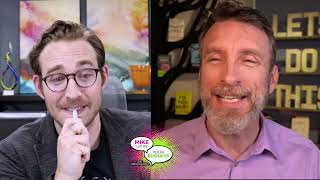
Phil Jones turned his self-published bestseller Magic Words into a series called Exactly What to Say, then built a custom-branding model where companies buy bulk copies with their logos and custom audio versions. The book becomes a repeat-order product generating ongoing revenue through three service tiers, from DIY to full fulfillment.
Chapters
Lighting the background, decent sized room, decent camera, decent lens. And that's the whole. The whole deal. Few little filters on eCamm.
Did you set up yourself?
Yeah.
Oh, you suck. I spent thousands of dollars and this is what I get. This is what I get.
I set it up myself. What I would say is I have John d', Amato, who's my photographer, and he did do a couple of like, move that light. Move that thing in the background.
Yeah, yeah, yeah, I know. I love the balance and stuff. Where are you, where are you living now?
This is my house in the uk, so. Well, this is my setup in the uk. That is in a rented office space that is a short walk from my house in the uk.
Gotcha. Gotcha.
Yeah.
And you got a new. Was that a Land Rover? What was that car? You tricked out that truck?
I have a. A tricked out Defender. I've had it.
Vendor.
Yeah, yeah, I've had it almost two years now, but we've been progressively like pimping it out as I go. I love it. It's my toy.
It's beautiful. On. On Facebook. So it, it, it's. What year is it?
It's an 08 is all it is.
So 8.
Yeah.
I thought it's like a 1908 that you like, modernized.
No, it's an O8. But that car has been the same for like 30 odd years. And I bought it as an original 08 with like 8,000 miles on it. And then when Land Rover discontinued the defender.
Yeah.
In 2015, I'm like, okay, let's pour some love into this thing. And now my little baby. So we've had it all tripped out by a company called Bespoke. And my interior in it is like rugged, but the equivalent of what you'd have in a Bentley. So it's like quilted leather interior.
And that is so cool.
It's kind of my mashup between city slick Range Rover and and country could climb up just about anything vehicle.
I love it. I absolutely love it. I'm in the process too. I bought a nothing like that. I bought a Ford Ranger, but I'm tricking it out just a little bit. And so I go to the guys like, what do you want? Like, I want to be a poser without like looking like a poser. He goes, oh, then you shouldn't really change anything. So let's talk about your books. So one thing you did, Phil, that I think is absolute genius is you made a series. The Exactly.
Series. Yeah.
Just tell me about how that concept came About. Tell me about the series of books.
Oh, if you want the honest answer, it was a beautiful accident with some organic osmosis that came from. It is, yeah. When I moved from the UK to the US as sort of a semi permanent thing, I knew I needed a platform to be able to break out my speaking business from being global to mostly being North American. So I'm like, okay, I'm going to do a book and use that as platform to get transparency with speaker bureaus, etc.
Yeah.
And I was going to do a new book and then I thought to myself, well, if I'm coming into a newish market that I'm not that visible towards, why don't I play one of my greatest hits? And I wrote a book back in the day called Magic Words that did remarkably well. That was never supposed to be a real book. I was in a mastermind group maybe a decade or so ago and this was when getting published used to be really hard and I could turn a book around like in a self published fashion real quick. I could probably do it in like two weeks and my big mouth got me into trouble. Rest of my mastermind were like, all right, prove it then. And I took a training course that I delivered maybe two days prior and had like a 2, 3 page PDF and I blew up into a book and padded it out and two weeks later we self published Magic Words via Lulu and I did some KDP promotion on it and just some self promotion and we did 120,000 downloads of this thing in its first like three, four weeks. And then it became more like a giveaway book as part of speeches and trainings and parts of those things. Self pub. But. But I was proud of it, but I hate it. You know that kind of thing where you do something that you is full of some of your best work but because you rushed it and you pushed it out the door real quick, I was proud of it when it went. But 12 months later, 24 months later, 36 months later, I'm like, it's not a book, it's a pamphlet.
Yeah, yeah, yeah.
So. So what I decided to do was to rewrite it and I was going to relaunch Magic Words and do the job properly and do it with page two hybrid piece. And a third of the way into into doing that, I realized there was another book called Magic Words in the US by a guy called Tim.
Really? Okay.
And I'm like, he's a real magician. And he wrote it after I published Magic Words but first date published within the U.S. a book called Magic Words was his. Mine wasn't published in the U.S. i'm like, okay, well I'm not going to try and fight the guy that's written a pretty decent book under the title that I want right now. I'm just going to rename the and I couldn't.
When you fight a guy like, like it's, it's not copyrighted. You could use a title, right?
I could. But why? Like why? And try and fight in an already crowded space for a.
Okay, I got you, I got you. Okay.
Not worth it. Like let him have it. And I was puzzling for new names and I delivered a number of programs including a full day event that I did a hybrid mashup, one man show of sort of training and entertainment. And I called it exactly what to say and I delivered it in a theater and it went well and we sold well for the tickets. I'm like, well that'll do. So I just borrowed that for the book title and then worked the subtitle through from there. And then when we launched exactly what to say as a book, it did remarkably well. I got some interest from major publishers who tried to buy exactly what to say from me when I owed the rights. And I didn't do that deal. I did a two book deal follow on instead. And given that I was marketing exactly what to Say, I didn't want to then add two books that didn't make sense. So the series was born out of the fact that I was going to bring three books out in an 18 month window. How do you make that sense? So exactly how to sell and exactly where to start created this trifecta of me being able to have New York traditional publisher, but also this leader book that was really the revenue stream backed up with these other two credibility plays. And I thought, okay, well like that was my chance of being able to say yes to the publisher without giving away my baby.
Yeah, I love it. So let me just recap it. So exactly what to say, you do a presentation on it. You didn't title test. You don't run analytics. You simply say I was a good presentation. That's my book title.
I like it. Yeah.
And it works. I mean it more than works. You have such a popular book.
I know, I know. But also know is there's two types of books in this world. Right. There's I got a new idea. I'm going to put this in a book.
Yeah.
Then there's material that is time served, that has been part of your repertoire for like an age that you've worked to the max, that you've had the edges rounded off it from messing up presentations. You've 27 speech titles that. And Mike, you know this, like I do, is. Is we've been in those rooms, right, where you do the exposure gigs back in the day, and you know your title of that speech, right. Is going to decide whether somebody comes to your session or somebody else.
Totally true.
Right, so. So I knew this was a winning title because every time I titled a speech that I'd split the crowd and I'd like to think it was reputation and all the other things it would be, but I knew that if I titled a speech exactly what to say at the Excel World Sales Forum, and I was a speaker alongside 20 other people that I would highly rate my session would get traction based on title alone when there are 15, 20 concurrents. So it wasn't a shot in the dark, but it wasn't a huge amount of analysis.
So tell me about those titles for the speaking engagements. When you spoke at a sales conference, you got 20 of your contemporaries competing for the same time slot. Did you modify titles, say exactly what to say to sell as much as you want, or.
Yeah, yeah, I put all sorts of different pieces and I do it now. Right. Even coming through Covid is one of my most successful speech titles was exactly what to say to navigate change.
Oh, I didn't say exactly what to say when you have a mask in front of your face.
The promotional material we do to keep this dream alive. Right? Yeah, yeah, yeah, I see the lips, but yeah, it's been fun. And when I would write speech titles for these bigger concurrent events, I'd go last. I'd deliberately go last so it would be, let me see who I'm up against, and write a speech that draws attention. Right, right. A title that draws attention versus if I was a punter, which direction would I go?
Yeah, yeah.
So maybe that's what I ended up doing with the book is going last.
You know, another thing, so. So we're in this group together, I don't even know if we really have a name, but kind of as an author meetup and people share best practices and one thing you did that blew my mind, and I don't know of any other authors that are in the position to do it or even consider doing it, is you take your book and you modify it for sponsors. So if someone's willing to buy a thousand copies of your book, you change the COVID you change the copy inside the book. Tell me about that strategy. And then I want to know. You're just walking away. You're so pissed I shared that. Oh, I thought you were so pissed I shared it. You're like, I'm out of here.
Like, here are some of them. Like, look at it.
So I got to read it this way. Exactly what to say. There's all different colors. And then.
And look like this is. This is little brand in the corner. You know who they are, right?
Yeah, yeah. Well, VW in the bottom left. Yeah, I think I recognize vw.
Volkswagen. And so big brands. And then, then here's a small solar company's edition. Let's try and get autofocus to work. So Momentum.
Momentum. Yeah.
A small group of auto dealers in Canada. Go. Auto.
Auto Luxury Edition. That's wild.
Professional Photographers Association.
Oh, wow.
Wow.
Yeah.
I mean, we even did a recruiting within the world of Trucking Edition.
CDL Driver Recruiting Edition. Exactly. What to say that. My gosh, the CDL driver. So this is amazing.
It's like, cool. And we push it even further, Mike, as well. So I then did a spin off just for the real estate industry. And this is exactly what to say for real estate agents.
Increase income for real estate agents.
This book alone is now pushing 100,000 copies.
Are you effing me right, Jones?
Look, now we customize the real estate edition bridges and. And you think if you're a real estate agent, you've got 100 agents in your team. You want to be able to do your version of the book. If you're. My hope is if you're Keller Williams and you've got 50,000 agents worldwide, you might want to do yours too.
Yeah. Yeah.
I like it because it's never ending, Mike. It's like, I'm going to run this book all the time. I have air in my lungs and keep breathing new life into it because it's truly evergreen.
Yeah, I think it's genius. So tell me, what's the strategy? I mean, I'm with Penguin. They wouldn't. They wouldn't do anything about that. They're like, are you kidding me? We can't change the dust cover design. How do you change the design and some of the content?
You build a system. You know about building business systems, right? So we've now formulated this whole thing out. I've built people in my team that when somebody wants one, like we've got a low end offering that we send something to a page and they just click the colors and they get to be able to do it themselves. And Then we got a mid tier offering where we provide some customization and we bundle that in with a webinar piece and I do a research call and a webinar and the book exists as part of that bundle and we've systemized the fulfillment on that with lead times and to turn that around. And what's really interesting, Mike, that I'm loving this year is we built second sail into all of our systems. So we are now nudging people for do you need more? And we get repeat orders at full retail price for bulk copies of custom editions that now we just hold in print on demand. So just get like. And it's not massive money. Like I want 100 more of those at 14.99 a piece. And we just like. But it's, you know, $2.50 print 1499 retail times 100 click. Don't see it. Yeah.
So you make, you make a thousand plus dollars on a single click.
Somebody, my team does that and we get, you know, a handful of those for a month like that. That's in all extensive purposes a real business by itself. It's just repeat orders on custom books.
Listen, dude, you're being paid to market. I mean your name is probably on there, your business. I think you're one of the sharpest authors in this industry. I mean the fact that you can further monetize books. Here's what I do. I'm like, oh, if it's in print, it can be in audio, it can be in Kindle, and then books are done. But you're the only guy I know.
That'S made custom audio books.
Oh, you do custom audio?
Yeah.
I don't know if I knew that. Does it say like, this is Phil Jones. This book is dedicated to Mike McAllowitz.
And I just record it. And then we built how we host that for the client and then we license it to them on renewal and they can run it in their lms.
So hold on, wait, you custom record just parts of it? Not the whole book, obviously. Just the intro.
I just do it again in one hit.
Yeah.
No, the whole book.
The whole book. Without really.
But remember exactly what to say is 74 minutes long.
Okay.
Right.
For me, 74 minute playtime is about three days of recording time. I mean, can you record it in a couple hours or is it.
Yeah, yeah, it's a two hour take.
Impressive.
And not only that is if there's an imperfection and it's in a client custom audiobook, they love it. So like really be like, it's the published version. That's for everybody in this format. I mean we do put it through some audio engineering and we cut it up. But I'm certain that all I could do is put a decent microphone on and record it at my Mac and chop the ends off and everybody's happy.
I love it. I love it. You know something I'm trying right now with audio is I did an audio only release. I had to get a release from Penguin to do it by saying I self pub this but only in audio and recorded in my office. But here's the trick. I didn't have a book. I just was like a podcast. I started talking. Then my editor cut it down to the pizzas that were relevant and streamed it together and. And now the book is. It's selling but we haven't promoted it. It's kind of sitting there. It was called the recession response. So it was specific to this kind of weird quasi recession where some businesses are getting crushed and some are exploding. So I don't know if the topic was perfect, but I'm thinking about doing that with other books now is testing on audio to see.
Yeah, I'm also intrigued as well. And this is. I know we're recording this right now but an idea that I'm having right now is.
Is pretty much gonna hear this brav. So just be careful.
Yeah, it's fine. Is nobody will do anything with good ideas like they never do anyway. Right. So is producing books in audio first and then creating the print book off the back of the audio. So it is actually make the primary content medium spoken word and then back it up with a print book to be able to follow it. That is merely a re edited transcription.
Yeah, that's exactly. Well, very similar to what I'm trying. I kind of make up the book on the fly. How would you get the spoken word? Are you going to write it out first or you just kind of wing it and assemble it?
Write the spoken word as you would in spoken word, like the format you're talking about, but then turn that into a manuscript and just get the manuscript tidied up.
Yeah, yeah, that's basically what I'm doing. What I did was this audiobook. I just kind of riffed we assembled and said is there interest? If there's interest, we're just going to print it.
Well, I'd love to see Mike Michalowicz do is. I'd love you to do your take on like what I did with my audible original is so. So we did an audio training program Right. And I did it with a live audience in partnership with Audible and we had a few hundred people in the theater in New York City and it was probably my greatest piece of work that I've done today. And then we created and engineered the experience after the fact to make the listener feel like they were part of a live studio. Wow. And it was eight hours, one take recorded to live studio. But now I have my sales training one day program that exists as an Audible original called how to Persuade and get Paid. But the listener, you know, it was designed to say that the listener at home is expecting to enjoy this as a listening experience. So I did a one day program. No slides, no tools, no props, no anything. Because I wanted it to transfer as a, as an audio experience only. And that's done.
Well, that sounds amazing. So tell me more about that. Did the audience, were they just passive listeners or were they asking questions?
They were in. And that was the whole point too, is that when you know your material so well, you know what the audience responses are. The audience responses are in the finished program. So we mic the room and again the listener just feels like that somebody else is responding to questions and they just happen to be a quiet person. I've had people, they join the workshop and engage in it even though they're in the car. Like they feel like. Which is fun. I mean it hasn't had. The sad thing for me on that is, is Audible were really running into this live recording. They had bought into a theater in New York. Like all of their investment was running towards.
Yeah.
And then some change around within senior leadership. Change in different directions. And my pub date came right at that exact time where.
Oh, the change was afoot.
Yeah. The exposure promised and the big release that was planned just didn't happen. And now every contact I had through that project, not one of them still works there. Not one.
So you self pub that book?
No, no, no. It's released for Audible. It's an Audible original.
It's an Audible. Oh, that's right. It's the Audible publisher.
It just doesn't have. It didn't have the push of the team of people that were involved in the creation of it. Still existing to be able to.
Such a novel idea. That's what's so funny. These big businesses, they have great ideas and then they kind of just vanish. They don't matriculate it. A small business.
Next one, right?
Yeah, yeah, just the next one. I did a TV show, believe it or not. Bronze a host for a reality show called Go Big or stay home. It was backed by Discover Channel. They spent somewhere between 300 and $500,000, according to the producer, to produce this. And it was like legit. Like, I flew out to Lake Tahoe. They had a crew of like 20 people. They actually had food service was one of them. And I'm like, wow, this is gonna be big. And we did the. A week of filming. They made the sizzle. I saw it. They actually made a pilot too. And it sucked. It sucked. And it really. It just did. It just did. And then they just abandoned it. The concept was great. The execution just. There was something missing.
Yeah.
Maybe it's me being the host. Maybe they should have someone else. But what was amazing to me was they just said, yeah, we're done with this. Almost a half million bucks, and say, you're done.
They just walk away.
Yeah, yeah, that didn't work, dude. I don't know. So, okay, so you do this Audible book. You said it's one of your best works of all time. Are you doing anything else to matriculate it? Even though Audible is not helping out?
Yeah, I mean, I'm on a podcast right now. I just mentioned it. Right?
Yeah, true. I know. I'm buying it. Yeah.
It is what I try to build, and I think you're a master of this too, is an ecosystem of ip, not any one thing. And what's interesting in how I'm trying to build my body of work is exactly what to say is almost always the gateway drug, that somebody finds my world and then what else exists? So it naturally almost matures into that. And what I'm enjoying is people finding it through somebody else and then looping back around and saying, how can you help? And where it serves me best, Mike, is I built this business from a training business. So 1112 years ago, I was running one day seminars and inviting people to come and learn how to sell in an ethical way for people who wouldn't typically see themselves as salespeople. I still get inquiries for that stuff now. What happens is I push those inquiries towards the Audible original and I get to be able to say yes to the people that I don't want to tell them my current fees. I don't want to go from the guy that was charging 85 pound ahead at a workshop to what we now charge as speaking fees and working with corporations as businesses have grown. So a primary driver was to have an answer for that is to be able to say, how do I keep still serving the people that I really care about at that lower End of the market that don't have the corporate infrastructures. But the other part of it too is people are finding it and then asking me to be able to deliver custom versions of the same in their organization. It's like, hey, can you do something like this for us across a three day program or is this something you can add to a keynote and work with us over the next six months? So it just proves in every area of my work that there's a deeper body of work. So almost is like an extended resume or it's a bigger interview that if somebody wants to say, hey, behind the sizzle of the keynote, what else is there?
Yeah, yeah, yeah, yeah.
Then they get to be able to understand, well, hold on. And keep that keynote energy for eight hours.
Wow.
Like they can deliver that and be an engaging in environment. That was on audio. Well that's cool. So it served me in a lot of ways. That way of just having people coming to me saying can you help with blank and I hope I can afford you versus we're looking at people to be able to help us with X, Y and Z. What do you charge? Right. It's just a very different dynamic of conversation to the types of work I enjoy doing now and I like having it in my arsenal for that.
Tell me about the makeup of your team. I mean to support all the work you're doing. It's clearly not just you. You talked about your team producing the books and so forth. What's the makeup of a team for someone in your position as an author influencer?
My team is lean on purpose and I work well with a lot of partners who take full responsibility. So I class page two in my publishing setup.
I just talked about Trina's recently.
Yeah, Trina is great. And so. So our partnership with Page two delivers fulfillment for all the custom books and, and where to go next. And everything that we're doing in that professional publishing world is through Trina. But then I have Bonnie in my team who is my books person and does some other EA stuff. So everything, managing inventory, setting things up with Trina, keeping me honest on my deliverables, et cetera. I have one person in my team that is all things books. But then we have like this full support operation through Page two that sit behind that one person.
I think it's just why I've talked with other entrepreneurs and my God, something about your team, like I really don't have one. Is this me? But they start talking about their vendors. Well, the team is vendors or part time employees or Virtual help. I mean anyone that's doing a service to you. Right. Or for you.
And this is what I have is I have almost like a middle management team and then vendors. So I have then somebody on my brand management side of things that helps with my, you know, my websites, etc. But team of support that supports, you know, social media posting, graphic design creation, video creation, etc. So I don't employ any of those services but I employ somebody to, to facilitate those services. And then I have somebody who's my sort of cfo. And because we generate money from all sorts of different areas and the cross transatlantic setup, like I just want somebody to keep all that stuff honest and help me navigate that and also make sure we don't forget to get paid. The downside of being self published and as successful is exactly what to say is we have contracts galore for international things. We have. And it's scrappy. Right. But it's like 2500 bucks here and 1500.
Sure.
And so somebody that just keeps all that in check and makes sure that the promise of that being paid actually gets paid and that stuff. I also own and operate an agency that works in just one niche. So we have a marketing agency that provides a done with you service for hearing care providers in the US we have 50 clients, they pay a monthly recurring fee and we have 11 full time staff and then an army of freelancers behind that operation. And I'm in thought leadership, president role and drive, strategic direction of that company. But my two business partners in that run the day to day operation. So that's another team. And I spend my days doing stuff like this, delivering for clients and then making decisions. That's really all my day to days are and try and get as much stuff off my desk as possible. I don't like stuff.
I, I equate this to kind of a band. Like there's a front man for the band, the singer that everyone recognizes but they don't realize the music's being created behind them. Yeah. You know the role you're serving sounds like predominantly is being a spokesperson for all these different elements, making strategic decisions. Yeah, being a spokesperson.
Yeah. It's. It's more than that though Mike. And you'll know this in your organization is, is. It's easy to say it's the spokesperson and then the strategic advisor. But you, you're also, you're also the energy. You're also the cheerleader.
Yeah.
The, the ballsy one to be able to go in and get scrappy when things need to change. You're the one that cleans up other people's messes. You're the person that can pull everybody in a new direction and sell them on a new idea when it needs to be done and turn a ship and it not be bad news and.
Create the new ideas too.
The new content, all of that is to where we go in and you know, it's leading from the front, the middle and the back at the same time. But it's. Yeah, I wouldn't say I figured it out, but I've made a lot of mistakes and have learned where my time is best spent.
Yeah, yeah, we seem to be doing it right. Let me ask you about this. The international business. You're in the uk, you generate a lot of revenue in the US currency exchange. Is that a problem? How do you handle it?
It's a pain in the butt. So the UK is my home, but I'm a US resident right now. I'm technically here on vacation right now at my vacation home in the uk. But what we do is I run two separate companies. So I have my UK company and my US company and I trade them as two completely separate entities and I exist myself on whichever country I'm domicile. So basically I pay for two lives.
That's funny. So right now you're living the UK life. And what happens with the US business? It collects revenue, it just accumulates, just grows revenue. Yeah. And then when you come back to.
The us Interestingly though, while I'm here, I'm running expenses from my US company.
How do you do that? I guess, but it's US specific expenses then.
Sure. But Phil Jones, the person at this point in time is a US resident that's on vacation in the uk.
Oh, right, right.
I'm not employed by my UK company. My UK company.
So you're spending US dollars as you go through the uk, Whatever you're doing your day to day.
But. But also I have forex accounts on both sides that allow me to be beneficial. And sure, we carry on balance sheets, currency losses, but in the grand scheme of things, I'm okay with that. And because we operate on both sides, I don't mind holding dollars or gbp. It doesn't matter to me. So it means that more often than not, unless we're trying to do something big on a personal level, etcetera, we can trade at times that is suitable to us. So yeah, so I don't, I don't feel forced into trading on day rates or anything anywhere is that we'll Just go. Okay. I like that rate. Let's move a lump. Let's move.
Yeah. So hey, what's next for you?
I don't know. Is less.
Okay.
I think of your new book, if I was. Well, I do have a working title for a potential new book that is. It's called Enough.
Oh, interesting.
Which is I just think as an entrepreneur and particularly somebody who's operated in and around the sales arena for as long as I have done, I've learned that everybody is chasing for more, but more is never the answer. Yet still everybody's on the relentless quest for more. But I've never met anybody who gets to the end of that chase, wherever it might be. And you and I know some people who are like ridiculously successful to the standard version of success.
Right, right.
And they're still chasing more. So I'd like to explore a non advice book, but an exploratory type book to try and help find the answer to enough. Like where is that?
That. That is interesting. That's a really cool. That's very ethereal, very cerebral. I was at a conference with entrepreneurs, some wildly successful entrepreneurs. And one guy, it's 100 people we've been gathering for a long time, broke down in tears and he goes, no one gets me. He made $100 million income. And he goes, no one gets me. He goes, what I've turned into is I'm so afraid of losing the money that the panic and overwhelm is relentless.
I believe it. Because you start attaching your identity.
Yeah.
So that's a number. Or if that success story disappears.
Yeah.
Like you see it with people, whether it's millionaire, billionaire, house, car, whatever it might be. And I, you know, I know as much about your story too is, is when you attach your identity to a number or a possession or a having a. Things like you lose your identity.
Yeah, yeah.
So that.
The best thing I heard on this topic was from Dave Ramsey and in one of his books and he says these are maybe one of his radio shows because this is not my things. I am a steward of these things. Meaning that I've temporary. Of temporary service to them.
Almost. Yeah.
And to me like, oh, that was a big relief that what I thought was possessions. I'm simply responsible for maintaining her stewardship and transferring. And that felt good.
I like that. I like that thought. Is. Yeah. And. And I think that is. Is a truism actually in so many things like even the. Of a business. And you know, we're selling a couple of properties here right now. That I bought and acquired like through time. And it's going to result in all of that cash liquidity coming back into our life. And I've never had the feeling before of I have a giant chunk of money and no idea what to do with it. And it weighs like, it like lots of money. Every other point in my life has been free. It's like allowed me to do something I want to do.
Yeah.
Where I'm like, geez, that's, that's a problem. Like I, like I gotta, I now feel a sense of responsibility. I have to do something smart with that is, you know, where should I invest that? Shall I do more in the business? Shall I grow this thing? Shall I invest in more teams? Shall I take on more premises like.
What can I do?
And now you're running down a set of tracks where it's like, hang on, is that where I want to be or do I want to be somewhere different? And then you're like, well, should I buy more real estate? Should I do this like 10% down and scale things up that people are. Because interest rates are so cheap. And you start like feeling this pressure cooker that was entirely unnecessary, entirely self generated because of the fact that you quote, unquote, have some money. And sure, it's a first world problem and it's a problem that many people are chasing. I don't, I don't want to pretend that I'm, you know, it's a real issue, but it feels like a real.
Issue, but it is. And a lot of people that are listening to this won't be able to relate. They'll be like, ah, Phil, just give me the money, bro, like, hook me up. But that's not it. Like this is. You've attained it through prudence, through effort, and now there's a responsibility associated with it. I'm not at that level. I don't, I can start feeling what you're feeling, but I don't really get it yet. And I'm sure it can be a major burden.
Well, the responsibility becomes, feels heavier when that money exists within a corporation too. So the real estate I'm selling here is owned by one of my corporations. So it isn't like, oh, I just stick this in some ISAs or some savings accounts or I, you know, pour it into 401k or it's lump of money back into business so I can take it out of my business, pay insane amounts of tax on it, and then still have no purpose with it. Like, why do that? I can store it in my business and shelter it from income tax for a period of time, which is not the worst decision in the world. But hold on. If your money's not working, it's losing, is what we've been taught a number of times. I'm not a patient investor. Like, everything I've ever built for myself is because I know how to accelerate revenue and profitability and, you know, and grow stuff quickly. So I'm not going to have the patience of doing something with money that is like, well, I made quarter of a percent on that. And like. Like, I'm not doing that. I know enough about enough that says I don't trust the markets.
I know. Especially right now. But, yeah.
And I don't think anybody knows. Right. Unless you know. No. And then you probably shouldn't know, like.
Right.
So actually, yeah, I just find it and I'm having fun with the feeling like it hurts and it's frustrating, but I'm having fun exploring it and being like, ah, it just gives you a new sense on. I'm trying to let it be freeing as opposed to, like, constraining and trying to say, well, hold on. If I was to rebuild my business again from scratch from right now, what might I do differently? If somebody provided me a crazy investment in my business years ago, what might I have done with it? If I had the money at the time, but I didn't do is, you know, is there something that I could do that creates an opportunity for somebody else? That was me 10 years ago.
Let me wrap up with this. This question for you is what your life trajectories played out? Is this what you expected for yourself when you were younger?
It's what I dreamed of, hoped for, and planned for. And the journey has been nothing like anything I could have imagine.
I love that. I love that. Phil, this has been fascinating. Like I said, you're one of, if not the sharpest author I know. Just come up with such innovative ideas and have changed. You're in the bleeding edge. What authorship is becoming. So thank you for leading us and thanks for doing my little show with me.
I love it. Thank you. Looking forward to hanging out again in person someday in the not too distant.
Yeah, it'll happen. It'll happen.
Happen. It'll happen. It'll happen. Thanks, my man.
Thank you.










