A chat with New York Times Bestseller Author, Michelle Richmond
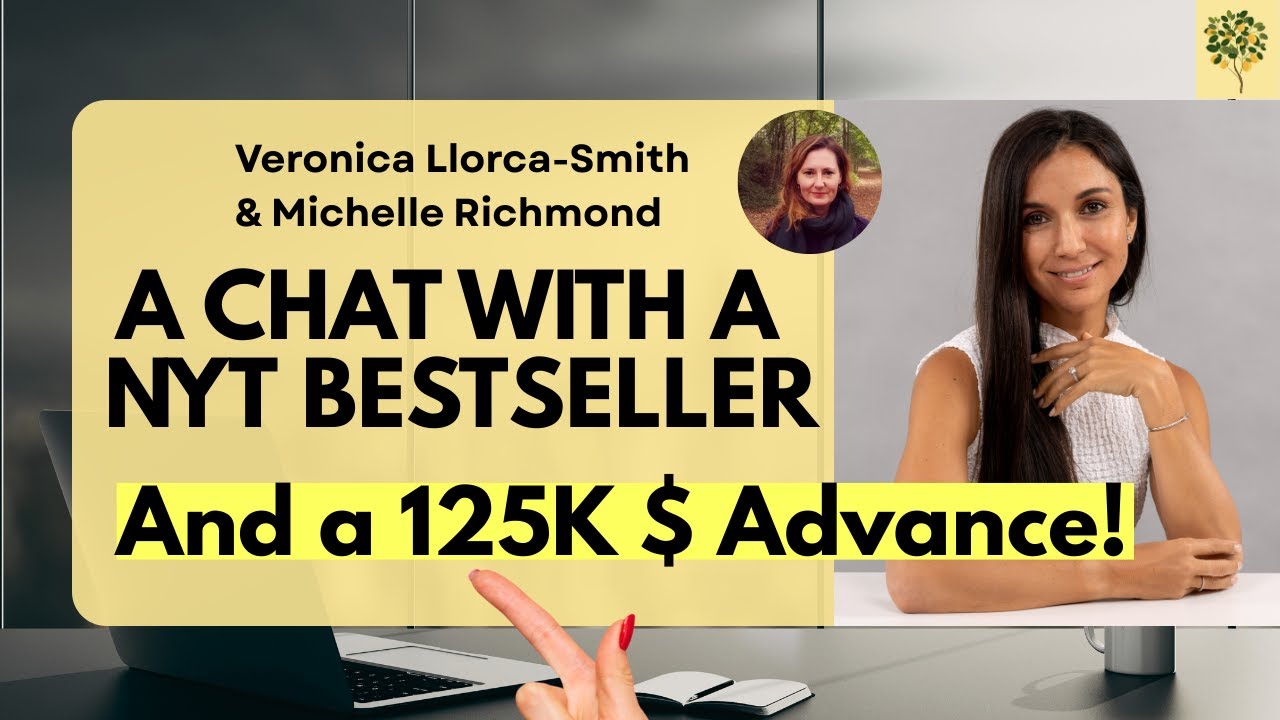
In this recorded YouTube interview hosted by Veronica LLorca‑Smith, New York Times bestseller author Michelle Richmond shares the winding path of her writing career, from early short‑story contests and an AWP award to a chance encounter with a literary scout that led to her first novel. She discusses the pivotal role of local relationships—calling bookstores, bringing brownies, attending a bookseller dinner—and how those grassroots efforts helped her debut novel The Year of Fog become a San Francisco bestseller and later a New York Times paperback bestseller. Richmond explains the mechanics of the NYT bestseller list, emphasizing that it is a curated, distribution‑focused list rather than a pure sales volume ranking, and notes how large retailers like Target are excluded from its reporting. She outlines typical launch timelines (hardcover and ebook together, paperback a year later) and the various publishing formats (trade paperback original). The conversation also covers the advantages of big‑publisher imprints, especially regional ones, and how authors can leverage festivals and book fairs worldwide. Richmond provides concrete financial details—advances ranging from $1,000 to $150,000, royalty rates of 8‑15%, and the importance of earning out an advance. Both hosts compare fiction and nonfiction business models, highlighting the intangible benefits of publishing (brand building, speaking gigs) and the rise of Substack as a complementary revenue stream. Practical advice on pitching to festivals, using awards, and building an author ecosystem rounds out the discussion.
Chapters
So let's get started. And many people in the audience are actually authors. So if you have questions, feel free to put them in the chat. We'll try to get back to you. And we would like to start with the beginning. So it sounds amazing when we say all these things and all these titles, and I know that you've also won awards, but how did all this journey as an author start? If you had to go back, I think it's 20 years in time, right? How did it all start?
It's been a while. It's hard to believe it's that long. But so I published my first book through a contest because I had written short stories, and those of you who are writers may know that short story collections are very hard to publish. So I submitted my collection. I couldn't get any agents interested in my story collection. And I had always planned to be a writer. I should set that up from the beginning. I knew from the time I was a child I would be a writer. So it kind had in some ways kind of a straight path because I knew how much I wanted to do that. That said, I didn't know what to do, how to do it. I didn't grow up in a kind of household where there was a lot of literature, where I knew writers, or an artistic family. It wasn't like that, but I knew that I wanted to write. So I ended up majoring in English, going and working for a while in odd jobs like waiting tables and working in a tanning salon. And then I went to an MFA program so I could really spend some serious time writing and teaching writing at the same time. So I did an MFA program in creative writing, and when I came out of that, I was still doing odd jobs, but I moved to New York City and was teaching for Gotham Writers Workshop, but I was also writing. Oh, when I was also teaching, I mentioned this because you're in Hong Kong.
Mm-hmm.
One of the jobs I had while I was in New York City, I took a job working for a Chinese businessman. And as soon as I took the job, thinking it was a job in New York City, he said, okay, you're coming to Beijing. So I went to Beijing and I lived in Beijing for a little while and then Hong Kong. And during that time I was writing, and I was writing everything I possibly could. So I came home and I submitted my story collection to to various contests. There are a lot of contests for debut story collections and had a couple of runner-up placements and then ended up receiving— it was called the AWP Award. And this prize is still going. So anyone who's trying to publish a first book of literary fiction, I highly recommend the AWP Award because you don't have to be agented and it doesn't matter who you know or don't know because the submissions go without your name on them. So my first story collection was published that way through University of Massachusetts Press. And after that, I really tried to get an agent for the novel I had written that was set in China, and it was based on the time I had spent there, and it was about the Three Gorges Dam. This was before the Three Gorges Dam was flooded, but— I met an engineer on a bus while I was traveling solo, a Chinese engineer who told me about what was going to happen with the Three Gorges Dam. And so I ended up writing a novel, sort of, it was about a young woman from Alabama. So it was from, I'm from Alabama, so it was from a perspective of someone who kind of had my background but who was in China. And I could not get an agent for that book. No one was, just rejection after rejection from agents. And I ended up, I was doing a reading for my story collection, The Girl in the Fallaway Dress, in Alabama. And when I was doing that reading, a man came up to me and said, you live in San Francisco, but you're Southern. I am a book scout for a small literary publisher in San Francisco, and they love Southern fiction. So That is how I met my publisher, Mike Adam Cage, who published my first novel, Dream of the Blue Room, without an agent. And at that point, I kept trying to get an agent, and I finally did. And that agent I've been with ever since. I met her in 2003, and she's the one who sold The Year of Fog. And that's really when— The Year of Fog is really when my writing career sort of took off and I was able to start writing full-time. Veronica, I'm sorry. That was a very long and roundabout story, but that's how it happened.
No, I'm wide open because I think it's absolutely fascinating. And there's so many points there that I want to unwrap and go a little bit deeper. Please, in the audience, help me also ask questions. So a lot of really interesting things there. And one of the things that really caught my attention is that you said that, uh, you're facing a lot of rejection. And I think authors, we know all about it, I think is really part of the game. But you were saying that you were kind of discovered when you were doing this reading that was probably something random, you're trying to break through. And I really wanted to go a little bit deeper into that because most of the stories that I know of people breaking through is by putting yourself out there. And the moment that you least expect it, you also have an opportunity because obviously the more you are out there, the more the odds are in your favor. And I just wanted to build a little bit on that. So in my case, my first book was, this might be familiar to people in my community, The Lemon Tree Mindset. I self-published this because I couldn't find any publisher. And then when I published it, no one would buy it because I didn't have a community. I didn't have a newsletter. I didn't have anything. And that's why I launched The Lemon Tree Mindset newsletter on Substack because I realized that I had to find my readers. So couldn't find an agent, couldn't find a publisher. And then a few months later, something interesting happened. I went with my little book in one of the bookstores here in Hong Kong. And I said, can I talk to the manager? And the manager was like, okay, how can I help you? And I said, well, I'm an author. I'm based here in Hong Kong. And it's honestly so hard to get sales from my book. Do you think you'd be able to help me somehow? I'll be willing to do an event, to do an open talk, whatever. And it was actually the owner that day, and she really loved the story. And she said, look, I'd love for you to come and you can have the store, you can do a book signing, you can invite people in your community. And so that's how I was able to get some traction for this book. And thanks to that event of me putting myself out there, I had to actually carry the books in a cart and take a taxi from my home to the bookstore. That's how I met the publisher of this book then, who, having heard the story, was actually interested in being my publisher. So very often we really have to put ourselves out there and go through these situations in the mud so that we finally get a shot. So if you're listening to us and you want to find a publisher, an agent, please keep going. Get in the mud, get dirty in the mud, because that's really How you create opportunities for yourself.
That's so true. I love your story, Veronica, because I love that you, I mean, that takes a lot of courage to just walk in and say, I'm an author, this is my book. And, but that's what led to, to your next book, which I absolutely love. Um, I was talking to Veronica about this before we started, but I've just been reading The Flight Home. And if you haven't read it, if you're an audience of Veronica's newsletter. I think you would love The Flight Home because that's like such an intimate story of your life and how you got to where you are. But I also remember reading in, it might've been in The Anti-Procrastinator, but maybe it's in Lemon Tree Mindset. I'm not sure that your, one of your daughters, when you went to a book event, your little daughter saw your photo. This is in Hong Kong, and said, that's, that's mommy. Mommy's an author. And read the, read the sign, mommy, that you were an author. Is that, am I getting that right? Yeah.
This is so sweet.
And you felt like an author when she said that.
I felt like an author because, yes, she was learning to read. She was maybe 6. And we went to the bookstore. They both had matching pink dresses. And then she read the sign. She saw my picture and she said, Veronica, you're going to say, my mommy, my mommy's an author. And she was so proud. And it was just one of those moments like, wow, this is why I do what I think. Being an author is about impact and it's about legacy. And I think when you have children in particular, and we're both moms, it takes that legacy word and concept to a next new level. So much so that my daughter actually asked me to help her publish a book. And we self-published a book on Amazon called The Story of the Little Rabbit when she was 6. Oh, that's so sweet. So, so yeah, really the gift that keeps on giving, I always say. And so, so Michelle, so we have this star, you have like your breakthrough book that is The Year of Fog. And I'd love to now go a little bit deeper into what it takes to be a New York Times bestseller. Now, I'm not a New York Times bestseller, but it's definitely my dream. And I think for most authors, it's definitely one of the wow moments that the mecca, right, that we aspire to. we aspire to reach. And to give a bit of context, because I was doing a bit of research to prepare for this session, I was reading what does it take to be a New York Times bestseller. And the numbers might be out there and it doesn't matter the exact number, but it's really based on volume of sales and they monitor it per week. So it has to be between 5,000 and 15,000 or above per week, which is a lot even for a month. I would love to have those numbers, but it's not only about volume, it's also about distribution. It's not just Amazon, it has to be diversified distribution across different channels, possibly even different markets. Would you be able to give us a little bit more context from someone who's been on the other side? Exactly what does it— are you monitoring it? Also, I heard that the launch week and month are critical to make it to that list. So we would love to know the behind. Yes.
Okay. Well, I knew none of this when I was, when The Year of Fog came out. And I do have, I was looking for a copy to show because this book, this came out in 2007 and I found the, um, advanced reading copy. So I like showing this because this is the copy that went out that my publisher sent out to reviewers. Um, this was, there weren't influencers at that time. This is 2007. So they sent out to reviewers and bloggers. I guess bloggers were sort of the influencers of the time and booksellers. And this is before we knew the book would do anything at all. And it was a— so it's kind of fun to see the advanced reading copy that was sort of the beginning when we had no idea. And the book was not— it was not purchased as a big— Penguin Random House did not purchase it as a big book by any means. It was a small advance. My agent sent it to— it went through about a year of rejections once she started sending it out before anyone accepted it. And I happened to be during most of that year pregnant. So the book was the last thing on my mind. Like, I wasn't even thinking— that was kind of a gift. I wasn't thinking about the rejections because I was just excited about having a baby and trying to get everything in order for the baby. Anyway, so, um, The book, so she got a— she finally— an offer was made by Caitlin Alexander, who was at Delacorte, which was an imprint of Random House. And Caitlin Alexander was a new editor there. And that's one thing that you should know, authors who are going out on submission as debut authors, it's often great, you know, you'll hear of famous editors who have been at the company for a long time, and yes, they have a lot of power, but for me, I felt like it was really nice that this book was taken up by a young editor who wanted to make her name. And so we kind of came up together with this book. So she acquired the book. It was maybe, I don't know, maybe 18 months after she acquired it that it came out. And I'll tell you though, the one big thing that I think the publisher did for the book that made a huge difference, but I'll also tell you what I did. So what I did was I had had 2 previous small books and I had the good fortune of living in San Francisco and I had called and visited all of our amazing independent bookstores and we have a bunch. And so for both of those first 2 books, I had done events just by calling the bookstores and asking them if I could do events. With the second book, I had the San Francisco literary publisher, so they had set up bookstore events for me. But it wasn't just that I went and did events and asked everyone I knew to come to them. And I was teaching in an MFA program at the time, so I had students, so that was nice, and faculty friends. I also, you know, I would go to the book— I would bake brownies and go to the bookstores and thank them for having my book and see if they had any copies I could sign. And they might only have one copy, Yeah, it didn't matter. I was so excited to bring them brownies and meet, and meet the booksellers that I didn't already know. So, so, you know, I would maybe would have met the owner or one bookseller, but I would go in with the brownies that either I or my husband made these amazing chocolate chip cookies. So I would take his chocolate chip cookies in and just whoever was working there, I would thank them immensely for having my book, even if they had one copy. So I have relationships with booksellers. Is the point I'm making before The Year of Fog came out. So when The Year of Fog came out in hardcover, the publisher didn't do— they didn't do a book tour. And so there was no book tour. There was none of that stuff. There was a local book— there was San Francisco and Bay Area bookstores book tour that they set up. But I mean, it's not like they sent me anywhere. I had flights anywhere or anything like that. But what they did do was they let me They invited me to a dinner, and I still don't know if they intentionally invited me or if somebody else dropped out, but there was a bookseller dinner at a really hip restaurant in San Francisco. The restaurant is, I don't think it's there anymore. It's called Absinthe. And it was a bookseller dinner where they invited all of the independent booksellers, the owners and book reps for book reps from Penguin Random House came, but also the bookstore owners and booksellers were there. And it was for— there were 2 authors. There was a really well-known author there whose name I'm forgetting. She writes cozy mysteries. She's huge. Like, she's since become really huge, but she was already a bestseller.
And then me.
So I don't know, like, I don't know if they invited me because they expected good things in my book, or maybe because— By then they knew that I had developed relationships with booksellers, but also the book, it's called The Year of Fog. It's set in San Francisco. It's absolutely a love letter to San Francisco. So I think the bookseller dinner where I just talked to booksellers about the book was a huge help for getting bookstores to carry and hand-sell the hardcover. I'm sorry, Veronica, this is going long. I want to tell the one last thing. So it was not a hardcover bestseller. What, as, as a hardcover, when it came out, it was a bestseller in San Francisco. So it was a San Francisco Chronicle bestseller and the Northern California Independent Booksellers Association bestseller. This is how many bestsellers happen is they start locally. And then when the paperback comes out, your publisher will take notice and give you more of a push. So that's what happened. This got a lot of attention in San Francisco. Um, there was a bookseller at Kepler's Books in Palo Alto, Menlo Park, um, Nancy Salmon, who is no longer with us, but who hand sold it like crazy and helped get it on the local bestseller list. So when it was time a year later for it to come out in paperback, my publisher had the sense this book could do well. And so then they finally started really pushing it. You know, you kind of, a lot of times that's how it works. You have to prove the book. Before they want, if you've gotten a small advance, you have to prove the book before they make a big investment in it. And so at that point, I still didn't get any sort of national book tour or anything, but I did, um, a lot more local events for the paperback. And it was the paperback that hit the best, the New York Times bestseller list. But that's a long story. But as Veronica, as you were saying, the New York Times list is not only about volume because you could have a book that sold way more than any book that's on the New York Times seller this week. And it wouldn't be on in your, let's say, let's say other books sold, um, 10,000.
I think we're having issues with Michelle. If you're in the audience, can you let me know in the comments if you can hear her? Sorry, I think we were having some technical glitches. So, uh, Michelle, I think So we were starting to move from, it's not just volume, it's about distribution. So if you can take it from there. Okay.
Sorry about that. Um, it is, um, so the New York Times bestseller list isn't just, isn't really the books that sold the most in the country that particular week. They do, the book does have to hit a certain number, but it's really a curated list. So, um, the book has to have sold across the country in a lot of different retail environments. So, which oftentimes kind of keeps the self-published books out of the list because a lot of times those are mostly selling on Amazon. So, but the New York Times list does prioritize independent booksellers because it kind of gives a— independent bookstores because it kind of gives a broad picture of what's selling across the country. Of course, they also take into consideration the big chain bookstores like Barnes Noble and I don't even know what the other big chains are now. But so bookstores are reporting their sales, but you might have books that sell quite a lot that aren't being reported by those particular bookstores, and then the book won't hit the list. And I know from The Year of Fog that Target sold 300,000 copies of the book, But when it was selling at Target, it was not on the New York Times bestseller list. It was selling far less when it was on the list than later when Target was selling it like hotcakes and it wasn't on any list anymore because it was being sold at Target, which wasn't reporting for the list. So it's a— the New York Times is very secretive about how their list works, but You know, so there, I, so I don't know if that's interesting or helpful, but that's just a little bit of information about the list.
No, absolutely. And there are a lot of people joining us now, Angelica, Ferdy Duke. So I just want to make a bit of a summary on how important it is to start local, right? Be successful and build those relationships where you are. In your case, that was in San Francisco, in California, build those relationships, put yourself out there, which is so important. And there was something that you mentioned that I think would be very interesting for all of us authors to understand more. You said that first you had the digital launch and then the hard copy came, or like, how was like the launch of the different formats of the book?
Well, first was the hardcover and the ebook came out at the same time, which is how it's almost always done now. But at that time, ebooks were— ebooks were people, not that many people really reading ebooks yet. So the way it traditionally works is hardcover and ebook launch, and then one year later, paperback launches. You don't get a paperback if your hardcover hasn't sold some copies. So you can have a hardcover launch and then it never come out in paperback. There's also another path is, is, um, trade. It's called trade paperback original, where the book doesn't come out in hardcover ever, and it comes out in trade paperback original and ebook at the same time. So the way my books always work is hardcover and then paperback one year later. So I do events for the hardcover at local bookstores, and then when the paperback comes out, I do more events at different local bookstores, sometimes the same one. And then when I say local, I mean all over the Bay Area, but then also, um, I'll sometimes do, I usually do one thing in LA, um, at Vroman's or something like that. And for a few books, I've done one thing in New York City. So, um, because my publisher will say, oh, and I'm trying to think, my last book came out during the pandemic. So Everything was online except I did a luncheon in LA for Poison Pen, which is really fun. But yeah, so you, what about you, Veronica? Are you, do you, so you had a lot of success by starting locally with Hong Kong. So how do you get, how do you do the launch of your, of your books?
So to be honest, for me, like my, my biggest breakthrough book just to call it somehow, was The Anti-Procrastinator, because it was the first time that I landed a publisher deal. So, that one was with Penguin. So, that was very lucky in the sense that when you have a big publisher, one of the Big 5, it opens a lot of doors. And so, in my case, that really helped me have visibility in Fortune 500 companies, for example. It helped to really push my work as a public speaker to the next level. So, the corporate world, being in Hong Kong, that is a very corporate world environment, that really helped. Other things that I did similar to you starting in Hong Kong, because it's such a vibrant international community, I've done multiple events as well with book— local bookstores. And then from there, and we haven't talked about these and I'd love to hear from you, is the literary scene, meaning festivals, book fairs, for example. So that is something that I started exploring as well. And so this year, for example, I went to Singapore twice to launch my book. Once was in a local bookstore in Singapore. The second time was at the literary festival. I went to India as well. I was invited to participate in the largest literary festival in southern India. But for me, what has been also very useful is to develop relationships with the publisher, because one of the things that, you know, is that when you pick any of these big publishers, so in my case, Penguin, We tend to think that is this big company, right? One Penguin. But actually, under the umbrella, you have over 300 imprints based on gender, based on where you're located, based on all these different filters. And so, for me, because I'm based in Hong Kong, I started to develop the relationship in Asia and also Penguin India, which is not that far. And so, now, for example, in January, through the relationship that I've built with Penguin India, which is not the one that published my book, different imprint. I've been invited to go to the Delhi World Book Fair, which is the biggest fair, literary fair in India. They're going to print 500 copies of the book. That's amazing.
Congratulations.
That's so cool. It really is cool. But again, nothing came to me. No one knocked on my door saying, hey, we're going to invite you there. I put myself out there. Back to the point of the beginning of rejection. I also get a lot of rejection. Like I wanted to go to the Ubud Festival in Bali because it just sounds so cool. They said, oh, we're not interested. So, so that's also part of it, like putting yourself out there, but to build on what you're saying, starting local, building those relationships, and then looking for opportunities. You talked about awards at the very beginning. I've been looking at awards. There's so many indie book awards that any author can apply for. Many of these fairs, not so much the festivals, but the fairs, you can actually directly go. As someone is saying, Jaipur in India. That's one of the biggest ones. I definitely want to pitch to Jaipur. I think it's one of the most prestigious ones. The one that I'm going is in Delhi, and the other one that I went earlier this year was in Kerala in the south. But if anyone is interested in India and the literary scene, Jaipur, in my understanding, is one of the biggest ones. And this is very important. They do sponsor international authors, meaning when I went to the Kerala one as well, they paid for the flight, they paid for the accommodation. So, Which is huge because otherwise it's a, it's a big investment. Um, so yes, on the part of literary festivals, book fairs, um, have you done any of that, Michelle? I'm not familiar with the books in, in the US, so it'd be really great to hear more about it.
Well, that, this is, I, this is so interesting to hear from you. And now I'm going to have to, um, email with you afterwards because I want to know, that sounds really interesting, the, um, the India book fairs. So I have done a few. A few, but it's been a while because my last book came out in 2021 and things were mostly online. But I've done the— there's a big book fair here called— I don't know what it's called, but it's in Austin. So I've done that. And because I'm from Alabama, I do— with every book, I go to Alabama for something. And And so there's a book fair in Birmingham that I've done. I've done a book fair in Chattanooga. I can't remember the names of all the book fairs because it's actually been quite a while since I've done one. But really, Veronica, you're reminding me that I should be pitching book fairs. I mean, I think I used to do that and I kind of, I have pandemic brain where I forget what the possibilities are for a book since that's when my last one came out. But, um, yeah, I, I, I think what, what you're talking about is so interesting because you're just, um, thinking of where book fairs are and going out and asking people about them and you're having really great results with that. So I think that's interesting. The, um, the one thing I would say about a book fair, That I've found, I love being at one, but I have found I'm always sitting next, because you have a long table of authors. You might be doing a panel or a reading, but eventually everyone's going to be at a long table of authors signing books. And I'm always sitting next to someone who's like a massive bestseller, which is, and then so you, it's kind of— funny and awkward. You see the line of hundreds of people and then you're signing a few books, but it's all fun and good. I was going to— there was another— so San Francisco also has— I was just at a literary event a few nights ago and I went to see a friend read who I met at a literary event in San Francisco 20 years ago. And he reminded me of a different event where we had met another writer that was at this thing. So it's all a community, and when you've been doing it for a while, you meet writers at various book fairs or readings and literary events, and then 15, 20 years later, you're still supporting each other by showing up to each other's readings. And I think that's really important, is just being part of the community of writers and supporting other people when their books come out.
Absolutely. And I saw a question from Carol. She was asking how we pitch to festivals, which is a question that I get very often. And I actually have an article if you browse through the Elementary Mindset, where I have specific book festivals where you can actually send submissions. So many of them, they have an open submission. One caveat is that for festivals, most of the time it has to be a published book. So it's not usually self-published. That's one thing. And they look at things that your presence, your digital footprint, if you have any awards, things that can really give you credibility and your book as well. So that's the type of thing that they look at. And very often they look at a timeline of 6 months or even longer. So for example, in my case as an author, now I'm looking at the Ubud Festival in Indonesia for next year. So try to think ahead even before you publish the book. You can even have a list. I mentioned some of the ones in my region, the Singapore one, Singapore Writers Festival, amazing. Hong Kong Literary Festival, I've participated twice. And I'm also a coach for authors and writers. And I'm now bringing some of my clients to speak in those festivals. The Hong Kong one, which is where I'm based, actually has budget for international authors. So, back to Michelle's point, I have found that being in that community, it just really helps you know what are some good opportunities, which are some fairs. You get those direct connections. So, very, very important to try to make those connections and build those relationships. One question, Michelle, that we had earlier from Mira, and I want to make sure that we talk about it, and we should have covered at the very beginning, You have so many novels and books and the, what is your gender? What type of books are you've, you've already published? So if you can give us the picture to make sure that everyone really understands your work.
Okay.
Thank you.
Well, yeah. So, I appreciate that question. And my, so I would say my first 2 books, Dream of the Blue Room and The Year of Fog. The Year of Fog was a literary mystery. And Dream of the Blue Room was, I guess now they would call it upmarket women's fiction. I don't know what they were calling it at the time. It was just kind of an obscure literary novel. And so my books, Dream of the Blue Room, The Year of Fog, and the one that came after it, No One You Know, were all sort of marketed the same way as upmarket women's fiction. Although I don't know that that's what it was called at the time. And then I would say what pulls all of my books together is most of them are set in the San Francisco Bay Area with some Southern element, except my next one is set in Paris because I was living there when I was writing it. And they all have some sort of mystery or thriller element. So what happened I think it was my 5th novel. I wrote a book called The Marriage Pact. I was just writing one of my books, which one of my books is, it concerns, it's a person in a relationship at a really troubled moment in their life and something big is happening. Because you're always asking as a novelist, why is this particular story being told at this particular time and why should the reader care? So with The Marriage Pact, It was a couple's invited to an exclusive organization that promises to help them have a happy, lasting marriage, but it turns out to be something they can't get out of. I was just writing a story I was interested in about relationships set in San Francisco, and my editor got this book and she said, Michelle, you've written a thriller. She was so excited because now she could market as a thriller. And that was in 2017, and thrillers do tend They tend to be easier, I think, for publishers to market. It wasn't that I was writing to the market. I had just written a book and my editor said, I'm going to call this a thriller. I'm going to call it a psychological thriller. And so then a different machine starts working behind it. And that's when my agent was able to take that book out and go to auction in a bunch of countries. And my agent sold it in 31 countries, most of them before 31 languages, most of them before it had even come out in the US. So I credit my agent with sort of building this excitement around the book. But my US publisher had sort of started the ball rolling. And then my agent took it out without an ending written, and she took it out to all these places, and somehow that created a buzz that nobody knew how the book was going to end, including me. And so, um, I don't remember. Oh, so I'm sorry, to get back to the question. So my books sort of span this literary mystery to psychological suspense genre. And my latest, The Wonder Test, is psychological suspense. It's a suburban suspense story set in Silicon Valley. Yeah. So that's what kind of the thread that has them all together is that they're Uh, there's always a suspense element, but it's always very character-based. But I guess any, any fiction is very character-based.
Love it. And, uh, so Nira is getting excited. She's one of the founding members in my community. She's like, fiction is really on the— some themes that you mentioned here is a psychological thriller. I saw that you also have some suburban suspense. So it's great that you're really touching the fiction. It's definitely not something that I've I've ventured into. There was a thought-provoking question, very interesting, from Carol on, does it still make sense? Is it still profitable to publish printed books when many authors out there, they're actually making more money by writing online, specifically on Substack? We are both Substack bestsellers, so it means that we're putting a lot of work into our writing. So I'd love to have a really open and candid conversation. What is the reality of printed books? I don't know if people know about the royalties, peanuts, but we can talk a little bit about that.
Exactly.
The authors, most of us, we invest in an ecosystem that is not just books. So if we could talk a bit about that and with this, we can wrap up the session. Yeah.
Well, I would, I'd love to hear your thoughts on, on it, Veronica, and then I will chime in too.
Sure. So I've always been very open that the books for me is much more about, uh, A brand builder, equity builder. It helps my work as a public speaker. I love writing. So even if no one was to read the book, I would still probably write them. But in terms of profit, to be honest, when you work with a big— Carol is saying exactly, when you work with a big publisher, I don't know if people know this, but I was shocked to find out that the royalties are only 8%. And which is not a high-value ticket. A book is not a high-value ticket. And You really end up with like very, very small profits. What I find interesting is this mindset of creating an ecosystem. As I was saying, I published this book. This book didn't make a lot of money, but it was the beginning of my publication, The Lemon Tree Mindset, which now makes a significant, significant revenue every year. I have the Spanish one. I've been able to create talks, presentations out of the book. So for me personally, it's much more what it adds to me. As my business overall than actually just the profit. So that's how I see it. And I would say this for anyone who works in the B2B world, whether you're a consultant, whether you're an expert in your field, in my case, I do a lot of on leadership, on growth mindset, having a book, it just elevates your profile. So that's something that is intangible. It's not that you get money for having the book, but it helps me land public speaking gigs. It helps me increase my fees, being in conferences. So for me, that's really the intangible value of publishing books, but I would love to know from your side because fiction is very, very—
Yeah. I think for nonfiction, it's so interesting because, yeah, the book is a calling card for a nonfiction writer. It's a calling card of your expertise. And so that's a completely different, that's a different landscape, but there are some similarities, which is, yes, royalties Royalty rates are very low. And so that's why for a fiction writer, an advance is very important because, I mean, the advance is rarely ever going to amount to much per hour when you consider how many years and thousands of hours it takes to write a novel. But a good advance can shore you up as you write. But then once the book comes out, you have to earn out the advance. And on a hardcover, you get, um, 15% per. So like if the hardcover sale sells for, um, well, I can't, I can't do a 15%, but on the paperback, you get 10%. So if your paperback sells for $17, you get, well, it really, it's 8 to 12%. So it's, but usually for me, it's 10%. So you get, um, $1.70 per book. So you're not making much money. And so that's where the advance comes in because an advance, you have that whether or not the book sells and starts earning royalties. And then the book, but if you get a big advance, your book has to earn out that advance at that royalty rate of, you have to sell enough books for those $1.70s to add up to $100,000 or whatever your advance is in order for you to then start earning royalties. That makes sense. But this is To me, Substack is so interesting. And getting back to the question of, is publishing really still— print books still viable? I love the print book experience just because that's how I came up. I love picking up a print book. I love reading them. I love having my book out in print. But I've also been enjoying Substack. And yes, of course you do the math. If a paid That's why I so appreciate my paid subscriber. I mean, I love all of my subscribers, but a paid subscriber, it's like they've bought your book 50 times. That's what's amazing. Like, depending on what your annual rate is, or even if they, even if they just get a subscription for a month, and let's say your subscription is $5, it's like they've bought 2 hardcovers or something. So, um, so it, it And that sounds transactional. I don't mean to make it sound transactional, but what I'm saying is that a subscriber who supports you on Substack is someone who is supporting your life as a writer in a similar way to someone who's going out and buying your book, but they're actually providing more support just because of the way the economics of Publishing are.
Great. So thank you for explaining that, for clarifying. And another question that we have there, because people love talking about the money from the books, is how much in advance. And so I'll give my perspective. It really depends. It really varies. I had a tiny advance, but I was so proud when Penguin Random House said, oh, we're going to give you $1,000.
Like, oh my God, before I've even written the book, I thought it was Amazing.
And then on the other side of the spectrum, you have people like Elizabeth— oh, I forgot her name now— from Eat, Pray, Love. Elizabeth Gilbert, sorry, who actually went to the publisher and she had this idea of the travelogue before she went traveling to India and all these places, and she got an advance for $200,000. So I guess there we have an entire spectrum. Michel, I don't know if you can share a bit your experience with advance.
Yeah, I'm happy to share. I won't share per book, but I'll say my lowest advance. I've gotten advance for $1,000 for Dream of the Blue Room. And the highest advance I've gotten is $150,000. And I would say that the, um, and the advance for The Year of Fog, which was the book that became a New York Times bestseller, was $25,000. And that really, because that was considered a small advance at the time.
Mm-hmm.
And it set me up because I didn't have, because it was, I didn't have, um, when you have a smaller advance, I have a whole article about this on my Substack called The Silver Lining of the Small Book Advance. When you have an advance that your book can earn out, when you go out with your next book, you're not fighting the numbers. You're not fighting a bad track record. So if you get an advance of $1,000, $5,000, $10,000, $25,000, Then you're more likely by far to earn out than if you get an advance of $100,000. That's going to be harder to earn out and it's going to go against your track record. So when I got to The Year of Fog, I had gotten a $1,000 advance for my story collection. That book did not sell well. I had gotten a— oh no, $2,000 for my story collection, $1,000 for Dream of the Blue Room. Neither of those sold well, but that did not work against me because The advances were small, so it wasn't a problem that I hadn't sold a lot of copies. It was just considered, oh, okay, you have these 2 books, they got good reviews, the publisher didn't put a ton behind them, so it's okay that they didn't sell a lot. And then when The Year of Fog exceeded my publisher's expectations and mine by a ton, it set up my career. Basically, that's what it did. It set me up to be able to write for many years. And that I will always be grateful for that. And always be grateful to the readers and the booksellers. And of course, my agent.
What a lovely way to wrap up today. Congratulations, Michelle. Super inspiring. I know that we're many authors here. We have many, many questions. So, so just to wrap up, we can just say a final word and also where can people find you?
Oh, okay. Uh, thank you for that question. michellerichmond.com. You can find my books and I also am on Substack. At, um, caffeinatedwriter.com. Just, I mean, that's maybe a, that's a mouthful, but caffeinatedwriter.com. So, um, yeah, that's, that's where I am mostly. I'm on Instagram, but I am Michelle Richmond SF, but I don't post there a ton.
Fantastic. Michelle, thank you so, so much. I know that it's late, uh, where you are, morning time here in Hong Kong. Thank you so much. And if there's, if you're not yet in my community, it's called the Lemon Tree Mindset. I interview a lot of inspiring people and it's great to be able to talk to you, Michelle, today. So thank you again so much.
Thank you so much. I really appreciate it.
Bye. Bye.
More from Veronica



How Much Speakers Charge And Where To Find Paid Gigs [Public Speaking Bootcamp]







